
Report Feature
Glycobiology Enzyme Trends and Forecast
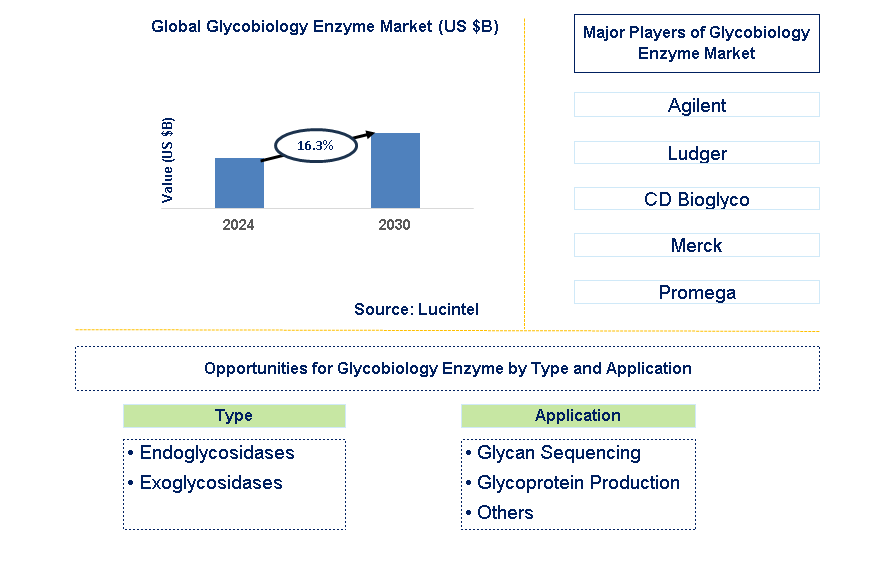
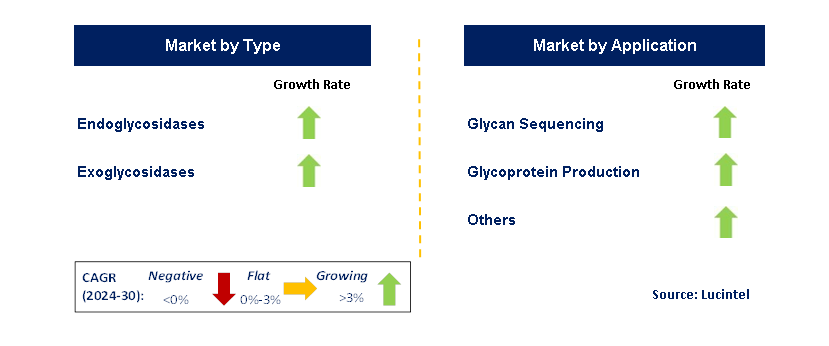
The future of the global glycobiology enzyme market looks promising with opportunities in the glycan sequencing and glycoprotein production markets. The global glycobiology enzyme market is expected to grow with a CAGR of 16.3% from 2024 to 2030. The major drivers for this market are increasing research in glycobiology for drug discovery and growing prevalence of chronic diseases.• Lucintel forecasts that, within the category, endoglycosidases is expected to witness the higher growth over the forecast period.
• Within the category, glycan sequencing is expected to witness the higher growth.
• In terms of regions, APAC is expected to witness highest growth over the forecast period. Gain valuable insights for your business decisions with our comprehensive 150+ page report.
Emerging Trends in the Glycobiology Enzyme Market
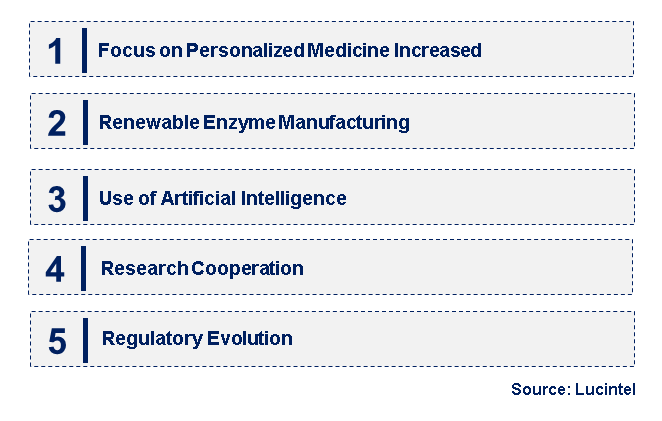
There are various new trends responsible for changing the landscape of the glycobiology enzyme market. These trends are indicative of advances made in technology and regulation, along with increased applications in other industries.• Focus on Personalized Medicine Increased: The trend toward personalized medicine is changing the glycobiology enzyme market. Nowadays, it is possible to identify individual glycosylation patterns, and this information can be utilized to design targeted therapeutics, thereby tailoring treatments to improve patient outcomes. This increases the demand for specialized enzymes developed for specific genetic profiles.
• Renewable Enzyme Manufacturing: The increasing environmental concerns have directly promoted the production of glycobiology enzymes. These enzymes are produced using environmentally friendly methods. Companies are processing their products biotechnologically, which excludes waste generation and reduces energy usage. This helps companies meet sustainability objectives in the global arena and attracts customers who are keen on a greener environment, thus enhancing brand reputation and competitiveness in the marketplace.
• Use of Artificial Intelligence: In recent times, the integration of AI into the study of enzymes has gained momentum. Its applications include predicting enzyme behaviors, optimizing glycosylation processes, and shortening timelines for discovery. This trend improves R&D efficiency by cutting costs and promoting innovation in enzyme applications, thus impacting numerous industries.
• Research Cooperation: Academic research institutions and industry players are increasingly undertaking collaborative research initiatives. These collaborations aim to bridge the gap that exists between research and commercialization. Findings in scientific inquiry are translated into market-ready products for enzyme utilization. These collaborations pave the way for innovation and improve the competitive scenario of the glycobiology enzyme market.
• Regulatory Evolution: Ongoing changes in the regulatory environment regarding biotechnology and enzyme use are driving market trends. The sustainability of stricter safety and efficacy thresholds requires manufacturers to put considerable effort into quality assurance and compliance. This guarantees that glycobiology enzymes are of top quality, resulting in more confident consumers who can be effectively targeted through marketing. More than any other factor, these trends are revolutionizing the market for glycobiology enzymes, driving innovation, sustainability, and cooperation across applications.
Recent Developments in the Glycobiology Enzyme Market
Breakthroughs in the glycobiology enzyme sector have led to several major advancements that boost performance and improve the capacity for applications.• Advancements in Enzyme Engineering: Over the years, discoveries in directed evolution and synthetic biology have facilitated the design of more efficient and specific enzymes for glycobiology. Improvements in enzyme performance contribute to enhanced capabilities in drug development, food formulation, and diagnostics, thereby increasing yield and efficacy.
• Novel Enzyme Discovery: The discovery of novel enzymes with unique glycosylation properties has gained significant importance. There is a growing interest in exploring diverse biological sources and discovering enzymes that catalyze glycan modifications in specific directions. This increase in enzyme diversity streamlines further progress in therapeutic applications and bioprocessing.
• Increased Diagnostic Applications: The application of glycobiology enzymes has been on the rise, especially for diagnostics, to detect biomarkers of diseases. To increase sensitivity and specificity, and therefore improve diagnostic accuracy, glycosidases and glycosyltransferases—enzymes that modify glycans—are used in various assays. This trend supports the development of personalized medicine approaches.
• Collaborative International Research Projects: International collaborative research projects are incubating innovation in glycobiology enzymes. Multidisciplinary approaches bring together far more expertise than any single individual could offer, thereby speeding up product development. These collaborations facilitate knowledge sharing and resource pooling, forming the basis for innovation in enzyme technology.
• Commercialization of Glycobiology Enzymes: The increased commercialization of glycobiology enzymes is changing the market landscape. Companies are scaling up their production processes and planning marketing strategies for new enzyme products. Such commercialization trends foster more competitive markets and expand the application domains of glycobiology enzymes. These trends influence the market for glycobiology enzymes by promoting innovation, expanding application fields, and enhancing commercial potential.
Strategic Growth Opportunities for Glycobiology Enzyme Market
There are numerous strategic growth opportunities in the glycobiology enzyme market across different applications.• Pharmaceuticals: The fastest growth potential lies in the pharmaceutical sector within the glycobiology enzyme domain. The development and formulation of new drugs would benefit significantly from using such enzymes, as changes in glycosylation patterns lead to increased efficacy and stability. These factors are heavily influenced by personalized medicine, which encompasses targeted therapy.
• Food and Beverage Industry: The food and beverage industry utilizes glycobiology enzymes to improve processing and nutritional value. There is increasing demand for carbohydrates that can be modified for flavor profile enhancement. This presents substantial growth opportunities for manufacturers specializing in enzyme applications in food technology.
• Diagnostics: The demand for advanced diagnostic tools is booming, offering glycobiology enzymes significant growth potential in this sector. These enzymes can be used to detect biomarkers and develop assays that enhance diagnostic sensitivity and speed.
• Biotechnology and Research: Glycobiology enzymes are employed in the biotechnology industry for various research purposes, such as cell culture and bioprocessing. The growing interest in biotechnology is driving demand for specific enzymes that enhance the quality of experiments. This trend is critical for academic and industrial collaborations.
• Environmental Applications: Environmental applications, such as bioremediation and waste management, show increased interest in glycobiology enzymes. Addressing environmental challenges, these enzymes can hydrolyze complex organic compounds, opening new avenues for global sustainability efforts. The growth opportunities will influence the glycobiology enzyme market by stimulating innovation, broadening application ranges, and enhancing competitiveness.
Glycobiology Enzyme Market Driver and Challenges
Technological advancements, including synthetic biology and recently developed CRISPR technology, have revolutionized enzyme engineering. Consequently, there has been an increase in the development of more efficient glycobiology enzymes. These innovations enhance product quality and expand application areas, promoting market growth and creating new therapeutic opportunities. The factors driving the glycobiology enzyme market include:• Increasing Demand in the Pharmaceutical Industry: The growing focus on personalized medicine and targeted therapies is generating pharmaceutical demand for glycobiology enzymes. The industry's pursuit of better drugs is a driving force behind the market; specialized enzymes enhance the efficacy and safety of drugs, thereby fueling market growth.
• Growing Glycobiology Awareness: Increased knowledge of glycobiology in health and disease is prompting investments in research and development. New applications for glycobiology enzymes are fostering innovation and growth across various industries, thereby securing stability.
• Sustainability Initiatives: The glycobiology enzyme market is experiencing a rise in sustainable production methods. These green approaches resonate with global sustainability goals, helping brands gain respectability and attracting environmentally conscious customers. Challenges in the glycobiology enzyme market include:
• Regulatory Obstacles: Manufacturers face significant difficulties in regulating glycobiology enzymes, especially given the complexity of regulatory frameworks. Strict safety and efficacy regulations require substantial resources for research and quality assurance, which can affect the ability to bring products to market.
• Competition from Substitutes: Manufacturers encounter competitive pressures from alternative technologies and products. Consequently, they must continually innovate and market their glycobiology enzymes with distinct advantages to remain competitive.
• Market Dispersion: The glycobiology enzyme market is highly fragmented, consisting of many players with uneven levels of expertise. While this fragmentation adds complexity to the marketplace, it creates challenges with standardization and achieving economies of scale when trying to cut costs and enhance profitability. These drivers and challenges together shape the overall glycobiology enzyme market, influencing strategic decisions and investment opportunities as stakeholders navigate the changing landscape.
List of Glycobiology Enzyme Companies
Companies in the market compete on the basis of product quality offered. Major players in this market focus on expanding their manufacturing facilities, R&D investments, infrastructural development, and leverage integration opportunities across the value chain. Through these strategies glycobiology enzyme companies cater increasing demand, ensure competitive effectiveness, develop innovative products & technologies, reduce production costs, and expand their customer base. Some of the glycobiology enzyme companies profiled in this report include-• Agilent
• Ludger
• CD Bioglyco
• Merck
• Promega
• Creative-Enzymes
• Abcam
• Biosynth
• Leadgene Biomedical
• Mybiosource
Glycobiology Enzyme by Segment
The study includes a forecast for the global glycobiology enzyme by type, application, and region.Glycobiology Enzyme Market by Type [Analysis by Value from 2018 to 2030]:
• Endoglycosidases
• Exoglycosidases
Glycobiology Enzyme Market by Application [Analysis by Value from 2018 to 2030]:
• Glycan Sequencing
• Glycoprotein Production
• Others
Glycobiology Enzyme Market by Region [Analysis by Value from 2018 to 2030]:
• North America
• Europe
• Asia Pacific
• The Rest of the World
Country Wise Outlook for the Glycobiology Enzyme Market
Glycobiology enzymes are evolving rapidly due to the growth in biotechnology and increased applications in medicine, food, and industrial processes. Significant changes are underway in the U.S., China, Germany, India, and Japan, as scientists work to tap further into the potential of glycosylation in health and disease. Research and development initiatives in these countries contribute to new enzyme technologies that augment therapeutic benefits and optimize production processes across different industries.• United States: Recent advances in glycobiology enzymes in the U.S. highlight their biopharmaceutical applications, particularly for glycoprotein and monoclonal antibody production. Leading research institutions can now exploit CRISPR technology to engineer glycosylation pathways for higher-efficacy and safer therapeutics. Academia-industry collaboration is driving the commercialization of new enzymes, while the push for personalized medicine continues to foster the development of specific glycobiology enzymes tailored to individual patients' needs.
• China: China is particularly notable for agricultural and food application research on glycobiology enzymes. Key developments in this field focus on enzymes that improve food processing and nutritional value. Chinese institutions are forming academic partnerships abroad to accelerate innovation. Additionally, increased investments are being dedicated to exploring environmentally friendly technologies for enzyme production, aligning with national initiatives for sustainable development. This positions China at the forefront of the global market for glycobiology enzymes.
• Germany: Germany excels in the industrial applications of biofuels and bioplastics, standing out in glycobiology enzyme technology. German scientists are innovating to enhance enzyme performance under optimal conditions and reduce production costs. Recent collaborations among research institutions and biotech firms aim to translate research into commercial products. Sustainability drives the enzymes developed in Germany toward greener production processes, maintaining the country's leadership in biotechnological progress.
• India: The glycobiology enzyme market in India is growing due to increasing demand from pharmaceuticals and diagnostics. Recent initiatives include establishing biotechnology hubs focused on enzyme research and development. Indian companies are expanding partnerships with global counterparts to enhance their technological edge and productivity. The government is also promoting research in glycoscience as a supportive initiative, encouraging innovation and entrepreneurship in the sector.
• Japan: Research in Japan has primarily focused on medicinal applications, particularly drug development and diagnostics. Recent discoveries include new enzymes capable of building glycan molecules, enhancing medication effectiveness. Japanese companies are preparing enzymes for regenerative medicine and tissue engineering. Effective cooperation between academia and industry positions Japan as a significant player in the global glycobiology enzyme market.

Features of the Global Glycobiology Enzyme Market
Market Size Estimates: Glycobiology enzyme market size estimation in terms of value ($B). Trend and Forecast Analysis: Market trends (2018 to 2023) and forecast (2024 to 2030) by various segments and regions. Segmentation Analysis: Glycobiology enzyme market size by type, application, and region in terms of value ($B). Regional Analysis: Glycobiology enzyme market breakdown by North America, Europe, Asia Pacific, and Rest of the World. Growth Opportunities: Analysis of growth opportunities in different types, applications, and regions for the glycobiology enzyme market. Strategic Analysis: This includes M&A, new product development, and competitive landscape of the glycobiology enzyme market. Analysis of competitive intensity of the industry based on Porter’s Five Forces model.If you are looking to expand your business in this or adjacent markets, then contact us. We have done hundreds of strategic consulting projects in market entry, opportunity screening, due diligence, supply chain analysis, M & A, and more.

FAQ
Q1. What is the growth forecast for glycobiology enzyme market? Answer: The global glycobiology enzyme market is expected to grow with a CAGR of 16.3% from 2024 to 2030. Q2. What are the major drivers influencing the growth of the glycobiology enzyme market? Answer: The major drivers for this market are increasing research in glycobiology for drug discovery and growing prevalence of chronic diseases. Q3. What are the major segments for glycobiology enzyme market? Answer: The future of the glycobiology enzyme market looks promising with opportunities in the glycan sequencing and glycoprotein production markets. Q4. Who are the key glycobiology enzyme market companies? Answer: Some of the key glycobiology enzyme companies are as follows:• Agilent
• Ludger
• CD Bioglyco
• Merck
• Promega
• Creative-Enzymes
• Abcam
• Biosynth
• Leadgene Biomedical
• Mybiosource Q5. Which glycobiology enzyme market segment will be the largest in future? Answer: Lucintel forecasts that, within the category, endoglycosidases is expected to witness the higher growth over the forecast period. Q6. In glycobiology enzyme market, which region is expected to be the largest in next 5 years? Answer: In terms of regions, APAC is expected to witness highest growth over the forecast period. Q.7 Do we receive customization in this report? Answer: Yes, Lucintel provides 10% customization without any additional cost.
Table of Contents
Methodology
- In-depth interviews of the major players in this market
- Detailed secondary research from competitors’ financial statements and published data
- Extensive searches of published works, market, and database information pertaining to industry news, company press releases, and customer intentions
- A compilation of the experiences, judgments, and insights of Lucintel’s professionals, who have analyzed and tracked this market over the years.


Buy Now
Choose a license that fits your team. Instant PDF delivery.
Prices exclude taxes. Instant delivery. Custom licensing available on request.
Key Questions
- • What are some of the most promising, high-growth opportunities for the glycobiology enzyme market by type (endoglycosidases and exoglycosidases), application (glycan sequencing, glycoprotein production, and others), and region (North America, Europe, Asia Pacific, and the Rest of the World)?
- • Which segments will grow at a faster pace and why?
- • Which region will grow at a faster pace and why?
- • What are the key factors affecting market dynamics? What are the key challenges and business risks in this market?
- • What are the business risks and competitive threats in this market?
- • What are the emerging trends in this market and the reasons behind them?
- • What are some of the changing demands of customers in the market?
- • What are the new developments in the market? Which companies are leading these developments?
- • Who are the major players in this market? What strategic initiatives are key players pursuing for business growth?
- • What are some of the competing products in this market and how big of a threat do they pose for loss of market share by material or product substitution?
- • What M&A activity has occurred in the last 5 years and what has its impact been on the industry? For any questions related to Glycobiology Enzyme Market, Glycobiology Enzyme Market Size, Glycobiology Enzyme Market Growth, Glycobiology Enzyme Market Analysis, Glycobiology Enzyme Market Report, Glycobiology Enzyme Market Share, Glycobiology Enzyme Market Trends, Glycobiology Enzyme Market Forecast, Glycobiology Enzyme Companies, write Lucintel analyst at email: helpdesk@lucintel.com. We will be glad to get back to you soon.


