
Report Feature
Fiber Optic Extessometers Market Trends and Forecast
The technologies in the fiber optic extessometers market have undergone significant changes in recent years, with advancements from traditional interferometric fiber optic sensors to distributed fiber optic sensors for enhanced real-time data collection and analysis.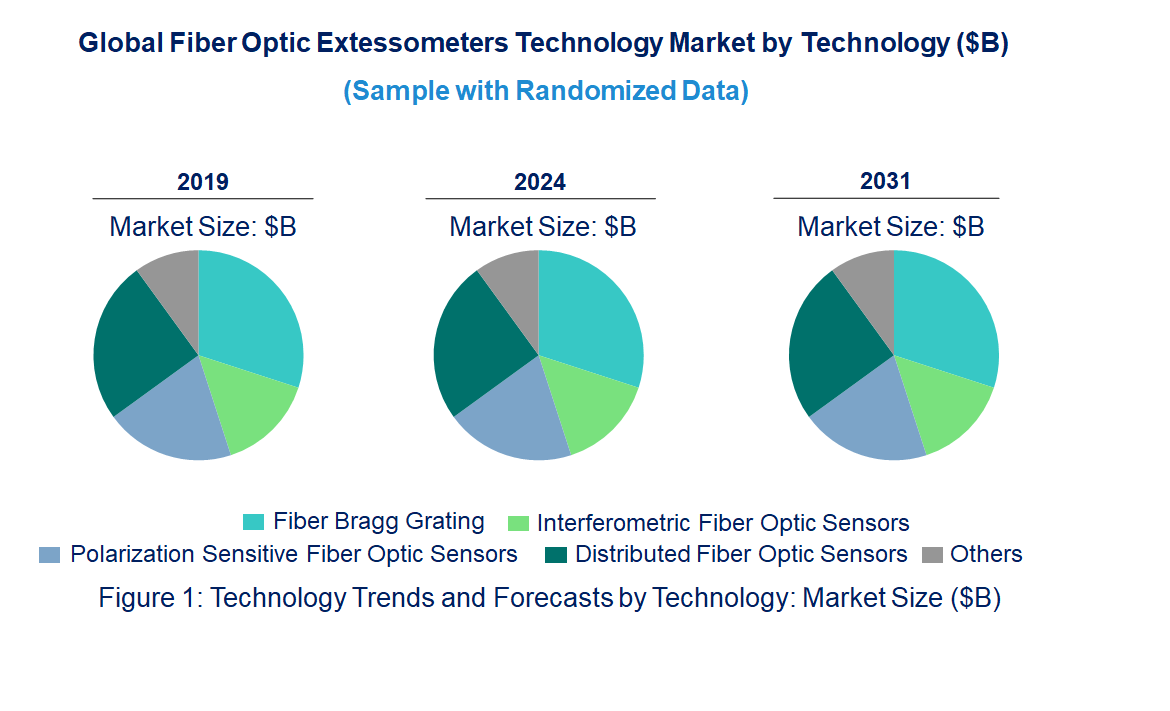
Emerging Trends in the Fiber Optic Extessometers Market
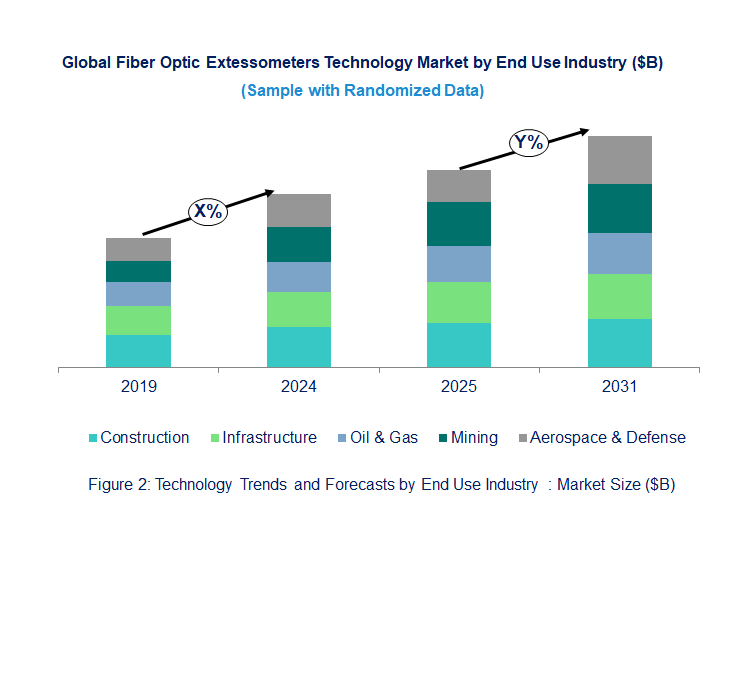
The fiber optic extessometers market is evolving rapidly, driven by advancements in sensor technologies and increased demand across industries. Below are five key trends:• Distributed Sensing Technology: Rising adoption of distributed fiber optic sensors for continuous monitoring over long distances in infrastructure and oil & gas sectors.
• Enhanced Precision with FBG Sensors: Widespread implementation of Fiber Bragg Grating (FBG) sensors for high-accuracy strain measurement in aerospace and defense applications.
• Real-Time Data Analytics: Integration of IoT and advanced analytics with fiber optic extessometers for instant performance insights and predictive maintenance.
• Durability and Environmental Resistance: Development of sensors with high durability and resistance to harsh conditions, particularly for mining and construction use.
• Cost Efficiency and Scalability: Innovations in manufacturing to reduce costs and make fiber optic extessometers scalable for diverse applications. These advancements are reshaping the fiber optic extessometers market, enabling better monitoring, increased operational efficiency, and wider adoption in critical industries.
Fiber Optic Extessometers Market : Industry Potential, Technological Development, and Compliance Considerations
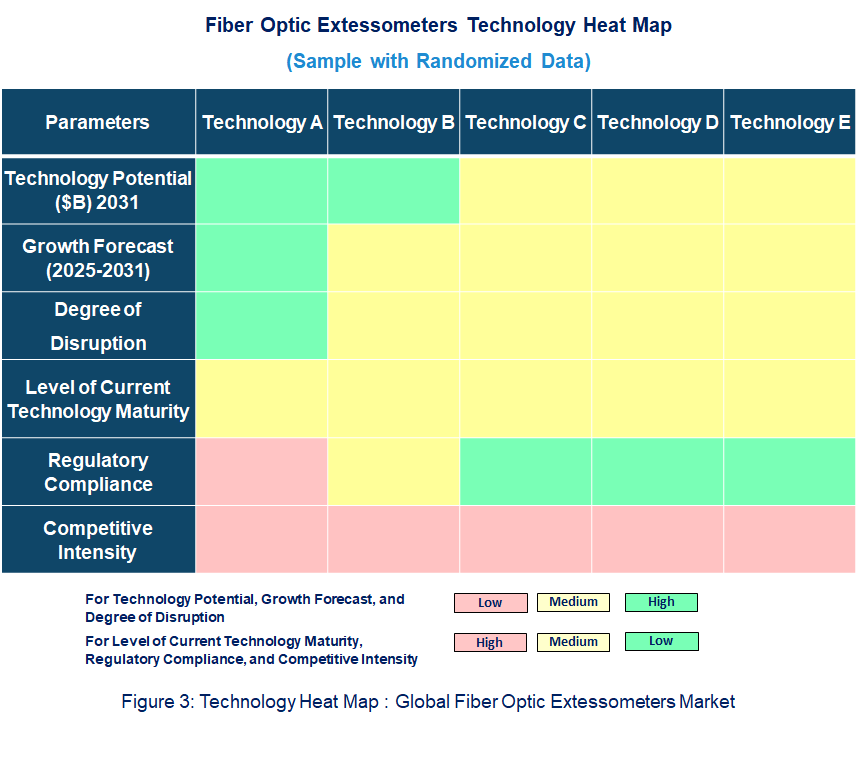
• Technology Potential: High, as real-time distributed sensing and FBG sensors expand use cases in industries demanding precise monitoring and robust performance.
• Degree of Disruption: Moderate to high, particularly in industries like infrastructure and aerospace, where traditional monitoring systems are being replaced by advanced fiber optic solutions.
• Level of Current Technology Maturity: FBG and interferometric sensors are well-established, while distributed sensing and polarization-sensitive sensors are still advancing.
• Regulatory Compliance: Growing focus on safety and environmental monitoring necessitates adherence to stringent industry standards, fostering the adoption of fiber optic extessometers.
Recent Technological development in Fiber Optic Extessometers Market by Key Players
The fiber optic extessometers market is witnessing significant advancements driven by the need for precise, durable, and non-contact measurement solutions in industries such as construction, aerospace, and materials testing. Leading players, including Instron, Ametek, Epsilon Tech, MTS Systems, and Tinius Olsen, are driving innovations to enhance performance, durability, and versatility.• Instron: Instron introduced a new series of fiber optic extessometers tailored for high-temperature and high-strain applications. These devices enhance testing capabilities in extreme environments, enabling industries like aerospace and energy to improve material characterization and reliability.
• Ametek: Ametek unveiled an integrated extensometer system compatible with its advanced testing platforms. This innovation provides seamless data acquisition and analysis, reducing setup time and improving overall test accuracy for users in research and quality assurance.
• Epsilon Tech: Epsilon Tech launched a lightweight, portable fiber optic extensometer designed for field applications. The device’s durability and ease of use make it ideal for structural health monitoring in construction and infrastructure projects, broadening its market reach.
• MTS Systems: MTS Systems developed an extensometer with enhanced resolution and dynamic response. This product meets the growing demand for real-time strain measurement in dynamic testing environments, such as automotive crash simulations and vibration analysis.
• Tinius Olsen: Tinius Olsen introduced a cost-effective fiber optic extensometer aimed at small and medium enterprises. By offering high precision at an affordable price, the company is targeting budget-conscious customers while maintaining quality and performance standards.
Fiber Optic Extessometers Market Driver and Challenges
The fiber optic extessometers market is driven by increasing demand for precision testing, growth in high-performance materials applications, and advancements in automation. Major factors impacting the fiber optic extessometers market include:• Precision Testing Needs: The demand for accurate strain measurement in research and industrial applications is driving the adoption of fiber optic extessometers, as they provide non-contact, high-resolution data essential for material analysis.
• High-Performance Materials Applications: Industries such as aerospace and energy increasingly use advanced materials, requiring precise testing solutions to evaluate mechanical properties and ensure safety and performance.
• Automation and Digital Integration: The integration of extessometers with automated testing systems and real-time data analysis tools enhances productivity and decision-making, promoting market growth. Major challenges in the fiber optic extessometers market are:
• High Costs: Fiber optic extessometers are often more expensive than traditional options, posing a barrier for cost-sensitive industries and smaller organizations.
• Limited Awareness: A lack of awareness about the benefits and applications of fiber optic extessometers among end-users, particularly in developing regions, limits market penetration. The fiber optic extessometers market is evolving rapidly, with innovations focused on precision, durability, and cost-effectiveness addressing the diverse needs of industries. While challenges like high costs and limited awareness persist, advancements in automation and high-performance materials applications are driving growth, paving the way for broader adoption and market expansion.
List of Fiber Optic Extessometers Companies
Companies in the market compete on the basis of product quality offered. Major players in this market focus on expanding their manufacturing facilities, R&D investments, infrastructural development, and leverage integration opportunities across the value chain. With these strategies fiber optic extessometers companies cater increasing demand, ensure competitive effectiveness, develop innovative products & technologies, reduce production costs, and expand their customer base. Some of the fiber optic extessometers companies profiled in this report includes.• Instron
• Ametek
• Epsilon Tech
• Mts Systems
• Tinius Olsen
Fiber Optic Extessometers Market by Technology
• Technology Readiness by Technology Type: FBG sensors exhibit high readiness with proven applications in structural health monitoring and aerospace. Interferometric fiber optic sensors demonstrate medium readiness, thriving in applications requiring extreme sensitivity, such as seismic monitoring. Polarization-sensitive sensors have low to medium readiness, focusing on specialized applications in dynamic stress analysis. Distributed fiber optic sensors lead with high readiness, widely used in long-range monitoring for pipelines and large structures. Emerging technologies, categorized as "Others," show low readiness due to limited field trials. The adoption depends on competitive differentiation, regulatory alignment, and specific use-case performance.
• Competitive Intensity and Regulatory Compliance: The fiber optic extessometers market exhibits high competitive intensity, driven by the dominance of FBG and distributed fiber optic sensors due to their versatility and performance. Interferometric sensors face moderate competition, leveraging their niche applications. Polarization sensitive sensors are less competitive but cater to specialized high-precision demands. Emerging technologies must overcome entry barriers, including patent-driven competition. Regulatory compliance varies, with safety certifications and international measurement standards critical for adoption. Compliance with guidelines for environmental resilience and system integration adds complexity, influencing market dynamics and innovation.
• Disruption Potential: Fiber bragg grating (FBG) technology disrupts the fiber optic extessometers market by offering precise strain and temperature measurement, ideal for structural health monitoring. Interferometric fiber optic sensors enable ultra-sensitive displacement detection, transforming applications in geotechnical and aerospace fields. Polarization sensitive fiber optic sensors improve stress and strain analysis in dynamic environments. Distributed fiber optic sensors provide continuous real-time monitoring over long distances, addressing critical needs in infrastructure and pipeline safety. Other emerging technologies, such as hybrid sensors, add niche functionalities. Collectively, these advancements redefine monitoring efficiency, data accuracy, and operational scalability.
Fiber Optic Extessometers Market Trend and Forecast by Technology [Value from 2019 to 2031]:
• Fiber Bragg Grating (FBG)
• Interferometric Fiber Optic Sensors
• Polarization Sensitive Fiber Optic Sensors
• Distributed Fiber Optic Sensors
• Others
Fiber Optic Extessometers Market Trend and Forecast by End Use Industry [Value from 2019 to 2031]:
• Construction
• Infrastructure
• Oil & Gas
• Mining
• Aerospace & Defense
Fiber Optic Extessometers Market by Region [Value from 2019 to 2031]:
• North America
• Europe
• Asia Pacific
• The Rest of the World
• Latest Developments and Innovations in the Fiber Optic Extessometers Technologies
• Companies / Ecosystems
• Strategic Opportunities by Technology Type
Features of the Global Fiber Optic Extessometers Market
Market Size Estimates: Fiber optic extessometers market size estimation in terms of ($B). Trend and Forecast Analysis: Market trends (2019 to 2024) and forecast (2025 to 2031) by various segments and regions. Segmentation Analysis: Technology trends in the global fiber optic extessometers market size by various segments, such as end use industry and technology in terms of value and volume shipments. Regional Analysis: Technology trends in the global fiber optic extessometers market breakdown by North America, Europe, Asia Pacific, and the Rest of the World. Growth Opportunities: Analysis of growth opportunities in different end use industries, technologies, and regions for technology trends in the global fiber optic extessometers market. Strategic Analysis: This includes M&A, new product development, and competitive landscape for technology trends in the global fiber optic extessometers market. Analysis of competitive intensity of the industry based on Porter’s Five Forces model.Table of Contents
Methodology
- In-depth interviews of the major players in this market
- Detailed secondary research from competitors’ financial statements and published data
- Extensive searches of published works, market, and database information pertaining to industry news, company press releases, and customer intentions
- A compilation of the experiences, judgments, and insights of Lucintel’s professionals, who have analyzed and tracked this market over the years.


Buy Now
Choose a license that fits your team. Instant PDF delivery.
Prices exclude taxes. Instant delivery. Custom licensing available on request.
Key Questions
- • What are some of the most promising potential, high-growth opportunities for the technology trends in the global fiber optic extessometers market by technology (fiber bragg grating (fbg), interferometric fiber optic sensors, polarization sensitive fiber optic sensors, distributed fiber optic sensors, and others), end use industry (construction, infrastructure, oil & gas, mining, and aerospace & defense), and region (North America, Europe, Asia Pacific, and the Rest of the World)?
- • Which technology segments will grow at a faster pace and why?
- • Which regions will grow at a faster pace and why?
- • What are the key factors affecting dynamics of different technology? What are the drivers and challenges of these technologies in the global fiber optic extessometers market?
- • What are the business risks and threats to the technology trends in the global fiber optic extessometers market?
- • What are the emerging trends in these material technologies in the global fiber optic extessometers market and the reasons behind them?
- • Which technologies have potential of disruption in this market?
- • What are the new developments in the technology trends in the global fiber optic extessometers market? Which companies are leading these developments?
- • Who are the major players in technology trends in the global fiber optic extessometers market? What strategic initiatives are being implemented by key players for business growth?
- • What are strategic growth opportunities in this fiber optic extessometers technology space?
- • What M & A activities did take place in the last five years in technology trends in the global fiber optic extessometers market?


