
Report Feature
Exoglycosidase Trends and Forecast
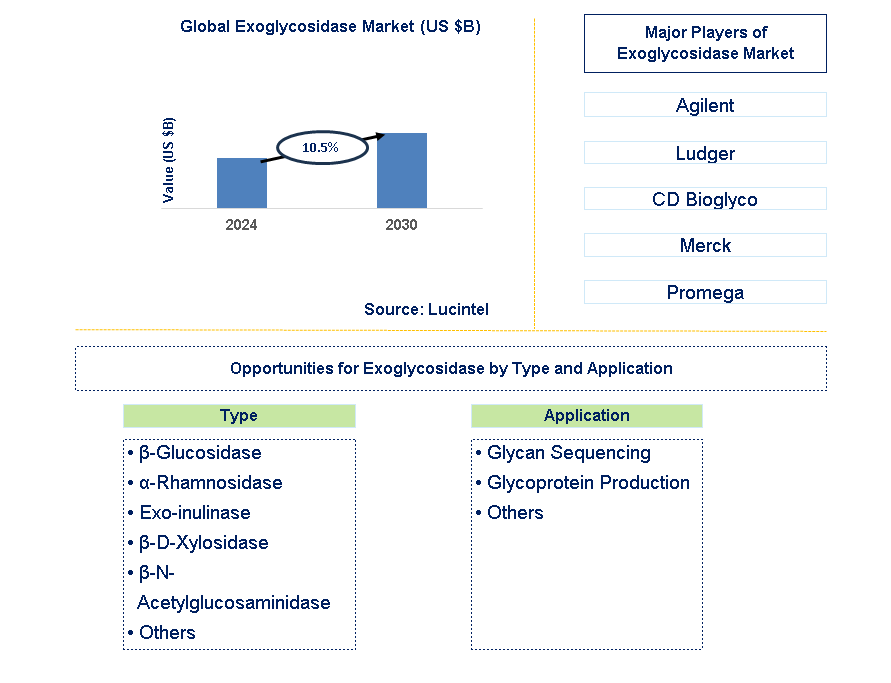
The future of the global exoglycosidase market looks promising with opportunities in the glycan sequencing and glycoprotein production markets. The global exoglycosidase market is expected to grow with a CAGR of 10.5% from 2024 to 2030. The major drivers for this market are rising demand for enzymatic glycan in biopharmaceutical industry, ongoing research and development in glycobiology, and increasing demand for accurate and sensitive diagnostic tests.• Lucintel forecasts that, within the type category, β-glucosidase is expected to witness the highest growth over the forecast period.
• Within the application category, glycan sequencing is expected to witness the higher growth.
• In terms of regions, APAC is expected to witness highest growth over the forecast period. Gain valuable insights for your business decisions with our comprehensive 150+ page report.

Emerging Trends in the Exoglycosidase Market
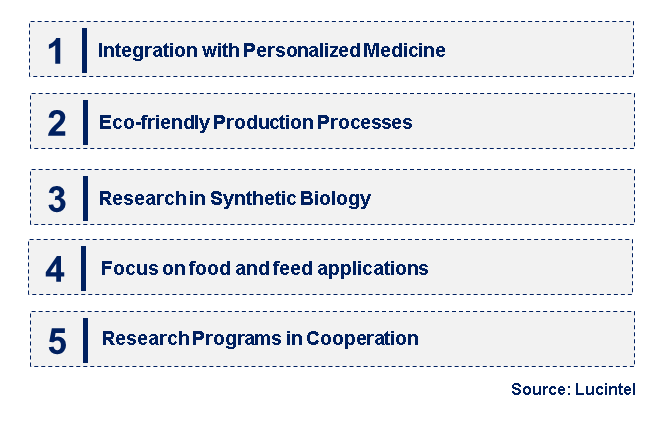
The exoglycosidases scenario is changing with several emerging trends that depict technological advancement and a shift in market demands. These trends shape applications across industries, thus fostering innovation and raising efficiency.• Integration with Personalized Medicine: Integration of exoglycosidases in the context of personalized medicine opens up new avenues. These enzymes can change the glycosylation profile of drugs prescribed for specific patient benefits in efficacy. Such demands for tailored therapies are matched with specified applications of these enzymes for particular patient profiles, thus opening up avenues for R&D in the concerned areas.
• Eco-friendly Production Processes: Exoglycosidases are receiving increasing attention due to sustainable production approaches. Companies are adopting a green chemistry approach to reduce environmental impact and increase efficiency, which aids in achieving sustainability goals, thereby attracting consumer groups that support the market and reinforcing competitiveness.
• Research in Synthetic Biology: Innovative concepts in synthetic biology have unlocked avenues for designing exoglycosidases with improved properties. Utilizing designed enzymes with better specificity and stability provides access to novel avenues previously restricted by application limitations. This development has also transformed the enzyme development process, facilitating quicker commercialization and further use in various industries.
• Focus on Food and Feed Applications: The application of exoglycosidases is rapidly growing in the food and feed industries. These enzymes can enhance nutritional value and processing efficiency, thereby responding to consumer demand for more nutritious offerings. As a result, the food industry is being redesigned, with consumers increasingly seeking new enzyme-related solutions, prioritizing quality and sustainability.
• Research Programs in Cooperation: Increased collaborative research between academia and industry is driving exoglycosidase innovation forward. This interaction provides opportunities to share knowledge and resources, expediting product development and commercialization of new enzyme products. This activity ensures a more competitive landscape and improves enzyme technology. These developments are transforming the exoglycosidase market in many ways, maximizing innovation while ensuring sustainability and expanding areas of application within various industries.
Recent Developments in the Exoglycosidase Market
New discoveries in exoglycosidases have highlighted the increasing importance of these enzymes in various applications.• Newly Explored Enzyme Types: The discovery of new types of exoglycosidases has been a highly promising area in recent years. New enzyme varieties exhibit a high degree of specificity toward target glycan structures, directly enhancing therapeutic and diagnostic applications. This discovery expands the scope of available tools for analyzing glycosylation and stimulates further research in glycobiology.
• Stability and Efficiency: Improved stability and efficiency of exoglycosidases now enable their use in more demanding industrial processes. New formulations and enzyme engineering produce products that perform well across a range of conditions, increasing the scope and commercial acceptance of these products.
• Applications in Glycobiology Research: Research in glycobiology commonly involves studying the structure and function of glycans with exoglycosidases. This enhances understanding of glycosylation's role in biological processes, thus advancing fields like immunology and oncology.
• Commercialization of Enzyme Products: The commercialization of exoglycosidase products is gaining momentum as companies invest in scaling up capacity. This is crucial to meet the increased demand for specialized enzymes across diverse industries such as pharmaceuticals and food processing, leading to overall market growth.
• Regulatory Approvals and Standards: Advances in regulatory frameworks for enzyme use are accelerating market growth. Novel quality and safety standards for exoglycosidases assure the performance properties of the products, which is essential for increasing consumer confidence and enabling large-scale utilization in various sectors. This results in a positive influence on the exoglycosidase market, increasing innovation, discovering new applications, and enhancing commercial viability.
Strategic Growth Opportunities for Exoglycosidase Market
The exoglycosidase market presents several strategic growth opportunities in various applications.• Pharmaceutical Applications: The pharmaceuticals market is a significant growth area for exoglycosidases. These enzymes are critical in drug development, primarily for altering glycan structures to improve therapeutic performance. Advanced medicine and focus in this area further propel demand for specific applications of these enzymes in developing formulations and drug delivery methods.
• Diagnostic Tools Development: Exoglycosidases offer opportunities in identifying and analyzing biomarkers, addressing the increasing need for advanced tools in diagnostics. Enzymes that modify glycans give rise to sensitive and specific diagnostic assays, influencing innovation in medical diagnostics and personalized healthcare.
• Improvement for the Food Industry: Exoglycosidases are increasingly used in the food industry as consumers seek healthier products. There is a growing demand for improving nutritional profiles and processing efficiency through enzymes. This trend presents excellent business opportunities for innovative solutions in enzyme development for food processing.
• Biotechnology Research Applications: The field of biotechnology offers significant potential for using exoglycosidases. Cell culture and bioprocessing applications require specific enzymes for research studies. As research on glycobiology and related areas increases, the demand for specialized enzymes will also rise.
• Environmental Applications: New opportunities also arise from applying exoglycosidases in environmental fields, especially bioremediation. Since exoglycosidases catalyze the hydrolysis of complex organic compounds, they play a role in environmental sustainability efforts, such as waste reduction and improving ecological health through ongoing initiatives worldwide. These factors shape the exoglycosidase market by accelerating innovation, expanding areas of application, and increasing competition.
Exoglycosidase Market Driver and Challenges
Several dynamics shape the exoglycosidase market, influenced by multiple drivers and challenges. Understanding these factors will help stakeholders grasp the underlying issues. Factors driving the exoglycosidase market include:• Technological Developments: The rapid pace in biotechnology and enzyme engineering has led to new exoglycosidases. Improvements in specificity, stability, and efficiency open new application possibilities, thus providing room for expansion in pharmaceutical and diagnostic applications.
• Increasing Demand for Biopharmaceuticals: The exoglycosidase market is benefiting from the rise of biopharmaceuticals. Personalized medicine increasingly prefers specialized enzymes that modify glycosylation patterns in therapeutic compounds, making growth in this market even more relevant.
• Growing Glycobiology Awareness: Greater understanding of glycosylation's role in health and disease has led to increased funding for glycobiology research. This encourages investment in new exoglycosidases with specific functions that expand market possibilities and business opportunities. Challenges in the exoglycosidase market include:
• Regulatory Compliance: Exoglycosidase manufacturers face challenges navigating complex regulatory frameworks. Safety and efficacy requirements entail substantial investments in research and quality assurance, which could limit market entry for smaller firms.
• Market Fragmentation: The exoglycosidase market is characterized by extreme fragmentation, with many players having varying levels of experience. This makes developing industry standards difficult and hinders collaboration, impacting profitability and innovation.
• Competition from Alternatives: Alternative technologies and products challenge the market, as manufacturers must continually demonstrate that their enzymes are distinctly beneficial compared to others. The interplay of drivers and challenges in the exoglycosidase market is fundamental for stakeholders considering strategic decisions, investment opportunities, and innovation pathways in this dynamic landscape.
List of Exoglycosidase Companies
Companies in the market compete on the basis of product quality offered. Major players in this market focus on expanding their manufacturing facilities, R&D investments, infrastructural development, and leverage integration opportunities across the value chain. Through these strategies exoglycosidase companies cater increasing demand, ensure competitive effectiveness, develop innovative products & technologies, reduce production costs, and expand their customer base. Some of the exoglycosidase companies profiled in this report include-• Agilent
• Ludger
• CD Bioglyco
• Merck
• Promega
• Creative-Enzymes
• Abcam
Exoglycosidase by Segment
The study includes a forecast for the global exoglycosidase by type, application, and region.Exoglycosidase Market by Type [Analysis by Value from 2018 to 2030]:
• β-Glucosidase
• α-Rhamnosidase
• Exo-inulinase
• β-D-Xylosidase
• β-N-Acetylglucosaminidase
• Others
Exoglycosidase Market by Application [Analysis by Value from 2018 to 2030]:
• Glycan Sequencing
• Glycoprotein Production
• Others
Exoglycosidase Market by Region [Analysis by Value from 2018 to 2030]:
• North America
• Europe
• Asia Pacific
• The Rest of the World
Country Wise Outlook for the Exoglycosidase Market
Exoglycosidases are increasingly significant in biochemistry and biotechnology; they centralize the processing and modification of glycans. Recent advances in the United States, China, Germany, India, and Japan focus on improvement and application development. Enzymes are being introduced in therapeutic, diagnostic, and industrial processes as their potential becomes increasingly understood. The landscape shifts quickly as innovations improve effectiveness and specificity for multiple applications.• United States: Developments in exoglycosidases for therapeutic use in the U.S. have been impressive, particularly in personalized medicine. Researchers are exploring glycosylation pathways in cancer treatment using these enzymes. Advances from biotech firms and institutions may lead to further innovation; new formulations of enzymes are emerging. Stability and potency of enzymes continue to be critical for biopharmaceutical applications, positioning the U.S. as a global leader.
• China: China is likely to accelerate its research on exoglycosidases, especially regarding agricultural uses. New enzymes are being developed to enhance crop resistance and nutrient availability in soils. Chinese universities are collaborating with industrial partners in enzyme production and application processes. Government interest in biotechnology research programs will further boost efforts to exploit exoglycosidases in various industrial-scale applications, keeping China at the forefront of the market.
• Germany: Germany remains a trendsetter in enzyme technology. Recent studies on exoglycosidases focus on food and feed applications. German scientists are optimizing enzyme effectiveness to improve processing and product quality. There is a heightened effort toward sustainability in production methods, making them much more environmentally friendly. Collaboration between research centers and companies is accelerating commercialization and broadening the applications of these enzymes.
• India: The exoglycosidase market is growing in India, primarily within the pharmaceutical and diagnostics sectors. Indian biotech companies are investing in R&D to develop enzymes for glycan profiling and therapeutic applications. This growth will be supported by government initiatives enhancing research collaborations to develop enzyme capabilities. Increasing demand for personalized medicine is driving innovative solutions in enzyme applications, establishing India as an emerging player in the global market.
• Japan: Japan has focused more on the use of exoglycosidases in biomedical research, particularly in pharmaceutical research and drug discovery. Recent breakthroughs include identifying novel enzymes capable of selectively targeting glycan structures to enhance therapeutic efficacy. Collaboration between academia and pharmaceutical companies is advancing the requirements for innovation in enzyme applications, supported by Japan's strong regulatory environment, which maintains high standards in enzyme applications. This advantage allows Japan to maintain a competitive edge in the global enzyme market.

Features of the Global Exoglycosidase Market
Market Size Estimates: Exoglycosidase market size estimation in terms of value ($B). Trend and Forecast Analysis: Market trends (2018 to 2023) and forecast (2024 to 2030) by various segments and regions. Segmentation Analysis: Exoglycosidase market size by type, application, and region in terms of value ($B). Regional Analysis: Exoglycosidase market breakdown by North America, Europe, Asia Pacific, and Rest of the World. Growth Opportunities: Analysis of growth opportunities in different types, applications, and regions for the exoglycosidase market. Strategic Analysis: This includes M&A, new product development, and competitive landscape of the exoglycosidase market. Analysis of competitive intensity of the industry based on Porter’s Five Forces model.If you are looking to expand your business in this or adjacent markets, then contact us. We have done hundreds of strategic consulting projects in market entry, opportunity screening, due diligence, supply chain analysis, M & A, and more.

FAQ
Q1. What is the growth forecast for exoglycosidase market? Answer: The global exoglycosidase market is expected to grow with a CAGR of 10.5% from 2024 to 2030. Q2. What are the major drivers influencing the growth of the exoglycosidase market? Answer: The major drivers for this market are rising demand for enzymatic glycan in biopharmaceutical industry, ongoing research and development in glycobiology, and increasing demand for accurate and sensitive diagnostic tests. Q3. What are the major segments for exoglycosidase market? Answer: The future of the exoglycosidase market looks promising with opportunities in the glycan sequencing and glycoprotein production markets. Q4. Who are the key exoglycosidase market companies? Answer: Some of the key exoglycosidase companies are as follows:• Agilent
• Ludger
• CD Bioglyco
• Merck
• Promega
• Creative-Enzymes
• Abcam Q5. Which exoglycosidase market segment will be the largest in future? Answer: Lucintel forecasts that, within the type category, β-glucosidase is expected to witness the highest growth over the forecast period. Q6. In exoglycosidase market, which region is expected to be the largest in next 5 years? Answer: In terms of regions, APAC is expected to witness highest growth over the forecast period. Q.7 Do we receive customization in this report? Answer: Yes, Lucintel provides 10% customization without any additional cost.
Table of Contents
Methodology
- In-depth interviews of the major players in this market
- Detailed secondary research from competitors’ financial statements and published data
- Extensive searches of published works, market, and database information pertaining to industry news, company press releases, and customer intentions
- A compilation of the experiences, judgments, and insights of Lucintel’s professionals, who have analyzed and tracked this market over the years.


Buy Now
Choose a license that fits your team. Instant PDF delivery.
Prices exclude taxes. Instant delivery. Custom licensing available on request.
Key Questions
- • What are some of the most promising, high-growth opportunities for the exoglycosidase market by type (β-glucosidase, α-rhamnosidase, exo-inulinase, β-d-xylosidase, β-n-acetylglucosaminidase, and others), application (glycan sequencing, glycoprotein production, and others), and region (North America, Europe, Asia Pacific, and the Rest of the World)?
- • Which segments will grow at a faster pace and why?
- • Which region will grow at a faster pace and why?
- • What are the key factors affecting market dynamics? What are the key challenges and business risks in this market?
- • What are the business risks and competitive threats in this market?
- • What are the emerging trends in this market and the reasons behind them?
- • What are some of the changing demands of customers in the market?
- • What are the new developments in the market? Which companies are leading these developments?
- • Who are the major players in this market? What strategic initiatives are key players pursuing for business growth?
- • What are some of the competing products in this market and how big of a threat do they pose for loss of market share by material or product substitution?
- • What M&A activity has occurred in the last 5 years and what has its impact been on the industry? For any questions related to Exoglycosidase Market, Exoglycosidase Market Size, Exoglycosidase Market Growth, Exoglycosidase Market Analysis, Exoglycosidase Market Report, Exoglycosidase Market Share, Exoglycosidase Market Trends, Exoglycosidase Market Forecast, Exoglycosidase Companies, write Lucintel analyst at email: helpdesk@lucintel.com. We will be glad to get back to you soon.


