
Report Feature
Digital Experiance Platform Market Trends and Forecast
The technologies in the digital experience platform (DXP) market have undergone significant changes in recent years, with the shift from on-premise technology to cloud-based solutions. This transformation has led to more scalable, flexible, and cost-effective platforms, allowing businesses to enhance their customer experiences more effectively.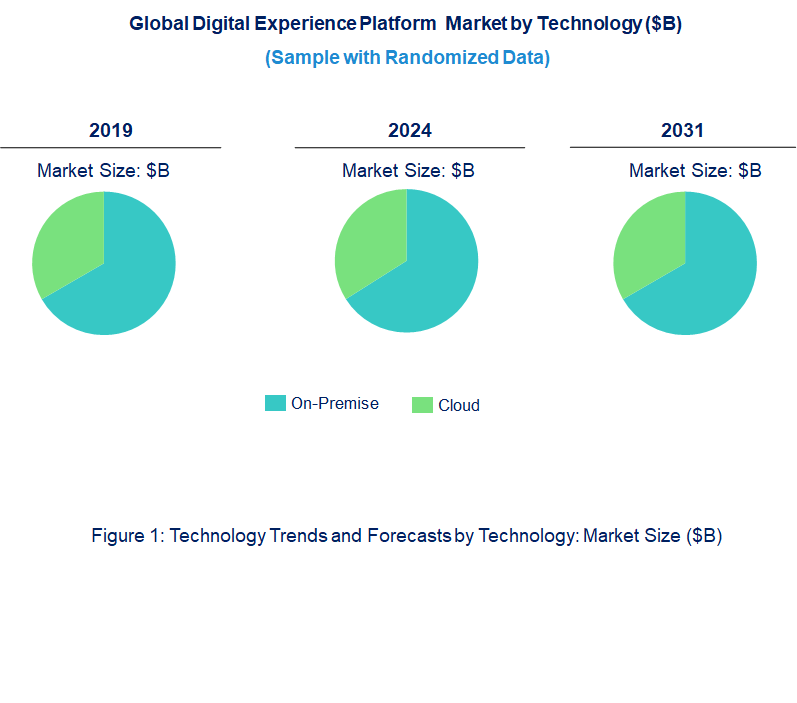
Emerging Trends in the Digital Experiance Platform Market
The digital experience platform market is evolving rapidly, with several emerging trends shaping its future. These trends are driven by advancements in technology and the increasing need for businesses to deliver personalized, seamless digital experiences.• Cloud Adoption: Businesses are increasingly shifting from on-premise solutions to cloud-based DXPs. This transition enables better scalability, integration capabilities, and global accessibility, leading to enhanced customer experience management.
• Artificial Intelligence (AI) Integration: AI is being incorporated into DXPs to personalize customer journeys, improve data insights, and automate content management. This results in more intuitive user interactions and data-driven decision-making.
• Omnichannel Experience: DXPs are evolving to provide a seamless experience across various digital channels (web, mobile, social, etc.), creating a unified customer journey. This trend enhances engagement and customer satisfaction.
• Headless CMS Architecture: The rise of headless content management systems (CMS) allows businesses to decouple content from the presentation layer, offering flexibility and faster content delivery across multiple platforms.
• Data Privacy & Security: With increasing regulatory scrutiny, DXPs are placing a greater emphasis on compliance with data protection laws, such as GDPR, ensuring secure and responsible handling of customer data. These trends are reshaping the market, driving the need for more advanced, agile, and customer-centric digital platforms.
Digital Experiance Platform Market : Industry Potential, Technological Development, and Compliance Considerations
• Technology Potential: Digital Experience Platforms (DXPs) offer robust potential to unify customer interactions across web, mobile, social, and other digital channels. Leveraging technologies like content management systems (CMS), AI, personalization engines, customer data platforms (CDPs), and omnichannel delivery tools, DXPs enable seamless, personalized, and data-driven experiences. They empower organizations to create consistent brand messaging, improve engagement, and drive customer loyalty and conversion.
• Degree of Disruption: DXPs are highly disruptive to traditional web content management and siloed digital marketing systems. By centralizing content, data, and customer journeys in one platform, DXPs transform fragmented customer experiences into cohesive ones. Their integration with AI and machine learning allows for dynamic personalization, adaptive UX, and automated workflows—reshaping how enterprises interact with users in real time.
• Level of Current Technology Maturity: The DXP market is in a growth phase with both mature vendors and innovative newcomers. Core capabilities like headless CMS, API-first architecture, and basic personalization are well-established. However, more advanced integrations like real-time predictive analytics, automated content recommendations, and voice/AR/VR interfaces are still evolving and maturing.
• Regulatory Compliance: DXPs must adhere to strict regulations regarding user data and digital accessibility. Compliance with GDPR, CCPA, and WCAG guidelines is essential. Platforms increasingly integrate privacy management features, consent tools, and secure data practices to ensure adherence to evolving global privacy and accessibility standards.
Recent Technological development in Digital Experiance Platform Market by Key Players
The digital experience platform (DXP) market is marked by continuous innovation from key players. These developments focus on enhancing the capabilities of DXPs in delivering seamless, personalized customer experiences.• Acquia has strengthened its DXP offerings by enhancing its cloud-based services and integrating AI-powered personalization tools, allowing brands to tailor customer interactions more effectively.
• Adobe continues to lead the market with its Experience Cloud, incorporating more AI-driven features to personalize content and improve customer journeys.
• IBM has integrated advanced analytics and AI into its Watson-powered DXPs, giving businesses more insights into customer behavior and preferences.
• Liferay focuses on providing open-source, customizable DXPs, enabling greater flexibility for businesses looking for tailored solutions.
• Microsoft has integrated AI, cloud, and data analytics within its Dynamics 365 suite, providing a comprehensive platform for customer engagement.
• OpenText has focused on enhancing its digital experience and content management tools, supporting both traditional and modern customer engagement strategies.
• Oracle continues to innovate by integrating cloud-based DXPs with its enterprise resource planning (ERP) systems, allowing businesses to manage end-to-end customer experiences. These developments highlight the ongoing push toward more intelligent, integrated, and cloud-based DXPs that can deliver personalized, seamless experiences at scale.
Digital Experiance Platform Market Driver and Challenges
The digital experience platform (DXP) market is driven by several key factors that are propelling its growth. Drivers:• Shift to Cloud: The migration to cloud-based DXPs is driving market growth by providing businesses with more flexibility, scalability, and cost-effectiveness.
• Increased Demand for Personalization: As consumer expectations rise, businesses are increasingly turning to DXPs to deliver tailored experiences, boosting demand for AI and machine learning capabilities.
• Regulatory Compliance: Growing concerns around data privacy, especially with GDPR and other regulations, are making compliance a top priority for businesses investing in DXPs.
• Technological Advancements: Innovations such as AI, machine learning, and data analytics are creating new opportunities for businesses to enhance their digital experiences. Challenges:
• High Implementation Costs: The adoption of advanced DXPs, particularly cloud-based solutions, can involve high initial investments.
• Integration Complexities: Businesses face challenges in integrating new DXPs with legacy systems and existing technologies.
• Security and Data Privacy Concerns: As more businesses move to the cloud, concerns around data security and privacy have become more pronounced. These opportunities and challenges are reshaping the digital experience platform market, driving businesses to adopt more flexible, secure, and data-driven solutions.
List of Digital Experiance Platform Companies
Companies in the market compete on the basis of product quality offered. Major players in this market focus on expanding their manufacturing facilities, R&D investments, infrastructural development, and leverage integration opportunities across the value chain. With these strategies digital experiance platform companies cater increasing demand, ensure competitive effectiveness, develop innovative products & technologies, reduce production costs, and expand their customer base. Some of the digital experiance platform companies profiled in this report includes.• Acquia
• Adobe
• International Business Machines
• Liferay
• Microsoft
• Open Text
Digital Experiance Platform Market by Technology
• Technology Readiness and Key Applications: Cloud-based DXPs are at a mature stage with widespread adoption across sectors like retail, media, education, and healthcare for applications like personalized content, customer journey mapping, and digital commerce. They are ready for rapid scale and support the continuous deployment of new experiences. On-premise DXPs, while technologically stable, face limitations in agility and integration, but are fully ready for deployment in highly regulated or security-conscious environments. Common applications include secure intranet portals, localized content delivery, and integration with legacy systems. Both deployment models support key DXP functions such as content management, analytics, digital asset management, and multichannel experience orchestration.
• Competitive Intensity and Regulatory Compliance: The DXP market is fiercely competitive, with major players like Adobe, Salesforce, Oracle, Acquia, and Sitecore offering both cloud and hybrid models. Cloud-based platforms intensify competition through subscription pricing, fast deployment, and seamless integration with other SaaS tools. However, on-premise models retain niche strength where data control is paramount. Compliance with data protection regulations such as GDPR, HIPAA, and CCPA adds complexity, especially for cloud deployments, requiring features like secure APIs, data encryption, and audit trails. Vendors differentiate through regulatory certifications, uptime SLAs, and compliance automation tools, fueling a high-stakes race for innovation and trust.
• Disruption Potential: In the Digital Experience Platform (DXP) market, both on-premises and Cloud deployment models bring transformative disruption. Cloud-based DXPs are rapidly displacing on-premise models by offering agility, scalability, real-time updates, and lower upfront costs, enabling businesses to deliver consistent, omnichannel digital experiences. They support rapid deployment of features like personalization, AI-driven content delivery, and integration with martech stacks. On-Premise DXPs, while more rigid, are still preferred in industries with strict data residency and security requirements, like finance and government. The cloud’s ability to power microservices architectures and enable continuous innovation makes it a disruptive force, particularly for organizations pursuing digital transformation.
Digital Experiance Platform Market Trend and Forecast by Technology [Value from 2019 to 2031]:
• On-Premise
• Cloud
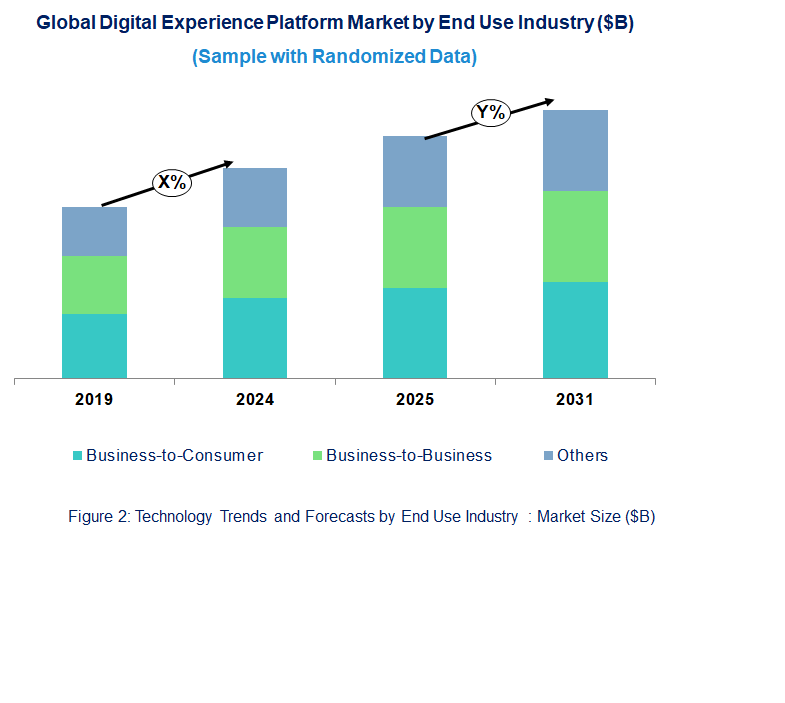
Digital Experiance Platform Market Trend and Forecast by End Use Industry [Value from 2019 to 2031]:
• Business-to-Consumer
• Business-to-Business
• Others
Digital Experiance Platform Market by Region [Value from 2019 to 2031]:
• North America
• Europe
• Asia Pacific
• The Rest of the World
• Latest Developments and Innovations in the Digital Experiance Platform Technologies
• Companies / Ecosystems
• Strategic Opportunities by Technology Type
Features of the Global Digital Experiance Platform Market
Market Size Estimates: Digital experiance platform market size estimation in terms of ($B). Trend and Forecast Analysis: Market trends (2019 to 2024) and forecast (2025 to 2031) by various segments and regions. Segmentation Analysis: Technology trends in the global digital experiance platform market size by various segments, such as and in terms of value and volume shipments. Regional Analysis: Technology trends in the global digital experiance platform market breakdown by North America, Europe, Asia Pacific, and the Rest of the World .Growth Opportunities: Analysis of growth opportunities in different end use industries, technologies, and regions for technology trends in the global digital experiance platform market. Strategic Analysis: This includes M&A, new product development, and competitive landscape for technology trends in the global digital experiance platform market.Analysis of competitive intensity of the industry based on Porter’s Five Forces model.Table of Contents
Methodology
- In-depth interviews of the major players in this market
- Detailed secondary research from competitors’ financial statements and published data
- Extensive searches of published works, market, and database information pertaining to industry news, company press releases, and customer intentions
- A compilation of the experiences, judgments, and insights of Lucintel’s professionals, who have analyzed and tracked this market over the years.


Buy Now
Choose a license that fits your team. Instant PDF delivery.
Prices exclude taxes. Instant delivery. Custom licensing available on request.
Key Questions
- • What are some of the most promising potential, high-growth opportunities for the technology trends in the global digital experiance platform market by technology (on-premise and cloud), end use industry (business-to-consumer, business-to-business, and others), and region (North America, Europe, Asia Pacific, and the Rest of the World)?
- • Which technology segments will grow at a faster pace and why?
- • Which regions will grow at a faster pace and why?
- • What are the key factors affecting dynamics of different technologies? What are the drivers and challenges of these technologies in the global digital experiance platform market?
- • What are the business risks and threats to the technology trends in the global digital experiance platform market?
- • What are the emerging trends in these technologies in the global digital experiance platform market and the reasons behind them?
- • Which technologies have potential of disruption in this market?
- • What are the new developments in the technology trends in the global digital experiance platform market? Which companies are leading these developments?
- • Who are the major players in technology trends in the global digital experiance platform market? What strategic initiatives are being implemented by key players for business growth?
- • What are strategic growth opportunities in this digital experiance platform technology space?
- • What M & A activities did take place in the last five years in technology trends in the global digital experiance platform market?


