
Report Feature
Cosmetics Microneedle Patch Market Trends and Forecast
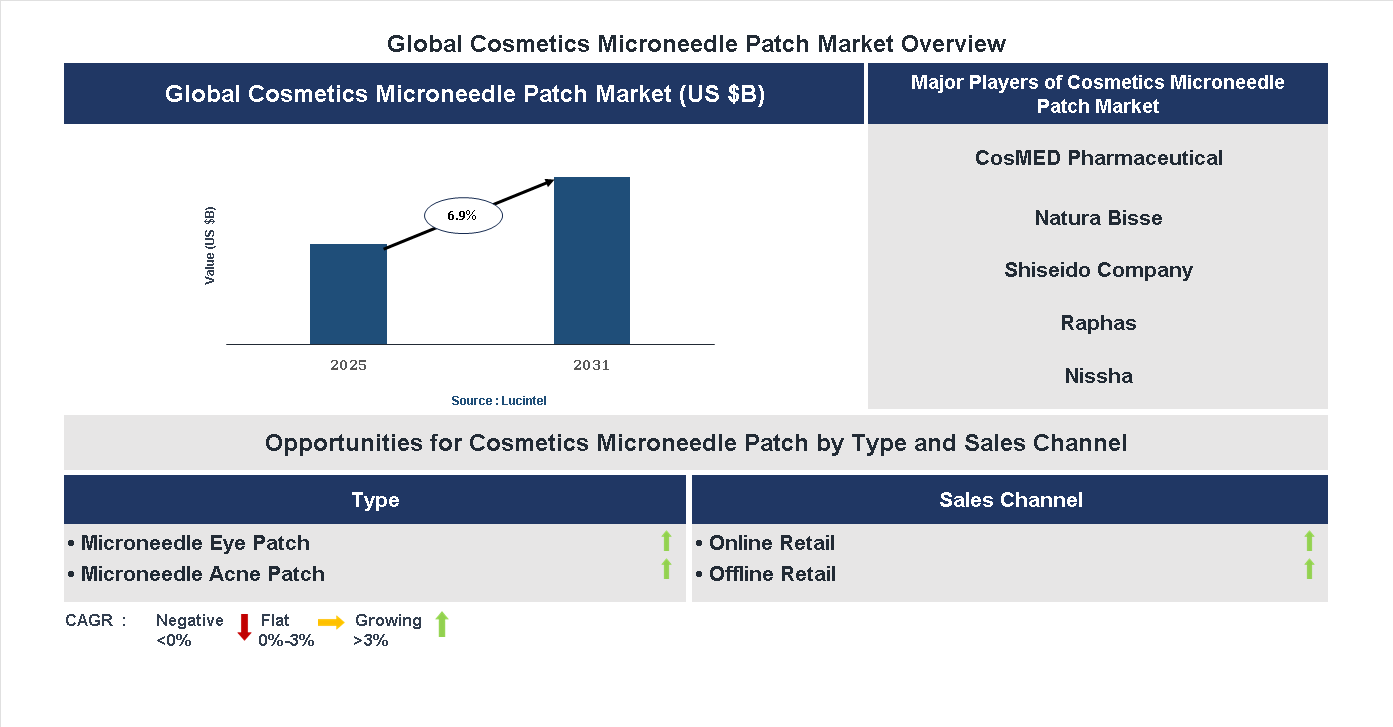
The future of the global cosmetics microneedle patch market looks promising with opportunities in the online retail and offline retail markets. The global cosmetics microneedle patch market is expected to grow with a CAGR of 6.9% from 2025 to 2031. The major drivers for this market are the increasing demand for non invasive skincare solutions, the rising popularity of at home cosmetic treatments, and the growing awareness of advanced beauty technologies.• Lucintel forecasts that, within the type category, microneedle acne patch is expected to witness higher growth over the forecast period.
• Within the sales channel category, online retail is expected to witness higher growth.
• In terms of region, APAC is expected to witness the highest growth over the forecast period. Gain valuable insights for your business decisions with our comprehensive 150+ page report. Sample figures with some insights are shown below.
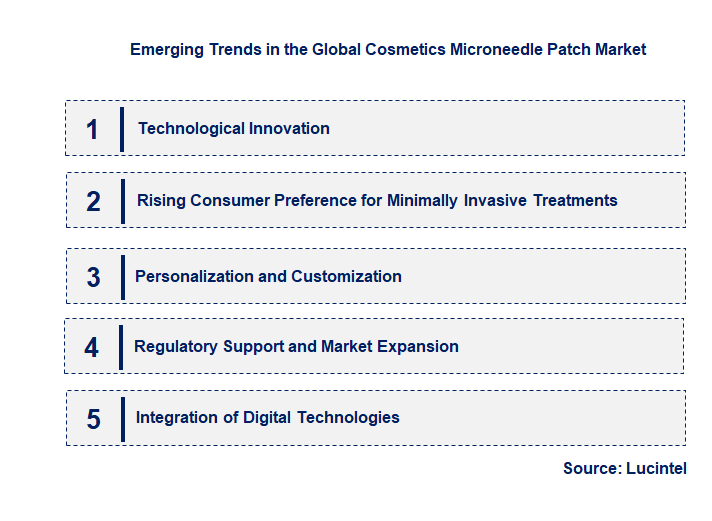
Emerging Trends in the Cosmetics Microneedle Patch Market
The cosmetics microneedle patch market is experiencing rapid growth driven by technological advancements, increasing consumer demand for minimally invasive skincare solutions, and a shift towards personalized beauty treatments. As consumers seek effective, pain-free, and convenient skincare options, companies are innovating with new formulations and delivery methods. The market is also influenced by rising awareness of skincare health, regulatory support, and the integration of digital technologies for better product customization. These developments are transforming traditional skincare routines and creating new opportunities for brands to differentiate themselves in a competitive landscape. The following key trends highlight the major shifts shaping this evolving market.• Technological Innovation: Advancements in microneedle design and materials are enhancing product efficacy and safety. Researchers are developing dissolvable and biodegradable microneedles that deliver active ingredients directly into the skin with minimal discomfort. These innovations improve absorption rates and reduce side effects, making microneedle patches more appealing to consumers. The integration of smart technology, such as sensors for real-time skin analysis, is also emerging, enabling personalized treatment plans. This trend is driving product differentiation and expanding applications in targeted skincare.
• Rising Consumer Preference for Minimally Invasive Treatments: Consumers increasingly favor non-invasive, pain-free skincare options over traditional procedures. Microneedle patches offer a convenient alternative to injections and invasive procedures, appealing to a broader demographic, including those with needle phobia. The ease of use, combined with visible results, boosts consumer confidence and satisfaction. This trend is fueling demand for at-home skincare solutions and encouraging brands to develop user-friendly, effective microneedle products that cater to busy lifestyles.
• Personalization and Customization: The market is shifting towards tailored skincare solutions that address individual skin concerns. Advances in digital skin analysis tools enable brands to create customized microneedle patches with specific active ingredients suited to each consumer’s needs. This personalization enhances treatment effectiveness and customer loyalty. Companies are also leveraging data analytics and AI to optimize formulations and delivery methods, making skincare more precise and targeted. Personalization is becoming a key differentiator, fostering deeper consumer engagement and satisfaction.
• Regulatory Support and Market Expansion: Governments and regulatory bodies are increasingly recognizing microneedle technology as safe and effective, leading to clearer guidelines and faster approvals. This regulatory support encourages innovation and investment in the market. Additionally, emerging markets in Asia, Latin America, and the Middle East are experiencing rapid growth due to rising disposable incomes and increasing beauty consciousness. Market expansion is further facilitated by collaborations between tech firms and cosmetic brands, broadening distribution channels and consumer access to microneedle products.
• Integration of Digital Technologies: Digital tools such as mobile apps, augmented reality, and AI are transforming the consumer experience. Apps enable users to track skin progress, receive personalized recommendations, and order products seamlessly. Augmented reality helps consumers visualize potential results, increasing confidence in product efficacy. AI-driven data analysis allows brands to refine formulations and predict market trends. This integration enhances customer engagement, improves product development, and fosters a more interactive, tech-enabled skincare ecosystem, ultimately driving market growth and innovation. In summary, these trends are reshaping the cosmetics microneedle patch market by fostering innovation, enhancing consumer experience, and expanding market reach. The focus on technology, personalization, and digital integration is creating a more dynamic, accessible, and effective skincare landscape, positioning microneedle patches as a key component of future beauty routines.
Recent Development in the Cosmetics Microneedle Patch Market
The cosmetics microneedle patch market has experienced significant growth driven by advancements in skincare technology, increasing consumer demand for minimally invasive treatments, and the rising popularity of at-home skincare solutions. Innovations in microneedle materials and formulations have expanded product offerings, making treatments more effective and accessible. The market is also influenced by growing awareness of skincare health and the desire for quick, pain-free solutions. As consumers seek personalized and convenient options, companies are investing in research and development to meet these evolving needs. These developments are shaping the future landscape of the cosmetics microneedle patch industry, making it more competitive and innovative.• Technological Innovations: New microneedle materials and designs have improved efficacy and safety, leading to more effective skincare delivery and increased consumer confidence in these products.
• At-Home Usage Expansion: The development of user-friendly, easy-to-apply microneedle patches has enabled consumers to perform treatments at home, boosting market accessibility and sales.
• Product Portfolio Diversification: Companies are launching a variety of patches targeting specific skin concerns such as aging, hyperpigmentation, and acne, broadening consumer choices and market reach.
• Regulatory Approvals and Standards: Increased regulatory scrutiny and approvals have enhanced product credibility, ensuring safety and boosting consumer trust in microneedle patches.
• Sustainability and Eco-Friendly Materials: The adoption of biodegradable and eco-friendly materials in patch manufacturing aligns with consumer preferences for sustainable products, influencing market growth. The recent developments in the cosmetics microneedle patch market are fostering innovation, expanding accessibility, and enhancing product credibility. These factors are driving market growth, attracting new consumers, and encouraging companies to invest in sustainable and targeted skincare solutions. Overall, the market is becoming more dynamic, competitive, and aligned with consumer demands for effective, safe, and eco-conscious products.
Strategic Growth Opportunities in the Cosmetics Microneedle Patch Market
The cosmetics microneedle patch market is experiencing rapid growth driven by advancements in skincare technology, increasing consumer demand for minimally invasive treatments, and a rising focus on personalized beauty solutions. As consumers seek effective, pain-free, and convenient skincare options, the market is expanding across various applications. Key growth opportunities are emerging in areas such as anti-aging, skin rejuvenation, acne treatment, scar reduction, and hyperpigmentation correction. These developments are transforming the landscape of cosmetic treatments, offering innovative solutions that cater to diverse consumer needs and preferences. The following highlights five key growth opportunities across different applications.• Anti-Aging: The use of microneedle patches for anti-aging benefits is gaining popularity due to their ability to deliver anti-aging ingredients directly into the skin. This enhances collagen production and reduces wrinkles, attracting a broad consumer base seeking youthful skin. The impact includes increased product efficacy and consumer trust, driving market expansion.
• Skin Rejuvenation: Microneedle patches facilitate the delivery of revitalizing agents like vitamins and antioxidants, promoting skin renewal. This application appeals to consumers looking for non-invasive, quick solutions for dull or tired skin. It boosts market growth by offering effective, at-home skincare options with minimal downtime.
• Acne Treatment: The market is witnessing growth in microneedle patches designed to treat acne by delivering targeted medication and reducing inflammation. This application provides a pain-free alternative to traditional treatments, appealing to teenagers and adults alike. It enhances treatment efficiency and consumer satisfaction, expanding market reach.
• Scar Reduction: Microneedle patches are increasingly used for scar treatment by promoting collagen synthesis and skin healing. This non-invasive approach offers an attractive option for individuals seeking to diminish scars without surgery. The impact includes improved skin appearance and increased demand for cosmetic solutions.
• Hyperpigmentation Correction: The delivery of skin-lightening agents via microneedle patches helps in reducing hyperpigmentation effectively. This application addresses a significant concern among consumers with uneven skin tone, driving demand for targeted, convenient treatments. It contributes to market diversification and growth. In summary, these growth opportunities are significantly impacting the cosmetics microneedle patch market by expanding its application scope, enhancing product efficacy, and meeting evolving consumer preferences. The market is poised for continued innovation and expansion as these applications gain traction, ultimately transforming the landscape of cosmetic skincare solutions.
Cosmetics Microneedle Patch Market Driver and Challenges
The cosmetics microneedle patch market is influenced by a variety of technological, economic, and regulatory factors that shape its growth trajectory. Advances in nanotechnology and materials science have enabled the development of more effective and minimally invasive patches, appealing to consumers seeking innovative skincare solutions. Economic factors such as rising disposable incomes and increasing awareness of skincare routines further propel market demand. Regulatory frameworks around safety and efficacy standards also impact product development and market entry. Additionally, consumer preferences for natural and sustainable products influence innovation and marketing strategies. Navigating these diverse factors is crucial for stakeholders aiming to capitalize on the markets potential while addressing associated challenges. The factors responsible for driving the cosmetics microneedle patch market include:• Technological Innovation: The rapid advancement in microneedle fabrication techniques, such as dissolvable and hydrogel-based patches, has significantly enhanced product efficacy and safety. These innovations allow for targeted delivery of active ingredients, reducing side effects and improving consumer outcomes. As research continues, new formulations and delivery mechanisms are emerging, expanding the scope of cosmetic applications. This technological progress attracts investments and encourages new entrants, fostering a competitive environment that accelerates market growth. Moreover, integration with digital health tools and personalized skincare solutions further boosts consumer interest and adoption.
• Rising Consumer Awareness and Demand for Non-Invasive Treatments: Consumers are increasingly seeking non-invasive, pain-free skincare options that deliver visible results without downtime. Microneedle patches meet this demand by offering minimally invasive procedures that can be used at home, appealing to busy lifestyles. The growing awareness of skincare benefits, driven by social media and influencer marketing, has amplified demand for innovative products like microneedle patches. This trend is particularly prominent among younger demographics and urban populations, who prioritize convenience and efficacy. As awareness continues to grow, market penetration is expected to expand, encouraging brands to develop diverse product lines.
• Economic Growth and Increasing Disposable Income: Economic development in emerging markets has led to higher disposable incomes, enabling consumers to spend more on premium skincare products. This financial capacity encourages consumers to explore advanced cosmetic solutions such as microneedle patches. Additionally, the expanding middle class in regions like Asia-Pacific and Latin America presents a substantial customer base for premium and innovative skincare products. Increased marketing efforts by global brands and local startups alike are capitalizing on this economic trend, fostering market expansion. The willingness to invest in personal appearance and skincare routines further propels demand for technologically advanced products.
• Regulatory Approvals and Standards: The evolving regulatory landscape plays a crucial role in shaping the cosmetics microneedle patch market. Stringent safety and efficacy standards ensure consumer protection but can pose barriers to market entry for new products. Companies investing in research and development must navigate complex approval processes, which can delay product launches. Conversely, clear regulatory pathways and approvals can enhance consumer trust and facilitate market acceptance. Regulatory agencies support for innovation, through fast-track approvals or guidelines specific to microneedle technologies, can accelerate market growth. Compliance with international standards also enables companies to expand globally.
• Growing Focus on Sustainable and Natural Products: Consumers are increasingly prioritizing eco-friendly, natural, and sustainable skincare options. This shift influences product formulation, packaging, and marketing strategies within the microneedle patch market. Companies are developing biodegradable patches and using natural active ingredients to meet consumer expectations. Sustainability initiatives not only appeal to environmentally conscious consumers but also align with regulatory trends favoring eco-friendly practices. This focus encourages innovation in materials and manufacturing processes, fostering a competitive advantage for brands that can effectively integrate sustainability into their offerings. The emphasis on eco-conscious products is expected to drive market differentiation and growth. The challenges facing this cosmetics microneedle patch market include:
• Regulatory Uncertainty and Compliance Costs: Navigating the complex regulatory environment remains a significant challenge for market players. Variations in safety and efficacy standards across regions can complicate product development and approval processes. Companies often face high compliance costs, which can hinder innovation and delay product launches. Additionally, evolving regulations require continuous monitoring and adaptation, increasing operational complexities. Failure to meet regulatory requirements can result in product recalls, legal penalties, and damage to brand reputation. Balancing innovation with compliance is essential but challenging, especially for smaller firms with limited resources.
• Technological Limitations and Manufacturing Challenges: Despite advancements, manufacturing microneedle patches at scale with consistent quality remains difficult. Ensuring uniformity in needle size, strength, and dissolution rates is critical for safety and efficacy. Technological limitations in materials and fabrication processes can lead to product variability and increased costs. Moreover, integrating complex delivery mechanisms into user-friendly formats poses engineering challenges. These manufacturing hurdles can restrict product availability, increase prices, and slow market adoption. Overcoming these technical barriers requires significant R&D investment and collaboration between scientists and manufacturers.
• Market Penetration and Consumer Acceptance: Although demand for non-invasive skincare solutions is rising, consumer acceptance of microneedle patches is still evolving. Some consumers may have concerns about safety, pain, or unfamiliarity with the technology, hindering widespread adoption. Additionally, competition from traditional skincare products and other innovative treatments can limit market penetration. Educating consumers about the benefits and safety of microneedle patches is essential but challenging, especially in regions with low awareness. Overcoming skepticism and establishing trust are critical for expanding market share and ensuring sustained growth. In summary, the cosmetics microneedle patch market is driven by technological innovations, increasing consumer demand for non-invasive treatments, economic growth, regulatory support, and sustainability trends. However, challenges such as regulatory complexities, manufacturing limitations, and consumer acceptance issues pose hurdles to growth. The interplay of these factors will shape the markets evolution, requiring strategic innovation, regulatory navigation, and consumer education. Overall, the market holds significant potential for growth, provided stakeholders effectively address these challenges and leverage emerging opportunities.
List of Cosmetics Microneedle Patch Companies
Companies in the market compete on the basis of product quality offered. Major players in this market focus on expanding their manufacturing facilities, R&D investments, infrastructural development, and leverage integration opportunities across the value chain. With these strategies cosmetics microneedle patch companies cater increasing demand, ensure competitive effectiveness, develop innovative products & technologies, reduce production costs, and expand their customer base. Some of the cosmetics microneedle patch companies profiled in this report include-• CosMED Pharmaceutical
• Natura Bisse
• Shiseido Company
• Raphas
• Nissha
• 111Skin
• Skyn Iceland
• Peace Out
• Hero Cosmetics
• AND SHINE
Cosmetics Microneedle Patch Market by Segment
The study includes a forecast for the global cosmetics microneedle patch market by type, sales channel, and region.Cosmetics Microneedle Patch Market by Type [Value from 2019 to 2031]:
• Microneedle Eye Patch
• Microneedle Acne Patch
Cosmetics Microneedle Patch Market by Sales Channel [Value from 2019 to 2031]:
• Online Retail
• Offline Retail
Cosmetics Microneedle Patch Market by Region [Value from 2019 to 2031]:
• North America
• Europe
• Asia Pacific
• The Rest of the World
Country Wise Outlook for the Cosmetics Microneedle Patch Market
The cosmetics microneedle patch market has experienced significant growth driven by technological advancements, increasing consumer demand for minimally invasive skincare solutions, and a rising focus on personalized beauty treatments. Countries are adopting innovative approaches to enhance product efficacy and safety, leading to rapid market expansion. Regulatory frameworks are evolving to accommodate new delivery systems, while consumer awareness about skincare benefits continues to grow globally. This dynamic landscape reflects a shift towards more effective, convenient, and skin-friendly cosmetic applications, with key markets like the United States, China, Germany, India, and Japan playing pivotal roles in shaping industry trends and innovations.• United States: The US market has seen substantial growth with increased adoption of microneedle patches for anti-aging and skin rejuvenation. Leading companies are investing in R&D to develop advanced, biocompatible patches, and regulatory agencies are streamlining approval processes. Consumer awareness about minimally invasive skincare options is rising, boosting demand. The integration of smart technology into patches for personalized treatment is also emerging, further expanding market potential.
• China: Chinas market is rapidly expanding due to a large consumer base seeking innovative skincare solutions. Local companies are investing heavily in research to develop cost-effective, effective microneedle patches. E-commerce platforms facilitate widespread distribution, and government initiatives support biotech innovation. The focus is on addressing skin concerns prevalent among Asian populations, such as pigmentation and aging, with a growing preference for natural and safe ingredients.
• Germany: Germanys market emphasizes high-quality, scientifically validated products. The country is witnessing increased collaborations between biotech firms and cosmetic brands to develop advanced microneedle patches. Regulatory standards are strict, ensuring product safety and efficacy, which boosts consumer confidence. There is also a focus on sustainable and eco-friendly materials in patch manufacturing, aligning with Germanys environmental priorities.
• India: The Indian market is experiencing rapid growth driven by a burgeoning middle class and increasing awareness of skincare. Local startups are innovating with affordable microneedle patch solutions tailored to diverse skin types. The rise of online retail channels and social media marketing is expanding reach. Additionally, there is a focus on addressing pigmentation, acne scars, and aging, with a trend toward natural and herbal ingredients in formulations.
• Japan: Japans market is characterized by technological innovation and high consumer standards. Companies are developing sophisticated microneedle patches with enhanced absorption and targeted delivery. The aging population is a key driver, with products aimed at anti-aging and skin repair. Regulatory compliance and safety are prioritized, and there is a growing interest in combining traditional ingredients with modern technology to appeal to health-conscious consumers.

Features of the Global Cosmetics Microneedle Patch Market
Market Size Estimates: Cosmetics microneedle patch market size estimation in terms of value ($B). Trend and Forecast Analysis: Market trends (2019 to 2024) and forecast (2025 to 2031) by various segments and regions. Segmentation Analysis: Cosmetics microneedle patch market size by type, sales channel, and region in terms of value ($B). Regional Analysis: Cosmetics microneedle patch market breakdown by North America, Europe, Asia Pacific, and Rest of the World. Growth Opportunities: Analysis of growth opportunities in different types, sales channels, and regions for the cosmetics microneedle patch market. Strategic Analysis: This includes M&A, new product development, and competitive landscape of the cosmetics microneedle patch market. Analysis of competitive intensity of the industry based on Porter’s Five Forces model.
FAQ
Q1. What is the growth forecast for cosmetics microneedle patch market? Answer: The global cosmetics microneedle patch market is expected to grow with a CAGR of 6.9% from 2025 to 2031. Q2. What are the major drivers influencing the growth of the cosmetics microneedle patch market? Answer: The major drivers for this market are the increasing demand for non invasive skincare solutions, the rising popularity of at home cosmetic treatments, and the growing awareness of advanced beauty technologies. Q3. What are the major segments for cosmetics microneedle patch market? Answer: The future of the cosmetics microneedle patch market looks promising with opportunities in the online retail and offline retail markets. Q4. Who are the key cosmetics microneedle patch market companies? Answer: Some of the key cosmetics microneedle patch companies are as follows:• CosMED Pharmaceutical
• Natura Bisse
• Shiseido Company
• Raphas
• Nissha
• 111Skin
• Skyn Iceland
• Peace Out
• Hero Cosmetics
• AND SHINE Q5. Which cosmetics microneedle patch market segment will be the largest in future? Answer: Lucintel forecasts that, within the type category, microneedle acne patch is expected to witness higher growth over the forecast period. Q6. In cosmetics microneedle patch market, which region is expected to be the largest in next 5 years? Answer: In terms of region, APAC is expected to witness the highest growth over the forecast period. Q7. Do we receive customization in this report? Answer: Yes, Lucintel provides 10% customization without any additional cost.
Table of Contents
List of Figures
List of Tables
Methodology
- In-depth interviews of the major players in this market
- Detailed secondary research from competitors’ financial statements and published data
- Extensive searches of published works, market, and database information pertaining to industry news, company press releases, and customer intentions
- A compilation of the experiences, judgments, and insights of Lucintel’s professionals, who have analyzed and tracked this market over the years.


Buy Now
Choose a license that fits your team. Instant PDF delivery.
Prices exclude taxes. Instant delivery. Custom licensing available on request.
Key Questions
- • What are some of the most promising, high-growth opportunities for the cosmetics microneedle patch market by type (microneedle eye patch and microneedle acne patch), sales channel (online retail and offline retail), and region (North America, Europe, Asia Pacific, and the Rest of the World)?
- • Which segments will grow at a faster pace and why?
- • Which region will grow at a faster pace and why?
- • What are the key factors affecting market dynamics? What are the key challenges and business risks in this market?
- • What are the business risks and competitive threats in this market?
- • What are the emerging trends in this market and the reasons behind them?
- • What are some of the changing demands of customers in the market?
- • What are the new developments in the market? Which companies are leading these developments?
- • Who are the major players in this market? What strategic initiatives are key players pursuing for business growth?
- • What are some of the competing products in this market and how big of a threat do they pose for loss of market share by material or product substitution?
- • What M&A activity has occurred in the last 5 years and what has its impact been on the industry? For any questions related to Cosmetics Microneedle Patch Market, Cosmetics Microneedle Patch Market Size, Cosmetics Microneedle Patch Market Growth, Cosmetics Microneedle Patch Market Analysis, Cosmetics Microneedle Patch Market Report, Cosmetics Microneedle Patch Market Share, Cosmetics Microneedle Patch Market Trends, Cosmetics Microneedle Patch Market Forecast, Cosmetics Microneedle Patch Companies, write Lucintel analyst at email: helpdesk@lucintel.com. We will be glad to get back to you soon.


