
Report Feature
Compact Weather Stations Market Trends and Forecast
The technologies in the compact weather stations market have undergone significant changes in recent years, with advancements from traditional sensor-based systems to IoT-enabled weather monitoring systems, enhancing real-time data collection and connectivity.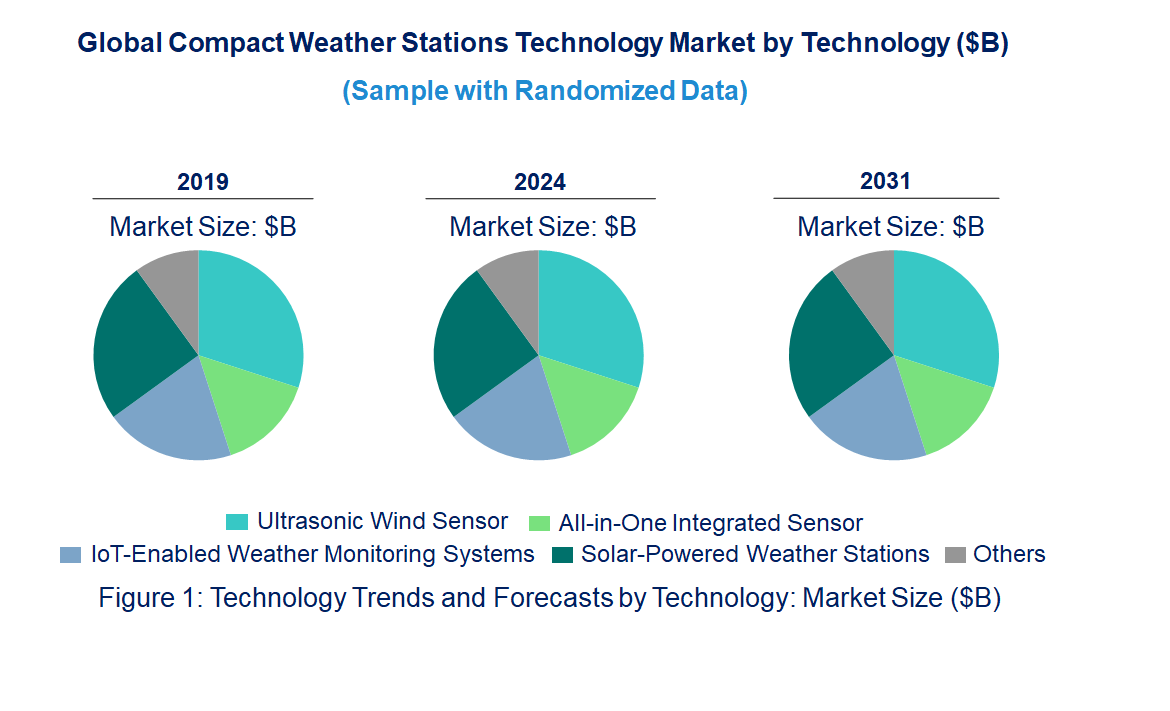
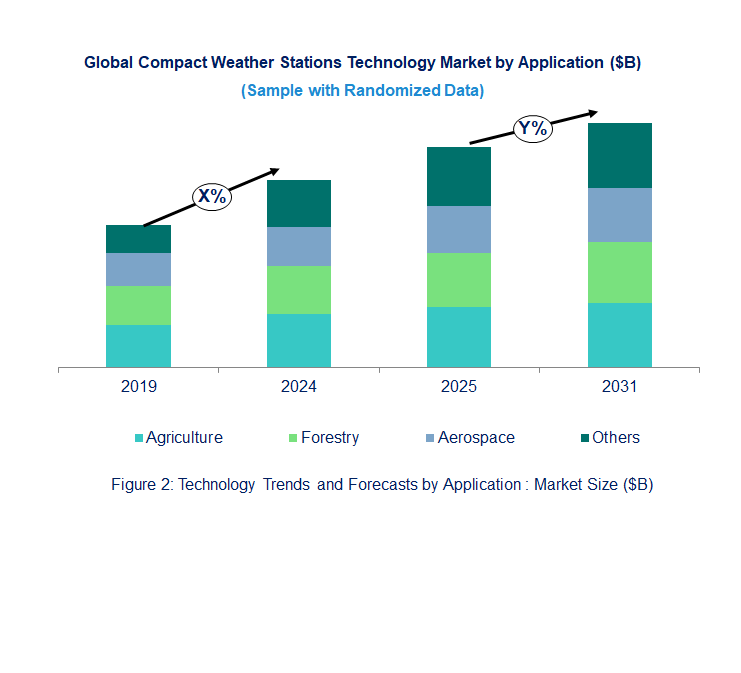
Emerging Trends in the Compact Weather Stations Market
The compact weather stations market is driven by the need for more accurate, real-time, and energy-efficient solutions. Below are five key trends:• IoT-Enabled Weather Monitoring Systems: Increasing integration of IoT technology in weather stations, enabling real-time data transmission and remote monitoring, which is enhancing decision-making and automation, especially in agriculture and forestry applications.
• Solar-Powered Weather Stations: The growing shift towards solar-powered weather stations, providing sustainable and off-grid solutions for remote monitoring, especially in agriculture, where energy efficiency and independence are crucial.
• Ultrasonic Wind Sensor Technology: A rise in the use of ultrasonic wind sensors for more accurate and maintenance-free wind speed and direction measurements, replacing traditional anemometers in compact weather stations.
• All-in-One Integrated Sensor Technology: The trend of compact all-in-one sensors that integrate multiple weather parameters into a single device, reducing installation complexity and costs, while offering versatile monitoring in agriculture and aerospace sectors.
• Integration with Big Data and AI: The increasing use of big data and AI analytics for weather prediction and optimization allowing for more accurate forecasting and improves operational efficiency in sectors like agriculture and forestry. These technological shifts are driving the compact weather stations market toward more efficient, autonomous, and sustainable systems that provide accurate, real-time weather data for diverse applications such as agriculture, forestry, and aerospace.allows
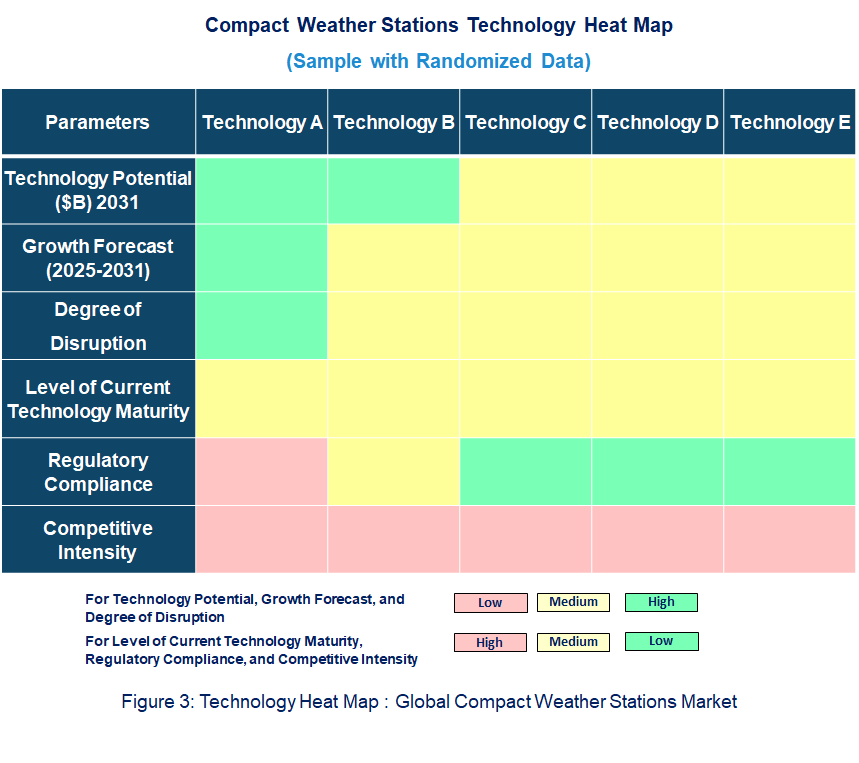
Compact Weather Stations Market : Industry Potential, Technological Development, and Compliance Considerations
• Technology Potential: High, as the use of IoT, solar power, and integrated sensors offers the potential to revolutionize weather data collection and improve forecasting accuracy across industries.
• Degree of Disruption: Moderate, with IoT-enabled weather stations and integrated sensors disrupting traditional weather stations, enhancing data accessibility and operational efficiency.
• Level of Current Technology Maturity: The technologies, especially IoT-enabled systems and solar-powered solutions, are highly mature and widely adopted, while the integration of AI and big data is still emerging.
• Regulatory Compliance: The technology must comply with environmental standards and data privacy regulations, especially in industries like agriculture, forestry, and aerospace, where precise and compliant weather data is essential for safety and efficiency.
Recent Technological development in Compact Weather Stations Market by Key Players
The compact weather stations market is evolving with advancements in technology, allowing for smaller, more efficient, and accurate weather monitoring systems. Companies like Shunfeng International Clean Energy, MTX, Columbia Weather Systems, AMETEK, and Optical Scientific are leading the charge in enhancing weather station capabilities. These improvements are aimed at providing precise, real-time data for a range of applications, from agriculture and aviation to environmental monitoring.• Shunfeng International Clean Energy: Shunfeng has developed an innovative compact weather station equipped with solar-powered sensors that offer high accuracy and low power consumption. This eco-friendly system is particularly beneficial for remote areas where reliable weather data is needed, without the need for external power sources.
• MTX: MTX launched a new line of compact weather stations with integrated IoT capabilities. These stations allow users to remotely monitor weather data in real-time via mobile applications. The integration of IoT technology enhances the station’s adaptability for use in agriculture, construction, and energy sectors, providing valuable insights for decision-making.
• Columbia Weather Systems: Columbia Weather Systems introduced a new version of its compact weather station designed for use in urban environments. These weather stations are highly portable and offer high-accuracy data collection, which is crucial for city planners and environmental scientists aiming to monitor air quality and weather patterns in densely populated areas.
• AMETEK: AMETEK developed a robust compact weather station that offers advanced forecasting features and high precision in measurements such as wind speed, temperature, and humidity. The system is designed to cater to industries like aviation and maritime, where real-time weather data is essential for safety and operational efficiency.
• Optical Scientific: Optical Scientific’s compact weather stations now feature enhanced optical sensors capable of measuring visibility and atmospheric conditions with greater precision. This technology is particularly useful in aviation and transportation sectors, where clear and accurate visibility data is critical for safety and operations.
Compact Weather Stations Market Driver and Challenges
The compact weather stations market is driven by the increasing demand for real-time, accurate weather data across various sectors such as agriculture, aviation, construction, and environmental monitoring. However, challenges such as high upfront costs and the complexity of integrating sensors into small, cost-effective units may hinder market growth. Factors responsible for driving the compact weather stations market include:• Rising Demand for Real-Time Data in Agriculture: Compact weather stations are being increasingly adopted in agriculture to monitor microclimates, optimize irrigation, and improve crop yields. Real-time data helps farmers make informed decisions about planting, harvesting, and irrigation, thereby enhancing productivity and reducing water consumption.
• Integration with IoT and Smart Technologies: The growing integration of compact weather stations with IoT and smart technologies is driving market growth. These advancements enable remote monitoring, data analysis, and automation, providing industries such as energy, transportation, and construction with actionable insights to improve operational efficiency and safety.
• Urbanization and Environmental Monitoring: The expanding focus on urbanization and environmental sustainability is fueling the demand for compact weather stations in urban areas. These systems help in monitoring air quality, temperature, and other environmental parameters, supporting city planners and government agencies in making informed decisions to improve urban living conditions. Major challenges in the compact weather stations market are:
• High Initial Costs: One of the main challenges for widespread adoption is the relatively high initial investment required for compact weather stations. For small and medium-sized businesses, this cost can be a barrier to entry, especially in developing regions where weather monitoring infrastructure is still evolving.
• Complexity of Sensor Integration: The need for miniaturization without compromising the accuracy of sensors in compact weather stations poses a technical challenge. Integrating various sensors (temperature, humidity, wind speed, etc.) into small, cost-effective units requires significant innovation and expertise, potentially increasing development time and cost. The compact weather stations market is seeing rapid growth, driven by the increasing demand for precise, real-time weather data across industries like agriculture, urban planning, and environmental monitoring. The integration of IoT and smart technologies is providing new growth opportunities, especially in remote areas where reliable data is essential. However, challenges such as high upfront costs and sensor integration complexity remain. Despite these challenges, advancements in sensor technology and cost-effective designs are making compact weather stations more accessible, allowing for broader market penetration and contributing to the expansion of this sector.
List of Compact Weather Stations Companies
Companies in the market compete on the basis of product quality offered. Major players in this market focus on expanding their manufacturing facilities, R&D investments, infrastructural development, and leverage integration opportunities across the value chain. With these strategies compact weather stations companies cater increasing demand, ensure competitive effectiveness, develop innovative products & technologies, reduce production costs, and expand their customer base. Some of the compact weather stations companies profiled in this report includes.• Shunfeng International Clean Energy
• Mtx
• Columbia Weather Systems
• Ametek
• Optical Scientific
Compact Weather Stations Market by Technology
• Technology Readiness by Technology Type: Ultrasonic wind sensor technology is highly mature and ready for deployment, offering increased precision with minimal maintenance requirements, ideal for compact and industrial applications. All-in-one integrated sensor technology is also highly ready, with growing adoption in both consumer and professional markets for its convenience and multifunctionality in small, integrated units. IoT-enabled weather monitoring systems are becoming increasingly ready, with increasing market acceptance due to their ability to provide real-time data, improve forecasting accuracy, and enable remote monitoring, making them crucial in smart cities and large-scale monitoring projects. Solar-powered weather stations are moderately ready, with widespread use in remote locations and off-grid applications, although they face challenges in maintaining consistent performance under varying solar conditions. Other technologies, like low-cost sensors, are emerging with medium readiness, offering significant potential for broadening the market and meeting the growing demand for accessible weather monitoring. Each technology competes based on performance, ease of use, energy efficiency, and regulatory compliance, with the primary focus on ensuring accurate data collection and integration.
• Competitive Intensity and Regulatory Compliance: The compact weather stations market experiences high competitive intensity, driven by rapid technological advancements in sensor accuracy, integration, and real-time data transmission. Ultrasonic wind sensor technology and all-in-one integrated sensor technology are highly competitive, as they cater to different segments of the market, offering specific advantages like ease of use or cost-effectiveness. IoT-enabled weather monitoring systems are gaining traction, particularly in professional and scientific fields, but face competition from established systems with longer market histories. Solar-powered weather stations hold a niche but are increasingly popular in off-grid applications. Regulatory compliance is a key factor in the market, especially concerning environmental standards and data accuracy. Weather stations must meet national and international certification requirements, ensuring the reliability and validity of the collected data for critical sectors like agriculture, environmental monitoring, and disaster management.
• Disruption Potential: Ultrasonic Wind sensor technology is disrupting the compact weather stations market by offering higher accuracy and reliability with no moving parts, making it ideal for compact and remote weather stations. All-in-one integrated sensor technology is transforming the market by consolidating multiple sensors into a single unit, simplifying installation and maintenance for both professionals and enthusiasts. IoT-enabled weather monitoring systems are creating significant disruption by enabling real-time data transmission, enhancing remote monitoring, and analytics. Solar-powered weather stations are revolutionizing the market by providing energy-efficient, self-sustaining solutions that make weather monitoring feasible in off-grid or remote locations. Other emerging technologies, such as low-cost sensors and hybrid systems, promise to further democratize weather data collection with improved affordability and accessibility for diverse applications, from agriculture to disaster management.
Compact Weather Stations Market Trend and Forecast by Technology [Value from 2019 to 2031]:
• Ultrasonic Wind Sensor Technology
• All-in-One Integrated Sensor Technology
• IoT-Enabled Weather Monitoring Systems
• Solar-Powered Weather Stations
• Others
Compact Weather Stations Market Trend and Forecast by Application [Value from 2019 to 2031]:
• Agriculture
• Forestry
• Aerospace
• Other
Compact Weather Stations Market by Region [Value from 2019 to 2031]:
• North America
• Europe
• Asia Pacific
• The Rest of the World
• Latest Developments and Innovations in the Compact Weather Stations Technologies
• Companies / Ecosystems
• Strategic Opportunities by Technology Type
Features of the Global Compact Weather Stations Market
Market Size Estimates: Compact weather stations market size estimation in terms of ($B). Trend and Forecast Analysis: Market trends (2019 to 2024) and forecast (2025 to 2031) by various segments and regions. Segmentation Analysis: Technology trends in the global compact weather stations market size by various segments, such as application and technology in terms of value and volume shipments. Regional Analysis: Technology trends in the global compact weather stations market breakdown by North America, Europe, Asia Pacific, and the Rest of the World. Growth Opportunities: Analysis of growth opportunities in different applications, and technologies, and regions for technology trends in the global compact weather stations market. Strategic Analysis: This includes M&A, new product development, and competitive landscape for technology trends in the global compact weather stations market. Analysis of competitive intensity of the industry based on Porter’s Five Forces model.Table of Contents
Methodology
- In-depth interviews of the major players in this market
- Detailed secondary research from competitors’ financial statements and published data
- Extensive searches of published works, market, and database information pertaining to industry news, company press releases, and customer intentions
- A compilation of the experiences, judgments, and insights of Lucintel’s professionals, who have analyzed and tracked this market over the years.


Buy Now
Choose a license that fits your team. Instant PDF delivery.
Prices exclude taxes. Instant delivery. Custom licensing available on request.
Key Questions
- • What are some of the most promising potential, high-growth opportunities for the technology trends in the global compact weather stations market by technology (ultrasonic wind sensor technology, all-in-one integrated sensor technology, iot-enabled weather monitoring systems, solar-powered weather stations, and others), application (agriculture, forestry, aerospace, and other), and region (North America, Europe, Asia Pacific, and the Rest of the World)?
- • Which technology segments will grow at a faster pace and why?
- • Which regions will grow at a faster pace and why?
- • What are the key factors affecting dynamics of different technology? What are the drivers and challenges of these technologies in the global compact weather stations market?
- • What are the business risks and threats to the technology trends in the global compact weather stations market?
- • What are the emerging trends in these material technologies in the global compact weather stations market and the reasons behind them?
- • Which technologies have potential of disruption in this market?
- • What are the new developments in the technology trends in the global compact weather stations market? Which companies are leading these developments?
- • Who are the major players in technology trends in the global compact weather stations market? What strategic initiatives are being implemented by key players for business growth?
- • What are strategic growth opportunities in this compact weather stations technology space?
- • What M & A activities did take place in the last five years in technology trends in the global compact weather stations market?


