
Report Feature
Bubble Diffusers Market Trends and Forecast
The technologies in the bubble diffusers market have undergone significant changes in recent years, with advancements from traditional coarse bubble diffusion to fine bubble diffusion and membrane diffusers, resulting in improved efficiency, oxygen transfer, and reduced energy consumption.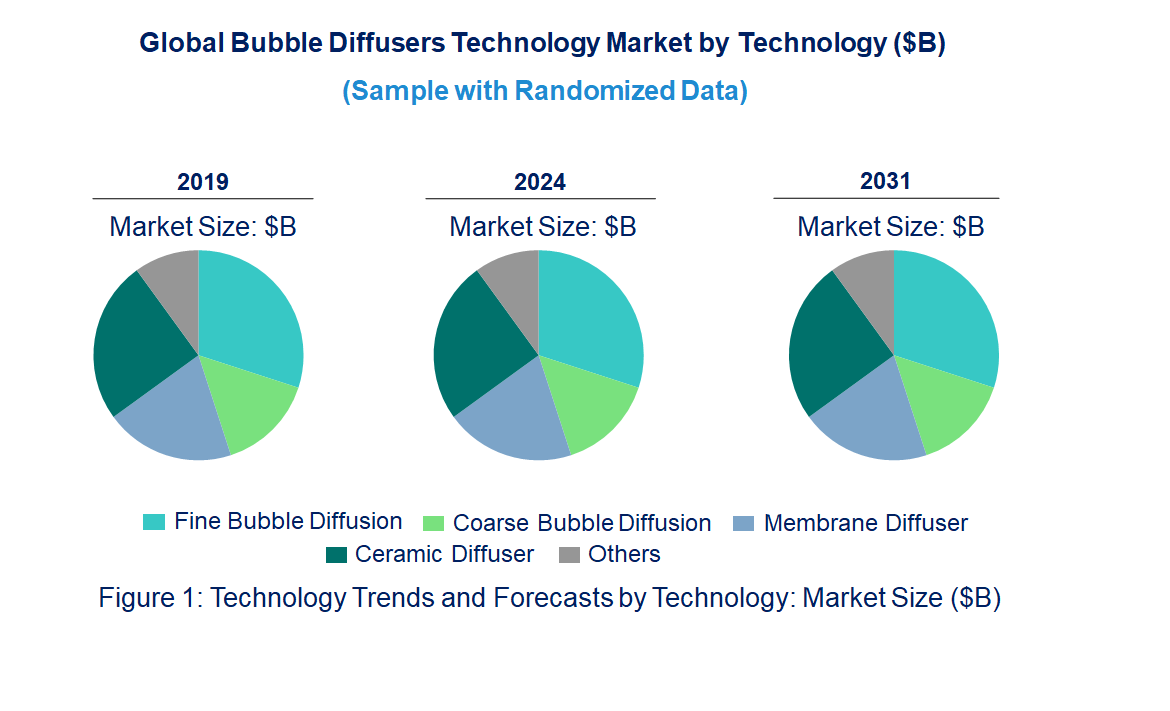
Emerging Trends in the Bubble Diffusers Market
The bubble diffusers market is evolving with an increasing focus on performance, sustainability, and cost-effectiveness. Below are five key trends:• Fine Bubble Diffusion: Growing adoption of fine bubble diffusion technology in wastewater treatment and industrial applications, providing better oxygen transfer rates and reducing energy consumption compared to coarse bubbles.
• Membrane Diffuser Systems: Increased use of membrane diffuser systems in industries like chemical processing, offering higher efficiency and reliability due to their uniform distribution of bubbles and lower maintenance needs.
• Ceramic Diffuser Technology: Rise in the use of ceramic diffusers in harsh industrial environments, providing high durability, long lifespan, and resistance to fouling, especially in chemical and pharmaceutical sectors.
• Energy Efficiency Focus: A stronger emphasis on designing energy-efficient diffusers that can reduce operational costs in wastewater treatment and manufacturing processes.
• Automation and Smart Monitoring: The integration of automation and smart monitoring systems with diffusers to optimize performance and provide real-time insights, enhancing operational efficiency and maintenance planning. These technological advancements are reshaping the bubble diffusers market by enhancing efficiency, sustainability, and operational cost-effectiveness, with growing applications across various industries.
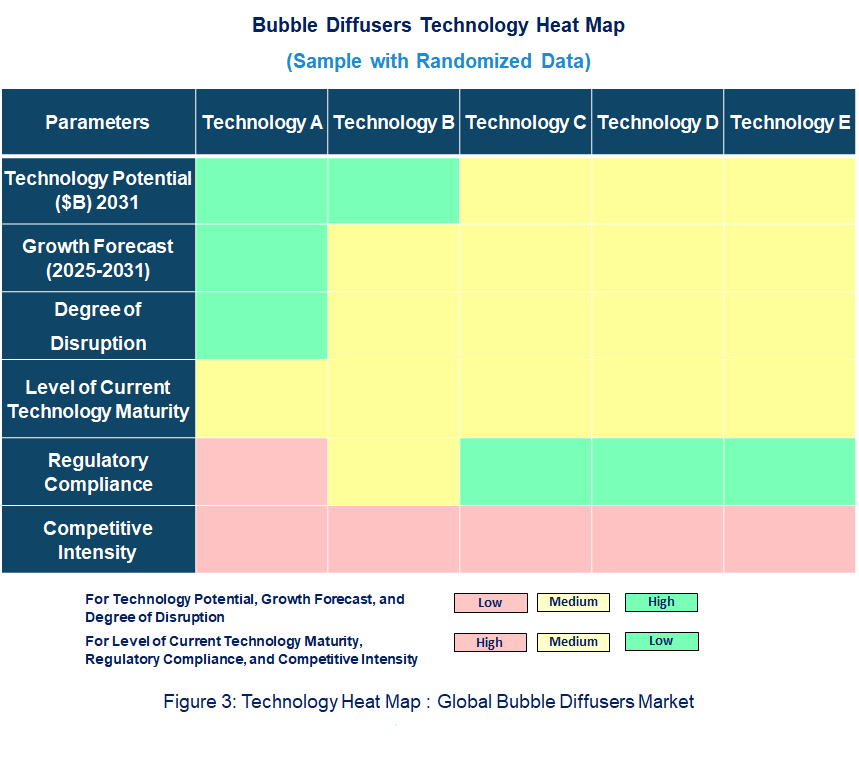
Bubble Diffusers Market : Industry Potential, Technological Development, and Compliance Considerations
• Technology Potential: High, with fine bubble and membrane diffuser technologies offering improved efficiency and energy savings, enabling significant advancements in environmental and industrial applications.
• Degree of Disruption: Moderate to high, as fine and membrane bubble diffusers are replacing traditional coarse bubble systems in many sectors, significantly improving oxygen transfer and reducing energy consumption.
• Level of Current Technology Maturity: Fine bubble and membrane diffuser technologies are highly mature, while ceramic and energy-efficient solutions are still emerging in specific sectors.
• Regulatory Compliance: Strong focus on ensuring compliance with environmental and safety standards in industries such as wastewater treatment and pharmaceuticals, ensuring that technologies meet stringent regulatory requirements.
Recent Technological development in Bubble Diffusers Market by Key Players
The bubble diffusers market is experiencing growth due to increased demand in wastewater treatment, aquaculture, and industrial processes that require efficient aeration systems. Companies like Nexom, SSI Aeration, SFA, Jaeger Aeration, and Bajrang Enviro Engineers are investing in innovations to improve efficiency, energy consumption, and environmental sustainability in their bubble diffuser technologies.• Nexom: Nexom has introduced advanced bubble diffuser systems designed to improve oxygen transfer efficiency while minimizing energy consumption. Their new technology integrates smart control features that allow for precise adjustment of aeration levels based on real-time needs, resulting in cost savings and improved performance in wastewater treatment facilities.
• SSI Aeration: SSI Aeration launched a new series of durable and low-maintenance bubble diffusers specifically designed for industrial applications. Their products are built to withstand harsh environments and provide enhanced aeration for biological processes, reducing operational costs for industries like food processing and chemical manufacturing.
• SFA: SFA expanded its product portfolio with bubble diffusers that utilize advanced ceramic materials. These materials offer higher corrosion resistance and longer service life, making them particularly useful in demanding environments like sewage treatment plants and aquaculture, where durability and reliability are essential.
• Jaeger Aeration: Jaeger Aeration developed an innovative bubble diffuser system that provides better distribution of air, improving aeration efficiency. This system is particularly effective in large-scale industrial applications such as municipal wastewater treatment, where uniform oxygen dispersion is critical for optimal biological treatment processes.
• Bajrang Enviro Engineers: Bajrang Enviro Engineers introduced a new range of cost-effective and high-efficiency bubble diffusers designed for small to medium-scale wastewater treatment plants. Their products offer better performance at lower operational costs, making them ideal for municipalities with budget constraints or limited infrastructure.
Bubble Diffusers Market Driver and Challenges
The bubble diffusers market is driven by the growing demand for energy-efficient solutions in aeration processes across industries such as wastewater treatment, aquaculture, and chemical manufacturing. However, the market faces challenges such as high initial investment costs and the need for regular maintenance and replacement of diffuser systems. Major factors responsible for driving the bubble diffusers market include:• Growing Need for Efficient Aeration in Wastewater Treatment: The increasing global focus on environmental sustainability and the rising demand for efficient wastewater treatment are propelling the need for advanced bubble diffusers. These diffusers enhance oxygen transfer rates, which are crucial for treating large volumes of water in urban and industrial settings.
• Rising Demand in Aquaculture: As aquaculture production grows, the need for efficient aeration systems to maintain optimal oxygen levels in water bodies has become a key driver for the market. Bubble diffusers play a crucial role in maintaining a healthy environment for fish farming, thereby supporting the growth of the aquaculture industry.
• Industrial Applications: Bubble diffusers are becoming integral to various industrial applications like food processing, chemical manufacturing, and power plants, where efficient aeration is necessary to optimize production processes and reduce energy consumption. This expanding range of applications is further driving the market’s growth. Major challenges in the bubble diffusers market are
• High Initial Investment Costs: One of the primary challenges facing the Bubble Diffusers Market is the high initial investment required for the installation of these systems, particularly in large-scale industrial or municipal applications. The capital costs can be a barrier for smaller enterprises or organizations with limited budgets.
• Maintenance and Durability: While bubble diffusers offer long-term operational benefits, they require regular maintenance and occasional replacement due to wear and tear, especially in harsh environments like sewage treatment plants. This can add to the total lifecycle cost and hinder market growth. The bubble diffusers market is growing due to increasing demand for energy-efficient aeration systems in wastewater treatment, aquaculture, and industrial processes. Key drivers such as the need for sustainable wastewater management and the expanding aquaculture industry are contributing to market growth, while challenges related to high upfront costs and maintenance requirements continue to impact adoption. Despite these challenges, advancements in diffuser technology, such as the introduction of durable materials and smart control systems, are helping mitigate these obstacles and are paving the way for continued market expansion.
List of Bubble Diffusers Companies
Companies in the market compete on the basis of product quality offered. Major players in this market focus on expanding their manufacturing facilities, R&D investments, infrastructural development, and leverage integration opportunities across the value chain. With these strategies bubble diffusers companies cater increasing demand, ensure competitive effectiveness, develop innovative products & technologies, reduce production costs, and expand their customer base. Some of the bubble diffusers companies profiled in this report includes.• Nexom
• Ssi Aeration
• Sfa
• Jaeger Aeration
• Bajrang Enviro Engineers
Bubble Diffusers Market by Technology
• Technology Readiness by Technology Type: Fine bubble diffusion is highly ready, with broad adoption in wastewater treatment and aquaculture due to its efficiency in oxygen transfer and overall system performance. Coarse bubble diffusion is widely available but has medium readiness compared to finer bubble technologies, as it is less efficient but still essential for larger-scale or low-cost applications. membrane diffusers are highly ready, known for their durability and energy-saving capabilities in large-scale aeration systems. Ceramic diffusers are mature and ready for use in demanding environments, offering excellent durability and resistance to wear, especially in harsh chemical or abrasive conditions. Other emerging technologies, like hybrid and multi-material diffusers, show moderate readiness, as they are still being tested in specific applications such as industrial wastewater treatment. Competitive dynamics are influenced by cost, energy efficiency, durability, and regulatory compliance, with a focus on developing technologies that offer sustainable, cost-effective, and reliable solutions.
• Competitive Intensity and Regulatory Compliance: The Bubble Diffusers Market exhibits high competitive intensity, with technologies like Fine Bubble Diffusion and Membrane Diffusers leading the way due to their high efficiency and energy savings. Coarse Bubble Diffusion holds a stable market share due to its robustness in certain applications, but faces increasing competition from more efficient solutions. Ceramic Diffusers are less competitive but remain relevant in specialized industries requiring durability and corrosion resistance. Regulatory compliance is essential, as diffusers must adhere to environmental and quality standards, particularly for wastewater treatment systems. Compliance with performance standards, such as those set by the American Society of Civil Engineers (ASCE) or the International Organization for Standardization (ISO), is key to maintaining market credibility and operational efficiency.
• Disruption Potential: Fine Bubble Diffusion technology is disrupting the bubble diffusers market by offering enhanced oxygen transfer efficiency, ideal for wastewater treatment and aquaculture. Coarse bubble diffusion, while less efficient than fine bubbles, remains relevant for applications requiring larger gas volumes and robust designs. Membrane diffusers offer increased energy efficiency, durability, and lower maintenance, making them highly suitable for large-scale aeration systems. Ceramic diffusers provide superior durability and long service life, often used in harsh conditions where corrosion resistance is critical. Other emerging technologies, like hybrid diffusers combining multiple materials, promise to further enhance efficiency and versatility, catering to diverse industrial needs. These innovations collectively drive more energy-efficient, sustainable, and cost-effective solutions in aeration applications.
Bubble Diffusers Market Trend and Forecast by Technology [Value from 2019 to 2031]:
• Fine Bubble Diffusion
• Coarse Bubble Diffusion
• Membrane Diffuser
• Ceramic Diffuser
• Others
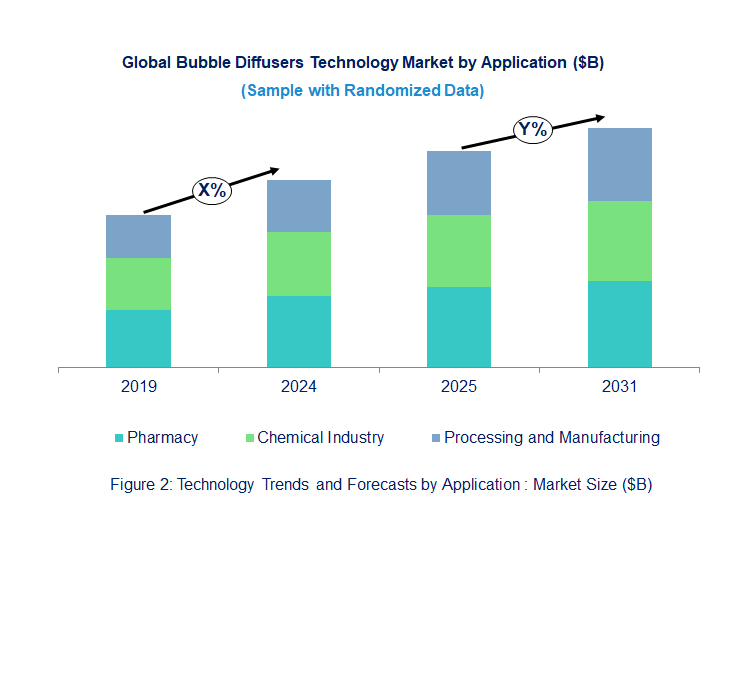
Bubble Diffusers Market Trend and Forecast by Application [Value from 2019 to 2031]:
• Pharmacy
• Chemical Industry
• Processing and Manufacturing
Bubble Diffusers Market by Region [Value from 2019 to 2031]:
• North America
• Europe
• Asia Pacific
• The Rest of the World
• Latest Developments and Innovations in the Bubble Diffusers Technologies
• Companies / Ecosystems
• Strategic Opportunities by Technology Type
Features of the Global Bubble Diffusers Market
Market Size Estimates: Bubble diffusers market size estimation in terms of ($B). Trend and Forecast Analysis: Market trends (2019 to 2024) and forecast (2025 to 2031) by various segments and regions. Segmentation Analysis: Technology trends in the global bubble diffusers market size by various segments, such as application and technology in terms of value and volume shipments. Regional Analysis: Technology trends in the global bubble diffusers market breakdown by North America, Europe, Asia Pacific, and the Rest of the World. Growth Opportunities: Analysis of growth opportunities in different applications, and technologies, and regions for technology trends in the global bubble diffusers market. Strategic Analysis: This includes M&A, new product development, and competitive landscape for technology trends in the global bubble diffusers market. Analysis of competitive intensity of the industry based on Porter’s Five Forces model.Table of Contents
Methodology
- In-depth interviews of the major players in this market
- Detailed secondary research from competitors’ financial statements and published data
- Extensive searches of published works, market, and database information pertaining to industry news, company press releases, and customer intentions
- A compilation of the experiences, judgments, and insights of Lucintel’s professionals, who have analyzed and tracked this market over the years.


Buy Now
Choose a license that fits your team. Instant PDF delivery.
Prices exclude taxes. Instant delivery. Custom licensing available on request.
Key Questions
- • What are some of the most promising potential, high-growth opportunities for the technology trends in the global bubble diffusers market by technology (fine bubble diffusion, coarse bubble diffusion, membrane diffuser, ceramic diffuser, and others), application (pharmacy, chemical industry, processing and manufacturing), and region (North America, Europe, Asia Pacific, and the Rest of the World)?
- • Which technology segments will grow at a faster pace and why?
- • Which regions will grow at a faster pace and why?
- • What are the key factors affecting dynamics of different technology? What are the drivers and challenges of these technologies in the global bubble diffusers market?
- • What are the business risks and threats to the technology trends in the global bubble diffusers market?
- • What are the emerging trends in these material technologies in the global bubble diffusers market and the reasons behind them?
- • Which technologies have potential of disruption in this market?
- • What are the new developments in the technology trends in the global bubble diffusers market? Which companies are leading these developments?
- • Who are the major players in technology trends in the global bubble diffusers market? What strategic initiatives are being implemented by key players for business growth?
- • What are strategic growth opportunities in this bubble diffusers technology space?
- • What M & A activities did take place in the last five years in technology trends in the global bubble diffusers market?


