
Report Feature
Battery-Free Sensor Market Trends and Forecast
Technologies in the battery-free sensor market have witnessed significant changes in the recent past, moving from traditional wired sensors to wireless, energy-harvesting sensors. This shift is enabled by advancements in energy harvesting technologies, such as RF (radio frequency) energy harvesting and solar-powered sensors, eliminating the need for conventional batteries. Moreover, the shift from inductive-based systems to ultrasonic and piezoelectric systems has enhanced sensor efficiency and miniaturization. This transition drives the growth of smart, low-maintenance sensor networks in highly reliable, long-term deployments.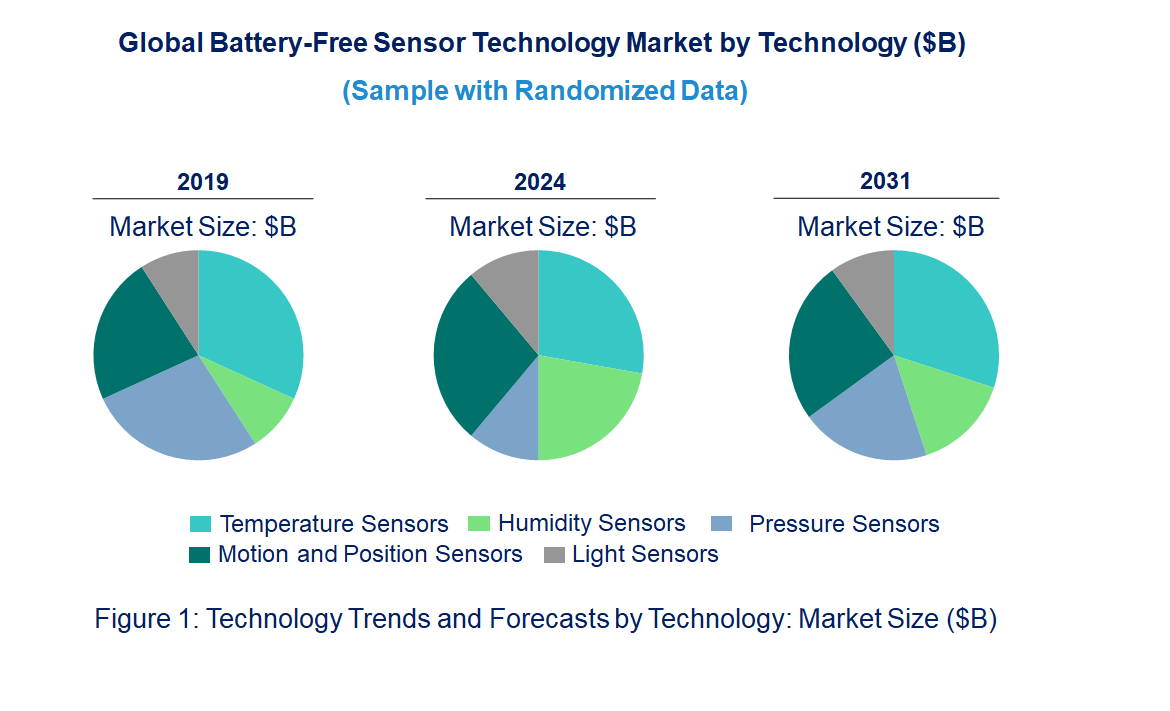
Emerging Trends in the Battery-Free Sensor Market
The battery-free sensor market is growing rapidly due to technological advancements and increasing applications across various industries. Here are five key trends shaping the future of this market:• Energy Harvesting Innovations: Advanced energy harvesting technologies, including solar, RF, and thermoelectric devices, now enable sensors to be powered internally without an external power source. These innovations reduce maintenance costs and prolong the lifespan of sensors in remote applications like smart agriculture and industrial monitoring.
• Miniaturization of Sensors: The trend of reducing sensors in size and weight increases their versatility and allows for greater integration into a wider variety of applications. With miniaturization combined with advancements in materials and design, sensors can be embedded into consumer devices, wearables, and industrial systems.
• Integration with IoT Platforms: IoT networks are increasingly integrating battery-free sensors to develop interconnected systems that monitor and manage real-time data. This enhances applications across key industries such as healthcare, automotive, and logistics, where real-time insights are critical.
• Advances in Wireless Connectivity: Low-power wireless communication technologies such as Bluetooth Low Energy (BLE) and LoRaWAN are enhancing the connectivity of battery-free sensors. These technologies enable seamless data transmission over longer distances with minimal energy consumption, opening the market to a variety of industrial and consumer applications.
• Increased Adoption in Healthcare: Batteryless sensors are increasingly being used in healthcare applications, particularly for uninterrupted monitoring of vital signs, environmental conditions, and tracking of medicine. Their long-term, zero-maintenance operation makes these devices highly suitable for wearable health-related devices and medical implants. These emerging directions are redefining new possibilities for batteryless sensing capabilities and are set to be disruptive in industries from automotive manufacturing to healthcare, enabling smarter and more sustainable solutions.
Battery-Free Sensor Market : Industry Potential, Technological Development, and Compliance Considerations
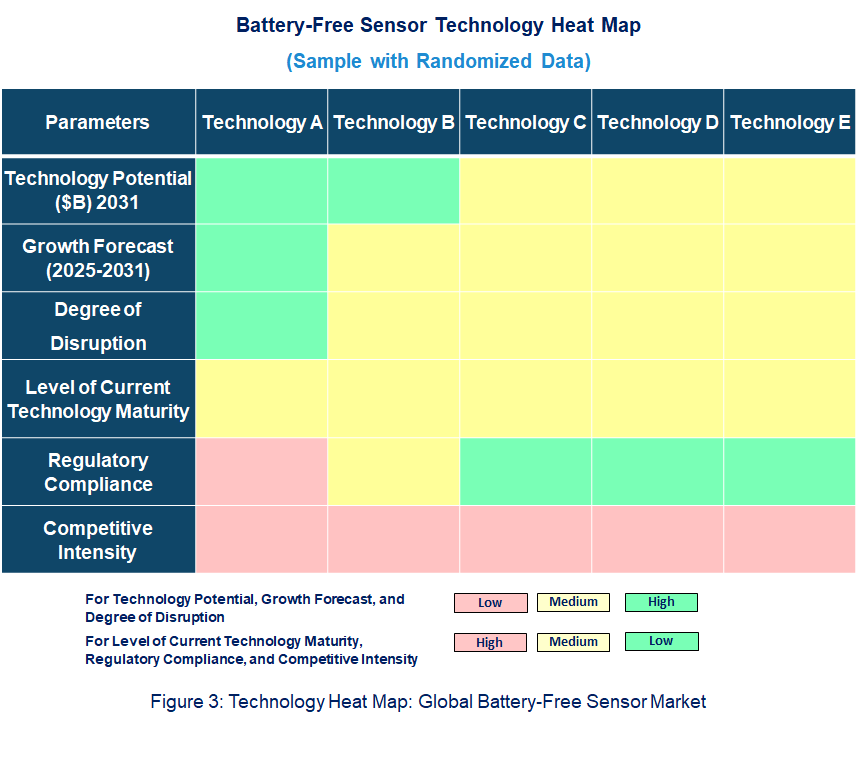
The battery-free sensor market takes advantage of innovative technologies to design devices that operate without the use of conventional batteries, using alternative sources of power such as energy harvesting or wireless power transfer. This sensor finds special utility in IoT, environmental monitoring, and healthcare, among others, where it must operate for long periods of time without the replacement of batteries.• Technology Potential: Battery-free sensors can drastically reduce maintenance costs, enhance sustainability, and extend sensor lifespan, making them ideal for remote or hard-to-reach locations. Technologies such as ambient energy harvesting (solar, thermal, or vibration) and low-power communication systems (e.g., RFID) are at the core of these devices.
• Degree of Disruption: This market can disrupt conventional sensor technologies by offering greener, cheaper, and more scalable solutions, especially in the segments of smart cities, wearables, and industrial IoT.
• Current Technology Maturity Level: The technology is advancing rapidly. Some commercially available solutions already exist, but scalability and integration challenges persist, particularly in power efficiency and sensor accuracy.
• Regulatory Compliance: Regulatory standards are evolving to ensure that battery-free sensors are safe, reliable, and compatible with existing networks. As the market matures, compliance with global standards will become a key factor in widespread adoption. In conclusion, battery-free sensor technology offers immense potential, but continued innovation and regulatory alignment are necessary for broader market adoption.
Recent Technological development in Battery-Free Sensor Market by Key Players
In the last couple of years, major companies have introduced new solutions that are driving faster growth in this sector. Recent news around key players includes:• On Semiconductor: On Semiconductor has led innovation in energy harvesting technologies by introducing low-power, battery-free sensors into IoT and industrial applications. The focus on ultra-low-power components has enhanced sensor performance and been applied to predictive maintenance and asset tracking in industrial settings.
• Farsens: Ambient RF-based battery-free RFID sensors developed by Farsens are powered by available ambient RF energy in the surroundings to track temperature, humidity, and other environmental conditions. Their solutions are used across logistics and supply chain management, reducing operational costs and making monitoring more efficient.
• Axzon: Axzon is a leader in energy-harvesting RFID sensors, focusing on industrial and healthcare applications. These sensors utilize passive wireless technology, which operates without batteries, offering real-time asset tracking and vital sign monitoring.
• Inductosense: The company specializes in battery-free, wireless ultrasonic sensors for structural health monitoring. Its solutions are widely used in the oil and gas and aerospace industries, helping detect issues before they lead to major failures, thus reducing costs and enhancing safety.
• Phase IV Engineering: Developed self-powered sensors that harvest energy from vibrations and can be deployed long-term in harsh environments. These products are directed toward the automotive and industrial sectors, where reliability and low-maintenance operating conditions are critical.
• Powercast: Powercast is the leader in RF-based energy harvesting, offering wireless power solutions for battery-free sensors in industrial, automotive, and consumer electronics applications. Their technology is revolutionizing wireless sensor networks by eliminating the need for batteries and reducing operational costs.
• Distech Controls: The products from Distech Controls integrate battery-free sensors into building automation systems, making them energy-efficient for monitoring and controlling HVAC, lighting, and security systems. Their solutions enhance the smart building sector through scalable, low-maintenance options.
• Enocean: Enocean’s energy-harvesting sensors generate power from motion, light, and temperature changes. These sensors are broadly applied in building automation, creating sustainable and cost-effective solutions for smart homes, offices, and industrial applications.
• Dco Systems: Dco Systems specializes in wireless sensors powered by energy harvested from environmental sources like temperature gradients. Their solutions are aimed at the energy and utilities sectors, where real-time monitoring of remote assets is critical. Everactive is among the leaders in battery-free sensors, as their devices rely on both RF and ambient energy to power continuous, real-time industrial monitoring. The company is pursuing ultra-low-power sensors for manufacturing and supply chain management to stay ahead in the market.
Battery-Free Sensor Market Driver and Challenges
The battery-free sensor market is booming, driven by several key factors, but not without complications. Below is an analysis of the primary growth drivers and challenges: The factors driving the battery-free sensor market include:• Increased Demand for Sustainable Solutions: As industries shift towards sustainability, there is a growing demand for battery-free solutions that reduce environmental impact and operating costs. Battery-free sensors eliminate the need for battery disposal and the maintenance of battery replacement cycles, making them ideal for long-term, low-maintenance applications.
• Advances in Energy Harvesting Technologies: Advancements in energy harvesting technologies, including RF energy, solar, and piezoelectric technologies, have enabled more efficient, reliable, and diverse applications of sensor technologies. These advancements are driving the adoption of battery-free sensors in the industrial, automotive, healthcare, and consumer sectors.
• IoT and Industrial Automation: As IoT and industrial automation rapidly increase in every industry, the demand for low-maintenance sensors that can operate with minimal human intervention for extended periods is driving market potential for battery-free sensors.
• Cost Savings and Scalability: As energy harvesting technologies become more efficient and less expensive, the broader applicability of battery-free sensors becomes feasible. These sensors are now being integrated into cost-sensitive industries like agriculture, logistics, and retail. Challenges
• Limited Power Generation Capabilities: Despite progress, most battery-free sensors are still limited by the amount of energy they can capture, which may restrict their use in high-power applications. Developing more efficient energy harvesting systems remains a challenge for expanding their market reach.
• High Initial Cost: The cost of setting up battery-free sensor systems may be higher than traditional wired or battery-powered sensors. This could be a limiting factor for many businesses, especially small and medium-sized enterprises.
• Complexity in Integration: Integrating battery-free sensors into existing systems, ensuring seamless communication between different platforms, is complex. Standardized protocols and communication technologies are still under development. Emerging technological trends, key players, and opportunities in sustainability and IoT adoption are reshaping the battery-free sensor market. Power generation and integration remain major challenges. However, these factors are collectively driving the market toward efficient, autonomous, and green solutions across different industries. The growing demand for low-maintenance and long-lasting sensor technologies means that battery-free sensors will play a leading role in the future of smart systems and infrastructure.
List of Battery-Free Sensor Companies
Companies in the market compete based on product quality offered. Major players in this market focus on expanding their manufacturing facilities, R&D investments, infrastructural development, and leverage integration opportunities across the value chain. With these strategies battery-free sensor companies cater to increasing demand, ensure competitive effectiveness, develop innovative products & technologies, reduce production costs, and expand their customer base. Some of the battery-free sensor companies profiled in this report include.• On Semiconductor
• Farsens
• Axzon
• Inductosense
• Phase Iv Engineering
• Powercast
Battery-Free Sensor Market by Technology
• Technology Readiness by Technology Type for Battery-Free Sensor Market: Temperature and humidity sensors are mature and widely used in agriculture and climate monitoring. Pressure sensors are advanced in industrial applications but require innovation in efficiency. Motion and position sensors are emerging, with applications in healthcare and smart homes. Light sensors are ready for use in smart cities but face power consumption challenges. Competitive levels are higher for temperature and humidity sensors, while motion and light sensors are still evolving. Regulatory compliance is crucial across all technologies, especially in high-risk sectors like healthcare and automotive.
• Competitive Intensity and Regulatory Compliance: The battery-free sensor market is highly competitive, with strong players in temperature, humidity, and pressure sensors. Motion, position, and light sensors are emerging but face challenges in energy efficiency and miniaturization. Market entry requires regulatory compliance, including safety and electromagnetic standards. Pressure and motion sensors are highly sector-specific and require certifications in automotive and healthcare. Regulatory barriers impede adoption, especially in high-risk sectors. The competitive landscape is influenced by competitive pressure and compliance.
• Technologies Disrupting the Battery-Free Sensor Market: Various technologies for the battery-free sensor market have significant disruption potential: Temperature, humidity, pressure, motion, position, and light sensors are transforming different industries through battery-free solutions. Temperature and humidity sensors play a crucial role in climate control and agriculture, while pressure sensors improve safety in industrial applications. Motion and position sensors enable energy harvesting for smart homes and healthcare, reducing battery dependency. Light sensors, vital for IoT and smart cities, also support autonomous devices. These technologies reduce maintenance costs, enhance scalability, and extend the lifespan of sensor networks, driving rapid market growth.
Battery-Free Sensor Market Trend and Forecast by Technology [Value from 2019 to 2031]:
• Temperature Sensors
• Humidity Sensors
• Pressure Sensors
• Motion and Position Sensors
• Light Sensors
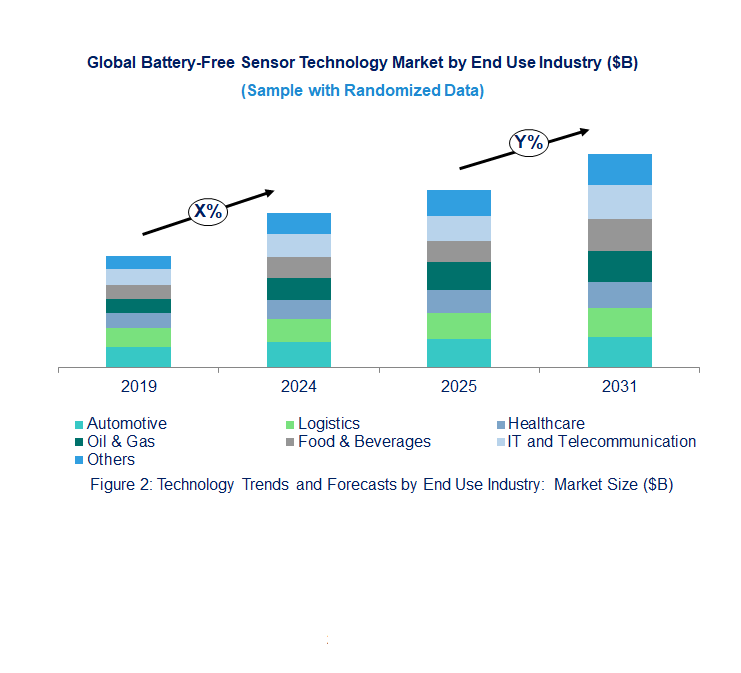
Battery-Free Sensor Market Trend and Forecast by End Use Industry [Value from 2019 to 2031]:
• Automotive
• Logistics
• Healthcare
• Oil & Gas
• Food & Beverages
• IT & Telecommunications
• Others
Battery-Free Sensor Market by Region [Value from 2019 to 2031]:
• North America
• Europe
• Asia Pacific
• The Rest of the World
• Latest Developments and Innovations in the Battery-Free Sensor Technologies
• Companies / Ecosystems
• Strategic Opportunities by Technology Type
Features of the Global Battery-Free Sensor Market
Market Size Estimates: Battery-free sensor market size estimation in terms of ($B). Trend and Forecast Analysis: Market trends (2019 to 2024) and forecast (2025 to 2031) by various segments and regions. Segmentation Analysis: Technology trends in the global battery-free sensor market size by various segments, such as end use industry and technology in terms of value and volume shipments. Regional Analysis: Technology trends in the global battery-free sensor market breakdown by North America, Europe, Asia Pacific, and the Rest of the World. Growth Opportunities: Analysis of growth opportunities in different end use industries, technologies, and regions for technology trends in the global battery-free sensor market. Strategic Analysis: This includes M&A, new product development, and competitive landscape for technology trends in the global battery-free sensor market. Analysis of competitive intensity of the industry based on Porter’s Five Forces model.Table of Contents
Methodology
- In-depth interviews of the major players in this market
- Detailed secondary research from competitors’ financial statements and published data
- Extensive searches of published works, market, and database information pertaining to industry news, company press releases, and customer intentions
- A compilation of the experiences, judgments, and insights of Lucintel’s professionals, who have analyzed and tracked this market over the years.


Buy Now
Choose a license that fits your team. Instant PDF delivery.
Prices exclude taxes. Instant delivery. Custom licensing available on request.
Key Questions
- • What are some of the most promising potential, high-growth opportunities for the technology trends in the global battery-free sensor market by technology (temperature sensors, humidity sensors, pressure sensors, motion and position sensors, and light sensors), end use industry (automotive, logistics, healthcare, oil & gas, food & beverages, it & telecommunications, and others), and region (North America, Europe, Asia Pacific, and the Rest of the World)?
- • Which technology segments will grow at a faster pace and why?
- • Which regions will grow at a faster pace and why?
- • What are the key factors affecting dynamics of different technology? What are the drivers and challenges of these technologies in the global battery-free sensor market?
- • What are the business risks and threats to the technology trends in the global battery-free sensor market?
- • What are the emerging trends in these technologies in the global battery-free sensor market and the reasons behind them?
- • Which technologies have potential of disruption in this market?
- • What are the new developments in the technology trends in the global battery-free sensor market? Which companies are leading these developments?
- • Who are the major players in technology trends in the global battery-free sensor market? What strategic initiatives are being implemented by key players for business growth?
- • What are strategic growth opportunities in this battery-free sensor technology space?
- • What M & A activities did take place in the last five years in technology trends in the global battery-free sensor market?


