
Report Feature
Baby Apparel Market Trends and Forecast
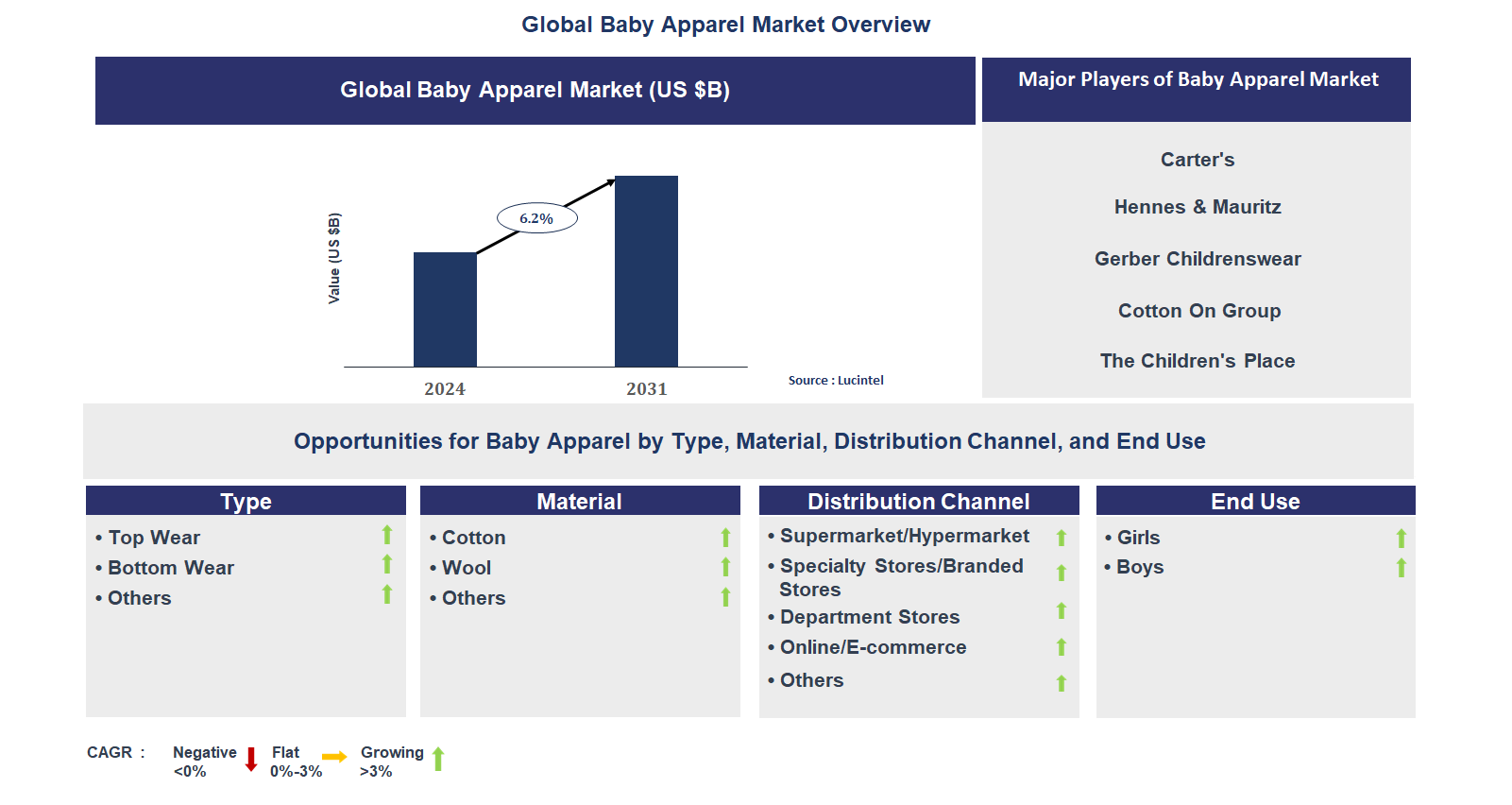
The future of the global baby apparel market looks promising with opportunities in the supermarket/hypermarket, specialty stores/branded store, department store, and online/e-commerce markets. The global baby apparel market is expected to grow with a CAGR of 6.2% from 2025 to 2031. The major drivers for this market are the increasing demand for organic baby clothing, the rising focus on eco-friendly baby apparel, and the growing preference for comfortable baby wear.• Lucintel forecasts that, within the type category, top wear is expected to witness higher growth over the forecast period.
• Within the distribution channel category, supermarket/hypermarket is expected to witness the highest growth.
• In terms of region, APAC is expected to witness the highest growth over the forecast period. Gain valuable insights for your business decisions with our comprehensive 150+ page report. Sample figures with some insights are shown below.
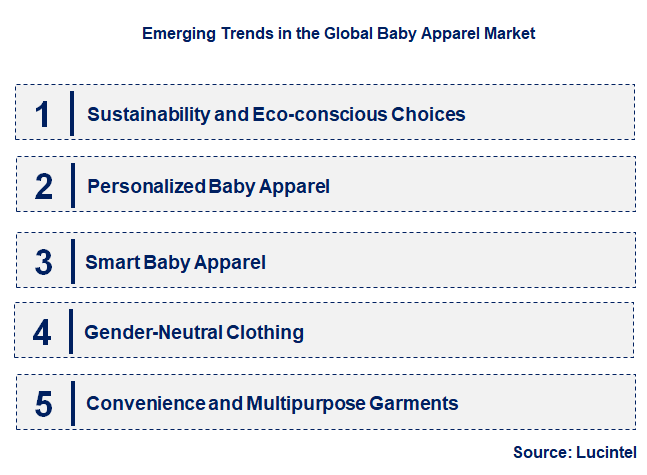
Emerging Trends in the Baby Apparel Market
The baby apparel market is evolving with new consumer demands and technological advancements, driven by factors like sustainability, digitalization, and cultural preferences. These emerging trends are reshaping how baby clothing is designed, marketed, and sold. Let’s explore five key trends that are defining the future of baby apparel.• Sustainability and Eco-conscious Choices: Eco-friendly baby clothing made from organic cotton, bamboo, and recycled fabrics is becoming more popular. Brands are increasingly focusing on reducing their environmental footprint by adopting sustainable sourcing practices. This trend is also driven by rising consumer awareness about climate change and the desire to support brands with ethical practices.
• Personalized Baby Apparel: Customization of baby clothes, from embroidered names to bespoke designs, is gaining momentum. Personalized items are increasingly popular in both online and brick-and-mortar stores, offering parents a way to express individuality while ensuring their babys clothes are unique. Advances in digital printing and embroidery technology are making personalization more affordable and accessible.
• Smart Baby Apparel: Smart clothing for babies is a growing trend, integrating technology such as temperature regulation fabrics, heart rate monitors, and moisture-wicking features. These clothes provide added comfort and safety by automatically adjusting to the baby’s needs. Tech-savvy parents are keen on these innovations for both practical and health-related reasons.
• Gender-Neutral Clothing: Gender-neutral baby apparel is on the rise, with brands moving away from traditionally pink and blue designs. This shift reflects broader societal movements towards inclusivity and equality. Parents are increasingly opting for neutral colors and unisex designs, which offer flexibility for future use and appeal to a more diverse customer base.
• Convenience and Multipurpose Garments: The demand for multifunctional baby clothing is increasing as parents seek practicality. Clothing that can be worn across different seasons or adjusted as the baby grows is becoming a key selling point. Brands are designing items that can be used in multiple ways, such as reversible jackets or onesies that transition into a two-piece set. These emerging trends in baby apparel reflect the growing focus on sustainability, personalization, and technological innovation. As the market continues to evolve, these trends are shaping consumer expectations and challenging brands to adapt. By embracing these shifts, companies can remain competitive in the ever-changing baby apparel landscape.
Recent Development in the Baby Apparel Market
Recent developments in the baby apparel market have been driven by innovation, sustainability, and changing consumer behaviors. These developments reflect broader shifts in lifestyle, technology, and environmental concerns. Let’s look at five key developments shaping the industry and their implications for the market.• Sustainable Fabrics and Materials: The shift towards sustainable fabrics like organic cotton, bamboo, and recycled materials has gained significant momentum. Brands are increasingly prioritizing the use of non-toxic, eco-friendly fabrics, driven by consumer demand for greener choices. This development is impacting production processes and supply chains, with companies investing in sustainable practices to remain competitive.
• Rise of E-commerce and Direct-to-Consumer Sales: The growth of online shopping has revolutionized the baby apparel market, with e-commerce platforms dominating sales. Brands are shifting toward direct-to-consumer sales models, leveraging social media, influencer marketing, and targeted online campaigns. This shift provides brands with more control over their customer experience and allows for better data insights.
• Integration of Technology in Design and Manufacturing: Technology is being integrated into both design and production of baby apparel. 3D design software, AI-powered trend forecasting, and automated manufacturing processes are allowing for faster, more efficient production. These innovations are enabling brands to offer a more customized and responsive product range, reducing time-to-market for new collections.
• Global Expansion of Luxury Baby Brands: Luxury baby apparel brands are expanding globally, targeting affluent markets in Asia and the Middle East. High-end baby clothing is becoming more popular, driven by increasing disposable incomes and a growing demand for premium products. The luxury market is also benefiting from social media and celebrity endorsements, which help drive awareness and demand.
• Focus on Functional, High-Quality Products: Consumers are increasingly looking for functional baby apparel that combines durability with comfort and style. High-quality fabrics, easy-to-use fastenings, and multifunctional designs are becoming key selling points. This shift is pushing brands to innovate by creating products that offer convenience for busy parents without compromising on aesthetics. These recent developments are transforming the baby apparel market, with a focus on sustainability, innovation, and luxury. Brands that embrace these trends and adapt to consumer preferences are likely to remain competitive, while those that fail to innovate may struggle to meet the evolving demands of the market.
Strategic Growth Opportunities in the Baby Apparel Market
The baby apparel market offers numerous growth opportunities driven by changing consumer preferences, technological advancements, and evolving retail landscapes. Key applications in design, retail, and manufacturing are providing new avenues for growth. Here are five critical growth opportunities in the sector.• Sustainability as a Competitive Edge: With consumers prioritizing eco-conscious choices, there is a significant growth opportunity in producing sustainable baby apparel. Brands can capitalize on the growing demand for organic, recycled, and non-toxic materials. Investing in eco-friendly practices will not only help brands meet consumer demands but also provide a competitive edge in the crowded marketplace.
• Direct-to-Consumer Channels: The rise of e-commerce and social media has created a booming opportunity for direct-to-consumer sales in the baby apparel sector. DTC brands can leverage digital platforms to reach a global audience, cutting out intermediaries and building direct relationships with customers. This model provides greater control over pricing, branding, and customer experience.
• Technological Integration in Manufacturing: Advancing technologies such as 3D printing, automation, and AI are transforming the production of baby apparel. These technologies allow for more efficient production cycles, personalized designs, and faster delivery times. Brands that adopt these technologies will benefit from streamlined operations and a more responsive supply chain.
• Customization and Personalization: The growing demand for personalized products provides an opportunity for baby apparel brands to offer bespoke clothing. This can include custom embroidery, design choices, and tailored fits. By offering personalization, brands can differentiate themselves from competitors and provide parents with a more individualized shopping experience.
• International Market Expansion: There is significant growth potential in expanding into emerging markets, particularly in Asia-Pacific and Latin America. With rising disposable incomes and an expanding middle class, countries like China, India, and Brazil present untapped opportunities for baby apparel brands. Localizing products and adapting to cultural preferences will be essential for success in these regions. These strategic growth opportunities offer exciting prospects for the baby apparel market. Companies that focus on sustainability, digitalization, and technological advancements while expanding into new regions are well-positioned to capture the markets future growth.
Baby Apparel Market Driver and Challenges
The baby apparel market is shaped by various technological, economic, and regulatory factors, both driving growth and presenting challenges. Understanding the major drivers and challenges is essential for navigating the evolving landscape. Below are key drivers and challenges impacting the market today. The factors responsible for driving the baby apparel market include: 1. Growing Demand for Sustainable Products: Consumers are becoming more aware of environmental issues, driving demand for sustainable and eco-friendly baby apparel. This has led to an increase in the adoption of organic cotton, bamboo fibers, and recycled materials. Brands that focus on sustainability are better positioned to attract environmentally-conscious consumers. 2. Technological Advancements in Fabric Innovation: Technological innovation is a major driver in the baby apparel market, with new fabrics offering features like temperature regulation, moisture-wicking, and anti-microbial properties. These advancements improve comfort and safety for babies, creating more opportunities for brands to offer high-quality, functional products. 3. Rise in Disposable Incomes in Emerging Markets: As disposable incomes increase in emerging markets, there is greater demand for high-quality baby apparel. Middle-class growth in countries like China, India, and Brazil is expanding the market for premium baby products, driving global sales and encouraging international brands to enter these regions. 4. E-commerce and Online Retail Growth: The shift toward e-commerce and online shopping is one of the key drivers in the baby apparel market. Online platforms allow parents to conveniently shop for baby clothes, and e-commerce sales continue to grow rapidly, offering new growth avenues for baby apparel brands. 5. Changing Consumer Preferences: As consumer preferences shift towards more functional, versatile, and personalized baby apparel, brands are adapting by introducing new product lines. Parents are increasingly prioritizing convenience, durability, and style, creating a market for multifunctional and customizable baby clothing options. Challenges in the baby apparel market are: 1. Rising Production Costs: With the increasing demand for high-quality and sustainable materials, production costs are rising. For baby apparel brands, balancing quality with affordability becomes a significant challenge. These rising costs can squeeze margins, especially for brands that focus on low-cost production and face price sensitivity in some regions. 2. Supply Chain Disruptions: The baby apparel market faces challenges with supply chain disruptions, particularly related to global logistics, material shortages, and production delays. These disruptions can impact product availability and lead to increased lead times, affecting retailers ability to meet customer demand. 3. Regulatory Compliance and Safety Standards: The baby apparel market is subject to stringent safety standards and regulations, which vary by region. Adhering to these regulations and ensuring compliance with safety standards is a challenge for brands, particularly when expanding into new international markets with differing regulatory requirements. The baby apparel market is influenced by strong drivers such as technological advancements, e-commerce growth, and rising disposable incomes in emerging markets. However, challenges like rising production costs, supply chain disruptions, and regulatory compliance can hinder growth. Balancing these drivers and challenges will be key to navigating the future of the market.List of Baby Apparel Companies
Companies in the market compete on the basis of product quality offered. Major players in this market focus on expanding their manufacturing facilities, R&D investments, infrastructural development, and leverage integration opportunities across the value chain. With these strategies baby apparel companies cater increasing demand, ensure competitive effectiveness, develop innovative products & technologies, reduce production costs, and expand their customer base. Some of the baby apparel companies profiled in this report include-• Carters
• Hennes & Mauritz
• Gerber Childrenswear
• Cotton On Group
• The Childrens Place
• Industria de Diseño Textile
• Nike
• Mothercare
• Gianni Versace
• Burberry
Baby Apparel Market by Segment
The study includes a forecast for the global baby apparel market by type, material, distribution channel, end use, and region.Baby Apparel Market by Type [Value from 2019 to 2031]:
• Top Wear
• Bottom Wear
• Others
Baby Apparel Market by Material [Value from 2019 to 2031]:
• Cotton
• Wool
• Others
Baby Apparel Market by Distribution Channel [Value from 2019 to 2031]:
• Supermarket/Hypermarket
• Specialty Stores/Branded Stores
• Department Stores
• Online/E-commerce
• Others
Baby Apparel Market by End Use [Value from 2019 to 2031]:
• Girls
• Boys
Baby Apparel Market by Region [Value from 2019 to 2031]:
• North America
• Europe
• Asia Pacific
• The Rest of the World
Country Wise Outlook for the Baby Apparel Market
The baby apparel market is experiencing notable growth and transformation due to evolving consumer preferences, technological advancements, and changing economic and regulatory landscapes. This dynamic environment is shaping market trends, strategies, and opportunities in various regions. We will explore recent developments in the baby apparel market across key global players, emerging trends, developments, growth opportunities, and major market drivers and challenges.• United States: The U.S. baby apparel market has been significantly influenced by a demand for sustainable and eco-friendly products. Consumers are increasingly favoring organic cotton, natural dyes, and clothing made from recycled materials. Retailers are responding by introducing more sustainable options, while technology-driven solutions, such as AI-driven personalization, are enhancing shopping experiences.
• China: In China, the baby apparel market is growing rapidly due to the expanding middle class and rising disposable incomes. The preference for premium, high-quality products is increasing, particularly among urban families. E-commerce platforms are playing a significant role in driving sales, and there is a growing trend of luxury baby apparel among affluent families.
• Germany: Germanys baby apparel market is heavily focused on high-quality, safe, and functional clothing. European consumers prioritize the use of non-toxic materials and products with certifications. Additionally, there is increasing demand for multifunctional garments, which provide both comfort and style, reflecting the country’s preference for practical yet stylish baby clothes.
• India: In India, the baby apparel market is seeing significant growth due to increasing urbanization and a young population. There is a rising awareness of international fashion trends for babies, as well as an increasing inclination towards eco-conscious products. Local brands are emerging to meet this demand, focusing on affordable yet stylish options.
• Japan: Japan’s baby apparel market is influenced by a strong cultural preference for quality, safety, and design. High-tech fabrics with temperature regulation, odor control, and water resistance are becoming more popular. The market is also seeing a shift toward more modern, minimalist designs, with an emphasis on durability and easy maintenance for busy parents.

Features of the Global Baby Apparel Market
Market Size Estimates: Baby apparel market size estimation in terms of value ($B). Trend and Forecast Analysis: Market trends (2019 to 2024) and forecast (2025 to 2031) by various segments and regions. Segmentation Analysis: Baby apparel market size by various segments, such as by type, material, distribution channel, end use, and region in terms of value ($B). Regional Analysis: Baby apparel market breakdown by North America, Europe, Asia Pacific, and Rest of the World. Growth Opportunities: Analysis of growth opportunities in different types, materials, distribution channels, end uses, and regions for the baby apparel market. Strategic Analysis: This includes M&A, new product development, and competitive landscape of the baby apparel market. Analysis of competitive intensity of the industry based on Porter’s Five Forces model.
FAQ
Q1. What is the growth forecast for baby apparel market? Answer: The global baby apparel market is expected to grow with a CAGR of 6.2% from 2025 to 2031. Q2. What are the major drivers influencing the growth of the baby apparel market? Answer: The major drivers for this market are the increasing demand for organic baby clothing, the rising focus on eco-friendly baby apparel, and the growing preference for comfortable baby wear. Q3. What are the major segments for baby apparel market? Answer: The future of the baby apparel market looks promising with opportunities in the supermarket/hypermarket, specialty stores/branded store, department store, and online/e-commerce markets. Q4. Who are the key baby apparel market companies? Answer: Some of the key baby apparel companies are as follows:• Carters
• Hennes & Mauritz
• Gerber Childrenswear
• Cotton On Group
• The Childrens Place
• Industria de Diseño Textile
• Nike
• Mothercare
• Gianni Versace
• Burberry Q5. Which baby apparel market segment will be the largest in future? Answer: Lucintel forecasts that, within the type category, top wear is expected to witness higher growth over the forecast period. Q6. In baby apparel market, which region is expected to be the largest in next 5 years? Answer: In terms of region, APAC is expected to witness the highest growth over the forecast period. Q7. Do we receive customization in this report? Answer: Yes, Lucintel provides 10% customization without any additional cost.
Table of Contents
List of Figures
List of Tables
Methodology
- In-depth interviews of the major players in this market
- Detailed secondary research from competitors’ financial statements and published data
- Extensive searches of published works, market, and database information pertaining to industry news, company press releases, and customer intentions
- A compilation of the experiences, judgments, and insights of Lucintel’s professionals, who have analyzed and tracked this market over the years.


Buy Now
Choose a license that fits your team. Instant PDF delivery.
Prices exclude taxes. Instant delivery. Custom licensing available on request.
Key Questions
- • What are some of the most promising, high-growth opportunities for the baby apparel market by type (top wear, bottom wear, and others), material (cotton, wool, and others), distribution channel (supermarket/hypermarket, specialty stores/branded stores, department stores, online/e-commerce, and others), end use (girls and boys), and region (North America, Europe, Asia Pacific, and the Rest of the World)?
- • Which segments will grow at a faster pace and why?
- • Which region will grow at a faster pace and why?
- • What are the key factors affecting market dynamics? What are the key challenges and business risks in this market?
- • What are the business risks and competitive threats in this market?
- • What are the emerging trends in this market and the reasons behind them?
- • What are some of the changing demands of customers in the market?
- • What are the new developments in the market? Which companies are leading these developments?
- • Who are the major players in this market? What strategic initiatives are key players pursuing for business growth?
- • What are some of the competing products in this market and how big of a threat do they pose for loss of market share by material or product substitution?
- • What M&A activity has occurred in the last 5 years and what has its impact been on the industry? For any questions related to Baby Apparel Market, Baby Apparel Market Size, Baby Apparel Market Growth, Baby Apparel Market Analysis, Baby Apparel Market Report, Baby Apparel Market Share, Baby Apparel Market Trends, Baby Apparel Market Forecast, Baby Apparel Companies, write Lucintel analyst at email: helpdesk@lucintel.com. We will be glad to get back to you soon.


