
Report Feature
Aviation Fuel System Maintenance and Repair Market Trends and Forecast
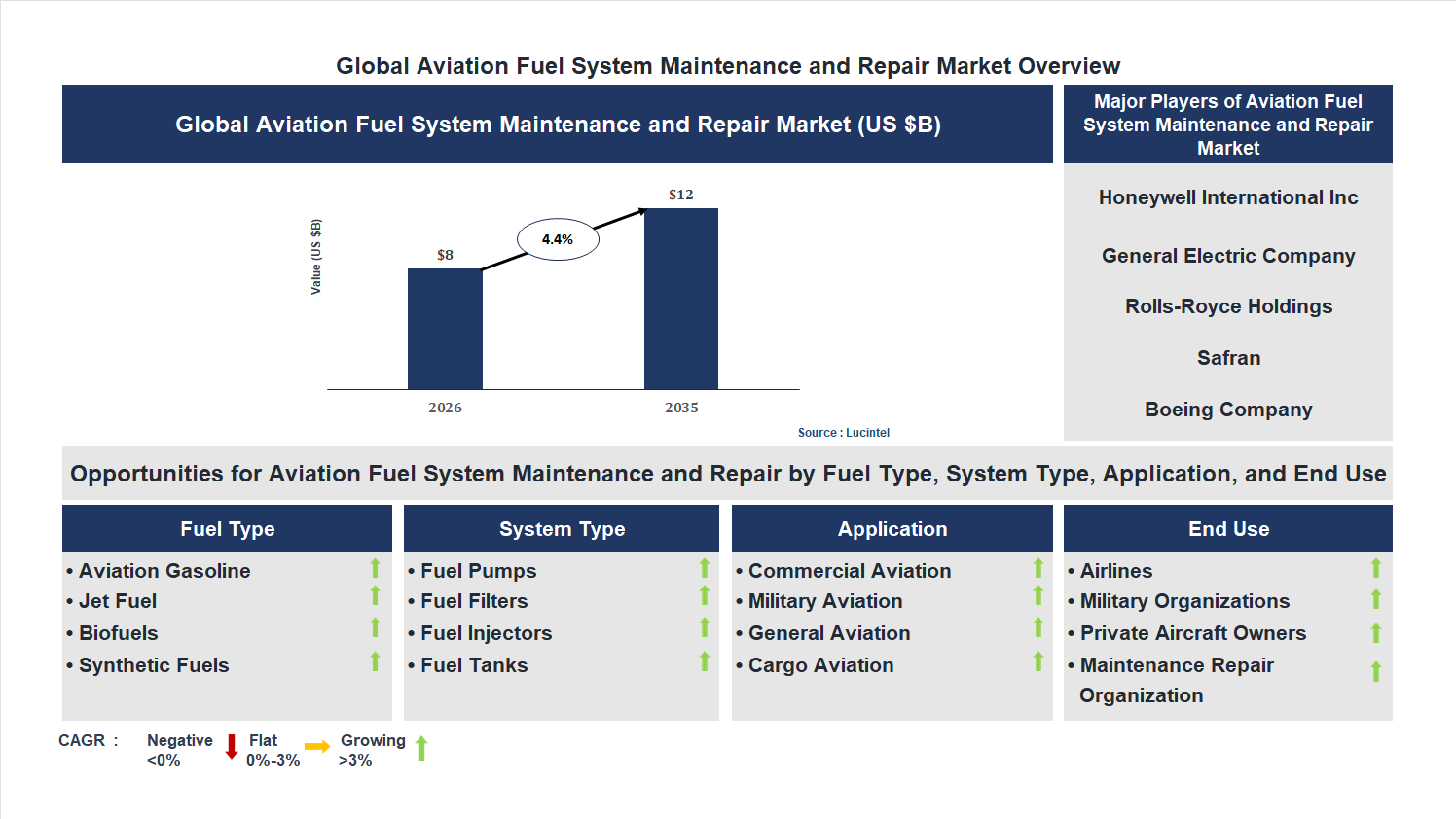
The future of the global aviation fuel system maintenance and repair market looks promising with opportunities in the airline, military organization, private aircraft owner, and maintenance repair organization markets. The global aviation fuel system maintenance and repair market is expected to reach an estimated $12 billion by 2035 with a CAGR of 4.4% from 2026 to 2035. The major drivers for this market are the increasing demand for reliable fuel system performance, the rising need for aircraft safety compliance standards, and the growing focus on efficient maintenance repair services.• Lucintel forecasts that, within the fuel type category, jet fuel is expected to witness the highest growth over the forecast period.
• Within the end use category, airline is expected to witness the highest growth.
• In terms of region, APAC is expected to witness the highest growth over the forecast period. Gain valuable insights for your business decisions with our comprehensive 150+ page report. Sample figures with some insights are shown below.
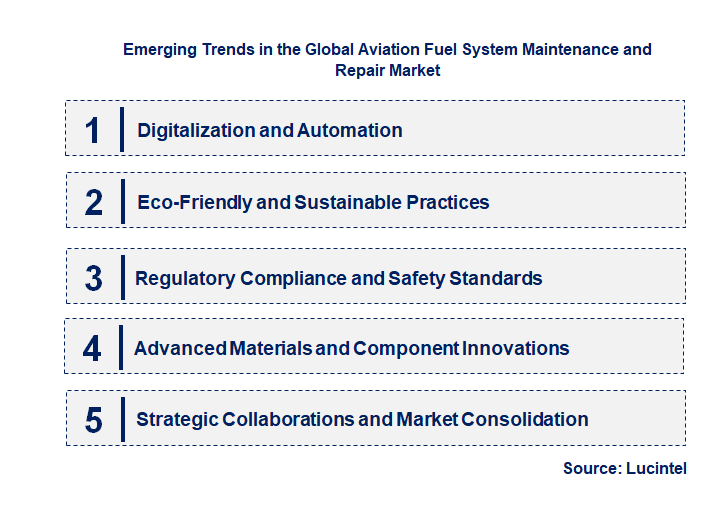
Emerging Trends in the Aviation Fuel System Maintenance and Repair Market
The aviation fuel system maintenance and repair market is experiencing rapid evolution driven by technological advancements, regulatory changes, and increasing safety standards. As the aviation industry expands globally, the demand for efficient, reliable, and environmentally sustainable fuel systems grows. Innovations in automation, digitalization, and eco-friendly practices are transforming maintenance procedures and operational protocols. Market players are focusing on enhancing safety, reducing downtime, and complying with stringent environmental regulations. These developments are not only improving operational efficiency but also shaping future growth trajectories, making the market more competitive and resilient. The following key trends highlight the major shifts currently shaping this industry.• Digitalization and Automation: The integration of digital tools and automation technologies is revolutionizing maintenance processes. Advanced sensors, IoT devices, and data analytics enable real-time monitoring of fuel systems, predicting failures before they occur. Automated diagnostic tools reduce manual errors and improve efficiency, leading to faster turnaround times. This trend enhances safety, minimizes downtime, and lowers maintenance costs, providing airlines with more reliable operations. As digitalization advances, predictive maintenance becomes standard, transforming traditional reactive approaches into proactive strategies, ultimately boosting overall system performance and safety standards.
• Eco-Friendly and Sustainable Practices: Growing environmental concerns and stricter regulations are pushing the industry toward greener solutions. Development of biofuels, synthetic fuels, and more efficient fuel management systems reduces carbon emissions and environmental impact. Airlines and maintenance providers are adopting sustainable practices such as recycling fuel and optimizing fuel consumption. These initiatives not only comply with international standards but also appeal to environmentally conscious consumers. The shift toward sustainability is prompting innovations in fuel system design, leading to cleaner, more efficient operations that align with global climate goals, thereby reshaping market offerings and competitive dynamics.
• Regulatory Compliance and Safety Standards: Increasingly stringent regulations are driving upgrades in fuel system maintenance and repair protocols. Authorities like the FAA and EASA impose rigorous safety and environmental standards, necessitating continuous updates in maintenance procedures. Compliance ensures operational safety and avoids penalties, fostering trust among stakeholders. Maintenance providers are investing in training, certification, and advanced inspection technologies to meet these standards. This trend emphasizes safety, reliability, and legal adherence, influencing market growth by encouraging innovation and higher quality service offerings, ultimately ensuring safer skies and more resilient fuel systems.
• Advanced Materials and Component Innovations: The development of high-performance materials and components is enhancing fuel system durability and efficiency. Lightweight composites, corrosion-resistant alloys, and advanced sealing technologies extend the lifespan of fuel system parts. These innovations reduce maintenance frequency and costs while improving system reliability. Manufacturers are focusing on designing components that withstand extreme conditions and reduce fuel leakage risks. This trend results in more robust, efficient, and environmentally friendly fuel systems, enabling airlines to operate more sustainably and cost-effectively, thus driving market growth and technological leadership.
• Strategic Collaborations and Market Consolidation: The industry is witnessing increased partnerships between OEMs, maintenance providers, and technology firms. Collaborations facilitate the sharing of expertise, technology transfer, and development of innovative solutions. Mergers and acquisitions are consolidating market players, creating more comprehensive service offerings and expanding geographic reach. These strategic moves enhance competitiveness, streamline supply chains, and foster innovation. As a result, the market becomes more dynamic, with integrated solutions that improve maintenance efficiency and safety standards, ultimately benefiting end-users through better service quality and reduced operational risks. These emerging trends are fundamentally reshaping the aviation fuel system maintenance and repair market by fostering innovation, enhancing safety, promoting sustainability, and encouraging strategic collaborations. These developments are driving efficiency, reducing costs, and ensuring compliance, positioning the industry for sustainable growth in a competitive global landscape.
Recent Developments in the Aviation Fuel System Maintenance and Repair Market
The aviation fuel system maintenance and repair market is experiencing rapid growth driven by increasing air travel demand, technological advancements, and stringent safety regulations. As airlines and maintenance providers seek more efficient, reliable, and environmentally friendly solutions, the industry is evolving with innovative practices and expanding service networks. These developments are shaping a more resilient and sustainable market landscape, offering significant opportunities for stakeholders to enhance operational efficiency, reduce costs, and meet regulatory standards.• Technological Innovations in Fuel System Diagnostics: Advancements in sensor technology and real-time monitoring tools enable precise detection of system faults, reducing downtime and maintenance costs. These innovations improve safety and operational efficiency by providing early warnings of potential failures, allowing proactive repairs. As a result, airlines benefit from minimized flight disruptions and enhanced safety standards, fostering trust and compliance within the industry.
• Adoption of Eco-Friendly Fuel Technologies: The shift towards sustainable aviation fuels (SAFs) and alternative energy sources is gaining momentum. These eco-friendly solutions help reduce carbon emissions and meet global environmental regulations. The integration of such fuels into maintenance routines requires specialized handling and system modifications, creating new service opportunities. This development supports airlines sustainability goals and enhances their market reputation.
• Expansion of Service Networks and Aftermarket Solutions: Major players are expanding their maintenance and repair facilities globally, ensuring quicker turnaround times and localized support. This growth improves accessibility for regional airlines and reduces logistical costs. Enhanced aftermarket services, including training and spare parts supply, strengthen customer loyalty and enable faster response to operational issues, thereby boosting overall market competitiveness.
• Implementation of Digital Maintenance Platforms: Digitalization of maintenance processes through AI and IoT platforms allows for predictive analytics and streamlined workflows. These platforms facilitate efficient scheduling, inventory management, and fault diagnosis, reducing operational costs. The adoption of digital solutions enhances transparency and compliance, leading to improved safety records and customer satisfaction, ultimately driving market growth through increased efficiency.
• Regulatory Enhancements and Safety Standards: Governments and aviation authorities are imposing stricter safety and maintenance regulations, necessitating advanced repair techniques and compliance measures. These regulatory changes drive demand for specialized maintenance services and certified repair facilities. Ensuring adherence to these standards improves safety outcomes, reduces liability, and fosters industry trust, thereby creating a more robust and compliant market environment. The recent developments in technology, sustainability, service expansion, digitalization, and regulation are collectively transforming the aviation fuel system maintenance and repair market. These changes are fostering increased safety, efficiency, and environmental responsibility, which are critical for industry growth. As a result, stakeholders are better positioned to meet evolving demands, capitalize on new opportunities, and sustain long-term competitiveness in a dynamic aviation landscape.
Strategic Growth Opportunities in the Aviation Fuel System Maintenance and Repair Market
The aviation fuel system maintenance and repair market is experiencing significant growth driven by increasing air travel demand, technological advancements, and stringent safety regulations. Airlines and maintenance providers are investing heavily in efficient, reliable fuel systems to ensure safety and operational efficiency. Emerging markets and the adoption of innovative repair techniques further expand opportunities. This evolving landscape offers numerous avenues for growth, innovation, and competitive advantage, making it a critical sector within the broader aerospace maintenance industry.• Growing Demand for Fleet Modernization and Upgrades: The increasing number of aging aircraft requires extensive fuel system maintenance and upgrades to meet safety standards. Airlines are investing in modern fuel management systems, leak detection, and corrosion prevention to enhance efficiency and safety. This demand drives the need for specialized repair services, component replacements, and system overhauls, creating substantial growth opportunities for service providers. Additionally, new aircraft models incorporate advanced fuel systems, further expanding the market scope.
• Adoption of Advanced Diagnostic and Repair Technologies: The integration of IoT, AI, and predictive analytics in fuel system maintenance is revolutionizing the industry. These technologies enable real-time monitoring, early fault detection, and predictive maintenance, reducing downtime and operational costs. Companies investing in these innovations can offer more efficient, accurate repair services, attracting clients seeking minimized aircraft downtime. The adoption of such technologies is expected to significantly enhance service quality and market competitiveness.
• Expansion in Emerging Markets and Developing Regions: Rapid economic growth and increasing air travel in regions like Asia-Pacific, Middle East, and Africa are fueling demand for aviation fuel system maintenance. Airlines in these regions are expanding their fleets and upgrading existing systems to meet international safety standards. Local service providers are also emerging, creating opportunities for partnerships and technology transfer. This regional expansion is expected to drive market growth, especially as regulatory frameworks become more stringent globally.
• Focus on Sustainability and Eco-Friendly Fuel Systems: The shift towards sustainable aviation fuels and environmentally friendly systems is creating new maintenance and repair needs. Innovations in biofuels, fuel efficiency, and emission reduction technologies require specialized maintenance procedures. Companies that develop eco-friendly repair solutions and adapt existing systems to sustainable fuels will gain a competitive edge. This focus aligns with global environmental goals and opens avenues for market differentiation and growth.
• Increasing Regulatory Compliance and Safety Standards: Stringent international safety and maintenance regulations are compelling airlines and service providers to invest in comprehensive fuel system inspections and repairs. Compliance with standards such as FAA, EASA, and ICAO mandates ensures safety and operational reliability. This regulatory environment drives demand for certified maintenance services, training, and quality assurance programs. Companies that can efficiently navigate these standards will benefit from sustained growth opportunities in the market. The overall market outlook is positively influenced by these growth opportunities, fostering innovation, regional expansion, and technological advancements. As stakeholders adapt to evolving safety, environmental, and operational demands, the aviation fuel system maintenance and repair market is poised for substantial growth, supporting the broader aerospace industry’s sustainability and efficiency goals.
Aviation Fuel System Maintenance and Repair Market Driver and Challenges
The aviation fuel system maintenance and repair market is influenced by a variety of technological, economic, and regulatory factors. Rapid advancements in aviation technology, increasing safety standards, and stringent environmental regulations are shaping the industry landscape. Economic factors such as rising air travel demand and fluctuating fuel prices also play a significant role. Additionally, regulatory frameworks aimed at reducing emissions and enhancing safety protocols impact operational practices. These drivers and challenges collectively determine the growth trajectory and operational dynamics of the market, requiring stakeholders to adapt continuously to evolving technological innovations, economic conditions, and regulatory requirements. The factors responsible for driving the aviation fuel system maintenance and repair market include:-• Technological Advancements: The integration of innovative diagnostic tools, automation, and predictive maintenance technologies enhances efficiency and reduces downtime. These advancements enable quicker identification of faults, improve safety, and lower maintenance costs, thereby increasing market demand. As aircraft systems become more complex, the need for sophisticated maintenance solutions grows, encouraging manufacturers and service providers to invest in cutting-edge technologies. This continuous innovation fosters a competitive environment and supports the expansion of maintenance capabilities, ultimately driving market growth.
• Increasing Air Traffic and Fleet Expansion: The surge in global air travel, driven by economic growth and rising middle-class populations, results in increased aircraft utilization and fleet expansion. Airlines require more frequent maintenance and repair services to ensure safety and operational efficiency. This rising demand for aircraft maintenance services directly correlates with market growth, as operators seek reliable and timely maintenance solutions to minimize downtime and maximize fleet availability. The expanding fleet also necessitates the development of specialized maintenance facilities and skilled workforce, further propelling market expansion.
• Stringent Safety and Environmental Regulations: Governments and international agencies enforce strict safety standards and environmental regulations, compelling airlines and maintenance providers to adhere to higher compliance levels. These regulations often mandate regular inspections, use of eco-friendly materials, and emission reduction measures, which increase maintenance complexity and costs. Compliance ensures safety and sustainability but also drives innovation in maintenance practices and equipment. The need to meet evolving regulatory standards encourages investment in advanced maintenance technologies and skilled personnel, fostering market growth while ensuring safety and environmental sustainability.
• Rising Focus on Predictive and Preventive Maintenance: The shift from reactive to predictive maintenance practices is driven by the need to reduce operational costs and prevent unexpected failures. Advanced sensors, data analytics, and IoT enable real-time monitoring of aircraft systems, allowing for timely interventions. This proactive approach minimizes downtime, extends equipment lifespan, and enhances safety, making it highly attractive to airlines and maintenance providers. The adoption of predictive maintenance technologies is accelerating, supported by digital transformation initiatives, and is expected to significantly influence market dynamics by improving efficiency and reducing overall maintenance costs.
• Growing Investment in Maintenance Infrastructure: The expansion of maintenance, repair, and overhaul (MRO) facilities worldwide is a key driver. Investments are being made to upgrade existing infrastructure and establish new facilities to accommodate increasing aircraft numbers. This growth is supported by government initiatives, private investments, and strategic partnerships aimed at enhancing maintenance capabilities. Improved infrastructure ensures faster turnaround times, higher quality standards, and better resource management, which collectively boost market growth. The development of specialized training centers and advanced testing laboratories further supports the industry’s evolution. The challenges facing the aviation fuel system maintenance and repair market include:-
• High Maintenance Costs: The complexity of modern aircraft systems and the need for specialized skills contribute to escalating maintenance expenses. Advanced diagnostic tools, replacement parts, and compliance with stringent safety standards increase operational costs for airlines and maintenance providers. Managing these costs while maintaining safety and efficiency remains a significant challenge, especially for smaller operators with limited budgets. Cost pressures may hinder the adoption of new technologies and impact profit margins, thereby affecting overall market growth.
• Regulatory Compliance and Certification Delays: Navigating the complex landscape of safety and environmental regulations can be time-consuming and costly. Certification processes for new maintenance procedures and technologies often involve lengthy approval cycles, delaying their deployment. Non-compliance risks penalties and reputational damage, while delays in certification can hinder innovation and market responsiveness. Ensuring timely compliance without compromising safety standards is a persistent challenge for industry stakeholders, impacting the pace of technological adoption and market expansion.
• Skilled Workforce Shortage: The industry faces a shortage of qualified maintenance technicians and engineers due to the specialized nature of aviation maintenance and the aging workforce. This talent gap hampers the ability to meet increasing maintenance demands and maintain high safety standards. Training and retaining skilled personnel require significant investment, and the lack of adequately trained staff can lead to delays, increased errors, and safety risks. Addressing this challenge is critical for sustaining growth and ensuring the reliability of maintenance services. The aviation fuel system maintenance and repair market is shaped by technological innovations, increasing demand from expanding fleets, and stringent safety and environmental regulations. While these drivers promote growth, challenges such as high costs, regulatory delays, and workforce shortages pose significant hurdles. The industry’s future depends on how effectively stakeholders can leverage technological advancements and infrastructure investments while overcoming operational and regulatory challenges. Overall, the market is poised for growth, driven by ongoing innovation and increasing global air traffic, but must navigate complex challenges to sustain this momentum.
List of Aviation Fuel System Maintenance and Repair Companies
Companies in the market compete on the basis of product quality offered. Major players in this market focus on expanding their manufacturing facilities, R&D investments, infrastructural development, and leverage integration opportunities across the value chain. With these strategies aviation fuel system maintenance and repair companies cater increasing demand, ensure competitive effectiveness, develop innovative products & technologies, reduce production costs, and expand their customer base. Some of the aviation fuel system maintenance and repair companies profiled in this report include-• Honeywell International Inc
• General Electric Company
• Rolls-Royce Holdings
• Safran
• Boeing Company
• Airbus
• Woodward Inc.
Aviation Fuel System Maintenance and Repair Market by Segment
The study includes a forecast for the global aviation fuel system maintenance and repair market by fuel type, system type, application, end use, and region.Aviation Fuel System Maintenance and Repair Market by Fuel Type [Value from 2019 to 2035]:
• Aviation Gasoline
• Jet Fuel
• Biofuels
• Synthetic Fuels
Aviation Fuel System Maintenance and Repair Market by System Type [Value from 2019 to 2035]:
• Fuel Pumps
• Fuel Filters
• Fuel Injectors
• Fuel Tanks
Aviation Fuel System Maintenance and Repair Market by Application [Value from 2019 to 2035]:
• Commercial Aviation
• Military Aviation
• General Aviation
• Cargo Aviation
Aviation Fuel System Maintenance and Repair Market by End Use [Value from 2019 to 2035]:
• Airlines
• Military Organizations
• Private Aircraft Owners
• Maintenance Repair Organizations
Aviation Fuel System Maintenance and Repair Market by Region [Value from 2019 to 2035]:
• North America
• Europe
• Asia Pacific
• The Rest of the World
Country Wise Outlook for the Aviation Fuel System Maintenance and Repair Market
The aviation fuel system maintenance and repair market is experiencing rapid growth driven by increasing air travel demand, technological advancements, and stringent safety regulations worldwide. Countries are investing in modernizing infrastructure, adopting innovative maintenance techniques, and enhancing safety standards to ensure efficient fuel system operations. The markets evolution is also influenced by environmental concerns, prompting the adoption of sustainable practices and alternative fuels. As the aviation industry recovers from recent disruptions, key players are focusing on expanding service networks and integrating digital solutions to improve maintenance efficiency and safety. These developments reflect a global push toward more reliable, eco-friendly, and technologically advanced fuel system maintenance solutions.• United States: The US market is witnessing significant technological innovation, including the adoption of predictive maintenance using IoT sensors and data analytics. Major airlines and maintenance providers are investing in digital transformation to enhance safety and reduce downtime. Regulatory agencies are enforcing stricter safety standards, prompting upgrades in fuel system inspection and repair procedures. Additionally, the US is focusing on sustainable practices, exploring alternative fuels and environmentally friendly maintenance techniques to meet emission reduction targets.
• China: China is rapidly expanding its aviation infrastructure, leading to increased demand for fuel system maintenance and repair services. The government is encouraging technological innovation and localization of maintenance equipment to reduce reliance on imports. Chinese companies are adopting advanced diagnostic tools and automation technologies to improve efficiency and safety standards. The country’s focus on expanding its airline fleet and airport network is driving growth in the maintenance sector, with a particular emphasis on cost-effective and scalable solutions.
• Germany: Germanys market is characterized by high safety standards and technological sophistication. The country is investing in advanced diagnostic and repair technologies, including robotic inspection systems and digital twins for predictive maintenance. German companies are also focusing on environmentally sustainable practices, such as reducing chemical waste and energy consumption during maintenance. The strong presence of major aerospace firms and a well-established regulatory framework support continuous innovation and high-quality service delivery.
• India: Indias aviation sector is experiencing rapid growth, leading to increased demand for fuel system maintenance and repair services. The market is witnessing modernization efforts, including the adoption of digital tools and automation to improve efficiency. The government’s focus on expanding airport infrastructure and promoting regional connectivity is boosting maintenance activities. Indian companies are also collaborating with global players to adopt best practices and advanced technologies, aiming to meet international safety standards and reduce operational costs.
• Japan: Japan is emphasizing technological innovation and safety in its aviation fuel system maintenance sector. The country is investing in automation, robotics, and AI-driven diagnostics to enhance maintenance precision and safety. Japan’s focus on environmental sustainability is reflected in efforts to develop eco-friendly maintenance practices and alternative fuel solutions. The mature aerospace industry in Japan supports continuous R&D, fostering advancements in predictive maintenance and digital monitoring systems to ensure high safety and efficiency standards.

Features of the Global Aviation Fuel System Maintenance and Repair Market
Market Size Estimates: Aviation fuel system maintenance and repair market size estimation in terms of value ($B). Trend and Forecast Analysis: Market trends (2019 to 2025) and forecast (2026 to 2035) by various segments and regions. Segmentation Analysis: Aviation fuel system maintenance and repair market size by various segments, such as by fuel type, system type, application, end use, and region in terms of value ($B). Regional Analysis: Aviation fuel system maintenance and repair market breakdown by North America, Europe, Asia Pacific, and Rest of the World. Growth Opportunities: Analysis of growth opportunities in different fuel types, system types, applications, end uses, and regions for the aviation fuel system maintenance and repair market. Strategic Analysis: This includes M&A, new product development, and competitive landscape of the aviation fuel system maintenance and repair market. Analysis of competitive intensity of the industry based on Porter’s Five Forces model.
FAQ
Q1. What is the aviation fuel system maintenance and repair market size? Answer: The global aviation fuel system maintenance and repair market is expected to reach an estimated $12 billion by 2035. Q2. What is the growth forecast for aviation fuel system maintenance and repair market? Answer: The global aviation fuel system maintenance and repair market is expected to grow with a CAGR of 4.4% from 2026 to 2035. Q3. What are the major drivers influencing the growth of the aviation fuel system maintenance and repair market? Answer: The major drivers for this market are the increasing demand for reliable fuel system performance, the rising need for aircraft safety compliance standards, and the growing focus on efficient maintenance repair services. Q4. What are the major segments for aviation fuel system maintenance and repair market? Answer: The future of the aviation fuel system maintenance and repair market looks promising with opportunities in the airline, military organization, private aircraft owner, and maintenance repair organization markets. Q5. Who are the key aviation fuel system maintenance and repair market companies? Answer: Some of the key aviation fuel system maintenance and repair companies are as follows:• Honeywell International Inc
• General Electric Company
• Rolls-Royce Holdings
• Safran
• Boeing Company
• Airbus
• Woodward Inc. Q6. Which aviation fuel system maintenance and repair market segment will be the largest in future? Answer: Lucintel forecasts that, within the fuel type category, jet fuel is expected to witness the highest growth over the forecast period. Q7. In aviation fuel system maintenance and repair market, which region is expected to be the largest in next 8 years? Answer: In terms of region, APAC is expected to witness the highest growth over the forecast period. Q8. Do we receive customization in this report? Answer: Yes, Lucintel provides 10% customization without any additional cost.
Table of Contents
List of Figures
List of Tables
Methodology
- In-depth interviews of the major players in this market
- Detailed secondary research from competitors’ financial statements and published data
- Extensive searches of published works, market, and database information pertaining to industry news, company press releases, and customer intentions
- A compilation of the experiences, judgments, and insights of Lucintel’s professionals, who have analyzed and tracked this market over the years.


Buy Now
Choose a license that fits your team. Instant PDF delivery.
Prices exclude taxes. Instant delivery. Custom licensing available on request.
Key Questions
- • What are some of the most promising, high-growth opportunities for the aviation fuel system maintenance and repair market by fuel type (aviation gasoline, jet fuel, biofuels, and synthetic fuels), system type (fuel pumps, fuel filters, fuel injectors, and fuel tanks), application (commercial aviation, military aviation, general aviation, and cargo aviation), end use (airlines, military organizations, private aircraft owners, and maintenance repair organizations), and region (North America, Europe, Asia Pacific, and the Rest of the World)?
- • Which segments will grow at a faster pace and why?
- • Which region will grow at a faster pace and why?
- • What are the key factors affecting market dynamics? What are the key challenges and business risks in this market?
- • What are the business risks and competitive threats in this market?
- • What are the emerging trends in this market and the reasons behind them?
- • What are some of the changing demands of customers in the market?
- • What are the new developments in the market? Which companies are leading these developments?
- • Who are the major players in this market? What strategic initiatives are key players pursuing for business growth?
- • What are some of the competing products in this market and how big of a threat do they pose for loss of market share by material or product substitution?
- • What M&A activity has occurred in the last 5 years and what has its impact been on the industry? For any questions related to Aviation Fuel System Maintenance and Repair Market, Aviation Fuel System Maintenance and Repair Market Size, Aviation Fuel System Maintenance and Repair Market Growth, Aviation Fuel System Maintenance and Repair Market Analysis, Aviation Fuel System Maintenance and Repair Market Report, Aviation Fuel System Maintenance and Repair Market Share, Aviation Fuel System Maintenance and Repair Market Trends, Aviation Fuel System Maintenance and Repair Market Forecast, Aviation Fuel System Maintenance and Repair Companies, write Lucintel analyst at email: helpdesk@lucintel.com. We will be glad to get back to you soon.


