Agricultural Biotechnology Market Report: Trends, Forecast and Competitive Analysis to 2035

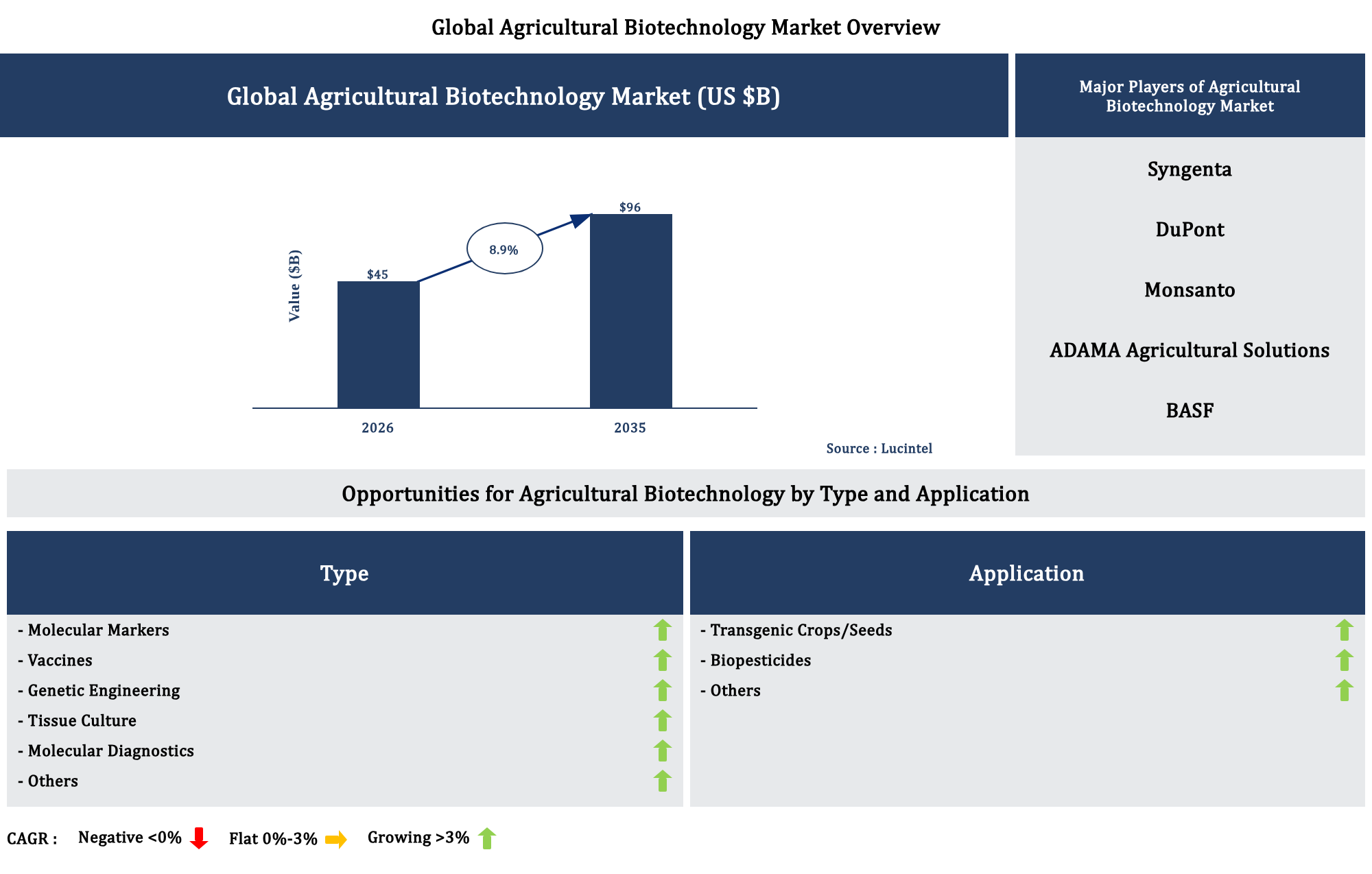
Key data points: The market size in 2035 = $96 billion, growth forecast = 8.9% annually for the next 9 years. Scroll below to get more insights. This market report covers trends, opportunities and forecasts in agricultural biotechnology market to 2035 by type (molecular markers, vaccines, genetic engineering, tissue culture, molecular diagnostics, and others), application (transgenic crops/seeds, biopesticides, and others), and region (North America, Europe, Asia Pacific, and the Rest of the World)

Publisher: Lucintel Last Updated: July 2026
See Pricing

Download Sample Report

| ✨ New Download Sample report — Get instant insights! | ✨ New Download Sample report — Get instant insights!

Agricultural Biotechnology Market Report: Trends, Forecast and Competitive Analysis to 2035

Agricultural Biotechnology Market

The future of the global agricultural biotechnology market looks promising with opportunities in the transgenic crop/seed, and biopesticide markets. The global agricultural biotechnology market is expected to reach an estimated $96 billion by 2035 with a CAGR of 8.9% from 2026 to 2035. The major drivers for this market are the increasing demand for crop yield improvement, the rising adoption of genetically modified crops, and the growing need for pest resistant varieties.

  • Lucintel forecasts that, within the type category, genetic engineering is expected to witness the highest growth over the forecast period due to the increasing adoption of genetic engineering technologies.
  • Within the application category, biopesticide is expected to witness higher growth due to the rising demand for biopesticide solutions.
  • In terms of regions, APAC is expected to witness the highest growth over the forecast period due to the growing agricultural biotechnology investments.

Gain valuable insights for your business decisions with our comprehensive 150+ page report. Sample figures with some insights are shown below.
Agricultural Biotechnology Market

Emerging Trends in the Agricultural Biotechnology Market

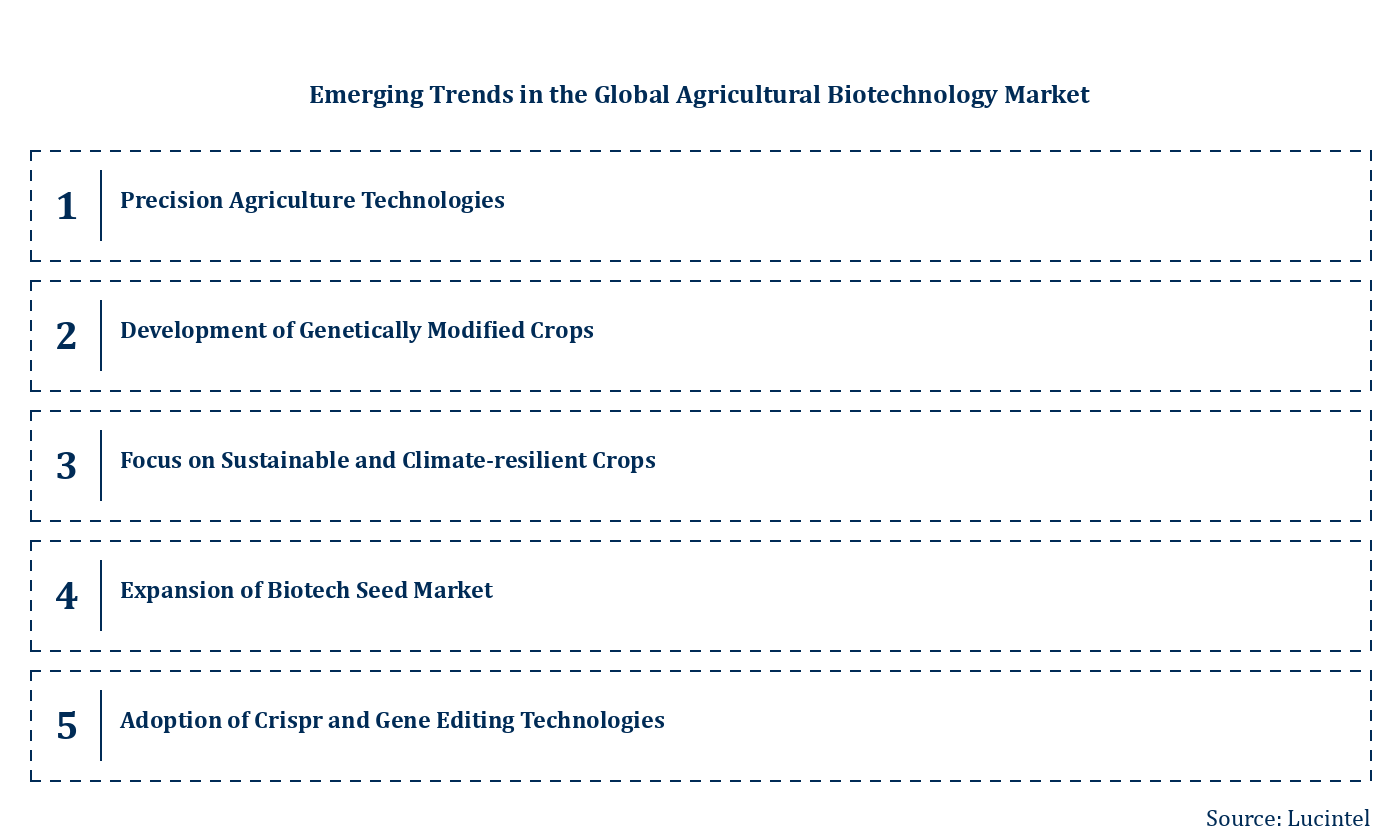
The agricultural biotechnology market is experiencing rapid evolution driven by technological advancements, increasing global food demand, and sustainability concerns. These developments are transforming traditional farming practices, enabling higher crop yields, pest resistance, and environmental resilience. As the industry adapts to these changes, new opportunities and challenges are emerging, shaping the future landscape of agriculture. Stakeholders are focusing on innovative solutions to meet the needs of a growing population while minimizing ecological impact. The following key trends highlight the major shifts currently influencing the agricultural biotechnology sector and its trajectory toward sustainable and efficient farming practices.

  • Precision Agriculture Technologies: The integration of biotechnology with digital tools is enabling precise application of inputs like water, fertilizers, and pesticides. This trend improves crop productivity, reduces waste, and minimizes environmental impact. Technologies such as GPS-guided equipment, remote sensing, and data analytics allow farmers to make informed decisions, leading to optimized resource use and higher yields. The adoption of these tools is accelerating, especially in developed regions, fostering sustainable farming practices and cost efficiencies.
  • Development of Genetically Modified Crops: Advances in genetic engineering are producing crops with enhanced traits such as pest resistance, drought tolerance, and improved nutritional content. These GM crops help address food security challenges by increasing yields and reducing reliance on chemical pesticides. Innovations include drought-tolerant maize and pest-resistant cotton, which are gaining regulatory approval and market acceptance. This trend is crucial for adapting agriculture to climate change and resource constraints, offering long-term benefits for farmers and consumers.
  • Focus on Sustainable and Climate-Resilient Crops: There is a growing emphasis on developing crops that can withstand extreme weather conditions and reduce environmental footprints. Biotechnology is used to create varieties that require less water, fertilizers, and pesticides, aligning with global sustainability goals. These climate-resilient crops help farmers adapt to changing climatic patterns, ensuring stable food production. This trend supports environmental conservation efforts and promotes the adoption of eco-friendly farming practices, contributing to the resilience of agricultural systems worldwide.
  • Expansion of Biotech Seed Market: The market for biotech seeds is expanding rapidly, driven by increasing demand for high-yield, pest-resistant, and climate-adapted varieties. Major players are investing heavily in R&D to develop innovative seed products, leading to a broader portfolio of options for farmers. This expansion enhances crop diversity and productivity, especially in developing countries where food security is critical. The growth of this segment is also fostering partnerships and licensing agreements, further accelerating technological dissemination across global markets.
  • Adoption of CRISPR and Gene Editing Technologies: The emergence of CRISPR and other gene-editing tools is revolutionizing crop development by enabling precise, efficient, and cost-effective genetic modifications. These technologies allow for rapid development of new crop varieties with desirable traits, reducing development time compared to traditional methods. Their regulatory landscape is evolving, with some regions adopting more permissive policies, which could accelerate market growth. This trend is poised to significantly impact crop innovation, offering solutions to pest resistance, disease management, and climate adaptation.

These trends are collectively reshaping the agricultural biotechnology market by fostering sustainable, efficient, and resilient farming practices. They are enabling stakeholders to meet the increasing global food demand while addressing environmental challenges, ultimately driving innovation and growth in the sector.
Agricultural Biotechnology Market by country

Recent Developments in the Agricultural Biotechnology Market

The agricultural biotechnology market is experiencing rapid growth driven by technological advancements, increasing global food demand, and the need for sustainable farming practices. Innovations in gene editing, crop protection, and biofertilizers are transforming agriculture, making it more efficient and environmentally friendly. Governments and private sectors are investing heavily to develop resilient crop varieties and reduce dependency on chemical inputs. These developments are shaping the future of agriculture, offering solutions to food security challenges and environmental concerns worldwide.

  • Gene Editing Technologies: Revolutionizing Crop Development: Gene editing tools like CRISPR are enabling precise modifications in crops, leading to higher yields, pest resistance, and drought tolerance. This accelerates the development of resilient crop varieties, reducing reliance on chemical pesticides and fertilizers. The technology's precision minimizes unintended effects, ensuring safety and regulatory approval. As a result, farmers can achieve better productivity with fewer inputs, boosting profitability and sustainability. This innovation is expected to dominate future crop improvement strategies globally.
  • Biopesticides and Biofertilizers: Promoting Sustainable Farming: The adoption of biopesticides and biofertilizers is increasing due to their eco-friendly nature and effectiveness. These biological solutions reduce chemical pesticide use, lowering environmental impact and health risks. They enhance soil fertility, promote plant growth, and improve crop yields. The market growth is driven by government incentives and consumer demand for organic produce. These bio-based inputs are particularly vital for organic farming and integrated pest management, contributing to sustainable agriculture practices worldwide.
  • Drought-Resistant and Climate-Resilient Crops: Developing crops that withstand extreme weather conditions is a key focus. These genetically modified or gene-edited crops help farmers maintain productivity amid climate change impacts like droughts and floods. They reduce water usage and improve crop stability, ensuring food security in vulnerable regions. The market for such crops is expanding rapidly, supported by government programs and international agencies. These innovations are crucial for adapting agriculture to changing climate patterns and ensuring long-term sustainability.
  • Digital Agriculture and Precision Farming: Integrating biotechnology with digital tools enhances farm management. Precision agriculture uses sensors, drones, and data analytics to optimize resource use, monitor crop health, and improve yields. Biotechnology provides the genetic basis for resilient crops, while digital tools enable targeted interventions. This synergy reduces input costs, minimizes environmental impact, and increases productivity. The market is witnessing significant investments, fostering smarter farming practices that meet the demands of a growing global population sustainably.
  • Regulatory Frameworks and Market Expansion: Evolving regulations are facilitating the adoption of biotech crops worldwide. Harmonized standards and approvals streamline market entry, encouraging innovation and investment. Emerging markets are adopting biotech solutions to address local agricultural challenges, expanding the global footprint. Intellectual property rights and safety assessments are critical components shaping market dynamics. These regulatory developments are fostering a conducive environment for biotech companies, accelerating product commercialization, and expanding market reach across diverse regions.

The overall impact of these developments is transforming the agricultural biotechnology market into a more innovative, sustainable, and resilient sector. Enhanced crop varieties, eco-friendly inputs, and digital integration are driving higher productivity and environmental benefits. Market growth is accelerating as stakeholders recognize the importance of biotechnology in ensuring food security and sustainable development. These advancements are positioning the market for continued expansion and global influence.

Strategic Growth Opportunities in the Agricultural Biotechnology Market

The agricultural biotechnology market is rapidly evolving, driven by the need for sustainable farming practices, increasing food demand, and technological advancements. Market growth is fueled by innovations in crop genetics, pest resistance, and climate resilience. Opportunities lie in expanding application areas, improving crop yields, and addressing global food security challenges. Strategic investments and collaborations are essential to capitalize on these trends, ensuring a competitive edge and sustainable development in the agricultural sector.

  • Crop Genetic Engineering for Higher Yields and Resilience: Developing genetically modified crops with enhanced yield potential, pest resistance, and drought tolerance offers significant growth. These innovations help farmers combat climate change impacts, reduce chemical usage, and improve food security. Sub-segments include biotech corn, soybeans, and rice, which dominate the market. Adoption is driven by regulatory approvals, consumer acceptance, and technological advancements, creating opportunities for market expansion and new product development.
  • Precision Agriculture Technologies for Efficient Resource Use: Precision farming tools such as GPS-guided equipment, remote sensing, and data analytics optimize resource utilization. These technologies improve crop management, reduce input costs, and increase productivity. The integration of IoT and AI enhances decision-making processes. Sub-segments include soil sensors, drone-based monitoring, and variable rate technology, which are gaining traction among farmers seeking sustainable and cost-effective solutions.
  • Development of Biopesticides and Biofertilizers for Sustainable Pest and Nutrient Management: Eco-friendly alternatives to chemical pesticides and fertilizers are gaining popularity. Biopesticides and biofertilizers improve crop health, soil fertility, and reduce environmental impact. Market growth is driven by regulatory pressures, consumer demand for organic produce, and the need for sustainable farming practices. Sub-segments include microbial inoculants, plant extracts, and bio-based pest control agents, expanding the scope of application.
  • Expansion of Market in Emerging Economies with Growing Food Demand: Rapid population growth and urbanization in emerging economies create substantial opportunities for agricultural biotech. These regions require improved crop varieties and sustainable practices to boost productivity. Investments in infrastructure, government support, and technology transfer facilitate market penetration. Sub-segments include staple crops like maize, wheat, and rice, tailored to local climatic and soil conditions, fostering regional market growth.
  • Integration of Digital Platforms for Data-Driven Crop Management: Digital platforms enable farmers to access real-time data, weather forecasts, and market information, enhancing decision-making. These tools improve crop planning, resource allocation, and risk management. The adoption of mobile apps, cloud-based systems, and AI-driven analytics is expanding rapidly. Sub-segments include farm management software, remote sensing data services, and supply chain traceability solutions, which streamline operations and boost productivity.

These strategic growth opportunities are transforming the agricultural biotechnology market by fostering innovation, sustainability, and efficiency. Embracing these trends will enable industry players to meet global food security challenges, expand into new markets, and develop sustainable solutions that benefit farmers, consumers, and the environment. The market's future hinges on leveraging these opportunities for long-term growth and resilience.

Agricultural Biotechnology Market Drivers and Challenges

The agricultural biotechnology market is influenced by a complex interplay of technological advancements, economic factors, and regulatory frameworks. Innovations in genetic engineering, crop protection, and seed development are transforming agricultural practices worldwide. Economic drivers such as increasing food demand, rising population, and the need for sustainable farming methods propel market growth. Conversely, regulatory challenges, public perception issues, and environmental concerns pose significant hurdles. These factors collectively shape the market landscape, influencing investment, research, and adoption rates. Understanding these drivers and challenges is essential for stakeholders aiming to capitalize on opportunities and mitigate risks within this dynamic sector.

The factors responsible for driving the agricultural biotechnology market include:-

  • Technological Innovation: The rapid development of gene editing tools like CRISPR and advanced breeding techniques has revolutionized crop development. These innovations enable the creation of high-yield, pest-resistant, and climate-resilient crops, significantly improving productivity. As technology becomes more accessible and cost-effective, adoption rates increase among farmers and seed companies. This continuous innovation fosters a competitive environment, accelerates research, and expands the market scope, ultimately contributing to global food security and sustainable agriculture.
  • Rising Food Demand and Population Growth: The global population is expected to reach nearly 10 billion by 2050, intensifying the need for increased food production. Agricultural biotechnology offers solutions to meet this demand by enhancing crop yields, reducing crop losses, and enabling cultivation in marginal environments. Governments and private sectors are investing heavily in biotech crops to ensure food security, which drives market expansion. This demand-driven growth underscores the importance of biotech innovations in addressing future food challenges sustainably.
  • Environmental Sustainability and Climate Change: Climate change impacts such as droughts, floods, and shifting weather patterns threaten traditional agriculture. Biotechnology provides tools to develop drought-tolerant, flood-resistant, and nutrient-efficient crops, reducing the environmental footprint of farming. These innovations support sustainable practices by decreasing reliance on chemical inputs and water resources. As environmental concerns become more prominent globally, the adoption of biotech solutions is seen as a vital strategy to adapt to climate change and promote eco-friendly agriculture.
  • Government Policies and Support: Favorable regulatory frameworks, subsidies, and research grants significantly influence the growth of agricultural biotechnology. Many governments recognize the potential of biotech crops to enhance food security and economic development, leading to supportive policies and streamlined approval processes. International trade agreements and intellectual property rights also play a role in fostering innovation and market expansion. Policy stability and proactive governance are crucial for attracting investments and encouraging adoption across different regions.

The challenges facing the agricultural biotechnology market include:-

  • Regulatory and Ethical Concerns: Stringent regulations and ethical debates surrounding genetically modified organisms (GMOs) hinder market growth. Different countries have varying approval processes, often leading to delays and increased costs for biotech product commercialization. Public skepticism about safety and environmental impacts further complicates acceptance. Ethical issues related to gene editing and patenting also create barriers, affecting innovation and market penetration, especially in regions with strict policies or public resistance.
  • Public Perception and Consumer Acceptance: Misinformation and lack of awareness about biotech crops contribute to consumer resistance. Negative perceptions about safety, environmental risks, and corporate control over seeds influence purchasing decisions. This skepticism limits market expansion, especially in Europe and other regions with strong anti-GMO sentiments. Overcoming these perceptions requires extensive education, transparent communication, and demonstration of benefits, which can be time-consuming and costly.
  • Environmental and Biodiversity Concerns: The potential for gene flow from biotech crops to wild relatives and non-GMO crops raises ecological concerns. There are fears about unintended consequences such as reduced biodiversity, development of resistant pests, and impacts on non-target species. These environmental risks prompt regulatory scrutiny and opposition from environmental groups, which can delay or restrict the deployment of biotech crops. Balancing innovation with ecological preservation remains a critical challenge for sustainable market growth.

The agricultural biotechnology market is driven by technological progress, increasing food security needs, environmental sustainability efforts, and supportive policies. However, regulatory hurdles, public perception issues, and ecological concerns pose significant challenges. These factors collectively influence the pace and scope of market development. While innovation and demand propel growth, addressing societal and environmental concerns is essential for long-term sustainability. The market's future depends on balancing technological advancements with responsible practices and effective stakeholder engagement, ensuring sustainable growth and global food security.

List of Agricultural Biotechnology Market Companies

Companies in the market compete on the basis of product quality offered. Major players in this market focus on expanding their manufacturing facilities, R&D investments, infrastructural development, and leverage integration opportunities across the value chain. Through these strategies agricultural biotechnology market companies cater increasing demand, ensure competitive effectiveness, develop innovative products & technologies, reduce production costs, and expand their customer base. Some of the agricultural biotechnology market companies profiled in this report include-

  • Syngenta
  • DuPont
  • Monsanto
  • ADAMA Agricultural Solutions
  • BASF
  • Bayer CropScience
  • Certis USA
  • Dow AgroSciences
  • Mycogen Seed
  • Performance Plants

Agricultural Biotechnology Market by Segment

The study includes a forecast for the global agricultural biotechnology market by type, application, and region.

  • Agricultural Biotechnology Market by Type [Value from 2019 to 2035]:
    • Molecular Markers
    • Vaccines
    • Genetic Engineering
    • Tissue Culture
    • Molecular Diagnostics
    • Others
  • Agricultural Biotechnology Market by Application [Value from 2019 to 2035]:
    • Transgenic Crops/Seeds
    • Biopesticides
    • Others
  • Agricultural Biotechnology Market by Region [Value ($B) from 2019 to 2035]:
    • North America
    • Europe
    • Asia Pacific
    • The Rest of the World

Country Wise Outlook for the Agricultural Biotechnology Market

The agricultural biotechnology market has experienced significant growth driven by technological advancements, increasing global food demand, and sustainability initiatives. Countries are investing heavily in research and development to improve crop yields, pest resistance, and climate resilience. Regulatory frameworks are evolving to accommodate new innovations, while public-private partnerships are fostering innovation. The market's expansion is also influenced by consumer preferences for organic and genetically modified foods, alongside government policies supporting sustainable agriculture. These developments reflect a global shift towards more efficient, resilient, and environmentally friendly agricultural practices, with each country tailoring its strategies to local needs and technological capabilities.

  • United States: The U.S. leads in agricultural biotechnology innovation, with substantial investments in genetically modified crops, gene editing, and biotech research. Recent approvals of drought-tolerant corn and soybean varieties aim to enhance productivity amid climate challenges. The government supports biotech through favorable regulatory policies, encouraging private sector growth. Additionally, advancements in precision agriculture and biotech-driven pest management are gaining traction, boosting crop yields and sustainability efforts.
  • China: China has rapidly expanded its biotech sector, focusing on genetically modified rice, corn, and cotton to ensure food security. Recent developments include regulatory reforms to streamline approval processes and increased public-private collaborations. The government emphasizes biotech as a strategic industry, investing heavily in research institutions and domestic biotech firms. Efforts are also underway to develop climate-resilient crops and reduce pesticide use, aligning with national sustainability goals.
  • Germany: Germany emphasizes sustainable and eco-friendly biotech solutions, with a focus on reducing chemical inputs and enhancing crop resilience. Recent innovations include biotech-based biofertilizers and pest control methods that minimize environmental impact. The country’s regulatory environment is cautious but supportive of research into genetically modified organisms (GMOs), especially for industrial and environmental applications. German biotech firms are also exploring gene editing techniques to improve crop quality and resistance.
  • India: India is increasingly adopting biotech crops like Bt cotton, with ongoing research into rice and wheat varieties to improve yield and pest resistance. Recent policy updates aim to streamline approval processes and promote biotech research. The government is investing in biotech parks and innovation hubs to foster local startups. Efforts are also focused on developing climate-smart crops to combat drought and heat stress, aligning with the country’s food security objectives.
  • Japan: Japan is advancing in biotech through research on genetically modified crops and bio-based agricultural inputs. Recent developments include the approval of biotech rice varieties and innovations in plant gene editing to improve crop resilience. The country emphasizes safety and regulatory rigor, balancing innovation with consumer acceptance. Japanese firms are also exploring biotech solutions for sustainable farming practices and reducing environmental impact, aligning with national sustainability commitments.

Features of the Agricultural Biotechnology Market

  • Market Size Estimates: Agricultural biotechnology market size estimation in terms of value ($B).
  • Trend and Forecast Analysis: Market trends (2019 to 2025) and forecast (2026 to 2035) by various segments and regions.
  • Segmentation Analysis: Agricultural biotechnology market size by type, application, and region in terms of value ($B).
  • Regional Analysis: Agricultural biotechnology market breakdown by North America, Europe, Asia Pacific, and Rest of the World.
  • Growth Opportunities: Analysis of growth opportunities in different types, applications, and regions for the agricultural biotechnology market.
  • Strategic Analysis: This includes M&A, new product development, and competitive landscape of the agricultural biotechnology market.
  • Analysis of competitive intensity of the industry based on Porter’s Five Forces model.

Top 5 Companies

  • Syngenta
  • DuPont
  • Monsanto
  • ADAMA Agricultural Solutions
  • BASF

Table of Contents

1. Executive Summary
13.1 Competitive Analysis Overview

List of Figures

List of Tables

Methodology

Lucintel has been in the business of market research and management consulting since 2000 and has published over 1000 market intelligence reports in various markets / applications and served over 1,000 clients worldwide. This study is a culmination of four months of full-time effort performed by Lucintel's analyst team. The analysts used the following sources for the creation and completion of this valuable report:

  • In-depth interviews of the major players in this market
  • Detailed secondary research from competitors' financial statements and published data
  • Extensive searches of published works, market, and database information pertaining to industry news, company press releases, and customer intentions
  • A compilation of the experiences, judgments, and insights of Lucintel's professionals, who have analyzed and tracked this market over the years.

Extensive research and interviews are conducted across the supply chain of this market to estimate market share, market size, trends, drivers, challenges, and forecasts. Below is a brief summary of the primary interviews that were conducted by job function for this report.

Lucintel's methodology for market research

Thus, Lucintel compiles vast amounts of data from numerous sources, validates the integrity of that data, and performs a comprehensive analysis. Lucintel then organizes the data, its findings, and insights into a concise report designed to support the strategic decision-making process. The figure below is a graphical representation of Lucintel's research process.

Primary interviews by job function

Buy Now

Choose a license that fits your team. Instant PDF delivery.

Market Report

1 User PDF

$4,850
Buy Now

Market Report

2-5 Users PDF

$6,700
Buy Now

Market Report

Corporate PDF

$8,850
Buy Now

Market Report

Global PDF

$10,000
Buy Now

Prices exclude taxes. Instant delivery. Custom licensing available on request.

Frequently Asked Questions

What is the agricultural biotechnology market size?
The global agricultural biotechnology market is expected to reach an estimated $96 billion by 2035.
What is the growth forecast for agricultural biotechnology market?
The global agricultural biotechnology market is expected to grow with a CAGR of 8.9% from 2026 to 2035.
What are the major drivers influencing the growth of the agricultural biotechnology market?
The major drivers for this market are the increasing demand for crop yield improvement, the rising adoption of genetically modified crops, and the growing need for pest resistant varieties.
What are the major segments for agricultural biotechnology market?
The future of the agricultural biotechnology market looks promising with opportunities in the transgenic crop/seed, and biopesticide markets.
Who are the key agricultural biotechnology market companies?

Some of the key agricultural biotechnology companies are as follows:

  • Syngenta
  • DuPont
  • Monsanto
  • ADAMA Agricultural Solutions
  • BASF
  • Bayer CropScience
  • Certis USA
  • Dow AgroSciences
  • Mycogen Seed
  • Performance Plants
Which agricultural biotechnology market segment will be the largest in future?
Lucintel forecasts that, within the type category, genetic engineering is expected to witness the highest growth over the forecast period.
In agricultural biotechnology market, which region is expected to be the largest in next 9 years?
In terms of region, APAC is expected to witness the highest growth over the forecast period.
Do we receive customization in this report?
Yes, Lucintel provides 10% customization without any additional cost.

Key Questions

  • What are some of the most promising, high-growth opportunities for the agricultural biotechnology market by type (molecular markers, vaccines, genetic engineering, tissue culture, molecular diagnostics, and others), application (transgenic crops/seeds, biopesticides, and others), and region (North America, Europe, Asia Pacific, and the Rest of the World)?
  • Which segments will grow at a faster pace and why?
  • Which region will grow at a faster pace and why?
  • What are the key factors affecting market dynamics? What are the key challenges and business risks in this market?
  • What are the business risks and competitive threats in this market?
  • What are the emerging trends in this market and the reasons behind them?
  • What are some of the changing demands of customers in the market?
  • What are the new developments in the market? Which companies are leading these developments?
  • Who are the major players in this market? What strategic initiatives are key players pursuing for business growth?
  • What are some of the competing products in this market and how big of a threat do they pose for loss of market share by material or product substitution?
  • What M&A activity has occurred in the last 6 years and what has its impact been on the industry?
Why Choose Us

The Lucintel Advantage

Trusted partner for strategic intelligence and business growth

25+ Years Excellence

25+ Years Excellence

Quarter century of proven expertise in management consulting and market research across global markets.
Game-Changer Ideas

Game-Changer Ideas

Innovative strategies and actionable insights that help clients become the smartest in their industry.
Global Reach

Global Reach

Extensive coverage across 50+ industries and markets worldwide with localized expertise.
Start Your Growth Journey

Get Your Free
Market Intelligence
Briefing

Receive a complimentary market analysis tailored to your industry. Our analysts will identify key growth opportunities and competitive dynamics specific to your business.

Custom Market Snapshot

Market size, growth rate, and key trend analysis for your specific sector.

Competitive Landscape Overview

Top competitor positioning and market share analysis.

Growth Opportunity Identification

Strategic recommendations backed by data-driven insights.

Subscribe

Subscribe to our Newsletter

Get curated market intelligence and competitive moves straight to your inbox.

By subscribing, you agree to receive our monthly insights. Unsubscribe anytime.

Industry Trends Market Signals Opportunities Competitor Moves