
Kitchenware Market Report: Trends, Forecast and Competitive Analysis to 2035

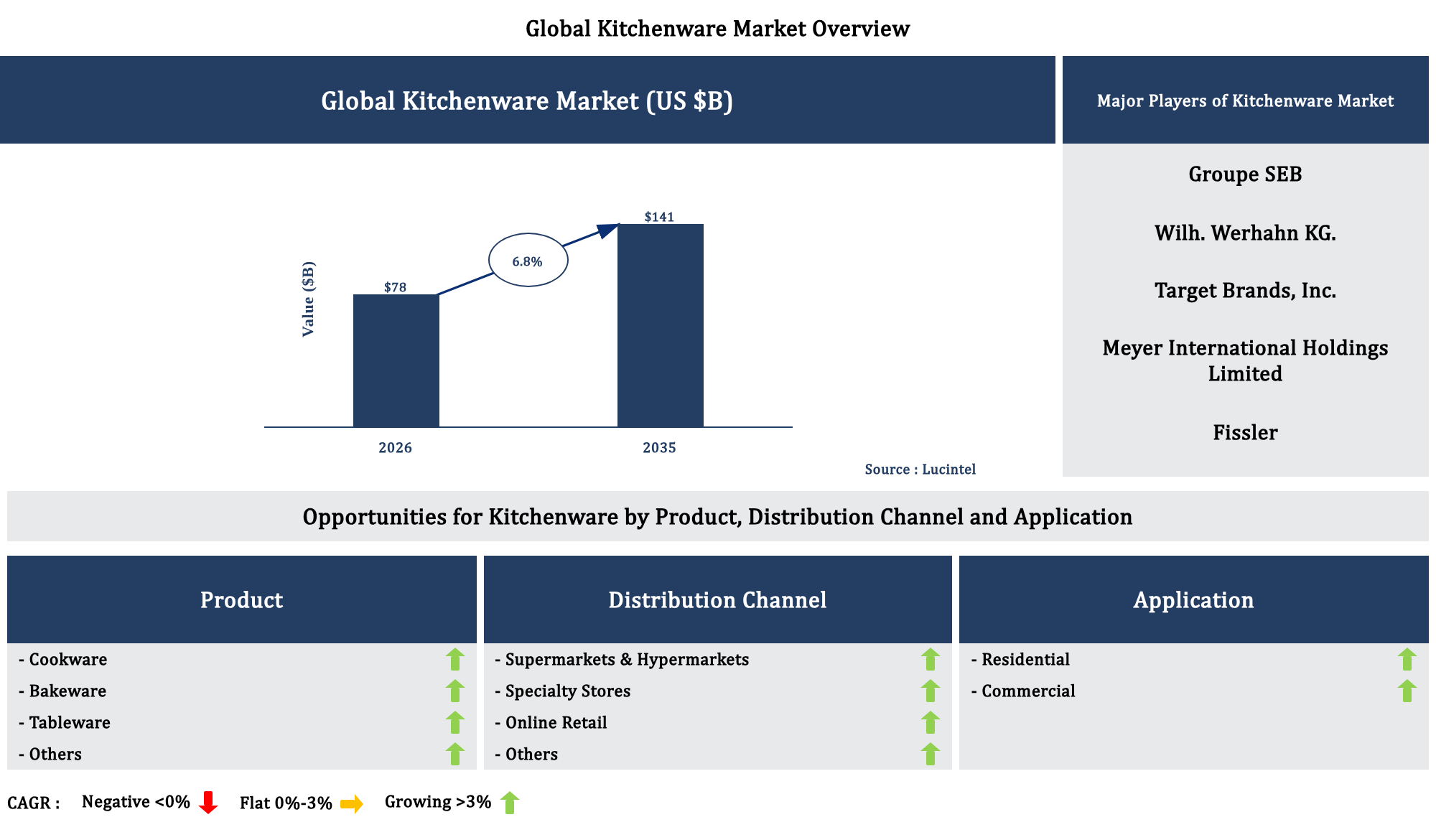
Key data points: The market size in 2035 = $141 billion, growth forecast = 6.8% annually for the next 8 years. Scroll below to get more insights. This market report covers trends, opportunities and forecasts in kitchenware market to 2035 by product (cookware, bakeware, tableware, and others), distribution channel (supermarkets & hypermarkets, specialty stores, online retail, and others), application (residential and commercial), and region (North America, Europe, Asia Pacific, and the Rest of the World)

Publisher: Lucintel Last Updated: July 2026
See Pricing

Download Sample Report

| ✨ New Download Sample report — Get instant insights! | ✨ New Download Sample report — Get instant insights!

Kitchenware Market Report: Trends, Forecast and Competitive Analysis to 2035

Kitchenware Market

The future of the global kitchenware market looks promising with opportunities in the residential and commercial markets. The global kitchenware market is expected to reach an estimated $141 billion by 2035 with a CAGR of 6.8% from 2026 to 2035. The major drivers for this market are the increasing demand for modern kitchen appliances, the rising use of durable cookware materials, and the growing preference for smart kitchen gadgets.

  • Lucintel forecasts that, within the product category, tableware is expected to witness the highest growth over the forecast period due to rising dining aesthetics and home entertaining trends driving tableware demand.
  • Within the application category, residential is expected to witness higher growth due to growing home cooking trends and urban households, which boost residential kitchenware demand.
  • In terms of regions, APAC is expected to witness the highest growth over the forecast period due to rapid urbanization, rising incomes, and an expanding middle class, which drives APAC growth.

Gain valuable insights for your business decisions with our comprehensive 150+ page report. Sample figures with some insights are shown below.
Kitchenware Market

Emerging Trends in the Kitchenware Market

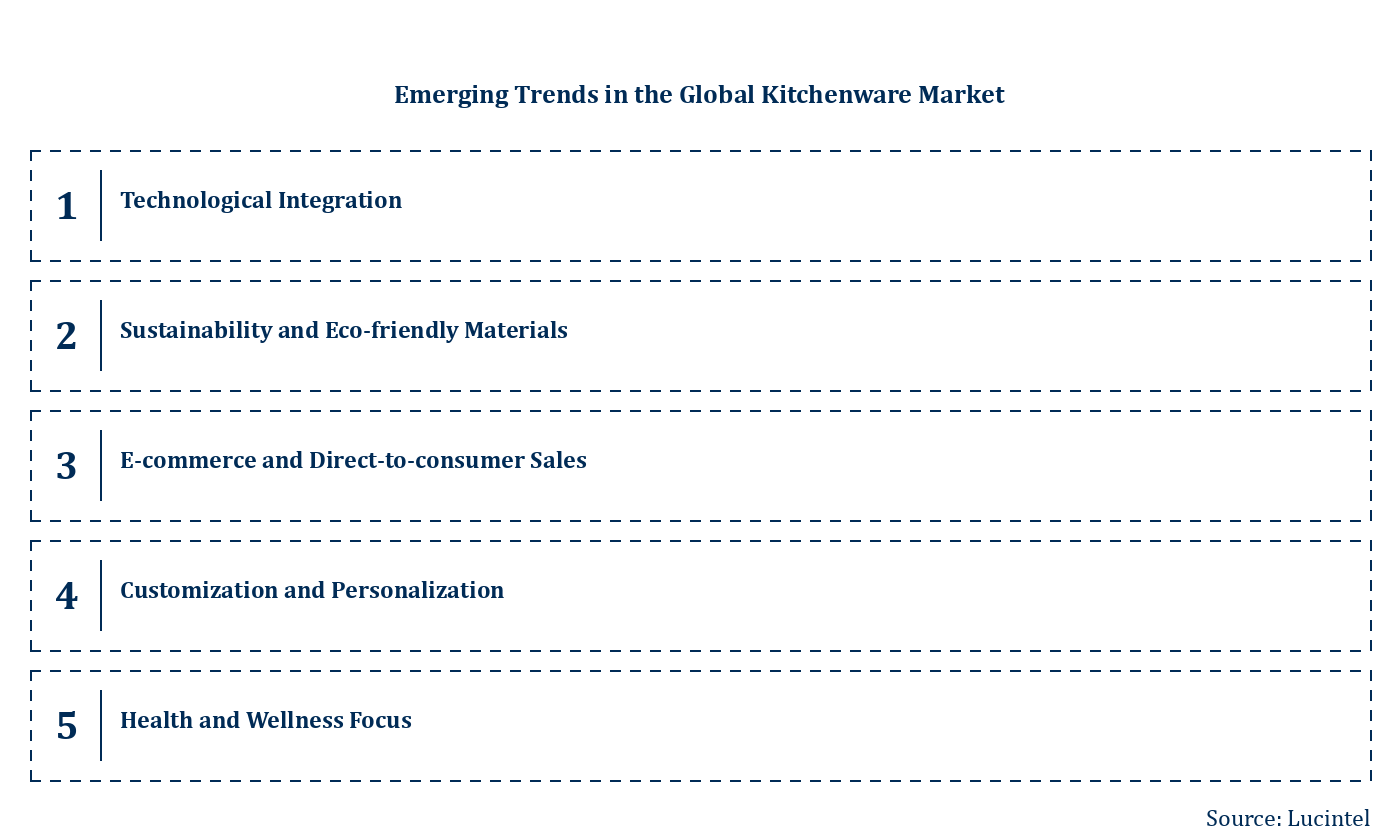
The kitchenware market is experiencing rapid evolution driven by technological advancements, changing consumer preferences, and sustainability concerns. As households seek more efficient, innovative, and eco-friendly products, manufacturers are adapting to meet these demands. The integration of smart technology, rising demand for eco-conscious materials, and the influence of e-commerce are shaping the future landscape of this industry. These trends are not only transforming product offerings but also redefining how consumers interact with kitchenware, leading to a more personalized, sustainable, and technologically integrated market environment. Understanding these key developments is essential for stakeholders aiming to stay competitive and innovative in this dynamic sector.

  • Technological Integration: The rise of smart kitchenware is revolutionizing the market by offering connected devices that enhance cooking efficiency and convenience. Smart pots, pans, and utensils equipped with sensors and IoT connectivity enable precise temperature control, recipe guidance, and real-time monitoring. This trend caters to tech-savvy consumers seeking innovative solutions that simplify meal preparation and improve culinary outcomes. As technology becomes more affordable and accessible, the adoption of smart kitchenware is expected to grow, driving market expansion and encouraging manufacturers to invest in R&D for innovative features.
  • Sustainability and Eco-Friendly Materials: Consumers are increasingly prioritizing environmentally sustainable products, prompting manufacturers to adopt eco-friendly materials such as bamboo, recycled plastics, and biodegradable composites. This shift reduces the environmental footprint of kitchenware and aligns with the global push towards sustainability. Market players are also focusing on designing durable, long-lasting products to minimize waste. The demand for eco-conscious kitchenware is influencing product development, marketing strategies, and supply chain practices, ultimately fostering a more sustainable industry that appeals to environmentally aware consumers.
  • E-Commerce and Direct-to-Consumer Sales: The growth of online shopping platforms has significantly impacted the kitchenware market by providing consumers with easy access to a wide range of products and brands. E-commerce enables brands to reach a global audience, offer personalized shopping experiences, and gather valuable consumer data. Direct-to-consumer models allow for better pricing, faster innovation cycles, and stronger brand loyalty. The convenience of online purchasing, coupled with targeted marketing and reviews, is driving sales growth and reshaping traditional retail channels, making e-commerce a dominant force in the market.
  • Customization and Personalization: Consumers now seek kitchenware that reflects their individual style and meets specific functional needs. Manufacturers are responding by offering customizable options such as engraved utensils, modular cookware sets, and personalized color schemes. This trend enhances customer engagement and satisfaction, fostering brand loyalty. Advances in manufacturing technologies like 3D printing facilitate mass customization, enabling brands to deliver tailored products efficiently. Personalization not only adds value but also differentiates brands in a competitive market, encouraging innovation and consumer-centric product development.
  • Health and Wellness Focus: The increasing emphasis on healthy living is influencing the kitchenware market by driving demand for products that support nutritious cooking. Items such as non-toxic cookware, ceramic knives, and air fryers are gaining popularity due to their health benefits. Consumers are also interested in products that facilitate low-fat, low-sugar, and allergen-free cooking. This trend encourages manufacturers to develop innovative, health-oriented kitchenware that aligns with wellness lifestyles. The focus on health and safety standards is prompting industry-wide improvements, making kitchenware safer and more aligned with modern health-conscious consumer needs.

These emerging trends are collectively reshaping the kitchenware market by fostering innovation, sustainability, and consumer-centric approaches. The integration of technology, eco-friendly materials, e-commerce growth, customization options, and health-focused products are creating a more dynamic, sustainable, and personalized industry landscape. These developments are not only meeting evolving consumer demands but also setting new standards for product development and market competition.
Kitchenware Market by country

Recent Developments in the Kitchenware Market

The kitchenware market is experiencing rapid growth driven by evolving consumer preferences, technological innovations, and increasing demand for sustainable products. As households seek functional, stylish, and eco-friendly options, manufacturers are innovating to meet these needs. The markets expansion is also fueled by rising urbanization and a growing interest in home cooking. These developments are reshaping the competitive landscape, creating new opportunities for brands to capture market share and meet diverse consumer demands.

  • Digital Integration in Kitchenware: Smart kitchenware with digital features is transforming cooking experiences. Connected devices enable precise temperature control, recipe guidance, and real-time monitoring, making cooking more efficient and enjoyable. This innovation appeals to tech-savvy consumers seeking convenience and customization. The integration of IoT technology is also driving premium product sales, encouraging brands to invest in smart solutions. Overall, digital integration is expanding market reach and elevating product standards, fostering a more innovative and consumer-centric industry.
  • Sustainability and Eco-Friendly Materials: Consumers increasingly prioritize environmentally friendly kitchenware made from sustainable materials like bamboo, recycled plastics, and biodegradable composites. Brands adopting eco-conscious practices are gaining competitive advantage by aligning with ethical values. This shift reduces environmental impact and appeals to health-conscious buyers. The demand for sustainable products is prompting manufacturers to innovate in material sourcing and production processes. As a result, the market is witnessing a surge in eco-friendly offerings, influencing industry standards and consumer choices globally.
  • Evolving Design Trends and Aesthetic Appeal: Contemporary kitchenware designs focus on minimalism, multifunctionality, and aesthetic appeal to match modern home decor. Stylish, sleek, and ergonomic products attract consumers seeking both form and function. Customization options and trendy finishes are also gaining popularity, allowing consumers to personalize their kitchens. These design innovations enhance user satisfaction and brand loyalty. The emphasis on aesthetics is driving product differentiation and encouraging brands to invest in innovative design, ultimately expanding market share in a competitive landscape.
  • E-Commerce Expansion and Direct-to-Consumer Sales: The rise of online shopping platforms has significantly expanded access to a wide range of kitchenware products. Direct-to-consumer models enable brands to build stronger relationships with customers, offer competitive pricing, and gather valuable feedback. E-commerce also facilitates targeted marketing and global reach, boosting sales volumes. The convenience of online purchasing and the proliferation of digital marketing strategies are transforming traditional retail channels. This shift is making kitchenware more accessible, fostering market growth, and encouraging brands to optimize their digital presence.
  • Innovation in Material Technology and Product Durability: Advancements in material technology are producing more durable, heat-resistant, and non-toxic kitchenware options. Innovations such as ceramic coatings, reinforced plastics, and advanced metals enhance product lifespan and safety. These improvements meet consumer demands for long-lasting, high-performance products that withstand daily use. Enhanced durability reduces replacement frequency, offering better value to consumers. As a result, brands investing in material innovation are gaining a competitive edge, driving market growth through higher quality and customer satisfaction.

The overall impact of these developments is a dynamic, innovative, and sustainable kitchenware market. Increased consumer engagement, technological advancements, and eco-conscious practices are fostering growth, expanding product offerings, and reshaping industry standards. This evolution benefits both manufacturers and consumers, leading to a more competitive, diverse, and environmentally responsible market landscape.

Strategic Growth Opportunities in the Kitchenware Market

The kitchenware market is experiencing rapid growth driven by increasing consumer demand for innovative, durable, and stylish products. Evolving lifestyles, rising disposable incomes, and a focus on home cooking are fueling market expansion globally. Technological advancements and sustainability trends are also shaping product development. Companies are exploring new materials and smart kitchen solutions to meet diverse consumer needs. This dynamic environment presents numerous strategic opportunities for market players to expand their reach and enhance profitability through targeted innovations and market penetration strategies.

  • Expanding Eco-Friendly and Sustainable Kitchenware Products: Growing consumer awareness about environmental impact is driving demand for eco-friendly kitchenware made from biodegradable, recycled, or sustainable materials. Companies investing in sustainable product lines can differentiate themselves and capture market share. Innovations in packaging and manufacturing processes further support sustainability goals. This trend aligns with global efforts to reduce plastic waste and promote responsible consumption, creating significant growth opportunities for brands committed to environmental stewardship.
  • Leveraging Smart and Connected Kitchen Technologies: The integration of smart technology into kitchenware offers enhanced convenience, efficiency, and user engagement. IoT-enabled appliances and utensils allow consumers to monitor cooking processes, control devices remotely, and access recipe guidance. Market players investing in smart kitchen solutions can tap into the growing tech-savvy demographic. These innovations improve user experience, foster brand loyalty, and open avenues for premium pricing, positioning companies at the forefront of the digital transformation in kitchenware.
  • Expanding Product Offerings for Health-Conscious Consumers: Rising health awareness is prompting consumers to seek kitchenware that supports healthy cooking and eating habits. Products such as non-toxic cookware, portion control tools, and specialized utensils are gaining popularity. Companies that develop innovative, health-focused kitchenware can meet this demand and differentiate themselves in a competitive market. Emphasizing safety, ease of cleaning, and nutritional benefits can further attract health-conscious buyers and boost sales.
  • Capitalizing on E-Commerce and Direct-to-Consumer Sales Channels: The shift towards online shopping provides a strategic platform for kitchenware brands to reach a broader audience. E-commerce enables personalized marketing, direct customer engagement, and streamlined distribution. Companies investing in robust online presence and digital marketing can increase sales, gather valuable consumer insights, and reduce reliance on traditional retail channels. This approach supports rapid product launches and flexible pricing strategies, fostering sustained growth in a competitive landscape.
  • Developing Innovative Materials and Design for Enhanced Durability and Aesthetics: Advancements in materials science allow for the creation of more durable, lightweight, and aesthetically appealing kitchenware. Incorporating materials like ceramic composites, reinforced plastics, and innovative coatings enhances product lifespan and visual appeal. Companies focusing on design innovation can attract style-conscious consumers and those seeking long-lasting products. This strategy also enables differentiation through unique aesthetics and functional features, driving higher consumer satisfaction and brand loyalty.

The overall market outlook is positively influenced by these strategic growth opportunities, enabling companies to innovate, expand their customer base, and strengthen their competitive position. Embracing sustainability, technology, health trends, digital channels, and material innovation will be crucial for sustained success in the evolving kitchenware landscape.

Kitchenware Market Drivers and Challenges

The kitchenware market is influenced by a variety of technological, economic, and regulatory factors that shape its growth and development. Innovations in materials and manufacturing processes drive product diversity and quality, while economic conditions affect consumer spending patterns. Regulatory standards ensure safety and sustainability, impacting product design and compliance costs. Additionally, shifting consumer preferences towards eco-friendly and smart kitchen solutions further influence market dynamics. Navigating these drivers and challenges is essential for stakeholders aiming to capitalize on opportunities and mitigate risks in this competitive landscape.

The factors responsible for driving the kitchenware market include:-

  • Technological Innovation: Advances in manufacturing technologies, such as 3D printing and automation, enable the production of innovative, durable, and cost-effective kitchenware. These innovations meet evolving consumer demands for convenience, safety, and aesthetics. Smart kitchenware integrated with IoT technology offers enhanced functionality, appealing to tech-savvy consumers. The continuous development of eco-friendly materials also supports sustainability goals, attracting environmentally conscious buyers. Overall, technological progress accelerates product development, broadens market offerings, and enhances consumer experience, fueling market growth.
  • Rising Disposable Income and Urbanization: Increasing disposable incomes, especially in emerging economies, enable consumers to spend more on premium and branded kitchenware products. Urbanization leads to smaller living spaces, prompting demand for space-saving, multifunctional, and stylish kitchenware solutions. As lifestyles become busier, consumers seek convenient, durable, and aesthetically pleasing products that simplify cooking and food storage. This economic shift expands the customer base and encourages manufacturers to innovate and diversify their product lines to meet these new demands.
  • Growing Focus on Health and Wellness: Consumers are increasingly prioritizing health and wellness, influencing their purchasing decisions for kitchenware. Non-toxic, BPA-free, and eco-friendly materials are in high demand to ensure food safety and reduce environmental impact. Additionally, the popularity of specialized kitchenware such as air fryers, non-stick cookware, and ergonomic utensils supports healthier cooking practices. This trend encourages manufacturers to develop innovative, health-conscious products, thereby expanding market opportunities and catering to a health-aware demographic.
  • E-commerce Expansion: The rapid growth of online retail channels has transformed how consumers access kitchenware products. E-commerce offers a wider product selection, competitive pricing, and convenient shopping experiences, especially during the COVID-19 pandemic. Digital marketing and direct-to-consumer sales enable brands to reach niche markets and build brand loyalty. The ease of online purchasing and availability of customer reviews influence buying decisions, driving market expansion. E-commerce also facilitates faster product launches and real-time consumer feedback, fostering innovation and responsiveness in the market.

The challenges in the kitchenware market are:

  • Regulatory and Safety Standards: Stringent safety, quality, and environmental regulations pose significant challenges for manufacturers. Compliance with standards such as food-grade certifications, chemical restrictions, and eco-labeling increases production costs and complexity. Non-compliance can lead to legal penalties, product recalls, and damage to brand reputation. Keeping pace with evolving regulations across different regions requires continuous monitoring and adaptation, which can hinder innovation and increase time-to-market for new products.
  • Fluctuating Raw Material Prices: The market heavily depends on raw materials like stainless steel, plastics, and eco-friendly composites, whose prices are subject to volatility due to geopolitical tensions, supply chain disruptions, and environmental factors. Rising raw material costs can squeeze profit margins and force manufacturers to increase product prices, potentially reducing competitiveness. Managing supply chain risks and securing stable sources of raw materials are ongoing challenges that impact production planning and profitability.
  • Intense Market Competition: The kitchenware market is highly competitive, with numerous global and local players vying for market share. Differentiating products through innovation, branding, and pricing strategies is crucial but challenging. Price wars and aggressive marketing can erode profit margins, while rapid product obsolescence demands continuous innovation. Smaller players face difficulties competing with established brands that have extensive distribution networks and economies of scale, making market entry and expansion increasingly complex.

The kitchenware market is shaped by rapid technological advancements, economic growth, and evolving consumer preferences, which create significant growth opportunities. However, regulatory compliance, raw material price fluctuations, and intense competition pose substantial challenges. Navigating these drivers and hurdles requires strategic innovation, efficient supply chain management, and a keen understanding of consumer trends. Overall, the markets future depends on how effectively stakeholders adapt to these dynamic factors, balancing growth initiatives with risk mitigation to sustain long-term success.

List of Kitchenware Market Companies

Companies in the market compete on the basis of product quality offered. Major players in this market focus on expanding their manufacturing facilities, R&D investments, infrastructural development, and leverage integration opportunities across the value chain. Through these strategies kitchenware market companies cater increasing demand, ensure competitive effectiveness, develop innovative products & technologies, reduce production costs, and expand their customer base. Some of the kitchenware market companies profiled in this report include-

  • Groupe SEB
  • Wilh. Werhahn KG.
  • Target Brands, Inc.
  • Meyer International Holdings Limited
  • Fissler
  • Tramontina
  • Newell Brands, Inc.
  • SCANPAN
  • TTK Prestige Ltd.
  • The Vollrath Company, LLC

Kitchenware Market by Segment

The study includes a forecast for the global kitchenware market by product, distribution channel, application, and region.

  • Kitchenware Market by Product [Value from 2019 to 2035]:
    • Cookware
    • Bakeware
    • Tableware
    • Others
  • Kitchenware Market by Distribution Channel [Value from 2019 to 2035]:
    • Supermarkets & Hypermarkets
    • Specialty Stores
    • Online Retail
    • Others
  • Kitchenware Market by Application [Value from 2019 to 2035]:
    • Residential
    • Commercial
  • Kitchenware Market by Region [Value ($B) from 2019 to 2035]:
    • North America
    • Europe
    • Asia Pacific
    • The Rest of the World

Country Wise Outlook for the Kitchenware Market

The kitchenware market has experienced significant shifts driven by technological innovations, changing consumer preferences, and sustainability concerns. As global economies recover and adapt to new lifestyles, countries are focusing on product innovation, eco-friendly materials, and smart kitchen solutions. These developments reflect a broader trend towards convenience, health consciousness, and environmental responsibility. Each country’s unique economic and cultural factors influence their market strategies and growth trajectories, leading to diverse advancements across regions. Understanding these regional trends is essential for stakeholders aiming to capitalize on emerging opportunities and address evolving consumer demands in the global kitchenware industry.

  • United States: The US market has seen a surge in smart kitchenware products, integrating IoT technology for enhanced convenience and efficiency. There is a growing demand for eco-friendly and sustainable materials, driven by consumer awareness of environmental issues. Premium and designer kitchenware items are gaining popularity, reflecting a trend towards aesthetic and functional innovation. E-commerce channels continue to expand, facilitating direct-to-consumer sales and personalized shopping experiences. Additionally, health-focused cookware, such as non-toxic and ceramic options, is increasingly preferred, aligning with the rising health consciousness among consumers.
  • China: China’s kitchenware market is rapidly expanding, fueled by urbanization and rising disposable incomes. Innovative product designs, including multifunctional and space-saving items, are in high demand. The market is witnessing a shift towards eco-friendly and biodegradable materials, supported by government policies promoting sustainability. E-commerce platforms like Alibaba and JD.com are major distribution channels, enabling quick access to a broad consumer base. Local brands are gaining ground by offering affordable, high-quality products, while international brands are expanding their presence through strategic partnerships and online marketing. Smart kitchen appliances are also gaining traction among tech-savvy consumers.
  • Germany: The German kitchenware market emphasizes quality, durability, and sustainability. There is a strong preference for products made from eco-friendly and recyclable materials, reflecting the country’s environmental policies. Innovations include energy-efficient cookware and smart kitchen gadgets that improve cooking precision and convenience. The market also sees a rise in premium brands focusing on design and functionality. Retail channels are shifting towards omnichannel strategies, combining physical stores with online platforms. Consumer demand for health-conscious and non-toxic cookware continues to grow, alongside a focus on reducing waste and promoting circular economy principles.
  • India: The Indian kitchenware market is experiencing rapid growth driven by increasing urbanization, rising middle-class incomes, and changing lifestyles. Traditional cookware is being replaced or complemented by modern, durable, and stylish products. There is a rising demand for stainless steel, non-stick, and eco-friendly cookware options. E-commerce sales are expanding, making products more accessible across rural and urban areas. Local manufacturers are innovating with affordable, innovative designs tailored to regional cooking styles. The market also shows a growing interest in smart and energy-efficient appliances, aligning with India’s push towards modernization and sustainable development.
  • Japan: Japan’s kitchenware market is characterized by a focus on high-quality, innovative, and space-saving products. The demand for precision tools and multifunctional appliances is high, reflecting the country’s culinary traditions and technological expertise. Eco-friendly and sustainable materials are increasingly used, supported by strict environmental regulations. Smart kitchen devices that enhance efficiency and reduce waste are gaining popularity. The market also emphasizes ergonomic design and safety features, catering to an aging population. Retail channels include specialty stores and online platforms, with a strong emphasis on premium and designer brands. Consumers prioritize durability, functionality, and eco-consciousness in their purchasing decisions.

Features of the Kitchenware Market

  • Market Size Estimates: Kitchenware market size estimation in terms of value ($B).
  • Trend and Forecast Analysis: Market trends (2019 to 2025) and forecast (2026 to 2035) by various segments and regions.
  • Segmentation Analysis: Kitchenware market size by product, distribution channel, application, and region in terms of value ($B).
  • Regional Analysis: Kitchenware market breakdown by North America, Europe, Asia Pacific, and Rest of the World.
  • Growth Opportunities: Analysis of growth opportunities in different products, distribution channels, applications, and regions for the kitchenware market.
  • Strategic Analysis: This includes M&A, new product development, and competitive landscape of the kitchenware market.
  • Analysis of competitive intensity of the industry based on Porter’s Five Forces model.

Top 5 Companies

  • Groupe SEB
  • Wilh. Werhahn KG.
  • Target Brands, Inc.
  • Meyer International Holdings Limited
  • Fissler

Table of Contents

1. Executive Summary
14.1 Competitive Analysis Overview

List of Figures

List of Tables

Methodology

Lucintel has been in the business of market research and management consulting since 2000 and has published over 1000 market intelligence reports in various markets / applications and served over 1,000 clients worldwide. This study is a culmination of four months of full-time effort performed by Lucintel's analyst team. The analysts used the following sources for the creation and completion of this valuable report:

  • In-depth interviews of the major players in this market
  • Detailed secondary research from competitors' financial statements and published data
  • Extensive searches of published works, market, and database information pertaining to industry news, company press releases, and customer intentions
  • A compilation of the experiences, judgments, and insights of Lucintel's professionals, who have analyzed and tracked this market over the years.

Extensive research and interviews are conducted across the supply chain of this market to estimate market share, market size, trends, drivers, challenges, and forecasts. Below is a brief summary of the primary interviews that were conducted by job function for this report.

Lucintel's methodology for market research

Thus, Lucintel compiles vast amounts of data from numerous sources, validates the integrity of that data, and performs a comprehensive analysis. Lucintel then organizes the data, its findings, and insights into a concise report designed to support the strategic decision-making process. The figure below is a graphical representation of Lucintel's research process.

Primary interviews by job function

Buy Now

Choose a license that fits your team. Instant PDF delivery.

Market Report

1 User PDF

$4,850
Buy Now

Market Report

2-5 Users PDF

$6,700
Buy Now

Market Report

Corporate PDF

$8,850
Buy Now

Market Report

Global PDF

$10,000
Buy Now

Prices exclude taxes. Instant delivery. Custom licensing available on request.

Frequently Asked Questions

What is the kitchenware market size?
The global kitchenware market is expected to reach an estimated $141 billion by 2035.
What is the growth forecast for kitchenware market?
The global kitchenware market is expected to grow with a CAGR of 6.8% from 2026 to 2035.
What are the major drivers influencing the growth of the kitchenware market?
The major drivers for this market are the increasing demand for modern kitchen appliances, the rising use of durable cookware materials, and the growing preference for smart kitchen gadgets.
What are the major segments for kitchenware market?
The future of the kitchenware market looks promising with opportunities in the residential and commercial markets.
Who are the key kitchenware market companies?

Some of the key kitchenware companies are as follows:

  • Groupe SEB
  • Wilh. Werhahn KG.
  • Target Brands, Inc.
  • Meyer International Holdings Limited
  • Fissler
  • Tramontina
  • Newell Brands, Inc.
  • SCANPAN
  • TTK Prestige Ltd.
  • The Vollrath Company, LLC
Which kitchenware market segment will be the largest in future?
Lucintel forecasts that, within the product category, tableware is expected to witness the highest growth over the forecast period.
In kitchenware market, which region is expected to be the largest in next 8 years?
In terms of region, APAC is expected to witness the highest growth over the forecast period.
Do we receive customization in this report?
Yes, Lucintel provides 10% customization without any additional cost.

Key Questions

  • What are some of the most promising, high-growth opportunities for the kitchenware market by product (cookware, bakeware, tableware, and others), distribution channel (supermarkets & hypermarkets, specialty stores, online retail, and others), application (residential and commercial), and region (North America, Europe, Asia Pacific, and the Rest of the World)?
  • Which segments will grow at a faster pace and why?
  • Which region will grow at a faster pace and why?
  • What are the key factors affecting market dynamics? What are the key challenges and business risks in this market?
  • What are the business risks and competitive threats in this market?
  • What are the emerging trends in this market and the reasons behind them?
  • What are some of the changing demands of customers in the market?
  • What are the new developments in the market? Which companies are leading these developments?
  • Who are the major players in this market? What strategic initiatives are key players pursuing for business growth?
  • What are some of the competing products in this market and how big of a threat do they pose for loss of market share by material or product substitution?
  • What M&A activity has occurred in the last 5 years and what has its impact been on the industry?
Why Choose Us

The Lucintel Advantage

Trusted partner for strategic intelligence and business growth

25+ Years Excellence

25+ Years Excellence

Quarter century of proven expertise in management consulting and market research across global markets.
Game-Changer Ideas

Game-Changer Ideas

Innovative strategies and actionable insights that help clients become the smartest in their industry.
Global Reach

Global Reach

Extensive coverage across 50+ industries and markets worldwide with localized expertise.
Start Your Growth Journey

Get Your Free
Market Intelligence
Briefing

Receive a complimentary market analysis tailored to your industry. Our analysts will identify key growth opportunities and competitive dynamics specific to your business.

Custom Market Snapshot

Market size, growth rate, and key trend analysis for your specific sector.

Competitive Landscape Overview

Top competitor positioning and market share analysis.

Growth Opportunity Identification

Strategic recommendations backed by data-driven insights.

Subscribe

Subscribe to our Newsletter

Get curated market intelligence and competitive moves straight to your inbox.

By subscribing, you agree to receive our monthly insights. Unsubscribe anytime.

Industry Trends Market Signals Opportunities Competitor Moves