
Report Feature
Kids Travel Bag Market Trends and Forecast
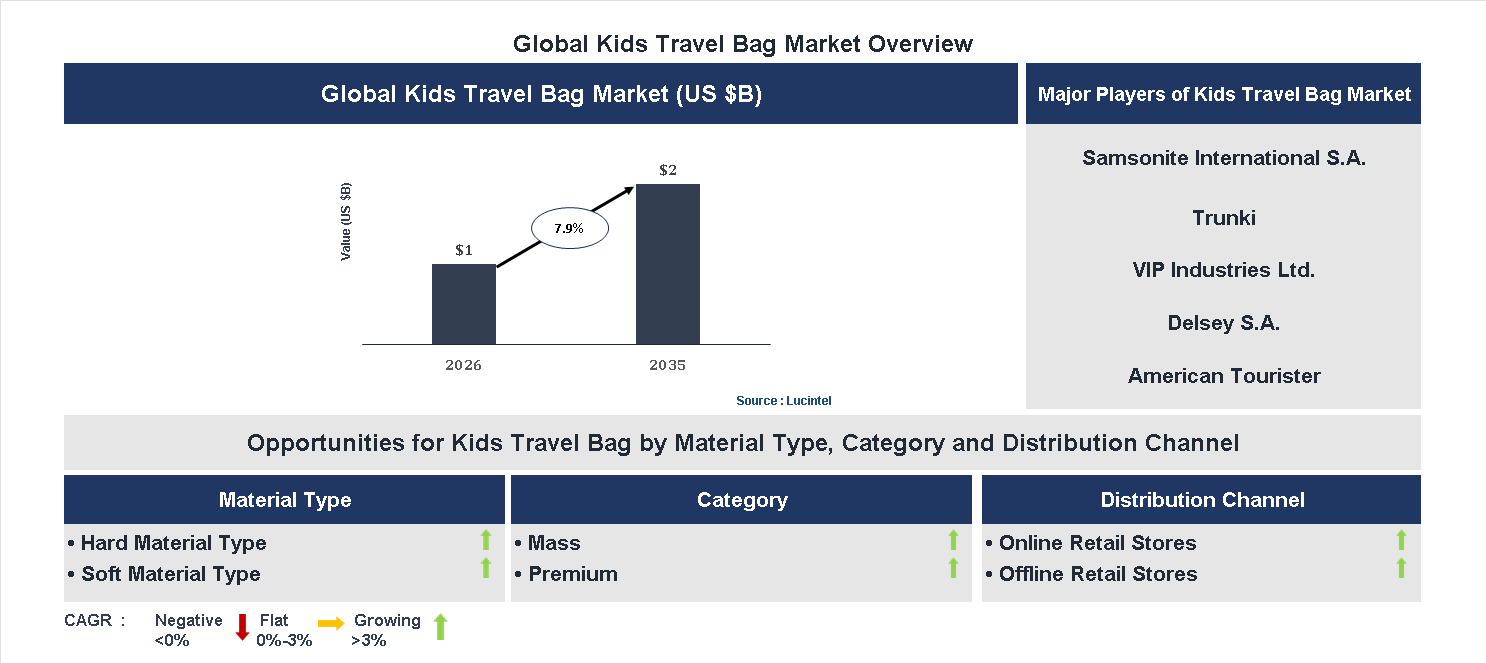
The future of the global kids travel bag market looks promising with opportunities in the hard material type and soft material type markets. The global kids travel bag market is expected to reach an estimated $2 billion by 2035 with a CAGR of 7.9% from 2026 to 2035. The major drivers for this market are the increasing family travel activities with children, the rising demand for lightweight kids luggage, and the growing preference for cartoon themed travel bags.• Lucintel forecasts that, within the distribution channel category, offline retail store is expected to witness higher growth over the forecast period.
• Within the material type category, hard material type is expected to witness higher growth.
• In terms of region, North America is expected to witness the highest growth over the forecast period. Gain valuable insights for your business decisions with our comprehensive 150+ page report. Sample figures with some insights are shown below.
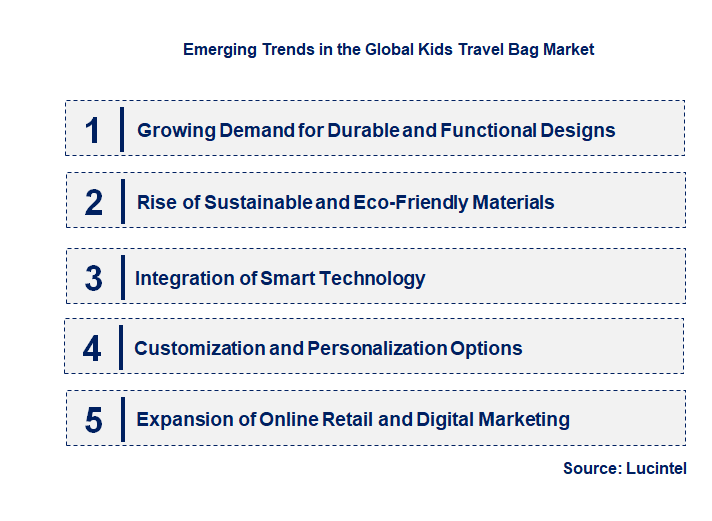
Emerging Trends in the Kids Travel Bag Market
The kids travel bag market is experiencing rapid growth driven by increasing family travel, evolving consumer preferences, and technological advancements. As parents seek durable, functional, and stylish options for their children, manufacturers are innovating to meet these demands. The market is also influenced by sustainability trends, digital integration, and customization options, which are reshaping product offerings and consumer expectations. These developments are creating new opportunities for brands to differentiate themselves and cater to a more discerning customer base. Understanding these emerging trends is essential for stakeholders aiming to capitalize on the markets potential and stay ahead of competitors in this dynamic landscape.• Growing Demand for Durable and Functional Designs: Parents prioritize safety, durability, and practicality in kids travel bags. Products with reinforced materials, multiple compartments, and ergonomic features are increasingly popular. This trend enhances customer satisfaction by providing long-lasting, easy-to-use options that accommodate children’s needs during travel, thereby boosting brand loyalty and market share.
• Rise of Sustainable and Eco-Friendly Materials: Consumers are increasingly conscious of environmental impacts, prompting brands to adopt eco-friendly fabrics and sustainable manufacturing practices. Recyclable materials, biodegradable components, and eco-conscious branding appeal to eco-aware families. This trend not only aligns with global sustainability goals but also differentiates brands in a competitive market, attracting environmentally conscious buyers.
• Integration of Smart Technology: The incorporation of smart features such as GPS tracking, built-in chargers, and RFID-blocking compartments is transforming kids travel bags. These technological enhancements improve security, convenience, and connectivity, appealing to tech-savvy parents. The integration of smart tech elevates the user experience and positions brands as innovative leaders in the market.
• Customization and Personalization Options: Consumers increasingly seek personalized products that reflect their childs personality. Brands offering customizable designs, monogramming, and themed accessories are gaining popularity. This trend fosters emotional connections with customers, encourages brand loyalty, and allows companies to command premium pricing through unique, tailored offerings.
• Expansion of Online Retail and Digital Marketing: The shift towards e-commerce and digital marketing channels is significantly impacting the market. Brands are leveraging social media, influencer collaborations, and targeted advertising to reach a broader audience. Enhanced online shopping experiences, virtual try-ons, and direct-to-consumer sales models are driving growth, making products more accessible and appealing to modern consumers. These trends are collectively reshaping the kids travel bag market by emphasizing durability, sustainability, technology, personalization, and digital engagement. They are enabling brands to meet evolving consumer expectations, foster loyalty, and innovate continuously, thereby driving market expansion and competitiveness in a rapidly changing environment.
Recent Development in the Kids Travel Bag Market
The kids travel bag market is experiencing rapid growth driven by increasing family travel, rising disposable incomes, and a demand for functional yet stylish luggage options for children. Innovations in materials, design, and features are making these bags more appealing to parents and kids alike. Market players are focusing on sustainability and customization to capture a larger share. The evolving consumer preferences and technological advancements are shaping the future landscape of this niche market, creating new opportunities for brands and manufacturers.• Growing Family Travel Trends: Expanding family vacations and travel experiences are boosting demand for kids travel bags. Parents seek durable, lightweight, and easy-to-carry luggage that can withstand rough handling and meet airline regulations. The rise in international travel and staycations has further increased the need for specialized kids travel gear. This trend encourages brands to innovate with ergonomic designs, fun aesthetics, and safety features, ultimately expanding market size and consumer loyalty.
• Innovation in Material and Design: Advances in lightweight, eco-friendly, and durable materials are transforming kids travel bags. Manufacturers are incorporating sustainable fabrics, water-resistant coatings, and shock-absorbing features to enhance functionality. Creative designs with vibrant colors, characters, and customizable options appeal to children, making travel more enjoyable. These innovations improve product longevity, safety, and aesthetic appeal, attracting environmentally conscious consumers and increasing market competitiveness.
• Rise of Smart and Tech-Integrated Bags: Integration of technology into kids travel bags is creating new market opportunities. Features like GPS tracking, built-in chargers, and RFID-blocking compartments enhance security and convenience for parents. Smart bags also include interactive elements such as LED lights or activity zones to entertain children during travel. These technological enhancements improve user experience, safety, and engagement, positioning smart bags as premium products and expanding the market into tech-savvy consumer segments.
• Focus on Sustainability and Eco-Friendly Products: Consumers are increasingly prioritizing environmentally sustainable products, prompting brands to develop eco-friendly kids travel bags. Use of recycled materials, biodegradable fabrics, and eco-conscious manufacturing processes are gaining popularity. This shift not only appeals to environmentally aware parents but also aligns with global sustainability goals. The emphasis on eco-friendly products is driving innovation, creating niche markets, and encouraging brands to adopt greener practices, thereby influencing overall market growth.
• Customization and Personalization Options: Personalization features such as name tags, custom prints, and modular components are becoming popular among consumers. These options allow children to express their personality and make travel gear more appealing. Brands offering customizable designs are gaining competitive advantage, fostering brand loyalty and increasing sales. The trend also encourages collaborations with popular characters and brands, expanding market reach and catering to diverse consumer preferences. These developments are significantly impacting the kids travel bag market by enhancing product features, increasing consumer engagement, and promoting sustainability. The market is becoming more innovative, competitive, and aligned with modern travel needs, leading to increased sales, brand differentiation, and expanded consumer base.
Strategic Growth Opportunities in the Kids Travel Bag Market
The kids travel bag market is experiencing rapid growth driven by increasing family travel, evolving consumer preferences, and innovative product designs. As parents seek durable, functional, and stylish options for children, manufacturers are expanding their offerings to meet diverse needs. The market presents significant opportunities for brands to innovate, target new customer segments, and enhance distribution channels. Strategic investments in product development and marketing are essential to capitalize on this expanding market landscape and meet the rising demand for specialized kids travel bags.• Growing Demand for Durable and Lightweight Kids Travel Bags: The increasing frequency of family trips has heightened the need for durable, lightweight, and easy-to-carry travel bags for children. Consumers prefer bags made from high-quality materials that withstand rough handling while remaining lightweight for children to carry comfortably. Features like ergonomic straps, water resistance, and multiple compartments are highly valued. Brands focusing on innovative, sturdy, and lightweight designs are poised to capture a larger market share, especially among frequent travelers and parents seeking convenience.
• Expansion of Customizable and Themed Kids Travel Bags: Customization and themed designs are gaining popularity among parents and children. Personalized bags with favorite characters, vibrant colors, and unique patterns appeal to children’s preferences and allow parents to select products that reflect their childs personality. Manufacturers offering customizable options, including monograms or themed accessories, can differentiate their products in a competitive market. This trend enhances customer engagement and loyalty, driving sales in both online and offline retail channels.
• Integration of Smart Features in Kids Travel Bags: The incorporation of smart technology, such as GPS tracking, built-in chargers, and RFID-blocking compartments, presents new growth avenues. These features address parental concerns about security and convenience during travel. Smart bags enable real-time location tracking, provide charging solutions for devices, and improve overall travel safety. Companies investing in IoT-enabled products can attract tech-savvy consumers and position themselves as innovative leaders in the kids travel bag segment.
• Rising Popularity of Eco-Friendly and Sustainable Kids Travel Bags: Consumers are increasingly prioritizing environmentally friendly products, prompting brands to develop sustainable kids travel bags. Using recycled materials, biodegradable fabrics, and eco-conscious manufacturing processes appeals to environmentally aware parents. These products not only reduce environmental impact but also enhance brand reputation. The demand for sustainable options is expected to grow, encouraging manufacturers to innovate with eco-friendly materials and transparent supply chains to meet consumer expectations.
• Growth of E-commerce and Direct-to-Consumer Sales Channels: The shift towards online shopping has significantly impacted the kids travel bag market. E-commerce platforms offer a wider product range, competitive pricing, and convenient purchasing options. Direct-to-consumer brands can build strong relationships with customers through personalized marketing and exclusive product launches. Digital marketing strategies, influencer collaborations, and seamless online shopping experiences are crucial for capturing market share. This channel expansion enables brands to reach a broader audience and adapt quickly to changing consumer preferences. The overall impact of these growth opportunities will likely lead to increased innovation, diversified product offerings, and expanded market reach. Companies that effectively leverage these trends can strengthen their competitive position, meet evolving consumer demands, and capitalize on the expanding market potential for kids travel bags.
Kids Travel Bag Market Driver and Challenges
The kids travel bag market is influenced by a variety of technological, economic, and regulatory factors that shape its growth and development. Innovations in materials and design enhance product appeal and functionality, while economic conditions affect consumer spending patterns. Regulatory standards regarding safety and environmental impact also play a crucial role in product development and market entry. Additionally, evolving consumer preferences for stylish, durable, and eco-friendly travel bags drive market dynamics. The interplay of these factors creates both opportunities and challenges for manufacturers and retailers, impacting overall market expansion and competitiveness. The factors responsible for driving the kids travel bag market include:-• Technological Innovation: The integration of advanced materials and manufacturing techniques has led to lighter, more durable, and safer travel bags for children. Features such as ergonomic designs, secure zippers, and fun, appealing aesthetics attract parents seeking quality products. Innovations like eco-friendly fabrics and smart compartments further enhance product value, encouraging brand loyalty and market growth. As technology continues to evolve, manufacturers can develop more customized and innovative products, boosting consumer interest and expanding market share.
• Rising Disposable Income: Increasing household incomes, especially in emerging markets, enable parents to spend more on premium and branded kids travel bags. This economic upliftment results in higher demand for stylish, durable, and feature-rich products. Consumers are willing to invest in quality items that ensure safety and comfort for their children during travel. The growth of the middle class and urbanization further contribute to expanding the customer base, driving sales and encouraging manufacturers to innovate and diversify their offerings.
• Evolving Consumer Preferences: Parents now prioritize safety, durability, and design when selecting kids travel bags. There is a growing demand for bags that are not only functional but also visually appealing with vibrant colors, fun characters, and customizable options. The trend towards eco-conscious products also influences consumer choices, prompting brands to adopt sustainable materials. This shift in preferences encourages manufacturers to innovate continuously, aligning product features with customer expectations and increasing market competitiveness.
• E-commerce Expansion: The rapid growth of online retail platforms has made kids travel bags more accessible to a global audience. E-commerce provides brands with a cost-effective channel to reach consumers directly, offering a wide variety of products and customization options. Digital marketing and social media influence purchasing decisions, especially among younger parents. The convenience of online shopping, coupled with detailed product information and reviews, boosts sales and market penetration, fostering competitive differentiation among brands.
• Regulatory and Safety Standards: Stringent safety regulations and standards for childrens products influence product design and manufacturing processes. Compliance with safety norms regarding materials, zippers, straps, and overall durability is essential to avoid legal issues and build consumer trust. Environmental regulations also push brands toward sustainable practices, impacting sourcing and production costs. Adhering to these standards ensures market access and enhances brand reputation, although it may pose challenges in terms of compliance costs and innovation constraints. The challenges facing the kids travel bag market include:-
• Regulatory Compliance Costs: Meeting safety and environmental standards involves significant investment in research, testing, and certification processes. These costs can be burdensome, especially for small and medium-sized enterprises, potentially limiting innovation and product diversity. Non-compliance risks legal penalties and damage to brand reputation, making regulatory adherence a critical but challenging aspect of market participation.
• Intense Competition: The kids travel bag market is highly competitive, with numerous local and international brands vying for market share. Differentiating products through design, features, and pricing becomes increasingly difficult. Price wars and promotional strategies can erode profit margins, while maintaining quality and safety standards remains essential. This competitive landscape demands continuous innovation and marketing efforts, which can strain resources.
• Fluctuating Raw Material Prices: The cost of raw materials such as fabrics, zippers, and plastics directly impacts production costs. Price volatility due to supply chain disruptions, geopolitical issues, or environmental factors can lead to increased manufacturing expenses. These fluctuations challenge profit margins and may force brands to adjust pricing strategies, potentially affecting consumer demand and market stability. The kids travel bag market is shaped by technological advancements, economic growth, changing consumer preferences, and regulatory standards that foster innovation and expansion. However, challenges such as compliance costs, intense competition, and raw material price fluctuations pose significant hurdles. Navigating these drivers and challenges requires strategic planning, innovation, and adaptability. Overall, the markets future growth depends on balancing innovation with regulatory adherence and cost management, ensuring sustainable development and competitive advantage.
List of Kids Travel Bag Companies
Companies in the market compete on the basis of product quality offered. Major players in this market focus on expanding their manufacturing facilities, R&D investments, infrastructural development, and leverage integration opportunities across the value chain. With these strategies kids travel bag companies cater increasing demand, ensure competitive effectiveness, develop innovative products & technologies, reduce production costs, and expand their customer base. Some of the kids travel bag companies profiled in this report include-• Samsonite International S.A.
• Trunki
• VIP Industries Ltd.
• Delsey S.A.
• American Tourister
• Disney Consumer Products
• Cabin Max
• Modobag
• Younglingz
• Kiddietotes
Kids Travel Bag Market by Segment
The study includes a forecast for the global kids travel bag market by material type, category, distribution channel, and region.Kids Travel Bag Market by Material Type [Value from 2019 to 2035]:
• Hard Material Type
• Soft Material Type
Kids Travel Bag Market by Category [Value from 2019 to 2035]:
• Mass
• Premium
Kids Travel Bag Market by Distribution Channel [Value from 2019 to 2035]:
• Online Retail Stores
• Offline Retail Stores
Kids Travel Bag Market by Region [Value from 2019 to 2035]:
• North America
• Europe
• Asia Pacific
• The Rest of the World
Country Wise Outlook for the Kids Travel Bag Market
The kids travel bag market has experienced significant growth driven by increasing travel activities among families, rising disposable incomes, and a growing emphasis on convenience and style. Technological innovations, sustainable materials, and customization options are shaping the competitive landscape. Countries are adopting new regulations and consumer preferences, influencing product development and marketing strategies. The markets evolution reflects broader trends in the travel and retail sectors, with a focus on safety, durability, and eco-friendliness. As global travel rebounds post-pandemic, key players are expanding their offerings to meet diverse demands across different regions, fostering innovation and competition.• United States: The US market has seen a surge in demand for lightweight, durable, and eco-friendly kids travel bags. Major brands are integrating smart features like RFID-blocking pockets and ergonomic designs. E-commerce platforms are expanding their reach, and sustainability is a key focus, with brands adopting recycled materials. Customization options are increasingly popular among consumers seeking personalized products. Retailers are also emphasizing safety features, such as secure zippers and non-toxic materials, to appeal to health-conscious parents. The market is driven by rising travel frequency and a preference for stylish, functional luggage.
• China: Chinas kids travel bag market is rapidly expanding due to increasing outbound travel and domestic tourism. Local brands are gaining ground by offering affordable, innovative designs tailored to Chinese consumers preferences. There is a strong emphasis on vibrant colors, cartoon characters, and multifunctionality. E-commerce giants like Alibaba and JD.com facilitate widespread distribution and quick adoption of new trends. Sustainability is gradually gaining importance, with some brands exploring eco-friendly materials. The market benefits from a growing middle class and rising disposable incomes, leading to higher spending on branded and premium products.
• Germany: The German market emphasizes quality, safety, and sustainability in kids travel bags. Consumers prefer products made from eco-friendly, durable materials with a focus on ergonomic design. Brands are incorporating innovative features such as lightweight construction and ergonomic straps. There is a rising trend toward minimalist and functional designs that appeal to environmentally conscious parents. Retail channels include specialty stores and online platforms, with a focus on high-quality, long-lasting products. Regulations around safety standards are strict, ensuring products meet rigorous safety and environmental criteria. The market is also influenced by European sustainability initiatives.
• India: The Indian kids travel bag market is witnessing rapid growth driven by increasing travel and urbanization. Consumers favor affordable, colorful, and multifunctional bags that appeal to children and parents alike. Local brands are gaining popularity by offering trendy designs and durable materials suited for diverse terrains. E-commerce platforms like Flipkart and Amazon are expanding their offerings, making products more accessible. There is a rising awareness of safety and quality, prompting brands to adhere to safety standards. The market is also seeing a shift toward eco-friendly materials as consumers become more environmentally conscious. Overall, affordability and style are key drivers.
• Japan: Japans market for kids travel bags is characterized by a focus on innovation, safety, and eco-friendliness. Japanese consumers prefer compact, lightweight, and highly functional designs with child-friendly features. Brands are incorporating smart technology, such as GPS trackers and anti-theft features, to enhance security. Sustainability is a significant trend, with many products made from recycled or biodegradable materials. The market benefits from high consumer awareness and strict safety regulations. Retail channels include specialty stores and online platforms, with a focus on high-quality, innovative products. The market continues to evolve with a strong emphasis on environmental responsibility and technological integration.

Features of the Global Kids Travel Bag Market
Market Size Estimates: Kids travel bag market size estimation in terms of value ($B). Trend and Forecast Analysis: Market trends (2019 to 2025) and forecast (2026 to 2035) by various segments and regions. Segmentation Analysis: Kids travel bag market size by material type, category, distribution channel, and region in terms of value ($B). Regional Analysis: Kids travel bag market breakdown by North America, Europe, Asia Pacific, and Rest of the World. Growth Opportunities: Analysis of growth opportunities in different material types, category, distribution channels, and regions for the kids travel bag market. Strategic Analysis: This includes M&A, new product development, and competitive landscape of the kids travel bag market. Analysis of competitive intensity of the industry based on Porter’s Five Forces model.
FAQ
Q1. What is the kids travel bag market size? Answer: The global kids travel bag market is expected to reach an estimated $2 billion by 2035. Q2. What is the growth forecast for kids travel bag market? Answer: The global kids travel bag market is expected to grow with a CAGR of 7.9% from 2026 to 2035. Q3. What are the major drivers influencing the growth of the kids travel bag market? Answer: The major drivers for this market are the increasing family travel activities with children, the rising demand for lightweight kids luggage, and the growing preference for cartoon themed travel bags. Q4. What are the major segments for kids travel bag market? Answer: The future of the kids travel bag market looks promising with opportunities in the hard material type and soft material type markets. Q5. Who are the key kids travel bag market companies? Answer: Some of the key kids travel bag companies are as follows:• Samsonite International S.A.
• Trunki
• VIP Industries Ltd.
• Delsey S.A.
• American Tourister
• Disney Consumer Products
• Cabin Max
• Modobag
• Younglingz
• Kiddietotes Q6. Which kids travel bag market segment will be the largest in future? Answer: Lucintel forecasts that, within the distribution channel category, offline retail store is expected to witness higher growth over the forecast period. Q7. In kids travel bag market, which region is expected to be the largest in next 5 years? Answer: In terms of region, North America is expected to witness the highest growth over the forecast period. Q8. Do we receive customization in this report? Answer: Yes, Lucintel provides 10% customization without any additional cost.
Table of Contents
List of Figures
List of Tables
Methodology
- In-depth interviews of the major players in this market
- Detailed secondary research from competitors’ financial statements and published data
- Extensive searches of published works, market, and database information pertaining to industry news, company press releases, and customer intentions
- A compilation of the experiences, judgments, and insights of Lucintel’s professionals, who have analyzed and tracked this market over the years.


Buy Now
Choose a license that fits your team. Instant PDF delivery.
Prices exclude taxes. Instant delivery. Custom licensing available on request.
Key Questions
- • What are some of the most promising, high-growth opportunities for the kids travel bag market by material type (hard material type and soft material type), category (mass and premium), distribution channel (online retail stores and offline retail stores), and region (North America, Europe, Asia Pacific, and the Rest of the World)?
- • Which segments will grow at a faster pace and why?
- • Which region will grow at a faster pace and why?
- • What are the key factors affecting market dynamics? What are the key challenges and business risks in this market?
- • What are the business risks and competitive threats in this market?
- • What are the emerging trends in this market and the reasons behind them?
- • What are some of the changing demands of customers in the market?
- • What are the new developments in the market? Which companies are leading these developments?
- • Who are the major players in this market? What strategic initiatives are key players pursuing for business growth?
- • What are some of the competing products in this market and how big of a threat do they pose for loss of market share by material or product substitution?
- • What M&A activity has occurred in the last 7 years and what has its impact been on the industry? For any questions related to Kids Travel Bag Market, Kids Travel Bag Market Size, Kids Travel Bag Market Growth, Kids Travel Bag Market Analysis, Kids Travel Bag Market Report, Kids Travel Bag Market Share, Kids Travel Bag Market Trends, Kids Travel Bag Market Forecast, Kids Travel Bag Companies, write Lucintel analyst at email: helpdesk@lucintel.com. We will be glad to get back to you soon.


