
Market Report · July 15, 2026

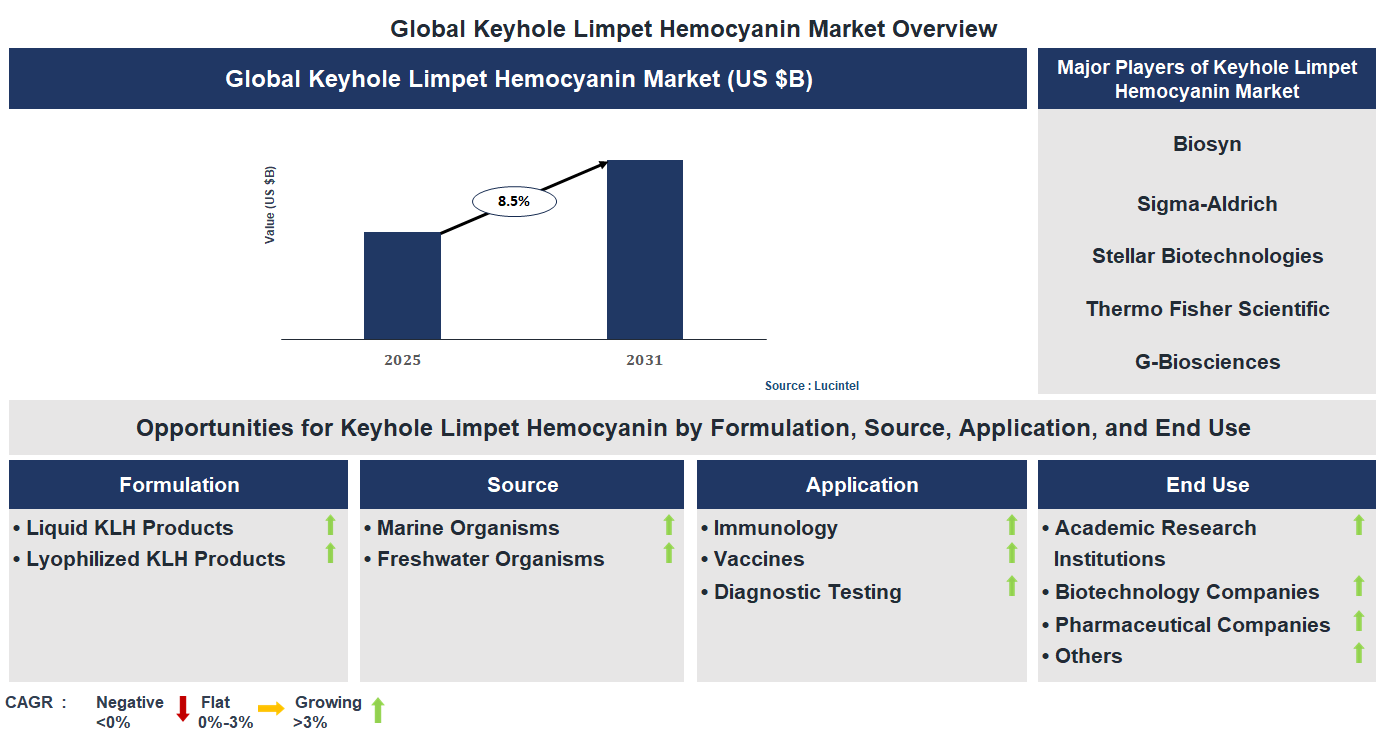
Key data points: The growth forecast = 8.5% annually for the next 7 years. Scroll below to get more insights. This market report covers trends, opportunities and forecasts in keyhole limpet hemocyanin market to 2031 by formulation (liquid KLH products and lyophilized KLH products), source (marine organisms and freshwater organisms), application (immunology, vaccines, and diagnostic testing), end use (academic research institutions, biotechnology companies, pharmaceutical companies, and others), and region (North America, Europe, Asia Pacific, and the Rest of the World)
We'll send your sample report shortly.
• Lucintel forecasts that, within the formulation category, liquid KLH product is expected to witness higher growth over the forecast period.
• Within the end use category, biotechnology company is expected to witness the highest growth.
• In terms of region, APAC is expected to witness the highest growth over the forecast period. Gain valuable insights for your business decisions with our comprehensive 150+ page report. Sample figures with some insights are shown below.
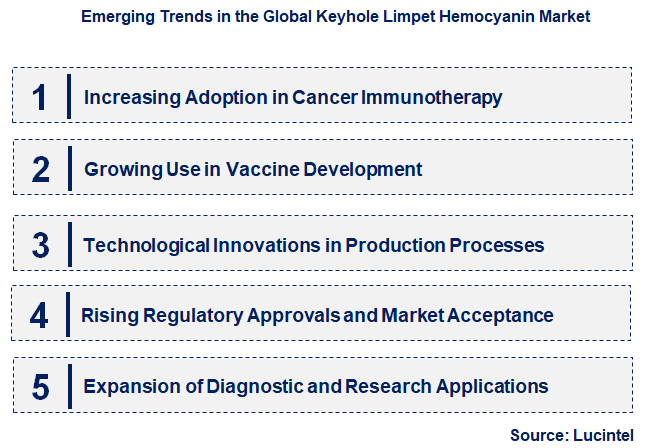
• Increasing Adoption in Cancer Immunotherapy: The use of KLH as an immune stimulant in cancer treatments is expanding due to its ability to enhance immune responses. Researchers are exploring KLH as a carrier protein in vaccine formulations, which helps improve the efficacy of cancer vaccines. This trend is driven by the rising prevalence of cancer and the need for targeted immunotherapies. The integration of KLH in clinical trials is expected to boost its application, making it a vital component in personalized cancer treatment strategies. This shift is likely to increase demand and stimulate market growth significantly.
• Growing Use in Vaccine Development: KLH is increasingly used as a carrier protein in vaccine formulations, especially for infectious diseases and cancer. Its ability to elicit a strong immune response makes it ideal for conjugate vaccines. Advances in vaccine technology and the need for more effective immunizations are fueling this trend. The development of novel vaccine candidates incorporating KLH is expected to improve immunogenicity and durability. This trend is also supported by increased funding for vaccine research and rising global health concerns, which collectively drive the market toward broader application of KLH in vaccine development.
• Technological Innovations in Production Processes: Innovations in biotechnological methods are enhancing the efficiency and scalability of KLH production. Techniques such as recombinant DNA technology and improved purification processes are reducing costs and increasing yield quality. These advancements enable manufacturers to meet rising demand while maintaining high standards of safety and purity. The adoption of automation and process optimization is also reducing production time, making KLH more accessible for various applications. This trend is crucial for supporting market expansion and ensuring consistent supply to meet global healthcare needs.
• Rising Regulatory Approvals and Market Acceptance: Increasing regulatory approvals for KLH-based products are boosting market confidence and acceptance. Regulatory agencies are recognizing the safety and efficacy of KLH in various applications, which facilitates commercialization. This trend is supported by positive clinical trial outcomes and growing evidence of KLH’s benefits in immunotherapy and diagnostics. As regulatory pathways become clearer and more streamlined, more companies are likely to invest in KLH-based product development. This acceptance is pivotal in expanding the market and encouraging innovation within the industry.
• Expansion of Diagnostic and Research Applications: The use of KLH in diagnostic assays and research tools is expanding due to its strong immunogenic properties. It is widely used in ELISA tests, antibody production, and immunoassays. The increasing focus on personalized medicine and biomarker discovery is driving demand for KLH-based reagents. Additionally, ongoing research into novel diagnostic techniques is likely to uncover new applications for KLH. This trend is expected to diversify the market, opening new revenue streams and fostering innovation in biomedical research and clinical diagnostics. In summary, these emerging trends are collectively transforming the keyhole limpet hemocyanin market by enhancing its applications, improving production methods, and increasing regulatory support. These developments are not only expanding market opportunities but also advancing healthcare solutions, ultimately leading to more effective treatments and diagnostics in the future.
• Expansion of Immunotherapy Applications: The use of KLH in cancer immunotherapy has increased, with new clinical trials demonstrating its effectiveness as an immune stimulant. This expansion is driving demand for KLH-based vaccines and therapeutic agents, leading to increased market growth and new product development.
• Regulatory Approvals and Funding: Several KLH-based products have received regulatory approval in various regions, facilitating market entry and commercialization. Additionally, increased funding from the government and private sectors for biotech research is accelerating the innovation and commercialization of KLH applications.
• Advances in Vaccine Technology: Innovations in vaccine delivery systems and adjuvant formulations incorporating KLH have improved vaccine efficacy and safety profiles. These technological advancements are broadening KLHs application scope in infectious disease prevention and therapeutic vaccines.
• Rising Investment in Biotech R&D: The biotech sectors increased investment in research and development has led to the discovery of novel KLH formulations and conjugates. This trend is fostering product pipeline expansion and enhancing the markets competitive landscape.
• Growing Diagnostic and Research Use: The application of KLH in diagnostic assays and research tools has expanded, driven by its strong immunogenic properties. This growth is supporting the development of new diagnostic platforms and research methodologies, further boosting market demand. In summary, these developments are significantly impacting the Keyhole Limpet Hemocyanin Market by fostering innovation, expanding application areas, and improving product efficacy and safety. The market is poised for continued growth as research and regulatory support strengthen, and new therapeutic and diagnostic uses emerge.
• Enhanced Cancer Treatments: KLH is increasingly used as an immune stimulant in cancer immunotherapy, boosting the bodys ability to recognize and attack tumor cells. Its ability to serve as a carrier protein in vaccine formulations enhances immune responses, leading to more effective therapies. This application is expected to see rapid growth as personalized medicine and immuno-oncology expand, improving patient outcomes and opening new revenue streams for biotech firms.
• Novel Vaccine Adjuvants: KLH functions as a potent adjuvant in vaccine formulations, enhancing immune responses to various antigens. Its ability to improve vaccine efficacy makes it valuable in developing vaccines for infectious diseases and cancer. The rising demand for effective vaccines, especially in emerging infectious diseases, is driving innovation and adoption of KLH-based adjuvants, expanding market opportunities.
• Immune Response Monitoring: KLH is used in diagnostic assays to evaluate immune responses, particularly in allergy testing and immunological research. Its high immunogenicity allows for precise detection of immune activity, aiding in disease diagnosis and monitoring. Growing investments in diagnostic research and personalized medicine are fueling demand for KLH-based diagnostic tools, broadening their application scope.
• Immunological Research Tools: KLH is a critical reagent in immunology research, used for antibody production and immune response studies. As research into immune mechanisms deepens, the demand for KLH as a research tool increases. This growth supports the development of new therapies and enhances understanding of immune-related diseases, creating a robust R&D pipeline.
• Production of Conjugate Vaccines: KLH is employed in manufacturing conjugate vaccines, where it acts as a carrier protein to improve immunogenicity. The expanding pipeline of conjugate vaccines for infectious diseases and cancer is driving demand for KLH in biopharmaceutical production. This application is expected to grow as vaccine technology advances and global immunization efforts intensify. In summary, these key growth opportunities are significantly impacting the keyhole limpet hemocyanin market by expanding its applications across healthcare, research, and diagnostics. The increasing adoption of KLH in immunotherapy, vaccine development, and diagnostics is fostering innovation, driving market expansion, and attracting investments. As these opportunities evolve, they are poised to shape a more dynamic and competitive market landscape, ultimately improving healthcare outcomes worldwide.
• Technological Advancements: The development of innovative extraction and purification techniques has improved the quality, safety, and efficacy of KLH products. These advancements enable large-scale production, reduce costs, and expand applications in vaccines and immunotherapies. As research progresses, new formulations and delivery methods are emerging, increasing the versatility and adoption of KLH. Enhanced biotechnological tools also facilitate better understanding of immune responses, further boosting market growth. The continuous evolution of technology ensures that KLH remains a vital component in immunological research and clinical applications, supporting sustained market expansion.
• Rising Prevalence of Chronic Diseases: The increasing incidence of cancer, autoimmune disorders, and infectious diseases worldwide is a significant driver. KLH is widely used as an immunostimulant and vaccine adjuvant, enhancing immune responses against various pathogens and tumor cells. The growing patient population requiring immunotherapy and vaccine development fuels demand for KLH-based products. Governments and healthcare providers are investing heavily in research and development to combat these diseases, which further accelerates market growth. As awareness about immunological treatments increases, the reliance on KLH as a key biological agent is expected to rise substantially.
• Growing Investment in R&D: Increased funding from pharmaceutical companies, research institutions, and government agencies is propelling innovation in KLH applications. Investment in vaccine development, cancer immunotherapy, and diagnostic tools utilizing KLH is expanding rapidly. This financial support enables extensive research, clinical trials, and product commercialization, thereby broadening the market scope. Collaborations between biotech firms and academic institutions foster technological breakthroughs and novel formulations. The focus on personalized medicine and targeted therapies also opens new avenues for KLH utilization, ensuring sustained growth driven by ongoing research and development efforts.
• Regulatory Support and Approvals: Favorable regulatory policies and approvals for KLH-based products are facilitating market growth. Regulatory agencies are establishing clear guidelines for the safety, efficacy, and quality standards of biological products, which streamline approval processes. This regulatory clarity encourages manufacturers to invest in KLH research and commercialization. Additionally, approvals for KLH as a vaccine adjuvant and in immunotherapy applications boost market confidence and adoption. Ongoing regulatory harmonization across regions further simplifies international trade and distribution, supporting global market expansion.
• Increasing Awareness and Adoption: Growing awareness among healthcare professionals and patients about the benefits of KLH in vaccines and immunotherapies is driving demand. Educational initiatives and clinical research publications highlight KLH’s efficacy, encouraging its integration into treatment protocols. The expanding use of KLH in diagnostic assays and research further amplifies its market presence. As more clinical evidence becomes available, adoption rates are expected to increase, especially in emerging markets. This trend is supported by the rising focus on personalized medicine and immuno-oncology, positioning KLH as a critical biological agent in future healthcare solutions. The challenges facing this keyhole limpet hemocyanin market include:
• High Production Costs: The extraction and purification of KLH involve complex, labor-intensive processes that contribute to high manufacturing costs. Limited scalability and the need for specialized facilities further increase expenses. These costs impact product pricing, potentially limiting accessibility and adoption, especially in cost-sensitive markets. Additionally, fluctuations in raw material availability and quality can disrupt supply chains, affecting market stability. Overcoming these cost barriers requires technological innovations and process optimization, which are still under development, posing ongoing challenges for manufacturers seeking competitive pricing.
• Regulatory Hurdles: Despite some supportive policies, the regulatory landscape for biological products like KLH remains complex and stringent. Lengthy approval processes, varying standards across regions, and concerns about animal-derived products create barriers to market entry. Regulatory uncertainties can delay product launches and increase compliance costs. Moreover, safety concerns related to immunogenicity and potential allergic reactions necessitate extensive clinical testing, further prolonging approval timelines. Navigating these regulatory challenges requires significant expertise and resources, which can hinder smaller players and slow overall market growth.
• Ethical and Sustainability Concerns: The use of marine animals, such as keyhole limpets, raises ethical questions regarding animal welfare and environmental impact. Overharvesting of limpets can threaten local ecosystems and biodiversity. Consumer and regulatory pressures for sustainable and cruelty-free products are increasing, prompting calls for alternative production methods. Developing recombinant or synthetic versions of KLH could address these concerns but requires substantial research and investment. Balancing the demand for effective biological agents with ethical and environmental considerations remains a critical challenge for the industry, influencing market acceptance and regulatory approval pathways. In summary, the keyhole limpet hemocyanin market is driven by technological innovations, rising disease prevalence, increased R&D investment, regulatory support, and growing awareness. However, high production costs, regulatory complexities, and ethical concerns pose significant hurdles. These factors collectively shape the market’s growth trajectory, requiring strategic navigation by industry stakeholders. While expansion opportunities are substantial, addressing these challenges is essential to ensure sustainable development and broader application of KLH in healthcare. The market’s future will depend on technological progress, regulatory harmonization, and sustainable practices, ultimately influencing its global reach and impact.
• Biosyn
• Sigma-Aldrich
• Stellar Biotechnologies
• Thermo Fisher Scientific
• G-Biosciences
• Liquid KLH Products
• Lyophilized KLH Products
• Marine Organisms
• Freshwater Organisms
• Immunology
• Vaccines
• Diagnostic Testing
• Academic Research Institutions
• Biotechnology Companies
• Pharmaceutical Companies
• Others
• North America
• Europe
• Asia Pacific
• The Rest of the World
• United States: The US has seen increased investment in KLH-based immunotherapies, with several clinical trials underway for cancer vaccines. Leading biotech firms are optimizing extraction and purification techniques, enhancing product efficacy and safety. Regulatory agencies are streamlining approval processes, encouraging innovation. Academic institutions are collaborating with industry to explore novel applications, including autoimmune disease treatments. The US market is also witnessing a rise in personalized medicine approaches utilizing KLH.
• China: China is rapidly expanding its KLH production capacity, driven by government initiatives to boost biotech innovation. Local companies are developing cost-effective extraction methods, reducing reliance on imports. The country is also investing heavily in research to explore KLHs potential in infectious disease vaccines and cancer immunotherapy. Regulatory frameworks are evolving to facilitate faster approval of KLH-based products. Additionally, China is increasing collaborations with international research organizations to accelerate development.
• Germany: Germany remains a key player in KLH research, focusing on improving the purity and stability of KLH products. The country’s biotech firms are innovating in vaccine adjuvant formulations, enhancing immune response efficacy. Germany’s strong regulatory standards ensure high-quality products, fostering trust in clinical applications. The country is also investing in bioprocessing technologies to scale up production efficiently. Academic institutions are conducting pioneering research on KLH’s role in allergy treatments and autoimmune diseases.
• India: India is witnessing a surge in KLH research, supported by government funding and private sector investments. Local manufacturers are working on affordable production techniques to meet domestic demand and export needs. The country is exploring KLH’s application in cancer immunotherapy and vaccine development for infectious diseases. Regulatory agencies are updating guidelines to facilitate clinical trials and commercialization. India’s growing biotech ecosystem is fostering collaborations with global firms, accelerating innovation in KLH-based therapies.
• Japan: Japan is focusing on advanced biotechnological methods to enhance KLH production quality and yield. The country’s research institutions are exploring novel vaccine adjuvants and diagnostic tools involving KLH. Japan’s regulatory environment supports rapid approval of innovative biopharmaceuticals, encouraging market growth. The country is also investing in personalized medicine approaches, integrating KLH in targeted immunotherapies. Collaborations between academia and industry are driving innovations, particularly in cancer treatment and autoimmune disorder management.


• Biosyn
• Sigma-Aldrich
• Stellar Biotechnologies
• Thermo Fisher Scientific
• G-Biosciences Q5. Which keyhole limpet hemocyanin market segment will be the largest in future? Answer: Lucintel forecasts that, within the formulation category, liquid KLH product is expected to witness higher growth over the forecast period. Q6. In keyhole limpet hemocyanin market, which region is expected to be the largest in next 5 years? Answer: In terms of region, APAC is expected to witness the highest growth over the forecast period. Q7. Do we receive customization in this report? Answer: Yes, Lucintel provides 10% customization without any additional cost.


Choose a license that fits your team. Instant PDF delivery.
Prices exclude taxes. Instant delivery. Custom licensing available on request.
Market Report · July 15, 2026
Market Report · May 18, 2026
Market Report · May 18, 2026
Trusted partner for strategic intelligence and business growth


Receive a complimentary market analysis tailored to your industry. Our analysts will identify key growth opportunities and competitive dynamics specific to your business.

Market size, growth rate, and key trend analysis for your specific sector.

Top competitor positioning and market share analysis.

Strategic recommendations backed by data-driven insights.
Get curated market intelligence and competitive moves straight to your inbox.
By subscribing, you agree to receive our monthly insights. Unsubscribe anytime.
Receive a complimentary market analysis tailored to your industry. Our analysts will identify key growth opportunities and competitive dynamics specific to your business.
Market size, growth rate, and key trend analysis for your specific sector.
Top competitor positioning and market share analysis.
Strategic recommendations backed by data-driven insights.
Get curated market intelligence, emerging trends, and competitive moves straight to your inbox each month.
By subscribing, you agree to receive our monthly insights. Unsubscribe anytime.
We'll send your sample report shortly.