
Report Feature
Kava Root Extract Market Trends and Forecast
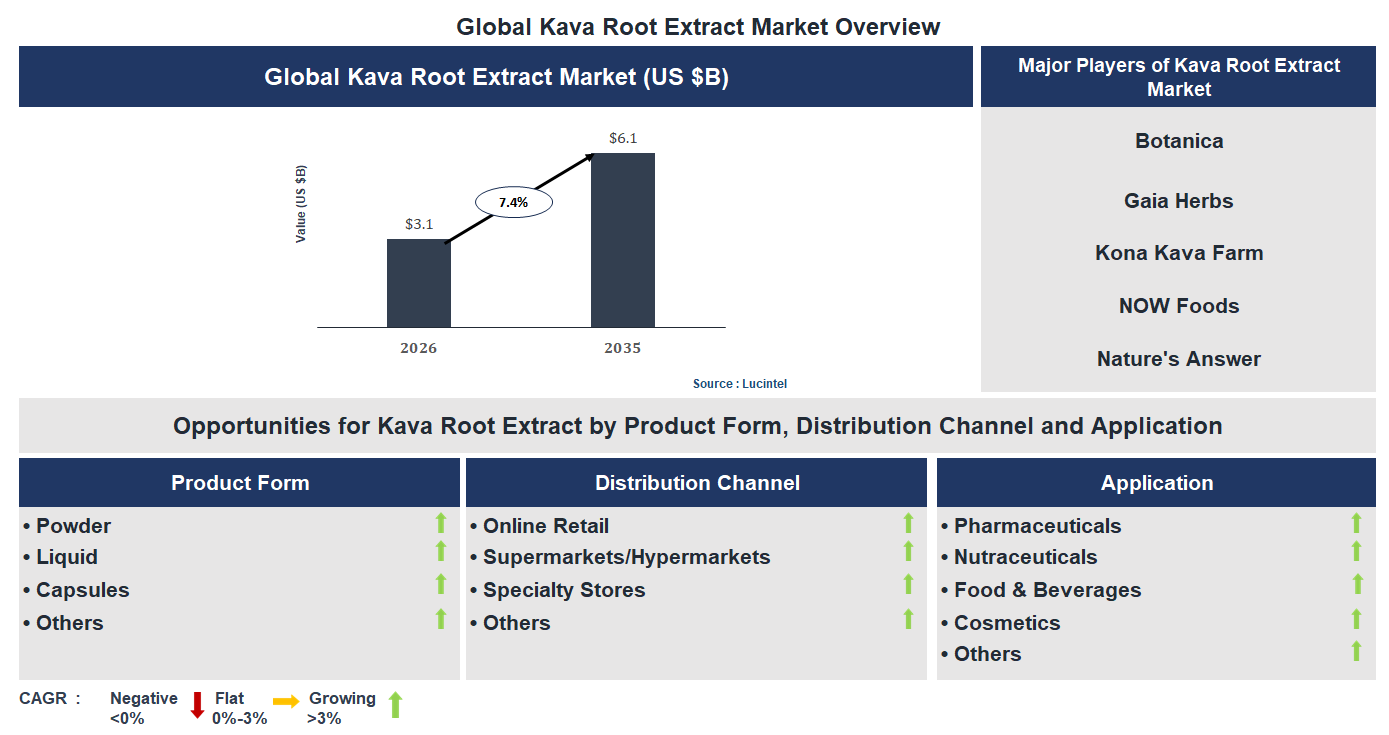
The future of the global kava root extract market looks promising with opportunities in the pharmaceutical, nutraceutical, food & beverage, and cosmetic markets. The global kava root extract market is expected to reach an estimated $6.1 billion by 2035 with a CAGR of 7.4% from 2026 to 2035. The major drivers for this market are the increasing demand for natural wellness products, the rising popularity of stress-relief supplements, and the growing awareness of mental health benefits.• Lucintel forecasts that, within the product form category, powder is expected to witness the highest growth over the forecast period.
• Within the application category, pharmaceutical is expected to witness the highest growth.
• In terms of region, APAC is expected to witness the highest growth over the forecast period. Gain valuable insights for your business decisions with our comprehensive 150+ page report. Sample figures with some insights are shown below.
Emerging Trends in the Kava Root Extract Market
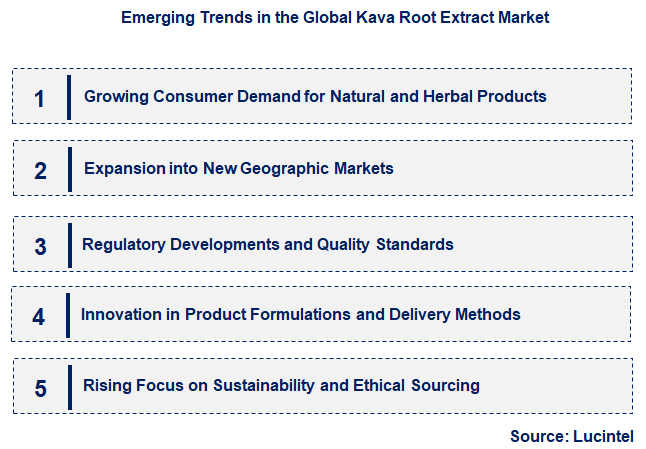
The kava root extract market is experiencing rapid growth driven by increasing consumer interest in natural remedies, wellness products, and alternative medicine. As consumers seek holistic health solutions, the market is evolving with innovative product formulations, expanding geographic reach, and heightened regulatory attention. These developments are shaping the future landscape of the industry, influencing product offerings, marketing strategies, and consumer preferences. Understanding these emerging trends is crucial for stakeholders aiming to capitalize on opportunities and navigate challenges effectively. The following five key trends highlight the current and future directions of the kava root extract market.• Growing Consumer Demand for Natural and Herbal Products: The increasing preference for natural, plant-based remedies is fueling market growth. Consumers are seeking alternatives to synthetic pharmaceuticals, emphasizing wellness, stress relief, and relaxation. This trend is driven by rising awareness of health benefits, safety concerns, and a shift towards holistic lifestyles. As a result, Kava root extract is gaining popularity as a natural anxiolytic and sedative option, encouraging manufacturers to develop innovative, high-quality products that meet consumer expectations for purity and efficacy.
• Expansion into New Geographic Markets: The market is witnessing significant expansion into emerging regions such as Asia-Pacific, Latin America, and the Middle East. These areas have traditional uses of Kava and a growing acceptance of herbal supplements. Increased awareness, improved distribution channels, and favorable regulatory environments are facilitating market penetration. This geographic diversification not only broadens consumer bases but also encourages local cultivation and production, reducing reliance on imports and fostering regional industry growth.
• Regulatory Developments and Quality Standards: Regulatory scrutiny is intensifying globally, with authorities establishing quality standards and safety guidelines for Kava products. Concerns over potential hepatotoxicity have prompted stricter regulations, impacting product formulations and marketing claims. Companies are investing in rigorous testing, quality assurance, and transparent labeling to comply with regulations and build consumer trust. These developments are crucial for market sustainability, ensuring consumer safety, and preventing misinformation, ultimately fostering a more trustworthy industry environment.
• Innovation in Product Formulations and Delivery Methods: The market is witnessing innovation in product formats, including capsules, teas, tinctures, and topicals. Advances in extraction techniques and formulation science are enhancing bioavailability and efficacy. Additionally, novel delivery methods such as nanoemulsions and dissolvable powders are improving consumer convenience and absorption. These innovations cater to diverse consumer preferences and lifestyles, expanding market reach and creating new revenue streams for manufacturers.
• Rising Focus on Sustainability and Ethical Sourcing: Sustainability concerns are influencing industry practices, with companies emphasizing eco-friendly cultivation, harvesting, and packaging. Ethical sourcing of Kava roots, supporting local communities, and ensuring fair trade practices are gaining importance. Consumers are increasingly valuing brands that demonstrate environmental responsibility and social impact. This trend is driving the adoption of sustainable practices, enhancing brand reputation, and aligning the market with global sustainability goals, ultimately contributing to long-term industry resilience. In summary, these emerging trends are transforming the kava root extract market by promoting natural product development, expanding geographic reach, emphasizing safety and quality, fostering innovation, and prioritizing sustainability. Together, they are reshaping the industry landscape, creating new growth opportunities, and setting the stage for a more responsible and consumer-centric market environment.
Recent Development in the Kava Root Extract Market
The kava root extract market is experiencing rapid growth driven by increasing consumer interest in natural remedies and herbal supplements. Advances in extraction technologies and growing awareness of Kavas health benefits are expanding its applications across wellness, pharmaceuticals, and functional foods. Market players are investing in research to validate health claims, while regulatory developments influence product acceptance. This evolving landscape presents significant opportunities for innovation, market expansion, and increased consumer adoption, shaping the future trajectory of the industry.• Growing Consumer Demand for Natural Remedies: The rising preference for herbal and plant-based products is boosting the kava root extract market. Consumers seek natural solutions for stress relief, anxiety, and sleep disorders, positioning Kava as a popular alternative to synthetic drugs. This trend is supported by increased awareness of holistic health and wellness, leading to higher demand across global markets. Companies are capitalizing on this shift by developing targeted products, expanding distribution channels, and investing in marketing strategies to educate consumers about Kava’s benefits.
• Advances in Extraction and Processing Technologies: Innovations in extraction methods, such as supercritical fluid extraction and solvent-free processes, are enhancing the purity and potency of Kava extracts. These technological improvements reduce production costs and improve product stability, quality, and safety. As a result, manufacturers can offer higher-quality products that meet regulatory standards and consumer expectations. This progress also enables the development of novel formulations, including capsules, teas, and topicals, broadening the market scope and application diversity.
• Increasing Research and Clinical Validation: Growing scientific interest and clinical studies are substantiating Kava’s health benefits, particularly for anxiety, stress, and sleep disorders. This research enhances credibility and consumer confidence, facilitating regulatory approvals and market acceptance. As more evidence emerges, product formulations are becoming more targeted and effective, attracting healthcare professionals and consumers alike. This validation supports marketing efforts and encourages integration of Kava into mainstream health and wellness routines, further expanding its market reach.
• Regulatory Developments and Standardization: Evolving regulations and quality standards are shaping the Kava market landscape. Countries are establishing guidelines for safe consumption, quality control, and labeling, which help mitigate safety concerns related to Kava’s potential hepatotoxicity. Standardization efforts ensure consistent potency and purity, boosting consumer trust and facilitating international trade. Clear regulatory frameworks also encourage manufacturers to adhere to safety protocols, fostering market growth and opening new opportunities in regions with previously restrictive policies.
• Expansion into New Markets and Applications: The diversification of Kava’s applications into functional foods, beverages, cosmetics, and pharmaceuticals is creating new growth avenues. Emerging markets in Asia, Europe, and North America are witnessing increased adoption driven by health trends and regulatory acceptance. Innovative product development, such as Kava-infused drinks and skincare products, is attracting a broader consumer base. This expansion not only increases market size but also encourages cross-sector collaborations, fostering innovation and long-term industry sustainability. The overall impact of these developments is a robust, expanding market characterized by increased consumer trust, innovative product offerings, and broader geographic reach. These factors collectively drive growth, enhance competitiveness, and position Kava Root Extract as a key player in the global herbal supplement and wellness industry.
Strategic Growth Opportunities in the Kava Root Extract Market
The kava root extract market is experiencing significant growth driven by increasing consumer interest in natural remedies, wellness products, and traditional herbal solutions. As awareness of mental health and relaxation therapies rises, demand for plant-based extracts like kava root is expanding across global markets. Innovations in extraction techniques and product formulations are further fueling market expansion. This presents numerous strategic opportunities for manufacturers, suppliers, and marketers to capitalize on the growing preference for natural, holistic health solutions and diversify their product portfolios.• Growing Demand for Natural Stress Relief Products: The increasing awareness of mental health issues and the desire for natural stress management options are boosting demand for kava root extract. Consumers are seeking herbal alternatives to pharmaceuticals, leading to expanded use in supplements, teas, and wellness products. This trend is supported by the perception of kava as a safe, effective relaxant, encouraging manufacturers to develop innovative formulations targeting stress, anxiety, and sleep disorders, thereby expanding market reach.
• Expansion of Herbal and Dietary Supplement Markets: The rising popularity of herbal and dietary supplements globally is creating new opportunities for kava root extract. Consumers are increasingly turning to plant-based products for health benefits, including anxiety reduction and relaxation. Companies are investing in product development, marketing, and distribution channels to meet this demand, which is expected to drive sales growth. Regulatory approvals and quality assurance are critical factors influencing market expansion in this segment.
• Innovation in Product Formulations and Delivery Methods: Advances in extraction and formulation technologies are enabling the development of diverse kava-based products, such as capsules, powders, tinctures, and beverages. These innovations improve bioavailability, convenience, and consumer appeal. The introduction of novel delivery methods caters to different consumer preferences and lifestyles, broadening the market scope. Continuous R&D efforts are essential to optimize efficacy and safety, fostering consumer trust and expanding application areas.
• Increasing Adoption in the Cosmetic and Personal Care Industry: The cosmetic sector is exploring kava root extract for its soothing, anti-inflammatory, and antioxidant properties. It is incorporated into skincare, haircare, and relaxation products to promote skin health and stress relief. This diversification into personal care opens new revenue streams and enhances product differentiation. Growing consumer interest in natural ingredients in cosmetics supports this trend, encouraging brands to leverage kava’s benefits for holistic wellness and beauty solutions.
• Rising Focus on Sustainable and Ethical Sourcing: Consumers and companies are emphasizing sustainability and ethical sourcing of herbal ingredients like kava root. Certification standards, fair trade practices, and environmentally friendly cultivation methods are gaining importance. This focus enhances brand reputation and appeals to eco-conscious consumers. Sustainable sourcing also ensures consistent quality and supply, which are vital for market stability and growth. Embracing these practices can provide a competitive edge and foster long-term market development. The overall impact of these opportunities is a robust expansion of the kava root extract market, driven by consumer preferences for natural, holistic health solutions and innovative product development. Strategic investments in research, sustainability, and marketing will be crucial for stakeholders to capitalize on emerging trends and secure a competitive position in this growing industry.
Kava Root Extract Market Driver and Challenges
The kava root extract market is influenced by a variety of technological, economic, and regulatory factors that shape its growth trajectory. Advances in extraction and formulation technologies have improved product quality and safety, boosting consumer confidence. Economic factors such as increasing health consciousness and demand for natural remedies drive market expansion. Regulatory environments, including approvals and restrictions, significantly impact product availability and marketing strategies. Additionally, cultural acceptance and awareness of Kavas traditional uses influence consumer adoption. Navigating these diverse factors is essential for market players to capitalize on opportunities while addressing potential hurdles. Understanding these drivers and challenges provides a comprehensive view of the markets prospects and risks. The factors responsible for driving the kava root extract market include:• Growing Consumer Preference for Natural and Herbal Products: Increasing awareness of health benefits associated with natural remedies has led consumers to seek herbal supplements like Kava. This trend is driven by a desire for holistic wellness, minimal side effects, and organic lifestyles. As consumers become more health-conscious, demand for plant-based products rises, encouraging manufacturers to innovate and expand their offerings. The market benefits from this shift, with more products gaining acceptance in both traditional and modern healthcare settings. The growing popularity of alternative medicine further fuels this demand, making Kava a preferred choice for stress relief, anxiety reduction, and relaxation.
• Advances in Extraction and Processing Technologies: Technological innovations in extraction methods, such as supercritical fluid extraction and cold pressing, have enhanced the purity, potency, and safety of Kava root extracts. These advancements allow for more efficient production, reducing costs and environmental impact. Improved processing techniques also help in removing undesirable compounds, ensuring compliance with safety standards. As a result, high-quality extracts are more accessible, appealing to both consumers and manufacturers. This technological progress supports product diversification, including capsules, powders, and beverages, thereby expanding market reach and consumer options.
• Increasing Awareness of Kava’s Therapeutic Benefits: Scientific research and clinical studies have highlighted Kava’s potential in alleviating anxiety, promoting relaxation, and improving sleep quality. This growing body of evidence has increased awareness among healthcare professionals and consumers alike. Marketing campaigns emphasizing these benefits have further boosted credibility and demand. As more individuals seek natural alternatives to pharmaceutical drugs, Kava’s reputation as a herbal remedy strengthens. This increased awareness not only expands the consumer base but also encourages product innovation tailored to specific health needs, fostering market growth.
• Expansion of Distribution Channels and E-commerce Platforms: The rise of online retail and e-commerce platforms has made Kava products more accessible to a global audience. Direct-to-consumer sales, digital marketing, and social media influence have expanded market reach beyond traditional retail outlets. This distribution expansion allows for greater product variety, competitive pricing, and consumer education. Additionally, partnerships with health stores, wellness centers, and pharmacies enhance visibility and credibility. The convenience of online purchasing and detailed product information further attracts consumers, supporting sustained growth and market penetration across diverse demographics.
• Increasing Investment in R&D and Product Innovation: Companies are investing heavily in research and development to improve Kava formulations, enhance bioavailability, and develop new product formats. Innovation efforts focus on creating functional foods, beverages, and supplements tailored to specific consumer needs. R&D also aims to address safety concerns and standardize active compounds, ensuring consistent quality. These innovations help differentiate products in a competitive market, attract new customer segments, and meet evolving regulatory standards. The focus on scientific validation and product diversification drives market expansion and positions Kava as a versatile herbal ingredient. The challenges in the kava root extract market are:
• Regulatory Restrictions and Legal Concerns: Regulatory agencies in various countries have imposed restrictions or bans on Kava due to concerns over potential hepatotoxicity. These regulations create uncertainty for manufacturers and limit market access in certain regions. Navigating complex legal frameworks requires significant compliance efforts and can delay product launches. Additionally, inconsistent regulations across countries hinder international trade and market expansion. The evolving legal landscape necessitates ongoing monitoring and adaptation, which can increase costs and impact profitability. Overcoming regulatory hurdles is crucial for sustained growth and consumer trust.
• Safety and Quality Concerns: Despite its benefits, Kava has been associated with reports of liver toxicity, leading to safety concerns among consumers and regulators. Variability in plant quality, extraction methods, and dosage can affect safety profiles. Ensuring consistent quality and safety standards is challenging but essential for market acceptance. Manufacturers must implement rigorous testing and quality control measures, which can increase production costs. Addressing these concerns through scientific research and transparent communication is vital to mitigate risks, maintain consumer confidence, and prevent market setbacks.
• Cultural and Social Acceptance Challenges: While Kava has traditional roots in Pacific Island cultures, its acceptance in Western markets faces cultural and social barriers. Misconceptions about its effects, legal restrictions, and negative media reports can hinder consumer adoption. Overcoming skepticism requires targeted education and awareness campaigns to dispel myths and highlight benefits. Additionally, cultural sensitivities and intellectual property considerations may pose challenges in marketing and branding. Building trust and understanding among diverse consumer groups is essential for expanding market reach and ensuring sustainable growth. In summary, the kava root extract market is driven by increasing consumer preference for natural products, technological advancements, growing awareness of health benefits, expanded distribution channels, and ongoing product innovation. However, regulatory restrictions, safety concerns, and cultural acceptance challenges pose significant hurdles. These factors collectively influence market dynamics, requiring stakeholders to navigate complex legal landscapes, ensure product safety, and foster consumer trust. The overall impact is a market with substantial growth potential tempered by regulatory and safety challenges that must be strategically managed to realize long-term success.
List of Kava Root Extract Companies
Companies in the market compete on the basis of product quality offered. Major players in this market focus on expanding their manufacturing facilities, R&D investments, infrastructural development, and leverage integration opportunities across the value chain. With these strategies kava root extract companies cater increasing demand, ensure competitive effectiveness, develop innovative products & technologies, reduce production costs, and expand their customer base. Some of the kava root extract companies profiled in this report include-• Botanica
• Gaia Herbs
• Kona Kava Farm
• NOW Foods
• Natures Answer
• Oregons Wild Harvest
• Herb Pharm
• Kava King Products
• Kava Vinaka
• Root of Happiness
Kava Root Extract Market by Segment
The study includes a forecast for the global kava root extract market by product form, distribution channel, application, and region.Kava Root Extract Market by Product Form [Value from 2019 to 2035]:
• Powder
• Liquid
• Capsules
• Others
Kava Root Extract Market by Distribution Channel [Value from 2019 to 2035]:
• Online Retail
• Supermarkets/Hypermarkets
• Specialty Stores
• Others
Kava Root Extract Market by Application [Value from 2019 to 2035]:
• Pharmaceuticals
• Nutraceuticals
• Food & Beverages
• Cosmetics
• Others
Kava Root Extract Market by Region [Value from 2019 to 2035]:
• North America
• Europe
• Asia Pacific
• The Rest of the World
Country Wise Outlook for the Kava Root Extract Market
The kava root extract market has experienced notable growth and innovation across various regions, driven by increasing consumer interest in natural remedies, wellness products, and alternative medicines. As awareness of the plants calming and therapeutic properties expands, countries are adopting new regulations, enhancing production techniques, and expanding distribution channels. These developments reflect a broader trend toward natural health solutions and herbal supplements, influencing market dynamics globally. The following summaries highlight recent key advancements and changes in the United States, China, Germany, India, and Japan, illustrating regional responses and opportunities within this evolving market.• United States: The US market has seen a surge in demand for organic and high-quality kava products, driven by rising awareness of mental health and stress relief. Regulatory frameworks are becoming more standardized, encouraging safer consumption practices. Several startups are innovating with new formulations, including tinctures and capsules, expanding retail and online distribution channels. Additionally, research into the plant’s health benefits is gaining momentum, supporting market growth and consumer confidence.
• China: China is experiencing increased interest in herbal and traditional remedies, including kava, as part of its broader wellness trend. Local manufacturers are investing in quality control and certification processes to meet international standards. E-commerce platforms are playing a significant role in expanding access to kava products, while collaborations with global brands are enhancing product credibility. Regulatory policies are gradually evolving to accommodate herbal supplement imports and sales.
• Germany: Germany remains a key European market for herbal extracts, with stringent quality and safety standards. Recent developments include the introduction of standardized extracts and increased research on kava’s safety profile. Consumer preferences favor organic and sustainably sourced products, prompting producers to adopt eco-friendly practices. The market is also witnessing growth in herbal clinics and wellness centers offering kava-based therapies, further boosting demand.
• India: In India, the market for herbal and natural products is expanding rapidly, supported by a strong tradition of Ayurveda and herbal medicine. Local companies are exploring kava as part of their product portfolios, focusing on quality assurance and traditional formulations. The government’s push for herbal industry development and export opportunities is encouraging innovation and investment. Consumer awareness about natural stress relief options is also contributing to market expansion.
• Japan: Japan’s herbal supplement market is characterized by high consumer awareness and preference for scientifically validated products. Recent developments include the introduction of standardized kava extracts with proven safety profiles. Japanese companies are investing in research collaborations to explore kava’s health benefits further. The market is also influenced by regulatory updates aimed at ensuring product safety, which has helped build consumer trust and increased adoption of kava-based products.

Features of the Global Kava Root Extract Market
Market Size Estimates: Kava root extract market size estimation in terms of value ($B). Trend and Forecast Analysis: Market trends (2019 to 2025) and forecast (2026 to 2035) by various segments and regions. Segmentation Analysis: Kava root extract market size by product form, distribution channel, application, and region in terms of value ($B). Regional Analysis: Kava root extract market breakdown by North America, Europe, Asia Pacific, and Rest of the World. Growth Opportunities: Analysis of growth opportunities in different product forms, distribution channels, applications, and regions for the kava root extract market. Strategic Analysis: This includes M&A, new product development, and competitive landscape of the kava root extract market. Analysis of competitive intensity of the industry based on Porter’s Five Forces model.
FAQ
Q1. What is the kava root extract market size? Answer: The global kava root extract market is expected to reach an estimated $6.1 billion by 2035. Q2. What is the growth forecast for kava root extract market? Answer: The global kava root extract market is expected to grow with a CAGR of 7.4% from 2026 to 2035. Q3. What are the major drivers influencing the growth of the kava root extract market? Answer: The major drivers for this market are the increasing demand for natural wellness products, the rising popularity of stress-relief supplements, and the growing awareness of mental health benefits. Q4. What are the major segments for kava root extract market? Answer: The future of the kava root extract market looks promising with opportunities in the pharmaceutical, nutraceutical, food & beverage, and cosmetic markets. Q5. Who are the key kava root extract market companies? Answer: Some of the key kava root extract companies are as follows:• Botanica
• Gaia Herbs
• Kona Kava Farm
• NOW Foods
• Natures Answer
• Oregons Wild Harvest
• Herb Pharm
• Kava King Products
• Kava Vinaka
• Root of Happiness Q6. Which kava root extract market segment will be the largest in future? Answer: Lucintel forecasts that, within the product form category, powder is expected to witness the highest growth over the forecast period. Q7. In kava root extract market, which region is expected to be the largest in next 5 years? Answer: In terms of region, APAC is expected to witness the highest growth over the forecast period. Q8. Do we receive customization in this report? Answer: Yes, Lucintel provides 10% customization without any additional cost.
Table of Contents
List of Figures
List of Tables
Methodology
- In-depth interviews of the major players in this market
- Detailed secondary research from competitors’ financial statements and published data
- Extensive searches of published works, market, and database information pertaining to industry news, company press releases, and customer intentions
- A compilation of the experiences, judgments, and insights of Lucintel’s professionals, who have analyzed and tracked this market over the years.


Buy Now
Choose a license that fits your team. Instant PDF delivery.
Prices exclude taxes. Instant delivery. Custom licensing available on request.
Key Questions
- • What are some of the most promising, high-growth opportunities for the kava root extract market by product form (powder, liquid, capsules, and others), distribution channel (online retail, supermarkets/hypermarkets, specialty stores, and others), application (pharmaceuticals, nutraceuticals, food & beverages, cosmetics, and others), and region (North America, Europe, Asia Pacific, and the Rest of the World)?
- • Which segments will grow at a faster pace and why?
- • Which region will grow at a faster pace and why?
- • What are the key factors affecting market dynamics? What are the key challenges and business risks in this market?
- • What are the business risks and competitive threats in this market?
- • What are the emerging trends in this market and the reasons behind them?
- • What are some of the changing demands of customers in the market?
- • What are the new developments in the market? Which companies are leading these developments?
- • Who are the major players in this market? What strategic initiatives are key players pursuing for business growth?
- • What are some of the competing products in this market and how big of a threat do they pose for loss of market share by material or product substitution?
- • What M&A activity has occurred in the last 7 years and what has its impact been on the industry? For any questions related to Kava Root Extract Market, Kava Root Extract Market Size, Kava Root Extract Market Growth, Kava Root Extract Market Analysis, Kava Root Extract Market Report, Kava Root Extract Market Share, Kava Root Extract Market Trends, Kava Root Extract Market Forecast, Kava Root Extract Companies, write Lucintel analyst at email: helpdesk@lucintel.com. We will be glad to get back to you soon.


