
Report Feature
Uncooled Infrared MEMS Sensor and Chip Market Trends and Forecast
The technologies in the uncooled infrared MEMS sensor and chip market have undergone significant changes over the years. This development has involved a shift from traditional infrared technologies, such as thermopiles and pyroelectric sensors, to modern microbolometer-based systems. Microbolometer technology has enabled better performance, more compact designs, and improved reliability of infrared sensors, leading to increased adoption in automotive, consumer electronics, and aerospace applications. Uncooled infrared sensors are gaining wider access due to advancements in MEMS (Microelectromechanical Systems) fabrication, which are making integrated chips more cost-effective, scalable, and affordable. As a result, these sensors are now suitable for a broader range of applications that previously required complex cooling mechanisms, which increased both their size and cost.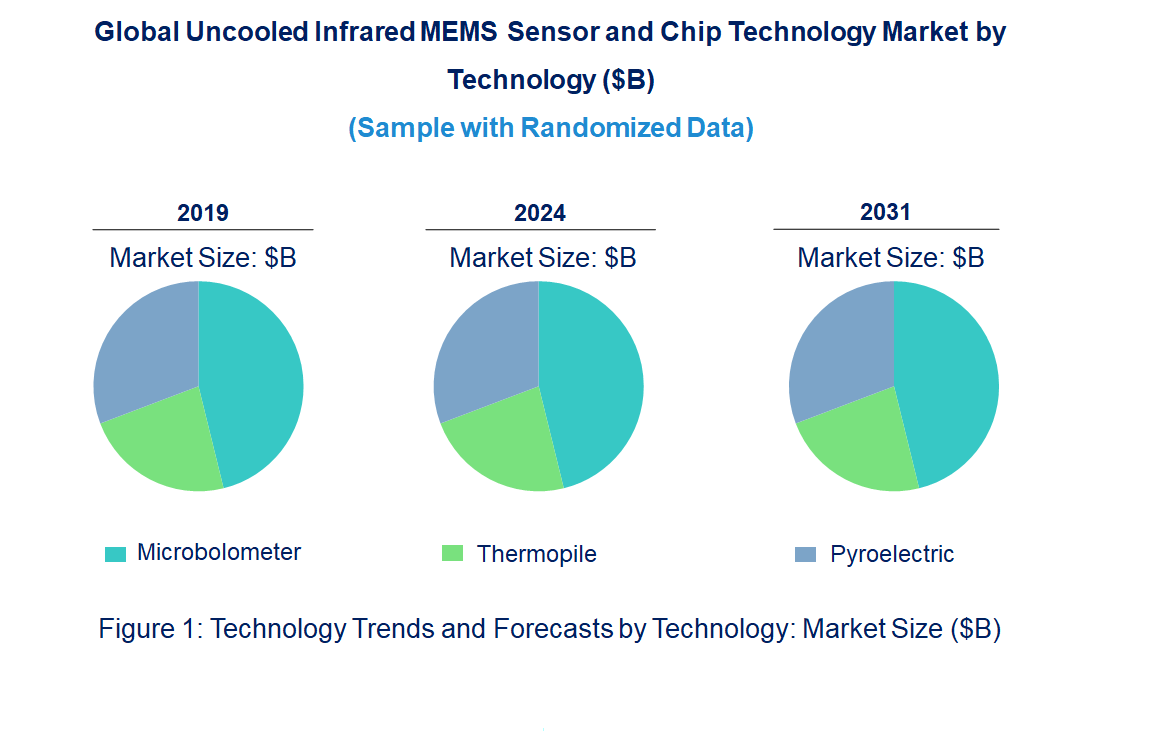
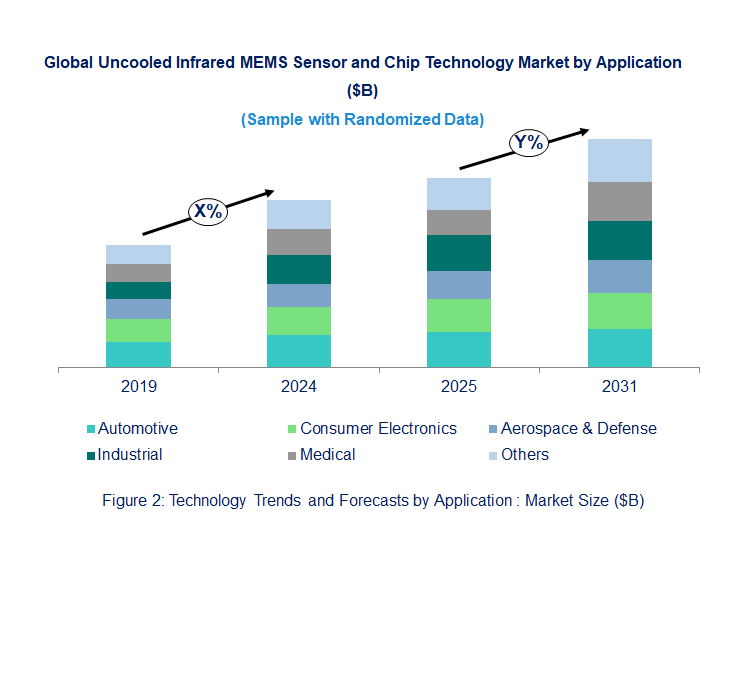
Emerging Trends in the Uncooled Infrared MEMS Sensor and Chip Market
The uncooled infrared MEMS sensor and chip market is experiencing several pivotal trends driven by the demand for advanced sensing solutions, which are spurring growth in various industries. These trends are improving the performance, functionality, and affordability of uncooled infrared sensors, opening up new opportunities in emerging markets.• Miniaturization of Sensor Systems: Uncooled infrared MEMS sensors are becoming smaller, more compact, and energy-efficient, allowing integration into mobile and portable devices. This is especially impactful in consumer electronics, medical diagnostics, and wearables, where size and power efficiency are critical factors.
• Advanced Materials: VOx and a-Si are among the advanced materials used in microbolometer-based infrared sensors. These materials provide higher sensitivity and thermal resolution, which makes them increasingly popular in high-performance applications, such as automotive, industrial, and defense fields. Improvements in image resolution and performance have been seen in the technology front, due to advancements in MEMS designs and infrared image processing techniques. Better thermal sensitivity, faster response times, and improved resolutions are being achieved, which paves the way for their applications in complex fields like security systems, industrial automation, and self-driving cars.
• Low-Cost Sensors for Consumer Electronics: The development of low-cost uncooled infrared sensors is a significant trend, with these sensors designed to be integrated into consumer electronics, such as smartphones, smart home devices, and wearables. These sensors could enable new functionalities such as health monitoring, motion sensing, and advanced camera capabilities.
• Automotive Applications: Uncooled infrared sensors are increasingly being used in the automotive sector for driver assistance systems (ADAS), such as night vision, collision avoidance, and pedestrian detection. These applications require smaller, power-efficient sensors that can operate reliably in a wide range of environmental conditions. Emerging trends are transforming the uncooled infrared MEMS sensor and chip market by accelerating miniaturization, improving performance, and reducing costs, thereby expanding the range of applications in automotive, consumer electronics, and industrial sectors.
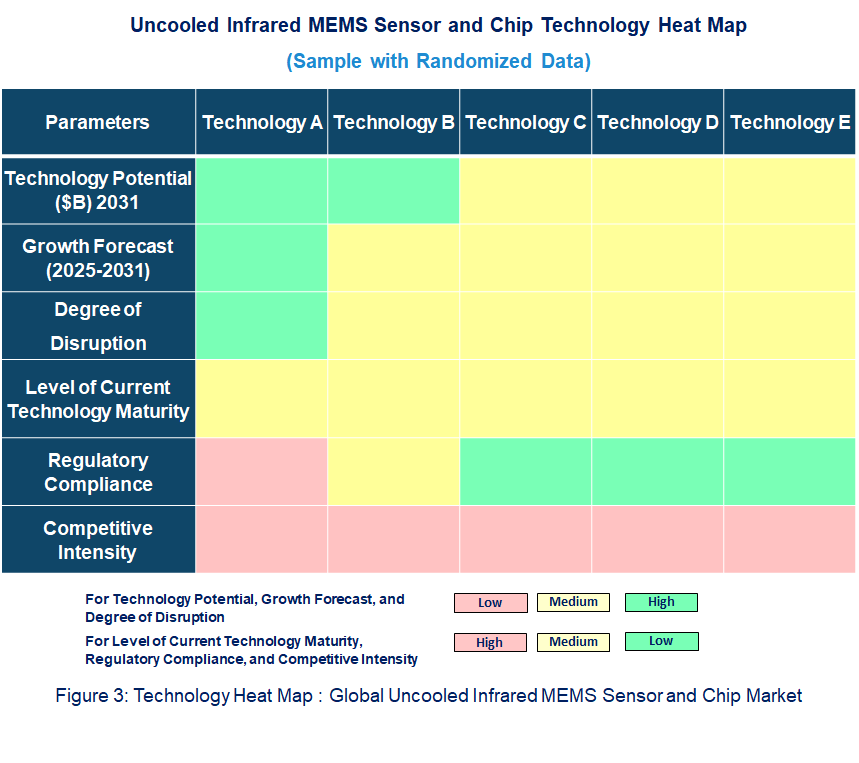
Uncooled Infrared MEMS Sensor and Chip Market : Industry Potential, Technological Development, and Compliance Considerations
The uncooled infrared MEMS (Micro-Electro-Mechanical Systems) sensor and chip market involves the development of small, cost-effective infrared sensors that detect heat signatures in a variety of applications without the need for cooling mechanisms. These sensors are used in areas such as automotive night vision, driver assistance, industrial monitoring, predictive maintenance, security system motion detection, and consumer electronics thermal cameras.• Technology Potential: The potential for uncooled infrared MEMS sensors is substantial, as they do not rely on large and energy-hungry cooling systems. Instead, they offer compactness, power efficiency, and cost-effectiveness. Additionally, the demand for portable, real-time thermal imaging is increasing the adoption of these sensors in consumer products such as smartphones and wearables. Their low power consumption and miniaturized form factor also open up broad applications in the defense, healthcare, and industrial automation industries.
• Degree of Disruption: The degree of disruption is moderate to high. The ability to provide affordable, reliable infrared sensing technology without the need for cooling systems is transforming sectors that rely on thermal imaging, potentially replacing more expensive, cooled sensors traditionally used in these applications.
• Current Technology Maturity: Uncooled infrared MEMS sensors are relatively mature technologies, with advancements in material science and manufacturing processes leading to further improvements in performance, sensitivity, and integration. However, ongoing R&D is needed for higher-resolution sensors and wider adoption in new markets.
• Regulatory Compliance: Manufacturers must adhere to safety, environmental, and EMC regulations. Environmental safety certification, such as RoHS, is particularly important for consumer electronics.
Recent Technological development in Uncooled Infrared MEMS Sensor and Chip Market by Key Players
The uncooled infrared MEMS sensor and chip market is being driven by innovations and investments from key industry players, who are focusing on improving sensor performance, reducing costs, and expanding the scope of applications. These developments are propelling infrared sensing technologies across multiple sectors.• FLIR Systems, Inc.: FLIR remains a leader in uncooled infrared sensor technology, particularly with its microbolometer-based infrared cameras. Its products are used across a wide variety of industrial, automotive, and consumer electronics applications. The company is expanding its portfolio with higher resolution and faster response times.
• ULIS (subsidiary of Sofradir): ULIS has made great progress in developing high-performance, compact infrared sensors for automotive and security applications. Their sensors are integrated into advanced driver-assistance systems (ADAS) and surveillance solutions, offering increased functionality and performance at a lower cost.
• BAE Systems: BAE Systems focuses on military and aerospace applications, developing uncooled infrared sensors that operate in harsh environments while delivering high performance. Their MEMS-based infrared sensors are used for missile guidance, surveillance, and reconnaissance systems with long-term reliability in defense applications.
• Raytheon Technologies Corporation: Raytheon has contributed to developing uncooled infrared sensors for military and aerospace applications. Their work in microbolometer technology has improved the performance of infrared targeting systems and surveillance equipment, enhancing accuracy and efficiency in defense applications.
• Leonardo DRS: Leonardo DRS is committed to integrating uncooled infrared sensors into various defense systems. Their infrared sensors are used for surveillance, target detection, and thermal imaging applications, providing higher resolution and sensitivity for military and security operations.
• L3Harris Technologies, Inc.: L3Harris has been developing uncooled infrared sensors for aerospace, defense, and industrial applications. Their infrared sensors are used in high-tech imaging systems, enabling enhanced target acquisition and situational awareness for defense and security forces.
• Xenics NV: Xenics develops high-performance infrared cameras and sensors for commercial, scientific, and security applications. Their uncooled infrared sensors are known for their superior sensitivity and image quality, with ongoing improvements in machine vision and security systems.
• Hamamatsu Photonics K.K.: Hamamatsu Photonics is advancing infrared sensors for uncooled IR applications, focusing on MEMS-based technology to enhance performance. These infrared sensors are utilized across various medical diagnostic, industrial automation, and environmental monitoring applications. The company continues to prioritize precision and high resolution in imaging.
• Murata Manufacturing Co., Ltd.: Murata is using its MEMS technology expertise to create compact, power-efficient uncooled infrared sensors for consumer electronics and automotive applications. These sensors enable advanced features such as gesture recognition, temperature sensing, and thermal imaging in various devices.
• Texas Instruments Incorporated: Texas Instruments is pushing the development of uncooled infrared MEMS sensors across a wide range of applications, from automotive to consumer electronics. Their low-cost, high-performance sensors are leading the way toward mass adoption of infrared technology in everyday products. These developments reflect the strategic moves of major players to improve sensor performance and expand the applications of uncooled infrared sensors, especially in automotive, defense, medical, and consumer electronics.
Uncooled Infrared MEMS Sensor and Chip Market Driver and Challenges
The uncooled infrared MEMS sensor and chip market is influenced by various factors driving growth, including technological advancements, increasing demand for infrared imaging, and expanding applications in several sectors. However, challenges such as cost limitations, material constraints, and competition from cooled sensors continue to present obstacles. The factors responsible for driving the uncooled infrared MEMS sensor and chip market include:• Advanced Driver Assistance Systems (ADAS): The adoption of ADAS in the automotive industry is driving demand for uncooled infrared sensors, particularly for night vision and collision avoidance features. These systems require compact, energy-efficient, and high-performance infrared sensors that must be affordable for mass production.
• Advancements in Microbolometer Technology: Microbolometer-based IR sensors offer better performance, lower power consumption, and higher cost efficiency than traditional IR sensors. Recent advancements are driving growth in the adoption of infrared sensing technologies in industrial, automotive, medical, and consumer electronics applications.
• Miniaturization and Cost Reduction: The uncooled infrared MEMS sensor market is driven by the trend toward smaller and cheaper infrared sensors. Improved manufacturing processes have led to cost reductions, making these sensors more accessible for a wide range of applications, such as consumer electronics and wearable devices.
• The Increasing Demand for Portable and Wearable Devices: Wearable technology and portable devices are gaining popularity, leading to new applications for uncooled infrared sensors, such as temperature sensing, health monitoring, and gesture recognition, further driving market growth in consumer electronics. Challenges in the uncooled infrared MEMS sensor and chip market include:
• High Manufacturing Costs: Despite technological improvements, the cost of manufacturing high-performance uncooled infrared sensors remains relatively high. This poses a significant barrier to adoption in price-sensitive markets, and overcoming these cost barriers is essential for broader market penetration.
• Material and Fabrication Limitations: Advanced materials for infrared sensors have yet to be developed to provide better sensitivity, resolution, and thermal performance. Manufacturers face significant challenges in sourcing these materials at scale and in a cost-effective manner.
• Competition from Cooled Infrared Sensors: Cooled infrared sensors, though more expensive and complex, offer higher resolution and sensitivity. Competition from cooled sensor technologies remains a threat to uncooled infrared sensors, particularly in high-end applications requiring quality imaging. The uncooled infrared MEMS sensor and chip market is experiencing significant growth driven by advancements in microbolometer technology, cost reductions, and increased demand from automotive and consumer electronics sectors. However, challenges such as manufacturing costs, material limitations, and competition from cooled infrared sensors need to be addressed to maximize the potential of uncooled infrared MEMS sensors across various industries.
List of Uncooled Infrared MEMS Sensor and Chip Companies
Companies in the market compete on the basis of product quality offered. Major players in this market focus on expanding their manufacturing facilities, R&D investments, infrastructural development, and leverage integration opportunities across the value chain. With these strategies uncooled infrared MEMS sensor and chip companies cater increasing demand, ensure competitive effectiveness, develop innovative products & technologies, reduce production costs, and expand their customer base. Some of the uncooled infrared MEMS sensor and chip companies profiled in this report includes.• FLIR Systems, Inc.
• ULIS (a subsidiary of Sofradir)
• BAE Systems
• Raytheon Technologies Corporation
• Leonardo DRS
• L3Harris Technologies, Inc.
Uncooled Infrared MEMS Sensor and Chip Market by Technology
• Technology Readiness by Technology Type: Microbolometer: highly mature and commercially available technology offered in wide applications, including thermal cameras, automotive night vision, and industrial inspections, demonstrating mass deployment readiness. Thermopile sensors are also well established, offering high reliability and low-cost solutions for temperature sensing and environmental monitoring, although they are less suited to high-resolution imaging. Pyroelectric sensors are less mature but are widely used in motion detection and gas sensing applications, with high sensitivity in specific areas. Regulatory compliance is essential for all three types of sensors, especially in consumer electronics, medical, and automotive industries. The competitive level is at its highest for microbolometers, followed by thermopiles, with pyroelectric sensors facing relatively less competition but serving niche markets.
• Competitive Intensity and Regulatory Compliance: Competitive intensity in the uncooled infrared MEMS sensor market is highest with microbolometers, which dominate thermal imaging, automotive, and security applications. Many companies are competing to enhance the performance and reduce the costs of microbolometer-based sensors. Thermopile sensors are also competitive, especially for cheaper applications like temperature sensing and environmental monitoring. Pyroelectric sensors face less competition but serve specific niche markets requiring motion detection and special detection needs. Regulatory compliance is crucial for all three sensor types, especially in consumer electronics, medical, and automotive industries. Microbolometers and thermopiles have additional regulatory requirements related to thermal imaging, while pyroelectric sensors are subject to fewer industry-related standards.
• Disruption Potential: Microbolometers have the highest disruption potential in the uncooled infrared MEMS sensor market due to their high sensitivity and suitability for a wide range of applications, including thermal imaging, automotive, and security. Thermopile sensors are also disruptive due to their strength and cost-effectiveness in applications like environmental monitoring and temperature sensing, although they typically offer lower resolution than microbolometers. Pyroelectric sensors, which are more niche, provide advantages in motion detection and gas sensing, mainly for security and industrial applications. Collectively, these technologies are transforming infrared sensing applications due to their compact, cost-effective, and diverse nature across various markets, with microbolometers showing significant market penetration and growth opportunities.
Uncooled Infrared MEMS Sensor and Chip Market Trend and Forecast by Technology [Value from 2019 to 2031]:
• Microbolometer
• Thermopile
• Pyroelectric
Uncooled Infrared MEMS Sensor and Chip Market Trend and Forecast by Application [Value from 2019 to 2031]:
• Automotive
• Consumer Electronics
• Aerospace & Defense
• Industrial
• Medical
• Others
Uncooled Infrared MEMS Sensor and Chip Market by Region [Value from 2019 to 2031]:
• North America
• Europe
• Asia Pacific
• The Rest of the World
• Latest Developments and Innovations in the Uncooled Infrared MEMS Sensor and Chip Technologies
• Companies / Ecosystems
• Strategic Opportunities by Technology Type
Features of the Global Uncooled Infrared MEMS Sensor and Chip Market
Market Size Estimates: Uncooled infrared MEMS sensor and chip market size estimation in terms of ($B). Trend and Forecast Analysis: Market trends (2019 to 2024) and forecast (2025 to 2031) by various segments and regions. Segmentation Analysis: Technology trends in the global uncooled infrared MEMS sensor and chip market size by various segments, such as application and technology in terms of value and volume shipments. Regional Analysis: Technology trends in the global uncooled infrared MEMS sensor and chip market breakdown by North America, Europe, Asia Pacific, and the Rest of the World. Growth Opportunities: Analysis of growth opportunities in different applications, technologies, and regions for technology trends in the global uncooled infrared MEMS sensor and chip market. Strategic Analysis: This includes M&A, new product development, and competitive landscape for technology trends in the global uncooled infrared MEMS sensor and chip market. Analysis of competitive intensity of the industry based on Porter’s Five Forces model.Table of Contents
Methodology
- In-depth interviews of the major players in this market
- Detailed secondary research from competitors’ financial statements and published data
- Extensive searches of published works, market, and database information pertaining to industry news, company press releases, and customer intentions
- A compilation of the experiences, judgments, and insights of Lucintel’s professionals, who have analyzed and tracked this market over the years.


Buy Now
Choose a license that fits your team. Instant PDF delivery.
Prices exclude taxes. Instant delivery. Custom licensing available on request.
Key Questions
- • What are some of the most promising potential, high-growth opportunities for the technology trends in the global uncooled infrared mems sensor and chip market by technology (microbolometer, thermopile, and pyroelectric), application (automotive, consumer electronics, aerospace & defense, industrial, medical, and others), and region (North America, Europe, Asia Pacific, and the Rest of the World)?
- • Which technology segments will grow at a faster pace and why?
- • Which regions will grow at a faster pace and why?
- • What are the key factors affecting dynamics of different technology? What are the drivers and challenges of these technologies in the global uncooled infrared MEMS sensor and chip market?
- • What are the business risks and threats to the technology trends in the global uncooled infrared MEMS sensor and chip market?
- • What are the emerging trends in these technologies in the global uncooled infrared MEMS sensor and chip market and the reasons behind them?
- • Which technologies have potential of disruption in this market?
- • What are the new developments in the technology trends in the global uncooled infrared MEMS sensor and chip market? Which companies are leading these developments?
- • Who are the major players in technology trends in the global uncooled infrared MEMS sensor and chip market? What strategic initiatives are being implemented by key players for business growth?
- • What are strategic growth opportunities in this uncooled infrared MEMS sensor and chip technology space?
- • What M & A activities did take place in the last five years in technology trends in the global uncooled infrared MEMS sensor and chip market?


