
Report Feature
Sports Broadcasting Technology Market Trends and Forecast
The technologies in the sports broadcasting technology market have undergone significant changes in recent years, with a shift from analog broadcasting to digital broadcasting, and from standard definition (SD) to ultra-high-definition (UHD) and 4K/8K technology.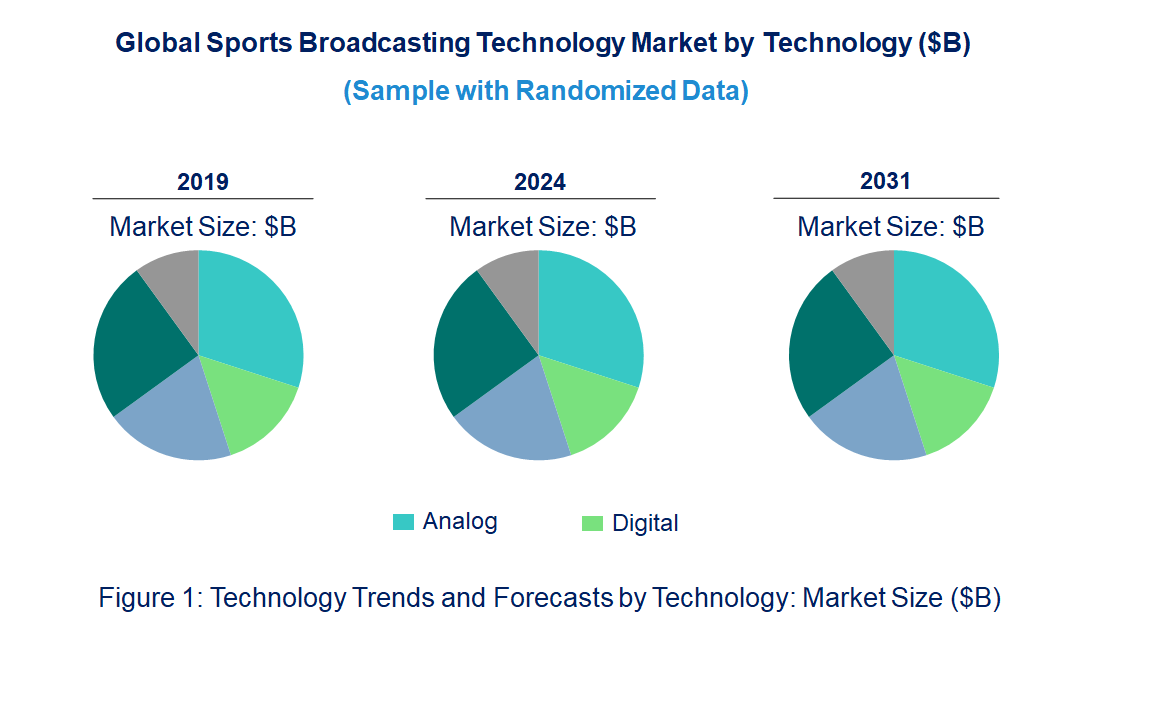

Emerging Trends in the Sports Broadcasting Technology Market
The sports broadcasting technology market is rapidly evolving as new technologies redefine how live sports content is produced, distributed, and consumed. These trends aim to enhance viewer experience, improve operational efficiency, and enable new business models for broadcasters and distributors.• Cloud-based Production and Distribution: Transitioning to cloud platforms allows remote production, cost savings, and faster scalability. It ensures high flexibility and supports seamless global distribution.
• Immersive Technologies (AR/VR): Augmented and virtual reality bring immersive experiences to viewers, offering interactive and 360-degree content, transforming sports viewing into an engaging activity.
• AI and Machine Learning Integration: AI-driven analytics provide real-time insights, enabling automated highlights, predictive analysis, and personalized viewer experiences.
• 5G-enabled Broadcasting: 5G technology allows low-latency streaming and higher bandwidth for delivering high-quality video, including UHD, on mobile and connected devices.
• Interactive and Social Media Integration: Interactive features like polls, gamification, and social media integration enhance viewer These trends collectively drive innovation in sports broadcasting, reshaping the industry with enhanced user experiences, operational efficiencies, and new monetization models.

Sports Broadcasting Technology Market : Industry Potential, Technological Development, and Compliance Considerations
• Technology Potential: High, as advancements like AI, 5G, and cloud computing revolutionize the production and distribution landscape.
• Degree of Disruption: Significant, especially with real-time, personalized, and interactive experiences challenging traditional broadcasting models.
• Level of Current Technology Maturity: Moderate to advanced, with technologies like UHD broadcasting well-established and AR/VR in progressive adoption phases.
• Regulatory Compliance: Evolving, with a focus on copyright management, data privacy, and spectrum allocation for new broadcasting technologies like 5G.
Recent Technological development in Sports Broadcasting Technology Market by Key Players
The sports broadcasting technology market is undergoing transformative changes driven by innovation and strategic advancements by key players. Companies are focusing on new technologies like AI, 5G, and immersive experiences while enhancing distribution systems for greater efficiency and global reach. Below are recent developments by notable industry players and their impacts.• Broadcast Electronics: Broadcast Electronics introduced an advanced automation system that integrates AI for real-time content optimization, improving efficiency and accuracy in live sports coverage. This streamlines production workflows and enhances viewer experiences.
• Belden: Belden launched high-performance broadcast cables compatible with UHD and 5G technologies, enabling seamless, high-speed data transmission. This supports broadcasters in meeting the growing demand for high-quality sports streaming.
• ETL Systems: ETL Systems expanded its RF distribution products, offering increased bandwidth and low-latency capabilities crucial for live sports broadcasting. This ensures uninterrupted and reliable broadcasting in competitive markets.
• NEC Corporation: NEC unveiled AI-powered video analytics tools for sports events, enabling automated highlights and detailed player performance metrics. This enhances viewer engagement and provides valuable insights for broadcasters.
• Rohde & Schwarz: Rohde & Schwarz launched next-generation transmitters supporting UHD and IP workflows, providing high reliability and scalability for sports broadcasters globally.
• OMB Broadcast: OMB Broadcast developed energy-efficient transmitters optimized for remote sports events, reducing costs and environmental impact while ensuring consistent broadcast quality.
• Global Invacom: Global Invacom introduced a satellite IP solution for high-speed, global sports broadcasting. This innovation ensures consistent coverage in remote locations, boosting accessibility and audience reach.
• VSN Video Stream Networks: VSN enhanced its media asset management platform with AI capabilities, enabling seamless editing and real-time content distribution for sports broadcasters.
• IBM Corporation: IBM deployed its Watson AI technology for predictive analytics in sports broadcasting, helping broadcasters optimize schedules and improve audience targeting.
• Evertz Microsystems: Evertz introduced a cloud-based broadcast platform supporting remote production and distribution, significantly reducing operational costs while maintaining quality.
Sports Broadcasting Technology Market Driver and Challenges
The sports broadcasting technology market is undergoing a significant transformation, driven by advancements in digital platforms, immersive technologies, and data analytics. As consumer preferences shift towards on-demand and personalized content, broadcasters are adopting innovative solutions to enhance viewer engagement and streamline operations. This evolution presents both opportunities and challenges in the industry. Major Drivers• Shift to Streaming Platforms: The increasing preference for streaming services over traditional cable has led broadcasters to invest heavily in digital platforms. This transition allows for greater flexibility, wider reach, and the ability to offer personalized content to viewers.
• Advancements in Immersive Technologies: Technologies such as Augmented Reality (AR), Virtual Reality (VR), and 360-degree video are enhancing the viewing experience by providing immersive and interactive content. These innovations attract tech-savvy audiences seeking more engaging ways to consume sports.
• Integration of Artificial Intelligence (AI) and Data Analytics: AI and data analytics are being utilized to deliver personalized content, optimize broadcasting schedules, and improve advertising strategies. This data-driven approach helps broadcasters cater to individual viewer preferences and maximize revenue.
• Expansion of Esports Broadcasting: The rapid growth of esports has opened new avenues for broadcasting. Platforms like Twitch and YouTube are capitalizing on this trend by offering live streams and interactive features, attracting a younger demographic. Key Challenges
• High Infrastructure Costs: Investing in state-of-the-art broadcasting equipment and technology infrastructure requires significant capital. Smaller broadcasters may find it challenging to keep up with these expenses, potentially limiting their competitiveness.
• Content Licensing and Rights Management: Securing broadcasting rights for sports events can be complex and costly. Negotiating and managing these rights across multiple platforms adds layers of complexity to broadcasting operations.
• Cybersecurity Threats: As broadcasting becomes more digital, the risk of cyberattacks increases. Protecting sensitive data and ensuring the security of streaming platforms are critical concerns for broadcasters.
• Regulatory Compliance: Navigating the regulatory landscape, including content censorship laws and broadcasting regulations, can be challenging, especially for international broadcasters operating across different jurisdictions.
List of Sports Broadcasting Technology Companies
Companies in the market compete on the basis of product quality offered. Major players in this market focus on expanding their manufacturing facilities, R&D investments, infrastructural development, and leverage integration opportunities across the value chain. With these strategies sports broadcasting technology companies cater increasing demand, ensure competitive effectiveness, develop innovative products & technologies, reduce production costs, and expand their customer base. Some of the sports broadcasting technology companies profiled in this report includes.• Broadcast Electronics
• Belden
• Etl System
• Nec Corporation
• Rohde & Schwarz
• Omb Broadcast
Sports Broadcasting Technology Market by Technology
• Technology Readiness by Technology Type for Sports Broadcasting Technology Market: Analog broadcasting is mature with low readiness for future demands; competition is minimal, and its application is limited to regions with basic infrastructure. Digital broadcasting is highly advanced, with intense competition and key applications in HD and interactive streaming. OTT platforms show high readiness, dominating personalized, on-demand sports content. AI is emerging with moderate readiness, focusing on analytics and audience engagement. AR and VR are niche technologies with growing readiness, transforming live sports through immersive experiences. Cloud streaming is highly ready and competitive, enabling scalable, global event coverage. 5G broadcasting is in its early phase, offering ultra-low latency for real-time sports. Compression codecs are essential and widely adopted, improving efficiency. Blockchain is emerging with low readiness but high potential for securing broadcasting contracts. Each technology’s readiness depends on its ability to integrate innovation with real-world applications.
• Disruption Potential: Analog broadcasting, though reliable and cost-effective, lacks scalability and interactivity, limiting its relevance in a tech-driven era. Digital broadcasting has become a game-changer with high-definition quality, interactive features, and global reach. Internet-based technologies such as IPTV and OTT platforms enable personalized viewing experiences, driving fan engagement. The integration of AI for real-time analytics and tailored advertising enhances sports broadcasts. AR and VR technologies are transforming live events with immersive experiences. Cloud-based streaming ensures seamless access and scalability. 5G networks promise ultra-low latency, vital for real-time sports streaming. Advanced compression codecs improve content delivery while minimizing bandwidth usage. Blockchain technology secures broadcasting rights and ensures transparency. Together, these digital tools are disrupting traditional broadcasting, creating a dynamic and interactive ecosystem.
• Competitive Intensity and Regulatory Compliance: Analog technologies face low competitive intensity due to their declining adoption, while digital technologies experience fierce competition driven by rapid innovation and consumer demand. Digital broadcasting players contend with evolving technologies like OTT and IPTV, which intensify market rivalry. Regulatory compliance for analog is minimal, but digital platforms face stringent rules around data privacy, licensing, and intellectual property. Content localization further complicates compliance for digital broadcasters operating globally. Government incentives for digital adoption encourage market players but also raise competitive pressure. The entrance of tech-driven players like OTT platforms challenges traditional broadcasters. Adhering to diverse regional regulations adds to operational complexity. Compliance costs significantly affect market strategies. Competitive dynamics are shaped by the balance between innovation and regulatory obligations.
Sports Broadcasting Technology Market Trend and Forecast by Technology [Value from 2019 to 2031]:
• Analog
• Digital
Sports Broadcasting Technology Market Trend and Forecast by End Use [Value from 2019 to 2031]:
• Broadcaster
• Studios & Content Developer
• Distributors
Sports Broadcasting Technology Market by Region [Value from 2019 to 2031]:
• North America
• Europe
• Asia Pacific
• The Rest of the World
• Latest Developments and Innovations in the Sports Broadcasting Technology Technologies
• Companies / Ecosystems
• Strategic Opportunities by Technology Type
Features of the Global Sports Broadcasting Technology Market
Market Size Estimates: Sports broadcasting technology market size estimation in terms of ($B). Trend and Forecast Analysis: Market trends (2019 to 2024) and forecast (2025 to 2031) by various segments and regions. Segmentation Analysis: Technology trends in the global sports broadcasting technology market size by various segments, such as end use and technology in terms of value and volume shipments. Regional Analysis: Technology trends in the global sports broadcasting technology market breakdown by North America, Europe, Asia Pacific, and the Rest of the World. Growth Opportunities: Analysis of growth opportunities in different end uses and technologies and regions for technology trends in the global sports broadcasting technology market. Strategic Analysis: This includes M&A, new product development, and competitive landscape for technology trends in the global sports broadcasting technology market. Analysis of competitive intensity of the industry based on Porter’s Five Forces model.Table of Contents
Methodology
- In-depth interviews of the major players in this market
- Detailed secondary research from competitors’ financial statements and published data
- Extensive searches of published works, market, and database information pertaining to industry news, company press releases, and customer intentions
- A compilation of the experiences, judgments, and insights of Lucintel’s professionals, who have analyzed and tracked this market over the years.


Buy Now
Choose a license that fits your team. Instant PDF delivery.
Prices exclude taxes. Instant delivery. Custom licensing available on request.
Key Questions
- • What are some of the most promising potential, high-growth opportunities for the technology trends in the global sports broadcasting technology market by technology (analog and digital), end use (broadcaster, studios & content developer, and distributors), and region (North America, Europe, Asia Pacific, and the Rest of the World)?
- • Which technology segments will grow at a faster pace and why?
- • Which regions will grow at a faster pace and why?
- • What are the key factors affecting dynamics of different technology? What are the drivers and challenges of these technologies in the global sports broadcasting technology market?
- • What are the business risks and threats to the technology trends in the global sports broadcasting technology market?
- • What are the emerging trends in these material technologies in the global sports broadcasting technology market and the reasons behind them?
- • Which technologies have potential of disruption in this market?
- • What are the new developments in the technology trends in the global sports broadcasting technology market? Which companies are leading these developments?
- • Who are the major players in technology trends in the global sports broadcasting technology market? What strategic initiatives are being implemented by key players for business growth?
- • What are strategic growth opportunities in this sports broadcasting technology technology space?
- • What M & A activities did take place in the last five years in technology trends in the global sports broadcasting technology market?


