
Report Feature
Robotic Laser Cutting Market Trends and Forecast
The technologies in the robotic laser cutting market have undergone significant changes in recent years, with transitions from CO2 Laser cutting machines to fiber laser cutting machines due to their superior energy efficiency, precision, and lower maintenance requirements.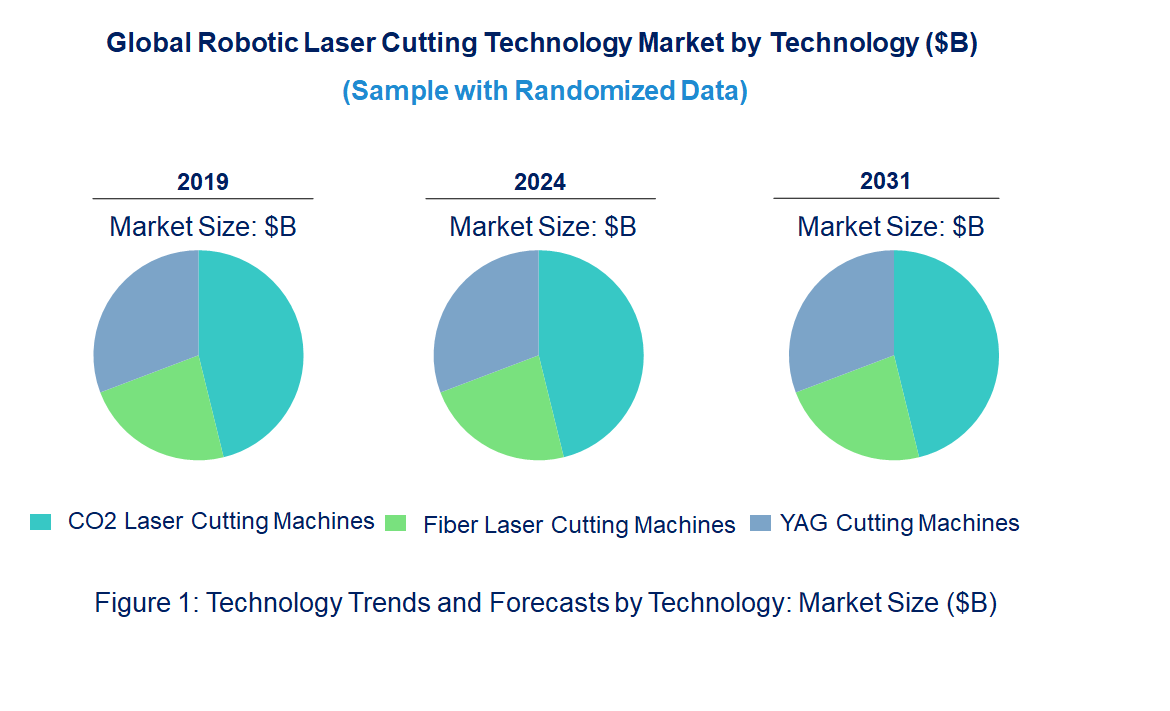
Emerging Trends in the Robotic Laser Cutting Market
The robotic laser cutting market is evolving rapidly with significant technological and application-oriented innovations. Here are five key trends reshaping the market:• Advancements in Fiber Laser Cutting Machines: The rise of fiber laser cutting is driven by its increased efficiency, faster cutting speeds, and adaptability for diverse materials, making it the preferred choice over traditional CO2 systems.
• Integration of AI and IoT: Smart robotic laser cutting systems now leverage AI for precision and IoT for real-time monitoring, reducing downtime and improving productivity.
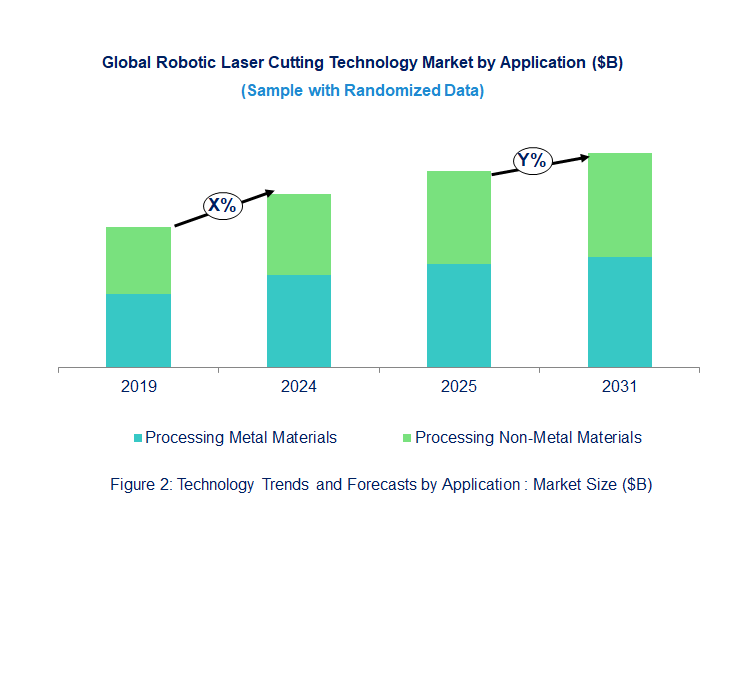
• Growth in Non-Metal Material Processing: Increasing demand for high-precision cutting in plastics, ceramics, and composites has expanded the application scope of robotic laser cutting.
• Environmental Sustainability: Eco-friendly laser cutting technologies are gaining traction as industries prioritize energy efficiency and reduce waste.
• Customized Solutions for Industry 4.0: Tailored robotic laser systems compatible with Industry 4.0 frameworks are enhancing operational flexibility and production automation. These trends collectively foster greater efficiency, precision, and adaptability, transforming industrial applications across sectors.
Robotic Laser Cutting Market : Industry Potential, Technological Development, and Compliance Considerations
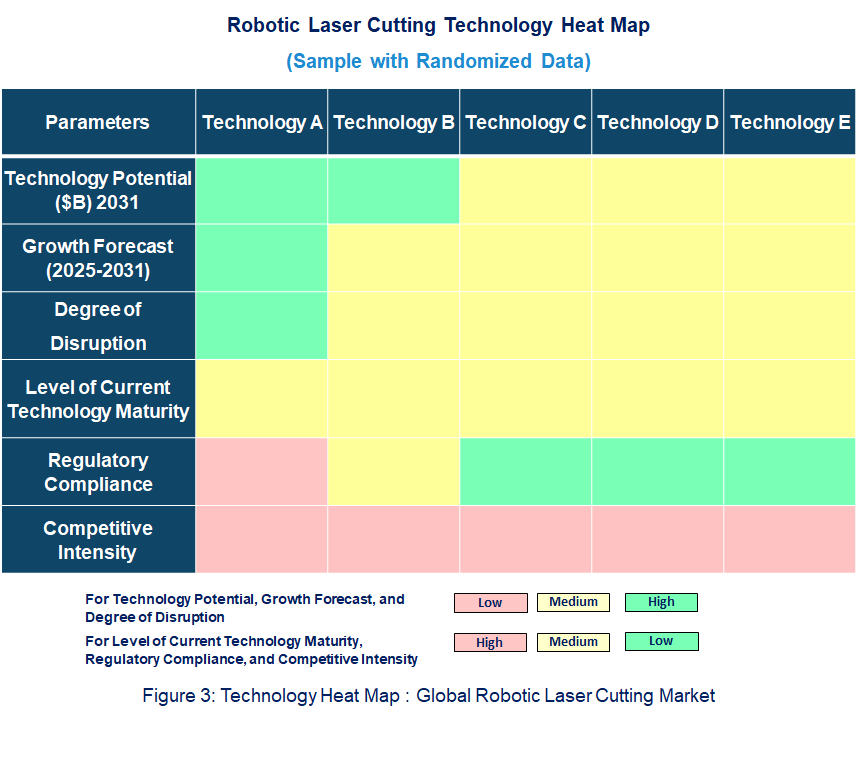
• Technology Potential: Robotic laser cutting technology holds immense potential due to its ability to provide unmatched precision, speed, and versatility. These systems are applicable across industries such as automotive, aerospace, electronics, and construction. The transition from manual cutting processes to automated laser solutions has increased productivity while minimizing waste. Emerging advancements, such as integration with AI and machine learning, further enhance the potential for smarter and adaptive cutting systems that optimize processes and ensure consistent quality.
• Degree of Disruption: The adoption of fiber laser cutting machines marks a significant disruption in the market, replacing older CO2 and YAG technologies. Fiber lasers offer higher energy efficiency, faster cutting speeds, and the capability to cut reflective materials, addressing critical limitations of earlier systems. The degree of disruption is amplified by the integration of robotic arms, enabling automation and multi-axis cutting for complex designs, transforming traditional manufacturing workflows.
• Level of Current Technology Maturity: The maturity of technology varies across laser types. Fiber lasers are considered highly advanced, with widespread adoption in metal processing. CO2 lasers, while mature, are declining in popularity due to inefficiency compared to fiber lasers. YAG lasers remain niche, primarily used for specialized applications. The ecosystem supporting robotic integration is also well-established, boosting the overall market readiness.
• Regulatory Compliance: Regulatory compliance is centered on ensuring operational safety, controlling emissions, and adhering to workplace standards. Organizations must comply with guidelines related to laser safety, such as ISO 11553 and ANSI Z136. These standards ensure safe usage in industrial settings. Environmental regulations drive the adoption of energy-efficient technologies, such as fiber lasers, to reduce carbon footprints.
Recent Technological development in Robotic Laser Cutting Market by Key Players
The robotic laser cutting market is experiencing rapid growth, driven by technological advancements and strategic initiatives by key players. Companies like ABB, Fanuc, Jenoptik, and others are focusing on innovations to enhance precision, efficiency, and adaptability across industries such as automotive, aerospace, and electronics. Below are key developments:• ABB: ABB introduced advanced software tools to optimize laser cutting efficiency, enhancing precision for complex industrial applications. This development reduces waste and operational costs, strengthening its foothold in manufacturing automation.
• Fanuc: Fanuc unveiled a new generation of robotic arms with integrated laser cutting capabilities, offering unmatched precision and speed for the automotive industry. This strengthens Fanuc’s position as a leader in robotic solutions.
• Jenoptik: Jenoptik developed a modular laser processing system for robotics, enabling customized solutions for diverse industries. This innovation boosts operational flexibility, attracting clients in the aerospace and medical sectors.
• Midea: Midea expanded its laser robotics portfolio by integrating AI-powered optimization, significantly improving cutting accuracy. This move enhances competitiveness in consumer electronics and white goods manufacturing.
• Staubli: Staubli introduced compact robotic laser systems tailored for small-scale manufacturers, emphasizing cost-effectiveness and scalability. This expands access to high-precision cutting technology for SMEs.
• Yaskawa Electric: Yaskawa launched high-speed robotic laser cutters with AI-driven quality control, targeting the automotive and electronics sectors. This strengthens its presence in high-demand markets.
• Trumpf: Trumpf integrated real-time monitoring tools into its robotic laser cutting systems, improving process reliability. This innovation increases productivity, reducing downtime for industrial clients.
• Bystronic: Bystronic rolled out energy-efficient robotic laser cutters, focusing on sustainability. This aligns with industry trends towards eco-friendly manufacturing solutions.
• Coherent: Coherent introduced ultra-fast lasers integrated with robotics for microfabrication, addressing precision needs in the medical device industry. This expands its niche market appeal.
• Mitsubishi Electric: Mitsubishi Electric enhanced its laser systems with improved cutting speeds and multi-material compatibility, catering to diverse industrial applications. This bolsters its competitive edge in global markets.
Robotic Laser Cutting Market Driver and Challenges
The robotic laser cutting market is shaped by evolving industrial needs, technological advancements, and stringent operational standards. Below are the major growth drivers and challenges impacting this dynamic market: The factors responsible for driving the robotic laser cutting market include:• Automation and Precision Needs: Industries are increasingly adopting robotic laser cutting to achieve unmatched precision and reduce human error. This trend drives demand for cutting-edge solutions, enhancing productivity and minimizing waste.
• Growth in Manufacturing Sectors: Rapid growth in automotive, aerospace, and electronics manufacturing boosts the adoption of robotic laser cutting for its efficiency and scalability. The market benefits from a surge in complex and high-volume production requirements.
• Technological Advancements: Innovations in AI, IoT, and sensor technologies improve the performance of robotic laser cutters, fostering market growth. These advancements enhance operational efficiency and broaden application areas.
• Sustainability Focus: Energy-efficient laser cutting systems reduce environmental impact, aligning with global sustainability initiatives. This drives adoption among environmentally-conscious manufacturers.
• Customization Demand: Industries require highly flexible and customizable robotic laser cutting solutions to meet diverse production needs, creating opportunities for providers offering modular systems. Challenges in the robotic laser cutting market are:
• High Initial Costs: The significant capital investment required for robotic laser cutting systems remains a barrier, particularly for SMEs.
• Complex Integration: Integrating robotic laser cutting systems into existing manufacturing lines requires advanced expertise and may lead to downtime during transitions.
• Regulatory Compliance: Manufacturers face challenges in adhering to safety and environmental regulations, impacting product development timelines and costs. The drivers and challenges collectively shape the Robotic Laser Cutting Market, with automation, sustainability, and customization driving growth. Overcoming challenges such as high costs and integration complexities will be crucial for stakeholders to fully capitalize on emerging opportunities.
List of Robotic Laser Cutting Companies
Companies in the market compete on the basis of product quality offered. Major players in this market focus on expanding their manufacturing facilities, R&D investments, infrastructural development, and leverage integration opportunities across the value chain. With these strategies robotic laser cutting companies cater increasing demand, ensure competitive effectiveness, develop innovative products & technologies, reduce production costs, and expand their customer base. Some of the robotic laser cutting companies profiled in this report includes.• Abb
• Fanuc
• Jenoptik
• Midea
• Staubli
• Yaskawa Electric
Robotic Laser Cutting Market by Technology
• Technology Readiness by Technology Type: Fiber laser cutting machines exhibit the highest technology readiness, with advanced automation, AI integration, and widespread adoption across sectors like automotive, aerospace, and electronics. Their competitive level is high due to exceptional precision, low maintenance, and regulatory compliance. CO2 lasers are moderately ready, excelling in thick material cutting but lagging in operational efficiency and environmental compliance, making them suitable for heavy industrial applications. YAG machines display limited readiness, focusing on niche applications like welding and drilling, with moderate competitive levels and safety compliance requirements. Fiber lasers’ key advantage lies in their energy efficiency and adaptability, while CO2 and YAG machines cater to specific, less competitive niches. The market’s evolution continues to favor fiber lasers, supported by sustainability demands and technological advancements.
• Competitive Intensity and Regulatory Compliance: The competitive intensity in the robotic laser cutting market is highest for fiber laser machines due to their rapid adoption and technological advancements. CO2 laser machines experience moderate competition as they cater to niche markets with limited innovation. YAG machines face lower competitive intensity, restricted by narrower application scopes. Regulatory compliance varies; fiber lasers align well with energy efficiency and emissions standards, giving them an edge in environmentally regulated industries. CO2 lasers face stricter scrutiny for emissions, adding to operational burdens, while YAG machines must meet specific safety requirements due to their high-power output. Companies in this market must balance cost competitiveness, technological superiority, and adherence to stringent global regulations, creating a dynamic yet challenging environment.
• Disruption Potential: The disruption potential of technologies in the robotic laser cutting market varies significantly. Fiber laser cutting machines lead the way, offering high precision, energy efficiency, and versatility for cutting various materials, making them ideal for automotive and aerospace applications. CO2 laser cutting machines, while effective for thicker materials and non-metals, face challenges due to higher maintenance costs and operational inefficiencies. YAG cutting machines, suitable for high-energy tasks like welding and drilling, are less favored for cutting due to their slower speeds and limited adaptability. Fiber lasers’ dominance arises from their ability to handle complex geometries with precision and low operational cost. Meanwhile, CO2 and YAG machines are gradually being displaced in markets demanding enhanced performance and reduced environmental impact. Emerging technologies incorporating AI and IoT into fiber lasers further elevate their disruptive potential, setting new benchmarks in smart manufacturing.
Robotic Laser Cutting Market Trend and Forecast by Technology [Value from 2019 to 2031]:
• CO2 Laser Cutting Machines
• Fiber Laser Cutting Machines
• YAG Cutting Machines
Robotic Laser Cutting Market Trend and Forecast by Application [Value from 2019 to 2031]:
• Processing Metal Materials
• Processing Non-Metal Materials
Robotic Laser Cutting Market by Region [Value from 2019 to 2031]:
• North America
• Europe
• Asia Pacific
• The Rest of the World
• Latest Developments and Innovations in the Robotic Laser Cutting Technologies
• Companies / Ecosystems
• Strategic Opportunities by Technology Type
Features of the Global Robotic Laser Cutting Market
Market Size Estimates: Robotic laser cutting market size estimation in terms of ($B). Trend and Forecast Analysis: Market trends (2019 to 2024) and forecast (2025 to 2031) by various segments and regions. Segmentation Analysis: Technology trends in the global robotic laser cutting market size by various segments, such as application and technology in terms of value and volume shipments. Regional Analysis: Technology trends in the global robotic laser cutting market breakdown by North America, Europe, Asia Pacific, and the Rest of the World. Growth Opportunities: Analysis of growth opportunities in different technologies,and applications and regions for technology trends in the global robotic laser cutting market. Strategic Analysis: This includes M&A, new product development, and competitive landscape for technology trends in the global robotic laser cutting market. Analysis of competitive intensity of the industry based on Porter’s Five Forces model.Table of Contents
Methodology
- In-depth interviews of the major players in this market
- Detailed secondary research from competitors’ financial statements and published data
- Extensive searches of published works, market, and database information pertaining to industry news, company press releases, and customer intentions
- A compilation of the experiences, judgments, and insights of Lucintel’s professionals, who have analyzed and tracked this market over the years.


Buy Now
Choose a license that fits your team. Instant PDF delivery.
Prices exclude taxes. Instant delivery. Custom licensing available on request.
Key Questions
- • What are some of the most promising potential, high-growth opportunities for the technology trends in the global robotic laser cutting market by technology (co2 laser cutting machines, fiber laser cutting machines, and yag cutting machines), application (processing metal materials and processing non-metal materials), and region (North America, Europe, Asia Pacific, and the Rest of the World)?
- • Which technology segments will grow at a faster pace and why?
- • Which regions will grow at a faster pace and why?
- • What are the key factors affecting dynamics of different technology? What are the drivers and challenges of these technologies in the global robotic laser cutting market?
- • What are the business risks and threats to the technology trends in the global robotic laser cutting market?
- • What are the emerging trends in these material technologies in the global robotic laser cutting market and the reasons behind them?
- • Which technologies have potential of disruption in this market?
- • What are the new developments in the technology trends in the global robotic laser cutting market? Which companies are leading these developments?
- • Who are the major players in technology trends in the global robotic laser cutting market? What strategic initiatives are being implemented by key players for business growth?
- • What are strategic growth opportunities in this robotic laser cutting technology space?
- • What M & A activities did take place in the last five years in technology trends in the global robotic laser cutting market?


