
Report Feature
Nanomagnetic Market Trends and Forecast
The technologies in the nanomagnetic market have undergone a tremendous shift in recent years, with significant advancements from conventional magnetic storage to advanced nanomagnetic materials and technologies. These innovations have led to breakthroughs in performance, efficiency, and miniaturization across various applications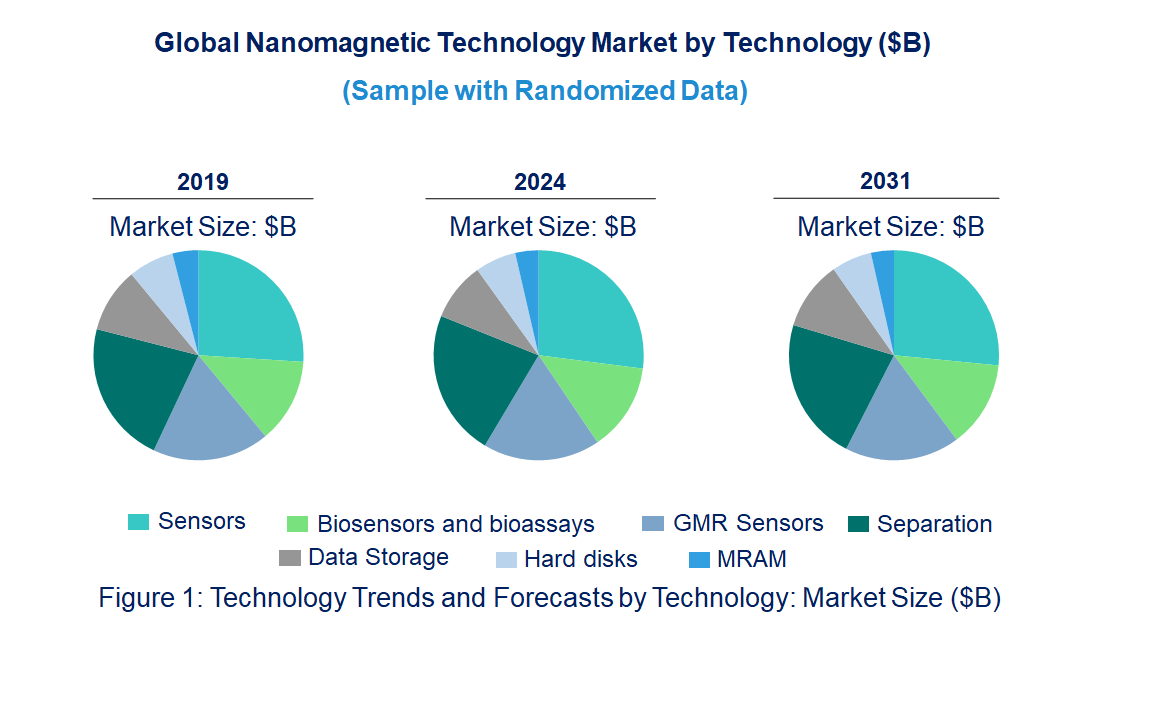
Emerging Trends in the Nanomagnetic Market
Technological advancements in the nanomagnetic market have grown alongside the increased demand for sensor technologies, data storage solutions, and medical applications. These advancements are driven by the demand for more efficient, precise, and compact systems. Below are five key trends reshaping the Nanomagnetic Market:• Evolution from traditional HDDs to SSDs: Over time, there has been a significant shift in technology from HDD in the data storage sector, as there is a demand for faster, more rugged, and energy-efficient data storage solutions. This shift is primarily due to the benefits provided by SSDs, specifically regarding speed and lower power consumption.
• Giant Magneto Resistive sensors have made huge strides: GMR sensors improve the sensitivity and resolution of magnetic field detection. This has led to advancements in areas such as biosensors and data storage. In reality, GMR technology has replaced most older magnetic sensing techniques due to its superior performance.
• Nanomagnetic materials for medical applications: As nanomagnetic materials continue to emerge in medical applications, particularly in biosensing and medical imaging, the areas of application are expanding. These materials enable the development of more precise diagnostic techniques, such as early disease detection systems and improved imaging techniques.
• Data storage systems: There is an upward trend in the miniaturization of data storage devices. Consumers are increasingly demanding smaller and more compact data storage solutions for electronics. This trend is supported by innovations in nanomagnetic materials, which allow for high-density data storage in more compact packages.
• Integration of nanomagnetic technologies in MRAM: The integration of nanomagnetic technologies into MRAM is becoming the new non-volatile memory solution in the semiconductor industry. Nanomagnetic materials used in MRAM are changing the memory storage landscape, making memory storage more efficient in both performance and energy usage compared to traditional memory types. These trends indicate the continuous growth and massive transformations happening in the nanomagnetic market, reshaping applications in fields ranging from consumer electronics to healthcare.
Nanomagnetic Market : Industry Potential, Technological Development, and Compliance Considerations
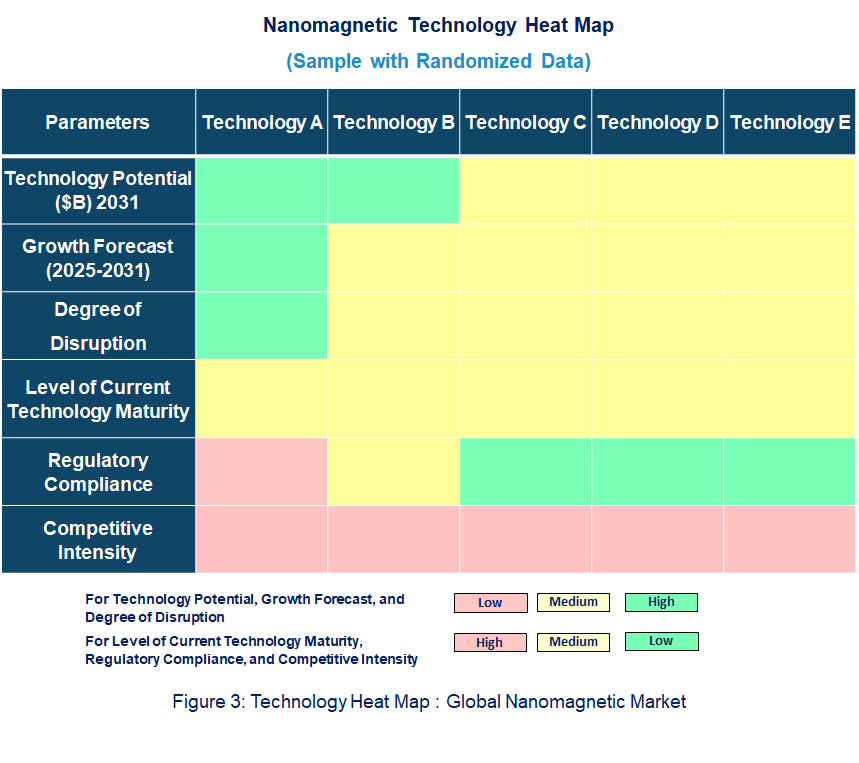
The nanomagnetic market involves the use of magnetic properties in nanoscale applications in electronics, data storage, healthcare, and energy. This technology has the potential to revolutionize industries by providing high-density storage efficiency in energy conversion and producing advanced sensors.• Technology Potential: Nanomagnetic technologies offer great potential to break existing trends in data storage, memory devices, and new medical diagnostics. They could lead to the development of smaller, faster, and more efficient devices, positioning nanomagnetic technology as a key player in emerging tech fields like quantum computing and spintronics.
• Degree of Disruption: Nanomagnetic technologies are poised to disrupt sectors such as data storage, healthcare, and renewable energy. Innovations like ultra-high-density storage could replace traditional hard drives with faster and more compact alternatives.
• Current Maturity of Technology: Despite still being in the experimental and developmental phases, nanomagnetic technologies have made impressive progress, with prototypes for storage devices and sensors already demonstrated. However, widespread commercialization remains several years away.
• Compliance with Regulations: As an emerging technology, nanomagnetics faces an evolving regulatory landscape, particularly concerning environmental safety and health. Regulations must adapt as the technology evolves to ensure proper implementation. The nanomagnetic technology holds significant promise but requires innovative steps and regulatory oversight before it can be fully realized.
Recent Technological development in Nanomagnetic Market by Key Players
The nanomagnetic market is experiencing rapid technological changes, driven by leaders in nanomagnetic materials, sensors, and data storage. These companies play significant roles in transforming the market through new product development and strategic partnerships.• Novanta: Novanta has led the development of advanced sensors for medical devices, using nanomagnetic technology to achieve high-precision diagnostics. Their innovations have greatly improved the performance and reliability of medical imaging systems.
• Rofin-Sinar Technologies: Rofin-Sinar has successfully incorporated nanomagnetic technologies into laser systems, making the manufacturing process more efficient. This includes improved precision in laser-cutting tools used in the production of nanomagnetic components.
• Han’s Laser: Han’s Laser has introduced high-precision laser solutions for the production of nanomagnetic materials used in sensors and data storage devices. Their technology plays a key role in the miniaturization of electronic components.
• IPG Photonics: The corporation has been vital in designing fiber laser technologies, which are necessary for developing nanomagnetic sensors. From medical imaging to telecommunication, these lasers have a wide range of applications.
• Konica Minolta: This leading technology firm has promoted nanomagnetic applications in imaging devices. These technologies, developed through innovations in diagnostic tools, enhance speed and accuracy, particularly in medical and industrial fields.
• LG: LG has emphasized the incorporation of nanomagnetic technologies in consumer electronics, especially for the development of high-capacity storage devices. Its efforts have driven the progress of SSDs with increased storage capacities.
• Osram: Osram has applied nanomagnetic principles to improve LED and sensor technologies, which are increasingly used in automotive and industrial applications. Their research focuses on improving energy efficiency and lifespan.
• Samsung: Samsung has been a major player in the development of MRAM technology, integrating nanomagnetic materials into its semiconductor products. This positions Samsung at the forefront of non-volatile memory solutions.
• Tokyo Electron: Tokyo Electron has advanced the use of nanomagnetic materials in semiconductor manufacturing. Their research into nanomagnetic sensors has opened new possibilities for faster and more efficient manufacturing processes.
• Amkor Technology: Amkor Technology has made significant progress in integrating nanomagnetic sensors into the packaging of electronic devices, improving the performance of microelectronic components and enabling the design of smaller, more efficient devices. These developments demonstrate how major players are driving the nanomagnetic market, shaping its future through innovation and technological leadership.
Nanomagnetic Market Driver and Challenges
Several drivers and challenges shape the growth trajectory of the nanomagnetic market. These are among the most significant factors determining the future of this market. The factors driving the nanomagnetic market include:• Technological advancement in data storage: The growing demand for high-performance data storage solutions, such as SSDs and MRAM, is driving the growth of nanomagnetic technologies. These technologies offer faster, more reliable, and energy-efficient storage solutions, meeting the needs of industries like telecommunications, data centers, and consumer electronics.
• Growth of Medical Applications: Nanomagnetic technologies are increasingly used in medical diagnostics, particularly in imaging and biosensing. This growth is driven by the need for more accurate and non-invasive diagnostic tools, making nanomagnetic materials essential in developing next-generation medical devices.
• Miniaturization in Consumer Electronics: The trend toward miniaturization in consumer electronics is driving demand for smaller, more efficient storage and sensor magnetic solutions. Nanomagnetic technologies enable high-density storage and sensor integration, allowing for more compact devices and contributing to overall market growth.
• Integration with IoT and Smart Devices: The growth of IoT and smart devices presents new opportunities for nanomagnetic technologies. As more devices become interconnected, there is an increasing need for miniature and precise sensors that are efficient and offered by nanomagnetic technologies. Challenges in the nanomagnetic market include:
• High price of nanomagnetic materials: The increasing demand for nanomagnetic technologies is hindered by the high cost of nanomagnetic materials. The processes involved in producing these materials are specialized and expensive, limiting their affordability for smaller companies or budget-sensitive industries.
• Complexity of Manufacturing Processes: The manufacturing of nanomagnetic sensors and components involves complex processes that are difficult to scale for mass production. This makes product development costly and increases lead times.
• Regulatory and Safety Issues: The use of nanomagnetic materials in medical applications raises concerns related to safety and regulatory compliance. Companies must ensure that their products meet the highest performance and safety standards, which may slow innovation and product release. The nanomagnetic market is rapidly evolving with technological shifts, emerging trends, and ongoing developments by key players. Innovations in sensor technology, data storage, and medical applications are reshaping the market landscape. While high material costs and complex manufacturing remain challenges, the market is advancing through improvements in data storage, diagnostics in medicine, and the demand for more efficient, smaller devices. All these factors are setting the pace for a more efficient, technology-enhanced nanomagnetic market.
List of Nanomagnetic Companies
Companies in the market compete on the basis of product quality offered. Major players in this market focus on expanding their manufacturing facilities, R&D investments, infrastructural development, and leverage integration opportunities across the value chain. With these strategies nanomagnetic companies cater increasing demand, ensure competitive effectiveness, develop innovative products & technologies, reduce production costs, and expand their customer base. Some of the nanomagnetic companies profiled in this report includes.• Novanta
• Rofin-Sinar Technologies
• Han’S Laser
• Ipg Photonics
• Konica Minolta
• Lg
Nanomagnetic Market by Technology
• Technology Readiness and Key Applications: Sensors and biosensors are mature and widely used in healthcare and industry. GMR sensors are making progress in data storage and magnetic sensing, while MRAM is gaining popularity in low-power memory applications. Separation technologies are still developing for large-scale use. Hard disks remain mature but continue to evolve. Biosensors face heavy regulatory scrutiny, while MRAM and GMR focus on specialized data and memory applications. Competitive dynamics vary by technology, with sensors and biosensors leading in diverse markets, while MRAM and GMR focus on high-precision roles.
• Disruption Potential of Various Technologies: Technologies such as sensors, biosensors, GMR sensors, and MRAM are disrupting the nanomagnetic market. Sensors and biosensors are transforming healthcare and industrial monitoring by enabling real-time diagnostics. GMR sensors offer ultra-sensitive detection capabilities, changing the landscape of data storage. MRAM has the potential to replace traditional memory storage with faster, non-volatile technologies. Separation technologies, including magnetic nanoparticles, are improving purification processes. Innovations in hard disk storage continue to enhance density. MRAM is gaining traction in the low-power, high-speed memory space. These technologies are expanding application areas across IoT, healthcare, and computing.
• Competitive Intensity and Regulatory Compliance: The nanomagnetic market is highly competitive, with companies racing to innovate in sensors, biosensors, GMR sensors, and MRAM. Biosensors face strict regulatory compliance within healthcare, while GMR sensors and MRAM must meet industry standards for performance. MRAM competes with flash memory in mobile devices, and GMR sensors lead in magnetic sensing. Regulatory hurdles are higher for biosensors, but relatively low for MRAM and GMR. Safety and environmental standards are critical in separation technologies. Innovation and regulatory compliance are key success factors across all these sectors.
Nanomagnetic Market Trend and Forecast by Technology [Value from 2019 to 2031]:
• Sensors
• Biosensors and bioassays
• Giant magneto resistive (GMR) sensors
• Separation
• Data Storage
• Hard disks
• MRAM
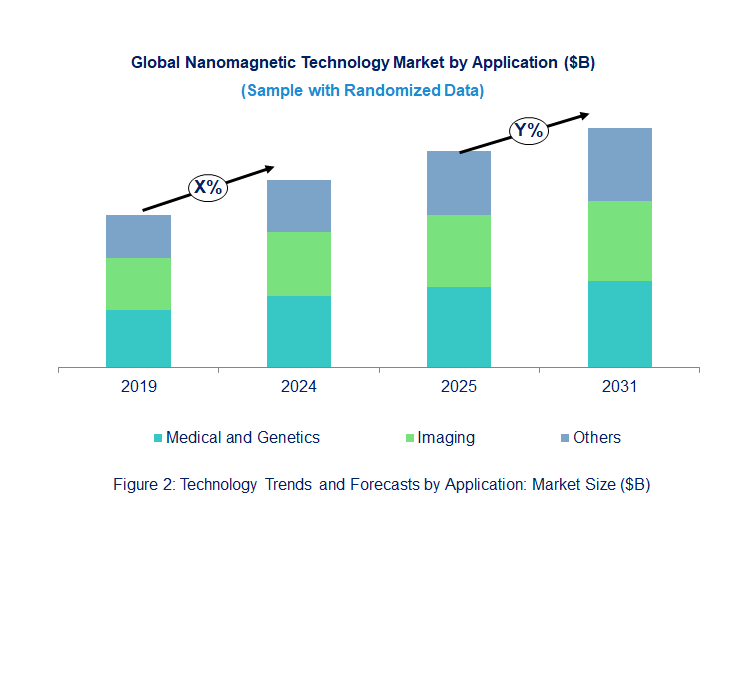
Nanomagnetic Market Trend and Forecast by Application [Value from 2019 to 2031]:
• Medical and Genetics
• Imaging
• Others
Nanomagnetic Market by Region [Value from 2019 to 2031]:
• North America
• Europe
• Asia Pacific
• The Rest of the World
• Latest Developments and Innovations in the Nanomagnetic Technologies
• Companies / Ecosystems
• Strategic Opportunities by Technology Type
Features of the Global Nanomagnetic Market
Market Size Estimates: Nanomagnetic market size estimation in terms of ($B). Trend and Forecast Analysis: Market trends (2019 to 2024) and forecast (2025 to 2031) by various segments and regions. Segmentation Analysis: Technology trends in the global nanomagnetic market size by various segments, such as application and technology in terms of value and volume shipments. Regional Analysis: Technology trends in the global nanomagnetic market breakdown by North America, Europe, Asia Pacific, and the Rest of the World. Growth Opportunities: Analysis of growth opportunities in different application, technologies, and regions for technology trends in the global nanomagnetic market. Strategic Analysis: This includes M&A, new product development, and competitive landscape for technology trends in the global nanomagnetic market. Analysis of competitive intensity of the industry based on Porter’s Five Forces model.Table of Contents
Methodology
- In-depth interviews of the major players in this market
- Detailed secondary research from competitors’ financial statements and published data
- Extensive searches of published works, market, and database information pertaining to industry news, company press releases, and customer intentions
- A compilation of the experiences, judgments, and insights of Lucintel’s professionals, who have analyzed and tracked this market over the years.


Buy Now
Choose a license that fits your team. Instant PDF delivery.
Prices exclude taxes. Instant delivery. Custom licensing available on request.
Key Questions
- • What are some of the most promising potential, high-growth opportunities for the technology trends in the global nanomagnetic market by technology (sensors, biosensors and bioassays, giant magneto resistive (gmr) sensors, separation, data storage, hard disks, and mram), application (medical and genetics, imaging, and others), and region (North America, Europe, Asia Pacific, and the Rest of the World)?
- • Which technology segments will grow at a faster pace and why?
- • Which regions will grow at a faster pace and why?
- • What are the key factors affecting dynamics of different technology? What are the drivers and challenges of these technologies in the global nanomagnetic market?
- • What are the business risks and threats to the technology trends in the global nanomagnetic market?
- • What are the emerging trends in these technologies in the global nanomagnetic market and the reasons behind them?
- • Which technologies have potential of disruption in this market?
- • What are the new developments in the technology trends in the global nanomagnetic market? Which companies are leading these developments?
- • Who are the major players in technology trends in the global nanomagnetic market? What strategic initiatives are being implemented by key players for business growth?
- • What are strategic growth opportunities in this nanomagnetic technology space?
- • What M & A activities did take place in the last five years in technology trends in the global nanomagnetic market?


