
Report Feature
Geotechnical Service Market Trends and Forecast
The technologies in the geotechnical service market have undergone significant changes in recent years, with a shift from traditional manual methods of soil testing and geophysical surveying to automated systems integrated with advanced geotechnical software, offering higher precision and real-time monitoring capabilities.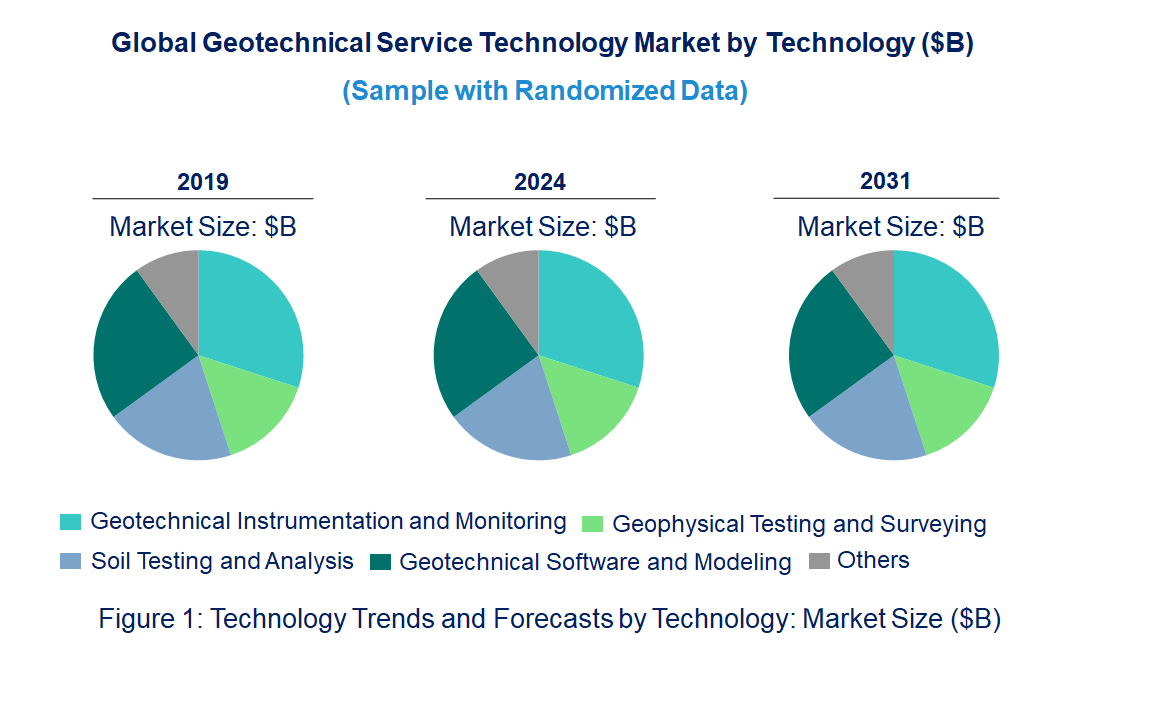
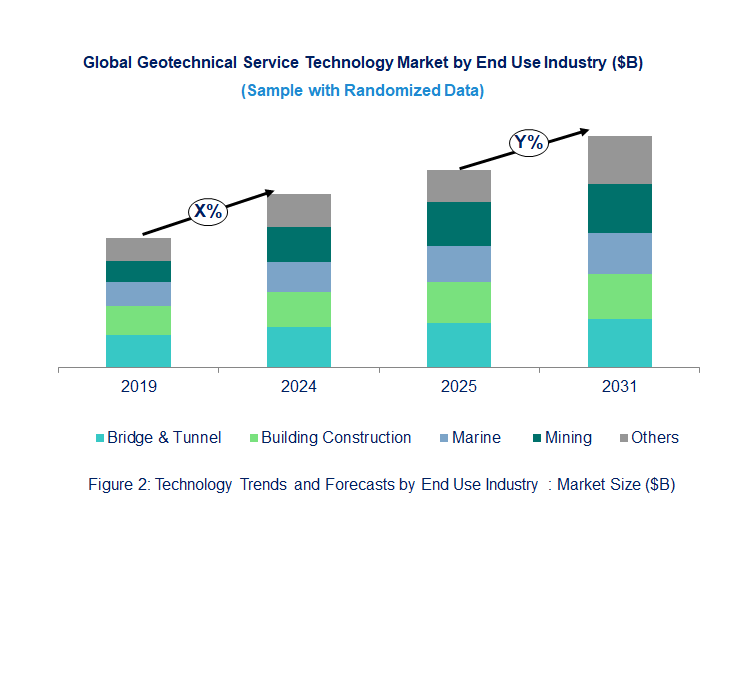
Emerging Trends in the Geotechnical Service Market
The geotechnical service market is undergoing several technological advancements. Below are the key emerging trends:• Integration of Geotechnical Instrumentation and Monitoring: There has been a significant rise in the use of advanced geotechnical instrumentation and monitoring systems that provide real-time data, improving the accuracy of assessments in areas like soil stability and foundation integrity.
• Geophysical Testing and Surveying Advancements: New techniques in geophysical testing and surveying, such as seismic imaging and ground-penetrating radar, are being incorporated to offer more detailed and non-invasive insights into the subsurface conditions, reducing the need for invasive drilling.
• Automation in Soil Testing and Analysis: The automation of soil testing and analysis has accelerated, allowing for faster and more consistent results while minimizing human error. This has enhanced efficiency in industries like construction and mining.
• Advances in Geotechnical Software and Modeling: Software and modeling tools are becoming increasingly sophisticated, allowing for more accurate simulations and better predictive capabilities in designing geotechnical systems, especially for complex infrastructures.
• Sustainability in Geotechnical Practices: There is a growing emphasis on sustainable practices, such as reducing environmental impact and incorporating green technologies into geotechnical services. This includes using eco-friendly materials and optimizing construction methods to minimize waste. These technology trends are transforming the geotechnical service market by improving efficiency, precision, and sustainability. The integration of real-time monitoring, automation, and advanced software is enhancing decision-making in projects like construction, oil and gas exploration, and infrastructure development.
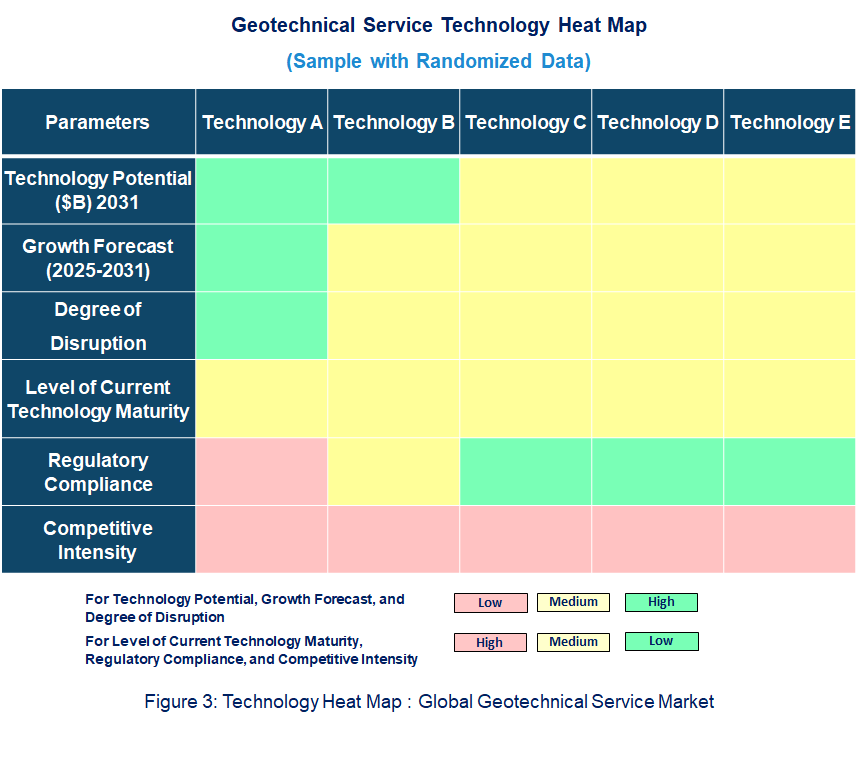
Geotechnical Service Market : Industry Potential, Technological Development, and Compliance Considerations
• Technology Potential: The technology potential of the geotechnical service market is vast, as innovations in instrumentation, automation, and modeling are making it possible to gather and analyze more data with greater accuracy. This is particularly beneficial in industries like mining, construction, and oil and gas, where understanding soil conditions and stability is crucial for safety and project success.
• Degree of Disruption: The degree of disruption is moderate, as new technologies are replacing traditional practices like manual soil testing and invasive surveying techniques. These advancements have the potential to change the way geotechnical services are delivered, offering more efficient, cost-effective, and precise results.
• Level of Technology Maturity: The level of technology maturity is moderate to high. Geotechnical instrumentation and monitoring systems, along with advanced software, are already well established in the market. However, new software and automation technologies are still developing and being integrated into more complex projects.
• Regulatory Compliance: Regulatory compliance is an important consideration, especially in industries like construction, where safety and environmental regulations must be met. Geotechnical service providers must adhere to local and international standards, ensuring that their methods and equipment meet regulatory requirements to avoid risks and ensure the safety and sustainability of projects.
Recent Technological development in Geotechnical Service Market by Key Players
The geotechnical service market has experienced significant growth as infrastructure development and environmental considerations continue to rise globally. Companies such as AECOM, Kiewit Corporation, Stantec, Fugro, WSP, EGS Survey, Gardline Limited, Arup, HDR, and Geosyntec have played key roles in advancing geotechnical services through innovations and expansions that enable more accurate, efficient, and sustainable solutions. These developments are transforming how the industry handles site investigations, risk assessments, and ground improvement techniques, making geotechnical services integral to large-scale construction and environmental management projects.• AECOM: AECOM has enhanced its geotechnical capabilities by investing in advanced geotechnical analysis tools and expanding its services to include more detailed subsurface investigations. This has allowed the company to provide clients with more precise data for large infrastructure projects, improving safety, project efficiency, and reducing unforeseen issues during construction.
• Kiewit Corporation: Kiewit has strengthened its geotechnical service offerings by integrating cutting-edge geotechnical engineering techniques, including the use of drones and other remote sensing technologies for subsurface surveying. This technology-driven approach has improved project timelines and helped the company offer more accurate and cost-effective geotechnical services, particularly in challenging environments.
• Stantec: Stantec has made strides in expanding its geotechnical service portfolio by incorporating advanced technologies like 3D modeling and geospatial data analysis into its site assessments. The integration of these technologies has provided better insights into subsurface conditions, leading to more informed decision-making and reduced risks in construction and environmental remediation projects.
• Fugro: Fugro has made significant advancements in geotechnical data collection by deploying autonomous underwater vehicles (AUVs) for offshore site investigations. These AUVs enable the company to gather more accurate and detailed geotechnical data in remote or hazardous areas, improving the safety and efficiency of offshore construction projects and environmental monitoring.
• WSP: WSP has expanded its geotechnical service capabilities by focusing on sustainability, integrating renewable energy solutions in ground improvement techniques. This focus on sustainable geotechnical services has enabled WSP to cater to green construction projects and environmental assessments, responding to increasing demand for eco-friendly infrastructure solutions.
• EGS Survey: EGS Survey has incorporated 3D geotechnical modeling and GIS technology into its site investigations, improving the accuracy of data collected for geotechnical assessments. This innovation allows for enhanced visualization of subsurface conditions, aiding in better project planning and reducing the potential for costly surprises during construction.
• Gardline Limited: Gardline Limited has enhanced its offshore geotechnical services with the addition of more sophisticated geotechnical drilling equipment and remote monitoring tools. These innovations have improved the company’s ability to gather more accurate and reliable data in offshore geotechnical investigations, facilitating the safe development of subsea infrastructure.
• Arup: Arup has expanded its focus on geotechnical engineering by using digital tools to simulate ground behavior during construction projects. This enables the company to predict potential challenges and optimize the design process, providing clients with more precise geotechnical data and helping mitigate risks before construction begins.
• HDR: HDR has adopted a more data-driven approach to geotechnical services by incorporating artificial intelligence (AI) and machine learning into its analyses of subsurface conditions. This use of AI enhances the accuracy of site evaluations, optimizes resource allocation, and reduces costs for clients involved in large infrastructure projects.
• Geosyntec: Geosyntec has integrated more sustainable practices in its geotechnical services by utilizing green construction techniques, such as using recycled materials in soil stabilization projects. These environmentally friendly innovations have positioned Geosyntec as a leader in sustainable geotechnical services, supporting eco-conscious clients and meeting regulatory requirements for green building practices.
Geotechnical Service Market Driver and Challenges
The geotechnical service market is driven by rising demand for infrastructure development, technological advancements in geotechnical testing, and an increasing focus on sustainability. These factors have led to greater efficiency and more precise data collection, offering significant opportunities for growth. However, challenges such as high operational costs and environmental regulations continue to impact the market’s growth. The major factors responsible for the geotechnical service market are:• Technological Advancements: The adoption of advanced technologies such as 3D modeling, AI, drones, and remote sensing has improved the accuracy, speed, and cost-effectiveness of geotechnical surveys. These innovations enable companies to deliver more reliable subsurface data, which is crucial for the success of large-scale construction and environmental projects.
• Infrastructure Development: With the growing demand for new infrastructure in emerging economies and the renovation of aging infrastructure in developed countries, the need for geotechnical services is expanding. Geotechnical engineers play a critical role in assessing site conditions, managing risks, and ensuring the stability of buildings and roads, fueling the market’s growth.
• Focus on Sustainability: As environmental concerns grow, there is an increasing demand for sustainable geotechnical practices, such as using recycled materials and reducing waste in ground improvement techniques. This shift towards green building practices is creating new opportunities for geotechnical service providers to offer eco-friendly solutions. Major Challenges in the geotechnical service market are:
• High Operational Costs: The high costs associated with advanced geotechnical testing equipment, specialized labor, and project logistics can pose a challenge for companies in the market. While technological advancements can reduce costs in the long run, the initial investment can be significant, particularly for smaller companies.
• Regulatory and Environmental Constraints: Stringent environmental regulations and compliance standards can slow the pace of geotechnical work, especially in sensitive ecological areas. Geotechnical firms must navigate complex regulatory environments, which can add to the complexity and duration of projects. The geotechnical service market is experiencing substantial growth driven by technological advancements, increased demand for infrastructure, and a shift toward sustainable practices. Despite challenges such as high operational costs and regulatory barriers, these drivers are creating significant opportunities for companies to innovate and expand their services, particularly in large-scale construction and environmental management projects.
List of Geotechnical Service Companies
Companies in the market compete on the basis of product quality offered. Major players in this market focus on expanding their manufacturing facilities, R&D investments, infrastructural development, and leverage integration opportunities across the value chain. With these strategies geotechnical service companies cater increasing demand, ensure competitive effectiveness, develop innovative products & technologies, reduce production costs, and expand their customer base. Some of the geotechnical service companies profiled in this report includes.• Aecom
• Kiewit Corporation
• Stantec
• Fugro
• Wsp
• Egs Survey
Geotechnical Service Market by Technology
• Technology Readiness: The readiness of technologies such as geotechnical instrumentation and monitoring, geophysical testing and surveying, soil testing and analysis, geotechnical software and modeling, and others in the geotechnical service market varies. Geotechnical Instrumentation is highly mature and widely used in monitoring, ensuring the safety of construction projects. Geophysical Testing is gaining traction due to its ability to provide detailed subsurface data, enhancing site assessments. Soil Testing and Analysis are well-established in the industry, offering essential data for construction material selection. Geotechnical Software and Modeling have become more advanced, helping in designing efficient, cost-effective geotechnical solutions. Other technologies, such as automated drilling and 3D imaging, are emerging, enhancing the market’s potential for future growth.
• Competitive Intensity and Regulatory Compliance: In the Geotechnical Service Market, the competitive intensity among technologies such as Geotechnical Instrumentation and Monitoring, Geophysical Testing and Surveying, Soil Testing and Analysis, Geotechnical Software and Modeling, and others is high due to increasing demand for more efficient, accurate, and reliable geotechnical services. Regulatory compliance is a significant factor for these technologies, as they need to meet safety, environmental, and quality standards in the construction and engineering sectors. Geotechnical instrumentation and soil testing technologies must adhere to local building codes and environmental regulations, while geophysical testing and software modeling tools are increasingly integrated into industry-standard practices for more reliable and compliant results.
• Disruption Potential: The geotechnical service market is being significantly disrupted by technologies such as geotechnical instrumentation and monitoring, geophysical testing and surveying, soil testing and analysis, geotechnical software and modeling, and others. Geotechnical instrumentation improves real-time data collection and site monitoring, enhancing safety and accuracy. Geophysical testing and surveying methods allow for in-depth sub-surface analysis, aiding in the precise assessment of construction sites. Soil testing and analysis are critical for understanding material properties and performance under different conditions, fostering more sustainable solutions. Advanced geotechnical software optimizes design and planning, leading to cost-effective construction. These technologies push the boundaries of geotechnical services, offering more efficient, precise, and sustainable solutions.
Geotechnical Service Market Trend and Forecast by Technology [Value from 2019 to 2031]:
• Geotechnical Instrumentation and Monitoring
• Geophysical Testing and Surveying
• Soil Testing and Analysis
• Geotechnical Software and Modeling
• Others
Geotechnical Service Market Trend and Forecast by End Use Industry [Value from 2019 to 2031]:
• Bridge & Tunnel
• Building Construction
• Marine
• Mining
• Municipal
• Oil & Gas
• Others
Geotechnical Service Market by Region [Value from 2019 to 2031]:
• North America
• Europe
• Asia Pacific
• The Rest of the World
• Latest Developments and Innovations in the Geotechnical Service Technologies
• Companies / Ecosystems
• Strategic Opportunities by Technology Type
Features of the Global Geotechnical Service Market
Market Size Estimates: Geotechnical service market size estimation in terms of ($B). Trend and Forecast Analysis: Market trends (2019 to 2024) and forecast (2025 to 2031) by various segments and regions. Segmentation Analysis: Technology trends in the global geotechnical service market size by various segments, such as end use industry and technology in terms of value and volume shipments. Regional Analysis: Technology trends in the global geotechnical service market breakdown by North America, Europe, Asia Pacific, and the Rest of the World. Growth Opportunities: Analysis of growth opportunities in different end use industries, technologies, and regions for technology trends in the global geotechnical service market. Strategic Analysis: This includes M&A, new product development, and competitive landscape for technology trends in the global geotechnical service market. Analysis of competitive intensity of the industry based on Porter’s Five Forces model.Table of Contents
Methodology
- In-depth interviews of the major players in this market
- Detailed secondary research from competitors’ financial statements and published data
- Extensive searches of published works, market, and database information pertaining to industry news, company press releases, and customer intentions
- A compilation of the experiences, judgments, and insights of Lucintel’s professionals, who have analyzed and tracked this market over the years.


Buy Now
Choose a license that fits your team. Instant PDF delivery.
Prices exclude taxes. Instant delivery. Custom licensing available on request.
Key Questions
- • What are some of the most promising potential, high-growth opportunities for the technology trends in the global geotechnical service market by technology (geotechnical instrumentation and monitoring, geophysical testing and surveying, soil testing and analysis, geotechnical software and modeling, and others), end use industry (bridge & tunnel, building construction, marine , mining, municipal, oil & gas, and others), and region (North America, Europe, Asia Pacific, and the Rest of the World)?
- • Which technology segments will grow at a faster pace and why?
- • Which regions will grow at a faster pace and why?
- • What are the key factors affecting dynamics of different technology? What are the drivers and challenges of these technologies in the global geotechnical service market?
- • What are the business risks and threats to the technology trends in the global geotechnical service market?
- • What are the emerging trends in these material technologies in the global geotechnical service market and the reasons behind them?
- • Which technologies have potential of disruption in this market?
- • What are the new developments in the technology trends in the global geotechnical service market? Which companies are leading these developments?
- • Who are the major players in technology trends in the global geotechnical service market? What strategic initiatives are being implemented by key players for business growth?
- • What are strategic growth opportunities in this geotechnical service technology space?
- • What M & A activities did take place in the last five years in technology trends in the global geotechnical service market?


