
Report Feature
Beam Position Detectors Market Trends and Forecast
The technologies in the beam position detectors market have undergone significant changes in recent years, with advancements such as transitioning from traditional stripline beam position monitors to resonant beam position detectors with higher frequency sensitivity, and from basic optical systems to four-quadrant photodetectors with enhanced spatial resolution and real-time feedback capabilities.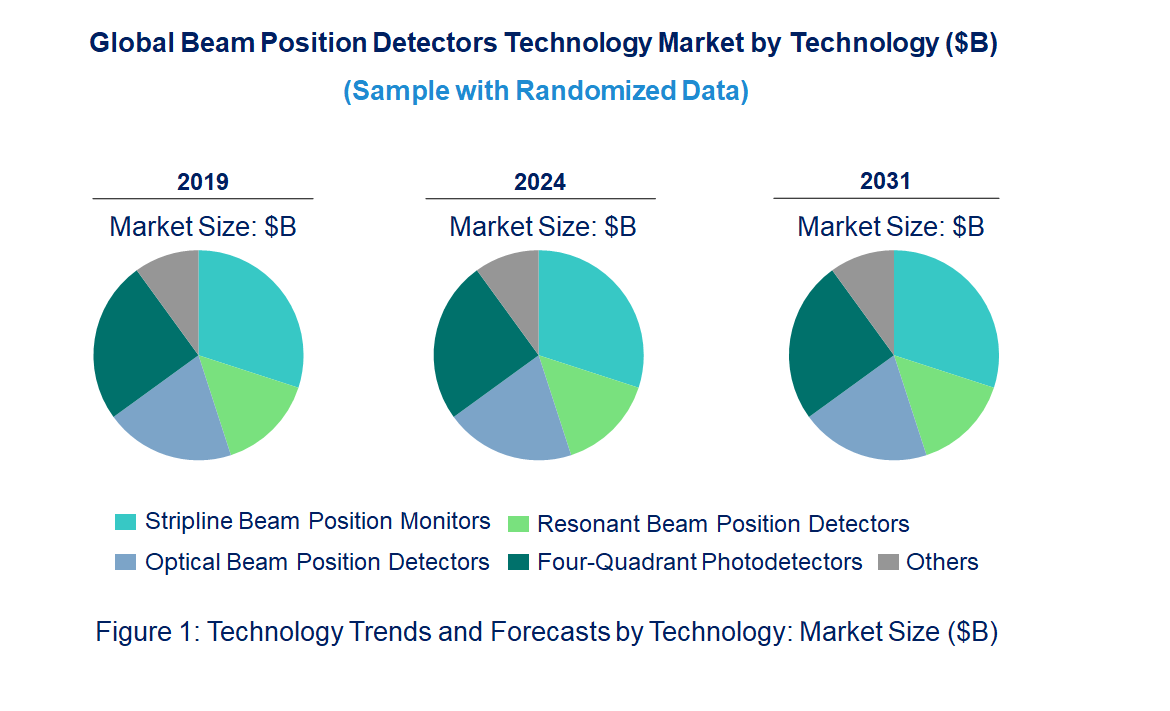
Emerging Trends in the Beam Position Detectors Market
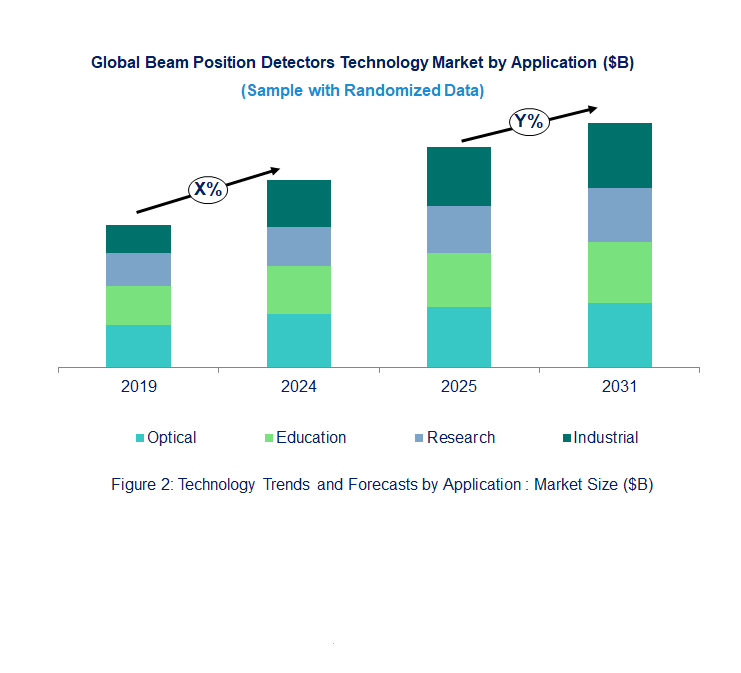
The beam position detectors market is experiencing transformative advancements, driven by the growing demand for precision, automation, and multi-disciplinary applications. Below are five key trends shaping the market:• High-Resolution Detection Systems: Emerging technologies focus on achieving higher spatial resolution, enabling accurate detection of minute beam movements for scientific and industrial applications.
• Integration with IoT and Smart Systems: Beam position detectors are increasingly being connected to IoT systems, facilitating remote monitoring, automation, and predictive analytics for enhanced operational efficiency.
• Miniaturization and Portability: There is a growing trend toward compact designs, making detectors suitable for portable and small-scale experimental setups.
• Advanced Material Usage: Adoption of novel materials improves detector durability, sensitivity, and resistance to environmental conditions.
• Sustainability and Energy Efficiency: Manufacturers are focusing on designing detectors with low power consumption and eco-friendly production methods to align with sustainability goals. These trends underscore the shift towards smarter, more efficient, and environmentally conscious beam position detectors, enabling broader adoption across optical, industrial, and research applications.
Beam Position Detectors Market : Industry Potential, Technological Development, and Compliance Considerations
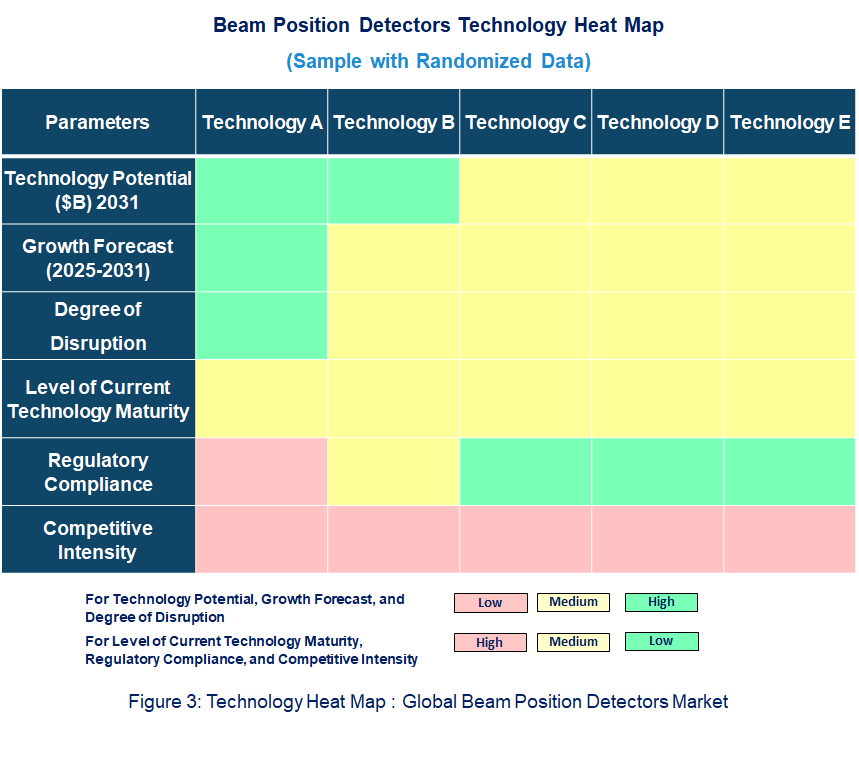
• Technology Potential: Beam position detectors hold high potential in fields such as particle accelerators, industrial automation, and optical research, offering precise alignment and monitoring.
• Degree of Disruption: Innovations like IoT integration and resonant detection systems disrupt traditional approaches, improving accuracy and enabling applications in real-time monitoring and automation.
• Level of Current Technology Maturity: Current technology is moderately mature, with legacy systems widely in use. However, advanced technologies like optical beam position detectors and four-quadrant photodetectors are rapidly gaining traction.
• Regulatory Compliance: Compliance with industry standards ensures the safety, reliability, and performance of these detectors, particularly in high-stakes environments like research facilities and industrial operations. Standards foster confidence among users, encouraging widespread adoption.
Recent Technological development in Beam Position Detectors Market by Key Players
The beam position detectors market is witnessing robust advancements, fueled by the growing demand for precision in applications such as particle accelerators, synchrotrons, and laser systems. Key players are focusing on innovations that enhance detector sensitivity, accuracy, and integration with modern technologies.• MKS Instruments: MKS Instruments introduced ultra-fast optical beam position detectors with integrated digital signal processing. This technology enhances measurement precision and supports high-speed applications in laser alignment and particle accelerator monitoring, enabling researchers to achieve more reliable data.
• Standa Ltd: Standa Ltd launched compact, portable beam position detectors, addressing the need for mobility in research setups. This innovation has improved accessibility for academic and mobile laboratories, expanding their market reach.
• CAEN: CAEN unveiled resonant beam position detectors with enhanced sensitivity and noise reduction capabilities. These detectors cater to low-energy particle detection, making them ideal for specialized research environments and advancing applications in nuclear and particle physics.
• Sydor Technologies: Sydor Technologies developed a real-time feedback system that integrates beam position detectors with machine learning algorithms. This system optimizes beam stability in synchrotrons and accelerators, reducing operational inefficiencies and boosting overall productivity.
• Applied Diamond, Inc.: Applied Diamond, Inc. introduced beam detectors using diamond-based substrates. These detectors offer superior durability and performance under extreme conditions, ensuring reliable operations in demanding environments such as high-energy physics and industrial testing.
Beam Position Detectors Market Driver and Challenges
The beam position detectors market is driven by advancements in precision technology, growing investments in research infrastructure, and the integration of AI. However, challenges such as high costs and complex calibration requirements pose barriers. Major factors reponsible for driving the beam position detectors market are:• Growing Demand for High Precision: The need for precise beam alignment in applications like particle accelerators and synchrotrons fuels demand for advanced detectors. These systems improve operational accuracy and efficiency, supporting cutting-edge scientific research.
• Integration of Machine Learning: The adoption of machine learning enhances detector capabilities, enabling predictive analytics and real-time feedback. This trend boosts reliability and operational optimization across industries.
• Rising Research Investments: Governments and institutions are increasingly funding research infrastructure, driving the adoption of beam position detectors in scientific and industrial facilities worldwide. Major challenges in the beam position detectors market are:
• High Costs: Advanced detectors involve significant costs, limiting adoption among smaller organizations and emerging markets. This challenge calls for more affordable innovations.
• Complex Calibration Requirements: Regular calibration is necessary to maintain accuracy, posing logistical and financial challenges for large-scale installations. Recent innovations by key players are significantly advancing the beam position detectors market, improving precision, durability, and integration with modern technologies. While drivers like high precision demand and AI integration propel growth, challenges such as cost and calibration emphasize the need for ongoing innovation. These dynamics collectively position the market for sustained expansion.
List of Beam Position Detectors Companies
Companies in the market compete on the basis of product quality offered. Major players in this market focus on expanding their manufacturing facilities, R&D investments, infrastructural development, and leverage integration opportunities across the value chain. With these strategies beam position detectors companies cater increasing demand, ensure competitive effectiveness, develop innovative products & technologies, reduce production costs, and expand their customer base. Some of the beam position detectors companies profiled in this report includes.• Mks Instruments
• Standa Ltd
• Caen
• Sydor Technologies
• Applied Diamond Inc
Beam Position Detectors Market by Technology
• Technology Readiness by Technology Type: Stripline beam position monitors show high readiness, widely adopted in accelerators for stable beam alignment. Resonant beam position detectors are moderately ready, excelling in specific high-frequency applications but requiring further customization. Optical beam position detectors have advanced readiness, with proven efficacy in non-invasive diagnostics and research-grade systems. Four-quadrant photodetectors are fully operational for compact beam alignment and diagnostics, adhering to photonic and safety standards. Other technologies, including hybrid and adaptive solutions, are emerging, promising regulatory-compliant, cost-efficient applications in medical imaging, materials testing, and defense. Their diverse readiness levels support competitive deployment in specialized markets.
• Competitive Intensity and Regulatory Compliance: Stripline beam position monitors face stiff competition in high-energy physics applications, requiring adherence to stringent international performance standards. Resonant beam position detectors are niche but experience competition based on frequency-specific capabilities and regulatory benchmarks. Optical beam position detectors compete on high-resolution imaging, often subjected to optical safety and accuracy regulations. Four-quadrant photodetectors see intense rivalry in compact systems, balancing compliance with photonic standards and cost constraints. Emerging technologies enhance competition by integrating functionalities within regulatory frameworks, fostering innovation while addressing market demands.
• Disruption Potential: Stripline beam position monitors bring high precision and real-time monitoring, significantly advancing particle accelerator performance. Resonant beam position detectors disrupt traditional methods with enhanced sensitivity for high-frequency beams. Optical beam position detectors leverage advanced optics to enable non-invasive and high-resolution measurements, especially in scientific research. Four-quadrant photodetectors revolutionize small-beam diagnostics with their adaptability and accuracy. Other emerging technologies, like integrated systems, improve cost-effectiveness and expand applications across medical, industrial, and defense sectors. Collectively, these innovations redefine beam detection capabilities, driving advancements in high-precision fields.
Beam Position Detectors Market Trend and Forecast by Technology [Value from 2019 to 2031]:
• Stripline Beam Position Monitors
• Resonant Beam Position Detectors
• Optical Beam Position Detectors
• Four-Quadrant Photodetectors
• Others
Beam Position Detectors Market Trend and Forecast by Application [Value from 2019 to 2031]:
• Optical
• Education
• Research
• Industrial
Beam Position Detectors Market by Region [Value from 2019 to 2031]:
• North America
• Europe
• Asia Pacific
• The Rest of the World
• Latest Developments and Innovations in the Beam Position Detectors Technologies
• Companies / Ecosystems
• Strategic Opportunities by Technology Type
Features of the Global Beam Position Detectors Market
Market Size Estimates: Beam position detectors market size estimation in terms of ($B). Trend and Forecast Analysis: Market trends (2019 to 2024) and forecast (2025 to 2031) by various segments and regions. Segmentation Analysis: Technology trends in the global beam position detectors market size by various segments, such as application and technology in terms of value and volume shipments. Regional Analysis: Technology trends in the global beam position detectors market breakdown by North America, Europe, Asia Pacific, and the Rest of the World. Growth Opportunities: Analysis of growth opportunities in different applications, technologies, and regions for technology trends in the global beam position detectors market. Strategic Analysis: This includes M&A, new product development, and competitive landscape for technology trends in the global beam position detectors market. Analysis of competitive intensity of the industry based on Porter’s Five Forces model.Table of Contents
Methodology
- In-depth interviews of the major players in this market
- Detailed secondary research from competitors’ financial statements and published data
- Extensive searches of published works, market, and database information pertaining to industry news, company press releases, and customer intentions
- A compilation of the experiences, judgments, and insights of Lucintel’s professionals, who have analyzed and tracked this market over the years.


Buy Now
Choose a license that fits your team. Instant PDF delivery.
Prices exclude taxes. Instant delivery. Custom licensing available on request.
Key Questions
- • What are some of the most promising potential, high-growth opportunities for the technology trends in the global beam position detectors market by technology (stripline beam position monitors, resonant beam position detectors, optical beam position detectors, four-quadrant photodetectors, and others), application (optical, education, research, and industrial), and region (North America, Europe, Asia Pacific, and the Rest of the World)?
- • Which technology segments will grow at a faster pace and why?
- • Which regions will grow at a faster pace and why?
- • What are the key factors affecting dynamics of different technology? What are the drivers and challenges of these technologies in the global beam position detectors market?
- • What are the business risks and threats to the technology trends in the global beam position detectors market?
- • What are the emerging trends in these material technologies in the global beam position detectors market and the reasons behind them?
- • Which technologies have potential of disruption in this market?
- • What are the new developments in the technology trends in the global beam position detectors market? Which companies are leading these developments?
- • Who are the major players in technology trends in the global beam position detectors market? What strategic initiatives are being implemented by key players for business growth?
- • What are strategic growth opportunities in this beam position detectors technology space?
- • What M & A activities did take place in the last five years in technology trends in the global beam position detectors market?


