
Report Feature
Aircraft Sensors Market Trends and Forecast
A series of developments in technologies have taken place in the aircraft sensors market, where analog sensor technology is completely switching to digital and smart sensors. These sensors allow for more precise and real-time data collection, which improves safety, operational efficiencies, and predictive maintenance across various aircraft systems, from engines/propulsion and flight controls to landing gear. Wireless connectivity is being adopted more frequently than traditional wired systems with digital sensors, as it streamlines the data transmission process and reduces aircraft wiring complexity.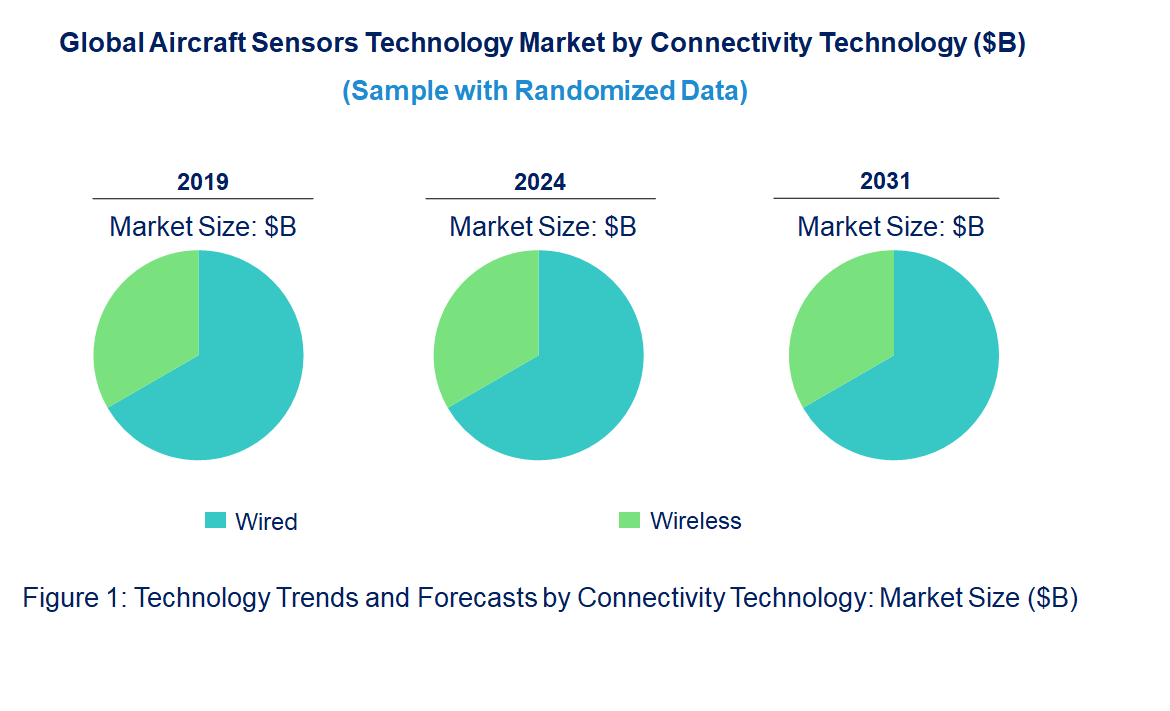
Emerging Trends in the Aircraft Sensors Market
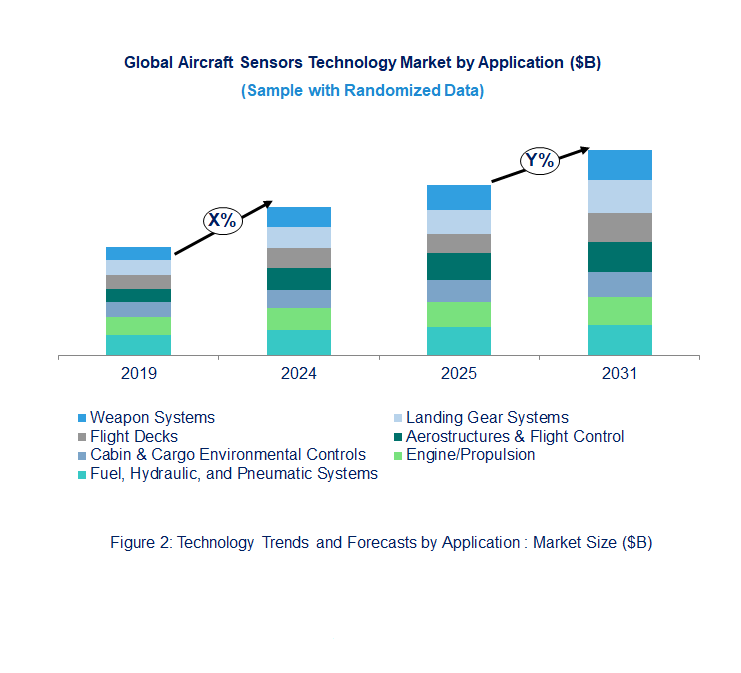
Several emerging trends in the aircraft sensors market are changing the face of the industry and boosting aircraft performance and safety. Here are five key trends:• Adoption of Wireless Sensor Networks: Wireless sensors are increasingly used in aircraft systems to reduce weight, improve flexibility, and enhance real-time monitoring capabilities. These sensors simplify integration into aircraft systems and reduce the complexity of traditional wiring.
• Integration of IoT for Predictive Maintenance: Integrating Internet of Things (IoT) technology with aircraft sensors enables predictive maintenance by collecting real-time data from multiple systems. This trend helps predict potential failures before they occur, improving safety and reducing maintenance costs.
• Development of Smart Sensors: Smart sensors with embedded processing capabilities are gaining traction in the aircraft industry. These sensors can analyze and process data on-site, providing more accurate and actionable insights for real-time decision-making, particularly in critical systems like flight control and engine performance.
• Environmental Sensors: Environmental sensors are becoming more important as factors like air quality, temperature, humidity, and gas levels in cabin and cargo areas are monitored. These sensors enhance passenger comfort and safety while supporting compliance with environmental regulations.
• Sensors Miniaturization: Space-saving and reduced weight requirements in aircraft create strong pressures to miniaturize sensors. Miniaturized sensors enable efficient integration of numerous applications in aircraft, ranging from engine monitoring to flight control to landing gear systems. These trends point to rapid technological advancements in the aircraft sensors market, improving overall performance, safety, and operational efficiency in modern aircraft. As wireless technology, IoT, and smart sensors continue to evolve, they are reshaping the future of aviation.
Aircraft Sensors Market : Industry Potential, Technological Development, and Compliance Considerations
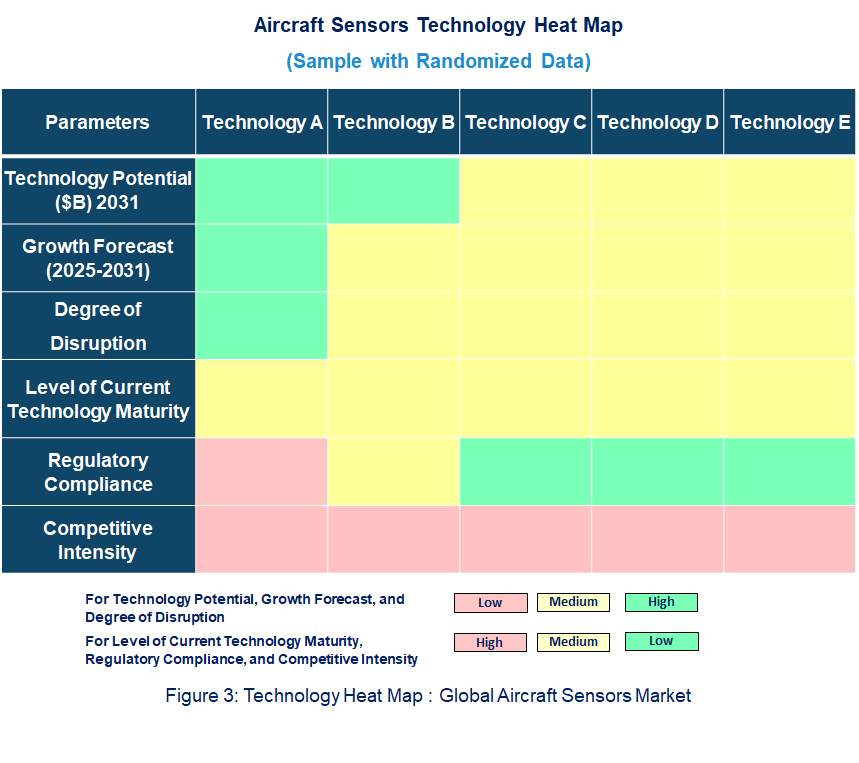
Connectivity technology for aircraft sensors addresses the communication and data transfer technology between aircraft sensors and onboard systems for better performance. The importance of this technology in enhancing modern aircraft efficiency, safety, and performance cannot be underestimated. Advancements in avionics and the demand for real-time data monitoring necessitate connectivity solutions in aerospace systems.• Technology Potential: Connectivity technology for aircraft sensors holds great promise to transform the future of the aviation industry. Real-time data exchange between systems, sensors, and ground stations enables enhanced decision-making, predictive maintenance, and operational efficiency. Innovations like 5G, satellite communication, and wireless technologies offer faster, more reliable, and wider coverage for data transfer in aircraft systems.
• Degree of Disruption: This technology is moderately disruptive, transforming traditional wired communication systems into more flexible and scalable wireless solutions. It can change how airlines monitor aircraft health and improve flight safety by enabling more sophisticated sensor networks and improved data analytics, reducing maintenance costs and downtime.
• Technology Maturity: The technology is in the development stage. Wireless connectivity and advanced communication systems are already in use, but full integration and standardization in the aviation industry are still underway. Companies are refining secure, high-speed connectivity solutions for a more seamless operational experience.
• Regulatory Compliance: The regulatory compliance of aircraft connectivity technology is very strict. Technologies must meet safety, security, and performance standards set by aviation authorities such as the FAA and EASA. The safety and operational reliability of systems in aviation can be assured.
Recent Technological development in Aircraft Sensors Market by Key Players
Aircraft sensors market key players have significantly contributed to technological advancements in sensors, enhancing aircraft performance and safety across different systems. Such development is a hallmark of the future.• Honeywell: Honeywell has been striving to improve its sensor technologies for application in aircraft propulsion, environmental controls, and flight decks. It has launched sophisticated sensors that enhance fuel efficiency and help minimize environmental impact, including fuel flow and pressure sensors used to monitor engines.
• TE Connectivity: TE Connectivity is advancing its sensor solutions for aircraft systems, particularly in areas such as engine and fuel monitoring. Their focus on high-performance sensors with wireless connectivity is helping improve real-time data collection and predictive maintenance for aircraft operators.
• Meggitt: Meggitt developed new sensor technologies for aircraft systems, such as hydraulic and pneumatic sensors. These sensors help efficiently and accurately monitor system performance. Meggitt’s research and development also support the installation of sensors in smart aircraft systems to enhance operational efficiency.
• AMETEK: AMETEK is improving its sensor solutions for aircraft flight control and aerostructures. Its sensors will improve the accuracy of monitoring flight data, ensuring aircraft operate more efficiently and safely, especially in high-precision systems like flight control surfaces and landing gear.
• Safran: Safran has been focusing on developing sensors for engine and propulsion systems, providing high-precision measurements of critical parameters such as temperature, pressure, and flow rates. These improvements help optimize fuel efficiency and reduce emissions in modern aircraft engines. These latest trends reflect the way forward for the major players in the development of sensor technologies to meet greater demands in the aircraft industry for safety, efficiency, and sustainability. Honeywell, TE Connectivity, Meggitt, AMETEK, and Safran innovations are well-positioned to create the next generations of aircraft sensors.
Aircraft Sensors Market Driver and Challenges
Drivers and challenges affecting growth in the aircraft sensors market, A variety of drivers and challenges have impacted growth and changes in this industry. The factors responsible for driving the aircraft sensors market include: Increase in Demand for Aircraft Safety: Growing demand in the aviation industry from aircraft operators for increased safety enhances demand for sophisticated sensor technologies for critical systems, offering real-time data. Flight control and landing gear sensors are crucial indicators for the performance of engines in an aircraft.• Airplane Technology Development: The development of electric and hybrid airplanes, for example, has given rise to new requirements for advanced sensors, particularly in monitoring newer systems and optimizing airplane performance and energy efficiency.
• Regulatory Pressure for Environmental Compliance: Rising regulations concerning emissions and fuel efficiency demand sensors to monitor and optimize aircraft performance, minimizing fuel consumption and emissions. Sensors, particularly those used in engine and propulsion systems, contribute to achieving this goal.
• Increased Commercial Air Demand: The growing demand for air travel increases the need for efficient, safe, and reliable aircraft systems. Higher demand for air travel requires the development of more technologically advanced sensors for aircraft applications, including fuel, hydraulic, and pneumatic applications. Challenges in the aircraft sensors market include:
• High Cost of Advanced Sensors: The development and integration of advanced sensors, including those with wireless connectivity and smart capabilities, can be expensive. Therefore, the high cost associated with these sensors might limit their adoption, especially among smaller aircraft manufacturers or operators with constrained budgets.
• Integration with Legacy Systems: Integrating new sensor technologies into aircraft systems can be challenging. Older systems may not be compatible with the latest sensor technologies, requiring investments in infrastructure and training to facilitate smooth integration.
• Cybersecurity Threats: The increasing use of wireless sensors and IoT-enabled devices in aircraft industries raises the risk of cyberattacks and data breaches. Protecting sensor data from unauthorized access is a major challenge for this industry. The drivers and challenges together shape the aircraft sensors market by encouraging innovation and presenting obstacles to widespread adoption. This market is advancing by creating smarter, more efficient sensors but must overcome cost barriers, integration issues, and cybersecurity concerns to fully realize its potential.
List of Aircraft Sensors Companies
Companies in the market compete based on product quality offered. Major players in this market focus on expanding their manufacturing facilities, R&D investments, infrastructural development, and leverage integration opportunities across the value chain. With these strategies aircraft sensors companies cater to increasing demand, ensure competitive effectiveness, develop innovative products & technologies, reduce production costs, and expand their customer base. Some of the aircraft sensor companies profiled in this report include.• Honeywell
• TE Connectivity
• Meggitt
• Ametek
• Safran
Aircraft Sensors Market by Technology
• Technology Readiness and Competitive Level for Wired and Wireless Technologies in Aircraft Sensors Market: Wired sensors are mature in the aircraft sensors market. They offer proven reliability and performance in critical applications like flight control, engine monitoring, and safety systems. These sensors are well-regulated and meet all necessary aviation safety standards, providing stable and secure data transmission. However, their weight and installation complexity are drawbacks being addressed by emerging wireless solutions. Wireless sensor technologies are rapidly advancing with higher technology readiness, leveraging developments in IoT, 5G, and low-power communication protocols. These sensors offer flexibility in sensor placement and reduced wiring, enabling more dynamic and efficient systems. Wireless solutions, however, face regulatory issues related to signal interference and cybersecurity concerns. Competitive intensity is high, with manufacturers focusing on improving power efficiency, data security, and advanced analytics. Key applications for both wired and wireless sensors include structural health monitoring, engine diagnostics, fuel management, and real-time cockpit data monitoring.
• Competitive Intensity and Regulatory Compliance in the Aircraft Sensors Market: The competitive intensity in the aircraft sensors market is increasing, with both wired and wireless technologies competing to meet the ever-changing needs of modern aviation. Wireless sensors are gaining popularity as they reduce weight, installation complexity, and cost, but they face challenges in terms of security and interference, which are crucial in aviation applications. Wired sensors are robust and reliable, but the installation complexity and weight limit them. Regulatory standards for both technologies are stringent because aircraft sensors must meet the relevant standards of the aviation industry set by the FAA and EASA. The additional scrutiny for wireless technologies in aircraft focuses on interference and data integrity, while safety and performance standards for wired sensors are more stringent. The competitive landscape is marked by the race to develop sensors that balance performance, compliance, and innovation to meet the safety and operational requirements of the aviation industry.
• Disruption Potential of Wired and Wireless Technologies for Aircraft Sensors Market: The adoption of both wired and wireless technologies in the aircraft sensors market has the potential to disrupt the market. The demand for modern aircraft designs is highly boosted by wireless sensors; they have less weight, lower installation costs, and simpler integration into existing systems. Sensor data can be gathered in real-time using wireless sensors, and these remote monitors enhance operational efficiency and improve safety. Wired sensors are more reliable and secure, but wireless solutions offer greater flexibility in sensor placement and reduce wiring complexity. The shift toward wireless technologies, including IoT-enabled sensors and advanced communication protocols, will continue to transform the market by further enhancing aircraft performance and maintenance. As aviation evolves with innovations for fuel efficiency, weight reduction, and smart maintenance, both wired and wireless sensors will play a critical role in enabling these transformations.
Aircraft Sensors Market Trend and Forecast by Connectivity Technology [Value from 2018 to 2030]:
• Wired
• Wireless
Aircraft Sensors Market Trend and Forecast by Application [Value from 2018 to 2030]:
• Fuel, Hydraulic, and Pneumatic Systems
• Engine/Propulsion
• Cabin & Cargo Environmental Controls
• Aerostructures & Flight Control
• Flight Decks
• Landing Gear Systems
• Weapon Systems
Aircraft Sensors Market by Region [Value from 2018 to 2030]:
• North America
• Europe
• Asia Pacific
• The Rest of the World
• Latest Developments and Innovations in the Aircraft Sensors Technologies
• Companies / Ecosystems
• Strategic Opportunities by Technology Type
Features of the Global Aircraft Sensors Market
Market Size Estimates: Aircraft sensors market size estimation in terms of ($B). Trend and Forecast Analysis: Market trends (2018 to 2023) and forecast (2024 to 2030) by various segments and regions. Segmentation Analysis: Technology trends in the global aircraft sensors market size by various segments, such as application and connectivity technology in terms of value and volume shipments. Regional Analysis: Technology trends in the global aircraft sensors market breakdown by North America, Europe, Asia Pacific, and the Rest of the World. Growth Opportunities: Analysis of growth opportunities in different applications, connectivity technologies, and regions for technology trends in the global aircraft sensors market. Strategic Analysis: This includes M&A, new product development, and competitive landscape for technology trends in the global aircraft sensors market. Analysis of competitive intensity of the industry based on Porter’s Five Forces model.Table of Contents
Methodology
- In-depth interviews of the major players in this market
- Detailed secondary research from competitors’ financial statements and published data
- Extensive searches of published works, market, and database information pertaining to industry news, company press releases, and customer intentions
- A compilation of the experiences, judgments, and insights of Lucintel’s professionals, who have analyzed and tracked this market over the years.


Buy Now
Choose a license that fits your team. Instant PDF delivery.
Prices exclude taxes. Instant delivery. Custom licensing available on request.
Key Questions
- • What are some of the most promising potential, high-growth opportunities for the technology trends in the global aircraft sensors market by connectivity technology (wired and wireless), application (fuel, hydraulic, and pneumatic systems, engine/propulsion, cabin & cargo environmental controls, aerostructures & flight control, flight decks, landing gear systems, weapon systems, and others), and region (North America, Europe, Asia Pacific, and the Rest of the World)?
- • Which technology segments will grow at a faster pace and why?
- • Which regions will grow at a faster pace and why?
- • What are the key factors affecting dynamics of different connectivity technologies? What are the drivers and challenges of these connectivity technologies in the global aircraft sensors market?
- • What are the business risks and threats to the technology trends in the global aircraft sensors market?
- • What are the emerging trends in these connectivity technologies in the global aircraft sensors market and the reasons behind them?
- • Which technologies have potential of disruption in this market?
- • What are the new developments in the technology trends in the global aircraft sensors market? Which companies are leading these developments?
- • Who are the major players in technology trends in the global aircraft sensors market? What strategic initiatives are being implemented by key players for business growth?
- • What are strategic growth opportunities in this aircraft sensors technology space?
- • What M & A activities did take place in the last five years in technology trends in the global aircraft sensors market?


