
Market Report · September 3, 2026

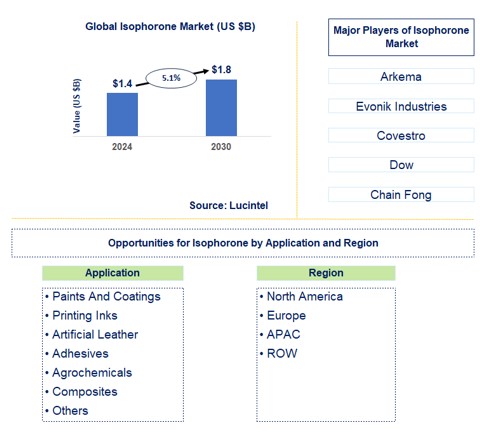
Key data points: The market size in 2030 = $1.8 billion, growth forecast = 5.1% annually for the next 6 years. Scroll below to get more insights. This market report covers trends, opportunities, and forecasts in the global isophorone market to 2030 by application (paints and coatings, printing inks, artificial leather, adhesives, agrochemicals, composites, and others) and region (North America, Europe, Asia Pacific, and the Rest of the World)
We'll send your sample report shortly.
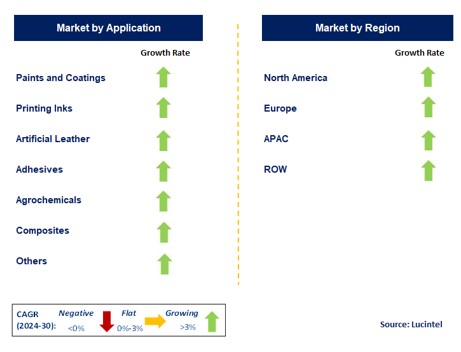
• Within the application category, adhesives will remain the largest segment due to surge in the construction of environmentally sustainable buildings.
• In terms of regions, North America will remain the largest region over the forecast period due to growing need for isophorone across diverse end-use industries. Gain valuable insights for your business decisions with our comprehensive 150+ page report. The global isophorone market has been developing with major changes in different regions due to industrial demand, regulatory forces, and technological advancements. These changes indicate that the market is evolving, influencing supplies, production, and trading strategies in different nations. Below is a summary of the aforementioned changes in some countries:
• United States: The isophorone consumption rate has increased due to its use in the automotive and aerospace industries. The adoption of green chemistry among manufacturers has led them to look for ways of producing it sustainably while complying with strict environmental regulations, which necessitate the development of low-emission processes.
• China: The country’s isophorone market is rapidly growing, mainly driven by expanding coatings and adhesives applications across various industries. Consequently, China is investing heavily in upgrading its production facilities as well as technology to meet increasing local demand in addition to export needs. Hence, industrial incentives are being offered.
• Germany: Germany is concentrating on high-end applications for isophorone, primarily within specialty chemicals and pharmaceuticals. Concerns about sustainability in this country have caused investigations into environmentally favorable release mechanisms, apart from Germany’s stringent quality control measures.
• India: Growing industrial activities coupled with infrastructure development are responsible for the rising demand for isophorone in India. The “Make in India” initiative by the government encourages local manufacturing, thereby decreasing dependence on imports. Additionally, companies are also making efforts toward improving their production efficiencies and product qualities through sophisticated technologies.
• Japan: Advancements taking place within the electronics and advanced materials sectors mark Japan’s isophorone industry. Japanese companies seek innovation alongside efficiency improvements, just like any other nation seeking economic competitiveness. Consequently, their innovative culture pushes them toward research-intensive production processes, resulting in the introduction of new and improved isophorone-based products. A more than 150-page report is developed to help in your business decisions.
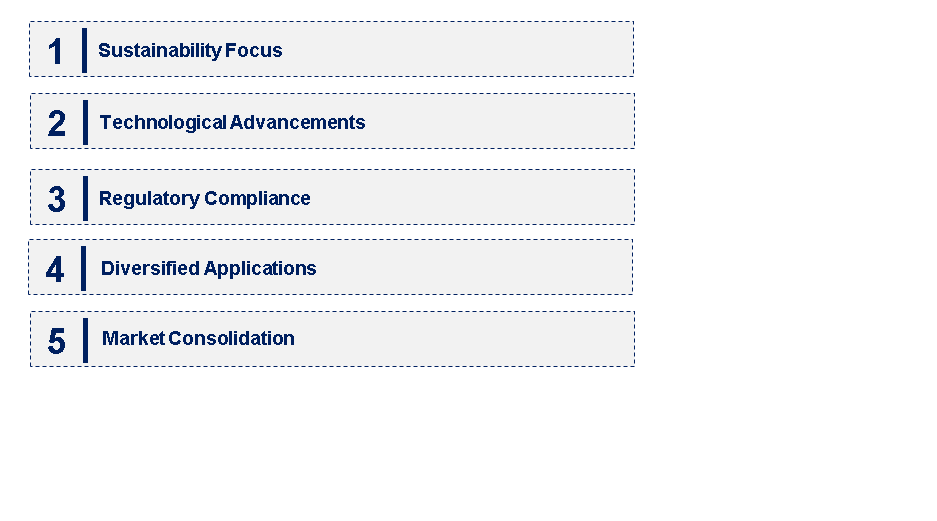
• Sustainability Focus: Increasingly, the market is driven by sustainability, with firms investing in environmentally friendly methods of production and materials. This trend is pushing for the adoption of greener technologies and practices that result in less environmental damage.
• Technological Advancements: Innovative changes in production technology are increasing efficiency and reducing costs. As a result, improved reaction conditions, along with new catalytic processes, lead to isophorone that has better quality and higher yields.
• Regulatory Compliance: Market practices are influenced by stringent environmental and safety directives. Companies are responding to this development by adopting compliant manufacturing procedures and stepping up their technology investments to meet regulatory requirements.
• Diversified Applications: An increasing number of industries, such as automotive, pharmaceuticals, and electronics, are using isophorone-based products for various purposes. This is creating demand for these products in different countries, thus establishing new markets.
• Market Consolidation: The isophorone industry is witnessing consolidation through mergers and acquisitions, leading to changing market dynamics. This consolidation helps companies achieve economies of scale and expand their market presence. These trends collectively point towards a more sustainable, technologically sophisticated, and diversified future for isophorone market growth globally. Companies are adjusting their production processes to comply with regulations, discovering new applications, and utilizing innovative approaches to stay competitive on the global stage.
• Sustainable Production Techniques: To curtail the environmental footprint of isophorone manufacturing, businesses are investing in green technologies. These involve low-emission processes and the use of renewable resources, aligning well with global sustainability goals.
• Technological Innovations: Advances in catalytic processes and reaction conditions are enhancing production efficiency as well as product quality. Consequently, these innovations enable companies to cut costs while improving isophorone performance.
• Regulatory Adjustments: Stricter environmental regulations are affecting production practices; therefore, companies must change their processes. As a result, companies are adopting new technologies to meet updated criteria and are investing heavily in research and development initiatives for long-term compliance.
• Expanding Applications: The material has found growing acceptance across industries, including automotive, pharmaceuticals, and electronics, among others. This increase is based on its versatility as a material, as well as the rising demand for specialized functionalities.
• Market Consolidation: Mergers and acquisitions are becoming more common in the isophorone industry. Through consolidation, firms aim to gain economies of scale, improve their position by growing market share, or expand their product offerings. These developments foster innovation, enhance sustainability, and respond to changing regulatory and demand conditions, thereby shaping the isophorone market. Market players are adapting to these challenges to avoid losing out to competition due to ever-changing customer preferences.
• Automotive Coatings: This industry segment has experienced increasing adoption due to its excellent performance and durability. The market provides growth opportunities as car manufacturers look for more sophisticated materials that can enhance both the appearance and lifespan of vehicles.
• Pharmaceuticals: This molecule is being used more frequently in the pharmaceutical industry, especially in drug formulation and delivery systems. Consequently, businesses may develop products specifically tailored for healthcare professionals.
• Electronics: Isophorone has been adopted by electronics companies in various high-tech applications, such as advanced materials and components. This category is expected to grow significantly due to rapid technological development.
• Adhesives and Sealants: Adhesives and sealants use isophorone because of its excellent bonding properties and versatility. An example of an area that can see significant growth is high-performance glues, which are required across different industries.
• Industrial Cleaners: It is also gaining ground in industrial cleaning agents as a solvent, with its effectiveness being one of the factors that make it preferred over other solvents. Industries require efficient and dependable solutions, thus creating room for expansion within this market segment. Thus, these growth prospects have led to an increase in application diversity and technological advancement within the isophorone market. Given this, firms are gearing up to seize these opportunities by developing specialized products targeted at emerging markets.
• Technology Developments: The effectiveness of the production process is boosted by innovations in technology. Growing isophorone production occurs as a result of advanced catalytic processes and better reaction conditions that have been implemented to make the process more cost-effective.
• Expanding Applications: The growing demand for isophorone from industries such as automotive manufacturing, pharmaceuticals, and electronics has increased over time. The material's properties and versatility have attracted its use for various purposes.
• Regulatory Compliance: Stricter policies on environmental protection and safety encourage the adoption of cleaner and more efficient technologies for isophorone production. To meet regulatory demands while remaining competitive, companies are investing heavily in these technologies.
• Demand for Sustainable Products: The development of eco-friendly methods for producing isophorone is driven by the increasing importance of sustainability. Companies are responding to market demand for green products by adopting sustainable practices and materials.
• Market Expansion: Emerging markets, particularly in Asia, present immense opportunities for growth in this sector due to industrial growth and infrastructure development. These factors will drive up the demand for isophorone, especially from Asian countries such as India and Malaysia. Challenges in the isophorone market include:
• High Production Costs: Production costs could be substantial due to advanced (expensive) technological manufacturing processes and costly raw materials used in production. How can businesses manage production costs properly, maintain profitability, and remain competitive?
• Regulatory Hurdles: Navigating complex regulatory environments and ensuring compliance with stringent standards may be challenging. Therefore, businesses must invest in adherence measures to comply with legal regulations; otherwise, they risk large fines or interruptions in operations.
• Market Volatility: Production stability may be affected by fluctuations in raw material prices and market demand, leading to losses or profit erosion during certain periods (Gupta et al., 2014). Businesses should develop strategies to sustain their market share in the face of fluctuating prices and demand. The key drivers and challenges of the isophorone market have been outlined above, which tend to influence its future growth trajectory by determining production practices, market demands, and regulatory requirements. In this respect, firms should strategically manage these factors by exploiting opportunities and avoiding threats that could undermine their operations.
• Arkema
• Evonik Industries
• Covestro
• Dow
• Chain Fong
• Paints and Coatings
• Printing Inks
• Artificial Leather
• Adhesives
• Agrochemicals
• Composites
• Others
• North America
• Europe
• Asia Pacific
• The Rest of the World


• Arkema
• Evonik Industries
• Covestro
• Dow
• Chain Fong Q6. In isophorone market, which region is expected to be the largest in next 5 years? Answer: North America will remain the largest region over the forecast period due to the growing need for isophorone across diverse end-use industries. Q.7. Do we receive customization in this report? Answer: Yes, Lucintel provides 10% customization without any additional cost.


Choose a license that fits your team. Instant PDF delivery.
Prices exclude taxes. Instant delivery. Custom licensing available on request.
Market Report · September 3, 2026
Market Report · July 22, 2026
Market Report · July 22, 2026
Trusted partner for strategic intelligence and business growth


Receive a complimentary market analysis tailored to your industry. Our analysts will identify key growth opportunities and competitive dynamics specific to your business.

Market size, growth rate, and key trend analysis for your specific sector.

Top competitor positioning and market share analysis.

Strategic recommendations backed by data-driven insights.
Get curated market intelligence and competitive moves straight to your inbox.
By subscribing, you agree to receive our monthly insights. Unsubscribe anytime.
Receive a complimentary market analysis tailored to your industry. Our analysts will identify key growth opportunities and competitive dynamics specific to your business.
Market size, growth rate, and key trend analysis for your specific sector.
Top competitor positioning and market share analysis.
Strategic recommendations backed by data-driven insights.
Get curated market intelligence, emerging trends, and competitive moves straight to your inbox each month.
By subscribing, you agree to receive our monthly insights. Unsubscribe anytime.
We'll send your sample report shortly.