
Market Report · May 18, 2026

This market report covers trends, opportunities, and forecasts in the global invoice process software market to 2031 by technology (software and service), end use industry (it & telecom, bfsi, government, retail, healthcare, education, and others), and region (North America, Europe, Asia Pacific, and the Rest of the World)
We'll send your sample report shortly.
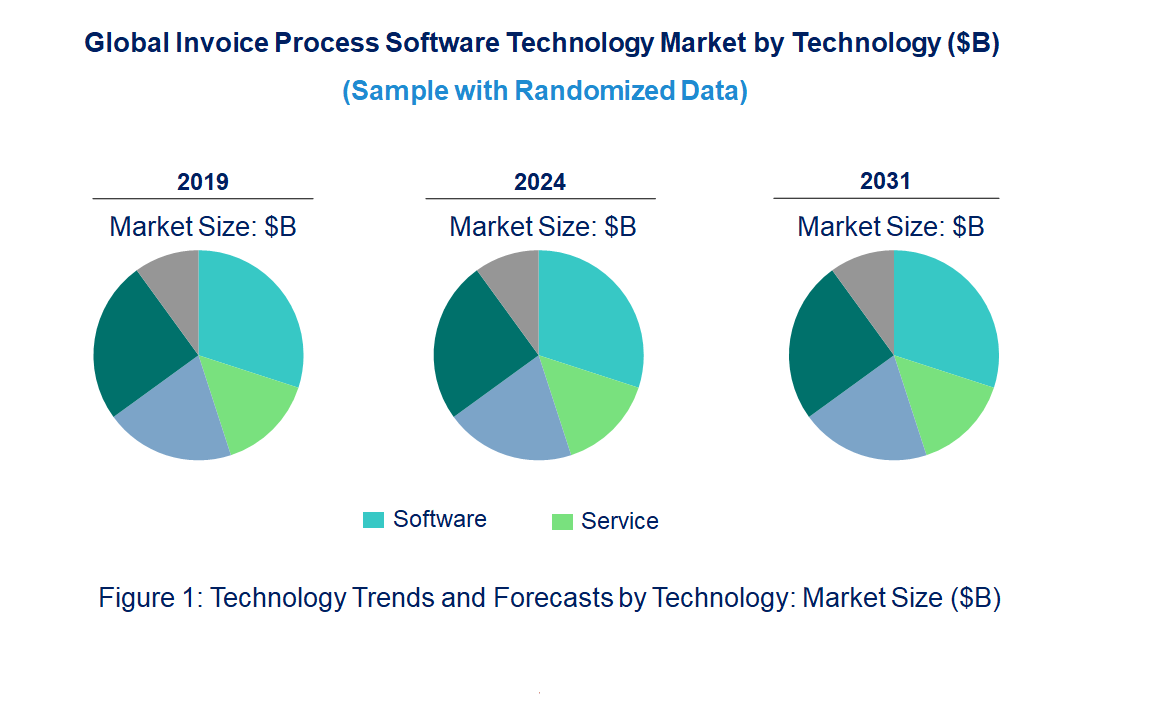
![Invoice Process Software Market Trend and Forecast by End Use Industry [Value from 2019 to 2031]:](https://lucintel.com/images/Invoice-Process-Software-Technology-Market-Segment.png "Invoice Process Software Market Trend and Forecast by End Use Industry [Value from 2019 to 2031]:")
• Adoption of Artificial Intelligence (AI) and Machine Learning (ML) : AI and ML are now used to automate tasks, including data entry, invoice matching, and anomaly detection. These technologies improve accuracy and reduce processing time, providing predictive analytics for better financial planning.
• Integration with Blockchain Technology: Blockchain technology ensures that invoice management is safe and transparent, with the creation of unalterable transaction records. This reduces the risk of fraud, builds trust, and makes cross-border invoicing easier.
• Advancements in Cloud-Based Solutions: Cloud-based invoice processing solutions are scalable, remotely accessible, and integrated with other enterprise tools such as ERP systems. These solutions benefit organizations that have geographically dispersed operations.
• Greater Attention to E-Invoicing Compliance: Governments are forcing e-invoicing for better tax compliance and lesser fraud. Software companies are incorporating compliance tools so that their solutions conform with local regulations across geographies.
• Greater adoption of RPA: The latest trend is the automation of RPA for end-to-end invoice processes, including validation, approvals, and payment scheduling. This trend has greatly minimized operational costs and increased process efficiency. These latest trends are revolutionizing the technology landscape of invoice process software so that businesses can shift from old, traditional systems to intelligent automated solutions. As these changes develop further, they will add efficiency to operations, compliance, and financial accuracy, changing the invoicing process into an advantage.
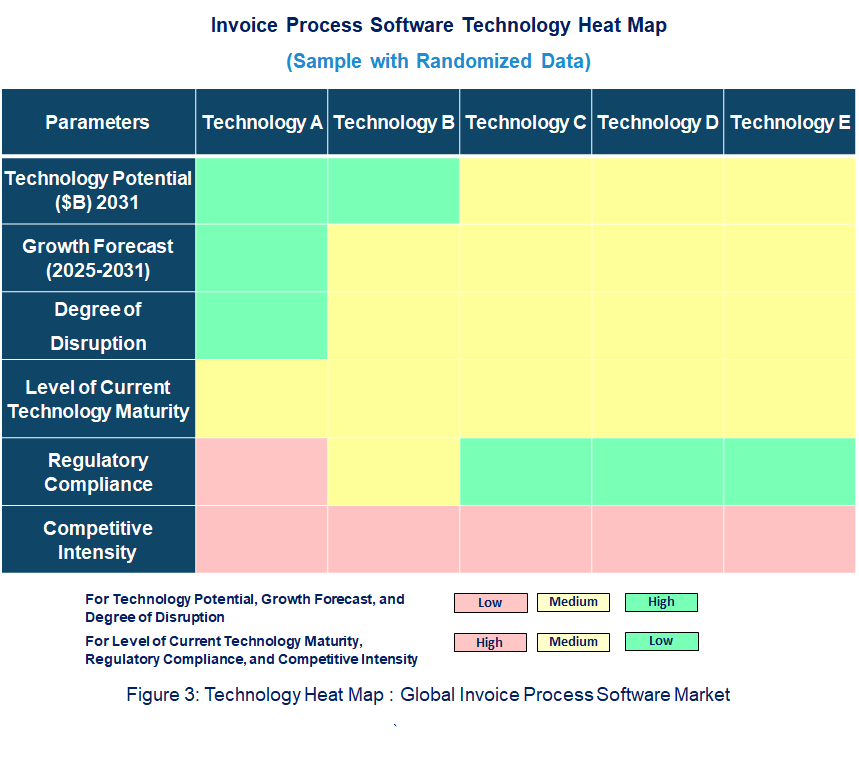
• Technology Potential: The potential of invoice process software lies in its ability to integrate seamlessly with other business systems like ERP and accounting platforms. Innovations such as real-time analytics, fraud prevention through blockchain, and AI-powered anomaly detection are unlocking new efficiencies and significantly improving cash flow management and decision-making processes.
• Degree of Disruption: It is causing a huge disruption by changing businesses from manual error-prone processes to intelligent automation. AI, RPA, and e-invoicing are reducing the cost of operations, eliminating processing delays, and encouraging global standardization through procedures that have already made traditional invoice management obsolete.
• Current Maturity of Technology Level: The base capabilities of e-invoicing and data extraction are mature, whereas predictive analytics and blockchain integration are still developing. Cloud-based platforms are very widely adopted and have helped with scalability and remote access.
• Regulatory Compliance: E-invoicing and also tax compliance are being made mandatory by governments. The modern solution will also be compliant, allowing it to meet jurisdiction requirements, thus reducing the risk of penalties and fraud and also promotes openness in financial reporting.
• SAP: SAP has integrated machine learning and AI capabilities into its invoice management systems, enabling real-time anomaly detection and automated invoice matching. This has reduced manual intervention, improved accuracy, and accelerated processing times for businesses.
• Sage: Sage has introduced cloud-based invoicing solutions tailored for small and medium enterprises (SMEs), enhancing accessibility and enabling seamless integration with accounting systems. This supports SMEs in achieving financial accuracy and regulatory compliance.
• Chrome River: Chrome River has launched AI-driven expense and invoice management tools that provide real-time insights and fraud detection capabilities, making it easier for organizations to manage global operations efficiently.
• Spendesk: Spendesk has unveiled an all-in-one invoicing platform that combines payment management with invoice processing. This allows businesses to streamline workflows, improve visibility, and centralize financial operations.
• Coupa: Coupa has enhanced its Business Spend Management platform with AI-powered invoice automation, allowing organizations to achieve faster approvals, improve vendor relationships, and ensure compliance with tax regulations.
• Zoho Corporation: Zoho introduced AI-driven invoice categorization and reporting tools, helping businesses gain deeper insights into spending patterns and enhancing decision-making.
• Kofax: Kofax has focused on robotic process automation (RPA) for invoice processing, enabling the extraction and validation of data across diverse formats, reducing errors, and enhancing productivity.
• Concur Invoice: Concur has integrated advanced approval workflows and real-time auditing features into its invoicing solutions, which improves compliance and reduces processing delays.
• Invoicera: Invoicera has developed blockchain-based invoicing features, providing enhanced security and transparency for businesses managing high-value transactions across borders. These advancements demonstrate how leading players in invoice process software technology are leveraging cutting-edge innovations to enhance efficiency, security, and compliance, reshaping the landscape of financial operations.
• Need for Automation: Organizations are using automation more and more to minimize errors, reduce processing time, and improve productivity. Advanced software features like RPA and AI-driven workflows in invoice management transform the approach to increasing efficiency and promoting innovation in financial operations.
• Compliance with Global Regulations: The E-invoicing mandates and tax regulations of regions like the EU and APAC have encouraged companies to invest in software for compliance and penalty avoidance. In doing so, they facilitate smooth cross-border trade and financial management.
• Cost Efficiency Using Cloud-Based Invoice Processing: Low initial cost, it does provide scalability and data storing while remaining safe. SMEs along with big businesses are seeking innovative alternatives rather than conventional ones. Its cost-effectiveness makes its solution worthwhile.
• Integration Using Enterprise Resource Planning (ERP)/Accounting System: Some of the software offers it. Integration is all-important. In other words, such software offering entire financial viewability not only increases decision-making efficacy but supports strategic growth.
• Advanced Analytics and Insights: Real-time data analysis and reporting capabilities allow businesses to gain actionable insights into spending patterns, which leads to better financial strategies and risk mitigation. Challenegs
• Integration with Existing Systems: Many organizations use legacy financial and accounting systems that are not compatible with modern invoice processing software. Integrating these systems can be complex, requiring significant time and resources, and can lead to data inconsistencies or disruptions in workflow.
• Data Security and Privacy Concerns: Invoice process software often handles sensitive financial data, making it a target for cyber threats. Companies must ensure robust security measures to protect against data breaches, comply with regulations like GDPR, and maintain customer trust, adding complexity to the development and deployment of these solutions. The drivers of growth in the invoice process software market call for automation, compliance, and cloud-based solutions. As such, these developments not only address prevailing challenges but also help organizations operate more efficiently, rewriting the rules of financial management across industries.
• SAP
• Sage
• Chrome River
• Spendesk
• Coupa
• Zoho Corporation
• Technology Readiness by Technology Type: The software technologies are very mature and support applications from generating invoices to automating processing and compliance management. They are used extensively by most industries to help smoothen their operation. Service technologies, too, are maturing now with SaaS platforms and managed services offering customized scalable solutions to businesses. Automated workflows for invoice approvals, real-time data analytics, and e-invoicing compliance, thus supporting operational efficiency as well as strategic financial planning requirements. Together, software and services are driving the industry toward seamless and intelligent invoice processing.
• Competitive Intensity and Regulatory Compliance: The invoice process software competition in the market for software and service solutions in invoice processing is high as vendors attempt to differentiate themselves through features such as real-time analytics and AI-driven insights. While software providers focus on robust integrations with ERP systems, service providers emphasize tailored solutions to meet diverse client needs. Regulatory compliance, especially for e-invoicing mandates and tax laws, is critical, requiring technologies to adapt swiftly to changing legal frameworks. This environment fosters intense competition among vendors to remain compliant and secure market share.
• Disruption Potential by Technology Type: In invoice processing, software and service technologies are creating high disruption. The latest software solutions use AI and machine learning to automate data extraction, error detection, and compliance checking to minimize manual intervention. In scalability and access, SaaS platforms redefine service models, allowing small businesses to embrace high-end capabilities. The shift towards cloud-based platforms ensures real-time updates, collaboration, and remote access, which has disrupted the traditional methods of invoice management. Outsourcing invoice management services that cater to the needs of organizations looking for specialized expertise further accelerates market shifts.
• Software
• Service
• IT Telecom
• BFSI
• Government
• Retail
• Healthcare
• Education
• Others
• North America
• Europe
• Asia Pacific
• The Rest of the World
• Latest Developments and Innovations in the Invoice Process Software Technologies
• Companies / Ecosystems
• Strategic Opportunities by Technology Type


Choose a license that fits your team. Instant PDF delivery.
Prices exclude taxes. Instant delivery. Custom licensing available on request.
Market Report · May 18, 2026
Market Report · May 18, 2026
Market Report · May 18, 2026
Trusted partner for strategic intelligence and business growth


Receive a complimentary market analysis tailored to your industry. Our analysts will identify key growth opportunities and competitive dynamics specific to your business.

Market size, growth rate, and key trend analysis for your specific sector.

Top competitor positioning and market share analysis.

Strategic recommendations backed by data-driven insights.
Get curated market intelligence and competitive moves straight to your inbox.
By subscribing, you agree to receive our monthly insights. Unsubscribe anytime.
Receive a complimentary market analysis tailored to your industry. Our analysts will identify key growth opportunities and competitive dynamics specific to your business.
Market size, growth rate, and key trend analysis for your specific sector.
Top competitor positioning and market share analysis.
Strategic recommendations backed by data-driven insights.
Get curated market intelligence, emerging trends, and competitive moves straight to your inbox each month.
By subscribing, you agree to receive our monthly insights. Unsubscribe anytime.
We'll send your sample report shortly.