
Market Report · July 22, 2026

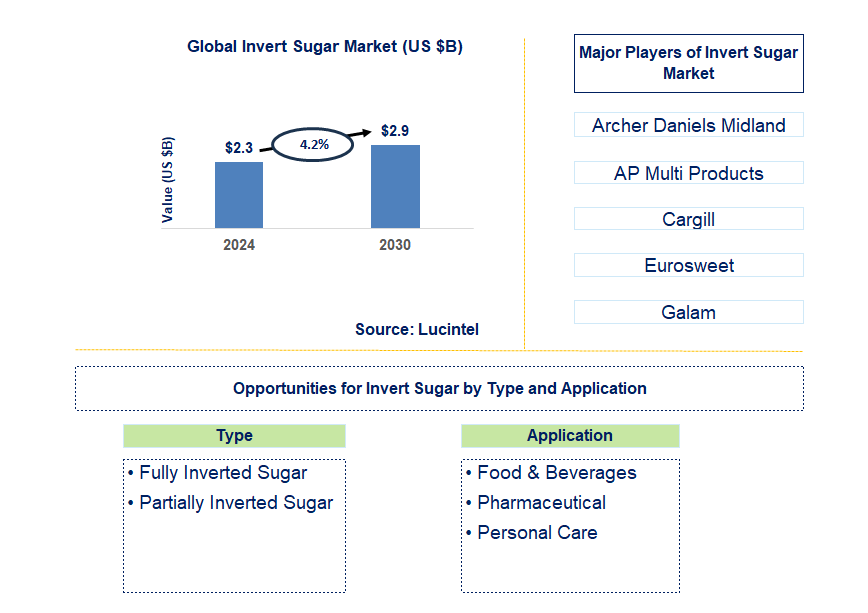
Key data points: The market size in 2030 = $2.9 billion, growth forecast = 4.2% annually for the next 6 years. Scroll below to get more insights. This market report covers trends, opportunities, and forecasts in the global invert sugar market to 2030 by type (fully inverted sugar and partially inverted sugar), application (food & beverages, pharmaceutical, and personal care), and region (North America, Europe, Asia Pacific, and the Rest of the World)
We'll send your sample report shortly.
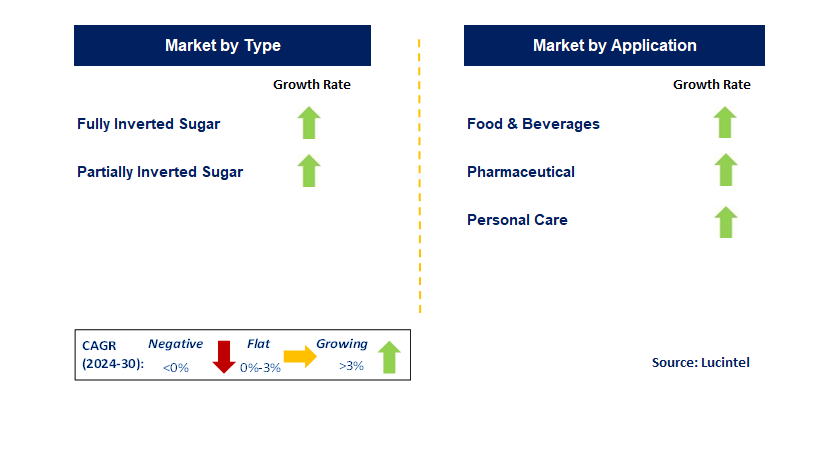
• Lucintel forecasts that, Within the type category, fully inverted sugar is expected to witness higher growth over the forecast period because it is used commonly as bulking agent in ice cream, frozen desserts and sorbets.
• Within the application category, food & beverage will remain the largest segment due to distinctive qualities, ease of use, and qualities that improve quality.
• In terms of regions, APAC is expected to witness the highest growth over the forecast period because the raw materials are readily available and rapid growth food processing industry and emerging economies. Gain valuable insights for your business decisions with our comprehensive 150+ page report.
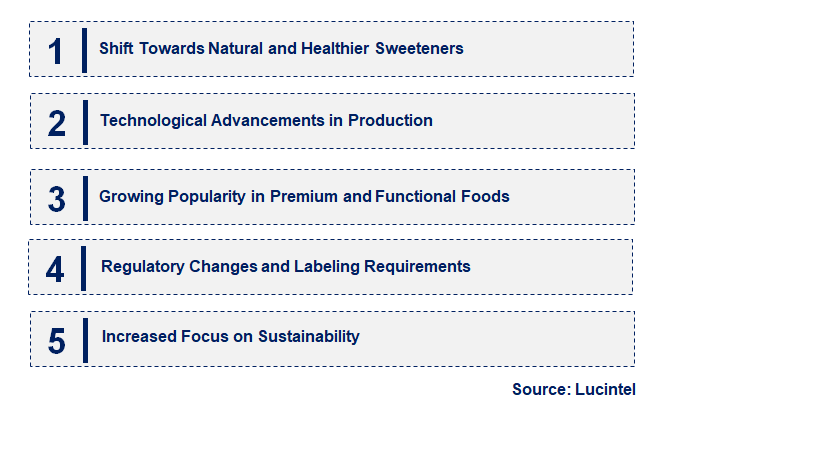
• Shift Towards Natural and Healthier Sweeteners: Consumers increasingly seek natural and healthier alternatives to traditional sweeteners. Invert sugar, with its natural origins and lower glycemic index, is becoming a preferred choice. This trend is driven by growing health consciousness and awareness of the adverse effects of high fructose corn syrup. As a result, food and beverage manufacturers reformulate products to include invert sugar, aligning with consumer demand for cleaner labels and better-for-you ingredients.
• Technological Advancements in Production: Advances in production technology enhance the efficiency and cost-effectiveness of invert sugar manufacturing. Innovations such as improved enzyme technologies and automated processing systems streamline production, reduce waste, and lower costs. These advancements enable manufacturers to meet increasing demand while maintaining product quality. Additionally, technological improvements facilitate the development of new applications and formulations for invert sugar in various food products.
• Growing Popularity in Premium and Functional Foods: The trend towards premium and functional foods drives demand for invert sugar. Consumers look for products that offer additional health benefits and enhanced sensory experiences. Invert sugar's role in enhancing flavor profiles and providing functional benefits such as improved texture and extended shelf life makes it a popular ingredient in high-end and health-focused products. This trend prompts manufacturers to explore new and innovative uses for invert sugar in the premium segment.
• Regulatory Changes and Labeling Requirements: Changes in regulations and labeling requirements impact the invert sugar market. Governments implement stricter guidelines on ingredient transparency and health claims, influencing how invert sugar is marketed and used in food products. Manufacturers must navigate these regulations to ensure compliance and maintain consumer trust. This trend drives the need for clear labeling and accurate health information, affecting product formulation and marketing strategies.
• Increased Focus on Sustainability: Sustainability is becoming a key consideration in the invert sugar market. Consumers and regulators place greater emphasis on environmentally friendly practices, leading to a push for sustainable production methods. Manufacturers adopt eco-friendly technologies and sourcing practices to reduce their environmental footprint. This trend reshapes the market by encouraging the development of sustainable products and practices, aligning with broader environmental and corporate responsibility goals. These emerging trends reshape the invert sugar market by influencing consumer preferences, driving technological innovations, and prompting regulatory and sustainability considerations. As the market continues to evolve, stakeholders must adapt to these trends to capitalize on new opportunities and address the challenges arising from changing dynamics. The overall impact includes a shift towards healthier, more sustainable products and advancements in production technologies that enhance market growth and diversification.
• Recent Developments in Healthy Sugar Substitutes: There is a growing focus on health and diet within the population, leading to a need for invert sugar substitutes with low glycemic index and calories. Manufacturers are seeking ways to produce these invert sugar products that are suitable for modern health-conscious society, such as those that are natural and organic.
• Technological Advancements: Developments in production technology improve the performance and cost of invert sugar. Advances in enzyme technology and processing technologies increase the purity and functionality of invert sugar, broadening the scope of its application.
• Growing Variety of Uses: In the sugar industry, non-traditional consumables are becoming very popular. Apart from confectionery and baked products, applications are moving towards beverages, dairy products, and even dietary supplements due to its ability to improve texture and increase shelf life.
• Sustainability Actions: Sugar invert producers are addressing harmful effects on the environment as the issue of sustainability gains ground. They aim to use less invasive materials in the production of sugar, improve energy efficiency during production processes, and adopt less harmful packaging.
• Increasing Demand by Region: The sugar invert market is growing in emerging markets, where there is a rising need for processed foods and beverages. This growth is fueled by improved living standards and changes in eating habits. The invert sugar market suggests a surge in innovation, health consciousness, and sustainability. Progress in production technology complements changing consumer preferences, increasing demand for healthy and multi-purpose sweeteners. In all these circumstances, there is no doubt that invert sugar will make an increasingly significant contribution to the food and beverage industry, serving contemporary needs for healthy and ecologically sound products.
• Food and Beverage Industry: The food and beverage industry represents a major growth opportunity for invert sugar, driven by consumer demand for natural sweeteners and healthier ingredients. Invert sugar enhances flavor, extends shelf life, and improves texture, making it a valuable component in a wide range of products. Its lower glycemic index compared to high fructose corn syrup aligns with the increasing preference for better-for-you options. As manufacturers reformulate products to meet health trends, invert sugar’s role in this sector is expected to expand.
• Bakery Sector: In the bakery sector, invert sugar is gaining traction due to its ability to retain moisture and improve product texture. It helps achieve a soft crumb and extended shelf life, which are essential for high-quality baked goods. Additionally, its ability to prevent crystallization makes it ideal for products like cakes, pastries, and cookies. As the demand for artisanal and high-quality bakery items increases, invert sugar's functional benefits position it as a key ingredient for innovation and market differentiation.
• Confectionery Industry: The confectionery industry offers significant growth potential for invert sugar due to its ability to enhance sweetness and texture while reducing crystallization. It is widely used in products such as candies, gummies, and chocolate confections. The increasing consumer preference for premium and artisanal confectionery items, combined with a growing focus on natural ingredients, drives the demand for invert sugar. Its application in this sector supports the creation of smoother, more appealing products, aligning with market trends toward higher-quality confectionery.
• Dairy Products: Invert sugar is increasingly used in the dairy industry to improve the texture, sweetness, and stability of products like yogurts, ice creams, and flavored milk. Its ability to enhance flavor profiles and reduce ice crystal formation in frozen dairy products makes it a valuable ingredient. As consumers seek more indulgent and creamy dairy options, invert sugar provides a means to achieve desirable product characteristics, contributing to growth in the dairy sector and expanding its application in this market.
• Pharmaceutical Sector: The pharmaceutical industry is exploring invert sugar for its use in oral drug formulations and syrups. Its sweetening properties help mask the taste of medications, improving patient compliance. Additionally, invert sugar can aid in the stabilization and preservation of liquid formulations. As the demand for patient-friendly drug delivery systems grows, invert sugar presents an opportunity for pharmaceutical companies to enhance product palatability and stability, driving its adoption in this sector. The strategic growth opportunities in the invert sugar market shape the industry's future by driving innovation and expansion across key applications. Capitalizing on these opportunities allows stakeholders to align with market trends and meet evolving consumer demands, positioning invert sugar as a valuable ingredient across diverse industries.
• Increasing Demand for Natural Sweeteners: Consumer preferences shift towards natural and less processed sweeteners due to growing health consciousness. Invert sugar, derived from the hydrolysis of sucrose, meets this demand by offering a natural alternative to high fructose corn syrup and artificial sweeteners. Its lower glycemic index and clean label appeal make it a preferred choice for health-conscious consumers, driving its adoption across various food and beverage products.
• Technological Advancements in Production: Innovations in production technology enhance the efficiency and scalability of invert sugar manufacturing. Advances such as improved enzyme technologies and automation in production processes reduce costs and increase output. These technological improvements allow manufacturers to meet rising demand and explore new applications for invert sugar, fostering growth and expanding market potential.
• Growing Application in Premium and Functional Foods: The rise in demand for premium and functional foods drives the use of invert sugar due to its ability to enhance flavor, texture, and shelf life. As consumers seek high-quality, health-oriented products, invert sugar’s benefits align with these trends. Its application in premium and functional food products supports market expansion and innovation, contributing to its growing popularity.
• Expansion of the Food and Beverage Industry: The continuous growth of the global food and beverage industry provides ample opportunities for invert sugar. As new products are developed and existing ones are reformulated to meet changing consumer preferences, invert sugar is increasingly incorporated for its functional and sensory benefits. The expanding food and beverage sector drives demand and creates new market opportunities for invert sugar producers.
• Rising Disposable Incomes and Urbanization: Increasing disposable incomes and urbanization in emerging markets fuel demand for processed and convenience foods, which often use invert sugar. As living standards improve, consumers in these regions seek higher-quality and more diverse food options. This trend boosts the demand for invert sugar in various applications, driving market growth in these expanding economies. Challenges in the invert sugar market include:
• Regulatory and Compliance Issues: Stringent regulations and compliance requirements for food ingredients and labeling can pose challenges for invert sugar manufacturers. Different countries have varying standards and guidelines, complicating international trade and market entry. Staying abreast of regulatory changes and ensuring compliance is essential for manufacturers to avoid legal issues and maintain market access.
• Fluctuating Raw Material Prices: The cost of raw materials for invert sugar production, such as sucrose, can be volatile due to factors like agricultural conditions and market fluctuations. These price fluctuations can impact production costs and profitability. Managing raw material costs and mitigating price volatility are critical challenges for maintaining stable production and competitive pricing.
• Competition from Alternative Sweeteners: The market for sweeteners is highly competitive, with numerous alternatives such as stevia, agave syrup, and synthetic sweeteners. Invert sugar faces competition from these alternatives, each offering different benefits and catering to varying consumer preferences. Differentiating invert sugar and demonstrating its unique advantages are essential for maintaining market share in this competitive landscape. The invert sugar market is shaped by key drivers such as the demand for natural sweeteners, technological advancements, and the expansion of the food and beverage industry. However, challenges including regulatory issues, raw material price fluctuations, and competition from alternative sweeteners must be addressed. Balancing these drivers and challenges is crucial for stakeholders to leverage growth opportunities and sustain market development, ensuring the continued success of invert sugar in a dynamic market environment.
• Archer Daniels Midland
• AP Multi Products
• Cargill
• Eurosweet
• Galam
• International Molasses
• Nordzucker
• Fully Inverted Sugar
• Partially Inverted Sugar
• Food & Beverages
• Pharmaceutical
• Personal Care
• North America
• Europe
• Asia Pacific
• The Rest of the World
• United States: In the U.S., the invert sugar market has seen a rise in demand driven by the growing trend toward natural and less processed ingredients. Consumers' increasing health consciousness is steering manufacturers to use invert sugar as a substitute for high fructose corn syrup in various food and beverage products. Additionally, advancements in production technologies have enhanced the efficiency of invert sugar production, reducing costs and increasing availability. Regulatory changes and labeling requirements also influence market dynamics, as companies adapt to new standards for ingredient transparency and health claims.
• Indian: The Indian invert sugar market is experiencing significant growth due to increasing urbanization and rising incomes, which drive demand for processed foods and beverages. The shift towards healthier alternatives has led to a higher usage of invert sugar as a natural sweetener. Local producers are expanding their capabilities to cater to the diverse needs of the Indian market, including regional preferences and price sensitivities. Additionally, government initiatives to boost the food processing sector support the development and adoption of invert sugar in various applications.
• Germany: Germany has witnessed steady growth in the invert sugar market, fueled by a strong emphasis on health and wellness among consumers. The country’s stringent food safety regulations and preference for natural sweeteners have boosted the adoption of invert sugar in both traditional and innovative food products. German manufacturers also focus on sustainability and eco-friendly production practices, aligning with broader environmental goals. Additionally, research and development in the food industry drive innovations in invert sugar applications, contributing to market growth and diversification.
• Japan: The Japanese invert sugar market is evolving with a focus on premium and functional food products. The Japanese consumer base values health and wellness, leading to a preference for natural sweeteners like invert sugar. The market is characterized by innovative product formulations and high-quality standards. Japanese manufacturers invest in advanced technologies to improve production efficiency and meet the growing demand for healthier alternatives. Additionally, Japan's regulatory environment and consumer trends influence the adoption of invert sugar in both traditional and contemporary food products.


• Archer Daniels Midland
• AP Multi Products
• Cargill
• Eurosweet
• Galam
• International Molasses
• Nordzucker Q6. Which invert sugar market segment will be the largest in future? Answer: Lucintel forecasts that fully inverted sugar is expected to witness higher growth over the forecast period because it is used commonly as bulking agent in ice cream, frozen desserts and sorbets. Q7. In invert sugar market, which region is expected to be the largest in next 5 years? Answer: APAC is expected to witness the highest growth over the forecast period because the raw materials are readily available and rapid growth food processing industry and emerging economies. Q.8 Do we receive customization in this report? Answer: Yes, Lucintel provides 10% customization without any additional cost.


Choose a license that fits your team. Instant PDF delivery.
Prices exclude taxes. Instant delivery. Custom licensing available on request.
Market Report · July 22, 2026
Market Report · July 22, 2026
Market Report · July 22, 2026
Trusted partner for strategic intelligence and business growth


Receive a complimentary market analysis tailored to your industry. Our analysts will identify key growth opportunities and competitive dynamics specific to your business.

Market size, growth rate, and key trend analysis for your specific sector.

Top competitor positioning and market share analysis.

Strategic recommendations backed by data-driven insights.
Get curated market intelligence and competitive moves straight to your inbox.
By subscribing, you agree to receive our monthly insights. Unsubscribe anytime.
Receive a complimentary market analysis tailored to your industry. Our analysts will identify key growth opportunities and competitive dynamics specific to your business.
Market size, growth rate, and key trend analysis for your specific sector.
Top competitor positioning and market share analysis.
Strategic recommendations backed by data-driven insights.
Get curated market intelligence, emerging trends, and competitive moves straight to your inbox each month.
By subscribing, you agree to receive our monthly insights. Unsubscribe anytime.
We'll send your sample report shortly.