
Report Feature
Intraoral X-ray Imaging Market Trends and Forecast
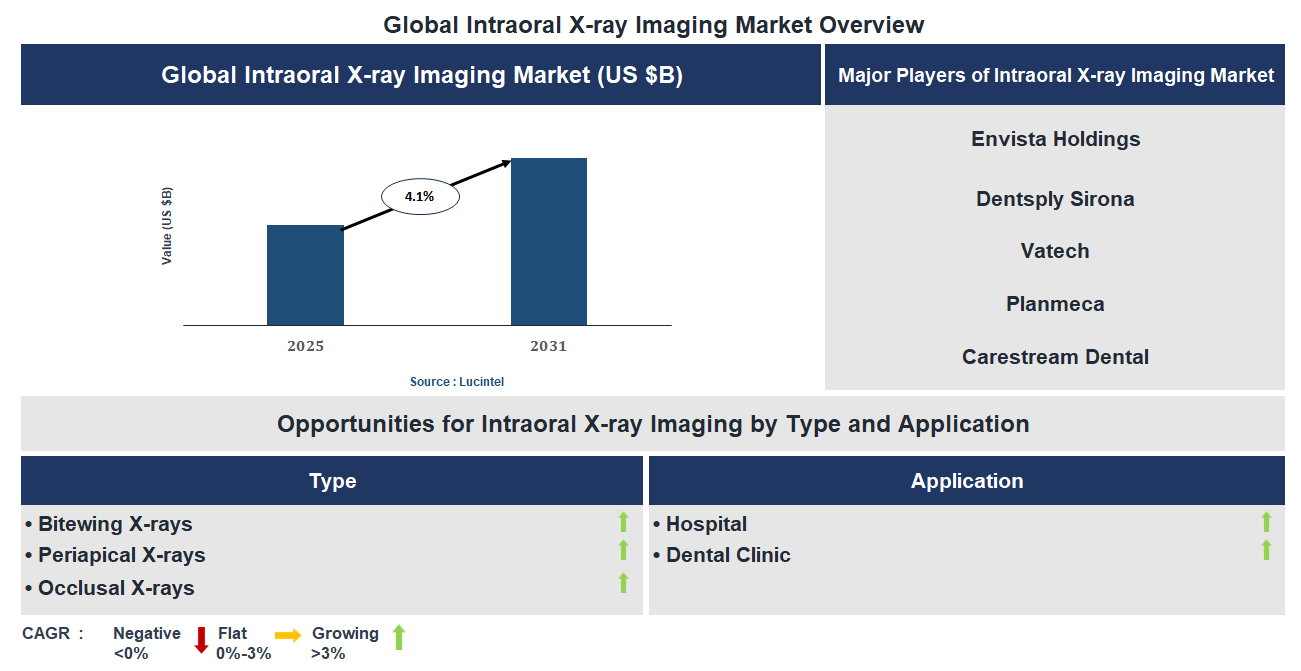
The future of the global intraoral X-ray imaging market looks promising with opportunities in the hospital and dental clinic markets. The global intraoral X-ray imaging market is expected to grow with a CAGR of 4.1% from 2025 to 2031. The major drivers for this market are the increasing demand for dental diagnostics, the rising adoption of digital X-ray systems, and the growing focus on patient comfort during procedures.• Lucintel forecasts that, within the type category, bitewing X-ray is expected to witness the highest growth over the forecast period.
• Within the application category, dental clinic is expected to witness higher growth.
• In terms of region, APAC is expected to witness the highest growth over the forecast period. Gain valuable insights for your business decisions with our comprehensive 150+ page report. Sample figures with some insights are shown below.
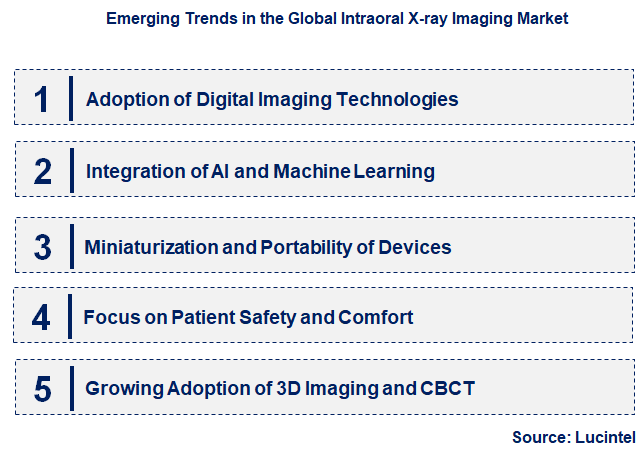
Emerging Trends in the Intraoral X-ray Imaging Market
The intraoral X-ray imaging market is experiencing rapid evolution driven by technological advancements, increasing demand for accurate dental diagnostics, and a growing focus on patient comfort and safety. As dental practices seek more efficient, precise, and minimally invasive solutions, several key trends are emerging that are shaping the future of this market. These developments are not only enhancing diagnostic capabilities but also improving workflow efficiency and patient experience. Understanding these trends is essential for stakeholders aiming to stay competitive and leverage new opportunities in this dynamic landscape.• Adoption of Digital Imaging Technologies: The shift from traditional film-based X-rays to digital systems is accelerating. Digital intraoral X-ray devices offer higher image quality, faster processing times, and easier storage and sharing of images. This transition reduces radiation exposure and enhances diagnostic accuracy, leading to better patient outcomes. The integration of digital technology also facilitates tele-dentistry and remote consultations, expanding access to dental care and improving practice efficiency.
• Integration of AI and Machine Learning: Artificial intelligence (AI) and machine learning are increasingly being incorporated into intraoral X-ray systems. These technologies assist in automatic image analysis, detection of cavities, periodontal diseases, and other dental anomalies with high precision. AI-driven tools improve diagnostic speed and accuracy, reduce human error, and support treatment planning. This trend is transforming traditional diagnostic workflows and enabling personalized patient care, ultimately leading to better clinical outcomes.
• Miniaturization and Portability of Devices: The development of compact, lightweight intraoral X-ray units is making dental imaging more accessible and convenient. Portable devices enable on-the-go diagnostics, especially in remote or underserved areas, and facilitate chairside imaging during procedures. Miniaturization also enhances patient comfort by reducing the size of equipment used during examinations. This trend broadens the scope of dental imaging applications and supports mobile dental clinics, thereby increasing market reach.
• Focus on Patient Safety and Comfort: Innovations aimed at reducing radiation doses and improving patient comfort are prominent. Low-dose X-ray technology minimizes radiation exposure, addressing safety concerns. Ergonomically designed devices and faster imaging processes reduce discomfort and anxiety for patients. Enhanced safety protocols and user-friendly interfaces also contribute to a more positive patient experience. These improvements are crucial for increasing patient acceptance and compliance, especially in pediatric and sensitive populations.
• Growing Adoption of 3D Imaging and CBCT: Cone Beam Computed Tomography (CBCT) and 3D imaging are gaining popularity for detailed dental and maxillofacial assessments. These advanced imaging techniques provide comprehensive views of the oral structures, aiding in implant planning, orthodontics, and complex surgeries. The superior diagnostic capabilities of 3D imaging improve treatment precision and outcomes. As costs decrease and technology becomes more accessible, the adoption of 3D imaging is expected to expand, significantly impacting the scope and quality of dental diagnostics. In summary, these emerging trends are collectively transforming the intraoral X-ray imaging market by enhancing diagnostic accuracy, improving patient safety and comfort, and expanding accessibility. The integration of digital, AI, and 3D technologies is driving innovation, making dental imaging more efficient, precise, and patient-centric. These developments are reshaping the market landscape, creating new opportunities for manufacturers, practitioners, and patients alike.
Recent Development in the Intraoral X-ray Imaging Market
The intraoral X-ray imaging market has experienced significant advancements driven by technological innovations, increasing dental health awareness, and the rising prevalence of dental disorders worldwide. These developments aim to improve diagnostic accuracy, patient comfort, and workflow efficiency. As the market evolves, key trends are shaping the future landscape, influencing manufacturers, dental practitioners, and patients alike. The integration of digital technologies, enhanced imaging capabilities, and regulatory support are pivotal in this growth trajectory. Understanding these recent developments provides insight into the markets direction and potential opportunities for stakeholders seeking to capitalize on emerging trends.• Adoption of Digital Imaging Technologies: The shift from traditional film-based X-rays to digital systems has revolutionized the market by offering faster results, reduced radiation exposure, and improved image quality. This transition enhances diagnostic precision and streamlines dental workflows, leading to increased adoption among dental clinics and hospitals. The digital trend also facilitates easier storage, sharing, and analysis of images, boosting overall efficiency and patient care.
• Integration of AI and Machine Learning: The incorporation of artificial intelligence (AI) and machine learning algorithms into intraoral X-ray systems has significantly improved diagnostic accuracy. These technologies assist in detecting cavities, periodontal diseases, and other dental anomalies with higher precision. AI-driven tools also enable automated image analysis, reducing human error and saving time, which benefits both practitioners and patients.
• Miniaturization and Portability of Devices: Recent developments focus on creating compact, lightweight, and portable intraoral X-ray devices. These innovations allow for greater flexibility in dental practices, including mobile clinics and remote areas. Portable devices improve patient comfort, facilitate quick diagnostics, and expand access to dental imaging services, especially in underserved regions.
• Enhanced Image Resolution and 3D Imaging: Advances in sensor technology have led to higher-resolution images and the emergence of 3D imaging capabilities. These improvements provide detailed visualization of dental structures, aiding in precise treatment planning for implants, orthodontics, and surgeries. Enhanced imaging also reduces the need for multiple scans, minimizing patient radiation exposure.
• Regulatory Approvals and Market Expansion: Increasing regulatory support and approvals for new intraoral X-ray systems have accelerated market growth. Governments and health authorities are promoting the adoption of safer, more effective imaging solutions through policies and incentives. This regulatory environment encourages innovation and expands market reach, especially in emerging economies seeking improved dental healthcare infrastructure. In summary, recent developments in the intraoral X-ray imaging market—such as digital transformation, AI integration, device miniaturization, advanced imaging capabilities, and supportive regulations—are collectively driving growth and innovation. These trends are enhancing diagnostic accuracy, patient experience, and operational efficiency, ultimately transforming the landscape of dental healthcare and expanding market opportunities globally.
Strategic Growth Opportunities in the Intraoral X-ray Imaging Market
The intraoral X-ray imaging market is experiencing rapid growth driven by technological advancements, increasing dental health awareness, and rising demand for accurate diagnostics. As dental practices evolve, the need for precise imaging solutions becomes critical for effective treatment planning. Key applications such as general dentistry, orthodontics, endodontics, periodontics, and implantology are witnessing significant innovations. These developments are creating new opportunities for market players to expand their offerings and improve patient outcomes. The following are five key growth opportunities across these applications, shaping the future landscape of intraoral X-ray imaging.• Enhanced Diagnostic Accuracy : The integration of digital sensors and advanced imaging software improves diagnostic precision, enabling early detection of dental issues and reducing treatment time, thereby increasing patient satisfaction and practice efficiency.
• 3D Imaging Adoption : The shift towards 3D intraoral imaging in orthodontics allows for comprehensive treatment planning, better visualization of dental structures, and improved appliance fitting, leading to more predictable outcomes and increased demand.
• Improved Root Canal Detection : Advanced imaging technologies facilitate precise identification of root canal anatomy, reducing procedural errors and enhancing success rates, which boosts confidence among practitioners and patients alike.
• Early Disease Detection : High-resolution intraoral X-ray systems enable early detection of periodontal diseases, allowing for timely intervention and better management of gum health, ultimately reducing long-term treatment costs.
• Digital Workflow Integration : The adoption of intraoral X-ray imaging in digital implant planning streamlines workflows, improves placement accuracy, and shortens treatment timelines, fostering growth in implant procedures. In summary, these growth opportunities are significantly impacting the intraoral X-ray imaging market by driving technological innovation, improving diagnostic capabilities, and expanding application scope. This evolution enhances clinical outcomes, increases adoption rates across dental specialties, and fuels overall market expansion.
Intraoral X-ray Imaging Market Driver and Challenges
The intraoral X-ray imaging market is influenced by a variety of technological, economic, and regulatory factors that shape its growth and development. Advances in digital imaging technology, increasing awareness of oral health, and the rising prevalence of dental disorders are key drivers. Additionally, regulatory standards and government initiatives aimed at improving dental diagnostics play a significant role. However, the market also faces challenges such as concerns over radiation exposure, high equipment costs, and regulatory hurdles that can impede adoption. Understanding these drivers and challenges is essential for stakeholders to navigate the evolving landscape effectively and capitalize on emerging opportunities. The factors responsible for driving the intraoral X-ray imaging market include:-• Technological Advancements: The integration of digital imaging and 3D imaging technologies has revolutionized intraoral X-ray systems. These innovations offer higher resolution images, reduced radiation doses, and faster processing times, enhancing diagnostic accuracy and patient comfort. As technology continues to evolve, dental practitioners are increasingly adopting advanced systems, which drives market growth. The shift from traditional film-based X-rays to digital solutions also reduces operational costs and environmental impact, further fueling demand. Continuous R&D efforts are expected to introduce even more sophisticated imaging modalities, expanding the market scope.
• Rising Prevalence of Dental Disorders: The increasing incidence of dental caries, periodontal diseases, and oral infections globally is a significant driver. Growing awareness about oral health, coupled with the rising geriatric population, contributes to higher demand for accurate diagnostic tools like intraoral X-ray systems. Early detection of dental issues through advanced imaging facilitates timely treatment, reducing long-term healthcare costs. This trend is particularly prominent in developing countries where dental healthcare infrastructure is expanding, creating a substantial market opportunity for intraoral X-ray imaging devices.
• Increasing Dental Tourism and Cosmetic Dentistry: The surge in dental tourism and cosmetic dentistry procedures worldwide is boosting demand for high-quality diagnostic imaging. Patients seeking aesthetic dental treatments prefer minimally invasive procedures, which require precise imaging for planning and execution. Intraoral X-ray systems are essential for accurate diagnosis and treatment planning in cosmetic procedures such as veneers, implants, and orthodontics. The growing preference for aesthetic dental solutions, especially in emerging markets, is expected to sustain market growth by encouraging dental clinics to invest in advanced imaging equipment.
• Regulatory Support and Government Initiatives: Governments and regulatory bodies are implementing standards and guidelines to ensure safety and efficacy in dental imaging. Initiatives promoting oral health awareness and subsidizing dental care services are encouraging the adoption of advanced diagnostic tools. Regulatory approvals for new imaging technologies facilitate market entry and expansion. Additionally, policies aimed at reducing radiation exposure and promoting digital health solutions are fostering innovation and adoption of safer, more efficient intraoral X-ray systems, thereby propelling market growth. The challenges facing this intraoral X-ray imaging market include:-
• Radiation Exposure Concerns: Despite technological improvements, concerns over radiation exposure remain a significant barrier. Patients and practitioners are increasingly cautious about cumulative radiation doses, which can hinder the adoption of intraoral X-ray systems. Although digital X-rays emit lower radiation than traditional film-based systems, safety concerns persist, necessitating strict adherence to safety protocols. This apprehension can slow market growth, especially in regions with stringent regulatory environments or limited awareness about safety measures, thereby impacting the overall adoption rate of advanced imaging solutions.
• High Equipment Costs: The cost of acquiring and maintaining advanced intraoral X-ray systems can be prohibitive, particularly for small dental practices and clinics in developing regions. High initial investment, coupled with expenses related to training and maintenance, limits widespread adoption. This financial barrier restricts market penetration in emerging markets where budget constraints are prevalent. Consequently, manufacturers face challenges in expanding their customer base, and the market growth may be constrained by the affordability of cutting-edge imaging technology.
• Regulatory and Reimbursement Challenges: Navigating complex regulatory frameworks and obtaining necessary approvals can delay product launches and market entry. Variations in regulations across countries create additional hurdles for manufacturers. Moreover, limited reimbursement policies for dental imaging procedures in certain regions reduce the financial incentives for dental practitioners to invest in advanced intraoral X-ray systems. These regulatory and reimbursement challenges can impede market expansion, especially in developing economies, and hinder the adoption of innovative imaging technologies. In summary, the intraoral X-ray imaging market is driven by technological innovations, increasing oral health awareness, and supportive regulatory environments. However, concerns over radiation safety, high costs, and regulatory complexities pose significant challenges. The interplay of these factors influences market dynamics, with growth opportunities in emerging markets and technological advancements offsetting some barriers. Overall, the market is poised for continued expansion, provided stakeholders address safety concerns and affordability issues to maximize adoption and improve dental diagnostic capabilities worldwide.
List of Intraoral X-ray Imaging Companies
Companies in the market compete on the basis of product quality offered. Major players in this market focus on expanding their manufacturing facilities, R&D investments, infrastructural development, and leverage integration opportunities across the value chain. With these strategies intraoral X-ray imaging companies cater increasing demand, ensure competitive effectiveness, develop innovative products & technologies, reduce production costs, and expand their customer base. Some of the intraoral X-ray imaging companies profiled in this report include-• Envista Holdings
• Dentsply Sirona
• Vatech
• Planmeca
• Carestream Dental
• Morita
• Yoshida
• Air Techniques
• Midmark
• Asahi Roentgen
Intraoral X-ray Imaging Market by Segment
The study includes a forecast for the global intraoral X-ray imaging market by type, application, and region.Intraoral X-ray Imaging Market by Type [Value from 2019 to 2031]:
• Bitewing X-rays
• Periapical X-rays
• Occlusal X-rays
Intraoral X-ray Imaging Market by Application [Value from 2019 to 2031]:
• Hospital
• Dental Clinic
Intraoral X-ray Imaging Market by Region [Value from 2019 to 2031]:
• North America
• Europe
• Asia Pacific
• The Rest of the World
Country Wise Outlook for the Intraoral X-ray Imaging Market
The intraoral X-ray imaging market has experienced significant advancements driven by technological innovation, increasing dental health awareness, and expanding healthcare infrastructure worldwide. Countries are adopting new digital solutions, improving image quality, and integrating AI for better diagnostics. Regulatory approvals and rising investments in dental care are further propelling growth. Each country’s unique healthcare policies and technological adoption rates influence market dynamics, leading to diverse development patterns across regions. These developments aim to enhance diagnostic accuracy, patient comfort, and operational efficiency, shaping the future landscape of dental imaging globally.• United States: The U.S. market has seen rapid adoption of digital intraoral X-ray systems, driven by technological advancements and high healthcare expenditure. Major players are integrating AI and 3D imaging to improve diagnostic precision. Increasing awareness of dental health and insurance coverage expansion are fueling demand. Regulatory bodies are approving innovative devices, and tele-dentistry integration is gaining momentum, enhancing remote diagnostics. The focus on minimally invasive procedures and patient comfort is also influencing product development, making the U.S. a leader in intraoral X-ray technology innovation.
• China: China’s intraoral X-ray market is expanding due to rising dental care awareness and a growing middle class seeking advanced dental treatments. The government’s investments in healthcare infrastructure and dental clinics are boosting market growth. Local manufacturers are increasing their R&D efforts to develop cost-effective digital solutions. The adoption of AI-powered imaging systems is gradually rising, supported by favorable policies promoting healthcare digitization. Additionally, the increasing prevalence of dental diseases and the expansion of dental insurance coverage are contributing to market growth, positioning China as a key emerging market.
• Germany: Germany’s market is characterized by high-quality standards and technological sophistication. The country is focusing on integrating digital and 3D imaging systems to enhance diagnostic capabilities. Strong regulatory frameworks ensure safety and efficacy, fostering innovation. The prevalence of dental diseases and a well-established healthcare system support steady market growth. German manufacturers are investing in R&D to develop more precise, patient-friendly devices. The emphasis on sustainable and eco-friendly solutions is also influencing product development, aligning with broader European healthcare and environmental policies.
• India: India’s intraoral X-ray market is witnessing rapid growth due to increasing awareness of oral health, rising dental tourism, and expanding dental clinics. Cost-effective digital solutions are in high demand, prompting local manufacturers to innovate. Government initiatives to improve healthcare infrastructure and dental education are further supporting market expansion. The adoption of AI and digital radiography is gradually increasing, although affordability remains a challenge. The growing prevalence of dental issues and rising disposable incomes are expected to sustain market growth, making India a promising emerging market for intraoral X-ray systems.
• Japan: Japan’s market is driven by technological innovation and an aging population requiring advanced dental care. The country emphasizes high-resolution digital imaging and integration with electronic health records for comprehensive diagnostics. Japan’s strict regulatory environment ensures high safety standards, fostering trust in new technologies. The adoption of AI and robotics in dental imaging is increasing, improving efficiency and accuracy. The focus on minimally invasive procedures and patient comfort is prominent. Additionally, Japan’s strong healthcare infrastructure and technological expertise position it as a leader in adopting cutting-edge intraoral X-ray solutions.

Features of the Global Intraoral X-ray Imaging Market
Market Size Estimates: Intraoral X-ray imaging market size estimation in terms of value ($B). Trend and Forecast Analysis: Market trends (2019 to 2024) and forecast (2025 to 2031) by various segments and regions. Segmentation Analysis: Intraoral X-ray imaging market size by type, application, and region in terms of value ($B). Regional Analysis: Intraoral X-ray imaging market breakdown by North America, Europe, Asia Pacific, and Rest of the World. Growth Opportunities: Analysis of growth opportunities in different types, applications, and regions for the intraoral X-ray imaging market. Strategic Analysis: This includes M&A, new product development, and competitive landscape of the intraoral X-ray imaging market. Analysis of competitive intensity of the industry based on Porter’s Five Forces model.
FAQ
Q1. What is the growth forecast for intraoral X-ray imaging market? Answer: The global intraoral X-ray imaging market is expected to grow with a CAGR of 4.1% from 2025 to 2031. Q2. What are the major drivers influencing the growth of the intraoral X-ray imaging market? Answer: The major drivers for this market are the increasing demand for dental diagnostics, the rising adoption of digital X-ray systems, and the growing focus on patient comfort during procedures. Q3. What are the major segments for intraoral X-ray imaging market? Answer: The future of the intraoral X-ray imaging market looks promising with opportunities in the hospital and dental clinic markets. Q4. Who are the key intraoral X-ray imaging market companies? Answer: Some of the key intraoral X-ray imaging companies are as follows:• Envista Holdings
• Dentsply Sirona
• Vatech
• Planmeca
• Carestream Dental
• Morita
• Yoshida
• Air Techniques
• Midmark
• Asahi Roentgen Q5. Which intraoral X-ray imaging market segment will be the largest in future? Answer: Lucintel forecasts that, within the type category, bitewing X-ray is expected to witness the highest growth over the forecast period. Q6. In intraoral X-ray imaging market, which region is expected to be the largest in next 5 years? Answer: In terms of region, APAC is expected to witness the highest growth over the forecast period. Q7. Do we receive customization in this report? Answer: Yes, Lucintel provides 10% customization without any additional cost.
Table of Contents
List of Figures
List of Tables
Methodology
- In-depth interviews of the major players in this market
- Detailed secondary research from competitors’ financial statements and published data
- Extensive searches of published works, market, and database information pertaining to industry news, company press releases, and customer intentions
- A compilation of the experiences, judgments, and insights of Lucintel’s professionals, who have analyzed and tracked this market over the years.


Buy Now
Choose a license that fits your team. Instant PDF delivery.
Prices exclude taxes. Instant delivery. Custom licensing available on request.
Key Questions
- • What are some of the most promising, high-growth opportunities for the intraoral X-ray imaging market by type (bitewing X-rays, periapical X-rays, and occlusal X-rays), application (hospital and dental clinic), and region (North America, Europe, Asia Pacific, and the Rest of the World)?
- • Which segments will grow at a faster pace and why?
- • Which region will grow at a faster pace and why?
- • What are the key factors affecting market dynamics? What are the key challenges and business risks in this market?
- • What are the business risks and competitive threats in this market?
- • What are the emerging trends in this market and the reasons behind them?
- • What are some of the changing demands of customers in the market?
- • What are the new developments in the market? Which companies are leading these developments?
- • Who are the major players in this market? What strategic initiatives are key players pursuing for business growth?
- • What are some of the competing products in this market and how big of a threat do they pose for loss of market share by material or product substitution?
- • What M&A activity has occurred in the last 5 years and what has its impact been on the industry? For any questions related to Intraoral X-ray Imaging Market, Intraoral X-ray Imaging Market Size, Intraoral X-ray Imaging Market Growth, Intraoral X-ray Imaging Market Analysis, Intraoral X-ray Imaging Market Report, Intraoral X-ray Imaging Market Share, Intraoral X-ray Imaging Market Trends, Intraoral X-ray Imaging Market Forecast, Intraoral X-ray Imaging Companies, write Lucintel analyst at email: helpdesk@lucintel.com. We will be glad to get back to you soon.


