
Market Report · May 18, 2026

This market report covers trends, opportunities, and forecasts in the global internet of medical thing market to 2031 by product technology (smart wearables, point of care kits, and home use devices), end use industry (hospitals & clinics, home care, and research institutes), and region (North America, Europe, Asia Pacific, and the Rest of the World)
We'll send your sample report shortly.
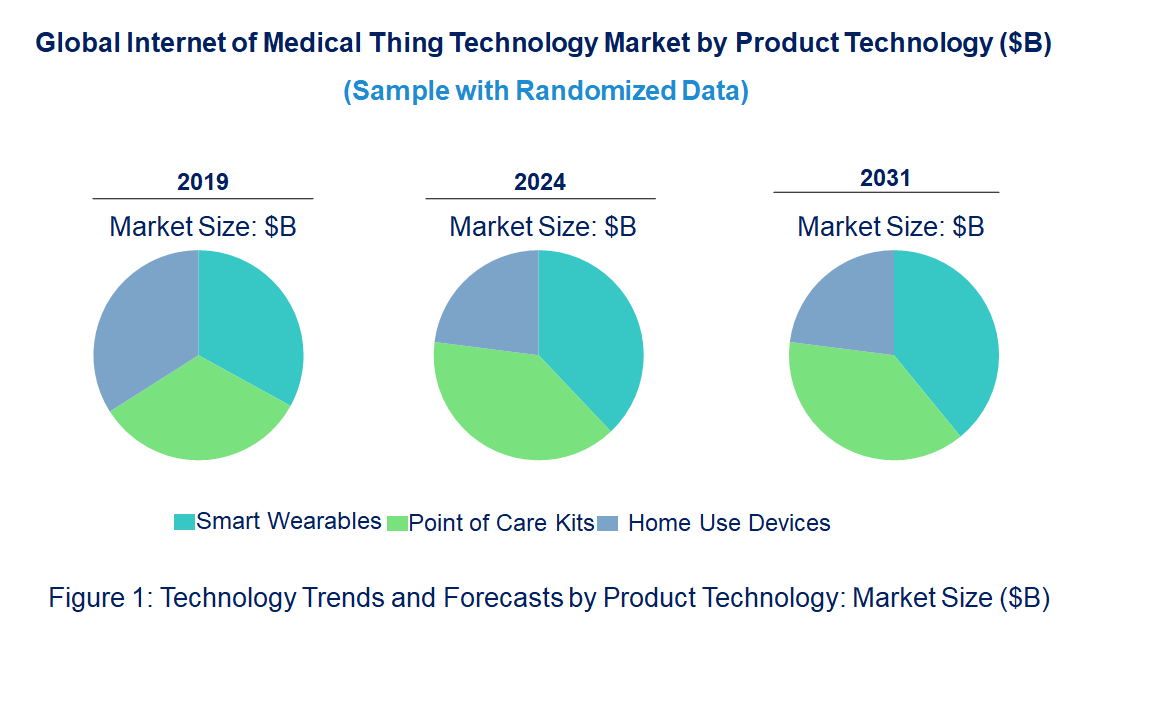
![Internet of Medical Thing Market Trend and Forecast by End Use Industry [Value from 2019 to 2031]:](https://lucintel.com/images/Internet-of-Medical-Thing-Technology-Market-Segment.png "Internet of Medical Thing Market Trend and Forecast by End Use Industry [Value from 2019 to 2031]:")
• Greater Integration with AI and Machine Learning: IoMT integrates AI and ML in devices to improve diagnosis accuracy, predictive healthcare, and personalized treatment. AI algorithms analyze real-time patient data from wearables and remote sensors to predict health events, helping healthcare providers offer tailored solutions and reduce hospital readmissions.
• Evolution in Wearable Health Devices: Wearable medical devices are getting ever more advanced, meaning continuous monitoring of health issues like diabetes, heart disease, and asthma, and other such chronic conditions. The devices track the vitals in themselves-also include heartbeat, blood pressure, and glucose levels-and then send the data directly to healthcare providers so that necessary interventions can be done immediately.
• 5G Adoption for Rapid Speed Data Transfers :The deployment of 5G networks is further revolutionizing the capabilities of IoMT, with faster transmission speeds and greater connectivity to support real-time remote monitoring of patients in remote rural locations, for example, through telemedicine with fewer requirements for face-to-face visits. With the IoMT increasing the connectivity of its devices, this increases the demand for robust cybersecurity. Cybersecurity solutions are now designed to protect sensitive patient data and the systems of the medical devices from hacking and data breaches to maintain patient privacy and regulatory compliance.
• Remote Patient Monitoring and Telemedicine: Increased adoption of IoMT devices is driven by the growing shift toward telemedicine. Remote monitoring can track patients’ conditions and reduce hospital visits, thus allowing for more efficient management, especially of chronic diseases among underserved or rural areas. Emerging trends in the IoMT technology space, as discussed above, are revolutionizing healthcare, improving patient care, efficiency, and reducing cost. Integration of AI, 5G, enhanced wearables, and stronger cybersecurity has paved its way toward a more connected, intelligent, and responsive healthcare ecosystem, creating more personalized and accessible medical care. likecopy
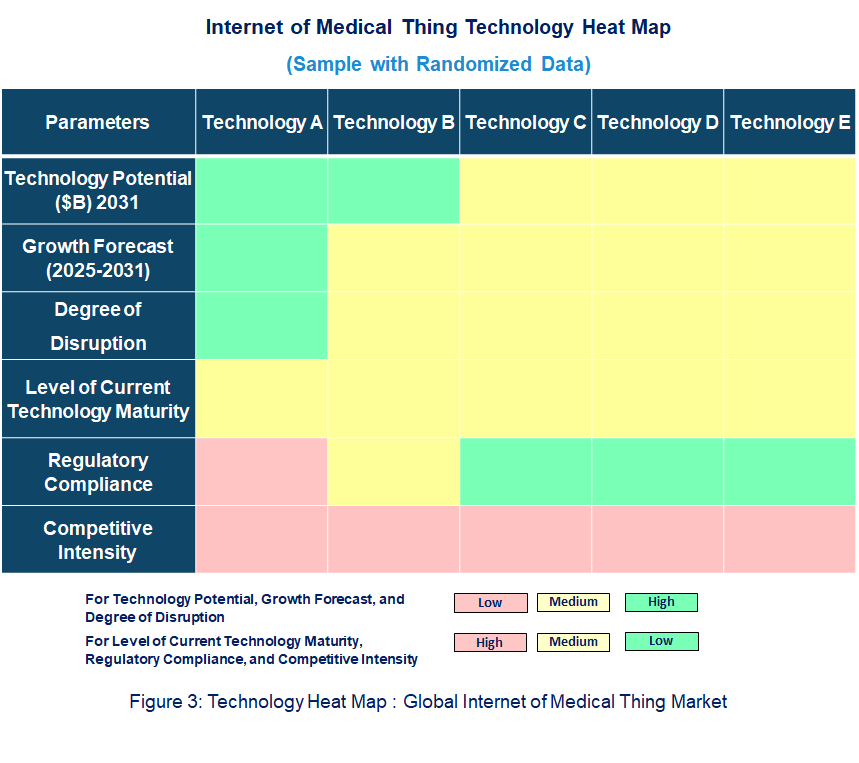
• Potential in Technology: The Technology potential of IoMT is immense, enabling real-time health data tracking, personalized treatments, and improved patient outcomes. It has applications in chronic disease management, elderly care, wearable health devices, and hospital equipment monitoring, enhancing the healthcare system’s efficiency and accessibility.
• Degree of Disruption: Degree of disruption is significant, as IoMT can transform traditional healthcare practices by enabling remote patient monitoring and reducing hospital visits, thus reducing healthcare costs and improving convenience for patients. IoMT can also facilitate predictive healthcare by collecting continuous data, allowing for early detection of diseases and better resource allocation.
• Current Technology Maturity Level: The Current technology maturity, IoMT, is already in widespread use with devices like smart wearables, connected diagnostic tools, and hospital monitoring systems. However, challenges such as device interoperability, data security, and battery life remain. The integration of AI and machine learning into IoMT is enhancing predictive capabilities, but full maturity is still evolving.
• Regulatory Compliance: Regulatory compliance is crucial in IoMT, as these devices often handle sensitive health data. Compliance with standards like HIPAA (Health Insurance Portability and Accountability Act), FDA regulations, and CE marking for medical devices is required to ensure data privacy, safety, and effectiveness in medical applications.
• GE Healthcare: GE Healthcare has introduced several IoMT solutions, particularly focused on AI-powered diagnostic imaging systems that improve early detection and treatment planning. Their devices integrate real-time data collection, providing clinicians with accurate, actionable insights for more personalized patient care and better outcomes.
• Koninklijke Philips: Philips has added connected health solutions that combine wearables, patient monitoring systems, and cloud-based platforms to deliver real-time health data. The innovations at Philips are based on improving chronic disease management, preventing hospital readmission, and the ability to remotely monitor patients, especially for patients with cardiovascular or respiratory conditions.
• Medtronic MiniMed: Medtronic’s MiniMed insulin pumps, linked to CGM systems, enable real-time glucose level data to be made available for patients to better control their diabetes. By auto-dispensing insulin in response to CGM-based data, IoMT technology further improves diabetes care.
• LifeFuels: This company has developed a smart bottle that monitors the hydration level of a person and integrates personalized nutrient recommendations. It connects through mobile applications and interfaces with other health monitoring platforms to let people manage their lives more effectively in terms of hydration and nutrition towards healthy lifestyles.
• Meru Health: Meru Health came up with an IoMT-based solution for mental health. Evidence-based mental health program is provided by combining digital therapy with wearable devices, such as the tracking of physiological responses. It enables remote monitoring of mental health conditions, including anxiety and depression.
• Breathometer: Breathometer’s smart devices offer the ability to detect biomarkers through breath analysis, linking to conditions like sleep apnea, stress, and metabolic health. Connects to mobile apps for real-time information on health conditions and improves respiratory health management.
• Carre Technologies: Carre Technologies has designed a wearable device to monitor patients with chronic respiratory conditions like asthma and COPD. Their technology can integrate sensors with AI, providing real-time data to help improve the management of conditions beyond exacerbation by alerting patients and healthcare providers to when intervention is necessary. Leading industry players’ advancements in IoMT technologies reflect the focus on changing healthcare solutions to be more connected, data-driven, and personalized. Through the integration of sensors, wearables, AI, and cloud, it is transforming the mode of delivering health care, proactively offering it, monitoring patients remotely, and further ensuring better patient outcomes.
• Growing Demand for Remote Monitoring The increasing prevalence of chronic diseases and the demand for at-home care have significantly driven the adoption of remote monitoring devices. These solutions allow healthcare providers to track patients in real-time, improving outcomes while reducing hospital visits and healthcare costs.
• Advancements in Sensor Technology Sensor technology has constantly evolved and improved, thereby raising accuracy and efficiency in IoMT devices. This has helped in developing smaller, more affordable, and reliable devices, further paving the way for increased adoption of IoMT solutions in both hospitals and homecare settings.
• AI and ML Integration AI and machine learning technologies transform IoMT devices in a radical way with predictive analytics, improved diagnosis, and tailored treatment plans. Healthcare professionals now have AI-driven insights that ultimately aid in better decision-making and outcomes, reducing the risk of error.
• Enhanced Connectivity with 5G Networks 5G technology promises to improve connectivity of IoMT devices and allow real-time data transmission much faster and more reliably than ever before. This promises to enhance the capabilities of remote patient monitoring systems and support more complex applications, including telemedicine and telehealth services. Challenges
• Regulatory and Compliance Challenges Regulatory. The landscape of regulations is one of the challenges that marketIoMT faces. All devices must pass safety, security, and privacy requirements, such as HIPAA in the United States and GDPR in Europe, for instance. Compliance with such regulatory requirements ensures patient safety and protects sensitive health-related information. For instance, IoMT is fundamentally altering the health sector by improving patient care, enabler cost saving, and improved real-time decision-making: There remain challenges like integration and regulatory compliances; however, rapid technological change in sensors, AI, and 5G connectivity for IoMT solutions will accelerate their adoption to make healthcare more efficient and accessible.
• GE Healthcare
• Koninklijke Philips
• Medtronic Minimed
• Lifefuels
• Meru Health
• Breathometer
• Technology Readiness by Technology Type: Smart wearables are highly advanced, with widespread adoption in fitness tracking and health monitoring, including heart rate, sleep patterns, and activity levels. Point-of-care kits are increasingly reliable, enabling rapid testing for conditions like diabetes, infections, and cholesterol at home or in non-clinical settings. Home-use devices are also maturing, particularly for managing chronic conditions like asthma, diabetes, and hypertension. Each of these technologies offers patient empowerment, improved health outcomes, and cost reductions through remote monitoring and early diagnosis, playing a crucial role in the future of healthcare delivery.
• Competitive Intensity and Regulatory Compliance: The competition in the internet of medical thing market for smart wearables, point-of-care kits, and home-use devices is intense, with multiple players striving to offer innovative, user-friendly, and affordable solutions. Regulatory compliance is crucial as these devices must meet safety standards, such as FDA approval for point-of-care kits and wearables, and privacy regulations like HIPAA for data protection. Companies face pressure to innovate rapidly while adhering to strict regulations, which can delay product launches but ensure patient safety and product reliability. Companies with effective regulatory navigation and strong technological differentiation will gain competitive advantages in this market.
• Disruption Potential by Technology Type: Smart wearables, point of care kits, and home-use devices have the potential to revolutionize healthcare by enabling real-time health monitoring and diagnosis outside of traditional medical settings. Smart wearables offer continuous tracking of vital signs, while point-of-care kits enable on-site diagnostic testing. Home-use devices allow patients to manage chronic conditions at home, reducing hospital visits and healthcare costs. These technologies empower patients with more control over their health, provide real-time data for healthcare professionals, and help prevent medical emergencies. The integration of AI and connectivity further enhances their value, driving disruption in the healthcare sector by improving accessibility, convenience, and personalized care.
• Smart Wearables
• Point of Care Kits
• Home Use Devices
• Hospitals & Clinics
• Home Care
• Research Institutes
• North America
• Europe
• Asia Pacific
• The Rest of the World
• Latest Developments and Innovations in the Internet of Medical Thing Technologies
• Companies / Ecosystems
• Strategic Opportunities by Technology Type


Choose a license that fits your team. Instant PDF delivery.
Prices exclude taxes. Instant delivery. Custom licensing available on request.
Market Report · May 18, 2026
Market Report · May 18, 2026
Market Report · May 18, 2026
Trusted partner for strategic intelligence and business growth


Receive a complimentary market analysis tailored to your industry. Our analysts will identify key growth opportunities and competitive dynamics specific to your business.

Market size, growth rate, and key trend analysis for your specific sector.

Top competitor positioning and market share analysis.

Strategic recommendations backed by data-driven insights.
Get curated market intelligence and competitive moves straight to your inbox.
By subscribing, you agree to receive our monthly insights. Unsubscribe anytime.
Receive a complimentary market analysis tailored to your industry. Our analysts will identify key growth opportunities and competitive dynamics specific to your business.
Market size, growth rate, and key trend analysis for your specific sector.
Top competitor positioning and market share analysis.
Strategic recommendations backed by data-driven insights.
Get curated market intelligence, emerging trends, and competitive moves straight to your inbox each month.
By subscribing, you agree to receive our monthly insights. Unsubscribe anytime.
We'll send your sample report shortly.