
Market Report · July 29, 2026

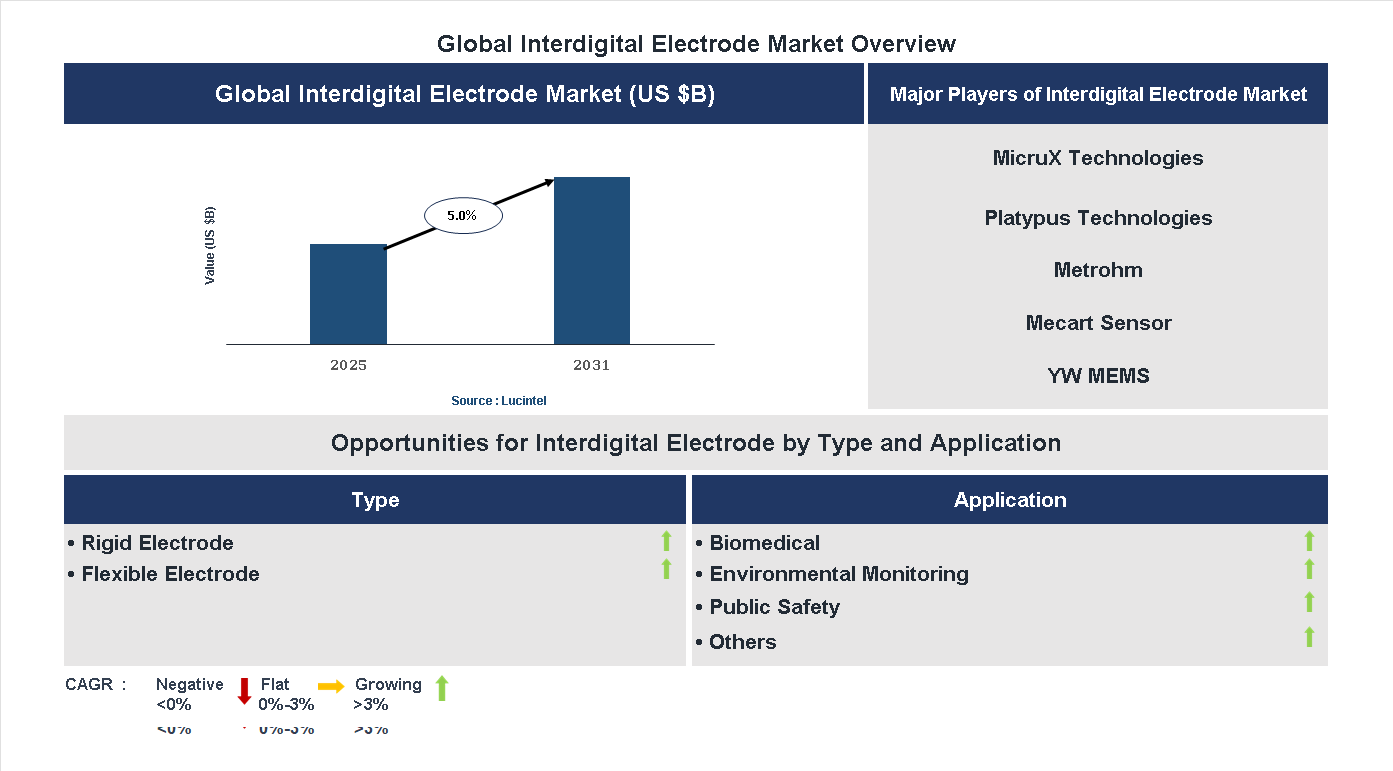
Key data points: The growth forecast = 5% annually for the next 7 years. Scroll below to get more insights. This market report covers trends, opportunities and forecasts in interdigital electrode market to 2031 by type (rigid electrode and flexible electrode), application (biomedical, environmental monitoring, public safety, and others), and region (North America, Europe, Asia Pacific, and the Rest of the World)
We'll send your sample report shortly.
• Lucintel forecasts that, within the type category, flexible electrode is expected to witness higher growth over the forecast period.
• Within the application category, biomedical is expected to witness the highest growth.
• In terms of region, APAC is expected to witness the highest growth over the forecast period. Gain valuable insights for your business decisions with our comprehensive 150+ page report. Sample figures with some insights are shown below.
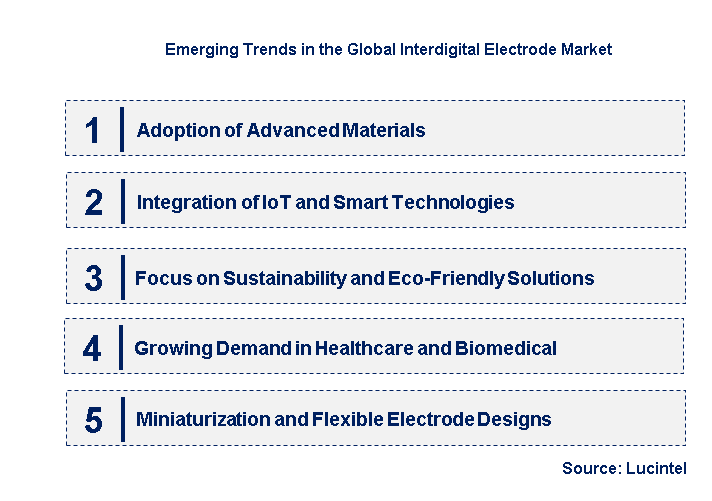
• Adoption of Advanced Materials: The market is witnessing a shift towards using novel materials such as nanomaterials, graphene, and conductive polymers. These materials improve electrode conductivity, flexibility, and durability, leading to enhanced device performance. This trend enables the development of more efficient sensors, energy storage devices, and biomedical applications. The integration of advanced materials also supports miniaturization and lightweight designs, which are critical for portable and wearable technologies. As research progresses, the availability of cost-effective, high-performance materials will further accelerate market growth and innovation.
• Integration of IoT and Smart Technologies: Interdigital electrodes are increasingly being embedded with IoT capabilities for real-time monitoring and data collection. This integration allows for smarter, more responsive devices in healthcare diagnostics, environmental sensing, and industrial automation. The ability to remotely monitor and control electrode-based systems enhances efficiency, reduces maintenance costs, and improves user experience. As IoT adoption expands, the demand for intelligent electrodes with embedded sensors and connectivity features will surge, driving market expansion and creating new application opportunities.
• Focus on Sustainability and Eco-friendly Solutions: Environmental concerns are prompting manufacturers to develop sustainable electrode materials and manufacturing processes. This includes using recyclable, biodegradable, or less toxic materials to reduce environmental impact. The push for eco-friendly solutions aligns with global regulations and consumer preferences for green products. Sustainable electrodes not only help companies meet compliance standards but also appeal to environmentally conscious consumers, thereby expanding market reach. This trend encourages innovation in material science and manufacturing techniques, fostering a more sustainable market landscape.
• Growing Demand in Healthcare and Biomedical Applications: The healthcare sector is a significant driver for interdigital electrodes, especially in biosensors, wearable health monitors, and diagnostic devices. Advances in electrode sensitivity and biocompatibility are enabling more accurate and non-invasive health monitoring solutions. The increasing prevalence of chronic diseases and the aging population further boost demand. This trend is fostering collaborations between technology firms and healthcare providers, leading to innovative products that improve patient outcomes. As biomedical applications expand, the market is poised for substantial growth, driven by technological breakthroughs and rising healthcare needs.
• Miniaturization and Flexible Electrode Designs: The trend towards smaller, flexible interdigital electrodes is transforming device design, enabling integration into compact and wearable formats. Flexible electrodes are essential for applications like skin-mounted sensors, implantable devices, and flexible electronics. Advances in fabrication techniques such as printing and microfabrication are making these designs more feasible and cost-effective. This miniaturization enhances user comfort and device versatility, opening new markets in consumer electronics, sports, and medical diagnostics. The ability to produce highly adaptable, lightweight electrodes is reshaping product development and expanding application horizons. In summary, these emerging trends are collectively reshaping the interdigital electrode market by fostering innovation, enhancing performance, and expanding application scope. The focus on advanced materials, smart integration, sustainability, healthcare applications, and miniaturization is driving growth and competitiveness. As these trends continue to evolve, they will unlock new opportunities, improve existing solutions, and position the market for sustained future expansion.
• Technological Advancements: New fabrication techniques and materials have improved electrode performance, leading to higher sensitivity and stability. This enhances device reliability and broadens application scope, attracting more investments and research interest.
• Growing Healthcare Applications: Interdigital electrodes are increasingly used in biosensors and medical diagnostics, enabling non-invasive, real-time health monitoring. This trend boosts market demand and encourages innovation in personalized healthcare solutions.
• Expansion in Environmental Monitoring: The deployment of interdigital electrodes in sensors for detecting pollutants and hazardous substances has increased. This development supports stricter environmental regulations and promotes sustainable practices.
• Miniaturization and Flexibility: Advances in flexible electronics have led to the development of bendable, lightweight interdigital electrodes. These are crucial for wearable devices and portable sensors, expanding market reach and consumer adoption.
• Market Consolidation and Strategic Collaborations: Major players are forming alliances and investing in R&D to develop advanced electrode technologies. This consolidation accelerates innovation, reduces costs, and enhances competitive positioning in the market. In summary, these developments are significantly impacting the interdigital electrode market by driving innovation, expanding application areas, and increasing market competitiveness. The focus on advanced materials, healthcare, environmental sensing, and flexible electronics is fostering growth and positioning the market for sustained future expansion.
• Expansion in Energy Storage Solutions: Growing adoption of interdigital electrodes in batteries and supercapacitors enhances energy density and charge/discharge efficiency, driving demand in renewable energy and portable electronics sectors. This expansion supports the development of more sustainable and high-performance energy storage systems, boosting market growth.
• Advancements in Sensor Technologies: The integration of interdigital electrodes in sensors improves sensitivity and accuracy for applications in healthcare, environmental monitoring, and industrial automation. These innovations enable more precise data collection, fostering new product development and expanding application scopes.
• Development of Flexible and Wearable Devices: The demand for flexible, lightweight, and wearable electronics is fueling research into adaptable interdigital electrode designs. This trend opens new markets in healthcare monitoring, fitness devices, and consumer electronics, broadening application horizons.
• Adoption in Water and Wastewater Treatment: Interdigital electrodes are increasingly used in electrochemical processes for water purification, offering efficient contaminant removal and energy savings. This application supports environmental sustainability initiatives and regulatory compliance, expanding market opportunities.
• Material Innovation and Cost Reduction: The development of novel, cost-effective electrode materials enhances performance and affordability. These innovations reduce manufacturing costs and improve product lifespan, making interdigital electrodes more accessible across various industries. In summary, these growth opportunities are significantly impacting the interdigital electrode market by fostering innovation, expanding application areas, and promoting sustainable solutions. As industries adopt advanced electrode technologies, market growth accelerates, creating new avenues for investment and development. This evolving landscape offers substantial potential for stakeholders to capitalize on emerging trends and achieve competitive advantages.
• Technological Innovation: The continuous development of advanced materials and fabrication techniques enhances electrode performance, sensitivity, and durability. Innovations such as flexible and miniaturized electrodes expand application possibilities in wearable health devices, IoT sensors, and industrial monitoring. These technological advancements reduce costs and improve efficiency, making interdigital electrodes more attractive across sectors. As research progresses, new functionalities like multi-parameter sensing are emerging, further fueling market growth and opening new avenues for commercialization.
• Growing Healthcare and Medical Applications: Increasing demand for non-invasive diagnostic tools and wearable health monitoring devices significantly propels the market. Interdigital electrodes are integral to biosensors, ECGs, and bioimpedance analysis, providing accurate and real-time data. Rising healthcare expenditure and technological adoption in emerging economies contribute to expanding applications. The aging population worldwide also necessitates advanced diagnostic solutions, boosting demand for interdigital electrodes in medical devices, thus driving market expansion and innovation.
• Industrial Automation and IoT Integration: The surge in industrial automation and IoT deployment necessitates reliable, high-performance sensors. Interdigital electrodes are crucial in sensing applications such as humidity, gas detection, and structural health monitoring. Their ability to provide precise measurements in compact formats makes them ideal for integration into smart systems. As industries seek to optimize processes and ensure safety, the demand for interdigital electrodes increases, fostering growth in manufacturing and sensor integration sectors.
• Environmental Monitoring and Sustainability Initiatives: Growing environmental concerns and regulatory pressures promote the adoption of interdigital electrodes in pollution detection, water quality analysis, and climate monitoring. These sensors enable real-time, accurate data collection, essential for regulatory compliance and environmental management. The push towards sustainable practices and smart city initiatives further accelerates demand, encouraging innovation in electrode design to withstand harsh conditions and improve sensitivity, thereby expanding market opportunities.
• Increasing Investment and R&D Activities: Significant investments from private and public sectors in research and development drive technological breakthroughs. Funding supports the development of novel electrode materials, fabrication processes, and application-specific solutions. Collaborations between academia and industry foster innovation, leading to improved performance and cost-effectiveness. This continuous R&D activity ensures the market remains dynamic, competitive, and capable of addressing emerging needs across various sectors. The challenges facing this interdigital electrode market include:
• High Manufacturing Costs: Producing interdigital electrodes involves sophisticated fabrication techniques, high-quality materials, and precision engineering, which contribute to elevated costs. These expenses can limit widespread adoption, especially in cost-sensitive applications or emerging markets. Additionally, scaling production while maintaining quality standards remains a challenge, potentially hindering market growth and profitability for manufacturers.
• Stringent Regulatory and Standards Compliance: The market faces complex regulatory frameworks related to safety, environmental impact, and medical device approval. Navigating these regulations requires significant time and financial investment, delaying product launches and increasing costs. Non-compliance risks, including legal penalties and market restrictions, pose substantial barriers, especially in healthcare and environmental monitoring sectors.
• Technological Complexity and Integration Challenges: Developing interdigital electrodes that perform reliably across diverse environments and applications involves overcoming material stability, signal interference, and miniaturization issues. Integrating these sensors into existing systems requires compatibility and calibration, which can be technically challenging. These complexities may slow innovation, increase development costs, and limit the deployment of advanced interdigital electrode solutions. In summary, the interdigital electrode market is driven by rapid technological advancements, expanding healthcare and industrial applications, and increasing environmental monitoring needs. However, high manufacturing costs, regulatory hurdles, and technological complexities present significant challenges. These factors collectively influence the market’s growth potential, requiring stakeholders to innovate continuously and navigate regulatory landscapes carefully. Overall, the market’s future depends on balancing innovation with cost-efficiency and compliance, ensuring sustainable growth and broader adoption across sectors.
• MicruX Technologies
• Platypus Technologies
• Metrohm
• Mecart Sensor
• YW MEMS
• Rigid Electrode
• Flexible Electrode
• Biomedical
• Environmental Monitoring
• Public Safety
• Others
• North America
• Europe
• Asia Pacific
• The Rest of the World
• United States: The US leads in technological innovation, with major companies investing heavily in R&D for high-performance interdigital electrodes. The focus is on developing flexible, miniaturized sensors for healthcare and wearable tech, alongside advancements in industrial automation. Government initiatives support research collaborations, fostering the rapid commercialization of new electrode technologies.
• China: China is rapidly expanding its manufacturing capabilities and investing in domestic R&D to reduce reliance on imports. The country emphasizes cost-effective production of interdigital electrodes for consumer electronics, IoT devices, and environmental sensors. Strategic partnerships between industry and academia are driving innovation and market penetration.
• Germany: Known for its engineering excellence, Germany focuses on high-precision interdigital electrodes for industrial applications, including automation and automotive sensors. The country emphasizes quality and durability, integrating electrodes into smart manufacturing systems. Investments in sustainable and energy-efficient solutions are also prominent.
• India: India is witnessing growing demand for interdigital electrodes in healthcare diagnostics, environmental monitoring, and consumer electronics. The market is driven by increasing adoption of IoT and smart devices, supported by government initiatives promoting innovation and manufacturing. Local startups are emerging with novel electrode designs.
• Japan: Japan emphasizes advanced research in interdigital electrodes for robotics, healthcare, and industrial automation. The country invests in miniaturization and enhanced sensitivity of electrodes, integrating them into sophisticated systems. Collaboration between academia and industry accelerates the development of cutting-edge applications.


• MicruX Technologies
• Platypus Technologies
• Metrohm
• Mecart Sensor
• YW MEMS Q5. Which interdigital electrode market segment will be the largest in future? Answer: Lucintel forecasts that, within the type category, flexible electrode is expected to witness higher growth over the forecast period. Q6. In interdigital electrode market, which region is expected to be the largest in next 5 years? Answer: In terms of region, APAC is expected to witness the highest growth over the forecast period. Q7. Do we receive customization in this report? Answer: Yes, Lucintel provides 10% customization without any additional cost.


Choose a license that fits your team. Instant PDF delivery.
Prices exclude taxes. Instant delivery. Custom licensing available on request.
Market Report · July 29, 2026
Market Report · July 20, 2026
Market Report · July 20, 2026
Trusted partner for strategic intelligence and business growth


Receive a complimentary market analysis tailored to your industry. Our analysts will identify key growth opportunities and competitive dynamics specific to your business.

Market size, growth rate, and key trend analysis for your specific sector.

Top competitor positioning and market share analysis.

Strategic recommendations backed by data-driven insights.
Get curated market intelligence and competitive moves straight to your inbox.
By subscribing, you agree to receive our monthly insights. Unsubscribe anytime.
Receive a complimentary market analysis tailored to your industry. Our analysts will identify key growth opportunities and competitive dynamics specific to your business.
Market size, growth rate, and key trend analysis for your specific sector.
Top competitor positioning and market share analysis.
Strategic recommendations backed by data-driven insights.
Get curated market intelligence, emerging trends, and competitive moves straight to your inbox each month.
By subscribing, you agree to receive our monthly insights. Unsubscribe anytime.
We'll send your sample report shortly.