
Market Report · July 29, 2026

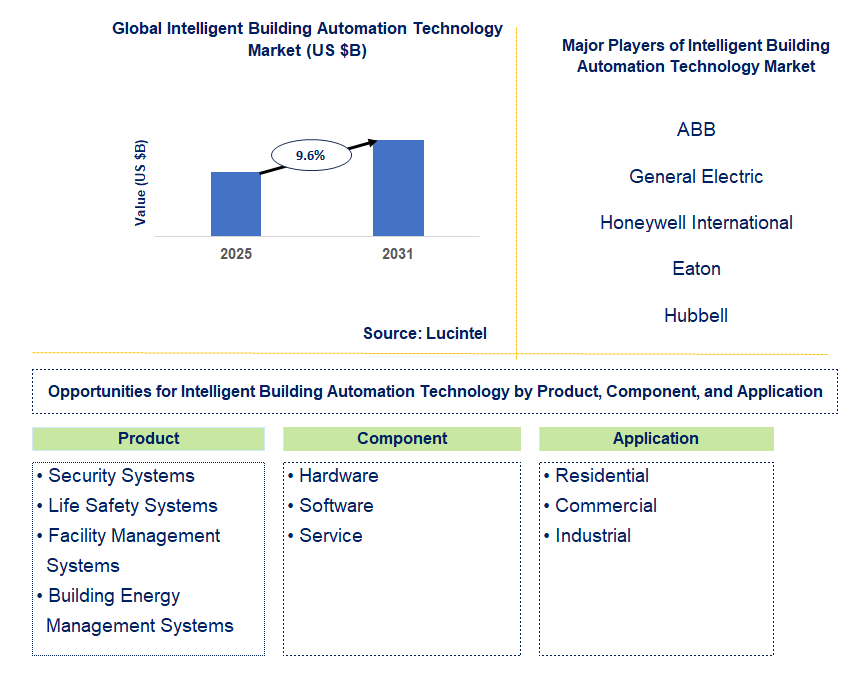
Key data points: The growth forecast = 9.6% annually for the next 7 years. Scroll below to get more insights. This market report covers Trends, opportunities and forecasts in intelligent building automation technology market to 2031 by product (security systems, life safety systems, facility management systems, and building energy management systems), component (hardware, software, and service), application (residential, commercial, and industrial), and region (North America, Europe, Asia Pacific, and the Rest of the World)
We'll send your sample report shortly.
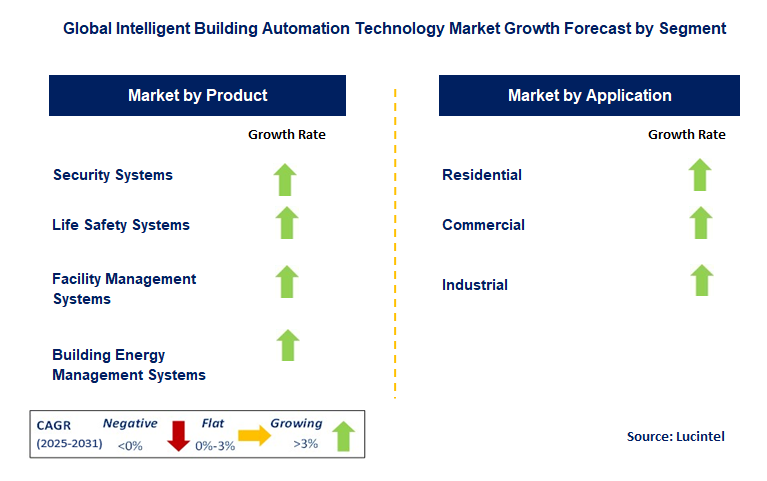
• Lucintel forecasts that, within the Product category, building energy management system is expected to witness the highest growth over the forecast period due to the rising building technical services.
• Within the application category, commercial is expected to witness the highest growth due to the increasing demand for energy efficiency.
• In terms of region, North America is expected to witness the highest growth over the forecast period due to the growing in intelligent building automation technologies.
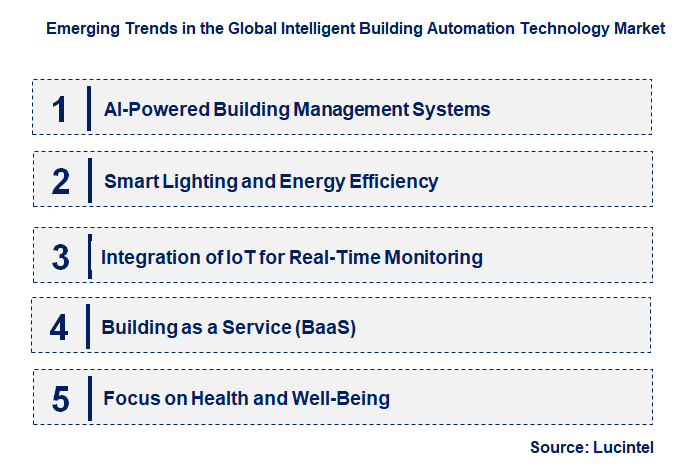
• AI-Powered Building Management Systems: Artificial intelligence is playing a significant role in optimizing building management. AI algorithms are used to predict energy consumption patterns, manage HVAC systems, and adjust lighting based on occupancy. These AI-powered systems improve energy efficiency and reduce operational costs while enhancing the comfort and safety of building occupants. AI technology is also used for predictive maintenance, ensuring that building systems remain in optimal condition and preventing costly repairs.
• Smart Lighting and Energy Efficiency: Smart lighting systems are becoming an integral part of intelligent buildings. These systems use sensors and automation to adjust lighting based on occupancy and natural light levels, reducing energy consumption. The integration of energy-efficient technologies, such as LED lighting and daylight harvesting, is also gaining popularity. As sustainability becomes a central focus, the demand for energy-efficient lighting solutions that reduce carbon footprints is expected to rise, further driving the adoption of intelligent building automation systems.
• Integration of IoT for Real-Time Monitoring: The Internet of Things (IoT) is revolutionizing building automation by providing real-time monitoring and control over various systems. IoT sensors are integrated into HVAC, lighting, and security systems to collect and analyze data on building performance. This data is then used to optimize operations, enhance efficiency, and predict maintenance needs. IoT-based automation enables building managers to make data-driven decisions that improve energy efficiency, reduce operational costs, and enhance occupant experience.
• Building as a Service (BaaS): The concept of Building as a Service (BaaS) is gaining traction, offering buildings the flexibility to be managed remotely with on-demand services. BaaS platforms leverage cloud computing, IoT, and AI to deliver intelligent building management solutions. These platforms allow property managers to remotely monitor and control building systems, provide predictive maintenance, and offer personalized services to occupants. This trend is particularly appealing to businesses that seek flexible and cost-effective building management solutions.
• Focus on Health and Well-Being: As health and well-being become top priorities, intelligent building automation systems are being designed to support healthier environments. Advanced air quality monitoring, smart lighting systems, and temperature control features are being integrated to create a more comfortable and healthier indoor atmosphere. The COVID-19 pandemic has heightened awareness around the importance of clean air and safe environments, further accelerating the demand for intelligent building technologies that improve occupant health and safety. These emerging trends—AI-powered systems, smart lighting, IoT integration, Building as a Service, and a focus on health—are reshaping the intelligent building automation technologies market. The growing demand for energy efficiency, sustainability, and occupant well-being is driving the adoption of these advanced technologies, leading to a more connected, efficient, and healthier built environment.
• AI in Building Management: AI integration in building management systems has resulted in tremendous advancements in energy optimization and operational efficiency. AI algorithms are now used to predict energy demand, control HVAC systems, and optimize lighting and security. AI helps reduce energy consumption, enhance comfort, and lower operating costs by analyzing historical data and real-time conditions. This development is revolutionizing how buildings are managed, making them smarter and more efficient.
• Smart HVAC Systems: Advances in HVAC systems, including the integration of sensors and automation, have impacted energy efficiency and building comfort. Smart HVAC systems regulate temperature based on occupancy and time of day to minimize lost energy. This type of system is growing increasingly advanced, with predictive capabilities that can predict maintenance requirements and trigger necessary repairs well before they happen. With the concern for energy efficiency at the top, these intelligent systems are fast becoming an essential part of smart building automation technology.
• Internet of Things Integration in Building Automation Platforms: Building automation systems were integrated with IoT sensors, making it possible to monitor and control various building functions in real-time, including lighting, HVAC, and security. Such sensors collect huge volumes of data, and data analysis takes place to improve the performance of the building and optimize the consumption of energy. IoT-based platforms are also utilized for predictive maintenance, reducing downtime while increasing the lifespan of a building system. This development is driving demand for intelligent automation technologies for buildings across various sectors.
• Energy Management Systems (EMS): The development of advanced energy management systems is helping buildings optimize their energy usage and reduce costs. These systems use real-time data to monitor energy consumption and identify inefficiencies, allowing building operators to make informed decisions about energy usage. With the growing focus on sustainability, energy management systems are becoming a key component of intelligent building automation, enabling buildings to meet energy efficiency goals while reducing their carbon footprint.
• Smart Security Integration: Integration of smart security systems such as smart surveillance cameras, access control and alarm systems became one of the important developments towards intelligent building automation. AI/ IoT enabled applications help to deliver enhanced security functionalities with real time monitoring and potential threats. Advanced smart security could be further interlinked with light and HVAC solutions in the integrated management of building systems. This development is driving the demand for more secure, automated, and efficient buildings. Recent developments in AI, smart HVAC systems, IoT integration, energy management, and smart security systems are shaping the future of intelligent building automation technologies. These advancements are improving building performance, energy efficiency, and occupant comfort, driving the growth of the market and making buildings smarter and more sustainable.
• Commercial Buildings: Commercial buildings such as offices, retail stores, and warehouses offer a huge growth opportunity for intelligent building automation technologies. As companies focus more on energy efficiency and reducing operational costs, the demand for smart building solutions is on the rise. Automation systems controlling HVAC, lighting, and security are in great demand, allowing building owners and operators to save energy while enhancing occupant comfort.
• Residential Buildings: Another area of significant growth for intelligent building automation is the residential sector. Homeowners are moving towards smart house systems to make houses energy-efficient, secure, and easy to manage. The increasing demand for smart thermostats, lighting control systems, security cameras, etc. will also open huge doors for technological providers for automated solutions that could provide better home management.
• Healthcare Facilities: Intelligent building automation technologies have been implemented into healthcare facilities like hospitals and clinics to improve care, safety, and energy efficiency. The potential of such systems is the optimization of temperature and lighting control, air quality monitoring, and proper sterilization of areas. The growing needs for efficient operation in the health sector create strong growth opportunities for automation technologies in this sector.
• Smart Cities: The development of smart cities presents a major growth opportunity for intelligent building automation technologies. As urban areas continue to grow, cities are adopting smart technologies to optimize energy use, reduce carbon footprints, and improve quality of life for residents. Automation systems for energy management, lighting, transportation, and waste management are integral to the success of smart cities, creating substantial growth opportunities for the market.
• Industrial Sector: The industrial sector is using smart building automation technologies to increase energy efficiency and enhance productivity. Factories and manufacturing units are installing automation systems that measure energy consumption, control lighting, and regulate heating and cooling systems. These will help reduce costs and increase productivity, driving demand for smart building solutions in the industrial sector. The intelligent building automation technologies market is witnessing growth across the key applications such as commercial, residential, healthcare, smart cities, and industrial sectors. This growth is propelled by increasing demands for energy efficiency, cost reduction, and sustainability, making it a promising future for intelligent building automation solutions.
• ABB
• General Electric
• Honeywell International
• Eaton
• Hubbell
• Azbil Corporation
• Ingersoll Rand
• Johnson Controls
• Rockwell Automation
• Seimens
• Security Systems
• Life Safety Systems
• Facility Management Systems
• Building Energy Management Systems
• Hardware
• Software
• Service
• North America
• Europe
• Asia Pacific
• The Rest of the World
• United States: The United States has been a leader in the adoption of intelligent building automation technologies, particularly in commercial buildings. The market is driven by a combination of energy efficiency initiatives and the need for improved building management. Recent developments include the integration of advanced IoT sensors, AI-driven analytics, and automation systems that optimize energy usage, improve indoor air quality, and enhance occupant comfort. Cities like New York and San Francisco are leading the way in adopting smart technologies. Government policies, such as energy efficiency standards and green building certifications, are further fueling growth in this sector.
• China: China has seen significant advancements in intelligent building automation technologies, especially in the construction of smart cities. With a focus on energy-efficient buildings and environmental sustainability, China is investing heavily in smart automation systems. These technologies are being integrated into both new construction projects and the retrofitting of existing buildings. The use of AI, big data analytics, and advanced sensors has become more widespread, allowing for better energy management, improved security, and enhanced user experience. Government initiatives, such as the “Made in China 2025” plan, have also accelerated the adoption of these technologies in urban development projects.
• Germany: Germany is recognized as a pioneer in energy-efficient building technologies, and its intelligent building automation market is highly advanced. The country’s focus on sustainability and renewable energy has driven the adoption of smart building solutions. Recent developments include the integration of smart grids, advanced HVAC systems, and intelligent lighting controls, which help to optimize energy consumption in both residential and commercial properties. Germany’s robust regulatory framework and commitment to green building standards further support the growth of intelligent building automation. Cities like Berlin and Munich are at the forefront of these developments, with many buildings being equipped with cutting-edge automation technologies.
• India: India’s intelligent building automation technologies market is growing rapidly as the country urbanizes and modernizes its infrastructure. In both commercial and residential sectors, there is a rising demand for energy-efficient buildings with integrated automation systems. The adoption of IoT, AI, and smart controls for HVAC, lighting, and security systems is becoming more common. Cities like Mumbai, Bangalore, and Delhi are incorporating intelligent building technologies into new developments. Government policies aimed at reducing energy consumption, such as the National Action Plan on Climate Change (NAPCC), are driving the demand for these solutions in the construction and real estate sectors.
• Japan: Japan has been an early adopter of intelligent building automation technologies, focusing on energy efficiency and disaster resilience. The integration of smart building systems in both residential and commercial properties is growing, with an emphasis on reducing energy consumption and enhancing occupant safety. Technologies such as AI-driven building management systems, smart HVAC controls, and automated lighting are becoming standard. Japan’s commitment to sustainability, coupled with its focus on smart cities, has driven the demand for intelligent building solutions. Additionally, Japan’s aging population is creating a need for automated systems that ensure comfort and safety for elderly residents.


• ABB
• General Electric
• Honeywell International
• Eaton
• Hubbell
• Azbil Corporation
• Ingersoll Rand
• Johnson Controls
• Rockwell Automation
• Seimens Q5. Which intelligent building automation technology market segment will be the largest in future? Answer: Lucintel forecasts that, within the Product category, building energy management system is expected to witness the highest growth over the forecast period due to the rising building technical services. Q6. In intelligent building automation technology market, which region is expected to be the largest in next 5 years? Answer: In terms of region, North America is expected to witness the highest growth over the forecast period due to the growing in intelligent building automation technologies. Q7. Do we receive customization in this report? Answer: Yes, Lucintel provides 10% customization without any additional cost.


Choose a license that fits your team. Instant PDF delivery.
Prices exclude taxes. Instant delivery. Custom licensing available on request.
Market Report · July 29, 2026
Market Report · July 20, 2026
Market Report · July 20, 2026
Trusted partner for strategic intelligence and business growth


Receive a complimentary market analysis tailored to your industry. Our analysts will identify key growth opportunities and competitive dynamics specific to your business.

Market size, growth rate, and key trend analysis for your specific sector.

Top competitor positioning and market share analysis.

Strategic recommendations backed by data-driven insights.
Get curated market intelligence and competitive moves straight to your inbox.
By subscribing, you agree to receive our monthly insights. Unsubscribe anytime.
Receive a complimentary market analysis tailored to your industry. Our analysts will identify key growth opportunities and competitive dynamics specific to your business.
Market size, growth rate, and key trend analysis for your specific sector.
Top competitor positioning and market share analysis.
Strategic recommendations backed by data-driven insights.
Get curated market intelligence, emerging trends, and competitive moves straight to your inbox each month.
By subscribing, you agree to receive our monthly insights. Unsubscribe anytime.
We'll send your sample report shortly.