
Market Report · July 29, 2026

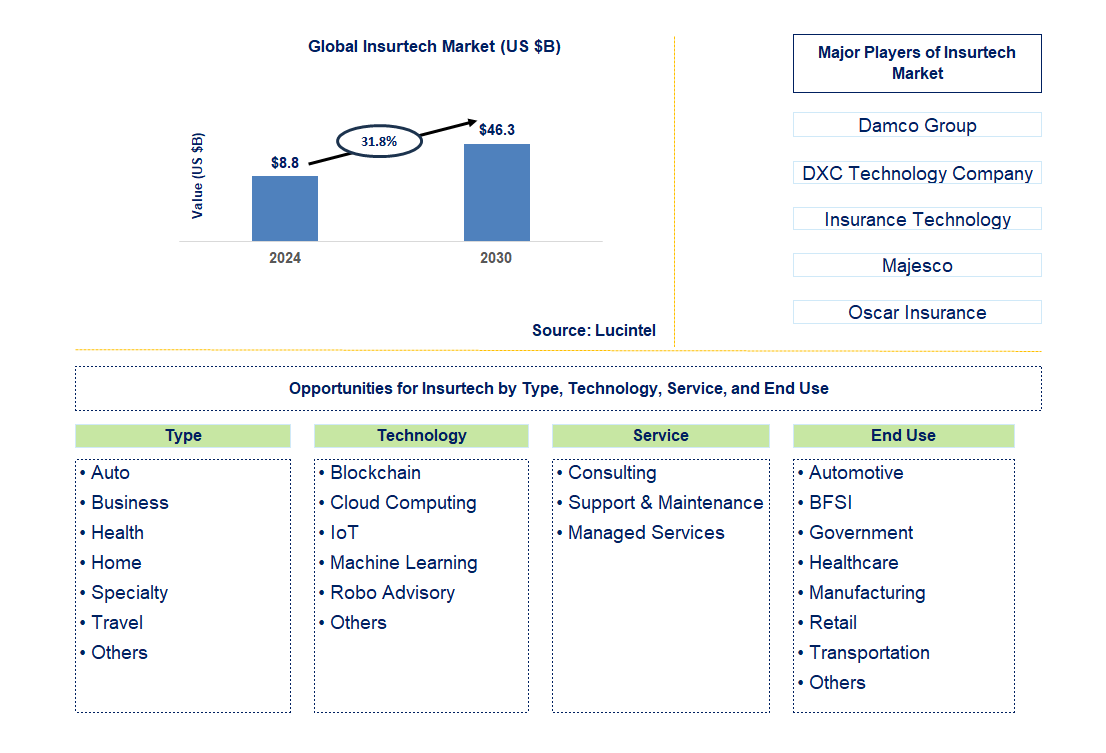
Key data points: The market size in 2030 = $46.3 billion, growth forecast = 31.8% annually for the next 6 years. Scroll below to get more insights. This market report covers trends, opportunities, and forecasts in the global insurtech market to 2030 by type (auto, business, health, home, specialty, travel, and others), technology (blockchain, cloud computing, IoT, machine learning, robo advisory, and others), service (consulting, support & maintenance, and managed services), end use (automotive, BFSI, government, healthcare, manufacturing, retail, transportation, and others), and region (North America, Europe, Asia Pacific, and the Rest of the World)
We'll send your sample report shortly.
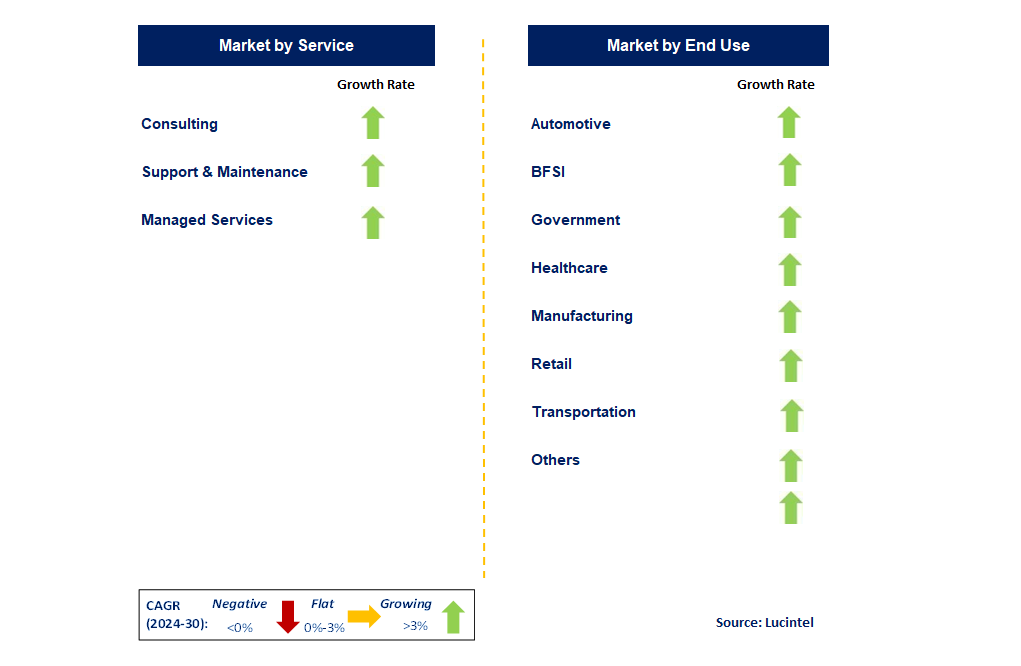
• Lucintel forecasts that, within the service category, managed services will remain the largest segment over the forecast period because the providers offer insurers a structured pathway for transformation by integrating expertise and talent with emerging technologies, as well as, provide insurers with optimal procedures, methodologies, and compliance guidance.
• In terms of regions, North America will remain the largest region over the forecast period due to rising trend in customer expenditure on insurance-related products, as well as, these solutions provide adaptable and versatile property and health insurance plans. Gain valuable insight for your business decisions with our comprehensive 150+ page report
• Integration of Artificial Intelligence and Machine Learning: AI and machine learning are increasingly being integrated into the insurance industry to enhance various processes such as underwriting, claims processing, and customer service. These technologies allow for more accurate risk assessment, predictive analytics, and automation of routine tasks. AI algorithms can analyze large volumes of data to identify patterns and make more informed decisions, leading to improved efficiency and personalized customer experiences. Machine learning models also enable insurers to detect fraud more effectively and optimize pricing strategies. The adoption of AI is transforming the insurance landscape by enhancing operational efficiency and decision-making capabilities.
• Rise of Digital Platforms and Ecosystems: Digital platforms and ecosystems are becoming central to the insurtech market, providing consumers with seamless access to a range of insurance services. These platforms offer functionalities such as policy management, claims filing, and customer support through integrated digital interfaces. By leveraging cloud technology and digital tools, insurers can streamline operations and deliver a more user-friendly experience. The rise of these platforms is also facilitating partnerships between insurers and third-party providers, creating comprehensive ecosystems that enhance customer engagement and expand service offerings. Digital ecosystems are reshaping how insurance products are distributed and managed.
• Expansion of Usage-Based Insurance Models: Usage-based insurance (UBI) models are gaining traction as they offer personalized pricing based on individual behavior and usage patterns. This approach utilizes telematics and IoT devices to collect data on driving habits, vehicle performance, and other relevant metrics. UBI models provide more accurate pricing and encourage safer behavior by linking premiums to actual usage. This trend is particularly prominent in auto insurance but is expanding to other areas such as health and property insurance. The flexibility and personalization of UBI models appeal to consumers seeking tailored insurance solutions and contribute to more equitable risk assessment.
• Adoption of Blockchain Technology: Blockchain technology is being explored for its potential to enhance transparency, security, and efficiency in the insurance industry. Blockchain can facilitate secure and tamper-proof transactions, streamline claims processing, and improve data sharing among stakeholders. Smart contracts, which are self-executing contracts with the terms directly written into code, can automate claims payments and reduce administrative overhead. The decentralized nature of blockchain technology helps in preventing fraud and ensuring the integrity of data. As insurers seek more secure and efficient methods of operation, blockchain is emerging as a key technology in the insurtech sector.
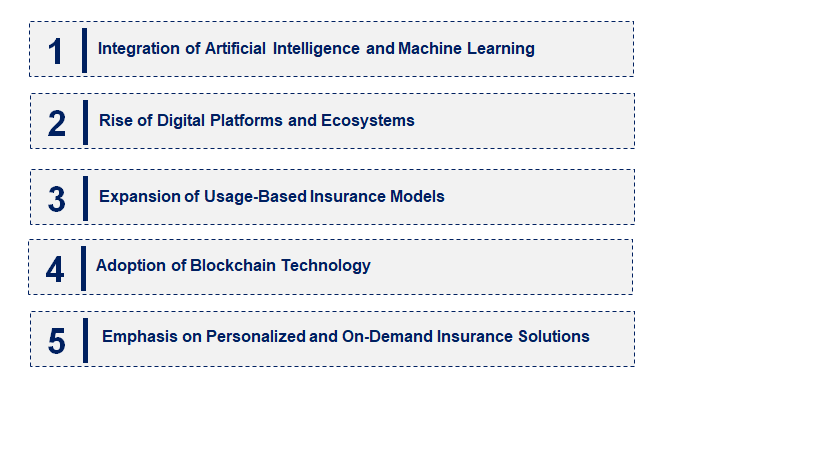
• Emphasis on Personalized and On-Demand Insurance Solutions: There is a growing emphasis on personalized and on-demand insurance solutions that cater to individual needs and preferences. Insurtech companies are leveraging data analytics and customer insights to offer customized coverage options and flexible policies. On-demand insurance allows consumers to activate or modify coverage as needed, providing greater control and convenience. This trend is driven by consumers' desire for more relevant and adaptable insurance products. Insurers are responding by developing innovative solutions that address specific customer requirements and offer tailored coverage options, enhancing overall customer satisfaction and engagement. Emerging trends in the insurtech market are reshaping the industry by leveraging technology to improve efficiency, personalization, and customer experience. The integration of AI and machine learning enhances decision-making and operational efficiency, while digital platforms and ecosystems offer seamless service access. Usage-based insurance models provide personalized pricing based on individual behavior, and blockchain technology promises increased transparency and security. The focus on personalized and on-demand solutions reflects a shift toward catering to specific consumer needs. These trends collectively drive the evolution of the insurance industry, offering new opportunities and challenges for stakeholders.
• Advancements in Artificial Intelligence (AI) and Machine Learning: Recent advancements in AI and machine learning are revolutionizing the insurance industry. Insurtech companies are leveraging these technologies to enhance underwriting accuracy, streamline claims processing, and improve customer service. AI algorithms analyze vast amounts of data to identify risk patterns, predict future claims, and personalize insurance offerings. Machine learning models enable insurers to automate routine tasks, detect fraud, and optimize pricing strategies. These innovations not only increase operational efficiency but also offer more tailored insurance solutions, transforming traditional insurance practices and enhancing overall customer experience.
• Emergence of Digital Platforms and Ecosystems: Digital platforms and ecosystems have become central to the insurtech market, offering consumers seamless access to a wide range of insurance services. These platforms integrate various functionalities, such as policy management, claims filing, and customer support, into a unified digital interface. By leveraging cloud computing and advanced digital tools, insurers can provide a more convenient and efficient service experience. The rise of digital ecosystems also fosters collaboration between traditional insurers and technology startups, leading to innovative insurance products and services that cater to modern consumer needs and preferences.
• Expansion of Usage-Based Insurance (UBI) Models: Usage-based insurance (UBI) models are gaining popularity as they offer personalized pricing based on individual behavior and usage patterns. UBI leverages telematics and IoT devices to collect data on driving habits, vehicle performance, and other metrics. This data-driven approach allows insurers to set premiums that reflect actual risk levels and encourages safer behavior. While traditionally used in auto insurance, UBI models are expanding into other areas, such as health and property insurance, offering consumers more flexible and personalized insurance solutions tailored to their specific needs and behaviors.
• Adoption of Blockchain Technology: Blockchain technology is being increasingly adopted in the insurance industry to enhance transparency, security, and efficiency. Blockchain's decentralized nature enables secure and tamper-proof transactions, reducing the risk of fraud and ensuring the integrity of data. Smart contracts, which automate and enforce contract terms through code, streamline claims processing and reduce administrative costs. Blockchain also facilitates more efficient data sharing among insurers, reinsurers, and other stakeholders. As the technology matures, it promises to improve operational efficiency and build greater trust within the insurance ecosystem.
• Focus on Personalized and On-Demand Insurance Solutions: There is a growing emphasis on personalized and on-demand insurance solutions that cater to individual needs and preferences. Insurtech companies are using data analytics and customer insights to offer highly customized coverage options and flexible policies. On-demand insurance allows consumers to activate or adjust coverage as needed, providing greater control and convenience. This trend reflects a shift towards more responsive and tailored insurance offerings, addressing diverse consumer needs and enhancing overall satisfaction. By aligning products with specific customer requirements, insurers can better meet market demands and foster stronger customer relationships. Recent developments in the insurtech market highlight a transformative shift driven by technological innovation and evolving consumer expectations. Advancements in AI, the rise of digital platforms, the expansion of UBI models, the adoption of blockchain, and a focus on personalized solutions are reshaping the insurance landscape. These changes not only enhance operational efficiency but also offer more tailored and user-friendly insurance products. As the industry continues to evolve, staying abreast of these developments will be crucial for insurers and stakeholders to leverage new opportunities and address emerging challenges effectively.
• Digital Platforms for Seamless Customer Engagement: Digital platforms are revolutionizing customer engagement in the insurance sector by offering a unified interface for policy management, claims processing, and customer support. These platforms enhance user experience by providing real-time access to services and streamlining interactions. As more consumers demand convenience and efficiency, insurtech companies can capitalize on this trend by developing intuitive, user-friendly platforms that integrate various insurance functions. This approach not only improves customer satisfaction but also drives operational efficiency and reduces administrative costs, creating a significant growth opportunity in the insurtech market.
• Usage-Based Insurance (UBI) Models: Usage-based insurance (UBI) models offer a growth opportunity by providing personalized pricing based on individual behavior and usage patterns. By leveraging telematics and IoT devices, insurers can collect data on driving habits, vehicle performance, and other metrics, allowing for more accurate risk assessment and customized premiums. This model appeals to consumers seeking flexibility and fairness in their insurance costs. Expanding UBI beyond auto insurance to sectors such as health and property can further enhance market reach and cater to a broader range of consumer needs, driving growth in the insurtech market.
• AI-Driven Underwriting and Claims Processing: AI-driven underwriting and claims processing present a significant growth opportunity by enhancing accuracy, efficiency, and speed. Machine learning algorithms can analyze large datasets to assess risk, predict claims, and detect fraud with greater precision. Automating these processes reduces manual errors, accelerates decision-making, and lowers operational costs. Insurtech companies that invest in AI technology can offer faster, more reliable services, attracting tech-savvy customers and gaining a competitive edge in the market.
• Blockchain for Enhanced Security and Transparency: The adoption of blockchain technology in insurance offers growth potential by improving security, transparency, and trust. Blockchain enables secure, tamper-proof transactions and facilitates efficient data sharing among insurers, reinsurers, and other stakeholders. By implementing blockchain-based solutions, insurtech companies can streamline claims processing, reduce fraud risk, and enhance customer trust. As the demand for transparency and security in financial transactions grows, blockchain represents a strategic opportunity for insurers to differentiate themselves in the market and build lasting relationships with customers.
• Personalized Insurance Solutions: The demand for personalized insurance solutions is growing as consumers seek coverage that aligns with their specific needs and lifestyles. Insurtech companies can leverage data analytics to understand customer preferences and behaviors, enabling them to offer tailored products and flexible coverage options. On-demand insurance solutions allow consumers to activate or adjust coverage based on real-time needs, enhancing convenience and customer satisfaction. By focusing on personalization, insurers can enhance their value proposition and drive customer loyalty, creating a significant growth opportunity in the insurtech market. The insurtech market presents numerous growth opportunities driven by technological advancements and evolving consumer expectations. By embracing digital platforms, expanding usage-based insurance models, investing in AI-driven processes, adopting blockchain technology, and focusing on personalized solutions, insurers can position themselves for success in a rapidly changing landscape. Leveraging these opportunities will be essential for insurtech companies and traditional insurers to remain competitive and effectively meet the demands of modern consumers.
• Technological Advancements: Rapid advancements in technology, including artificial intelligence (AI), machine learning, and big data analytics, are significant drivers in the insurtech market. These technologies enhance underwriting accuracy, streamline claims processing, and enable personalized insurance offerings. AI-driven tools can analyze vast datasets to identify risks, predict claims, and automate routine tasks, improving efficiency and customer experience. The integration of cutting-edge technologies allows insurtech companies to offer innovative solutions, attract tech-savvy customers, and maintain a competitive edge in the evolving insurance landscape.
• Increasing Consumer Demand for Digital Solutions: There is a growing demand for digital solutions in the insurance industry, driven by changing consumer preferences for convenience and accessibility. Consumers expect seamless, user-friendly interfaces for managing their insurance needs, including policy purchases, claims submissions, and customer support. Insurtech companies that offer intuitive digital platforms and mobile apps meet these expectations and enhance customer engagement. By providing easy access to services and real-time information, these companies improve user satisfaction and drive market growth, aligning with the broader trend towards digital transformation in various sectors.
• Data-Driven Insights and Personalization: The use of data-driven insights is transforming the insurance industry by enabling more accurate risk assessment and personalized insurance solutions. Advanced analytics and data collection tools allow insurtech companies to tailor policies and pricing based on individual behaviors and preferences. For instance, usage-based insurance (UBI) models leverage telematics data to offer customized premiums. Personalization enhances customer satisfaction and retention, as policies and pricing reflect actual risk and usage patterns. This trend towards data-driven decision-making and personalized offerings represents a significant growth opportunity in the insurtech market.
• Growing Insurance Needs and Emerging Markets: The increasing complexity of insurance needs and the expansion into emerging markets drive growth in the insurtech sector. As global economic development and urbanization progress, there is a rising demand for diverse insurance products tailored to various needs. Emerging markets present new opportunities for insurtech companies to offer innovative solutions and expand their customer base. By addressing unmet needs and providing accessible insurance options in these regions, insurtech companies can tap into new market segments and drive growth, contributing to the overall expansion of the industry.
• Regulatory Support for Innovation: Regulatory support for innovation plays a crucial role in fostering growth in the insurtech market. Governments and regulatory bodies are increasingly recognizing the potential of insurtech to improve efficiency and customer experience. Supportive regulations, such as sandbox environments and regulatory frameworks for digital insurance products, encourage innovation and experimentation. By creating a conducive environment for new technologies and business models, regulators help insurtech companies navigate legal challenges and accelerate market entry, contributing to the sector's growth and development. Challenges in the insurtech market are:
• Regulatory Compliance: Navigating complex and evolving regulatory requirements is a significant challenge for insurtech companies. Insurance is a heavily regulated industry, and compliance with diverse regulations across different jurisdictions can be cumbersome and costly. Ensuring adherence to data protection laws, financial regulations, and insurance-specific guidelines requires significant resources and expertise. Regulatory uncertainty and frequent changes in regulations can also impact strategic planning and operational efficiency. Insurtech companies must invest in legal and compliance infrastructure to manage these challenges effectively and mitigate the risk of regulatory penalties.
• Cybersecurity Threats: As insurtech companies increasingly rely on digital platforms and data-driven solutions, cybersecurity threats become a major concern. Protecting sensitive customer data and financial information from cyberattacks is crucial for maintaining trust and compliance. Data breaches and cyber incidents can lead to significant financial losses, legal repercussions, and damage to reputation. Ensuring robust cybersecurity measures, including encryption, secure access controls, and regular security audits, is essential for safeguarding information and mitigating risks associated with digital operations.
• Integration with Legacy Systems: Integrating new insurtech solutions with existing legacy systems poses a significant challenge for many insurers. Legacy systems often have outdated technology and limited interoperability with modern platforms, making integration complex and costly. This challenge can hinder the adoption of innovative insurtech solutions and impede operational efficiency. Insurers must invest in system upgrades or find ways to bridge the gap between old and new technologies. Effective integration strategies are necessary to leverage insurtech advancements while maintaining continuity and functionality in existing operations. The insurtech market is influenced by key drivers such as technological advancements, increasing consumer demand for digital solutions, data-driven personalization, growing insurance needs, and supportive regulatory environments. However, challenges including regulatory compliance, cybersecurity threats, and legacy system integration can impact growth and development. Addressing these drivers and challenges effectively is essential for insurtech companies to innovate, meet customer expectations, and achieve sustained success in a competitive and evolving industry.
• Damco Group
• DXC Technology Company
• Insurance Technology Services
• Majesco
• Oscar Insurance
• Quantemplate
• Wipro
• Auto
• Business
• Health
• Home
• Specialty
• Travel
• Others
• Blockchain
• Cloud Computing
• IoT
• Machine Learning
• Robo Advisory
• Others
• Consulting
• Support & Maintenance
• Managed Services
• Automotive
• BFSI
• Government
• Healthcare
• Manufacturing
• Retail
• Transportation
• Others
• North America
• Europe
• Asia Pacific
• The Rest of the World
• United States: In the United States, the insurtech market has been characterized by rapid innovation and significant investment. Key developments include the widespread adoption of AI and machine learning for underwriting and claims processing, which enhance accuracy and efficiency. Digital platforms are increasingly offering personalized insurance products tailored to individual needs. Additionally, there has been a surge in insurtech startups focusing on niche markets such as cyber insurance and usage-based insurance. The integration of blockchain technology for transparent and secure transactions is also gaining traction. These advancements are reshaping the insurance landscape, promoting competition, and improving customer experiences.
• China: The Chinese insurtech market is growing rapidly, driven by the country's advanced digital ecosystem and increasing consumer demand for online services. Key developments include the integration of AI and big data analytics to refine risk assessment and underwriting processes. The rise of digital insurance platforms, supported by major tech giants like Alibaba and Tencent, is transforming traditional insurance models and expanding reach to underserved populations. Additionally, there is a strong focus on mobile-based insurance solutions and innovative products like micro-insurance. These developments reflect China's commitment to leveraging technology to enhance insurance accessibility and customer engagement.
• Germany: In Germany, the insurtech market is experiencing significant transformation, with a strong emphasis on regulatory compliance and customer-centric solutions. Recent advancements include the adoption of digital tools to streamline processes and improve customer service, such as online policy management and automated claims handling. The use of AI for fraud detection and risk management is becoming more prevalent. Moreover, German insurtechs are focusing on integrating sustainability and ethical considerations into their offerings. Partnerships between traditional insurers and insurtech startups are also on the rise, fostering innovation and enhancing product offerings in the market.
• India: The Indian insurtech market is rapidly evolving, driven by the country's large and diverse population and increasing smartphone penetration. Recent developments include the growth of digital insurance platforms and mobile apps that simplify the purchase and management of insurance policies. AI and big data analytics are being used to improve underwriting accuracy and personalize insurance products. Additionally, there is a notable increase in micro-insurance and innovative products designed to cater to the needs of low-income and underserved segments. These advancements reflect India's focus on expanding insurance coverage and improving accessibility through digital solutions.
• Japan: The Japanese insurtech market is characterized by a cautious but steady adoption of technology in the insurance sector. Recent developments include the integration of AI for improving customer service and claims processing, as well as the use of big data for risk assessment. Digital transformation is also evident in the rise of online insurance platforms and the introduction of new products that cater to evolving consumer needs. Japanese insurers are increasingly exploring partnerships with tech startups to drive innovation. Additionally, there is a growing focus on enhancing customer engagement through digital channels and improving operational efficiency.


• Damco Group
• DXC Technology Company
• Insurance Technology Services
• Majesco
• Oscar Insurance
• Quantemplate
• Wipro Q6. Which insurtech market segment will be the largest in future? Answer: Lucintel forecasts that managed services will remain the largest segment over the forecast period because the providers offer insurers a structured pathway for transformation by integrating expertise and talent with emerging technologies, as well as, provide insurers with optimal procedures, methodologies, and compliance guidance. Q7. In insurtech market, which region is expected to be the largest in next 5 years? Answer: North America will remain the largest region over the forecast period due to rising trend in customer expenditure on insurance-related products, as well as, these solutions provide adaptable and versatile property and health insurance plans. Q.8 Do we receive customization in this report? Answer: Yes, Lucintel provides 10% customization without any additional cost.


Choose a license that fits your team. Instant PDF delivery.
Prices exclude taxes. Instant delivery. Custom licensing available on request.
Market Report · July 29, 2026
Market Report · July 20, 2026
Market Report · July 20, 2026
Trusted partner for strategic intelligence and business growth


Receive a complimentary market analysis tailored to your industry. Our analysts will identify key growth opportunities and competitive dynamics specific to your business.

Market size, growth rate, and key trend analysis for your specific sector.

Top competitor positioning and market share analysis.

Strategic recommendations backed by data-driven insights.
Get curated market intelligence and competitive moves straight to your inbox.
By subscribing, you agree to receive our monthly insights. Unsubscribe anytime.
Receive a complimentary market analysis tailored to your industry. Our analysts will identify key growth opportunities and competitive dynamics specific to your business.
Market size, growth rate, and key trend analysis for your specific sector.
Top competitor positioning and market share analysis.
Strategic recommendations backed by data-driven insights.
Get curated market intelligence, emerging trends, and competitive moves straight to your inbox each month.
By subscribing, you agree to receive our monthly insights. Unsubscribe anytime.
We'll send your sample report shortly.