
Market Report · July 31, 2026

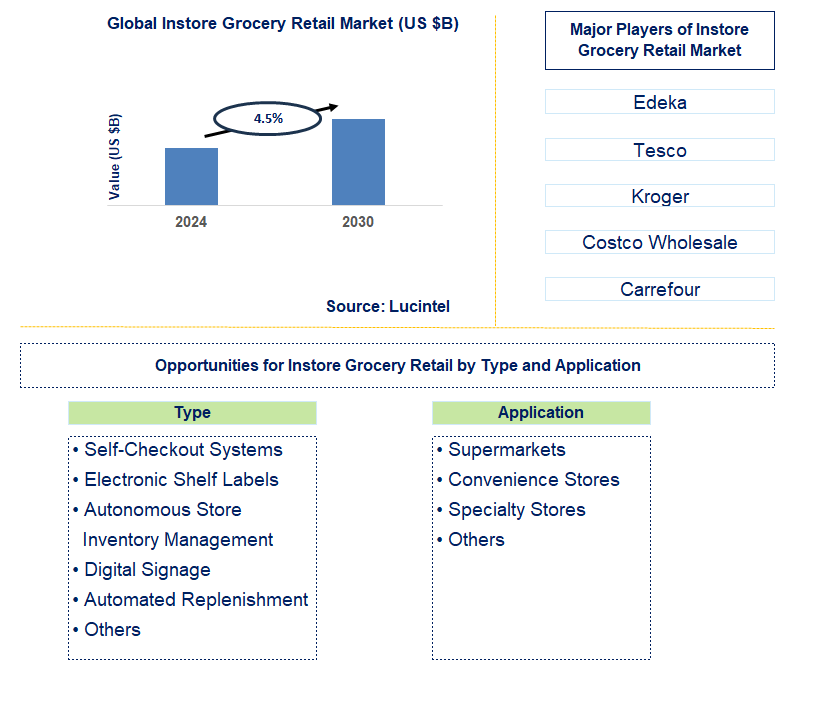
Key data points: The growth forecast = 4.5% annually next 6 years. Scroll below to get more insights. This market report covers trends, opportunities, and forecast in the global instore grocery retail market to 2030 by type (self-checkout systems, electronic shelf labels, autonomous store inventory management, digital signage, automated replenishment, and others), application (supermarkets, convenience stores, specialty stores, and others), and region (North America, Europe, Asia Pacific, and the Rest of the World)
We'll send your sample report shortly.
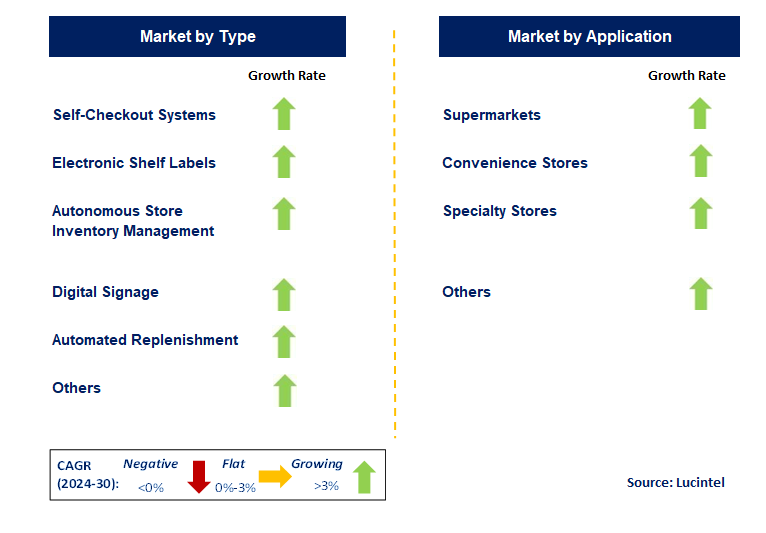
• Lucintel forecasts that self-checkout system is expected to witness the highest growth over the forecast period.
• Through this market, supermarket is expected to witness the highest growth.
• APAC is expected to witness highest growth over the forecast period. A more than 150-page report is developed to help in your business decisions.
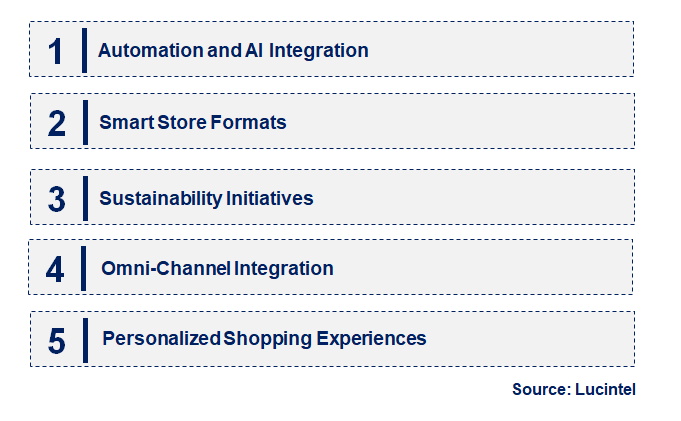
• Automation and AI Integration: There has been an increase in the rate of automation and the insurance of AI in the retail sector. Equipment for self-checkout, systems for automated inventory registration, and for analyzing customer behavior using AI are becoming advanced. These reduce the labor expenditure over the structures, enhance the correctness of the action, and present the customers with a much less complicated shopping experience.
• Smart Store Formats: New technologies like cashier-less checkouts, automated stocking etc. have given rise to the concept of smart stores which is changing the grocery retail business for the better. These stores make use of sensors combined with cameras and AI to offer shoppers convenience satisfaction in terms of time spent waiting and time spent shopping which is usually in very low ratio.
• Sustainability Initiatives: There is increased awareness about sustainability within grocery retail as a response to consumers’ needs and regulations. They carry out such activities like cutting down the uses of plastics, encouraging the use of recyclable packaging materials, and using locally made products. These efforts are aimed at addressing the environmental concerns as well as pleasing the green customer segment.
• Omni-Channel Integration: There is a contagion of convergence between the physical and virtual worlds. Specialists in the grocery business are creating true omnichannel environments in which consumers can order goods online and specify pickup in the store or the goods will be delivered to them. This method allows to satisfy the needs of more technology-oriented customers and offers more options and speed to the consumers.
• Personalized Shopping Experiences: Data and AI based applications are being integrated in the grocery businesses so that shoppers can feel appreciated. Targeted promotions, personalized offers, and loyalty enhanced programs are increasingly becoming the order of the day. These practices improve customers and their retention and satisfaction by providing what the customer wants and how they want it.
• Digital Payment Solutions: There is an increasing acceptance of digital payment solutions such as mobile wallets and contactless payments. Such technologies bring the ease of doing business and the speed of transacting that lowers checkout barriers and recognizes the increasing demand for cashless convenience.
• Health and Wellness Focus: There is an increased focus on health and wellness in the grocery retail industry. More grocery retailers are venturing into the sale of organic, gluten-free, and other health-oriented products. This trend is a reflection of the growing health and nutrition awareness prevailing among the consumers and creates a pull for healthier food. These trends are transforming the Instore Grocery Retail market through technology integration, increased focus on sustainability, and enhancing customer customization. The progress towards smart stores, omnichannel approaches, and advanced modes of payment is encouraging creativity and enhancing the comprehensive experience of the shoppers.
• Adoption of Automation: There are innovations such as self-checkout systems and automatic stock monitoring that are enhancing the grocery store automation process. These techniques enhance operations, improve precision, and allow shoppers to have a more pleasant shopping experience.
• Rise of Smart Stores: Smart stores that employ various technologies, such as cashier-less checkouts and automated stocking, are gradually becoming common in the market. These new approaches solve the problems of the previous money-saving methods and instead optimize the purchasing processes by minimizing the amount of time wasted waiting for service.
• Sustainability Practices: The grocery sector has been incorporating sustainability practices as one of the strategies, for instance, cut down the use of plastic, and encourage the use of packages that can be recycled. Such steps help alleviate the problems we face nowadays regarding the environment, while also coinciding with the consumers’ needs as passive as they may seem.
• Omni-Channel Retailing: Online and offline channels of buying are becoming more integrated. Various grocery marketing channels now include, ordering food and drinks online and picking them up from the delis or getting them delivered, this way the grocery stores are adapting to the modernized way of doing things.
• Personalized Experiences: Retailers are using the power of data analytics and artificial intelligence to enhance their customer’s shopping experience. Personalized marketing and recommendations, as well as loyalty supports, influence customers’ satisfaction positively.
• Digital Payment Adoption: The trend of mobile wallets and contactless payments continues increasing. This technologies provides simplicity and swiftness when paying at the counter which is appeals to people who prefer not to use hard-core cash.
• Health and Wellness Offerings: The health and wellness trend entails growing in the grocery retail sector. There is an increase in supply gap for organic and gluten free and health-conscious products hence retailers have started stocking these products more. In the context of the grocery retail market, these trends are changing the Instore Grocery Retail market in a big way by making the processes efficient, incorporating technologies and concentrating on environment and individualization as well. The market is transitioning towards a more consumer-centric approach and is being influenced by the growing level of technology.
• Franchising of smart store formats: Implementing smart store technologies, for instance, cash less cafes and automatic stocking systems will improve the shopping experience and operational efficiency as well. Such innovations enable shorter queueing and faster inventory service, as well as help to engage tech focused consumers.
• Employment of Mega-Channel Techniques: This proactive integration of these online efficiencies and traditional shop experiences would warrant the growing of skill with otal institutional approach. Providing facilities such as online ordering with physical shop collections and even delivery systems provide much satisfaction to consumers as they are computable.
• Consumerism in Fouremphasis: Highlighting the initiatives such as reducing the use of plastic and engaging in recyclable packaging and more would attract the current market which has a growing portion of environmental lovers and regulatory bodies as well. This emphasized initiative on sustainability improves brand performance and also tackle the ever-increasing environmental issues.
• Investment in Personalized Shopping Experiences: The usage of data analytics and AI provides better means to connect with customers by optimizing chosen promotional offers and even recommending specific products. Such a shopping experience is always preferred by the customers as it makes the entire shopping process seamless and fully optimized to their shopping behaviours.
• Adoption of Advanced Payment Solutions: The use of advanced payment solutions with the help of mobile wallets and contactless payments can facilitate such transactions ensuring great customer satisfaction. These technologies are targeting the growing demand for cashless transactions while minimizing the checkout barriers. These regional growth opportunities indicate the main focus areas for the further expansion and progress in the Instore Grocery Retail business model. Offering solutions in smart store formats, omni-channel strategies, sustainability, personalization as well as advanced payment capabilities will assist retailers in boosting their competitive advantage and propelling the market forward.
• Edeka
• Tesco
• Kroger
• Costco Wholesale
• Carrefour
• Ahold Delhaize
• Aldi
• Self-Checkout Systems
• Electronic Shelf Labels
• Autonomous Store Inventory Management
• Digital Signage
• Automated Replenishment
• Others
• Supermarkets
• Convenience Stores
• Specialty Stores
• Others
• North America
• Europe
• Asia Pacific
• The Rest of the World
• United States: The Self-service checkout systems and beyond, AI adoption is growing as Well as the Consolidation of Inventory Management Solution within the US Market. Some special enhancements are provided to the customers and the operational efficiency is enhanced, many shops are equipped with digital payments and focused on personalized shopping experience.
• China: Along with this, there is an increasing trend for the Off Line shopping sector in China. New trends include Self serviced stores, no cashiers checkouts, new forms of supply chains which is appropriate for the current challenges in retailing in China.
• Germany: Germany is defined by a high degree of social responsibility and a local sourcing orientation as well. Grocery retailers trying to be more green began switching packaging materials from plastic to environmentally friendly and organic substitutes. Moreover, the connection with consumers has been optimized through the implementation of various digital technologies.
• India: Over the past few years it has been observed that the grocery retail of India is growing on the back of more modern retail formats and their digital proliferation. The quantity of supermarkets and hyper-markets is increasing, and there is an emphasis on the efficiency of the supply chain as well as the introduction of the online buying and selling of goods.
• Japan: The grocery retail market in Japan is said to have sophisticated technologies and innovations. Other developments robotic shelf stocking rather than manual and artificial who’s job is just to manage the stock. Focus is more towards increasing the shopping experience and offering convenience by enhancing the shopping procedures with modern technology.


• Edeka
• Tesco
• Kroger
• Costco Wholesale
• Carrefour
• Ahold Delhaize
• Aldi Q5. Which instore grocery retail market segment will be the largest in future? Answer: Lucintel forecasts that self-checkout system is expected to witness the highest growth over the forecast period.
• Edeka
• Tesco
• Kroger
• Costco Wholesale
• Carrefour
• Ahold Delhaize
• Aldi Q6. In instore grocery retail market, which region is expected to be the largest in next 6 years? Answer: APAC is expected to witness highest growth over the forecast period. Q7. Do we receive customization in this report? Answer: Yes, Lucintel provides 10% customization without any additional cost.


Choose a license that fits your team. Instant PDF delivery.
Prices exclude taxes. Instant delivery. Custom licensing available on request.
Market Report · July 31, 2026
Market Report · July 31, 2026
Market Report · July 31, 2026
Trusted partner for strategic intelligence and business growth


Receive a complimentary market analysis tailored to your industry. Our analysts will identify key growth opportunities and competitive dynamics specific to your business.

Market size, growth rate, and key trend analysis for your specific sector.

Top competitor positioning and market share analysis.

Strategic recommendations backed by data-driven insights.
Get curated market intelligence and competitive moves straight to your inbox.
By subscribing, you agree to receive our monthly insights. Unsubscribe anytime.
Receive a complimentary market analysis tailored to your industry. Our analysts will identify key growth opportunities and competitive dynamics specific to your business.
Market size, growth rate, and key trend analysis for your specific sector.
Top competitor positioning and market share analysis.
Strategic recommendations backed by data-driven insights.
Get curated market intelligence, emerging trends, and competitive moves straight to your inbox each month.
By subscribing, you agree to receive our monthly insights. Unsubscribe anytime.
We'll send your sample report shortly.