
Market Report · July 22, 2026

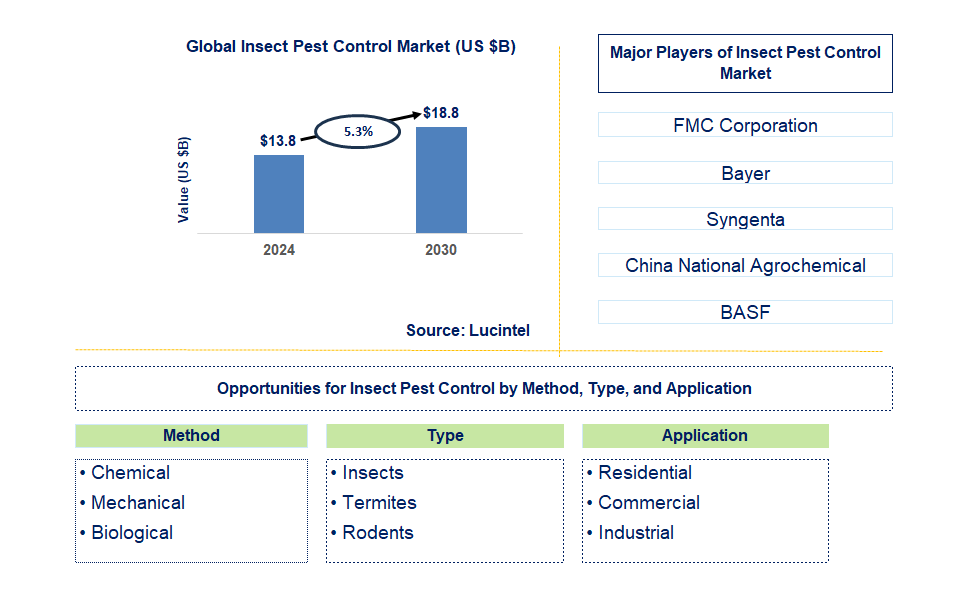
Key data points: The market size in 2030 = $18.8 billion, growth forecast = 5.3% annually for the next 6 years. Scroll below to get more insights. This market report covers trends, opportunities, and forecasts in the global insect pest control market to 2030 by method (chemical, mechanical, and biological), type (insects, termites, and rodents), application (residential, commercial, and industrial), and region (North America, Europe, Asia Pacific, and the Rest of the World)
We'll send your sample report shortly.
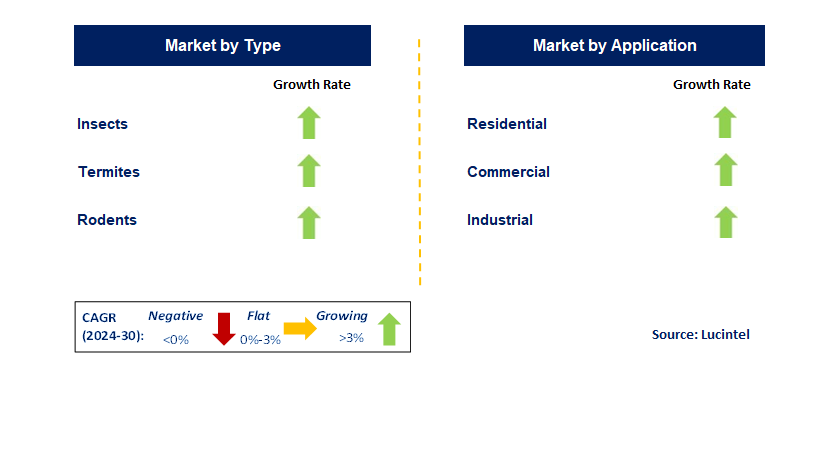
• Lucintel forecasts that, within the type category, insects will remain the largest segment over the forecast period because the insects are harmful to both agriculture and non-agriculture, which is why different products and services are used to control and eradicate insects.
• In terms of region, North America is expected to witness the highest growth over the forecast period due to rising number of residential and commercial spaces, as well as gradual economic development in this region. Gain valuable insights for your business decisions with our comprehensive 150+ page report.
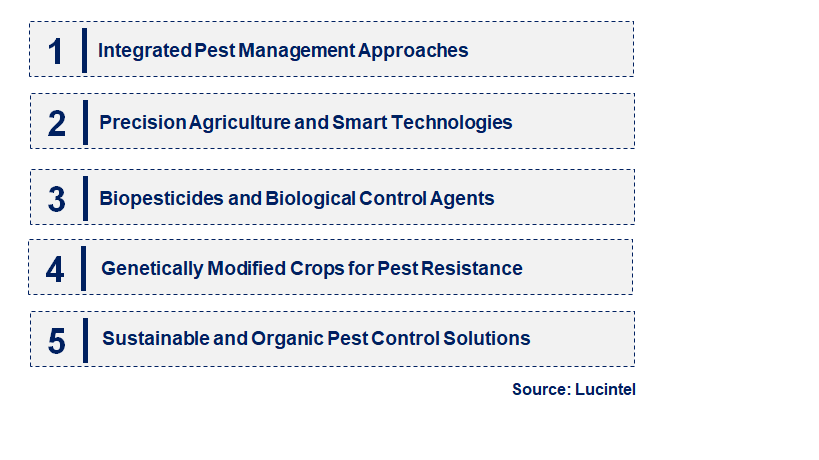
• Integrated Pest Management Approaches: Integrated Pest Management (IPM) involves combining biological, cultural, physical, and chemical methods to manage pests in an environmentally and economically sustainable way. This approach reduces reliance on chemical pesticides and minimizes their impact on beneficial organisms and the environment. By incorporating techniques such as crop rotation, natural predators, and targeted chemical use, IPM helps manage pest populations more effectively while promoting long-term agricultural sustainability.
• Precision Agriculture and Smart Technologies: Precision agriculture technologies, such as drones, sensors, and data analytics, enable real-time monitoring of pest populations and crop conditions. These tools allow for targeted pest control interventions, reducing the overall use of pesticides and improving effectiveness. Smart technologies facilitate more accurate application of treatments, enhance pest detection, and optimize pest management strategies, leading to increased efficiency and reduced environmental impact.
• Biopesticides and Biological Control Agents: Biopesticides, derived from natural sources, and biological control agents, such as beneficial insects and microbes, are gaining popularity as alternatives to chemical pesticides. These methods offer a more sustainable approach to pest management by targeting specific pests without harming non-target species. The use of biopesticides and biological agents supports eco-friendly practices, reduces resistance development, and aligns with increasing consumer and regulatory demands for greener pest control solutions.
• Genetically Modified Crops for Pest Resistance: Genetically modified (GM) crops engineered to resist specific pests are becoming more common. These crops can reduce the need for external pesticide applications and improve crop yields. By incorporating genes that produce pest-repelling proteins or enhance plant defenses, GM crops offer a proactive approach to pest management. This trend supports increased agricultural productivity and reduces environmental impacts associated with conventional pesticide use.
• Sustainable and Organic Pest Control Solutions: With growing consumer and regulatory pressure for environmentally friendly practices, the market is seeing a shift towards organic and sustainable pest control methods. This includes the use of natural pest repellents, organic pesticides, and practices that support soil health and biodiversity. Sustainable pest control solutions aim to reduce ecological footprints and enhance the long-term health of agricultural systems, catering to the demand for greener alternatives and supporting sustainable agricultural practices. Emerging trends in the insect pest control market reflect a shift towards more integrated, precise, and sustainable approaches. The adoption of Integrated Pest Management (IPM), precision agriculture technologies, biopesticides, genetically modified crops, and organic solutions is reshaping the industry. These trends address the challenges of pest resistance, environmental impact, and consumer demand for greener practices, driving innovation and transformation in pest control. As these trends continue to evolve, they will shape the future of pest management, promoting more efficient and sustainable agricultural practices.
• Advances in Precision Agriculture Technologies: Recent developments in precision agriculture are revolutionizing pest control by utilizing technologies such as drones, sensors, and satellite imaging. These tools enable real-time monitoring of pest populations and crop conditions, allowing for targeted and efficient pest management. By providing detailed data on pest hotspots and crop health, precision agriculture helps optimize pesticide application, reduce waste, and minimize environmental impact. This approach enhances the effectiveness of pest control measures and supports sustainable farming practices.
• Growing Use of Biopesticides: The use of biopesticides, derived from natural organisms or substances, is gaining traction in the insect pest control market. Biopesticides offer an eco-friendly alternative to traditional chemical pesticides by targeting specific pests without harming beneficial insects or the environment. Recent developments include improved formulations and expanded applications of biopesticides in various crops and regions. This trend reflects a shift toward sustainable pest management practices that reduce chemical reliance and address consumer and regulatory demands for greener solutions.
• Development of Genetically Modified Crops: Genetically modified (GM) crops with built-in pest resistance are becoming more prevalent in pest control strategies. Advances in genetic engineering have led to the creation of crops that produce proteins toxic to specific pests or enhance natural defenses. These GM crops can reduce the need for external pesticide applications and increase crop yields. Recent developments include the introduction of new GM crop varieties and ongoing research to address pest resistance and improve overall crop resilience.
• Implementation of Integrated Pest Management (IPM) Systems: Integrated Pest Management (IPM) systems are being increasingly adopted to manage pest populations through a combination of biological, cultural, mechanical, and chemical methods. Recent developments in IPM focus on integrating advanced technologies, such as automated pest monitoring systems and predictive analytics, to enhance the effectiveness of pest control strategies. IPM promotes a holistic approach to pest management that reduces reliance on chemical pesticides and minimizes environmental impact while improving overall pest control efficiency.
• Rise of Sustainable and Organic Pest Control Methods: The demand for sustainable and organic pest control methods is growing as consumers and regulatory bodies emphasize eco-friendly practices. Recent developments include the introduction of organic pesticides, natural repellents, and pest control techniques that support biodiversity and soil health. Innovations in this area aim to provide effective pest management solutions that align with organic farming standards and address environmental concerns. The rise of sustainable and organic methods reflects a broader trend toward reducing the ecological footprint of pest control practices. Recent developments in the insect pest control market are marked by advancements in precision agriculture, the growing use of biopesticides, the development of genetically modified crops, the implementation of integrated pest management (IPM) systems, and the rise of sustainable and organic methods. These trends are shaping the future of pest management by enhancing effectiveness, promoting sustainability, and addressing environmental and regulatory challenges. As the industry continues to evolve, these developments will play a crucial role in driving innovation and improving pest control practices.
• Agriculture and Crop Protection: In agriculture, there is a growing opportunity to enhance crop protection through advanced pest control solutions. The integration of precision agriculture technologies, such as drones and sensors, allows for targeted pest management and real-time monitoring. Additionally, the development and adoption of biopesticides and genetically modified crops with pest resistance offer effective alternatives to conventional pesticides. These advancements not only improve crop yields but also reduce environmental impact, supporting sustainable farming practices and addressing the increasing demand for food security.
• Urban Pest Control: Urban environments are experiencing increased pest-related issues, creating a demand for innovative pest control solutions. Strategic growth opportunities in urban pest control include the development of eco-friendly and non-toxic pest management products. Integrated Pest Management (IPM) systems tailored for urban settings can effectively address pests while minimizing chemical use. Smart technologies, such as automated monitoring systems and predictive analytics, also offer solutions for efficient and proactive pest control in residential and commercial buildings, enhancing public health and safety.
• Public Health and Disease Vector Control: The need for effective public health pest control solutions presents a significant growth opportunity. Innovations in pest control targeting disease vectors, such as mosquitoes, can help mitigate the spread of vector-borne diseases like malaria and dengue fever. The development of biopesticides, genetic control methods, and advanced monitoring technologies offers promising approaches for controlling these pests. Strategic investments in research and the implementation of integrated vector management strategies can improve public health outcomes and contribute to disease prevention efforts.
• Food Processing and Storage: In the food processing and storage sectors, pest control is crucial for maintaining product quality and safety. Growth opportunities include the implementation of advanced pest control technologies and integrated solutions designed for food facilities. Innovations such as automated monitoring systems, pheromone traps, and eco-friendly biopesticides can effectively manage pests without compromising food safety. Enhancing pest management practices in food processing and storage helps prevent contamination, reduce waste, and ensure compliance with food safety regulations.
• Sustainable and Organic Pest Control Products: The rising demand for sustainable and organic products presents a growth opportunity for pest control solutions. Developing and marketing organic and environmentally friendly pest control products, such as natural repellents and biopesticides, caters to the increasing consumer preference for eco-conscious choices. Innovations in this area include effective organic formulations and sustainable production methods. By aligning with sustainability trends, companies can tap into the growing market for green pest control solutions and support environmentally responsible practices. Strategic growth opportunities in the insect pest control market span various applications, including agriculture, urban environments, public health, food processing, and organic products. By leveraging advancements in technology, sustainable practices, and integrated solutions, companies can address evolving pest challenges and meet increasing demands for effective and eco-friendly pest management. These opportunities not only drive market growth but also contribute to improved pest control effectiveness, environmental sustainability, and public health.
• Technological Advancements in Pest Control: Recent technological innovations, such as precision agriculture tools, smart sensors, and automated pest monitoring systems, are revolutionizing the insect pest control market. These technologies enable real-time data collection and analysis, allowing for more targeted and efficient pest management. By improving the accuracy of pest detection and treatment application, technological advancements enhance the effectiveness of pest control measures and reduce the need for broad-spectrum chemical pesticides. This trend supports more sustainable and precise pest management practices.
• Growing Demand for Sustainable Solutions: Increasing awareness of environmental issues and the push for sustainable practices are driving demand for eco-friendly pest control solutions. Consumers and regulatory bodies are favoring products that minimize chemical usage and reduce environmental impact. This shift is leading to greater adoption of biopesticides, organic pest control methods, and Integrated Pest Management (IPM) approaches. The focus on sustainability aligns with broader environmental goals and supports the development of innovative solutions that address both pest control and ecological concerns.
• Rising Pest Resistance to Chemical Pesticides: The growing resistance of pests to conventional chemical pesticides is a significant driver for the development of alternative pest control methods. Resistance is leading to decreased effectiveness of traditional pesticides and increased pest management costs. In response, there is growing emphasis on the research and development of new pest control technologies, such as biopesticides, genetic control methods, and advanced monitoring systems. Addressing resistance through innovative solutions is crucial for maintaining effective pest management and ensuring agricultural productivity.
• Expansion of Precision Agriculture: The adoption of precision agriculture practices is enhancing pest control strategies by utilizing data-driven approaches. Precision agriculture technologies, including drones, GPS, and remote sensing, allow for precise monitoring and targeted interventions based on real-time data. This approach enables more accurate pest detection, efficient pesticide application, and better resource management. The expansion of precision agriculture supports more effective pest control while minimizing waste and environmental impact, aligning with the industry's move toward data-driven and sustainable practices.
• Increasing Focus on Public Health: The need for effective pest control to combat disease vectors, such as mosquitoes and ticks, drives innovations in public health pest management. Pest-borne diseases like malaria, dengue, and Lyme disease highlight the importance of advanced pest control measures. Investment in research and development of biopesticides, genetic control methods, and integrated vector management strategies is essential for improving public health outcomes. Addressing these challenges helps prevent the spread of vector-borne diseases and supports global health initiatives. Challenges in the insect pest control market include:
• High Costs of Advanced Technologies: While technological advancements offer significant benefits, the high costs associated with implementing advanced pest control technologies can be a barrier for some stakeholders. Investments in precision agriculture tools, smart sensors, and automated systems require substantial financial resources. Smaller agricultural operators and companies may struggle to afford these technologies, limiting their access to cutting-edge pest control solutions. Finding ways to reduce costs and make these technologies more accessible is essential for broader adoption.
• Stringent Regulatory Requirements: The insect pest control market is subject to strict regulatory requirements governing pesticide use, safety standards, and environmental impact. Compliance with these regulations can be complex and costly, impacting product development and market entry. Regulatory hurdles may include obtaining approvals for new products, adhering to safety guidelines, and meeting environmental standards. Navigating these regulations requires significant resources and expertise, posing challenges for companies aiming to introduce innovative pest control solutions.
• Environmental and Ecological Concerns: Despite advancements in pest control, there are ongoing concerns about the environmental and ecological impact of certain methods. Issues such as pesticide runoff, non-target species harm, and ecosystem disruption can arise from pest control practices. Ensuring that pest control solutions are environmentally responsible and do not negatively affect biodiversity is crucial. Companies must address these concerns by adopting sustainable practices and developing eco-friendly solutions to mitigate potential ecological impacts. The insect pest control market is shaped by various drivers and challenges, including technological advancements, sustainability demands, pest resistance issues, precision agriculture expansion, and public health needs. However, high technology costs, stringent regulatory requirements, and environmental concerns present significant challenges. Addressing these factors through innovative solutions and sustainable practices is key to navigating the evolving market landscape, enhancing pest control effectiveness, and meeting the growing demand for eco-friendly and efficient pest management strategies.
• FMC Corporation
• Bayer
• Syngenta
• China National Agrochemical Company
• BASF
• Ecolab
• Rollins
• Curtis Gilmour
• ADAMA Agricultural Solution
• Sumitomo Chemical
• Chemical
• Mechanical
• Biological
• Insects
• Termites
• Rodents
• Residential
• Commercial
• Industrial
• North America
• Europe
• Asia Pacific
• The Rest of the World
• United States: In the United States, recent developments in insect pest control focus on integrating advanced technologies with sustainable practices. Innovations include the use of precision agriculture tools like drones and sensors for real-time pest monitoring and targeted treatments. Additionally, there is a growing emphasis on biological control methods, such as the release of natural predators and pheromone traps, to reduce reliance on chemical pesticides. Research into genetically modified organisms (GMOs) resistant to pests is also advancing. These approaches aim to enhance effectiveness, reduce environmental impact, and address rising concerns over pesticide resistance.
• China: China is witnessing significant advancements in insect pest control, driven by its vast agricultural sector and the need for effective pest management solutions. Recent developments include the adoption of integrated pest management (IPM) strategies that combine biological control, cultural practices, and reduced chemical use. The Chinese government is promoting the use of biopesticides and organic methods to minimize the impact of conventional pesticides. Additionally, there is increased investment in research and development of pest-resistant crop varieties and advanced pest monitoring systems to improve crop protection and ensure food security.
• Germany: In Germany, the focus on insect pest control is increasingly aligned with sustainability and environmental protection. Recent developments highlight the adoption of eco-friendly pest control methods, including the use of biological agents such as beneficial insects and microbial pesticides. Germany is also investing in digital technologies for pest monitoring and management, such as remote sensing and data analytics, to optimize pest control strategies. The country’s stringent environmental regulations are driving innovations in low-impact pest control solutions, reflecting a broader European trend toward reducing chemical pesticide use and enhancing agricultural sustainability.
• India: India’s insect pest control market is evolving with a focus on addressing challenges related to pest resistance and crop damage. Recent developments include the promotion of integrated pest management (IPM) practices that combine cultural, mechanical, and biological methods to manage pests more effectively. There is growing adoption of biopesticides and natural predators as alternatives to chemical pesticides. Additionally, research is underway to develop pest-resistant crop varieties and improve pest forecasting systems to better manage outbreaks. These efforts aim to enhance agricultural productivity and reduce the environmental impact of pest control practices.
• Japan: Japan is making strides in insect pest control through advanced technology and sustainable practices. Recent developments include the use of precision agriculture tools and automated systems for pest detection and control. Japan is also investing in the development of biopesticides and environmentally friendly pest management techniques that align with its commitment to sustainability. Innovations such as genetically modified crops with built-in pest resistance and the application of integrated pest management (IPM) strategies are becoming more prevalent. These advancements reflect Japan’s efforts to enhance agricultural efficiency while minimizing the environmental footprint of pest control practices.


• FMC Corporation
• Bayer
• Syngenta
• China National Agrochemical Company
• BASF
• Ecolab
• Rollins
• Curtis Gilmour
• ADAMA Agricultural Solution
• Sumitomo Chemical Q6. Which insect pest control market segment will be the largest in future? Answer: Lucintel forecasts that insects will remain the largest segment over the forecast period because the insects are harmful to both agriculture and non-agriculture, which is why different products and services are used to control and eradicate insects. Q7. In insect pest control market, which region is expected to be the largest in next 5 years? Answer: North America is expected to witness highest growth over the forecast period due to rising number of residential and commercial spaces, as well as gradual economic development in this region. Q.8 Do we receive customization in this report? Answer: Yes, Lucintel provides 10% customization without any additional cost.


Choose a license that fits your team. Instant PDF delivery.
Prices exclude taxes. Instant delivery. Custom licensing available on request.
Market Report · July 22, 2026
Market Report · July 20, 2026
Market Report · July 20, 2026
Trusted partner for strategic intelligence and business growth


Receive a complimentary market analysis tailored to your industry. Our analysts will identify key growth opportunities and competitive dynamics specific to your business.

Market size, growth rate, and key trend analysis for your specific sector.

Top competitor positioning and market share analysis.

Strategic recommendations backed by data-driven insights.
Get curated market intelligence and competitive moves straight to your inbox.
By subscribing, you agree to receive our monthly insights. Unsubscribe anytime.
Receive a complimentary market analysis tailored to your industry. Our analysts will identify key growth opportunities and competitive dynamics specific to your business.
Market size, growth rate, and key trend analysis for your specific sector.
Top competitor positioning and market share analysis.
Strategic recommendations backed by data-driven insights.
Get curated market intelligence, emerging trends, and competitive moves straight to your inbox each month.
By subscribing, you agree to receive our monthly insights. Unsubscribe anytime.
We'll send your sample report shortly.