
Market Report · July 22, 2026

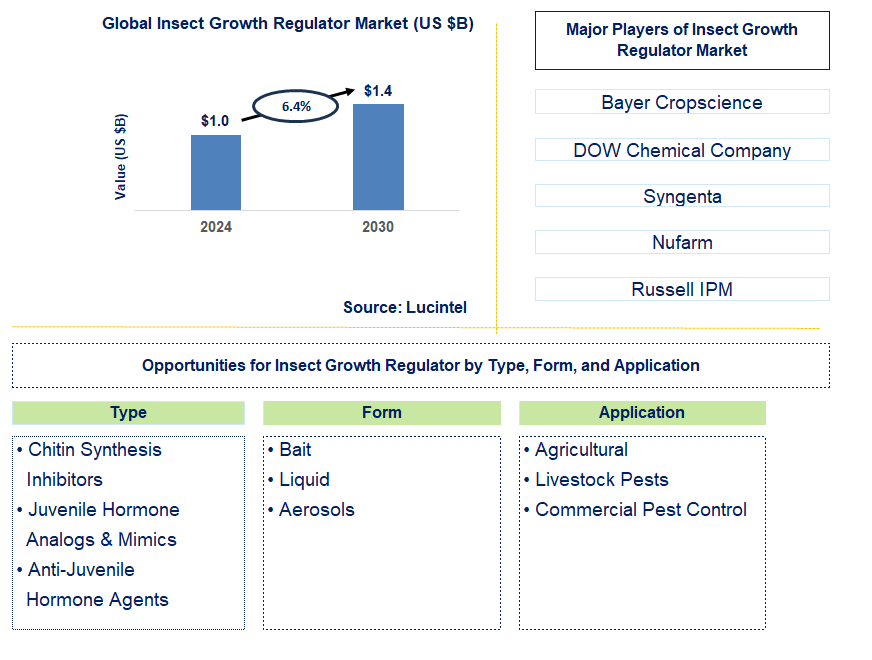
Key data points: The market size in 2030 = $1.4 billion, growth forecast = 6.4% annually for the next 6 years. Scroll below to get more insights. This market report covers trends, opportunities, and forecasts in the global insect growth regulator market to 2030 by type (chitin synthesis inhibitors, juvenile hormone analogs & mimics, and anti-juvenile hormone agents), form (bait, liquid, and aerosols), application (agricultural, livestock pests, and commercial pest control), and region (North America, Europe, Asia Pacific, and the Rest of the World)
We'll send your sample report shortly.
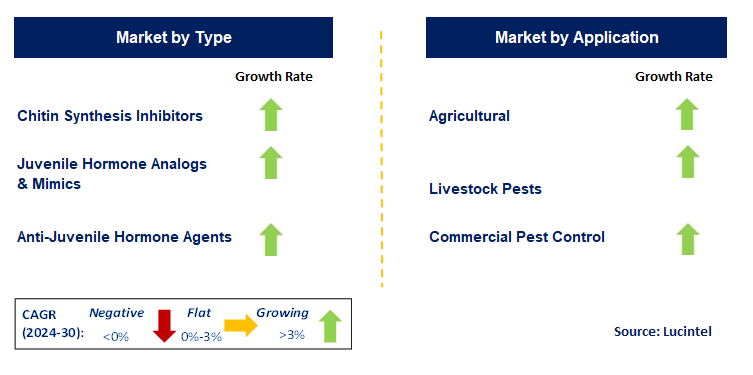
• Lucintel forecasts that, within the type category, chitin synthesis inhibitors will remain the largest segment over the forecast period.
• In terms of regions, North America is expected to witness highest growth over the forecast period due to rise in adoption of modern and less toxic pest control products for different applications, as well as, superior quality of life combined with product advancements and creative packaging. A more than 150-page report is developed to help in your business decisions.
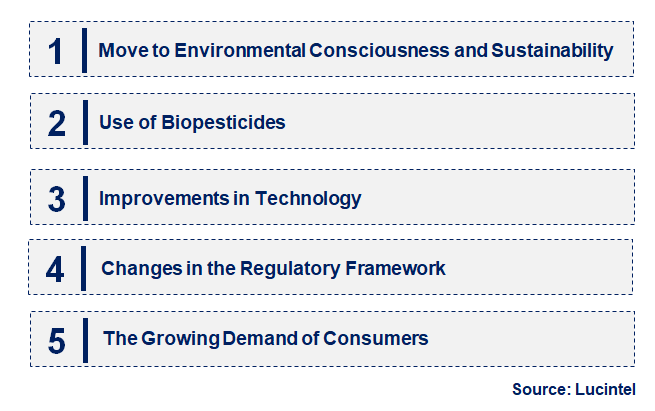
• Environmental Consciousness and Sustainability: Environmental awareness is shifting attitudes toward pest management, encouraging the use of IGRs in integrated pest management systems. These systems prioritize ecological balance and minimal chemical usage, reshaping perceptions of pest control.
• Use of Biopesticides: The combined use of biopesticides and IGRs is gaining traction, offering a synergistic approach to pest control. This strategy enhances efficiency, reduces reliance on chemical pesticides, and aligns with the growing demand for organic and green farming practices.
• Technological Advancements: Innovations in formulation technologies, such as microencapsulation and controlled-release systems, are improving the efficacy, stability, and shelf-life of IGRs. These advancements support effective pest control while minimizing environmental impact.
• Regulatory Changes: Evolving regulations favor safer and eco-friendly pest control solutions. Streamlined guidelines for IGR and biopesticide registration facilitate faster market entry for innovative products, encouraging manufacturers to invest in research and development.
• Consumer Demand: Growing awareness of food safety and pesticide residue issues is driving changes in farming practices. Farmers are increasingly incorporating IGRs into their crops to meet consumer demands for sustainably produced food. These trends are fostering innovation, enhancing sustainability, and increasing consumer participation in the IGR market.
• Launch of New IGR Products: The introduction of safer and more effective IGR products targets the most vulnerable stages of pest life cycles, aligning with IPM and sustainable agriculture principles.
• Advancements in Formulation Technologies: New formulation technologies, such as microencapsulation and slow-release systems, enhance IGR stability and effectiveness, reducing application frequency and environmental impact.
• Focus on Integrated Pest Management (IPM): The adoption of IPM practices is increasing, with farmers using IGRs alongside traditional pesticides to achieve more sustainable and effective pest management.
• Increased Research Investment: Public and private sectors are investing in research to develop eco-friendly IGRs, sourcing new active ingredients, and creating innovative formulations.
• Expansion into New Regions: The adoption of IGRs in underdeveloped regions, particularly in Asia and Africa, is expanding. Increased awareness of pest resistance and sustainable practices is driving growth in these areas, offering new opportunities for manufacturers. These developments are driving the IGR market toward improved product efficiency, environmentally friendly practices, and expanded global reach, fostering innovation and sustainability.
• Agriculture: The market for insect growth regulators has significant potential in the agriculture sector, particularly for crops highly susceptible to pests. The shift toward sustainable farming practices has made the use of insect growth regulators as a component of Integrated Pest Management mandatory for manufacturers. They must ensure the efficacy of their products while maintaining environmental safety.
• Horticulture: Horticulture represents another promising application for insect growth regulators, especially in combating pests that affect ornamental crops. The increasing demand for attractive and pest-free plants among consumers is likely to drive the need for pest control practices in horticulture, creating opportunities for insect growth regulator producers.
• Urban Pest Management: Urban pest management is a growing segment for insect growth regulators, driven by the increasing need for such products in households and commercial settings. Awareness of the risks posed by pest infestations has prompted consumers to seek effective and less toxic solutions. Insect growth regulators are ideal for controlling household pests such as cockroaches and mosquitoes, as they pose minimal health risks to humans and pets.
• Public Health: The application of insect growth regulators in the public health sector, particularly for mosquito control as part of vector control measures, presents a significant growth opportunity. The adoption of insect growth regulators in mosquito control programs is expected to increase as countries and health institutions focus on prevention rather than treatment of diseases.
• Biopesticides: The rising interest in biopesticides provides an avenue for insect growth regulators, particularly those that are bio-based. Insect growth regulators that meet biopesticide standards are likely to gain market share as consumers and regulatory authorities advocate for green alternatives. These strategic growth opportunities highlight the potential for companies to innovate and expand in the insect growth regulator market. By focusing on these applications, companies can enhance their competitive edge and achieve sustainable growth.
• Growing Demand for Sustainable Practices: The rising adoption of sustainable agricultural practices is a key driver of the insect growth regulator market. Increasing awareness among farmers about pest management has created a demand for alternatives that require minimal chemical use, which insect growth regulators fulfill effectively.
• Rising Pest Resistance: The growing resistance of pests to traditional pesticides has prompted farmers to adopt insect growth regulators. These products disrupt pest development stages without contributing to resistance, making them essential for long-term pest control strategies.
• Regulatory Support: Favorable regulatory policies promoting environmentally friendly pest management practices support the approval and adoption of insect growth regulators. This regulatory backing encourages manufacturers to innovate and expand their product offerings.
• Increased Investment in Research and Development: The prevalence of pest-related issues in crops has spurred investments in research and development of advanced formulations and technologies for insect growth regulators. This focus on innovation leads to the discovery of new active substances and improved pest management systems.
• Consumer Awareness: Growing consumer concerns about food safety and environmental sustainability have increased demand for insect growth regulators. Farmers are encouraged to adopt these products to meet consumer expectations for sustainable agricultural practices. Challenges in the insect growth regulator market include:
• Intense Competition: The insect growth regulator industry is highly competitive, with numerous companies offering similar products. This competition often results in price wars and margin pressures, making it difficult for firms to differentiate their offerings.
• Complex Formulation Processes: Developing efficient and reliable insect growth regulator formulations is a significant challenge. Manufacturers must invest substantial resources in research and development to create safe and effective products, which can delay product launches.
• Limited Market Awareness: Despite growing attention, some target users, such as farmers, lack sufficient knowledge about the benefits and applications of insect growth regulators. Educating potential users about these products is crucial for market expansion. The interplay between these drivers and challenges shapes the insect growth regulator market. By leveraging the drivers and addressing the challenges, stakeholders can strengthen their position in this dynamic and rapidly growing market.
• Bayer Cropscience
• DOW Chemical Company
• Syngenta
• Nufarm
• Russell IPM
• Central Garden & Pets Co.
• Platform Specialty Products
• Chitin Synthesis Inhibitors
• Juvenile Hormone Analogs & Mimics
• Anti-Juvenile Hormone Agents
• Bait
• Liquid
• Aerosols
• Agricultural
• Livestock Pests
• Commercial Pest Control
• North America
• Europe
• Asia Pacific
• The Rest of the World
• United States: The US IGR market has seen remarkable growth due to advancements in biotechnology and the availability of environmental authorities' approvals for active ingredients. Recently, the Environmental Protection Agency (EPA) amended IGR registration processes, enabling faster product availability to end-users. The growing adoption of organic agriculture and lifestyle changes in developing markets have increased the use of IGRs in pest management practices, particularly in horticultural crops, ensuring higher efficiency and safety.
• China: As China's agricultural sector expands, so does the need for advanced pest control measures, driving the growth of the IGR market. The government actively recommends biopesticides and IGRs to reduce dependence on chemical pesticides. Domestic companies are developing crop-specific IGRs to address pest resistance. Additionally, farmers in China are increasingly adopting integrated pest management, recognizing IGRs as effective tools against pests.
• Germany: In Germany, pest management policies promote IGR usage alongside stringent chemical pesticide regulations, boosting the IGR market. Advances in IGR formulation technologies are improving efficacy and reducing environmental impacts. EU research institutions and companies are developing pesticide-free IGR products to comply with reduced pesticide usage mandates. The growing emphasis on integrated pest management (IPM) supports the adoption of IGRs in sectors like organic farming.
• India: In India, concerns over pest resistance and sustainable pest management have spurred the growth of the IGR market. Government-led awareness programs advocating legitimate farming methods have increased IGR adoption among farmers. Domestic manufacturers are focusing on affordable formulations tailored to Indian agriculture. The shift toward IPM strategies has also encouraged the use of IGRs in crops like cotton and rice.
• Japan: The Japanese IGR market emphasizes innovation and safety, focusing on advanced formulations with low environmental impact. Urban and agricultural pest management practices increasingly adopt IGRs due to public awareness of the drawbacks of chemical pesticides. This trend is particularly evident in rice and horticultural sectors, where demand for IGRs continues to grow.


• Bayer Cropscience
• DOW Chemical Company
• Syngenta
• Nufarm
• Russell IPM
• Central Garden & Pets Co.
• Platform Specialty Products Q6. Which insect growth regulator market segment will be the largest in future? Answer: Lucintel forecasts that chitin synthesis inhibitors will remain the largest segment over the forecast period. Q7. In insect growth regulator market, which region is expected to be the largest in next 6 years? Answer: North America is expected to witness highest growth over the forecast period due to rise in adoption of modern and less toxic pest control products for different applications, as well as, superior quality of life combined with product advancements and creative packaging. Q.8 Do we receive customization in this report? Answer: Yes, Lucintel provides 10% customization without any additional cost.


Choose a license that fits your team. Instant PDF delivery.
Prices exclude taxes. Instant delivery. Custom licensing available on request.
Market Report · July 22, 2026
Market Report · July 22, 2026
Market Report · July 22, 2026
Trusted partner for strategic intelligence and business growth


Receive a complimentary market analysis tailored to your industry. Our analysts will identify key growth opportunities and competitive dynamics specific to your business.

Market size, growth rate, and key trend analysis for your specific sector.

Top competitor positioning and market share analysis.

Strategic recommendations backed by data-driven insights.
Get curated market intelligence and competitive moves straight to your inbox.
By subscribing, you agree to receive our monthly insights. Unsubscribe anytime.
Receive a complimentary market analysis tailored to your industry. Our analysts will identify key growth opportunities and competitive dynamics specific to your business.
Market size, growth rate, and key trend analysis for your specific sector.
Top competitor positioning and market share analysis.
Strategic recommendations backed by data-driven insights.
Get curated market intelligence, emerging trends, and competitive moves straight to your inbox each month.
By subscribing, you agree to receive our monthly insights. Unsubscribe anytime.
We'll send your sample report shortly.