
Market Report · July 22, 2026

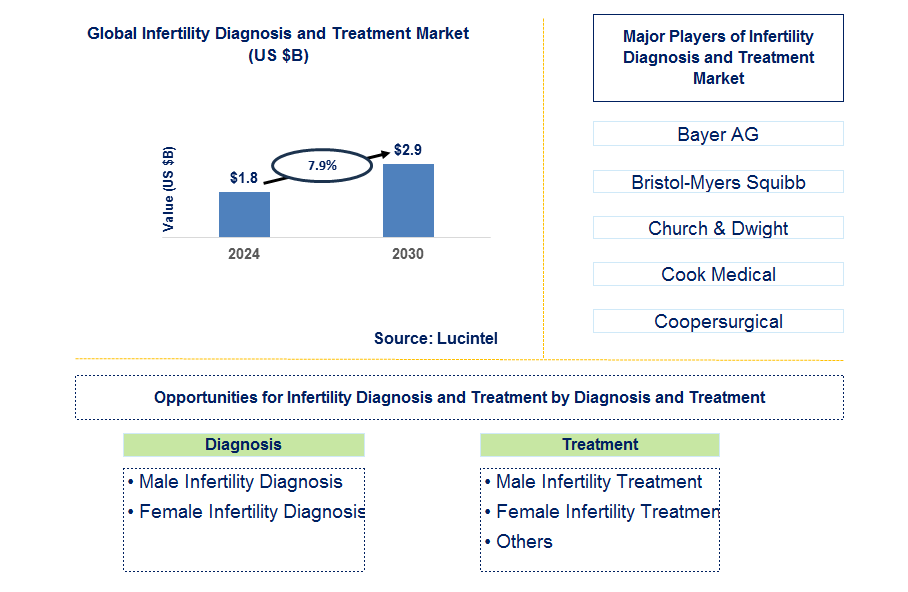
Key data points: The market size in 2030 = $2.9 billion, growth forecast = 7.9% annually for the next 6 years. Scroll below to get more insights. This market report covers trends, opportunities, and forecasts in the global infertility diagnosis and treatment market to 2030 by diagnosis (male infertility diagnosis and female infertility diagnosis), treatment (male infertility treatment, female infertility treatment, and Others), and region (North America, Europe, Asia Pacific, and the Rest of the World)
We'll send your sample report shortly.
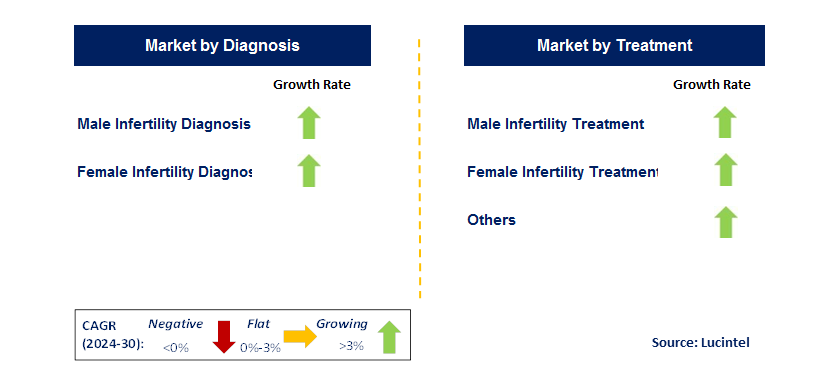
• Lucintel forecasts that, within the diagnosis category, female infertility diagnosis is expected to witness a higher growth over the forecast period.
• Within the treatment category, female infertility treatment will remain the largest segment.
• In terms of region, North America will remain the largest segment over the forecast period due to the changing lifestyle and growing geriatric population.
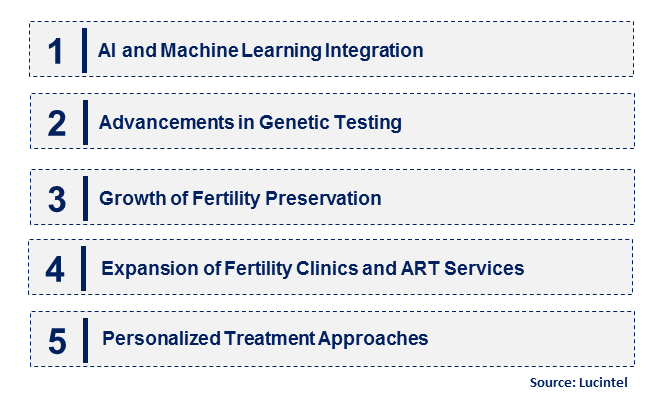
• AI and Machine Learning Integration: The use of AI and machine learning to analyze infertility data and predict treatment outcomes is on the rise. These technologies improve diagnostic accuracy, individualize therapy plans, increase success rates, and enable cost-effective use of resources.
• Advancements in Genetic Testing: Genetic testing has become more sophisticated, allowing for detailed analysis of genetic factors that cause infertility. This trend helps identify underlying causes, select the best treatment options, and improve embryo selection during IVF.
• Growth of Fertility Preservation: There is a rising popularity of fertility preservation methods like egg or sperm freezing. Technological improvements have facilitated the delaying of reproductive stages to suit individuals who want to undertake medical procedures or make certain decisions that may hinder their future fertility prospects.
• Expansion of Fertility Clinics and ART Services: The number of global fertility clinics and ART service providers is increasing, making infertility treatments more accessible. Infrastructure improvements and competition have reduced costs while enhancing the quality of care provided by ART services.
• Personalized Treatment Approaches: Personalized medicine is gaining prominence in the field of infertility treatments. Individual patients’ profiles, including genetic, hormonal, and lifestyle factors, are considered when tailoring treatment plans, thereby increasing efficiency and success rates in treating infertility cases.
• Integration of Holistic and Psychological Support: The inclusion of holistic approaches together with psychological support into the provision of infertility treatments is becoming common practice. This has led to clinics offering counseling services aimed at enhancing patient well-being, recognizing the emotional stress associated with this condition.
• Government and Policy Support: Governments across many countries are providing support for fertility treatments through policy changes and funding initiatives, among other measures. Such actions include expanding insurance coverage, subsidizing treatment costs, and conducting research to improve reproductive technologies.
• AI-Enhanced Diagnostic Tools: The use of AI technologies, which help improve the accuracy of infertility diagnostics, is increasingly becoming popular. Such tools assist in analyzing complex data and predicting treatment outcomes better.
• Advanced ART Techniques: Advances in assisted reproductive technologies (ART), such as improved IVF protocols with embryo screening, have led to higher success rates and shorter treatment durations. Thus, these innovations are making ART more effective while lessening its cost burden.
• Affordable Treatment Options: This has resulted in the introduction of cheaper fertility management procedures that increase patients’ access to them. Because providers have embraced technology in their operations, there has been a drop in costs, making services affordable to many more people than before.
• Genetic Screening and Testing: Better genetic screening techniques are now available for more precise determination of genetic factors causing infertility. As a result, embryo selection has improved, thereby increasing the chances of successful pregnancies.
• Fertility Preservation Methods: Advances in fertility preservation methods, such as egg freezing and sperm freezing, offer individuals the opportunity to postpone childbearing. These methods are becoming more accessible and effective, addressing the needs of patients with various life circumstances.
• Holistic and Supportive Care: The integration of psychological and holistic support into infertility treatment is gaining traction. Consequently, clinics are offering counseling and stress management services to address the emotional and psychological aspects of infertility.
• Government Initiatives: Increased government support for infertility treatments, including subsidies and policy changes, is enhancing access to care. Governments also fund research on reproductive technologies that advance their use while improving options available for treatment.
• Expansion of ART Services: There is potential for the expansion of services provided by assisted reproductive technology (ART), which improves its chances both medically and otherwise. Investing in new ART techniques and facilities helps capture a larger market share while meeting the escalating demand for fertility treatments.
• Development of Advanced Diagnostic Tools: Developing advanced diagnostic tools that improve the accuracy of diagnosing infertility holds great promise. Advances in genetic testing, alongside AI, may prompt growth through the provision of precise, tailored diagnostic solutions.
• Fertility Preservation Solutions: The rising demand for fertility preservation methods, such as egg freezing and sperm banking, implies an avenue for growth. Addressing these needs requires the development of new methods alongside scaling up accessibility.
• Integration of Holistic Care Services: Inclusion of holistic and psychological support within fertility treatment programs could offer areas for expansion. Delivering comprehensive care that addresses both emotional and psychological elements will help attract more patients and improve overall outcomes from therapy.
• Government and Policy Engagement: Engaging with government initiatives on policies regarding infertility challenges creates room for growth. The industry can improve market entry through collaborations with public health programs and advocating for supportive policies.
• Technological Advancements: Technological advancements such as AI and genetic testing have led to the adoption of new reproductive technologies. The diagnostic superiority of these technologies aids in improving therapy outcomes, supporting personalized healthcare, and contributing to the expansion of this sector.
• Increasing Awareness and Demand: The rise in awareness about infertility, especially the treatments associated with it, has resulted in increased demand for fertility services. The market continues to grow through changing societal attitudes, leading to an increasing number of people who require support.
• Improved Treatment Accessibility: Cost-effective infertility therapies can be developed alongside the expansion of fertility clinic networks, ensuring access to care among providers. This trend makes fertilization surgeries more affordable to wider population groups.
• Government Support and Policies: Market growth is driven by supportive government policies and funding initiatives. Expanding insurance coverage, subsidizing treatment costs, and advocating for research are some measures that have been put in place to improve access to fertility treatments.
• Rising Incidence of Infertility: The rising prevalence of infertility due to lifestyle changes, environmental factors, and late parenthood is behind the increasing need for services related to infertility diagnosis and treatment. This change has heightened demand in the market.
• High Costs of Treatment: Many patients may not be able to afford the expensive costs of fertility treatments. Despite progress made in ART and other therapies, financial constraints remain a significant problem for potential patients.
• Regulatory and Ethical Issues: The infertility market faces regulatory issues as well as ethical concerns regarding ART practices and genetic testing. Navigating complex regulations impacts the development and uptake of new technologies, as it entails addressing ethical concerns.
• Limited Access in Certain Regions: Poor infrastructure, lack of resources, and inadequate training for personnel restrict access, leading to limited availability of infertility treatment services in certain geographical areas. This disparity affects overall market growth and patient access.
• Bayer AG
• Bristol-Myers Squibb
• Church & Dwight
• Cook Medical
• Coopersurgical
• Eli Lilly
• EMD Serono
• Endo Pharmaceuticals
• Ferring Pharmaceuticals
• Genea
• Male Infertility Diagnosis
• Female Infertility Diagnosis
• Male Infertility Treatment
• Female Infertility Treatment
• Others
• North America
• Europe
• Asia Pacific
• The Rest of the World
• United States: In relation to infertility treatment and diagnosis, there have been significant strides made by the United States. The accuracy of infertility assessments has improved since AI-driven diagnostic tools were introduced, while advancements in personalized medicine have led to more tailored approaches to treating this condition. There has also been a rise in fertility preservation procedures, such as oocyte or sperm freezing.
• China: The Chinese infertility market is growing at an accelerated rate, propelled by increased investments in healthcare infrastructure and technology. Success rates for assisted reproductive technologies (ART), such as In Vitro Fertilization (IVF), have improved alongside reduced associated costs. Other advancements include the integration of genetic testing into embryo screening, which increases the chances of successful pregnancies.
• Germany: Germany’s diagnosis and treatment market for infertility is characterized by advances in precision medicine and innovative therapeutic methods. The country has seen the development of sophisticated diagnostic tools that allow for more precise identification of the causes of infertility. This includes state-of-the-art ART technologies adopted by German clinics, which now conduct IVF using improved techniques as well as genetic screening.
• India: The Indian infertility diagnosis and treatment market is growing rapidly, driven by rising awareness and technological advancements. There has been an increase in ART services as the number of IVF centers continues to rise, accompanied by improved success rates. Another recent development includes the availability of more affordable alternatives for treatment and the application of modern diagnostic tools to elucidate the causes of infertility.
• Japan: The infertility market in Japan is evolving with the development of reproductive technologies and greater accessibility to fertility treatment options. The country has seen developments such as state-of-the-art ART procedures, including preimplantation genetic testing (PGT) and egg freezing. Infertility diagnostics have also been enhanced through advanced imaging techniques and genetic tests currently in use. To address low birth rates, the government promotes fertility treatments and supports investigations into their causes.


• Bayer AG
• Bristol-Myers Squibb
• Church & Dwight
• Cook Medical
• Coopersurgical
• Eli Lilly
• EMD Serono
• Endo Pharmaceuticals
• Ferring Pharmaceuticals
• Genea
Q6. Which infertility diagnosis and treatment market segment will be the largest in future?

Choose a license that fits your team. Instant PDF delivery.
Prices exclude taxes. Instant delivery. Custom licensing available on request.
Market Report · July 22, 2026
Market Report · July 22, 2026
Market Report · July 22, 2026
Trusted partner for strategic intelligence and business growth


Receive a complimentary market analysis tailored to your industry. Our analysts will identify key growth opportunities and competitive dynamics specific to your business.

Market size, growth rate, and key trend analysis for your specific sector.

Top competitor positioning and market share analysis.

Strategic recommendations backed by data-driven insights.
Get curated market intelligence and competitive moves straight to your inbox.
By subscribing, you agree to receive our monthly insights. Unsubscribe anytime.
Receive a complimentary market analysis tailored to your industry. Our analysts will identify key growth opportunities and competitive dynamics specific to your business.
Market size, growth rate, and key trend analysis for your specific sector.
Top competitor positioning and market share analysis.
Strategic recommendations backed by data-driven insights.
Get curated market intelligence, emerging trends, and competitive moves straight to your inbox each month.
By subscribing, you agree to receive our monthly insights. Unsubscribe anytime.
We'll send your sample report shortly.