
Market Report · July 22, 2026

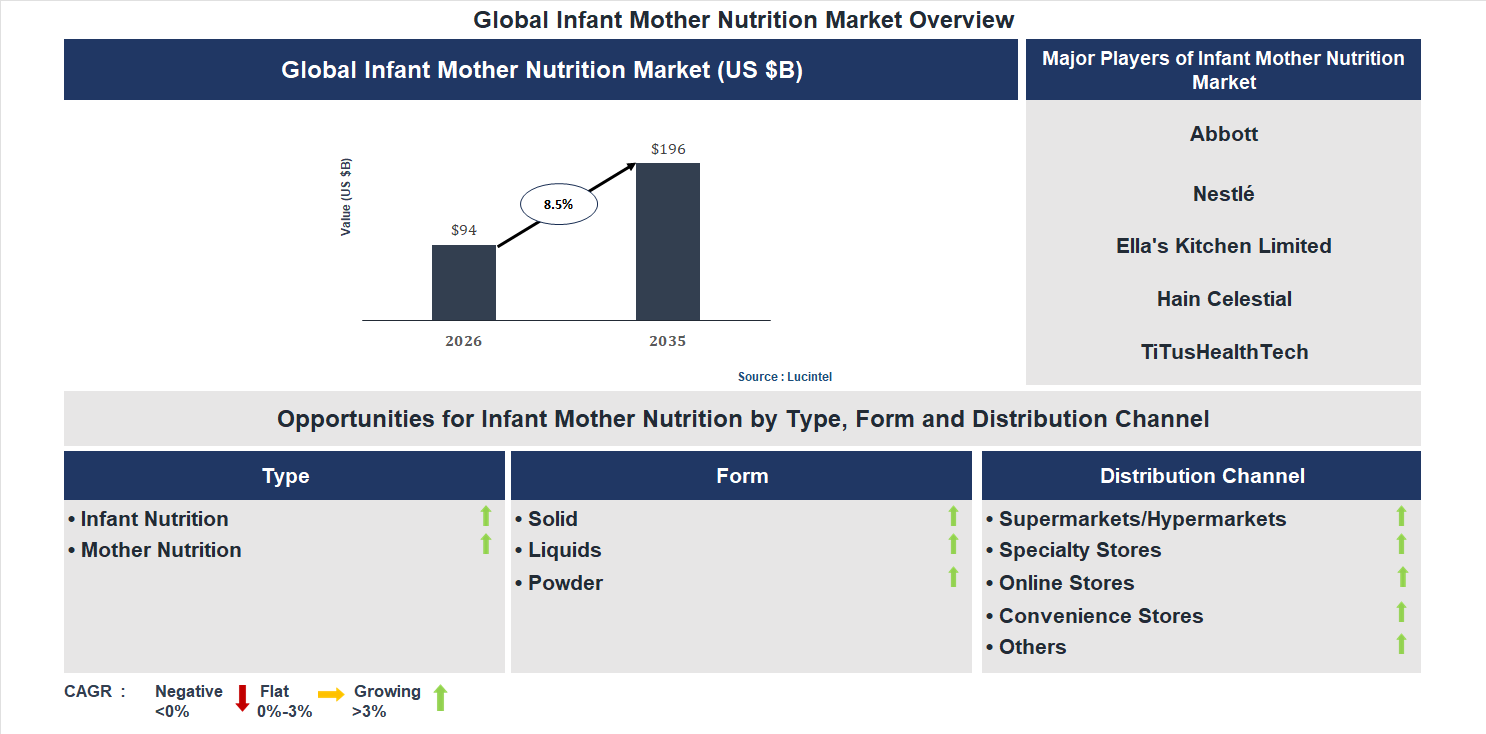
Key data points: The market size in 2035 = $196 billion, growth forecast = 8.5% annually for the next 8 years. Scroll below to get more insights. This market report covers trends, opportunities and forecasts in infant mother nutrition market to 2035 by type (infant nutrition and mother nutrition), form (solid, liquids, and powder), distribution channel (supermarkets/hypermarkets, specialty stores, online stores, convenience stores, and others), and region (North America, Europe, Asia Pacific, and the Rest of the World)
We'll send your sample report shortly.
• Lucintel forecasts that, within the type category, infant nutrition is expected to witness higher growth over the forecast period.
• Within the form category, powder is expected to witness the highest growth.
• In terms of region, APAC is expected to witness the highest growth over the forecast period. Gain valuable insights for your business decisions with our comprehensive 150+ page report. Sample figures with some insights are shown below.
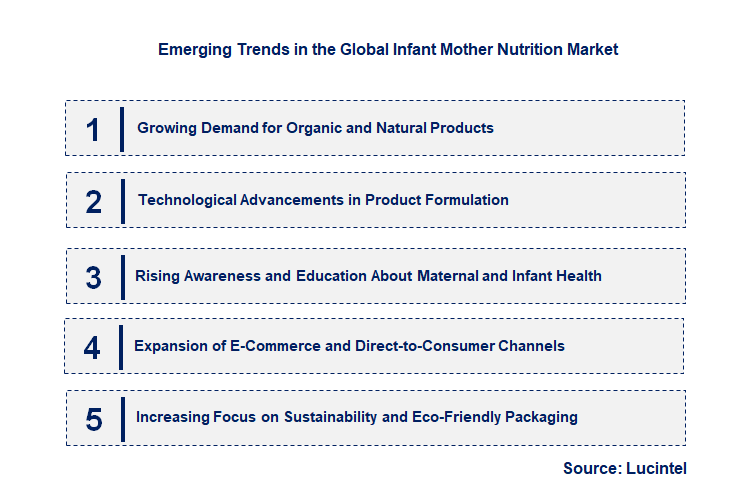
• Growing Demand for Organic and Natural Products: Consumers are increasingly prioritizing organic, non-GMO, and natural ingredients in infant and maternal nutrition products. This trend is driven by heightened awareness of potential chemical exposure and a desire for safer, healthier options. Companies are responding by developing organic formulas, supplements, and snacks that meet strict quality standards. This shift enhances trust and brand loyalty among health-conscious consumers and encourages innovation in sourcing and product formulation, ultimately elevating the overall quality standards within the market.
• Technological Advancements in Product Formulation: Innovation in biotechnology and food science is enabling the development of advanced nutritional products tailored to specific maternal and infant needs. These include personalized nutrition solutions, probiotic-enriched formulas, and functional foods that support immune health, cognitive development, and digestive wellness. Such technological progress improves product efficacy and safety, offering consumers more targeted options. It also allows brands to differentiate themselves through scientifically backed formulations, fostering growth and competitiveness in the market.
• Rising Awareness and Education About Maternal and Infant Health: Increased access to information through digital platforms, healthcare providers, and public health campaigns is raising awareness about optimal nutrition during pregnancy and early childhood. This trend encourages mothers to seek expert guidance and select high-quality products, driving demand for evidence-based, transparent, and informative offerings. Companies are investing in educational initiatives and transparent labeling to build trust and meet the informed needs of consumers, ultimately promoting healthier maternal and infant populations.
• Expansion of E-commerce and Direct-to-Consumer Channels: The growth of online retail platforms has made infant and maternal nutrition products more accessible to a broader audience. E-commerce offers convenience, a wider product range, and personalized shopping experiences, which appeal to modern consumers. Direct-to-consumer models also enable brands to gather valuable consumer data, improve customer engagement, and offer tailored solutions. This trend is reshaping distribution strategies, reducing reliance on traditional retail channels, and fostering innovation in marketing and customer service.
• Increasing Focus on Sustainability and Eco-Friendly Packaging: Consumers and regulators are emphasizing environmental responsibility, prompting companies to adopt sustainable practices. This includes using biodegradable packaging, reducing carbon footprints, and sourcing ingredients responsibly. Such initiatives appeal to environmentally conscious consumers and enhance brand reputation. The shift towards sustainability is influencing product development, supply chain management, and corporate social responsibility strategies, ultimately contributing to a more environmentally sustainable market landscape. These trends are collectively transforming the infant mother nutrition market by emphasizing health, safety, personalization, accessibility, and sustainability. They are driving innovation, improving product quality, and expanding market reach, thereby creating new opportunities for growth and positioning the market as more consumer-centric and environmentally responsible.
• Growing Demand for Prenatal and Postnatal Supplements: The increasing focus on maternal health has led to higher consumption of prenatal and postnatal nutritional products. This trend is driven by awareness campaigns and medical recommendations emphasizing the importance of proper nutrition during pregnancy and breastfeeding. As a result, market players are expanding their product lines with fortified, natural, and organic options, which boosts sales and market share. This growth enhances maternal and infant health, reducing complications and promoting healthy development.
• Innovation in Natural and Organic Ingredients: The shift towards natural, organic, and clean-label products is transforming the infant mother nutrition sector. Consumers prefer products free from artificial additives, preservatives, and chemicals, prompting companies to innovate with plant-based, organic ingredients. This trend improves product safety and efficacy, attracting health-conscious customers. It also aligns with regulatory standards and sustainability goals, fostering trust and loyalty. Overall, this development enhances product differentiation and market competitiveness.
• Adoption of Personalized Nutrition Solutions: Advances in nutrigenomics and data analytics enable tailored nutrition plans for mothers and infants. Personalized products address specific health needs, dietary restrictions, and genetic factors, improving health outcomes. This approach offers a competitive edge to companies investing in research and technology. It also empowers consumers with customized options, increasing satisfaction and adherence. The trend is expected to expand, driving market growth and fostering innovation in product development.
• Increased Focus on Education and Awareness: Educational initiatives by governments, NGOs, and industry players are raising awareness about maternal nutritions importance. These programs promote healthier dietary habits, proper supplement use, and early intervention. Enhanced knowledge leads to increased demand for quality products and better health practices. It also encourages healthcare providers to recommend suitable nutritional solutions. This development supports market growth by creating a more informed consumer base and fostering trust in nutritional products.
• Expansion of E-commerce and Digital Platforms: The rise of online retail channels and digital marketing has broadened access to infant mother nutrition products. E-commerce offers convenience, wider product choices, and competitive pricing, attracting a diverse customer base. Digital platforms facilitate targeted marketing, education, and direct engagement with consumers. This trend accelerates market penetration, especially in emerging regions, and enables companies to gather valuable consumer data. Overall, it significantly boosts sales, brand visibility, and market reach. The overall impact of these developments is a dynamic, innovative, and expanding market that prioritizes health, safety, and personalization. Increased consumer awareness and technological advancements are driving growth, creating opportunities for new entrants and established players alike. These trends are fostering a more competitive landscape, ultimately improving maternal and infant health outcomes globally.
• Expansion of Organic and Natural Infant Nutrition Products: The demand for organic and natural ingredients in infant and maternal nutrition is rising due to increasing health consciousness among consumers. Companies are developing products free from artificial additives, preservatives, and genetically modified organisms, catering to health-focused parents. This trend encourages innovation in clean-label formulations, driving market growth and opening new segments for premium, health-oriented products.
• Growing Adoption of Fortified and Functional Foods for Mothers: Fortified foods enriched with essential vitamins, minerals, and probiotics are gaining popularity among pregnant and breastfeeding women. These products support maternal health, boost immunity, and promote fetal development. The increasing awareness of nutritional deficiencies and the desire for convenient health solutions are fueling demand, prompting manufacturers to develop targeted functional foods that address specific health needs during pregnancy and postpartum.
• Rising Investments in Research and Development for Personalized Nutrition: Advances in genomics and biomarker analysis are enabling personalized nutrition solutions tailored to individual maternal and infant needs. Companies investing in R&D are creating customized supplements and formulas that optimize health outcomes. This approach enhances product efficacy, appeals to health-conscious consumers, and positions brands as innovative leaders, thereby expanding market share and fostering long-term growth opportunities.
• Increasing Government Initiatives and Regulatory Support: Governments worldwide are implementing policies and programs to improve maternal and infant nutrition, including subsidies, awareness campaigns, and nutritional guidelines. These initiatives promote better health practices, increase market visibility, and encourage industry compliance. Supportive regulatory frameworks also facilitate product approvals and market entry, creating a conducive environment for growth and innovation within the infant mother nutrition sector.
• Expansion into Emerging Markets with Rising Birth Rates: Developing regions with high birth rates and improving healthcare infrastructure present significant growth opportunities. Increasing disposable incomes and awareness about maternal health are driving demand for quality nutrition products. Companies expanding distribution channels and tailoring products to local preferences can capitalize on these markets, fostering substantial revenue growth and establishing a strong presence in emerging economies. The overall impact of these opportunities is set to significantly accelerate market growth, foster innovation, and improve maternal and infant health outcomes globally. Strategic focus on these areas will enable industry players to capture new customer segments, enhance product offerings, and strengthen their competitive position in a rapidly evolving market landscape.
• Technological Innovations: The development of advanced nutritional formulas and fortified products has revolutionized infant and maternal nutrition. Innovations such as personalized nutrition, bioactive ingredients, and improved delivery systems enhance product efficacy and safety. These technological advancements meet increasing consumer demand for high-quality, scientifically backed products, fostering market growth. Additionally, research and development investments enable companies to introduce novel solutions tailored to specific health needs, thus expanding market reach and consumer trust.
• Rising Awareness and Health Consciousness: Growing awareness about the importance of maternal and infant nutrition has led to increased demand for specialized products. Campaigns by health organizations and government initiatives educate mothers on proper nutrition, driving consumption of fortified foods, supplements, and functional beverages. This heightened health consciousness encourages mothers to seek premium and organic options, fueling market expansion and product diversification.
• Increasing Birth Rates and Population Growth: Higher birth rates in emerging economies contribute significantly to market demand. A larger population of pregnant women and new mothers necessitates a broader range of nutritional products. Population growth also correlates with increased healthcare infrastructure and maternal health programs, which promote the adoption of specialized infant and maternal nutrition solutions, thereby expanding market size.
• Regulatory Support and Government Initiatives: Governments worldwide are implementing policies to improve maternal and infant health, including nutritional guidelines and subsidies. Regulatory frameworks ensure product safety, quality, and transparency, boosting consumer confidence. Supportive policies, such as breastfeeding promotion and maternal health programs, create a conducive environment for market growth by encouraging the adoption of fortified and specialized nutrition products. The challenges in the infant mother nutrition market are:
• Stringent Regulatory Environment: The market faces complex regulatory requirements across different regions, including approval processes, labeling standards, and safety assessments. Navigating these regulations can be time-consuming and costly, potentially delaying product launches and increasing compliance expenses. Variability in regulations also complicates international expansion, posing a significant barrier for companies seeking global market penetration.
• Cultural and Social Barriers: Cultural beliefs and traditional practices influence maternal and infant feeding choices, often favoring natural or homemade remedies over commercial products. Misconceptions about fortified or supplemented foods can hinder market adoption. Overcoming these social barriers requires extensive education and awareness campaigns, which can be resource-intensive and may not always yield immediate results.
• Supply Chain and Distribution Challenges: Ensuring the availability of infant and maternal nutrition products in remote or underdeveloped regions remains a significant hurdle. Supply chain disruptions, lack of infrastructure, and logistical issues can impede product distribution and availability. These challenges increase costs and limit market reach, especially in emerging markets where demand is rapidly growing but infrastructure is underdeveloped. The infant mother nutrition market is driven by technological progress, increasing health awareness, demographic trends, and supportive policies. However, regulatory complexities, cultural resistance, and logistical issues pose notable challenges. These factors collectively influence market growth, requiring stakeholders to innovate, educate, and adapt strategies to capitalize on opportunities while mitigating risks. The overall impact is a dynamic, evolving market with substantial potential for growth amid ongoing efforts to improve maternal and infant health worldwide.
• Abbott
• Nestlé
• Ellas Kitchen Limited
• Hain Celestial
• TiTusHealthTech
• Mead Johnson & Company LLC.
• Pfizer Inc.
• The Kraft Heinz Company
• Reckitt Benckiser Group PLC.
• Bellamys Organic
• Infant Nutrition
• Mother Nutrition
• Solid
• Liquids
• Powder
• Supermarkets/Hypermarkets
• Specialty Stores
• Online Stores
• Convenience Stores
• Others
• North America
• Europe
• Asia Pacific
• The Rest of the World
• United States: The US market has seen a surge in organic and non-GMO infant nutrition products, driven by consumer demand for clean-label options. Innovations include fortified formulas with added probiotics and omega-3 fatty acids. Regulatory agencies like the FDA are tightening standards, encouraging product transparency. E-commerce sales are rising, providing wider access to specialized products. Major players are investing in R&D to develop personalized nutrition solutions, and there is a growing focus on sustainability and eco-friendly packaging.
• China: China’s infant mother nutrition market is expanding rapidly due to increasing urbanization and rising disposable incomes. Local brands are gaining prominence by offering affordable, high-quality products, while international companies are expanding their presence. The government’s policies promoting maternal health and breastfeeding support are influencing product development. Innovations include functional formulas targeting immune support and cognitive development. E-commerce platforms like Alibaba and JD.com are crucial distribution channels, and there is a rising trend of online consultations and personalized nutrition plans.
• Germany: The German market emphasizes organic, natural, and allergen-free infant nutrition products. Consumer awareness about the importance of maternal health is high, leading to demand for premium products. Companies are focusing on sustainability, with eco-friendly packaging and ethically sourced ingredients. Regulatory compliance with EU standards is strict, ensuring product safety and quality. Innovations include plant-based formulas and products enriched with prebiotics and probiotics. The market also sees increased adoption of digital health tools for maternal and infant care, fostering a holistic approach to nutrition.
• India: India’s infant mother nutrition market is witnessing rapid growth due to increasing awareness of maternal health and government initiatives like the Integrated Child Development Services (ICDS). Local manufacturers are expanding their product portfolios to include fortified and age-specific formulas. Rising urbanization and changing lifestyles are driving demand for convenient, nutritious options. Innovations include products tailored for maternal anemia and immune support. E-commerce and rural distribution channels are expanding reach. There is also a focus on affordability and culturally acceptable formulations to cater to diverse consumer needs.
• Japan: The Japanese market is characterized by a high preference for scientifically backed, high-quality infant nutrition products. The focus is on products that support cognitive development and immune health. Innovations include functional formulas with added nucleotides and fermented ingredients. The market is driven by an aging population of mothers seeking reliable, safe options. Regulatory standards are stringent, ensuring product safety and efficacy. Digital health integration, such as mobile apps for maternal and infant health monitoring, is gaining popularity. Sustainability and environmentally friendly packaging are also becoming important considerations among consumers.


• Abbott
• Nestlé
• Ellas Kitchen Limited
• Hain Celestial
• TiTusHealthTech
• Mead Johnson & Company LLC.
• Pfizer Inc.
• The Kraft Heinz Company
• Reckitt Benckiser Group PLC.
• Bellamys Organic Q6. Which infant mother nutrition market segment will be the largest in future? Answer: Lucintel forecasts that, within the type category, infant nutrition is expected to witness higher growth over the forecast period. Q7. In infant mother nutrition market, which region is expected to be the largest in next 5 years? Answer: In terms of region, APAC is expected to witness the highest growth over the forecast period. Q8. Do we receive customization in this report? Answer: Yes, Lucintel provides 10% customization without any additional cost.


Choose a license that fits your team. Instant PDF delivery.
Prices exclude taxes. Instant delivery. Custom licensing available on request.
Market Report · July 22, 2026
Market Report · July 22, 2026
Market Report · July 22, 2026
Trusted partner for strategic intelligence and business growth


Receive a complimentary market analysis tailored to your industry. Our analysts will identify key growth opportunities and competitive dynamics specific to your business.

Market size, growth rate, and key trend analysis for your specific sector.

Top competitor positioning and market share analysis.

Strategic recommendations backed by data-driven insights.
Get curated market intelligence and competitive moves straight to your inbox.
By subscribing, you agree to receive our monthly insights. Unsubscribe anytime.
Receive a complimentary market analysis tailored to your industry. Our analysts will identify key growth opportunities and competitive dynamics specific to your business.
Market size, growth rate, and key trend analysis for your specific sector.
Top competitor positioning and market share analysis.
Strategic recommendations backed by data-driven insights.
Get curated market intelligence, emerging trends, and competitive moves straight to your inbox each month.
By subscribing, you agree to receive our monthly insights. Unsubscribe anytime.
We'll send your sample report shortly.