
Market Report · July 15, 2026

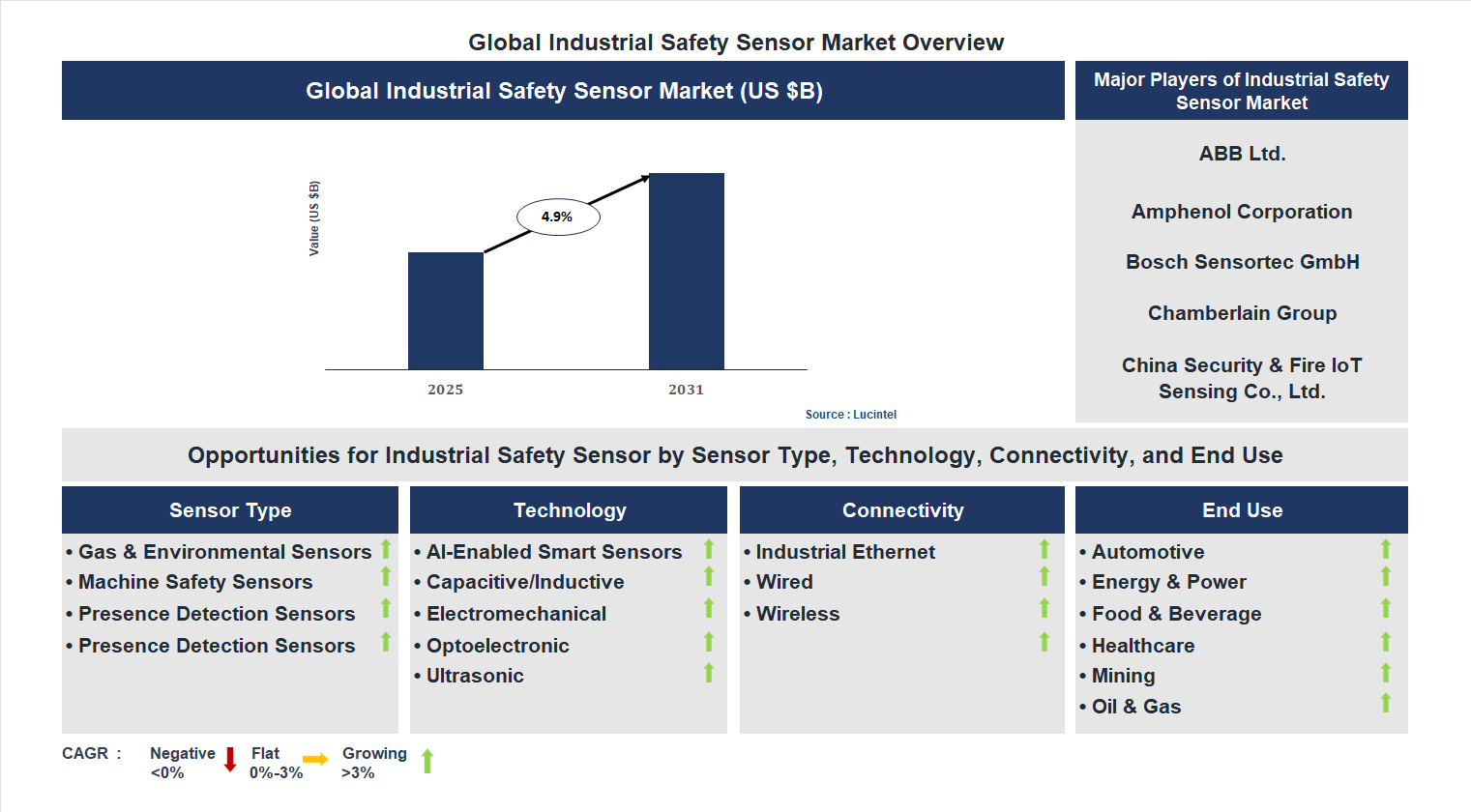
Key data points: The growth forecast = 4.9% annually for the next 7 years. Scroll below to get more insights. This market report covers trends, opportunities and forecasts in industrial safety sensor market to 2031 by sensor type (gas & environmental sensors, machine safety sensors, presence detection sensors, and pressure-sensitive safety sensors), technology (AI-enabled smart sensors, capacitive/inductive, electromechanical, optoelectronic, and ultrasonic), connectivity (industrial ethernet, wired, and wireless), end use (automotive, energy & power, food & beverage, healthcare, mining, and oil & gas), and region (North America, Europe, Asia Pacific, and the Rest of the World)
We'll send your sample report shortly.
• Lucintel forecasts that, within the sensor type category, gas & environmental sensor is expected to witness higher growth over the forecast period.
• Within the end use category, automotive is expected to witness the highest growth.
• In terms of region, APAC is expected to witness the highest growth over the forecast period. Gain valuable insights for your business decisions with our comprehensive 150+ page report. Sample figures with some insights are shown below.
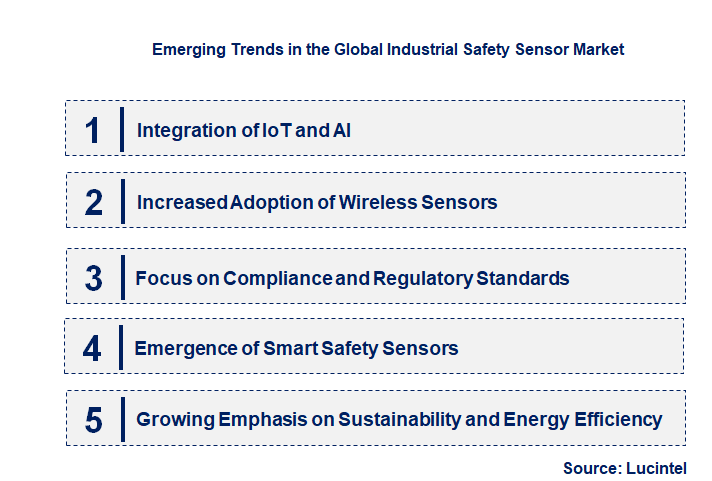
• Integration of IoT and AI: The incorporation of Internet of Things (IoT) and Artificial Intelligence (AI) into safety sensors is revolutionizing the market. These technologies enable real-time data collection, analysis, and predictive insights, allowing for proactive safety measures. IoT-enabled sensors can communicate with centralized systems to trigger immediate responses to hazards, reducing accidents and downtime. AI algorithms enhance sensor accuracy and reliability, facilitating smarter decision-making. This integration leads to more efficient safety management, minimizes human intervention, and supports predictive maintenance, ultimately improving overall operational safety and productivity.
• Increased Adoption of Wireless Sensors: Wireless safety sensors are gaining popularity due to their ease of installation, flexibility, and scalability. They eliminate the need for extensive wiring, reducing installation costs and time. Wireless sensors are particularly beneficial in hazardous or hard-to-reach areas, providing continuous monitoring without physical constraints. Their ability to seamlessly integrate into existing systems enhances safety coverage across diverse industrial environments. As wireless technology advances, these sensors offer improved reliability, longer battery life, and better data transmission, making them a preferred choice for modern industrial safety solutions.
• Focus on Compliance and Regulatory Standards: Stringent safety regulations and standards are driving the adoption of advanced safety sensors. Industries are increasingly investing in sensors that meet or exceed regulatory requirements to avoid penalties and ensure worker safety. This trend encourages manufacturers to develop sensors with enhanced accuracy, durability, and certification compliance. The focus on compliance also promotes the integration of safety sensors into comprehensive safety management systems, fostering a culture of safety and accountability. As regulations evolve, the market will continue to innovate to meet new safety benchmarks.
• Emergence of Smart Safety Sensors: The development of smart safety sensors equipped with advanced diagnostics and self-monitoring capabilities is a significant trend. These sensors can detect potential failures or hazards before they occur, enabling preventive maintenance and reducing downtime. Smart sensors often feature wireless connectivity, data analytics, and user-friendly interfaces, providing actionable insights to operators. Their ability to adapt to changing conditions and provide real-time alerts enhances safety and operational efficiency. This trend signifies a move towards more intelligent, autonomous safety systems that proactively manage risks.
• Growing Emphasis on Sustainability and Energy Efficiency: Sustainability concerns are influencing the design and deployment of safety sensors. Manufacturers are focusing on energy-efficient sensors that consume less power, supporting green initiatives and reducing operational costs. Additionally, sensors made from eco-friendly materials and designed for durability contribute to sustainable practices. Energy-efficient sensors also facilitate longer deployment in remote or hard-to-access areas, reducing maintenance needs. This trend aligns safety with environmental responsibility, encouraging industries to adopt safer, greener solutions that benefit both workers and the planet. In summary, these emerging trends are collectively transforming the industrial safety sensor market by making safety systems more intelligent, flexible, compliant, and sustainable. The integration of IoT and AI, wireless technology, regulatory focus, smart capabilities, and sustainability efforts are driving a shift towards proactive, efficient, and eco-friendly safety solutions. These developments are not only enhancing safety standards but also optimizing operational performance, ultimately reshaping the future landscape of industrial safety.
• Technological Innovation: Development of smart safety sensors with IoT connectivity has enhanced real-time monitoring and predictive maintenance, improving safety and reducing downtime.
• Integration with Automation Systems: Increasing integration of safety sensors with industrial automation and control systems has streamlined operations and improved safety compliance.
• Expansion into New Sectors: Growing adoption of safety sensors in emerging sectors like renewable energy, smart cities, and autonomous vehicles broadens market scope and revenue streams.
• Regulatory Enhancements: Stricter safety standards and regulations worldwide have driven demand for advanced safety sensors to ensure compliance and reduce liabilities.
• Miniaturization and Cost Reduction: Advances in sensor miniaturization and manufacturing have lowered costs, making safety sensors more accessible to small and medium enterprises. These developments are collectively transforming the industrial safety sensor market by enhancing sensor capabilities, expanding application areas, and ensuring compliance with evolving safety standards. The market is becoming more innovative, competitive, and aligned with Industry 4.0 trends, ultimately leading to safer industrial environments and increased operational efficiency.
• Manufacturing: Enhanced automation and safety protocols drive demand for advanced sensors. These sensors improve machine safety, reduce downtime, and ensure compliance with safety standards, leading to safer and more efficient production lines.
• Oil and Gas: Harsh environments necessitate rugged, reliable sensors. Growth in this sector is fueled by the need for explosion-proof and corrosion-resistant sensors that monitor hazardous conditions, preventing accidents and ensuring operational safety.
• Automotive: Increasing adoption of automation and robotics in manufacturing plants boosts sensor demand. These sensors enhance worker safety during assembly processes and enable real-time hazard detection, improving overall safety management.
• Pharmaceuticals: Strict safety regulations require precise monitoring of hazardous substances. Sensors that detect chemical leaks or environmental hazards are vital, ensuring worker safety and regulatory compliance in pharmaceutical manufacturing.
• Construction: Growing infrastructure projects demand safety sensors for site monitoring. Sensors that detect structural integrity, environmental hazards, or worker presence help prevent accidents and promote safer construction environments. These growth opportunities are significantly impacting the industrial safety sensor market by expanding its scope, increasing adoption across diverse sectors, and fostering innovation. As industries prioritize safety and compliance, the market is poised for sustained growth, driven by technological advancements and increasing safety awareness. This evolution ultimately leads to safer workplaces, reduced accidents, and enhanced operational efficiency across industries.
• Technological Innovation: The rapid development of advanced safety sensors, such as laser, ultrasonic, and infrared sensors, enhances detection accuracy and reliability. These innovations enable industries to implement more sophisticated safety systems, reducing accidents and downtime. As sensor technology becomes more affordable and efficient, adoption rates increase across sectors like manufacturing, oil & gas, and transportation. The integration of IoT and AI with safety sensors further boosts predictive maintenance and real-time monitoring, making industrial environments safer and more compliant with safety standards.
• Stringent Safety Regulations: Governments and industry bodies worldwide are enforcing stricter safety standards to protect workers and assets. Regulations such as OSHA in the U.S. and EU directives mandate the use of safety sensors in hazardous environments. These regulations compel industries to upgrade their safety systems, driving demand for reliable sensors. Compliance not only minimizes legal liabilities but also enhances corporate reputation. As safety standards evolve, the market for advanced safety sensors is expected to expand, encouraging manufacturers to innovate and develop compliant solutions.
• Growing Industrial Automation: The shift towards Industry 4.0 and automation is a major growth driver. Automated systems require precise safety sensors to monitor and control industrial processes, ensuring safe operation. The increasing adoption of robotics and automated machinery in manufacturing, logistics, and other sectors necessitates robust safety measures. This trend reduces human error and enhances productivity, prompting industries to invest heavily in safety sensor solutions. The integration of sensors with control systems facilitates seamless, safe operations, further accelerating market growth.
• Rising Focus on Worker Safety and Risk Management: Companies are prioritizing worker safety to reduce accidents and improve workplace conditions. Safety sensors play a crucial role in hazard detection, emergency shutdowns, and environmental monitoring. The rising awareness of occupational health and safety standards encourages organizations to adopt comprehensive safety systems. This focus not only ensures regulatory compliance but also boosts employee morale and productivity. As industries recognize the importance of proactive safety measures, the demand for advanced safety sensors continues to grow, fostering innovation and market expansion.
• Increasing Investment in Smart Infrastructure: Urbanization and infrastructure development projects are fueling demand for smart safety solutions. Safety sensors are integral to smart buildings, transportation systems, and industrial facilities, providing real-time hazard detection and environmental monitoring. Governments and private sectors are investing heavily in smart city initiatives, which include safety sensor deployment for public safety and operational efficiency. These investments create a substantial market opportunity for safety sensor manufacturers, encouraging the development of integrated, scalable safety solutions tailored for complex infrastructure environments. The challenges facing this industrial safety sensor market include:-
• High Implementation Costs: Deploying advanced safety sensors involves significant capital expenditure, especially for small and medium-sized enterprises. The costs associated with sensor procurement, installation, integration, and maintenance can be prohibitive, limiting adoption in cost-sensitive industries. Additionally, ongoing expenses for calibration and system upgrades add to the financial burden. This financial barrier hampers widespread adoption, particularly in developing regions, and may slow overall market growth despite technological benefits.
• Technological Complexity and Integration Issues: The integration of safety sensors with existing industrial systems can be complex and technically challenging. Compatibility issues, lack of standardized protocols, and the need for specialized expertise can hinder seamless deployment. Moreover, rapid technological advancements may lead to obsolescence, requiring frequent upgrades. These complexities can increase project timelines and costs, discouraging some organizations from adopting new safety solutions and creating barriers to market expansion.
• Regulatory Compliance and Certification Challenges: Navigating diverse and evolving safety standards across different regions poses a significant challenge. Achieving compliance requires rigorous testing, certification, and documentation, which can be time-consuming and costly. Variations in regulations may necessitate customized solutions, further complicating product development and deployment. Non-compliance risks legal penalties and reputational damage, making regulatory adherence a critical but challenging aspect for market participants. In summary, the industrial safety sensor market is driven by technological advancements, regulatory pressures, automation trends, safety priorities, and infrastructure investments. However, high costs, technological complexities, and regulatory hurdles present notable challenges. These factors collectively influence market dynamics, requiring stakeholders to innovate and adapt strategically. While growth prospects remain promising, addressing these challenges is essential for sustainable expansion and widespread adoption of safety sensor solutions across industries.
• ABB Ltd.
• Amphenol Corporation
• Bosch Sensortec GmbH
• Chamberlain Group
• China Security & Fire IoT Sensing Co., Ltd.
• Datalogic S.p.A.
• Dwyer Instruments, LLC
• Emerson Electric Co.
• GZ Cyndar Co., Ltd.
• Honeywell International
• Gas & Environmental Sensors
• Machine Safety Sensors
• Presence Detection Sensors
• Pressure-Sensitive Safety Sensors
• AI-Enabled Smart Sensors
• Capacitive/Inductive
• Electromechanical
• Optoelectronic
• Ultrasonic
• Industrial Ethernet
• Wired
• Wireless
• Automotive
• Energy & Power
• Food & Beverage
• Healthcare
• Mining
• Oil & Gas
• North America
• Europe
• Asia Pacific
• The Rest of the World
• United States: The US market has seen rapid adoption of IoT-enabled safety sensors, driven by stringent safety regulations and a focus on automation in manufacturing, oil & gas, and construction sectors. Major players are investing in AI and machine learning to develop predictive safety systems, reducing workplace accidents. The government’s emphasis on workplace safety standards and technological innovation has accelerated market growth, with increased deployment of wireless and connected sensors in industrial environments. Additionally, US companies are collaborating with tech firms to develop advanced safety solutions tailored to diverse industrial needs.
• China: China’s industrial safety sensor market is expanding swiftly due to rapid industrialization and government initiatives promoting safety standards. The country is focusing on integrating sensors with IoT platforms to improve real-time monitoring and safety management in manufacturing, mining, and energy sectors. Local manufacturers are innovating to offer cost-effective solutions, boosting market penetration. The Chinese government’s safety regulations and investments in smart manufacturing are further propelling market growth. Additionally, China is emphasizing the development of intelligent safety systems to enhance operational efficiency and worker safety.
• Germany: Germany’s market is characterized by high-quality, precision safety sensors primarily used in automotive, chemical, and machinery industries. The country’s strong emphasis on Industry 4.0 and automation has led to the adoption of advanced safety sensors with enhanced reliability and integration capabilities. German companies are investing in R&D to develop sensors with improved durability and performance, aligning with strict EU safety standards. The focus on sustainable and safe industrial practices is driving innovation, with a growing trend toward wireless and smart safety sensors that facilitate seamless integration into complex industrial systems.
• India: India’s industrial safety sensor market is witnessing rapid growth due to increasing safety awareness and regulatory enforcement across manufacturing, oil & gas, and infrastructure sectors. The government’s initiatives like Make in India and Smart Cities are encouraging the adoption of advanced safety solutions. Local manufacturers are expanding their product portfolios to include affordable, reliable sensors suitable for diverse industrial environments. The rising adoption of automation and digitalization is further boosting demand for safety sensors, with a focus on improving worker safety and operational efficiency in emerging industrial hubs.
• Japan: Japan’s market is driven by technological innovation and a strong emphasis on safety in manufacturing, robotics, and electronics industries. The country is investing in the development of highly reliable, durable safety sensors that can operate in harsh environments. Japan’s focus on robotics and automation has led to the integration of safety sensors with AI and IoT for smarter industrial systems. The government’s safety regulations and industry standards promote the adoption of cutting-edge safety technologies. Japanese companies are also exploring the use of sensors in disaster prevention and environmental monitoring, expanding the scope of the safety sensor market.


• ABB Ltd.
• Amphenol Corporation
• Bosch Sensortec GmbH
• Chamberlain Group
• China Security & Fire IoT Sensing Co., Ltd.
• Datalogic S.p.A.
• Dwyer Instruments, LLC
• Emerson Electric Co.
• GZ Cyndar Co., Ltd.
• Honeywell International Q5. Which industrial safety sensor market segment will be the largest in future? Answer: Lucintel forecasts that, within the sensor type category, gas & environmental sensor is expected to witness higher growth over the forecast period. Q6. In industrial safety sensor market, which region is expected to be the largest in next 5 years? Answer: In terms of region, APAC is expected to witness the highest growth over the forecast period. Q7. Do we receive customization in this report? Answer: Yes, Lucintel provides 10% customization without any additional cost.


Choose a license that fits your team. Instant PDF delivery.
Prices exclude taxes. Instant delivery. Custom licensing available on request.
Market Report · July 15, 2026
Market Report · July 13, 2026
Market Report · July 13, 2026
Trusted partner for strategic intelligence and business growth


Receive a complimentary market analysis tailored to your industry. Our analysts will identify key growth opportunities and competitive dynamics specific to your business.

Market size, growth rate, and key trend analysis for your specific sector.

Top competitor positioning and market share analysis.

Strategic recommendations backed by data-driven insights.
Get curated market intelligence and competitive moves straight to your inbox.
By subscribing, you agree to receive our monthly insights. Unsubscribe anytime.
Receive a complimentary market analysis tailored to your industry. Our analysts will identify key growth opportunities and competitive dynamics specific to your business.
Market size, growth rate, and key trend analysis for your specific sector.
Top competitor positioning and market share analysis.
Strategic recommendations backed by data-driven insights.
Get curated market intelligence, emerging trends, and competitive moves straight to your inbox each month.
By subscribing, you agree to receive our monthly insights. Unsubscribe anytime.
We'll send your sample report shortly.