
Market Report · July 31, 2026

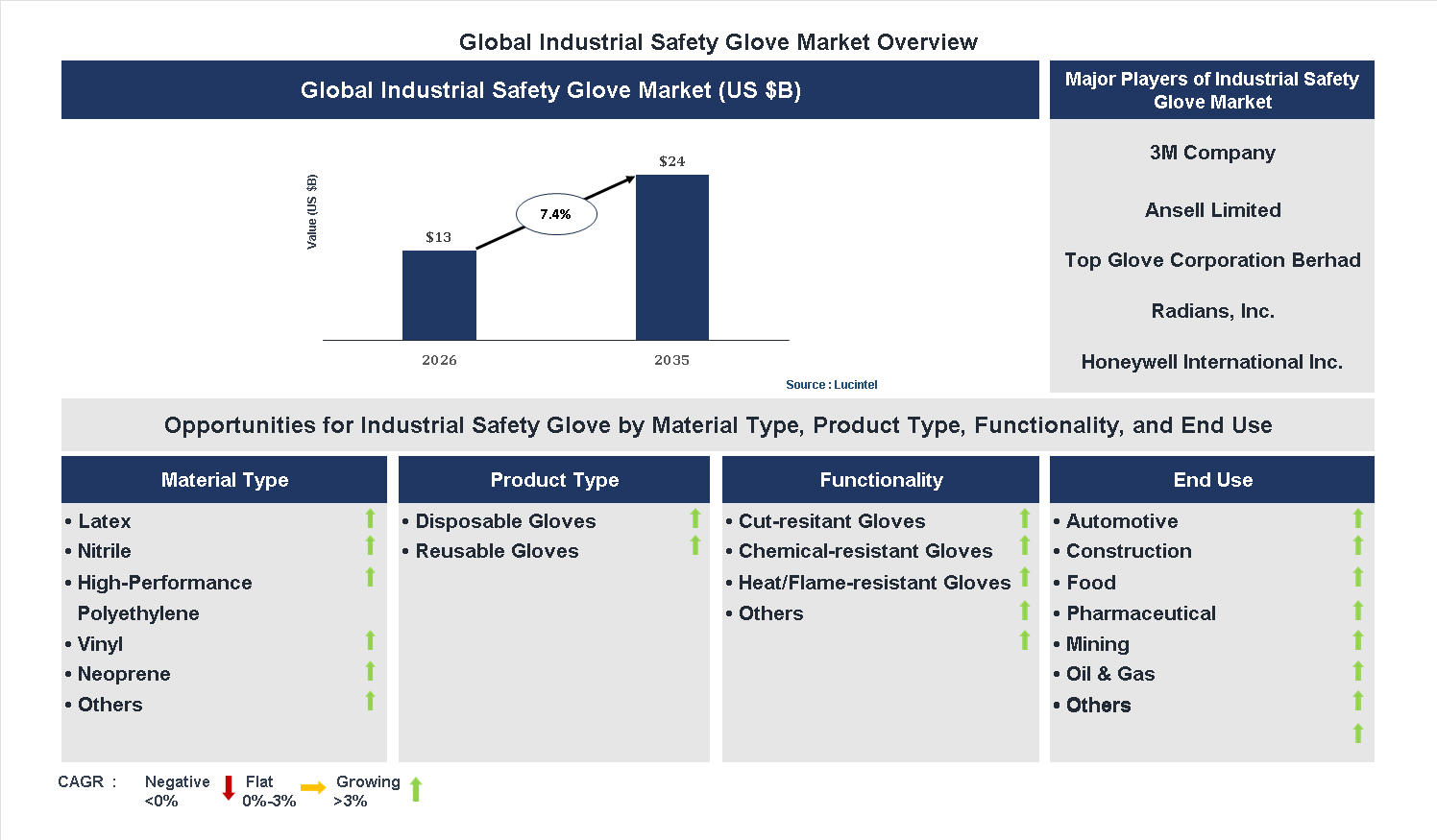
Key data points: The market size in 2035 = $24 billion, growth forecast = 7.4% annually for the next 8 years. Scroll below to get more insights. This market report covers trends, opportunities and forecasts in industrial safety glove market to 2035 by material type (latex, nitrile, high-performance polyethylene, vinyl, neoprene, and others), product type (disposable gloves and reusable gloves), functionality (cut-resitant gloves, chemical-resistant gloves, heat/flame-resistant gloves, and others), end use (automotive, construction, food, pharmaceutical, mining, oil & gas, and others), and region (North America, Europe, Asia Pacific, and the Rest of the World)
We'll send your sample report shortly.
• Lucintel forecasts that, within the material type category, high-performance polyethylene is expected to witness the highest growth over the forecast period.
• Within the end use category, pharmaceutical is expected to witness the highest growth.
• In terms of region, APAC is expected to witness the highest growth over the forecast period. Gain valuable insights for your business decisions with our comprehensive 150+ page report. Sample figures with some insights are shown below.
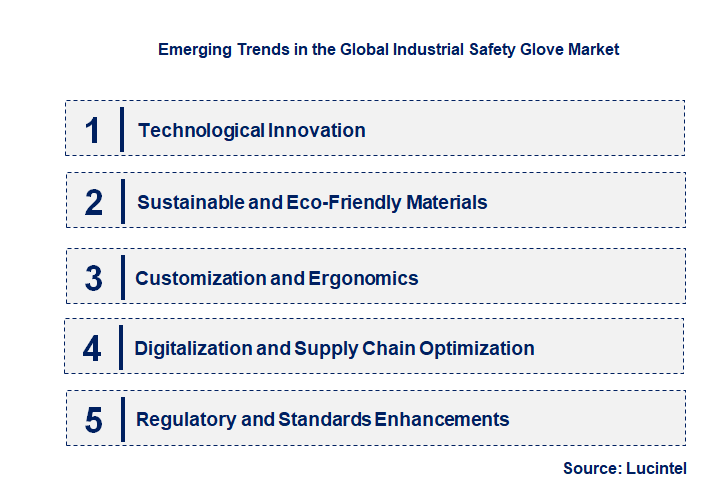
• Technological Innovation: The integration of advanced materials such as nanotechnology and smart textiles is revolutionizing safety gloves. These innovations improve durability, flexibility, and resistance to chemicals and abrasions. Smart gloves equipped with sensors can monitor environmental conditions or worker health, providing real-time data to enhance safety protocols. This trend is driving the development of high-performance gloves tailored to specific industry needs, ultimately reducing workplace injuries and increasing productivity.
• Sustainable and Eco-Friendly Materials: Growing environmental concerns are prompting manufacturers to adopt sustainable materials like recycled fibers and biodegradable polymers. These eco-friendly gloves reduce the environmental footprint without compromising safety standards. The shift towards sustainability is also driven by regulatory pressures and consumer preferences for green products. As a result, companies investing in eco-conscious manufacturing are gaining competitive advantages, and the market is witnessing a surge in environmentally sustainable safety glove options.
• Customization and Ergonomics: There is an increasing demand for gloves that offer better fit, comfort, and dexterity to improve worker compliance and reduce fatigue. Manufacturers are focusing on ergonomic designs and customizable options to cater to diverse industry requirements. This trend enhances user experience, minimizes the risk of accidents caused by improper fit, and encourages consistent use of safety gloves. Customization also allows for industry-specific features, such as enhanced grip or chemical resistance, further boosting market growth.
• Digitalization and Supply Chain Optimization: The adoption of digital tools like IoT and RFID technology is streamlining inventory management, tracking, and quality control processes. Digitalization enables real-time monitoring of glove usage and stock levels, reducing waste and ensuring timely replenishment. This trend improves supply chain efficiency, reduces costs, and enhances customer satisfaction. It also facilitates data collection for continuous product improvement and compliance with safety standards, making the market more responsive and agile.
• Regulatory and Standards Enhancements: Stricter safety regulations and standards are compelling manufacturers to innovate and improve product quality. Governments and industry bodies are implementing more rigorous testing and certification processes, ensuring higher safety levels. This trend encourages the development of gloves that meet or exceed regulatory requirements, fostering trust among consumers and end-users. It also drives market consolidation as companies seek to comply with evolving standards, ultimately elevating overall safety performance across industries. These trends are collectively reshaping the industrial safety glove market by fostering innovation, sustainability, customization, digital integration, and regulatory compliance. They are enabling manufacturers to deliver safer, more efficient, and environmentally responsible products, thereby enhancing workplace safety standards and expanding market opportunities.
• Growing Demand for High-Performance Gloves: The need for durable, cut-resistant, and chemical-resistant gloves is increasing across industries such as manufacturing, construction, and healthcare. This demand is driven by stricter safety regulations and a focus on worker safety. Advanced materials like Kevlar, nitrile, and polyurethane are being incorporated to enhance protection and comfort. As safety standards tighten, the market for specialized gloves is expected to expand, offering significant growth opportunities for innovative product development.
• Technological Innovations in Material Science: Advances in material science are revolutionizing safety glove manufacturing. The development of lightweight, breathable, and highly protective materials improves worker comfort without compromising safety. Innovations such as nanotechnology and smart textiles enable gloves to offer enhanced grip, flexibility, and resistance to hazards. These technological developments are attracting new customers and expanding applications, thereby fueling market growth and encouraging manufacturers to invest in R&D for next-generation safety gloves.
• Increasing Adoption of Eco-Friendly Gloves: Environmental concerns are prompting manufacturers to develop sustainable safety gloves using biodegradable and recyclable materials. Eco-friendly gloves reduce environmental impact and appeal to companies with corporate social responsibility commitments. The adoption of such gloves is gaining traction in industries aiming to reduce their carbon footprint. This shift towards sustainability is creating new market segments and encouraging innovation in eco-conscious manufacturing processes, ultimately broadening the market scope.
• Rising Focus on Personal Protective Equipment (PPE) Regulations: Governments and industry bodies are implementing stricter PPE regulations to ensure worker safety, which directly impacts the demand for safety gloves. Compliance requirements are driving companies to upgrade their safety gear, including gloves that meet specific standards for chemical, mechanical, and thermal hazards. This regulatory environment is fostering market growth by encouraging manufacturers to develop compliant, high-quality products and expanding the customer base across multiple sectors.
• Expansion in Emerging Markets: Rapid industrialization and infrastructure development in emerging economies are significantly boosting the demand for safety gloves. Countries in Asia-Pacific, Latin America, and Africa are witnessing increased investments in manufacturing, construction, and mining sectors. This expansion creates a substantial market for safety gloves, driven by the need for worker protection and safety compliance. Market players are focusing on local manufacturing and distribution strategies to capitalize on these emerging opportunities. The recent developments in the industrial safety glove market, including technological innovations, sustainability initiatives, regulatory enhancements, and emerging market expansion, are collectively driving substantial growth. These opportunities are not only improving safety standards but also fostering innovation and competitiveness within the industry. As a result, the market is poised for continued expansion, benefiting manufacturers, consumers, and regulatory bodies by promoting safer workplaces and sustainable practices across diverse industrial sectors.
• Growing Demand for Personal Protective Equipment in Manufacturing and Construction: The expansion of manufacturing and construction sectors worldwide is fueling the need for reliable safety gloves. Stringent safety regulations mandate protective gear, prompting companies to invest in high-quality gloves that prevent injuries. Innovations in materials like cut-resistant and chemical-resistant fabrics are enhancing safety standards. As industrial activities increase, the demand for durable, comfortable, and compliant safety gloves is expected to rise, creating substantial growth opportunities for manufacturers.
• Technological Advancements in Material and Design Enhancing Safety and Comfort: The development of advanced materials such as Kevlar, nitrile, and thermoplastic elastomers is revolutionizing safety glove performance. These innovations improve cut, abrasion, and chemical resistance while maintaining flexibility and comfort. Ergonomic designs and breathable fabrics are increasing user acceptance and compliance. Continuous R&D efforts are expected to lead to smarter, more efficient gloves, opening new markets and applications, especially in sectors requiring specialized protection.
• Increasing Adoption of Eco-Friendly and Sustainable Gloves: Environmental concerns are prompting manufacturers to develop sustainable safety gloves using biodegradable and recyclable materials. Eco-friendly gloves reduce environmental impact and meet regulatory standards for sustainability. The shift towards green products is attracting environmentally conscious consumers and organizations. This trend encourages innovation in sustainable manufacturing processes and materials, creating new market segments and expanding the overall market size as companies seek eco-friendly safety solutions.
• Rising Focus on Healthcare and Medical Sector Applications: The healthcare industry’s demand for protective gloves has surged due to increased awareness of infection control and safety protocols. Medical gloves, including nitrile, latex, and vinyl, are essential for preventing cross-contamination. The COVID-19 pandemic accelerated this demand, highlighting the need for high-quality, sterile gloves. Ongoing innovations aim to improve glove dexterity, barrier protection, and allergen-free materials, expanding applications in hospitals, clinics, and laboratories, thus driving market growth.
• Strategic Collaborations and Product Innovation Driving Market Expansion: Companies are forming strategic alliances to develop innovative safety glove solutions tailored to specific industry needs. Collaborations facilitate access to new technologies, materials, and markets. Investment in R&D leads to the creation of specialized gloves for sectors like oil & gas, chemicals, and food processing. These partnerships and innovations enhance product portfolios, improve safety standards, and boost market penetration, ensuring sustained growth and competitiveness in the evolving industrial safety glove landscape. These growth opportunities are poised to significantly influence the industrial safety glove market by fostering innovation, expanding application areas, and emphasizing sustainability. As safety regulations tighten and industrial activities grow, the market is expected to witness robust expansion driven by technological advancements and strategic collaborations. This dynamic environment will enable manufacturers to meet evolving safety standards and address diverse industry needs effectively.
• Technological Innovations: The development of advanced materials like Kevlar, nitrile, and latex has significantly improved glove durability, flexibility, and protection. Innovations such as touchscreen-compatible gloves and ergonomic designs enhance user comfort and functionality, encouraging wider adoption across industries. These technological advancements enable manufacturers to meet diverse safety requirements, opening new market segments and increasing overall demand.
• Increasing Industrialization: Rapid industrial growth in emerging economies and ongoing infrastructure projects are boosting the need for safety equipment, including industrial gloves. As industries such as manufacturing, construction, and oil & gas expand, the demand for protective gloves rises to ensure worker safety, compliance with safety standards, and reduction of workplace injuries, thereby propelling market growth.
• Stringent Safety Regulations: Governments and regulatory bodies worldwide are implementing strict safety standards and compliance requirements for workplaces. These regulations mandate the use of protective gear, including safety gloves, to minimize occupational hazards. Such regulatory frameworks compel industries to invest in high-quality gloves, fostering market expansion and encouraging innovation in safety glove products.
• Growing Awareness of Workplace Safety: Increased awareness among employers and employees regarding occupational health and safety has led to higher adoption of protective gear. Educational campaigns, safety training programs, and corporate responsibility initiatives emphasize the importance of safety gloves, which in turn drives demand across various sectors, especially in high-risk industries. The challenges facing the industrial safety glove market include:
• High Cost of Advanced Materials: The use of innovative materials like Kevlar and specialized coatings increases manufacturing costs, which can lead to higher retail prices. This cost barrier may limit adoption among small and medium-sized enterprises, restricting market growth. Additionally, fluctuations in raw material prices can impact profit margins and supply chain stability.
• Supply Chain Disruptions: The global supply chain for raw materials and manufacturing components has been vulnerable to disruptions caused by geopolitical tensions, pandemics, and logistical issues. These disruptions can lead to delays in production and delivery, affecting market supply and increasing costs, thereby hindering growth prospects.
• Evolving Safety Standards and Regulations: Rapid changes in safety standards require continuous product innovation and compliance updates. Manufacturers face challenges in keeping pace with these evolving regulations, which can involve significant R&D investments and certification processes. Failure to meet new standards may result in market restrictions or loss of competitiveness. The industrial safety glove market is driven by technological advancements, increasing industrialization, stringent safety regulations, and heightened safety awareness. However, high material costs, supply chain issues, and evolving regulatory standards pose significant challenges. These factors collectively influence market dynamics, requiring stakeholders to innovate and adapt continuously. Overall, the market's growth potential remains strong, provided companies effectively navigate these drivers and challenges to meet safety demands efficiently.
• 3M Company
• Ansell Limited
• Top Glove Corporation Berhad
• Radians, Inc.
• Honeywell International Inc.
• Hartalega Holdings Berhad
• The Glove Company
• MCR Safety
• Unigloves (UK) Limited
• Superior Glove Works Ltd.
• Latex
• Nitrile
• High-Performance Polyethylene
• Vinyl
• Neoprene
• Others
• Disposable Gloves
• Reusable Gloves
• Cut-resitant Gloves
• Chemical-resistant Gloves
• Heat/Flame-resistant Gloves
• Others
• Automotive
• Construction
• Food
• Pharmaceutical
• Mining
• Oil & Gas
• Others
• North America
• Europe
• Asia Pacific
• The Rest of the World
• United States: The U.S. market has seen substantial growth due to strict safety regulations and increased industrial activities. Innovations in material technology, such as cut-resistant and chemical-resistant gloves, are gaining popularity. The adoption of smart gloves with sensors for enhanced safety monitoring is emerging. The healthcare sector's demand for disposable gloves remains high, especially post-pandemic. Additionally, sustainability initiatives are prompting manufacturers to develop eco-friendly gloves using biodegradable materials. The U.S. market is also witnessing increased imports from Asia, alongside domestic manufacturing expansion to meet rising demand.
• China: China continues to dominate as a major producer and consumer of industrial safety gloves. The market is driven by rapid industrialization, infrastructure development, and expanding manufacturing sectors. Technological advancements in glove manufacturing, including the use of advanced polymers, are improving product quality. The government’s focus on workplace safety regulations is boosting demand for protective gloves across various industries. E-commerce platforms are facilitating wider distribution and accessibility. Moreover, China is investing in sustainable production practices, aiming to reduce environmental impact. The country’s large labor force and growing export capacity position it as a key player in the global market.
• Germany: Germany's market is characterized by high-quality standards and stringent safety regulations, which drive demand for premium safety gloves. The focus on innovation is evident through the integration of ergonomic designs and advanced materials like Kevlar and nitrile. The automotive and manufacturing sectors are significant consumers, emphasizing durability and protection. Germany is also investing in sustainable manufacturing processes, aligning with EU environmental policies. The adoption of automation and Industry 4.0 technologies is influencing glove design, making them more compatible with robotic applications. Overall, the market is evolving towards smarter, more sustainable safety solutions.
• India: The Indian industrial safety glove market is expanding rapidly, fueled by increasing industrialization, infrastructure projects, and government safety initiatives. The demand for affordable yet effective protective gloves is rising across sectors such as construction, manufacturing, and agriculture. Local manufacturers are adopting new technologies to improve product quality and diversify offerings. The government’s focus on improving workplace safety standards is a key driver. Additionally, the growth of e-commerce is facilitating access to a broader range of products. Environmental concerns are prompting some manufacturers to explore eco-friendly materials, although cost remains a critical factor in market growth.
• Japan: Japan’s market emphasizes high-performance and technologically advanced safety gloves, driven by its strong manufacturing and automotive industries. The focus on worker safety and regulatory compliance is leading to increased adoption of specialized gloves, including heat-resistant and chemical-resistant types. Innovations in material science, such as the use of nanotechnology, are enhancing glove capabilities. Japan is also investing in sustainable manufacturing practices and eco-friendly products to meet environmental standards. The integration of smart glove technology for enhanced safety monitoring is emerging. Overall, the Japanese market is characterized by a focus on quality, innovation, and sustainability.


• 3M Company
• Ansell Limited
• Top Glove Corporation Berhad
• Radians, Inc.
• Honeywell International Inc.
• Hartalega Holdings Berhad
• The Glove Company
• MCR Safety
• Unigloves (UK) Limited
• Superior Glove Works Ltd. Q6. Which industrial safety glove market segment will be the largest in future? Answer: Lucintel forecasts that, within the material type category, high-performance polyethylene is expected to witness the highest growth over the forecast period. Q7. In industrial safety glove market, which region is expected to be the largest in next 5 years? Answer: In terms of region, APAC is expected to witness the highest growth over the forecast period. Q8. Do we receive customization in this report? Answer: Yes, Lucintel provides 10% customization without any additional cost.


Choose a license that fits your team. Instant PDF delivery.
Prices exclude taxes. Instant delivery. Custom licensing available on request.
Market Report · July 31, 2026
Market Report · July 31, 2026
Market Report · July 31, 2026
Trusted partner for strategic intelligence and business growth


Receive a complimentary market analysis tailored to your industry. Our analysts will identify key growth opportunities and competitive dynamics specific to your business.

Market size, growth rate, and key trend analysis for your specific sector.

Top competitor positioning and market share analysis.

Strategic recommendations backed by data-driven insights.
Get curated market intelligence and competitive moves straight to your inbox.
By subscribing, you agree to receive our monthly insights. Unsubscribe anytime.
Receive a complimentary market analysis tailored to your industry. Our analysts will identify key growth opportunities and competitive dynamics specific to your business.
Market size, growth rate, and key trend analysis for your specific sector.
Top competitor positioning and market share analysis.
Strategic recommendations backed by data-driven insights.
Get curated market intelligence, emerging trends, and competitive moves straight to your inbox each month.
By subscribing, you agree to receive our monthly insights. Unsubscribe anytime.
We'll send your sample report shortly.