
Market Report · July 31, 2026

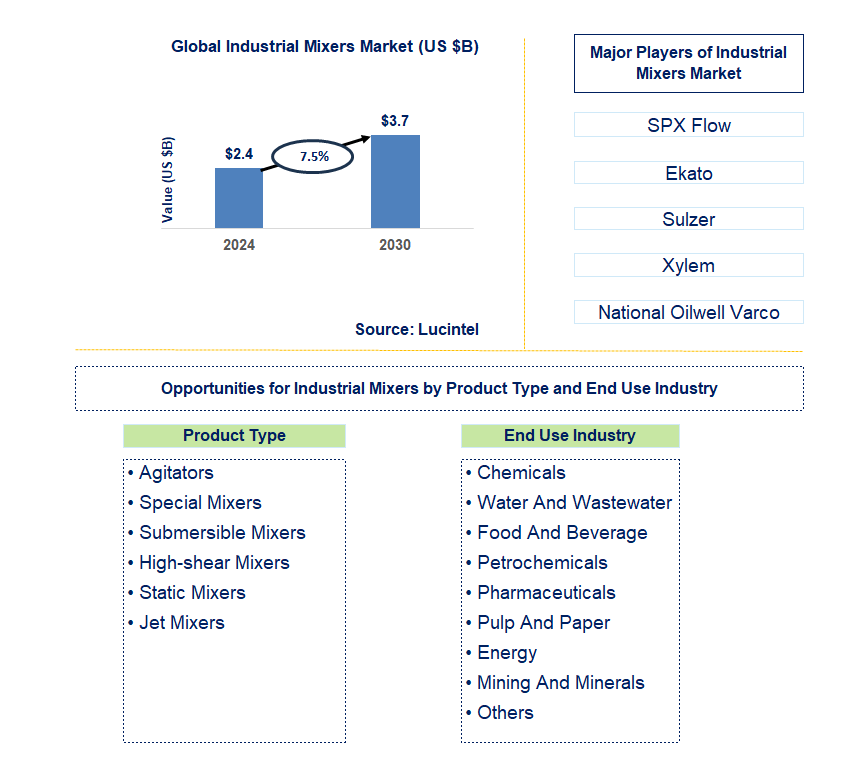
Key data points: The market size in 2030 = $3.7 billion, growth forecast = 7.5% annually for the next 6 years. Scroll below to get more insights. This market report covers trends, opportunities, and forecasts in the global industrial mixers market to 2030 by product type (agitators, special mixers, submersible mixers, high-shear mixers, static mixers, and jet mixers), end use industry (chemicals, water and wastewater, food and beverage, petrochemicals, pharmaceuticals, pulp and paper, energy, mining and minerals, and others), and region (North America, Europe, Asia Pacific, and the Rest of the World)
We'll send your sample report shortly.
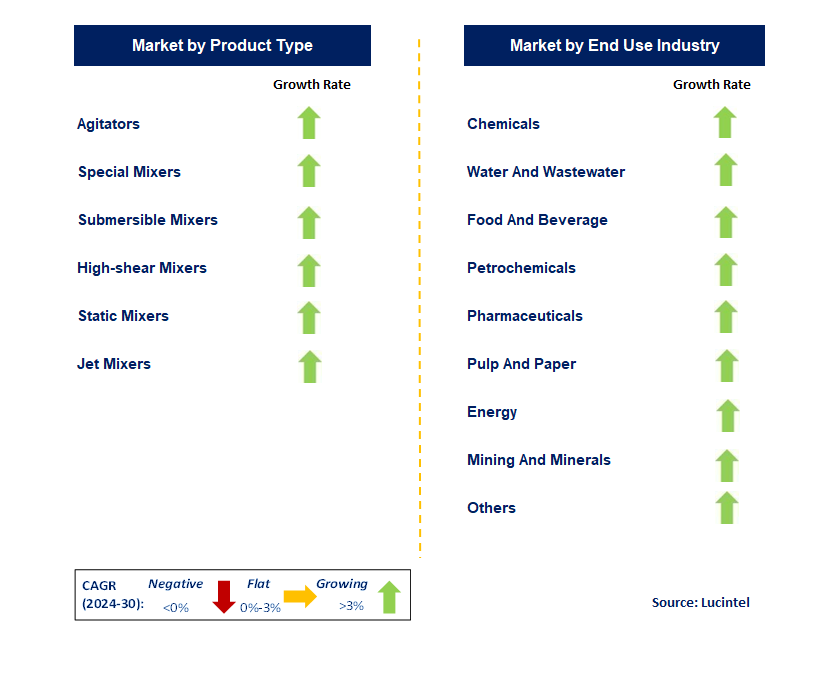
• Lucintel forecasts that, within the product type category, agitators are expected to witness the highest growth over the forecast period.
• Within the end-use category, food and beverage will remain the largest segment.
• In terms of regions, APAC is expected to witness the highest growth over the forecast period. Gain valuable insights for your business decisions with our comprehensive 150+ page report.
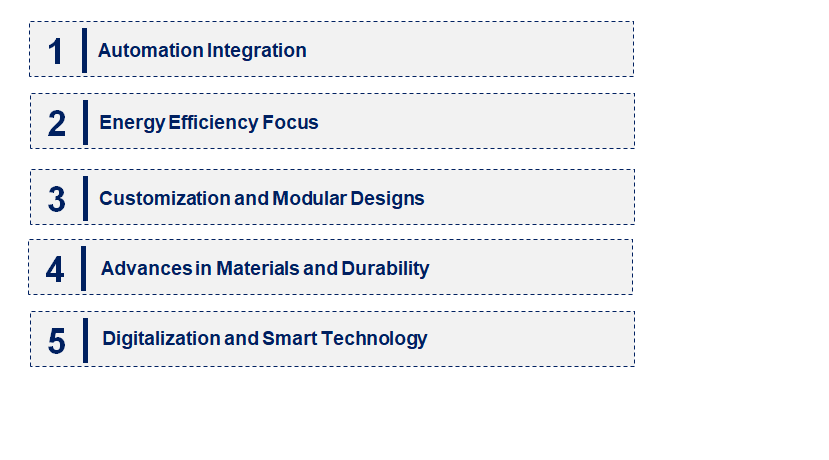
• Automation Integration – It is becoming necessary for automatic control systems, together with Internet of Things applications, to be incorporated into industrial mixers worldwide. This enhances operational efficiencies such as accuracy and time-saving through real-time production monitoring, leading to better process control and reducing manual intervention.
• Energy Efficiency Focus – Energy-saving mixers are increasingly emphasized because they not only reduce power consumption but also lower costs associated with operations. They involve optimized designs capable of maintaining high performance while conforming to global sustainability goals and regulations.
• Customization and Modular Designs – It is possible to have mixers designed with various modules for easy customization. This enables the mixers to fit easily into different production processes, thereby increasing system performance.
• Advances in Materials and Durability – Industrial mixers are now made of new materials that can extend their lifespan while improving durability. For example, they have better anti-corrosion properties and enhanced resistance to issues such as wear and corrosion, thereby reducing maintenance costs usually incurred during their use.
• Digitalization and Smart Technology – The industrial mixers sector is being transformed through digital technologies such as smart sensors and data analytics. These technological advancements help decision-makers gain real-time insights into how a mixer is performing, minimizing downtime costs within manufacturing facilities by allowing timely repairs when needed. These trends are changing the landscape of the industrial mixers market by driving innovation, enhancing efficiency, and adapting to the changing needs across sectors.
• Advanced Automation Systems – This has brought highly sophisticated automation systems into mixers, allowing for accurate control and monitoring on a real-time basis. Such systems enable more efficient operations by eliminating manual adjustments and improving overall process control.
• Energy-Efficient Designs – Recent designs target energy efficiency while incorporating features aimed at reducing power consumption. These innovations support sustainable practices, minimizing operational expenses and ensuring compliance with international environmental regulations.
• Customization and Modularity – The rise of customizable, modular mixers provides flexibility for various applications. These designs are easy to modify to meet specific process requirements, enhancing performance and improving integration.
• Durability Enhancements – The durability of industrial mixers has been improved through innovations in materials and coatings. These innovations address issues such as wear and corrosion, extending the lifespan of mixers and reducing maintenance needs.
• Digital & Smart Features – Digital technologies like IoT and data analytics have improved the functionality of mixers. This has created new opportunities for real-time mixing data, predictive maintenance, and better processing control, which increases overall efficiencies. These advances have positively impacted product performance, regulatory compliance, and the evolving industry scenarios within the industrial mixer market.
• Food & Beverage Industry – The food and beverage sector presents opportunities for hygienically advanced and efficient mixers. Innovations in these mixers support quality control and production scalability to meet industry-specific requirements.
• Pharmaceuticals Sector – This industry needs mixers that can achieve precise control to prevent contamination. By developing hygienic versions that meet the accuracy standards necessary for drug manufacturing processes, there is an opportunity for further growth in this field.
• Chemical Processing – The chemical processing industry requires high-capacity, durable mixers. Developing mixers that can handle aggressive chemicals or provide steady output at large-scale operations would be potential areas for investment in this sector.
• Cosmetics and Personal Care – In the cosmetics industry, product formulation uniformity is essential. Therefore, they require reliable mixers. Making improvements focused on precision, combined with versatility, will help serve the special needs of diverse markets, aiding manufacturing efficiency when creating new products for specific audiences, thus improving production efficiency.
• Environmental/Waste Management – There is also huge potential within environmental and waste management applications for mixer sales. To meet the needs of this industry, it will be necessary to develop strong mixers capable of handling difficult materials and processing them quickly. These expansion opportunities constitute the major forces driving the industrial mixers market, leading to the creation of new applications and triggering innovation in various industries, ultimately improving the sector’s ability to respond to changing and varied demands.
• Technological Advancements: Automation, digitalization, and innovative materials have driven the growth of this market. These developments help improve the performance, efficiency, and control operations of mixers currently used in modern industries.
• Growing Industrialization: The development of industrialization and manufacturing sectors increases the demand for advanced mixers. This necessitates the development of reliable, high-performing mixers that support different production processes.
• Energy Efficiency Regulations: The market is characterized by stricter energy use regulations, leading to a growing need for the development of energy-efficient mixers. As a result, operational costs are reduced while supporting sustainability goals and ensuring compliance with regulations.
• Customization Demands: There is an increasing need for customizable, modular mixer solutions, which has led to innovation. Manufacturers are focusing on providing tailored solutions that meet specific application requirements and enhance overall performance.
• Economic Fluctuations: Fluctuations in the economy can lead to downturns that affect industry production volumes. Manufacturers must strive to maintain profit margins and market stability during challenging times. Challenges in the industrial mixers market include:
• Material Costs: The increasing cost of high-performance materials can impact pricing structures and profitability levels for mixer manufacturers. Manufacturers should balance product quality and performance while managing material costs to avoid compromising either aspect.
• Supply Chain Challenges: Disruptions in global supply chains can result in shortages and increased prices for components used in mixers. As a result, manufacturers may incur additional operational costs, affecting market stability.
• Regulatory Compliance: Meeting rigorous regulatory standards on performance and environmental impact remains challenging. Manufacturers must ensure that their products meet these requirements to achieve market acceptance and reliability. These drivers and challenges are restructuring the industrial mixers market by influencing growth paths, spurring innovation, and responding to changing industry needs and government regulations.
• SPX Flow
• Ekato
• Sulzer
• Xylem
• National Oilwell Varco
• Alfa Laval
• Dover
• Shenyin
• Philadelphia
• Zhejiang Great Wall Mixers
• Agitators
• Special Mixers
• Submersible Mixers
• High-shear Mixers
• Static Mixers
• Jet Mixers
• Chemicals
• Water And Wastewater
• Food And Beverage
• Petrochemicals
• Pharmaceuticals
• Pulp And Paper
• Energy
• Mining And Minerals
• Others
• North America
• Europe
• Asia Pacific
• The Rest of the World
• United States – The US is focusing on incorporating industrial mixers with automation and digitization to make them smarter. Advanced control systems and IoT capabilities have emerged to improve precision and efficiency in industries such as food and beverage and pharmaceuticals.
• China – The Chinese industrial mixers market is growing rapidly toward high-capacity, energy-efficient mixers. With these improvements, the chemicals and materials processing sectors will be better equipped to handle the increased demands from the country’s fast-growing industrial sector.
• Germany – Germany leads in developing high-precision industrial mixers with a focus on sustainability. New models recently introduced include energy-efficient mixers with minimal environmental impact that adhere to stringent environmental legislation and industrial standards.
• India – India’s market is moving toward cost-effective yet versatile industrial mixers. Trends are focused on improving durability and performance due to the ever-increasing demand from expanding manufacturing and food processing industries.
• Japan – Japan’s mixer market features advanced technology characterized by high-performance, compact designs. Recent innovations include more automated mixers that can meet the higher precision levels needed for electronics and technology products produced in this jurisdiction.


• SPX Flow
• EKATO
• Sulzer
• Xylem
• National Oilwell Varco
• ALFA LAVAL
• Dover
• Shenyin
• Philadelphia
• Zhejiang Great Wall Mixers Q6. Which industrial mixers market segment will be the largest in future? Answer: Lucintel forecasts that agitators is expected to witness the highest growth over the forecast period. Q7. In industrial mixers market, which region is expected to be the largest in next 5 years? Answer: APAC is expected to witness the highest growth over the forecast period. Q.8 Do we receive customization in this report? Answer: Yes, Lucintel provides 10% customization without any additional cost.


Choose a license that fits your team. Instant PDF delivery.
Prices exclude taxes. Instant delivery. Custom licensing available on request.
Market Report · July 31, 2026
Market Report · July 22, 2026
Market Report · July 20, 2026
Trusted partner for strategic intelligence and business growth


Receive a complimentary market analysis tailored to your industry. Our analysts will identify key growth opportunities and competitive dynamics specific to your business.

Market size, growth rate, and key trend analysis for your specific sector.

Top competitor positioning and market share analysis.

Strategic recommendations backed by data-driven insights.
Get curated market intelligence and competitive moves straight to your inbox.
By subscribing, you agree to receive our monthly insights. Unsubscribe anytime.
Receive a complimentary market analysis tailored to your industry. Our analysts will identify key growth opportunities and competitive dynamics specific to your business.
Market size, growth rate, and key trend analysis for your specific sector.
Top competitor positioning and market share analysis.
Strategic recommendations backed by data-driven insights.
Get curated market intelligence, emerging trends, and competitive moves straight to your inbox each month.
By subscribing, you agree to receive our monthly insights. Unsubscribe anytime.
We'll send your sample report shortly.