
Market Report · July 16, 2026

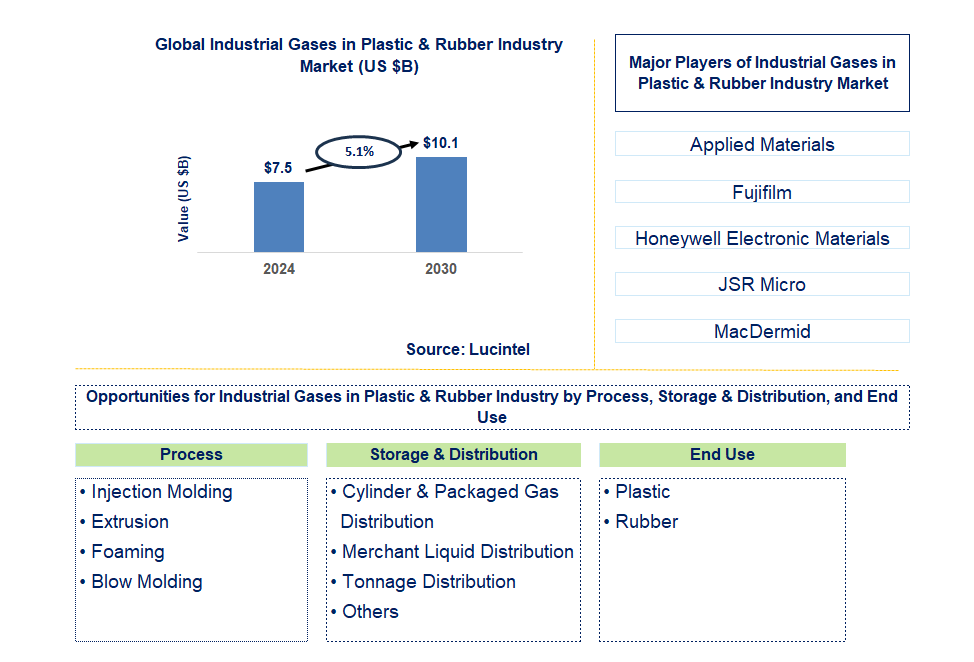
Key data points: The market size in 2030 = $10.1 billion, growth forecast = 5.1% annually for the next 6 years. Scroll below to get more insights. This market report covers trends, opportunities, and forecasts in the global industrial gases in plastic & rubber industry market to 2030 by process (injection molding, extrusion, foaming, and blow molding), storage & distribution (cylinder & packaged gas distribution, merchant liquid distribution, tonnage distribution, and others), end use (plastic and rubber), and region (North America, Europe, Asia Pacific, and the Rest of the World)
We'll send your sample report shortly.
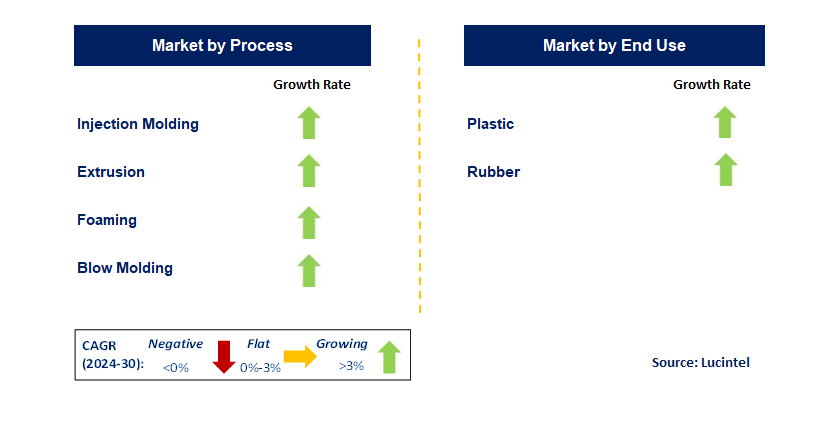
• Lucintel forecasts that, within the process category, injection molding will remain the largest segment over the forecast period due to its many advantages over alternative techniques, such as blow molding, extrusion, and foaming.
• Within the end use category, plastic will remain the largest segment due to significant use of industrial gases in the plastic manufacturing process to mold large plastics into complex shapes and designs.
• In terms of regions, APAC will remain the largest region over the forecast period due to presence of key manufacturing units and substantial demand for plastic and rubber from various end use industries, such as automotive, construction, packaging and electrical & electronics in the region.
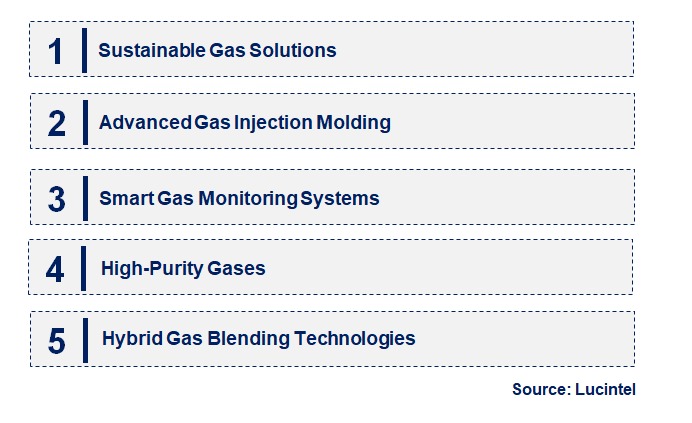
• Sustainable Gas Solutions: There is a growing trend towards the use of sustainable gases, such as carbon-neutral or recycled gases, in the plastic and rubber industries. This shift is driven by the need to reduce carbon footprints and comply with stringent environmental regulations, leading to greener manufacturing processes.
• Advanced Gas Injection Molding: The use of gas injection molding technology is gaining traction, offering improved product quality and reduced material usage. This trend is particularly significant in automotive and consumer goods manufacturing, where precision and material efficiency are critical.
• Smart Gas Monitoring Systems: The integration of smart monitoring systems in gas applications is emerging as a key trend. These systems enable real-time monitoring and control of gas usage, optimizing production processes, reducing waste, and ensuring safety in industrial operations.
• High-Purity Gases: Demand for high-purity gases is rising, particularly in the production of high-performance plastics and rubbers. These gases ensure consistent quality and performance in specialized applications, such as medical devices and aerospace components, where material integrity is paramount.
• Hybrid Gas Blending Technologies: Hybrid gas blending technologies are becoming more prevalent, allowing for customized gas mixtures that enhance the properties of plastic and rubber products. This trend is driven by the need for tailored solutions in industries like automotive, where specific material characteristics are required.
• Carbon Capture and Utilization (CCU): The adoption of carbon capture and utilization technologies is a significant development in the industry. By capturing CO2 emissions and repurposing them for industrial gas applications, companies are reducing their carbon footprints and contributing to more sustainable manufacturing processes.
• Innovative Gas Injection Molding: Recent advancements in gas injection molding techniques have led to more efficient production processes in the plastic and rubber industries. These innovations reduce material waste, improve product quality, and lower energy consumption, making them essential for cost-effective manufacturing.
• Development of Biodegradable Plastics: The use of industrial gases in the production of biodegradable plastics is an emerging development. This innovation addresses environmental concerns by creating sustainable alternatives to traditional plastics, reducing the industry's reliance on non-renewable resources, and minimizing plastic waste.
• Expansion of Gas Distribution Networks: The expansion of gas distribution networks, particularly in emerging markets, is enhancing the availability of industrial gases for plastic and rubber manufacturing. This development supports the growth of local industries and improves access to high-quality gases, driving regional economic growth.
• Enhanced Gas Recovery Systems: The implementation of advanced gas recovery systems is helping companies improve resource efficiency and reduce operational costs. These systems capture and recycle industrial gases used in production, minimizing waste and reducing the environmental impact of manufacturing processes.
• Lightweight Automotive Components: The use of industrial gases in the production of lightweight automotive components offers significant growth opportunities. By improving the strength-to-weight ratio of plastics and rubbers, these gases enable the production of more fuel-efficient vehicles, meeting the growing demand for eco-friendly transportation solutions.
• Medical Device Manufacturing: Industrial gases play a crucial role in the manufacturing of high-performance medical devices. Gases like oxygen and nitrogen are used in sterilization processes and the production of medical-grade plastics, supporting the growing demand for reliable and safe medical products.
• High-Performance Packaging Solutions: The packaging industry is leveraging industrial gases to create high-performance, sustainable packaging solutions. These gases are used to produce barrier materials that extend product shelf life and reduce packaging waste, catering to the demand for eco-friendly packaging options.
• Electronics and Semiconductor Manufacturing: In the electronics and semiconductor industries, industrial gases are essential for producing high-purity plastics and rubbers used in various components. The demand for advanced electronics is driving growth in this application, with gases ensuring the quality and reliability of critical materials.
• Aerospace and Defense Applications: The aerospace and defense industries are increasingly using industrial gases to produce lightweight, high-strength materials for various applications. These gases help create components that meet stringent performance standards, driving growth in these high-tech sectors.
• Technological Advancements: Innovations in gas applications, such as improved gas injection molding and smart monitoring systems, are driving efficiency and quality improvements in plastic and rubber manufacturing. These advancements enable companies to produce higher-quality products at lower costs, fostering industry growth.
• Environmental Regulations: Stringent environmental regulations are pushing companies to adopt sustainable practices, including the use of green gases and carbon capture technologies. Compliance with these regulations is driving the industry towards more eco-friendly production methods, reducing the environmental impact of manufacturing.
• Rising Demand for High-Performance Materials: The increasing demand for high-performance plastics and rubbers, particularly in the automotive, aerospace, and electronics industries, is a major driver. Industrial gases play a crucial role in producing these materials, ensuring their quality and performance meet industry standards.
• Globalization of Manufacturing: The globalization of manufacturing is expanding the market for industrial gases in the plastic and rubber industries. As companies establish production facilities in emerging markets, the demand for industrial gases is increasing, driving growth in these regions.
• Cost Reduction Initiatives: Companies are increasingly focused on reducing production costs, driving the adoption of advanced gas recovery and recycling systems. These initiatives help companies optimize resource usage and minimize waste, improving profitability and competitiveness in the market.
Challenges in the industrial gases in the plastic and rubber industry market are:• Supply Chain Disruptions: Global supply chain disruptions, exacerbated by geopolitical tensions and the COVID-19 pandemic, present significant challenges. These disruptions impact the availability of industrial gases, leading to production delays and increased costs for manufacturers in the plastic and rubber industries.
• Energy Costs: The high energy costs associated with producing and distributing industrial gases pose a challenge for the industry. Fluctuations in energy prices can impact the profitability of gas suppliers and manufacturers, requiring careful management of resources and costs.
• Regulatory Compliance: Navigating complex regulatory environments across different regions is a challenge for companies in the industrial gases market. Compliance with varying environmental and safety regulations requires significant investment in technology and processes, adding to operational costs.
• Applied Materials
• Fujifilm
• Honeywell Electronic Materials
• JSR Micro
• MacDermid
• Merck
• Microchem
• Shin-Etsu Chemical
• DuPont
• Tokyo Ohka Kogyo
• Injection Molding
• Extrusion
• Foaming
• Blow Molding
• Cylinder & Packaged Gas Distribution
• Merchant Liquid Distribution
• Tonnage Distribution
• Others
• Plastic
• Rubber
• North America
• Europe
• Asia Pacific
• The Rest of the World
• United States: In the U.S., recent developments focus on enhancing the efficiency and sustainability of industrial gases used in plastic and rubber manufacturing. Companies are investing in new technologies for gas recovery and recycling, aiming to reduce emissions and improve overall production efficiency, aligning with stringent environmental regulations.
• China: China is advancing rapidly in the industrial gases sector, particularly in the rubber industry, where the focus is on improving the quality of synthetic rubber products. The country is also investing in green technologies, such as carbon capture and storage (CCS), to reduce the environmental impact of gas usage in manufacturing.
• Germany: Germany continues to lead in technological innovation within the industrial gases market, focusing on precision gas applications in plastic and rubber manufacturing. Recent developments include advancements in gas injection molding techniques, which enhance product quality while reducing material waste and energy consumption.
• India: India's industrial gas market is expanding, driven by increased demand in the plastic and rubber sectors. Recent developments include investments in gas distribution infrastructure and the adoption of advanced gas blending technologies, which improve the efficiency and quality of plastic and rubber products while reducing costs.
• Japan: Japan is focusing on integrating advanced industrial gases into its high-tech manufacturing processes. Developments include the use of gases like nitrogen and carbon dioxide in cutting-edge plastic molding techniques, which improve the durability and performance of rubber and plastic components, especially in the automotive and electronics industries.


• Applied Materials
• Fujifilm
• Honeywell Electronic Materials
• JSR Micro
• MacDermid
• Merck
• Microchem
• Shin-Etsu Chemical
• DuPont
• Tokyo Ohka Kogyo
Q6. Which industrial gases in the plastic & rubber industry market segment will be the largest in future?

Choose a license that fits your team. Instant PDF delivery.
Prices exclude taxes. Instant delivery. Custom licensing available on request.
Market Report · July 16, 2026
Market Report · July 15, 2026
Market Report · July 15, 2026
Trusted partner for strategic intelligence and business growth


Receive a complimentary market analysis tailored to your industry. Our analysts will identify key growth opportunities and competitive dynamics specific to your business.

Market size, growth rate, and key trend analysis for your specific sector.

Top competitor positioning and market share analysis.

Strategic recommendations backed by data-driven insights.
Get curated market intelligence and competitive moves straight to your inbox.
By subscribing, you agree to receive our monthly insights. Unsubscribe anytime.
Receive a complimentary market analysis tailored to your industry. Our analysts will identify key growth opportunities and competitive dynamics specific to your business.
Market size, growth rate, and key trend analysis for your specific sector.
Top competitor positioning and market share analysis.
Strategic recommendations backed by data-driven insights.
Get curated market intelligence, emerging trends, and competitive moves straight to your inbox each month.
By subscribing, you agree to receive our monthly insights. Unsubscribe anytime.
We'll send your sample report shortly.