
Market Report · July 22, 2026

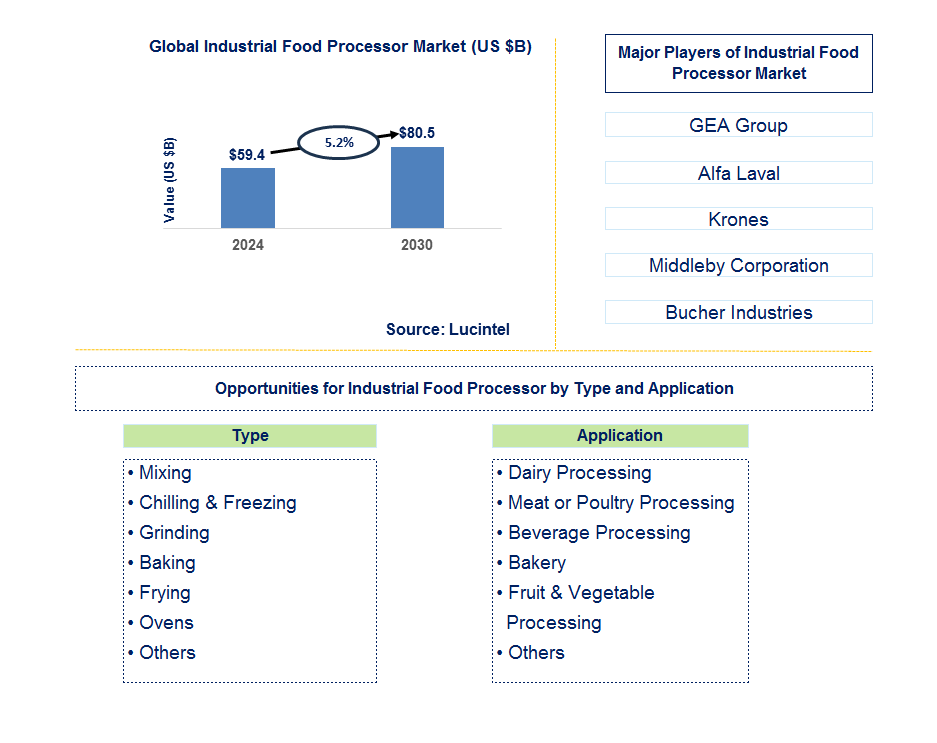
Key data points: The market size in 2030 = $80.5 billion, growth forecast = 5.2% annually for the next 6 years. Scroll below to get more insights. This market report covers trends, opportunities, and forecasts in the global industrial food processor market to 2030 by type (mixing, chilling & freezing, grinding, baking, frying, ovens, and others), application (dairy processing, meat or poultry processing, beverage processing, bakery, fruit & vegetable processing, and others), and region (North America, Europe, Asia Pacific, and the Rest of the World)
We'll send your sample report shortly.
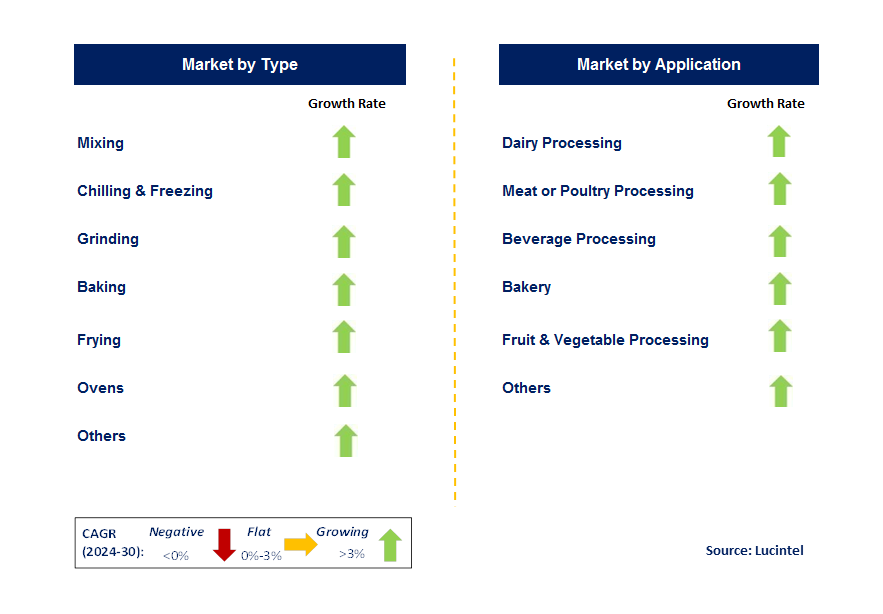
• Lucintel forecasts that cutting & chopping is expected to witness the highest growth over the forecast period.
• Within this market, meat or poultry processing will remain the largest segment.
• APAC will remain the largest region over the forecast period.
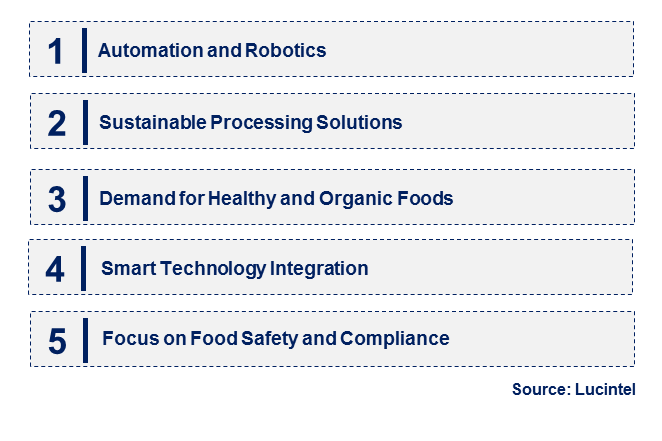
• Automation and Robotics: The integration of automation and robotics in food processing is revolutionizing the industry. Manufacturers are adopting automated systems to enhance efficiency, reduce labor costs, and improve consistency in food production. This trend allows companies to scale operations rapidly and meet increasing demand while minimizing human error.
• Sustainable Processing Solutions: With rising environmental concerns, there is a growing demand for sustainable processing solutions. Companies are focusing on energy-efficient machinery and waste reduction technologies. This trend not only helps reduce the environmental footprint but also appeals to eco-conscious consumers, enhancing brand reputation and customer loyalty.
• Demand for Healthy and Organic Foods: The increasing consumer preference for healthy and organic products is driving innovations in food processing. Manufacturers are adapting their equipment to produce organic snacks, plant-based proteins, and other health-focused foods. This trend requires advanced processing technologies to maintain nutritional quality while meeting safety standards.
• Smart Technology Integration: The incorporation of smart technologies, such as IoT and AI, is enhancing operational efficiency in food processing. Real-time data analytics and monitoring systems allow manufacturers to optimize production processes and reduce waste. This trend helps improve product quality and facilitates better decision-making in supply chain management.
• Focus on Food Safety and Compliance: Growing regulatory pressures regarding food safety are prompting manufacturers to invest in advanced processing technologies. Enhanced traceability, hygiene standards, and quality control measures are becoming essential. This trend not only ensures compliance but also builds consumer trust in food products. These emerging trends are significantly reshaping the industrial food processor market by driving innovation, enhancing efficiency, and addressing consumer demands for health and sustainability. As manufacturers adapt to these trends, they are positioned to thrive in a competitive landscape, ensuring product quality and safety.
• Investment in Smart Processing Technologies: Many manufacturers are investing heavily in smart processing technologies to improve efficiency and reduce operational costs. Automation, data analytics, and IoT integration are becoming standard practices. This development enhances production capabilities, allowing companies to meet rising demand while maintaining quality and safety standards.
• Expansion of Plant-Based Processing Equipment: The growing popularity of plant-based foods is driving demand for specialized processing equipment. Manufacturers are developing machines designed specifically for plant-based ingredients, enabling faster and more efficient production. This trend supports the increasing consumer shift toward healthier and more sustainable food options.
• Focus on Energy Efficiency: There is a significant push toward energy-efficient machinery in the industrial food processor market. Companies are seeking equipment that reduces energy consumption while maximizing output. This development not only lowers operational costs but also aligns with global sustainability goals, appealing to environmentally conscious consumers.
• Enhanced Food Safety Protocols: The implementation of stricter food safety regulations is leading manufacturers to adopt advanced processing technologies. Enhanced hygiene measures, traceability systems, and quality control processes are becoming essential. This development builds consumer trust and ensures compliance with regulatory standards.
• Rise of Customization and Flexibility: Manufacturers are increasingly focusing on customizable processing solutions to meet specific client needs. This trend allows companies to adapt quickly to market changes and consumer preferences. By offering tailored solutions, brands can enhance customer satisfaction and loyalty. These key developments indicate how the industrial food processor market is evolving in response to technological advancements and consumer demands. By focusing on smart technologies, plant-based solutions, energy efficiency, food safety, and customization, companies are positioning themselves for sustained growth and success.
• Expansion into Emerging Markets: Emerging markets, particularly in Asia and Africa, present significant growth opportunities for industrial food processors. Rising disposable incomes and changing lifestyles are driving demand for processed foods. Companies that enter these markets can capitalize on growing consumer bases and increasing urbanization.
• Development of Innovative Processing Technologies: Investing in innovative processing technologies is crucial for companies looking to differentiate themselves. Advanced machinery that enhances efficiency and quality can attract clients seeking competitive advantages. Companies that lead in technological innovation will gain market share and establish strong brand identities.
• Focus on Nutritional and Functional Foods: There is a rising demand for nutritional and functional foods that cater to health-conscious consumers. Manufacturers can seize this opportunity by developing processing equipment that supports the production of enriched foods, functional snacks, and health-oriented products. This trend aligns with consumer preferences for healthier options.
• Customization of Processing Solutions: Offering customizable processing solutions can help manufacturers meet specific client needs and adapt to market changes. By providing tailored machinery and processes, companies can enhance customer satisfaction and loyalty, positioning themselves as flexible partners in the food processing industry.
• Integration of Sustainable Practices: Emphasizing sustainability in food processing presents opportunities for brand differentiation. Companies can invest in eco-friendly technologies and practices that minimize waste and energy consumption. This trend not only appeals to environmentally conscious consumers but also enhances corporate social responsibility efforts. These strategic growth opportunities highlight the potential for innovation and expansion in the industrial food processor market. By focusing on emerging markets, innovative technologies, nutritional products, customization, and sustainability, companies can position themselves for long-term growth and success in a competitive landscape.
• Rising Demand for Processed Foods: The increasing global demand for processed foods is driving growth in the industrial food processor market. Urbanization and changing lifestyles lead to higher consumption of ready-to-eat meals and packaged foods. This driver presents significant opportunities for manufacturers to expand their production capacities and product offerings.
• Technological Advancements: Innovations in food processing technology are enhancing operational efficiency and product quality. Automation, smart technologies, and improved machinery are becoming essential for manufacturers seeking to stay competitive. This driver encourages continuous investment in research and development, leading to better processing solutions.
• Focus on Food Safety: Growing consumer awareness of food safety is prompting manufacturers to invest in advanced processing technologies. Enhanced safety protocols, traceability systems, and quality control measures are crucial for compliance with regulatory standards. This focus not only ensures product safety but also builds consumer trust.
• Health-Conscious Consumer Trends: The increasing demand for healthier food options is driving innovation in food processing. Manufacturers are adapting to consumer preferences for organic, plant-based, and functional foods. This driver encourages the development of specialized processing technologies that maintain nutritional quality while ensuring safety.
• Globalization of Food Supply Chains: The globalization of food supply chains is influencing the industrial food processor market. Companies are expanding their operations to meet international demand, requiring advanced processing solutions that cater to diverse markets. This driver facilitates collaboration and innovation across borders, enhancing product availability. Challenges in the industrial food processor market are:
• Regulatory Compliance: Stricter food safety regulations pose challenges for manufacturers in the industrial food processor market. Companies must invest in technologies and practices that ensure compliance, which can lead to increased operational costs. Navigating complex regulatory landscapes is essential to maintain market access.
• Market Competition: The industrial food processor market is highly competitive, with numerous players vying for market share. Companies must continuously innovate and differentiate their products to stand out. This competitive pressure can strain resources and require ongoing investment in marketing and product development.
• Supply Chain Disruptions: Recent global events have highlighted vulnerabilities in supply chains, affecting the availability of raw materials and processing equipment. Companies must navigate these challenges to ensure consistent production and supply, which can impact sales and customer satisfaction. These drivers and challenges collectively shape the industrial food processor market, influencing strategies for growth and sustainability. Companies that effectively leverage drivers while addressing challenges will be better positioned to thrive in an increasingly competitive landscape.
• Mixing
• Chilling & Freezing
• Grinding
• Baking
• Frying
• Ovens
• Others
• North America
• Europe
• Asia Pacific
• The Rest of the World
• United States: The U.S. industrial food processor market is seeing a shift toward automation and smart technologies. Manufacturers are investing in advanced processing equipment that enhances efficiency and reduces labor costs. Additionally, sustainability is a growing focus, with companies adopting eco-friendly practices and equipment. The rise in demand for plant-based foods is also influencing product development, pushing manufacturers to innovate.
• China: China's industrial food processor market is booming, driven by rapid urbanization and rising disposable incomes. There is a strong demand for advanced processing technology to meet the growing consumption of packaged and processed foods. Chinese manufacturers are increasingly focusing on automation and smart solutions to improve efficiency and quality. Regulatory pressures regarding food safety are also prompting investments in modern processing equipment.
• Germany: Germany remains a leader in the industrial food processor market, known for its emphasis on quality and innovation. The focus is on developing energy-efficient machinery that complies with stringent EU regulations. Additionally, the rise of plant-based diets has led to increased demand for specialized processing equipment. Manufacturers are also investing in digital technologies to enhance operational efficiency and traceability.
• India: The industrial food processor market in India is expanding rapidly, fueled by growing urbanization and changing consumer preferences. Investments in modern processing equipment are on the rise, with a focus on improving food safety and quality. The demand for processed and packaged foods is driving manufacturers to adopt advanced technologies and automation solutions. Government initiatives supporting the food processing industry are further boosting market growth.
• Japan: Japan's industrial food processor market is characterized by a focus on innovation and high-quality standards. There is a strong demand for automation and robotics to enhance production efficiency. Manufacturers are also investing in research and development to create advanced processing technologies that cater to consumer preferences for convenience and health. The aging population is influencing trends toward ready-to-eat and nutritious food options.




Choose a license that fits your team. Instant PDF delivery.
Prices exclude taxes. Instant delivery. Custom licensing available on request.
Market Report · July 22, 2026
Market Report · July 22, 2026
Market Report · July 22, 2026
Trusted partner for strategic intelligence and business growth


Receive a complimentary market analysis tailored to your industry. Our analysts will identify key growth opportunities and competitive dynamics specific to your business.

Market size, growth rate, and key trend analysis for your specific sector.

Top competitor positioning and market share analysis.

Strategic recommendations backed by data-driven insights.
Get curated market intelligence and competitive moves straight to your inbox.
By subscribing, you agree to receive our monthly insights. Unsubscribe anytime.
Receive a complimentary market analysis tailored to your industry. Our analysts will identify key growth opportunities and competitive dynamics specific to your business.
Market size, growth rate, and key trend analysis for your specific sector.
Top competitor positioning and market share analysis.
Strategic recommendations backed by data-driven insights.
Get curated market intelligence, emerging trends, and competitive moves straight to your inbox each month.
By subscribing, you agree to receive our monthly insights. Unsubscribe anytime.
We'll send your sample report shortly.