
Report Feature
In-Game Advertising Platform Market Trends and Forecast
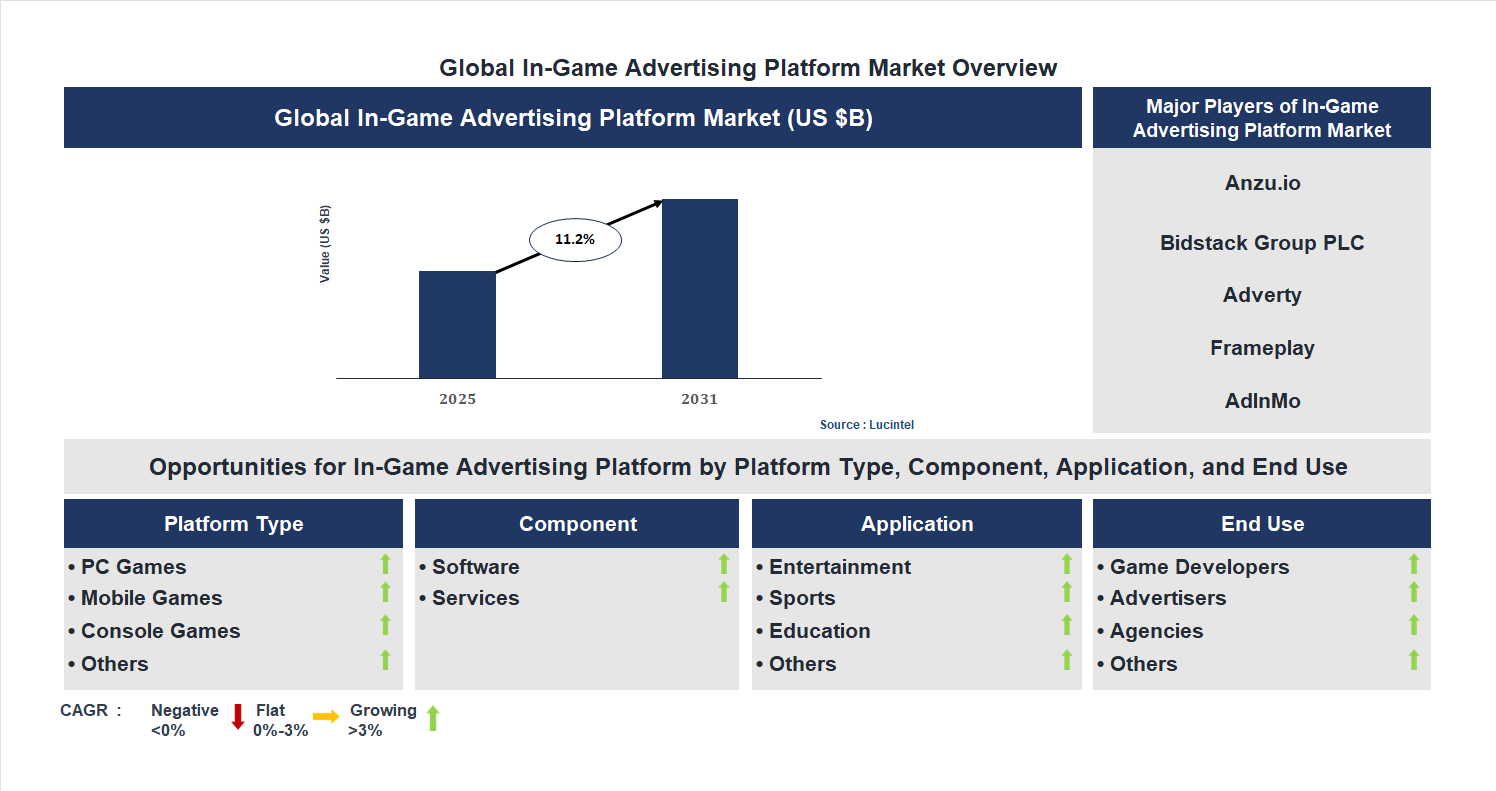
The future of the global in-game advertising platform market looks promising with opportunities in the entertainment, sports, and education markets. The global in-game advertising platform market is expected to grow with a CAGR of 11.2% from 2025 to 2031. The major drivers for this market are the increasing demand for immersive gaming experiences, the rising adoption of digital marketing strategies, and the growing integration of ads in mobile games.• Lucintel forecasts that, within the platform type category, mobile game is expected to witness the highest growth over the forecast period.
• Within the application category, entertainment is expected to witness the highest growth.
• In terms of region, APAC is expected to witness the highest growth over the forecast period. Gain valuable insights for your business decisions with our comprehensive 150+ page report. Sample figures with some insights are shown below.
Emerging Trends in the In-Game Advertising Platform Market
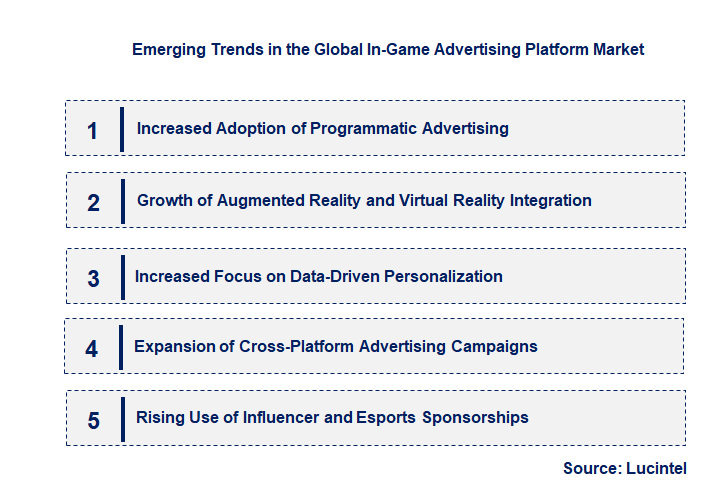
The in-game advertising platform market is experiencing rapid growth driven by advancements in gaming technology, increased user engagement, and the evolving digital advertising landscape. As gamers become a primary target for brands, the market is adapting with innovative solutions to deliver more personalized and immersive advertising experiences. The integration of data analytics, programmatic advertising, and augmented reality is transforming how brands connect with audiences within gaming environments. These developments are not only expanding market opportunities but also redefining the way advertisers approach digital marketing strategies. Understanding these emerging trends is crucial for stakeholders aiming to capitalize on this dynamic industry.• Increased Adoption of Programmatic Advertising: The rise of programmatic technology allows for real-time, automated ad placements within games, enhancing targeting precision and efficiency. This trend enables advertisers to reach specific demographics with personalized content, improving engagement rates and ROI. As programmatic platforms become more sophisticated, they facilitate seamless integration of ads into various gaming formats, including mobile, PC, and console games. This shift is making in-game advertising more scalable and data-driven, attracting more brands to invest in this space.
• Growth of Augmented Reality (AR) and Virtual Reality (VR) Integration: AR and VR technologies are creating immersive advertising experiences that blend seamlessly with gameplay. Brands are leveraging AR/VR to develop interactive ads that enhance user engagement and brand recall. This trend is particularly prominent in mobile gaming and virtual worlds, where immersive experiences can be customized to target specific audiences. The adoption of AR/VR in in-game advertising is expected to increase, offering new avenues for experiential marketing and deeper consumer interaction.
• Increased Focus on Data-Driven Personalization: Data analytics are playing a pivotal role in tailoring in-game advertisements to individual players' preferences and behaviors. By analyzing user data, advertisers can deliver highly relevant ads that resonate with players, leading to higher conversion rates. This trend is supported by advancements in machine learning and AI, which enable real-time personalization. As a result, in-game advertising is becoming more effective and less intrusive, fostering a better user experience while maximizing advertising impact.
• Expansion of Cross-Platform Advertising Campaigns: The convergence of gaming platforms—mobile, PC, console, and cloud gaming—is facilitating integrated advertising campaigns across multiple channels. This cross-platform approach allows brands to maintain consistent messaging and reach audiences wherever they play. It also enables more comprehensive data collection and audience segmentation. As the gaming ecosystem becomes more interconnected, advertisers can leverage unified campaigns to increase reach, engagement, and conversion rates, making in-game advertising a more cohesive component of broader marketing strategies.
• Rising Use of Influencer and Esports Sponsorships: Influencers and esports events are becoming key channels for in-game advertising, providing authentic and engaging brand exposure. Collaborations with popular gamers and sponsorship of esports tournaments help brands connect with highly engaged audiences. This trend enhances brand visibility and credibility within gaming communities, often leading to viral marketing effects. As esports continues to grow globally, the integration of sponsorships and influencer marketing within in-game advertising strategies is expected to expand, offering new monetization opportunities and audience engagement methods. In summary, these emerging trends are fundamentally reshaping the in-game advertising platform market by making advertising more targeted, immersive, personalized, integrated, and engaging. They are driving innovation, expanding market reach, and creating new opportunities for brands to connect with gaming audiences in meaningful ways. As these developments continue, the market is poised for sustained growth and transformation, reflecting the evolving landscape of digital entertainment and advertising.
Recent Development in the In-Game Advertising Platform Market
The in-game advertising platform market is experiencing rapid growth driven by the increasing popularity of online gaming and digital advertising. As gamers spend more time and money on gaming platforms, advertisers see new opportunities to reach targeted audiences effectively. Technological advancements and evolving consumer preferences are shaping the landscape, making in-game advertising a vital component of digital marketing strategies. This report highlights five key developments that are transforming the market and creating new avenues for growth and innovation.• Expansion of Programmatic Advertising: The integration of programmatic technology in in-game advertising allows for real-time ad placement and targeting. This development enhances efficiency, improves ad relevance, and maximizes return on investment for brands. As a result, advertisers can reach specific demographics with precision, increasing engagement and conversion rates. The market benefits from increased automation, scalability, and data-driven insights, making in-game advertising more attractive and accessible to a broader range of brands.
• Growth of Mobile Gaming Platforms: The surge in mobile gaming has opened new avenues for in-game advertising, reaching a vast and diverse audience. Mobile games often feature integrated ads that are less intrusive and more engaging, leading to higher user interaction. This trend boosts revenue streams for developers and advertisers alike, fostering innovation in ad formats and targeting techniques. The widespread adoption of smartphones ensures sustained growth, making mobile gaming a dominant channel for in-game advertising campaigns.
• Adoption of Augmented Reality (AR) and Virtual Reality (VR): AR and VR technologies are revolutionizing in-game advertising by creating immersive brand experiences. These technologies enable advertisers to integrate products seamlessly into virtual environments, increasing user engagement and brand recall. As AR and VR become more accessible, their adoption is expected to grow, offering innovative advertising opportunities that blend entertainment with marketing. This development enhances user experience while providing brands with novel ways to connect with consumers.
• Integration of Data Analytics and AI: Advanced data analytics and artificial intelligence are transforming how in-game advertising is targeted and optimized. These tools analyze player behavior, preferences, and engagement patterns to deliver personalized ads. AI-driven insights enable real-time adjustments, improving ad effectiveness and user experience. This integration results in higher conversion rates and better ROI for advertisers, while players receive more relevant content. The market benefits from smarter, more efficient advertising strategies driven by data and AI innovations.
• Emergence of Esports Sponsorships and Advertising: The booming esports industry offers a lucrative platform for in-game advertising and sponsorships. Brands are increasingly investing in esports tournaments, teams, and streaming events to reach highly engaged audiences. This trend enhances brand visibility and association with popular gaming culture. Esports sponsorships create new revenue streams for game developers and advertisers, fostering collaborations that drive market growth. The expanding esports ecosystem is positioning itself as a key driver of in-game advertising opportunities. The overall impact of these developments is a dynamic, innovative market that offers enhanced targeting, immersive experiences, and new revenue opportunities. As technology advances and consumer engagement deepens, the in-game advertising platform market is poised for sustained growth, transforming digital marketing strategies and redefining how brands connect with gamers worldwide.
Strategic Growth Opportunities in the In-Game Advertising Platform Market
The in-game advertising platform market is experiencing rapid expansion driven by increasing gaming engagement and digital ad spending. As gamers seek more immersive experiences, advertisers recognize the potential for targeted, interactive ads within gaming environments. Technological advancements and the rise of mobile gaming further fuel growth opportunities. Companies investing in innovative ad formats and data-driven strategies are poised to capitalize on this trend, creating new revenue streams and enhancing user engagement across diverse gaming platforms.• Expanding Mobile Gaming Advertising Opportunities: The proliferation of mobile devices has significantly increased mobile gaming, creating vast opportunities for in-game advertising. Mobile games often feature integrated ads that are less intrusive and highly targeted, leading to higher engagement rates. As mobile gaming continues to grow globally, advertisers can leverage location-based and personalized ads to reach specific demographics, boosting brand visibility and driving sales within a highly accessible platform.
• Integration of Augmented Reality (AR) and Virtual Reality (VR) Technologies: AR and VR are transforming in-game advertising by offering immersive, interactive experiences that captivate players. Brands can create virtual product placements or interactive campaigns within AR/VR environments, enhancing user engagement and brand recall. As AR and VR adoption accelerates, advertisers can develop innovative ad formats that blend seamlessly with gameplay, opening new avenues for experiential marketing and increased consumer interaction.
• Data-Driven Targeting and Personalization in Gaming Ads: Advanced data analytics enable precise targeting and personalization of in-game advertisements. By analyzing player behavior, preferences, and in-game actions, advertisers can deliver highly relevant ads that resonate with individual users. This approach improves ad effectiveness, increases conversion rates, and enhances user experience. The integration of AI and machine learning further refines targeting capabilities, making in-game advertising more efficient and impactful.
• Growth of Esports and Competitive Gaming Sponsorships: The booming esports industry offers lucrative opportunities for brand sponsorships and advertising. In-game advertising can be integrated into live streams, tournaments, and team branding, reaching millions of dedicated fans. Sponsorships in esports not only boost brand awareness but also foster deeper engagement through interactive campaigns and branded content, positioning companies to capitalize on the expanding global esports audience and associated marketing potential.
• Development of Cross-Platform Advertising Strategies: As gamers access content across multiple devices and platforms, cross-platform advertising becomes essential. Unified campaigns that span consoles, PCs, mobile devices, and streaming services ensure consistent brand messaging and maximize reach. This integrated approach allows advertisers to track user journeys comprehensively, optimize ad performance, and deliver seamless experiences, ultimately increasing engagement and conversion rates across diverse gaming environments. In conclusion, these growth opportunities are set to significantly influence the in-game advertising platform market by fostering innovation, expanding reach, and enhancing personalization. Embracing technological advancements and evolving consumer preferences will enable market players to unlock new revenue streams and strengthen their competitive positioning in this dynamic industry.
In-Game Advertising Platform Market Driver and Challenges
The in-game advertising platform market is influenced by a variety of technological, economic, and regulatory factors. Rapid advancements in gaming technology, increasing internet penetration, and the growing popularity of online gaming are key drivers. Additionally, the evolving regulatory landscape around data privacy and advertising standards presents challenges. Market growth is also impacted by economic shifts affecting advertising budgets and consumer spending. These factors collectively shape the opportunities and obstacles faced by industry players, requiring strategic adaptation to sustain growth and competitiveness in this dynamic environment. The factors responsible for driving the in-game advertising platform market include:-• Technological Innovation: The continuous development of advanced gaming engines, augmented reality (AR), and virtual reality (VR) technologies enhances user engagement and provides more immersive advertising opportunities. These innovations enable advertisers to deliver targeted, interactive ads that resonate with gamers, increasing ad effectiveness and revenue potential. As technology evolves, the market benefits from improved ad formats, real-time analytics, and seamless integration, fueling growth and attracting more brands to invest in in-game advertising.
• Growing Gaming Population: The expanding global gaming community, driven by increased smartphone penetration and affordable gaming devices, significantly boosts market demand. Millennials and Gen Z consumers spend substantial time gaming, making in-game advertising a highly effective marketing channel. The rise of esports and mobile gaming further amplifies this trend, offering advertisers access to diverse demographics and high engagement levels, thereby driving revenue and market expansion.
• Increasing Brand Adoption: Major brands across sectors such as consumer goods, automotive, and entertainment are increasingly leveraging in-game advertising to reach target audiences. The ability to deliver personalized, contextually relevant ads within popular games enhances brand visibility and consumer engagement. This trend is supported by the effectiveness of in-game ads in influencing purchase decisions, encouraging more brands to allocate budgets toward this channel, which in turn propels market growth.
• Data Analytics and Targeting Capabilities: Advanced data collection and analytics tools enable precise targeting and measurement of ad performance within games. This capability allows advertisers to optimize campaigns, improve ROI, and deliver highly relevant content to players. The integration of AI and machine learning further refines targeting strategies, making in-game advertising more efficient and appealing to marketers, thus fostering market expansion.
• Strategic Partnerships and Platform Integration: Collaborations between game developers, advertising platforms, and technology providers facilitate seamless ad integration and innovative ad formats. These partnerships expand the reach and effectiveness of in-game advertising, offering scalable solutions for brands. As platforms become more sophisticated, the ability to deliver cross-platform campaigns and measure success enhances market attractiveness and encourages continued investment. The challenges facing this in-game advertising platform market include:-
• Regulatory and Privacy Concerns: Increasing regulations around data privacy, such as GDPR and CCPA, impose restrictions on data collection and targeted advertising. These regulations complicate ad targeting strategies and may limit the scope of personalized advertising, impacting revenue streams. Additionally, growing consumer awareness and concern over data security can lead to resistance against intrusive ads, necessitating compliance and adaptation by market players.
• Ad Fraud and Brand Safety Issues: The prevalence of ad fraud, including bot traffic and fake impressions, undermines the credibility and effectiveness of in-game advertising. Ensuring brand safety and preventing ad placement in inappropriate or harmful content remains a significant challenge. These issues can lead to financial losses and damage brand reputation, prompting advertisers to seek more secure and transparent platforms.
• Technological Fragmentation and Compatibility: The diversity of gaming platforms, devices, and operating systems creates compatibility challenges for ad deployment. Fragmentation complicates the development of standardized ad formats and measurement tools, hindering seamless integration. This can increase costs and limit the reach of campaigns, slowing overall market growth and requiring ongoing technological adaptation. In summary, the in-game advertising platform market is driven by technological advancements, expanding gaming demographics, and increasing brand adoption, which collectively foster growth opportunities. However, regulatory constraints, ad fraud, and technological fragmentation pose significant challenges that could hinder market expansion. Navigating these drivers and challenges requires strategic innovation, compliance, and technological agility. Overall, the market's future depends on how effectively industry players can leverage opportunities while mitigating risks, ensuring sustainable growth in a competitive landscape.
List of In-Game Advertising Platform Companies
Companies in the market compete on the basis of product quality offered. Major players in this market focus on expanding their manufacturing facilities, R&D investments, infrastructural development, and leverage integration opportunities across the value chain. With these strategies in-game advertising platform companies cater increasing demand, ensure competitive effectiveness, develop innovative products & technologies, reduce production costs, and expand their customer base. Some of the in-game advertising platform companies profiled in this report include-• Anzu.io
• Bidstack Group PLC
• Adverty
• Frameplay
• AdInMo
• RapidFire
• Gadsme
• Admix
• iion
• Sayollo
In-Game Advertising Platform Market by Segment
The study includes a forecast for the global in-game advertising platform market by platform type, component, application, end use, and region.In-Game Advertising Platform Market by Platform Type [Value from 2019 to 2031]:
• PC Games
• Mobile Games
• Console Games
• Others
In-Game Advertising Platform Market by Component [Value from 2019 to 2031]:
• Software
• Services
In-Game Advertising Platform Market by Application [Value from 2019 to 2031]:
• Entertainment
• Sports
• Education
• Others
In-Game Advertising Platform Market by End Use [Value from 2019 to 2031]:
• Game Developers
• Advertisers
• Agencies
• Others
In-Game Advertising Platform Market by Region [Value from 2019 to 2031]:
• North America
• Europe
• Asia Pacific
• The Rest of the World
Country Wise Outlook for the In-Game Advertising Platform Market
The in-game advertising platform market has experienced significant growth driven by the increasing popularity of online gaming and advancements in digital advertising technologies. As gamers become a dominant demographic, companies are investing heavily in innovative advertising solutions to reach audiences effectively. The market's evolution is marked by technological integration, data-driven targeting, and the expansion into emerging markets. Countries like the United States, China, Germany, India, and Japan are at the forefront of these developments, each contributing unique trends and strategic initiatives that shape the global landscape of in-game advertising.• United States: The US market has seen rapid adoption of programmatic advertising and AI-driven targeting, with major gaming companies partnering with brands for immersive ad experiences. The rise of mobile gaming and eSports has further expanded opportunities for advertisers, leading to increased revenue and technological innovation.
• China: China’s market is characterized by a surge in mobile gaming and local platform dominance, with government regulations influencing advertising strategies. Companies are leveraging social media integrations and live streaming to enhance ad engagement, while local developers innovate with culturally tailored content.
• Germany: Germany emphasizes privacy compliance and data security in in-game advertising, aligning with strict EU regulations. The market is witnessing growth in premium ad placements and collaborations between gaming publishers and brands to create more personalized experiences.
• India: Rapid smartphone penetration and a burgeoning gaming community have propelled India’s market. Localized content and affordable ad solutions are driving growth, with companies exploring new monetization models like in-game rewards and influencer collaborations.
• Japan: Japan’s market is marked by a mature gaming industry with a focus on console and mobile platforms. Innovative ad formats, including augmented reality and interactive ads, are gaining popularity, supported by a strong consumer base receptive to integrated advertising experiences.

Features of the Global In-Game Advertising Platform Market
Market Size Estimates: In-game advertising platform market size estimation in terms of value ($B). Trend and Forecast Analysis: Market trends (2019 to 2024) and forecast (2025 to 2031) by various segments and regions. Segmentation Analysis: In-game advertising platform market size by various segments, such as by platform type, component, application, end use, and region in terms of value ($B). Regional Analysis: In-game advertising platform market breakdown by North America, Europe, Asia Pacific, and Rest of the World. Growth Opportunities: Analysis of growth opportunities in different platform types, components, applications, end uses, and regions for the in-game advertising platform market. Strategic Analysis: This includes M&A, new product development, and competitive landscape of the in-game advertising platform market. Analysis of competitive intensity of the industry based on Porter’s Five Forces model.
FAQ
Q1. What is the growth forecast for in-game advertising platform market? Answer: The global in-game advertising platform market is expected to grow with a CAGR of 11.2% from 2025 to 2031. Q2. What are the major drivers influencing the growth of the in-game advertising platform market? Answer: The major drivers for this market are the increasing demand for immersive gaming experiences, the rising adoption of digital marketing strategies, and the growing integration of ads in mobile games. Q3. What are the major segments for in-game advertising platform market? Answer: The future of the in-game advertising platform market looks promising with opportunities in the entertainment, sports, and education markets. Q4. Who are the key in-game advertising platform market companies? Answer: Some of the key in-game advertising platform companies are as follows:• Anzu.io
• Bidstack Group PLC
• Adverty
• Frameplay
• AdInMo
• RapidFire
• Gadsme
• Admix
• iion
• Sayollo Q5. Which in-game advertising platform market segment will be the largest in future? Answer: Lucintel forecasts that, within the platform type category, mobile game is expected to witness the highest growth over the forecast period. Q6. In in-game advertising platform market, which region is expected to be the largest in next 5 years? Answer: In terms of region, APAC is expected to witness the highest growth over the forecast period. Q7. Do we receive customization in this report? Answer: Yes, Lucintel provides 10% customization without any additional cost.
Table of Contents
List of Figures
List of Tables
Methodology
- In-depth interviews of the major players in this market
- Detailed secondary research from competitors’ financial statements and published data
- Extensive searches of published works, market, and database information pertaining to industry news, company press releases, and customer intentions
- A compilation of the experiences, judgments, and insights of Lucintel’s professionals, who have analyzed and tracked this market over the years.


Buy Now
Choose a license that fits your team. Instant PDF delivery.
Prices exclude taxes. Instant delivery. Custom licensing available on request.
Key Questions
- • What are some of the most promising, high-growth opportunities for the in-game advertising platform market by platform type (PC games, mobile games, console games, and others), component (software and services), application (entertainment, sports, education, and others), end use (game developers, advertisers, agencies, and others), and region (North America, Europe, Asia Pacific, and the Rest of the World)?
- • Which segments will grow at a faster pace and why?
- • Which region will grow at a faster pace and why?
- • What are the key factors affecting market dynamics? What are the key challenges and business risks in this market?
- • What are the business risks and competitive threats in this market?
- • What are the emerging trends in this market and the reasons behind them?
- • What are some of the changing demands of customers in the market?
- • What are the new developments in the market? Which companies are leading these developments?
- • Who are the major players in this market? What strategic initiatives are key players pursuing for business growth?
- • What are some of the competing products in this market and how big of a threat do they pose for loss of market share by material or product substitution?
- • What M&A activity has occurred in the last 6 years and what has its impact been on the industry? For any questions related to In-Game Advertising Platform Market, In-Game Advertising Platform Market Size, In-Game Advertising Platform Market Growth, In-Game Advertising Platform Market Analysis, In-Game Advertising Platform Market Report, In-Game Advertising Platform Market Share, In-Game Advertising Platform Market Trends, In-Game Advertising Platform Market Forecast, In-Game Advertising Platform Companies, write Lucintel analyst at email: helpdesk@lucintel.com. We will be glad to get back to you soon.


