
Market Report · July 22, 2026

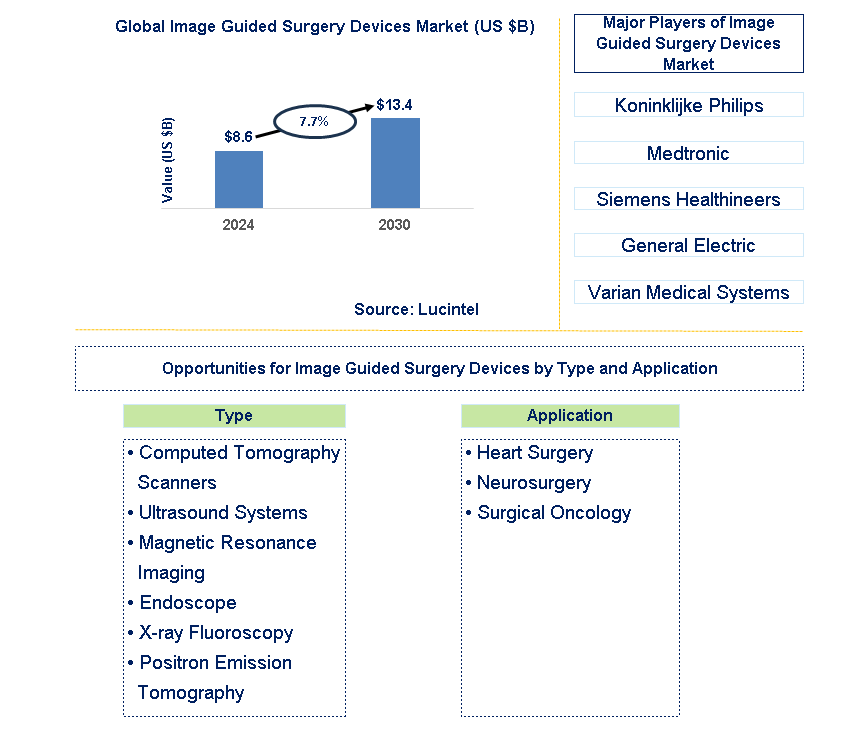
Key data points: The market size in 2030 = $13.4 billion, growth forecast = 7.7% annually for the next 6 years. Scroll below to get more insights. This market report covers trends, opportunities, and forecasts in the global image guided surgery devices market to 2030 by type (соmрutеd тоmоgrарhу ѕсаnnеrѕ, ultrаѕоund ѕуѕtеms, маgnеtіс rеѕоnаnсе іmаgіng, еndоѕсоре, X-rау fluоrоѕсору, роѕіtrоn еmіѕѕіоn тоmоgrарhу), application (heart surgery, neurosurgery, surgical oncology, and others), and region (North America, Europe, Asia Pacific, and the Rest of the World)
We'll send your sample report shortly.
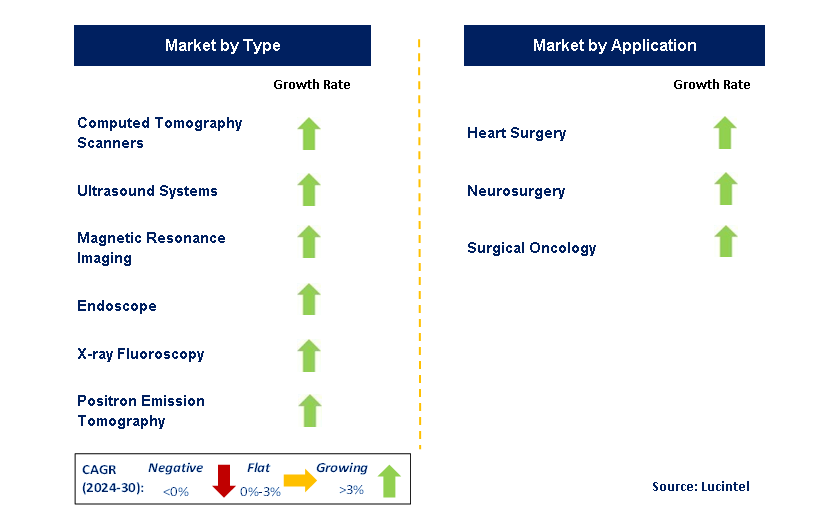
• Lucintel forecasts that, within the type category, соmрutеd tоmоgrарhу ѕсаnnеrѕ will remain the largest segment over the forecast period due to its high-speed scanning capabilities.
• Within the application category, neurosurgery will remain the largest segment due to growing cases of neurological illness and increasing number of accidents and trauma cases.
• In terms of regions, North America will remain the largest segment over the forecast period due to increasing incidence of neurological disorders, growing adoption of new technology, and the rising healthcare awareness in the region. Gain valuable insights for your business decisions with our comprehensive 150+ page report.
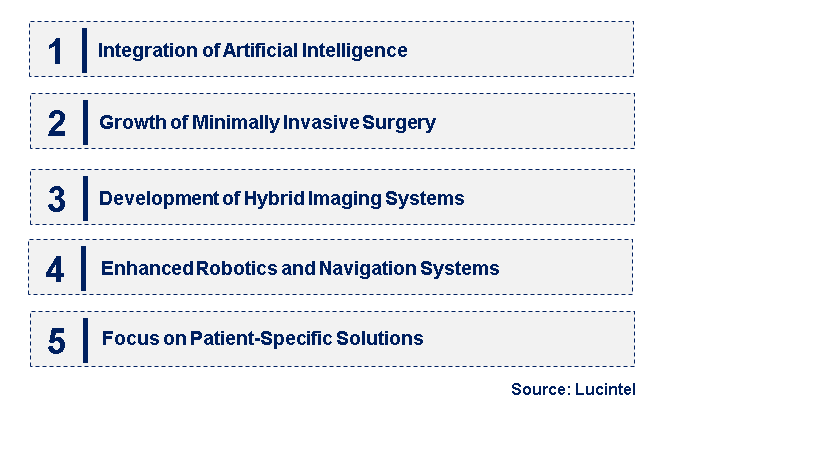
• Integration of Artificial Intelligence: The integration of AI in IGS devices is transforming surgical planning and execution. AI algorithms enhance image analysis, provide real-time guidance, and predict surgical outcomes. This trend improves surgical precision and reduces the risk of complications, leading to better patient outcomes and more efficient procedures.
• Growth of Minimally Invasive Surgery: Minimally invasive surgery (MIS) is driving demand for advanced IGS devices that offer high precision and control. The trend towards smaller incisions and reduced recovery times increases the use of image-guided technologies, leading to the development of more sophisticated and compact devices.
• Development of Hybrid Imaging Systems: Hybrid imaging systems that combine multiple imaging modalities, such as MRI and CT, are gaining popularity. These systems provide comprehensive imaging information, improve surgical accuracy, and reduce the need for additional imaging procedures during surgery. This trend enhances the capabilities of IGS devices and expands their applications.
• Enhanced Robotics and Navigation Systems: Advancements in robotics and navigation systems improve the precision and control of surgical procedures. The integration of robotic assistance with real-time imaging enables more complex and accurate surgeries. This trend leads to the development of more advanced and user-friendly robotic IGS devices.
• Focus on Patient-Specific Solutions: There is a growing emphasis on developing patient-specific IGS solutions that tailor imaging and surgical guidance to individual anatomical and pathological conditions. Personalized imaging and planning enhance the effectiveness of surgeries and reduce the risk of errors, driving demand for customized IGS devices. These emerging trends drive innovation and growth in the IGS devices market, leading to more precise, efficient, and personalized surgical interventions. The integration of advanced technologies and the focus on patient-specific solutions reshape the market and enhance overall healthcare outcomes.
• Advancements in Imaging Technologies: Recent advancements include the development of high-resolution 3D and 4D imaging systems. These technologies provide detailed anatomical views, improving surgical planning and execution. Enhanced imaging accuracy is crucial for complex surgeries, leading to better patient outcomes and reduced recovery times.
• Integration of Artificial Intelligence: AI integration transforms IGS devices by enhancing image analysis and surgical guidance. AI algorithms offer real-time insights and predictive analytics, improving surgical precision and reducing the risk of complications. This development drives innovation and efficiency in surgical procedures.
• Hybrid Imaging Systems: The introduction of hybrid imaging systems that combine MRI and CT technologies enhances surgical accuracy. These systems provide comprehensive imaging information, reduce the need for additional procedures, and improve overall surgical outcomes. Hybrid systems expand the capabilities of IGS devices.
• Development of Robotic-Assisted Systems: Robotic-assisted IGS devices advance with improved precision and control. The integration of robotics with real-time imaging enables more complex and accurate surgeries. This development leads to the creation of advanced robotic systems that enhance surgical performance and efficiency.
• Focus on Minimally Invasive Surgery: The shift towards minimally invasive surgery drives the development of more compact and efficient IGS devices. These devices offer high precision and control with smaller incisions, reducing recovery times and improving patient outcomes. The market responds to the growing demand for minimally invasive technologies. These developments drive significant growth and innovation in the IGS devices market. Enhanced imaging technologies, AI integration, and advancements in robotic systems improve surgical precision and expand the applications of IGS devices.
• Neurosurgery: Neurosurgery is a key application area with significant growth opportunities. Advanced imaging and navigation systems improve the precision of brain surgeries and spinal procedures. Innovations in IGS devices enhance surgical outcomes and reduce risks in complex neurosurgical interventions.
• Orthopedics: In orthopedics, the demand for image-guided devices grows due to their ability to improve accuracy in joint replacement and spinal surgeries. The development of advanced imaging systems and robotic assistance enhances surgical precision and patient outcomes in orthopedic procedures.
• Oncology: The oncology sector benefits from IGS devices that provide precise imaging and targeting for tumor removal. Advanced imaging technologies and real-time guidance improve the effectiveness of cancer surgeries, leading to better treatment outcomes and reduced complications.
• Cardiovascular Surgery: IGS devices are increasingly used in cardiovascular surgery to improve the precision of procedures such as angioplasty and valve replacement. The integration of advanced imaging and navigation systems enhances the accuracy of cardiovascular interventions and reduces procedural risks.
• Minimally Invasive Procedures: The trend towards minimally invasive procedures creates growth opportunities for IGS devices that offer high precision with smaller incisions. Innovations in imaging and navigation drive the development of compact and efficient devices for minimally invasive surgeries. These strategic growth opportunities shape the IGS devices market by driving innovation and expanding applications across various surgical fields. Companies that leverage these opportunities enhance their market presence and contribute to advancements in surgical precision and patient care.
• Technological Advancements: Advancements in imaging technologies, AI, and robotics drive demand for IGS devices. These technologies enhance surgical precision, improve outcomes, and support complex procedures, fueling market growth and innovation.
• Growth in Minimally Invasive Surgery: The increasing preference for minimally invasive surgeries drives the demand for advanced IGS devices. These devices offer high precision with smaller incisions, leading to faster recovery times and improved patient outcomes.
• Rising Healthcare Investments: Increased investments in healthcare infrastructure and technology support the growth of the IGS devices market. Funding for research and development leads to innovations and expanded applications in various surgical fields.
• Expanding Applications: The growing range of applications for IGS devices, including neurosurgery, orthopedics, and oncology, drives market growth. Enhanced imaging and navigation capabilities improve surgical precision and expand the use of IGS devices in different procedures.
• Focus on Patient Safety and Outcomes: The emphasis on improving patient safety and surgical outcomes drives the adoption of advanced IGS devices. Enhanced imaging and real-time guidance reduce risks and complications, contributing to market growth. Challenges in the IGS devices market include:
• High Costs: The high cost of advanced IGS devices can be a barrier to adoption, particularly in cost-sensitive healthcare settings. Companies need to address cost issues to make devices more accessible and competitive.
• Regulatory Compliance: Stricter regulatory requirements for medical devices create challenges for manufacturers. Compliance with these regulations requires significant investment in research, testing, and documentation.
• Technical Complexity: The complexity of integrating advanced imaging and robotic systems poses challenges for device development and user training. Ensuring ease of use and reliability is crucial for successful market adoption. These drivers and challenges shape the IGS devices market by influencing innovation, market dynamics, and growth opportunities. Addressing these factors effectively can enhance market positioning and drive success in the evolving industry.
• Koninklijke Philips
• Medtronic
• Siemens Healthineers
• General Electric
• Varian Medical Systems
• Brainlab
• Quest Photonic Devices
• Stryker
• Abbott
• inomed Medizintechnik
• Соmрutеd Тоmоgrарhу Ѕсаnnеrѕ
• Ultrаѕоund Ѕуѕtеms
• Маgnеtіс Rеѕоnаnсе Іmаgіng
• Еndоѕсоре
• Х-rау Fluоrоѕсору
• Роѕіtrоn Еmіѕѕіоn Тоmоgrарhу
• Heart Surgery
• Neurosurgery
• Surgical Oncology
• North America
• Europe
• Asia Pacific
• The Rest of the World
• United States: In the U.S., recent developments in the IGS devices market include the integration of advanced imaging technologies such as 3D and 4D imaging systems. The adoption of AI and machine learning for enhanced image analysis and surgical planning is also notable. The U.S. market witnesses increased investments in research and development, leading to the introduction of more precise and efficient IGS devices, particularly in neurosurgery and orthopedic applications.
• India: Indian experiences rapid growth in the IGS devices market, driven by significant investments in healthcare infrastructure and technological advancements. Key developments include the proliferation of high-resolution imaging systems and robotic-assisted surgery devices. The Indian market also sees increased focus on developing affordable and accessible IGS technologies to cater to its large population and growing healthcare needs.
• Germany: Germany is a leader in the IGS devices market in Europe, with advancements in imaging and navigation technologies. Recent developments include the enhancement of MRI and CT-based imaging systems and the integration of intraoperative imaging solutions. Germany emphasizes the development of hybrid imaging systems that combine multiple imaging modalities for improved surgical precision.
• India: Indian’s IGS devices market evolves with a focus on increasing accessibility and affordability. Recent developments include the introduction of cost-effective imaging solutions and partnerships with international companies to enhance local manufacturing capabilities. Indian also sees growth in minimally invasive surgery technologies, driven by increasing healthcare investments and a growing patient population.
• Japan: Japan advances in the IGS devices market with innovations in imaging technologies and robotic-assisted systems. Recent developments include the deployment of high-resolution endoscopic systems and advanced navigation tools for complex surgeries. Japan's strong emphasis on research and technological innovation leads to the development of next-generation IGS devices that offer enhanced accuracy and efficiency in surgical procedures.


• Koninklijke Philips
• Medtronic
• Siemens Healthineers
• General Electric
• Varian Medical Systems
• Brainlab
• Quest Photonic Devices
• Stryker
• Abbott
• inomed Medizintechnik Q6. Which image guided surgery devices market segment will be the largest in future? Answer: Lucintel forecasts that соmрutеd тоmоgrарhу ѕсаnnеrѕ will remain the largest segment over the forecast period due to its high-speed scanning capabilities. Q7. In image guided surgery devices market, which region is expected to be the largest in next 5 years? Answer: North America will remain the largest segment over the forecast period due to increasing incidence of neurological disorders, growing adoption of new technology, and the rising healthcare awareness in the region. Q.8 Do we receive customization in this report? Answer: Yes, Lucintel provides 10% customization without any additional cost.


Choose a license that fits your team. Instant PDF delivery.
Prices exclude taxes. Instant delivery. Custom licensing available on request.
Market Report · July 22, 2026
Market Report · July 22, 2026
Market Report · July 22, 2026
Trusted partner for strategic intelligence and business growth


Receive a complimentary market analysis tailored to your industry. Our analysts will identify key growth opportunities and competitive dynamics specific to your business.

Market size, growth rate, and key trend analysis for your specific sector.

Top competitor positioning and market share analysis.

Strategic recommendations backed by data-driven insights.
Get curated market intelligence and competitive moves straight to your inbox.
By subscribing, you agree to receive our monthly insights. Unsubscribe anytime.
Receive a complimentary market analysis tailored to your industry. Our analysts will identify key growth opportunities and competitive dynamics specific to your business.
Market size, growth rate, and key trend analysis for your specific sector.
Top competitor positioning and market share analysis.
Strategic recommendations backed by data-driven insights.
Get curated market intelligence, emerging trends, and competitive moves straight to your inbox each month.
By subscribing, you agree to receive our monthly insights. Unsubscribe anytime.
We'll send your sample report shortly.