
Market Report · July 31, 2026

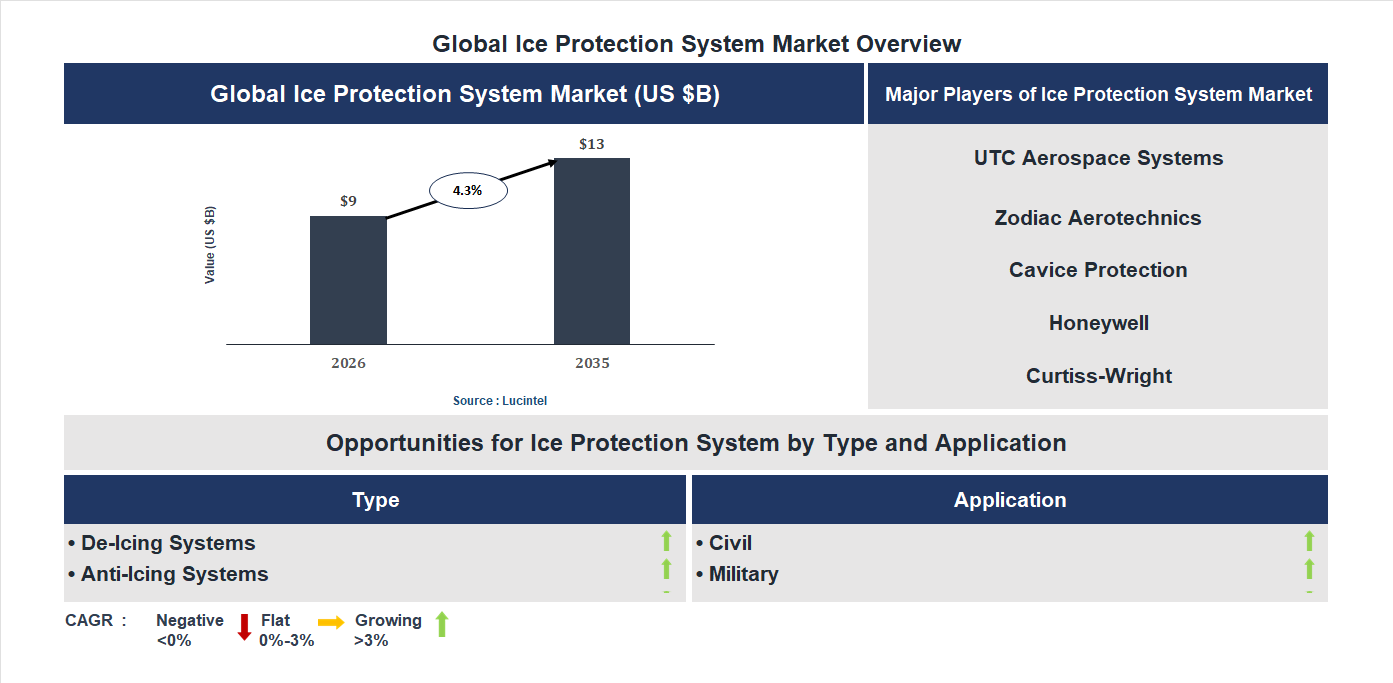
Key data points: The market size in 2035 = $13 billion, growth forecast = 4.3% annually for the next 8 years. Scroll below to get more insights. This market report covers trends, opportunities and forecasts in ice protection system market to 2035 by type (de-icing systems and anti-icing systems), application (civil and military), and region (North America, Europe, Asia Pacific, and the Rest of the World)
We'll send your sample report shortly.
• Lucintel forecasts that, within the type category, anti-icing system is expected to witness higher growth over the forecast period.
• Within the application category, military is expected to witness higher growth.
• In terms of region, APAC is expected to witness the highest growth over the forecast period. Gain valuable insights for your business decisions with our comprehensive 150+ page report. Sample figures with some insights are shown below.
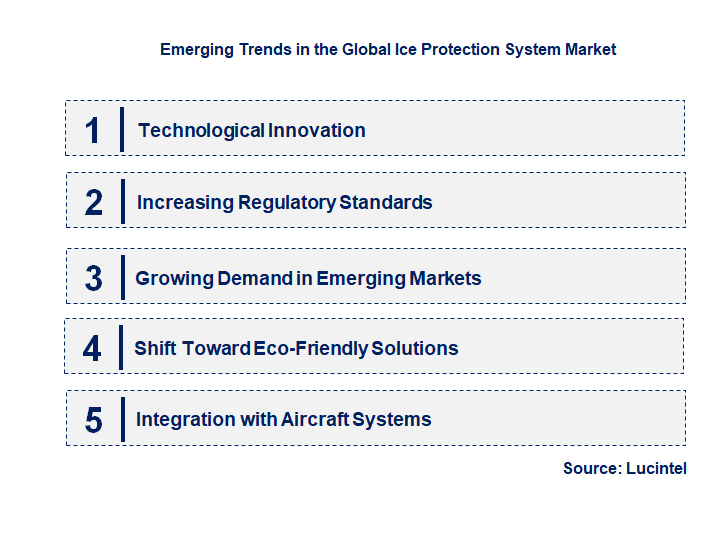
• Technological Innovation: The integration of advanced materials and sensors is revolutionizing ice protection systems. Newer systems utilize lightweight composites and real-time monitoring sensors that detect ice formation early, enabling quicker response times. These innovations improve system efficiency, reduce weight, and lower maintenance costs, making aircraft safer and more economical. The adoption of artificial intelligence and machine learning further enhances predictive capabilities, allowing for proactive ice management. This trend is driving the development of smarter, more adaptive ice protection solutions that cater to diverse aircraft types and operational environments.
• Increasing Regulatory Standards: Governments and aviation authorities are imposing stricter safety regulations related to ice protection. These regulations mandate the adoption of more reliable and comprehensive systems, pushing manufacturers to innovate continuously. Enhanced certification processes ensure that new systems meet rigorous safety benchmarks, fostering higher industry standards. This trend compels airlines and aircraft manufacturers to upgrade existing systems and invest in cutting-edge technologies, ultimately leading to safer skies. The regulatory landscape is thus a significant driver of market growth and technological advancement.
• Growing Demand in Emerging Markets: Rapid aviation sector growth in regions like Asia-Pacific and the Middle East is fueling demand for ice protection systems. As airlines expand their fleets to serve increasing passenger numbers, the need for reliable ice protection becomes critical. These markets often lack mature infrastructure, creating opportunities for innovative, cost-effective solutions tailored to local conditions. The rise of regional carriers and government investments in aviation infrastructure further boost market prospects. This trend highlights the importance of adaptable and scalable ice protection systems to meet diverse operational needs across emerging markets.
• Shift Toward Eco-Friendly Solutions: Environmental concerns are prompting the industry to develop sustainable ice protection technologies. Manufacturers are exploring the use of eco-friendly materials and energy-efficient systems that reduce carbon footprints. Innovations such as electrically heated systems with lower power consumption and systems that minimize chemical use are gaining traction. These environmentally conscious solutions not only comply with global sustainability goals but also reduce operational costs. The shift toward green technologies is reshaping the market by emphasizing sustainability alongside safety and efficiency, aligning with broader industry commitments to environmental responsibility.
• Integration with Aircraft Systems: The trend toward integrated aircraft systems is enhancing the functionality of ice protection solutions. Modern systems are now seamlessly connected with aircraft avionics, autopilot, and weather monitoring systems, enabling coordinated responses to icing conditions. This integration improves operational safety, reduces pilot workload, and enhances system reliability. It also allows for real-time data sharing and predictive analytics, facilitating proactive measures. As aircraft become more connected and automated, integrated ice protection systems are becoming essential, offering a comprehensive approach to safety and operational efficiency across commercial, military, and private aviation sectors. These emerging trends are transforming the ice protection system market by fostering innovation, enhancing safety standards, expanding market reach, promoting sustainability, and enabling smarter aircraft operations. These developments are not only improving existing technologies but also opening new avenues for growth and competitiveness in the evolving aerospace landscape.
• Technological Innovations in De-Icing Systems: Development of advanced, eco-friendly de-icing fluids and automated systems enhances safety and operational efficiency, reducing turnaround times and environmental impact. These innovations improve aircraft performance, lower maintenance costs, and meet stringent regulatory standards, making them highly attractive to airlines seeking reliable solutions in diverse climatic conditions.
• Growing Adoption of Electric Ice Protection Systems: Electric ice protection solutions are gaining popularity due to their energy efficiency, lower maintenance, and environmental benefits. They offer precise control and quicker response times, which improve safety during winter operations. This shift supports airlines sustainability goals and reduces reliance on traditional pneumatic or fluid-based systems, expanding market opportunities.
• Expansion in Regional Markets: Emerging economies in Asia-Pacific, Middle East, and Latin America are witnessing increased investments in aviation infrastructure, boosting demand for ice protection systems. Growing air traffic and modernization of airports in these regions create significant growth opportunities, encouraging local manufacturers and international players to expand their presence and cater to regional needs.
• Regulatory and Safety Standards Enhancements: Stricter international safety regulations and certification requirements are compelling airlines and manufacturers to upgrade their ice protection systems. Compliance ensures operational safety and reduces liability, prompting continuous innovation and adoption of more reliable, compliant solutions, which in turn drives market growth and technological advancement.
• Integration of IoT and Data Analytics: Incorporating IoT sensors and data analytics into ice protection systems enables real-time monitoring, predictive maintenance, and improved system performance. This integration reduces downtime, enhances safety, and lowers operational costs, making systems more efficient and reliable. The adoption of digital technologies is transforming traditional systems into smart solutions, opening new avenues for market expansion. The overall impact of these developments is a more advanced, efficient, and safety-focused ice protection market. Increased technological innovation, regional expansion, and regulatory compliance are driving growth, while sustainability and digital integration are shaping future industry standards. These factors collectively enhance operational safety, reduce costs, and open new market opportunities globally.
• Expansion of Commercial Aviation Fleet and Safety Regulations: The increasing number of commercial aircraft worldwide, coupled with stricter safety regulations, drives demand for advanced ice protection systems. Airlines seek reliable de-icing solutions to prevent accidents caused by ice accumulation, leading to investments in heated wings, propellers, and sensors. Growing air traffic in emerging markets further amplifies this need, creating opportunities for system upgrades and new installations across regional and long-haul fleets.
• Technological Innovations in De-Icing and Anti-Icing Solutions: Advances in materials, sensors, and automation are transforming ice protection systems. The development of lightweight, energy-efficient systems such as electro-thermal de-icing and pneumatic boots enhances aircraft performance and reduces operational costs. Integration of IoT and real-time monitoring enables predictive maintenance, minimizing downtime. These innovations open avenues for manufacturers to offer smarter, more effective solutions tailored to diverse aircraft types and operational environments.
• Rising Military Aircraft Modernization and Defense Spending: Military forces worldwide are modernizing their fleets with advanced ice protection systems to ensure operational readiness in harsh weather conditions. The demand for robust anti-icing solutions for fighter jets, transport aircraft, and helicopters is increasing, driven by defense budgets and strategic requirements. This growth is supported by innovations in ruggedized sensors and integrated systems that improve safety and mission success in extreme climates.
• Growing Adoption of Rotorcraft and Unmanned Aerial Vehicles (UAVs): The expanding use of rotorcraft in commercial, military, and rescue operations necessitates specialized ice protection systems. UAVs, increasingly deployed in surveillance, mapping, and delivery services, also require lightweight, efficient de-icing solutions. Market players are developing compact, energy-efficient systems suitable for these platforms, creating new revenue streams. The demand for reliable ice protection in diverse operational environments is expected to boost growth in this segment.
• Increasing Focus on Environmental Sustainability and Energy Efficiency: The push for eco-friendly aviation solutions is influencing ice protection system development. Manufacturers are exploring energy-efficient heating methods and environmentally safe de-icing fluids to reduce carbon footprints and chemical runoff. Regulatory pressures and corporate sustainability goals are encouraging innovation in low-energy, recyclable, and biodegradable systems. This focus on sustainability is expected to shape future market offerings and expand adoption across commercial and military sectors. The overall market growth is propelled by technological advancements, regulatory requirements, and expanding applications across commercial, military, and unmanned systems. These opportunities collectively enhance safety, operational efficiency, and environmental sustainability, positioning the ice protection system market for sustained expansion and innovation.
• Technological Innovation: The continuous development of advanced ice detection and de-icing technologies enhances system efficiency and reliability. Innovations such as automated ice detection sensors and lightweight de-icing systems improve aircraft safety and operational performance. These technological advancements reduce maintenance costs and downtime, making ice protection systems more attractive to aircraft manufacturers and operators. As technology progresses, the integration of smart systems with real-time monitoring capabilities is expected to further boost market growth, meeting increasing safety standards and operational demands.
• Rising Aircraft Production and Fleet Expansion: The global increase in aircraft manufacturing, especially in emerging economies, significantly drives demand for ice protection systems. As airlines expand their fleets to meet growing passenger and cargo needs, the requirement for reliable ice protection solutions becomes critical. This growth is supported by increased investments in new aircraft models, which incorporate advanced ice protection features from the outset. The expanding fleet size and the need for regular maintenance and upgrades sustain a steady demand for these systems across commercial, military, and general aviation sectors.
• Stringent Safety Regulations and Certification Standards: Governments and aviation authorities worldwide impose strict safety regulations that mandate the installation of ice protection systems on aircraft. Compliance with certification standards such as FAA and EASA requirements ensures passenger safety and operational integrity. These regulations compel airlines and manufacturers to adopt advanced ice protection solutions, thereby fueling market growth. The evolving regulatory landscape also encourages innovation and the development of more effective, environmentally friendly systems, further expanding market opportunities.
• Increasing Focus on Passenger Safety and Operational Efficiency: Airlines and aircraft operators prioritize passenger safety and operational reliability, which directly influence the adoption of ice protection systems. Effective ice protection minimizes flight delays, cancellations, and safety risks associated with ice accumulation. This focus on safety and efficiency drives airlines to invest in state-of-the-art systems that ensure smooth operations in adverse weather conditions. As passenger expectations rise and safety standards tighten, the demand for sophisticated ice protection solutions is expected to grow, supporting market expansion.
• Growing Military and Defense Applications: The defense sectors need for reliable ice protection systems for military aircraft and helicopters is a significant growth driver. Military operations often occur in extreme weather conditions, requiring robust de-icing and anti-icing solutions to maintain operational readiness. The development of specialized systems for military applications, including stealth and high-performance aircraft, contributes to market diversification. Increased defense budgets and modernization programs worldwide further stimulate demand, making military applications a vital component of the overall market growth. The challenges facing the ice protection system market include:-
• High Development and Certification Costs: Developing advanced ice protection systems involves significant research, testing, and certification expenses. Achieving compliance with stringent safety and environmental standards prolongs the development cycle and increases costs for manufacturers. These high expenses can act as barriers for new entrants and limit innovation, potentially slowing market growth. Additionally, the lengthy certification process can delay product launches, impacting revenue streams and market competitiveness.
• Environmental Concerns and Regulatory Restrictions: The environmental impact of de-icing chemicals and systems is increasingly scrutinized by regulatory authorities. Restrictions on the use of certain chemicals and the push for eco-friendly solutions pose challenges for manufacturers to develop sustainable systems. Compliance with environmental regulations may require redesigning existing technologies, increasing costs and development time. Balancing safety, performance, and environmental sustainability remains a complex challenge for the industry.
• Market Fragmentation and Competitive Intensity: The ice protection system market is highly fragmented, with numerous players ranging from large aerospace corporations to specialized component manufacturers. Intense competition leads to price pressures and the need for continuous innovation. Smaller companies may struggle to meet regulatory requirements or scale production, limiting their market share. This fragmentation can hinder standardization and slow the adoption of new technologies, impacting overall market growth and profitability. The ice protection system market is shaped by technological advancements, increasing aircraft production, regulatory compliance, safety priorities, and defense needs. However, high development costs, environmental restrictions, and market fragmentation pose significant challenges. These factors collectively influence the pace and direction of market growth, requiring stakeholders to innovate strategically and adapt to evolving standards. Overall, the markets future depends on balancing technological progress with regulatory and environmental considerations, ensuring safety and sustainability while capturing emerging opportunities.
• UTC Aerospace Systems
• Zodiac Aerotechnics
• Cavice Protection
• Honeywell
• Curtiss-Wright
• B/E Aerospace
• ITT Corporation
• Kilfrost
• Cox & Company
• Meggitt
• De-Icing Systems
• Anti-Icing Systems
• Civil
• Military
• North America
• Europe
• Asia Pacific
• The Rest of the World
• United States: The US market has seen substantial growth due to increased adoption in commercial and military aviation sectors. Innovations in lightweight, energy-efficient systems have been introduced, alongside stricter safety regulations that drive demand. Major aerospace companies are investing in advanced de-icing technologies, and government agencies are supporting research initiatives to improve system performance in extreme weather. The integration of automation and sensor-based systems is also gaining traction, enhancing operational safety and efficiency.
• China: China is rapidly expanding its ice protection capabilities, primarily driven by the growth of its civil aviation industry. The country is investing heavily in indigenous technology development and international collaborations to enhance system reliability. Recent developments include the deployment of advanced anti-icing systems in new aircraft fleets and the modernization of existing infrastructure. Government policies favoring technological self-sufficiency and infrastructure expansion are fueling market growth, with a focus on cost-effective, scalable solutions suitable for diverse climatic conditions.
• Germany: Germanys market is characterized by a focus on high-quality, innovative ice protection systems, especially within the aerospace and maritime sectors. The country emphasizes sustainable and environmentally friendly solutions, integrating renewable energy sources into system design. German companies are pioneering in the development of lightweight, durable materials and smart systems that improve efficiency and reduce maintenance costs. Regulatory standards in the European Union also influence product development, ensuring compliance with strict safety and environmental guidelines.
• India: India is witnessing rapid growth in ice protection systems, driven by expanding aviation infrastructure and increasing safety standards. The country is adopting both imported and domestically developed technologies to meet the needs of its growing airline industry. Recent advancements include the deployment of cost-effective anti-icing solutions suitable for diverse climatic zones, along with government initiatives to modernize airports and aircraft fleets. The focus remains on affordability, scalability, and improving safety in challenging weather conditions, with local manufacturers gaining prominence.
• Japan: Japans market is marked by technological innovation and high safety standards. The country is investing in advanced sensor-based and automated ice protection systems, particularly for its aerospace and maritime sectors. Recent developments include the integration of IoT and AI technologies to enhance system responsiveness and predictive maintenance. Japan also emphasizes environmentally sustainable solutions, aligning with its broader goals of reducing carbon footprint and promoting green technology. Collaboration between industry and academia continues to drive cutting-edge research in ice protection technologies.


• UTC Aerospace Systems
• Zodiac Aerotechnics
• Cavice Protection
• Honeywell
• Curtiss-Wright
• B/E Aerospace
• ITT Corporation
• Kilfrost
• Cox & Company
• Meggitt Q6. Which ice protection system market segment will be the largest in future? Answer: Lucintel forecasts that, within the type category, anti-icing system is expected to witness higher growth over the forecast period. Q7. In ice protection system market, which region is expected to be the largest in next 8 years? Answer: In terms of region, APAC is expected to witness the highest growth over the forecast period. Q8. Do we receive customization in this report? Answer: Yes, Lucintel provides 10% customization without any additional cost.


Choose a license that fits your team. Instant PDF delivery.
Prices exclude taxes. Instant delivery. Custom licensing available on request.
Market Report · July 31, 2026
Market Report · July 31, 2026
Market Report · July 31, 2026
Trusted partner for strategic intelligence and business growth


Receive a complimentary market analysis tailored to your industry. Our analysts will identify key growth opportunities and competitive dynamics specific to your business.

Market size, growth rate, and key trend analysis for your specific sector.

Top competitor positioning and market share analysis.

Strategic recommendations backed by data-driven insights.
Get curated market intelligence and competitive moves straight to your inbox.
By subscribing, you agree to receive our monthly insights. Unsubscribe anytime.
Receive a complimentary market analysis tailored to your industry. Our analysts will identify key growth opportunities and competitive dynamics specific to your business.
Market size, growth rate, and key trend analysis for your specific sector.
Top competitor positioning and market share analysis.
Strategic recommendations backed by data-driven insights.
Get curated market intelligence, emerging trends, and competitive moves straight to your inbox each month.
By subscribing, you agree to receive our monthly insights. Unsubscribe anytime.
We'll send your sample report shortly.