
Market Report · July 16, 2026

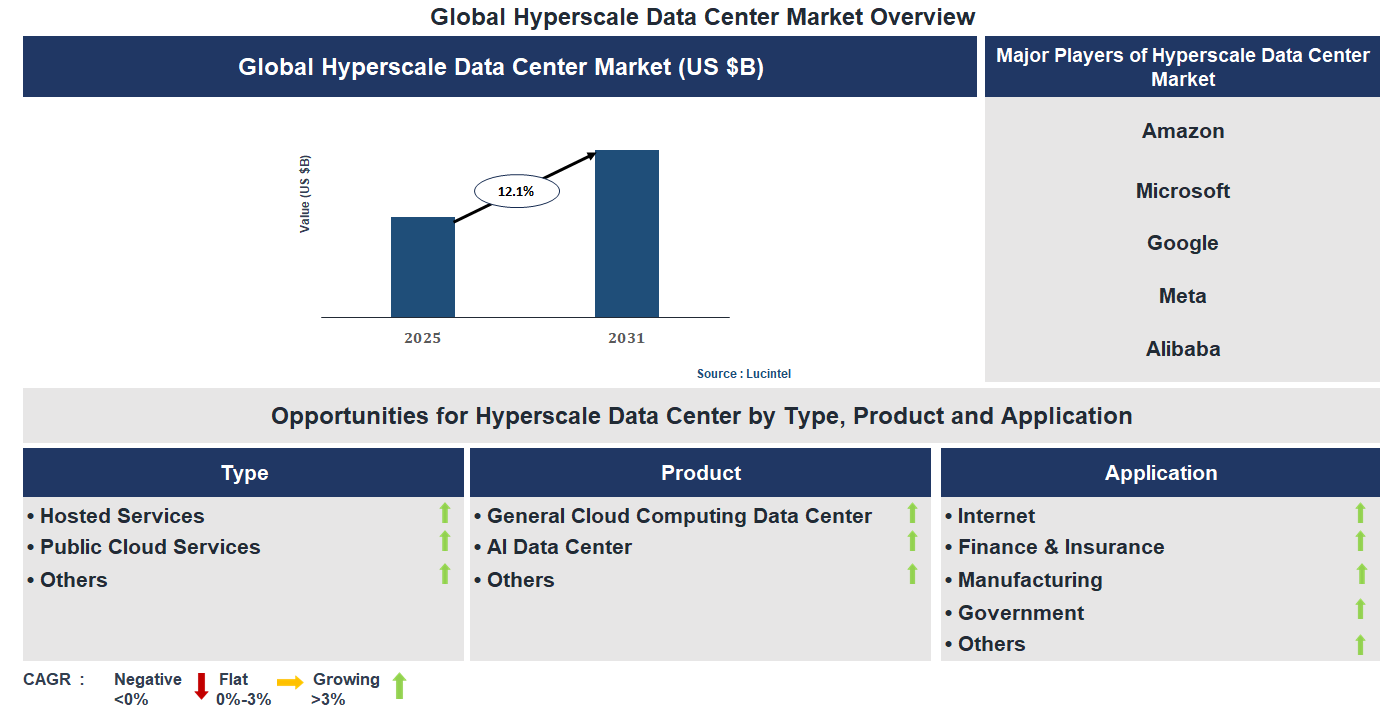
Key data points: The growth forecast = 12.1% annually for the next 7 years. Scroll below to get more insights. This market report covers trends, opportunities and forecasts in hyperscale data center market to 2031 by type (hosted services, public cloud services, and others), product (general cloud computing data center, AI data center, and others), application (internet, finance & insurance, manufacturing, government, and others), and region (North America, Europe, Asia Pacific, and the Rest of the World)
We'll send your sample report shortly.
• Lucintel forecasts that, within the type category, public cloud service is expected to witness higher growth over the forecast period.
• Within the application category, internet is expected to witness the highest growth.
• In terms of region, APAC is expected to witness the highest growth over the forecast period. Gain valuable insights for your business decisions with our comprehensive 150+ page report. Sample figures with some insights are shown below.
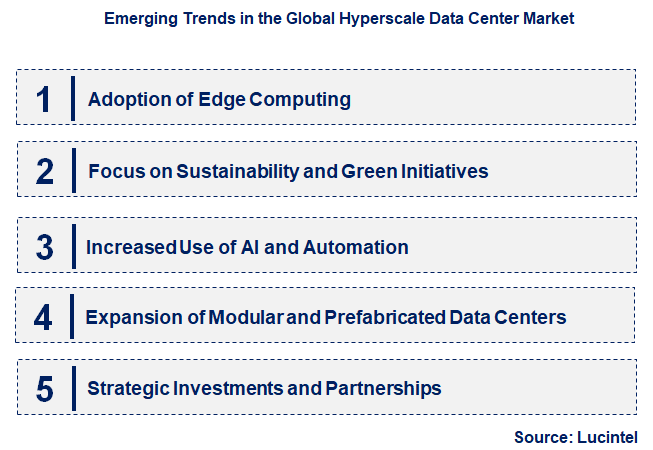
• Adoption of Edge Computing: Increasing demand for low-latency data processing is driving the integration of edge computing with hyperscale data centers. This trend enables data to be processed closer to the source, reducing latency and bandwidth costs. It supports emerging applications like IoT, autonomous vehicles, and real-time analytics, thereby expanding the reach and functionality of hyperscale infrastructure. As a result, data centers are becoming more distributed, flexible, and capable of supporting diverse workloads efficiently.
• Focus on Sustainability and Green Initiatives: Environmental concerns and rising energy costs are prompting hyperscale data centers to adopt sustainable practices. This includes utilizing renewable energy sources, improving energy efficiency through advanced cooling techniques, and implementing green building standards. These initiatives help reduce carbon footprints and operational costs, aligning with global sustainability goals. The shift towards eco-friendly operations is also influencing investor and customer preferences, making sustainability a key competitive differentiator in the market.
• Increased Use of AI and Automation: Artificial intelligence and automation are transforming data center management by optimizing operations, enhancing security, and predictive maintenance. AI-driven analytics improve resource allocation, reduce downtime, and streamline workflows, leading to higher efficiency and reliability. Automation tools facilitate rapid deployment and scaling of infrastructure, minimizing manual intervention. This trend is crucial for managing the complexity and scale of hyperscale facilities, enabling faster innovation cycles and cost savings, and ensuring high levels of service availability.
• Expansion of Modular and Prefabricated Data Centers: Modular and prefabricated data centers are gaining popularity due to their quick deployment, scalability, and cost-effectiveness. These solutions allow for rapid construction and easy expansion, reducing time-to-market and capital expenditure. They also offer flexibility to adapt to changing demand and technological upgrades. This trend supports the rapid growth of hyperscale infrastructure, especially in emerging markets and remote locations, by providing customizable and efficient data center solutions that meet diverse operational needs.
• Strategic Investments and Partnerships: Major cloud providers, technology firms, and real estate developers are forming strategic alliances and making significant investments in hyperscale data centers. These collaborations facilitate access to new markets, advanced technologies, and shared expertise. Investment trends include acquisitions, joint ventures, and greenfield projects aimed at expanding capacity and technological capabilities. Such partnerships accelerate innovation, improve supply chain resilience, and enable faster deployment, ensuring the market remains competitive and responsive to evolving customer demands. In summary, these trends are fundamentally reshaping the hyperscale data center market by promoting sustainability, technological innovation, and operational agility. They are enabling providers to meet the growing data demands efficiently while addressing environmental and security concerns. As a result, the market is becoming more distributed, intelligent, and sustainable, positioning it for continued growth and technological leadership in the digital age.
• Technological Innovation: Adoption of AI and automation tools is transforming data center operations, increasing efficiency and reducing costs. This development enhances scalability and reliability, attracting more enterprise clients and cloud providers, thereby expanding market size and competitiveness.
• Green Data Centers: A surge in sustainable practices and renewable energy integration is leading to the development of eco-friendly hyperscale facilities. This shift reduces carbon footprints, aligns with regulatory standards, and appeals to environmentally conscious clients, fostering market growth.
• Strategic Mergers and Acquisitions: Major players are engaging in mergers and acquisitions to strengthen their market position and expand geographic reach. These consolidations enable resource sharing, technological advancements, and increased market share, fostering industry consolidation.
• Edge Computing Integration: The rise of edge computing is influencing hyperscale data center deployment strategies, with facilities being built closer to end-users. This development improves latency and bandwidth, opening new revenue streams and market segments.
• Regulatory and Data Sovereignty Policies: Governments are implementing stricter data privacy and sovereignty regulations, impacting data center design and operations. Compliance costs increase, but these policies also create opportunities for specialized services and secure infrastructure solutions. In summary, these recent developments are significantly shaping the hyperscale data center market by driving technological advancements, promoting sustainability, fostering industry consolidation, and influencing regulatory compliance. These factors collectively enhance market competitiveness, open new growth avenues, and ensure the industry adapts to evolving digital and environmental demands.
• Cloud Service Providers: Expansion of cloud infrastructure is a primary growth driver, with hyperscale data centers enabling scalable, flexible, and cost-efficient cloud services. As demand for cloud storage and computing surges, providers are investing heavily in new facilities, enhancing capacity and connectivity. This growth improves service delivery, reduces latency, and supports emerging technologies like AI and IoT, ultimately expanding market share and revenue streams for cloud giants.
• E-commerce Platforms: The rise of online retail and digital transactions necessitates robust data infrastructure. Hyperscale data centers support e-commerce platforms by providing high-performance, reliable, and secure environments for processing vast amounts of transaction data. This growth opportunity enhances customer experience, enables real-time analytics, and supports the scalability needed during peak shopping seasons, driving revenue and market penetration for e-commerce companies.
• Financial Services: The financial sector relies heavily on hyperscale data centers for real-time data processing, risk management, and secure transactions. The increasing adoption of fintech, blockchain, and digital banking services fuels demand for high-capacity, secure infrastructure. This opportunity improves transaction speed, data security, and compliance, fostering innovation and expanding the market for hyperscale solutions within financial institutions.
• Healthcare and Life Sciences: The healthcare industry generates massive data volumes from electronic health records, imaging, and genomics. Hyperscale data centers facilitate secure storage, analysis, and sharing of sensitive data, supporting telemedicine, personalized medicine, and research. This growth enhances data accessibility, accelerates medical research, and improves patient outcomes, positioning hyperscale infrastructure as vital to healthcare innovation.
• Media and Entertainment: The proliferation of streaming services, digital content, and virtual reality demands high bandwidth and low latency infrastructure. Hyperscale data centers enable content delivery networks (CDNs) and data processing for media companies, ensuring seamless user experiences. This opportunity drives content monetization, supports emerging formats like 4K/8K streaming, and expands market reach for media providers. In summary, these key applications are significantly impacting the hyperscale data center market by driving demand for scalable, secure, and high-performance infrastructure. The growth opportunities across cloud services, e-commerce, financial services, healthcare, and media are fostering innovation, increasing investments, and shaping the future landscape of digital infrastructure globally.
• Technological Innovation: Rapid advancements in cloud infrastructure, AI, and IoT are creating a need for scalable, high-capacity data centers. As organizations adopt digital transformation strategies, the demand for hyperscale facilities that can handle massive data loads increases. Innovations in cooling, power efficiency, and modular design are enabling data centers to operate more sustainably and cost-effectively, further accelerating growth. The integration of edge computing with hyperscale infrastructure also expands market opportunities by reducing latency and supporting real-time data processing.
• Growing Cloud Adoption: The widespread adoption of cloud services by enterprises across industries is a primary driver. Cloud providers require extensive data center capacity to support their infrastructure, leading to significant investments in hyperscale facilities. This trend is driven by the need for scalable, flexible, and reliable computing resources, which are essential for supporting digital services, remote work, and e-commerce. As cloud adoption continues to rise globally, the demand for hyperscale data centers is expected to grow proportionally, fueling market expansion.
• Increasing Data Generation: The exponential increase in data generated from IoT devices, social media, and digital transactions necessitates robust data storage and processing capabilities. Hyperscale data centers are designed to handle such massive data volumes efficiently. This surge in data creation compels organizations to invest in large-scale infrastructure to ensure seamless data management, analytics, and security. The ability to process and analyze data in real-time provides competitive advantages, making hyperscale data centers indispensable in the digital economy.
• Economic Growth and Digital Transformation: The ongoing digital transformation initiatives by governments and private sectors are significant market drivers. Investments in smart cities, Industry 4.0, and digital infrastructure are expanding the need for hyperscale data centers. Economic growth in emerging markets also contributes to increased demand, as businesses seek to modernize their IT infrastructure to stay competitive. These factors collectively promote infrastructure development, job creation, and technological innovation within the hyperscale data center industry.
• Strategic Partnerships and Investments: Major technology firms and data center operators are forming strategic alliances and investing heavily in hyperscale infrastructure. These collaborations facilitate the development of advanced, energy-efficient data centers and expand geographic reach. Investment in renewable energy sources to power these facilities also enhances sustainability credentials, attracting environmentally conscious clients. Such partnerships accelerate technological advancements and market penetration, ensuring the industry remains competitive and innovative. The challenges facing the hyperscale data center market include:-
• Regulatory and Data Privacy Concerns: Increasing regulations related to data sovereignty, privacy, and security pose significant challenges. Different countries have varying compliance requirements, complicating global operations. Data localization laws restrict cross-border data flow, increasing infrastructure costs and operational complexity. Ensuring compliance while maintaining efficiency requires substantial investment in security measures and legal expertise. Failure to adhere to these regulations can result in hefty fines, reputational damage, and operational disruptions, hindering market growth.
• Environmental Sustainability and Energy Consumption: Hyperscale data centers consume vast amounts of energy, raising environmental concerns. The pressure to reduce carbon footprints and adopt renewable energy sources is intensifying. High energy costs and the need for sustainable cooling solutions add to operational challenges. Regulatory bodies and consumers are increasingly demanding eco-friendly practices, compelling operators to invest in green technologies. Balancing energy efficiency with performance and cost-effectiveness remains a critical challenge that could impact the scalability and profitability of hyperscale data centers.
• Rapid Technological Obsolescence: The fast pace of technological change in data center hardware, software, and networking equipment can lead to obsolescence. Keeping infrastructure up-to-date requires continuous investment, which can strain budgets and impact profitability. Additionally, integrating new technologies without disrupting existing operations is complex and costly. Failure to adapt swiftly may result in reduced competitiveness, security vulnerabilities, and increased operational risks, posing a significant challenge for long-term market sustainability. In summary, the hyperscale data center market is driven by technological innovation, cloud adoption, data growth, economic expansion, and strategic investments. However, regulatory complexities, environmental concerns, and rapid technological changes present notable challenges. These factors collectively influence the market’s growth potential, requiring stakeholders to adopt adaptive strategies that balance innovation with compliance and sustainability. Successfully navigating these drivers and challenges will determine the future landscape of hyperscale data centers, shaping the digital infrastructure of tomorrow.
• Amazon
• Microsoft
• Meta
• Alibaba
• Tencent
• Apple
• ByteDance
• Equinix
• Digital Realty
• Hosted Services
• Public Cloud Services
• Others
• General Cloud Computing Data Center
• AI Data Center
• Others
• Internet
• Finance & Insurance
• Manufacturing
• Government
• Others
• North America
• Europe
• Asia Pacific
• The Rest of the World
• United States: The US continues to lead the hyperscale data center market with significant investments from major cloud providers like Amazon, Microsoft, and Google. Recent developments include the expansion of existing facilities and new data center campuses in regions such as Northern Virginia, Dallas, and Silicon Valley. Emphasis is placed on energy efficiency and renewable energy integration to meet sustainability goals. The adoption of advanced cooling technologies and modular construction methods is also accelerating, reducing deployment times and costs.
• China: China has seen rapid growth in hyperscale data centers driven by government initiatives and the booming digital economy. Major players like Alibaba, Tencent, and Baidu are expanding their infrastructure to support cloud services and AI applications. Recent developments include the deployment of large-scale facilities in regions like Beijing, Shanghai, and Guangdong. The focus is on integrating green energy solutions and enhancing data security measures to comply with local regulations. The government’s support for data localization and infrastructure development continues to propel market growth.
• Germany: Germany is experiencing increased investment in hyperscale data centers, driven by the European Union’s digital strategy and sustainability commitments. Key developments include the construction of new facilities in Frankfurt, Berlin, and Munich, with a focus on energy efficiency and renewable energy use. German providers are adopting innovative cooling and power management solutions to reduce carbon footprints. The market is also witnessing collaborations between local and international firms to enhance data sovereignty and security, aligning with EU data protection regulations.
• India: India’s hyperscale data center market is rapidly expanding due to rising internet penetration, digital payments, and government initiatives like Digital India. Recent developments include the launch of large-scale data centers by companies such as Amazon Web Services, Google, and local players like Reliance Jio. The focus is on deploying energy-efficient infrastructure and leveraging renewable energy sources. New facilities are being established in key cities like Mumbai, Delhi, and Chennai to support cloud services, e-commerce, and enterprise needs, with government policies encouraging sustainable growth.
• Japan: Japan’s hyperscale data center market is growing steadily, driven by increasing demand for cloud services, IoT, and AI applications. Recent developments include the expansion of existing data centers and new projects in Tokyo, Osaka, and Nagoya. Emphasis is placed on disaster resilience, energy efficiency, and integration of renewable energy. Japanese providers are adopting innovative cooling technologies and modular designs to optimize space and reduce environmental impact. The government’s focus on digital transformation and smart city initiatives further supports market growth, with collaborations between public and private sectors enhancing infrastructure resilience.


• Amazon
• Microsoft
• Meta
• Alibaba
• Tencent
• Apple
• ByteDance
• Equinix
• Digital Realty Q5. Which hyperscale data center market segment will be the largest in future? Answer: Lucintel forecasts that, within the type category, public cloud service is expected to witness higher growth over the forecast period. Q6. In hyperscale data center market, which region is expected to be the largest in next 5 years? Answer: In terms of region, APAC is expected to witness the highest growth over the forecast period. Q7. Do we receive customization in this report? Answer: Yes, Lucintel provides 10% customization without any additional cost.


Choose a license that fits your team. Instant PDF delivery.
Prices exclude taxes. Instant delivery. Custom licensing available on request.
Market Report · July 16, 2026
Market Report · May 18, 2026
Market Report · May 18, 2026
Trusted partner for strategic intelligence and business growth


Receive a complimentary market analysis tailored to your industry. Our analysts will identify key growth opportunities and competitive dynamics specific to your business.

Market size, growth rate, and key trend analysis for your specific sector.

Top competitor positioning and market share analysis.

Strategic recommendations backed by data-driven insights.
Get curated market intelligence and competitive moves straight to your inbox.
By subscribing, you agree to receive our monthly insights. Unsubscribe anytime.
Receive a complimentary market analysis tailored to your industry. Our analysts will identify key growth opportunities and competitive dynamics specific to your business.
Market size, growth rate, and key trend analysis for your specific sector.
Top competitor positioning and market share analysis.
Strategic recommendations backed by data-driven insights.
Get curated market intelligence, emerging trends, and competitive moves straight to your inbox each month.
By subscribing, you agree to receive our monthly insights. Unsubscribe anytime.
We'll send your sample report shortly.