
Market Report · July 22, 2026

Key data points: The growth forecast = 6% annually next 6 years. Scroll below to get more insights. This market report covers trends, opportunities, and forecast in the global hydroponic nutrient and booster market to 2030 by type (universal hydroponic nutrients and booster and special hydroponic nutrients and booster), application (vegetable, fruit, flowers, and others), and region (North America, Europe, Asia Pacific, and the Rest of the World)
We'll send your sample report shortly.
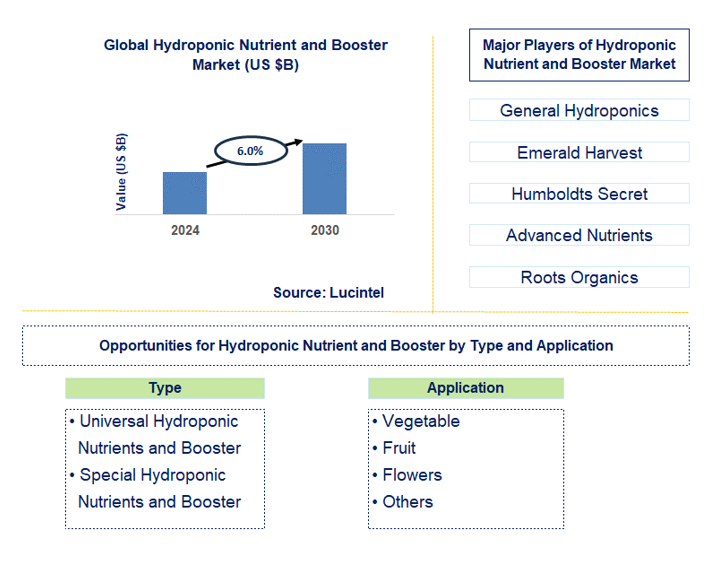
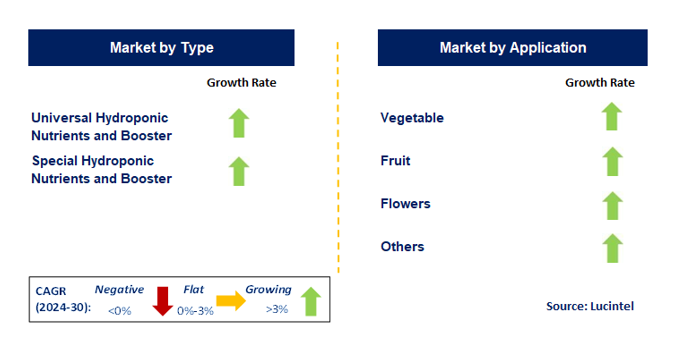
• Precision Nutrient Delivery: Precision nutrient delivery systems are gaining traction in the hydroponic market. These systems use sensors and automation to provide exact amounts of nutrients based on real-time plant needs. This trend improves nutrient use efficiency, reduces waste, and enhances plant growth and yield.
• Organic and Sustainable Nutrients: There is a growing demand for organic and sustainable hydroponic nutrients. Products made from natural sources and those that minimize environmental impact are becoming more popular. This trend aligns with broader consumer preferences for eco-friendly and health-conscious products.
• Advanced Formulations for Specific Crops: Nutrient formulations are increasingly tailored to meet the needs of specific crops and growth stages. Customizable nutrient solutions improve plant health and productivity by addressing the unique requirements of different plant types, leading to more effective and targeted hydroponic farming.
• Integration with Smart Technologies: The integration of smart technologies, such as IoT and automation, is transforming nutrient management. Smart systems allow for real-time monitoring, automated adjustments, and data-driven insights, enhancing the precision and efficiency of nutrient delivery in hydroponic systems.
• Focus on Nutrient Recycling and Efficiency: Nutrient recycling and efficiency are becoming key focus areas in hydroponics. Innovations aimed at reducing nutrient waste and improving recycling processes help lower costs and minimize environmental impact, contributing to more sustainable and cost-effective hydroponic farming.
Emerging trends in the hydroponic nutrient and booster market include precision nutrient delivery, organic and sustainable products, advanced formulations, smart technology integration, and a focus on recycling and efficiency. These trends are driving innovation, improving efficiency, and supporting sustainable practices in hydroponic agriculture.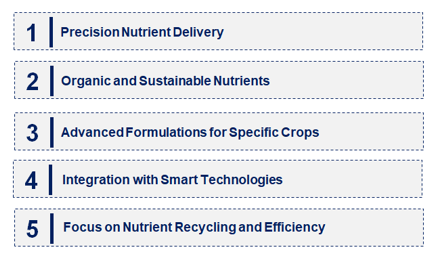
• Advanced Nutrient Formulations: The development of advanced nutrient formulations, including slow-release and multi-phase nutrients, is improving plant growth and yield. These formulations are designed to deliver essential nutrients more efficiently, addressing the specific needs of different crops and growth stages.
• Growth of Organic and Eco-Friendly Products: The rise in organic and eco-friendly hydroponic nutrients reflects growing consumer demand for sustainable and health-conscious products. These developments help reduce environmental impact and align with global trends towards more sustainable agricultural practices.
• Integration of Smart Technologies: The integration of smart technologies, such as automated nutrient delivery systems and real-time monitoring, enhances the precision and efficiency of hydroponic systems. These advancements reduce labor costs, improve nutrient management, and support more effective plant growth.
• Expansion of Research and Development: Increased investment in research and development is leading to innovative nutrient solutions and boosters. This focus on R&D drives the creation of more effective and specialized products, helping to meet the evolving needs of hydroponic growers and improve overall system performance.
Key developments in the hydroponic nutrient and booster market include advanced nutrient formulations, growth of organic products, integration of smart technologies, increased R&D, and expansion into urban and vertical farming. These developments enhance product performance, support sustainable practices, and drive market growth.• Expansion into Emerging Markets: Emerging markets with growing interest in hydroponic farming present significant opportunities for growth. Companies can expand their product offerings and market presence by developing region-specific nutrient solutions that cater to local agricultural needs and preferences.
• Development of Customized Nutrient Solutions: The demand for customized nutrient solutions that address specific crop requirements is increasing. Developing tailored formulations for different plant types and growth stages can enhance product effectiveness and attract growers seeking optimized solutions for their hydroponic systems.
• Adoption of Sustainable and Organic Products: The shift towards sustainable and organic products presents growth opportunities for companies focusing on eco-friendly nutrient solutions. Investing in organic formulations and environmentally friendly practices can appeal to health-conscious consumers and align with global sustainability trends.
Strategic growth opportunities in the hydroponic nutrient and booster market include expansion into emerging markets, development of customized solutions, adoption of sustainable products, integration with advanced technologies, and growth in urban and vertical farming. These opportunities drive innovation, enhance product offerings, and support market expansion.• General Hydroponics
• Emerald Harvest
• Humboldts Secret
• Advanced Nutrients
• Roots Organics
• Foxfarm
• Botanicare
• Universal Hydroponic Nutrients and Booster
• Special Hydroponic Nutrients and Booster
• Vegetable
• Fruit
• Flowers
• Others
• North America
• Europe
• Asia Pacific
• The Rest of the World
• United States: In the U.S., the hydroponic nutrient and booster market has seen significant advancements with the introduction of specialized nutrient blends tailored for different crop types and growth stages. Innovations include slow-release nutrients and organic boosters that improve plant health and yield. Additionally, there has been increased integration of smart technology in nutrient delivery systems, allowing for precise control and monitoring of nutrient levels. This focus on precision agriculture helps optimize resource use and enhance crop production efficiency.
• China: China's hydroponic market is expanding rapidly, driven by the country’s push for modernized agriculture and urban farming solutions. Recent developments include the launch of advanced hydroponic nutrient solutions designed to meet the needs of large-scale commercial operations. There is a growing emphasis on high-efficiency formulas that reduce waste and improve plant growth rates. Additionally, Chinese companies are investing in research and development to create innovative nutrient boosters that support sustainable and high-yield farming practices.
• Germany: Germany is leading the way in Europe with innovations in hydroponic nutrients and boosters, focusing on sustainability and organic solutions. Recent developments include the introduction of eco-friendly and biodegradable nutrient products that align with Germany's stringent environmental regulations. German companies are also exploring the use of precision agriculture technologies, such as automated nutrient delivery systems, to enhance the efficiency of hydroponic systems and reduce environmental impact.
• India: In India, the hydroponic nutrient market is evolving with the rise of urban and vertical farming. Recent developments include affordable and region-specific nutrient solutions designed to cater to local agricultural needs. Indian companies are also developing nutrient boosters that enhance growth rates and productivity in varied climatic conditions. Additionally, there is a growing focus on educational initiatives to promote hydroponic farming techniques and the benefits of specialized nutrients among Indian farmers and urban growers.
• Japan: Japan's hydroponic nutrient and booster market is characterized by technological sophistication and precision. Recent advancements include the development of highly specialized nutrient blends that cater to specific plant types and growth stages. Japanese companies are also integrating advanced monitoring systems and automation technologies to optimize nutrient delivery and minimize waste. These innovations support Japan’s focus on high-tech agriculture and sustainable practices, enhancing the efficiency and productivity of hydroponic systems.
• General Hydroponics
• Emerald Harvest
• Humboldts Secret
• Advanced Nutrients
• Roots Organics
• Foxfarm
• Botanicare
Q5. Which hydroponic nutrient and booster market segment will be the largest in future?

Choose a license that fits your team. Instant PDF delivery.
Prices exclude taxes. Instant delivery. Custom licensing available on request.
Market Report · July 22, 2026
Market Report · July 22, 2026
Market Report · July 22, 2026
Trusted partner for strategic intelligence and business growth


Receive a complimentary market analysis tailored to your industry. Our analysts will identify key growth opportunities and competitive dynamics specific to your business.

Market size, growth rate, and key trend analysis for your specific sector.

Top competitor positioning and market share analysis.

Strategic recommendations backed by data-driven insights.
Get curated market intelligence and competitive moves straight to your inbox.
By subscribing, you agree to receive our monthly insights. Unsubscribe anytime.
Receive a complimentary market analysis tailored to your industry. Our analysts will identify key growth opportunities and competitive dynamics specific to your business.
Market size, growth rate, and key trend analysis for your specific sector.
Top competitor positioning and market share analysis.
Strategic recommendations backed by data-driven insights.
Get curated market intelligence, emerging trends, and competitive moves straight to your inbox each month.
By subscribing, you agree to receive our monthly insights. Unsubscribe anytime.
We'll send your sample report shortly.