
Market Report · May 18, 2026

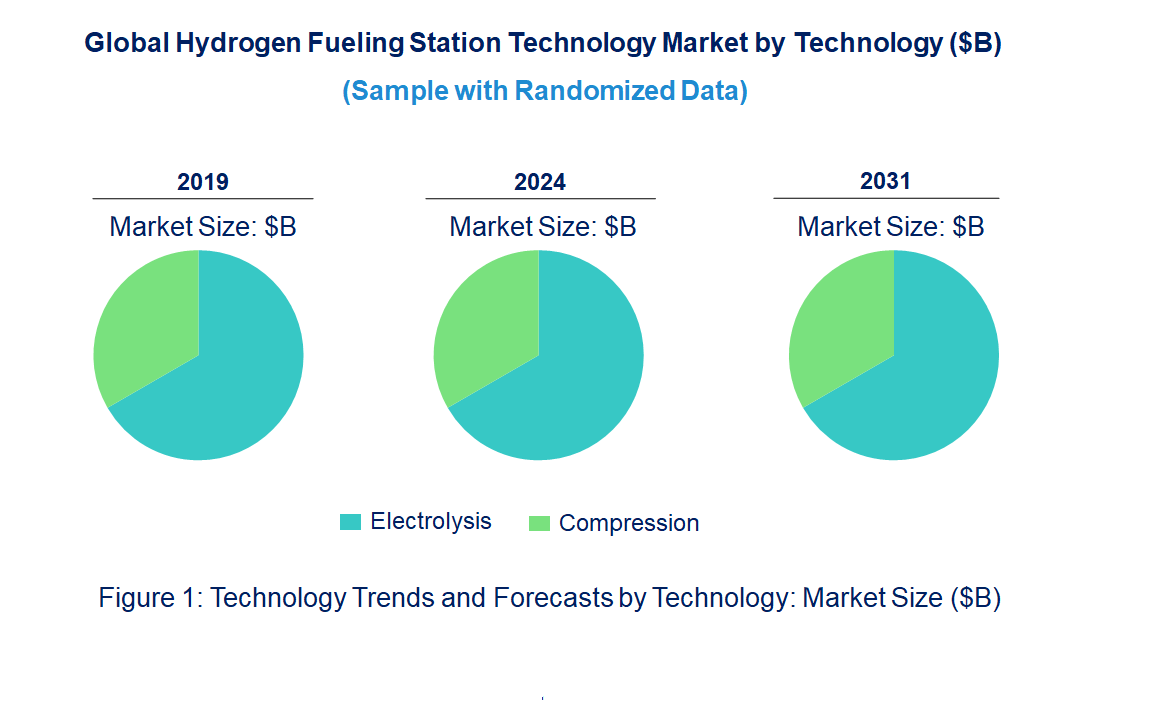
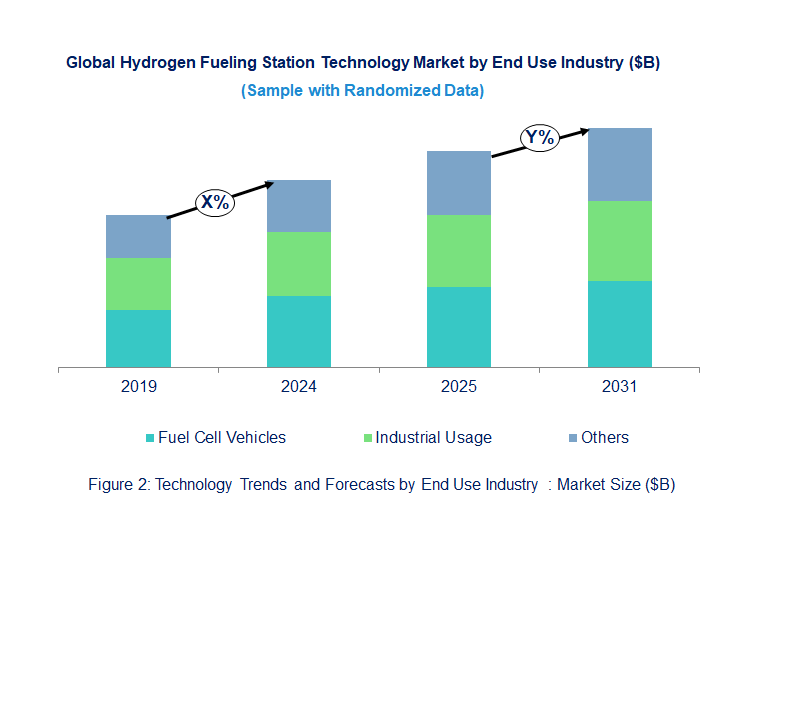
This market report covers trends, opportunities, and forecasts in the global hydrogen fueling station market to 2031 by technology (electrolysis and compression), end use industry (fuel cell vehicles, industrial usage, and others), and region (North America, Europe, Asia Pacific, and the Rest of the World)
We'll send your sample report shortly.
• Shift to Green Hydrogen Production: Increasing deployment of PEM and SOEC (Solid Oxide Electrolysis Cell) technologies for clean hydrogen generation using renewable electricity.
• Integration with Renewable Energy: Co-locating stations with solar and wind farms to ensure sustainable hydrogen supply and grid independence.
• Adoption of Modular & Portable Stations: Development of compact and mobile stations to support decentralized refueling, especially for remote or pilot areas.
• Smart Infrastructure & IoT Integration: Use of AI and digital platforms for real-time monitoring, predictive maintenance, and efficient hydrogen distribution.
• Advancements in High-Pressure Compression: Innovations such as ionic and electrochemical compressors replacing mechanical compressors for reduced energy loss and improved durability. These trends enhance infrastructure scalability, sustainability, and operational efficiency, paving the way for a more robust hydrogen ecosystem.
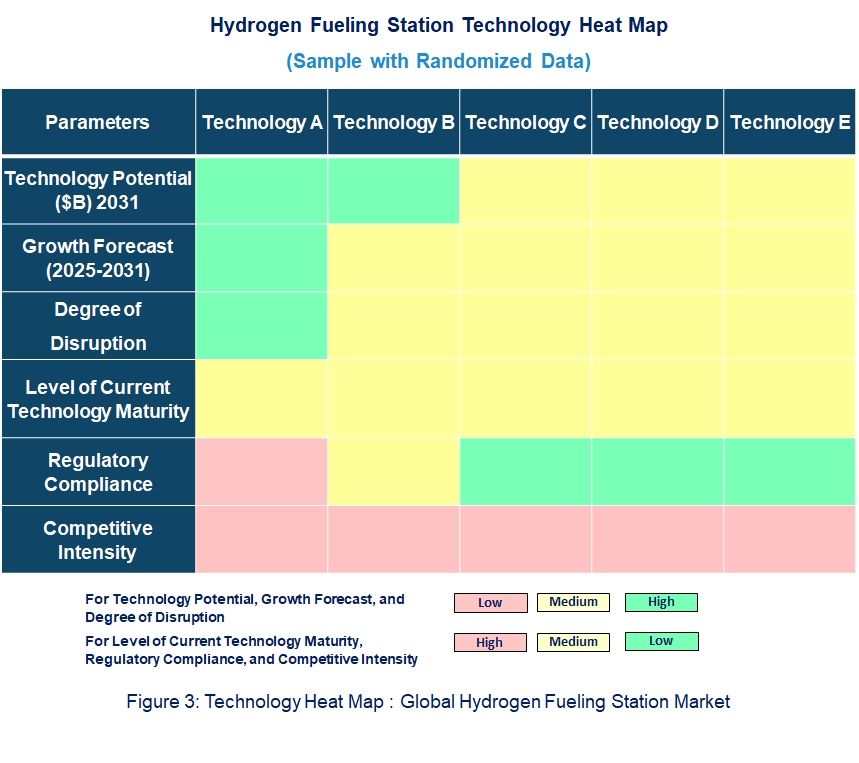
• Technology Potential: Electrolysis, especially PEM and SOEC, is gaining traction for producing green hydrogen directly from renewable sources. The potential disruption lies in replacing fossil fuel-based hydrogen with on-site electrolysis that minimizes supply chain emissions.
• Degree of Disruption: While PEM electrolysis is nearing commercialization with several pilot projects already operational, SOEC remains at a prototype stage with high efficiency but low commercial readiness. Compression systems have seen incremental innovation, with ionic compressors achieving moderate regulatory acceptance.
• Level of Current Technology Maturity: Compression technologies are evolving from mechanical to ionic compression, which reduces noise, wear, and maintenance.
• Regulatory Compliance: Compression systems have seen incremental innovation, with ionic compressors achieving moderate regulatory acceptance. Compliance with international standards such as ISO 14687, SAE J2601, and safety norms by Hydrogen Europe and local authorities remains essential. Despite challenges in scalability, CAPEX, and infrastructure readiness, the trajectory of hydrogen fueling station technology suggests a high-impact evolution with medium to high disruption potential.
• China Petrochemical (Sinopec): Launched China’s largest hydrogen refueling station in Guangdong province to support local FCV deployment, marking a significant step toward national hydrogen infrastructure.
• Air Liquide: Partnered with TotalEnergies and Toyota to deploy hydrogen corridors across Europe, focusing on long-haul truck refueling stations powered by low-carbon hydrogen.
• Cummins: Expanded its electrolyzer manufacturing capacity in the U.S. and Europe, directly supporting decentralized hydrogen fueling stations for FCVs and industrial clients.
• Air Products and Chemicals: Announced a $7 billion investment in the world’s largest green hydrogen plant in Saudi Arabia, with implications for global export and distribution networks.
• FuelCell Energy: Entered a joint development agreement for solid oxide electrolysis integration into refueling stations, targeting long-term energy storage and FCV support.
• Decarbonization Pressure: National climate targets are pushing the transition from fossil fuels to hydrogen-based mobility and industry.
• Government Incentives: Subsidies, tax benefits, and hydrogen roadmaps are encouraging private investments in fueling infrastructure.
• Growing FCV Adoption: Automakers' commitment to hydrogen vehicles is creating demand for reliable refueling networks.
• Industrial Hydrogen Demand: Green hydrogen is being adopted in steel, chemical, and energy sectors, increasing fueling station utility.
• Public-Private Partnerships: Collaboration between governments and firms is accelerating station rollouts in key regions. Challenges
• High Infrastructure Cost: Building hydrogen stations is capital-intensive due to specialized storage, compression, and dispensing equipment.
• Limited Network Availability: The number of hydrogen stations is sparse, especially outside of pilot regions like California, Japan, or parts of Europe.
• Hydrogen Storage & Transportation: Hydrogen has a low volumetric energy density, making it difficult and expensive to store and transport, especially at high pressures or cryogenic temperatures. These opportunities are positioning hydrogen fueling stations as vital assets in a low-carbon economy, transforming both mobility and industrial value chains.
• China Petrochemical
• Air Liquide
• Cummins
• Air Products And Chemicals
• Fuelcell Energy
• Itm Power
• Technology Readiness by Technology Type: Hydrogen fueling station technology is moderately mature, with several commercially operational stations, particularly in regions like Japan, Germany, and California. Key components such as compressors, dispensers, and storage systems are advancing steadily but face challenges in cost and standardization. While suitable for light-duty vehicles, scaling for heavy-duty transport and broader geographic coverage still requires further development and investment.
• Competitive Intensity and Regulatory Compliance: The competitive intensity in the hydrogen fueling station market is rising, driven by increasing investments from automakers, energy companies, and new entrants. Regulatory compliance is complex and varies by region, encompassing safety standards, environmental regulations, and infrastructure codes. Governments are actively supporting development through incentives, but strict permitting and zoning laws can delay deployment.
• Disruption Potential by Technology Type: Hydrogen fueling stations have high disruption potential, particularly with advancements in modular and mobile refueling technologies that lower infrastructure costs and accelerate deployment. Innovations like high-throughput dispensers and integrated renewable hydrogen production enhance efficiency and scalability. These developments could significantly shift the refueling landscape, especially in heavy-duty transport and remote applications.
• Electrolysis
• Compression
• Fuel Cell Vehicles
• Industrial Usage
• Others
• North America
• Europe
• Asia Pacific
• The Rest of the World
• Latest Developments and Innovations in the Hydrogen Fueling Station Technologies
• Companies / Ecosystems
• Strategic Opportunities by Technology Type


Choose a license that fits your team. Instant PDF delivery.
Prices exclude taxes. Instant delivery. Custom licensing available on request.
Market Report · May 18, 2026
Market Report · May 18, 2026
Market Report · May 18, 2026
Trusted partner for strategic intelligence and business growth


Receive a complimentary market analysis tailored to your industry. Our analysts will identify key growth opportunities and competitive dynamics specific to your business.

Market size, growth rate, and key trend analysis for your specific sector.

Top competitor positioning and market share analysis.

Strategic recommendations backed by data-driven insights.
Get curated market intelligence and competitive moves straight to your inbox.
By subscribing, you agree to receive our monthly insights. Unsubscribe anytime.
Receive a complimentary market analysis tailored to your industry. Our analysts will identify key growth opportunities and competitive dynamics specific to your business.
Market size, growth rate, and key trend analysis for your specific sector.
Top competitor positioning and market share analysis.
Strategic recommendations backed by data-driven insights.
Get curated market intelligence, emerging trends, and competitive moves straight to your inbox each month.
By subscribing, you agree to receive our monthly insights. Unsubscribe anytime.
We'll send your sample report shortly.