
Market Report · July 31, 2026

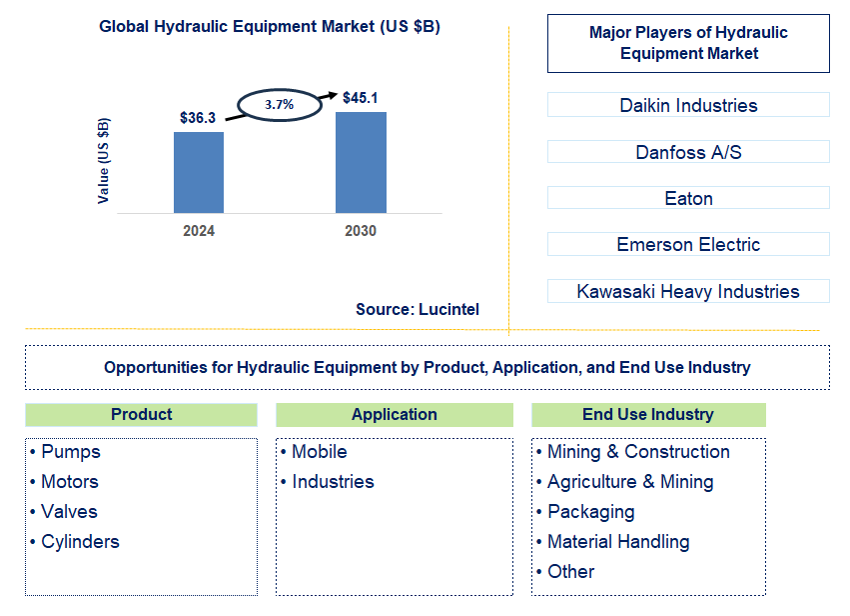
Key data points: The market size in 2030 = $45.1 billion, growth forecast = 3.7% annually for the next 6 years. Scroll below to get more insights. This market report covers trends, opportunities, and forecasts in the global hydraulic equipment market to 2030 by product (pumps, motors, valves, and cylinders), application (mobile and industries), end use industry (mining & construction, agriculture & mining, packaging, material handling, and others), and region (North America, Europe, Asia Pacific, and the Rest of the World)
We'll send your sample report shortly.
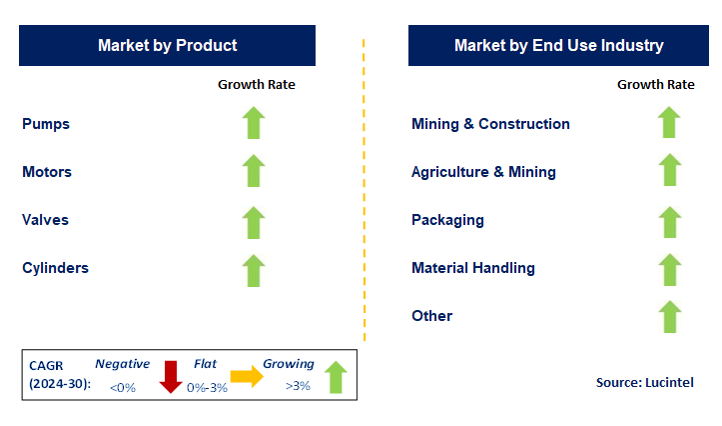
• Lucintel forecasts that, within the product category, the cylinder is expected to witness the highest growth over the forecast period.
• Within the end use industry category, mining & construction will remain the largest segment
• In terms of region, APAC is expected to witness the highest growth over the forecast period due to significantly growing construction and infrastructure activities and increasing demand for agricultural, fishery, and forestry equipment in the region. A more than 150-page report is developed to help in your business decisions.
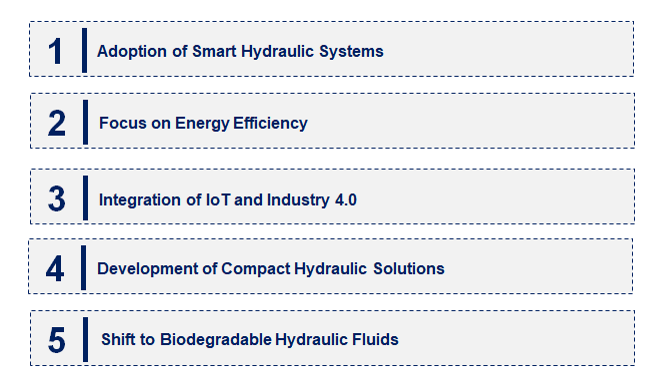
• Adoption of Smart Hydraulic Systems: The hydraulic equipment market is undergoing significant transformations, driven by technological advancements, environmental concerns, and changing industrial demands. As industries such as construction, agriculture, and manufacturing increasingly rely on hydraulic systems, several emerging trends are reshaping the market. These trends reflect a shift towards greater efficiency, sustainability, and customization, enabling businesses to enhance productivity while minimizing their environmental footprint. Understanding these trends is crucial for stakeholders looking to navigate the evolving hydraulic equipment market effectively.
• Focus on Energy Efficiency: The use of smart hydraulics also reduces downtime by facilitating predictive maintenance, thereby lowering energy consumption during production processes. By doing so, performance is improved at a reduced cost of operation, leading to sustainable development. This trend not only improves performance but also contributes to sustainability efforts, as better monitoring leads to more efficient resource use and lower operational costs.
• Integration of IoT and Industry 4.0:This allows businesses to monitor hydraulic systems remotely using smart sensors and connectivity, such as real-time analysis of data from remote sites where complex repair needs might require technicians' presence across borders. This trend enhances operational efficiency and reliability, allowing businesses to respond quickly to issues with their heavy machinery or system performance. The shift towards digitalization in hydraulic systems reflects broader trends in industrial automation and smart manufacturing.
• Development of Compact Hydraulic Solutions: Smaller components have been incorporated into portable applications, robotics, and areas with space constraints, as part of an initiative towards flexible design and application. Furthermore, the trend toward compactness aligns with the demand for lightweight solutions in different industries, meeting the growing need for efficiency and space-saving technologies.
• Shift to Biodegradable Hydraulic Fluids: Traditional fluids pose environmental risks, so companies have developed eco-friendly alternatives that minimize ecological impact. This trend not only meets regulatory requirements but also caters to the growing consumer demand for sustainable practices. The adoption of biodegradable fluids enhances the overall sustainability of hydraulic systems, making them more attractive to environmentally conscious industries. The emergence of these trends is reshaping the hydraulic equipment market by promoting efficiency, sustainability, and customization. As industries adapt to these changes, stakeholders must remain agile to leverage new opportunities and address challenges. The integration of advanced technologies and environmentally friendly practices will define the future of hydraulic systems, ensuring they meet the evolving demands of various sectors while contributing to a more sustainable industrial landscape.
• Miniaturization and Integration: Over time, hydraulic components have become smaller and lighter, enabling the development of machines that are more maneuverable. Precision, efficiency, and automation have been boosted by hydraulics that integrate with electronic controls.
• Energy Efficiency: Manufacturers have shifted their focus toward developing hydraulic systems that consume less energy. High-performance pumps with advanced control algorithms from computational fluid dynamics software can reduce energy consumption by over 50%.
• Smart Hydraulics: Sensors, data analytics, and predictive maintenance technologies have turned hydraulics into smart devices. They allow real-time monitoring, early fault detection, and optimized performance.
• Electric Hydraulics: Electric motors combined with hydraulic actuators are being used in applications that require precise control along with energy efficiency. This approach is flexible and reduces emissions from hydraulic leakage.
• Sustainable Materials: The use of sustainable or recyclable materials in hydraulic components is a growing trend. Biodegradable hydraulic fluids are being adopted, and many manufacturers are using recycled materials to minimize environmental impact. These changes have altogether altered the landscape of the hydraulic equipment market. Miniaturization and integration have increased demand for compactness and flexibility. Sustainable systems have lowered costs while being environmentally friendly. Smart hydraulics have increased dependability and productivity levels, benefiting everything from industrial presses to airport landing gears. Electric hydraulics have opened up new markets, especially in industries with strict emission regulations, such as the automotive sector, with associations like the California Air Resources Board (CARB) implementing policies. These trends reflect changes made possible through government intervention and policies.
• Construction Equipment: The shift toward more durable and efficient hydraulic systems in construction equipment is driven by the need for higher productivity and durability. Improved hydraulic technologies enhance lifting capabilities and operational efficiencies, making machinery more effective even under harsh conditions.
• Agricultural Machinery: The adoption of hydraulics in agricultural machinery promotes precision control, leading to better crop management and machine automation. This translates into increased yields and decreased operating costs, supporting the development of contemporary farming practices.
• Aerospace Applications: Lightweight, high-performance hydraulic systems are essential for improving the efficiency and reliability of aircraft in the aerospace industry. Through advanced hydrodynamics, they enhance maneuverability and safety, contributing significantly to the industry’s innovations.
• Automotive Industry: Hydraulic systems in automotive applications are evolving to support advanced driver-assistance systems (ADAS) and electric vehicles (EVs). In addition, these systems improve vehicle performance while promoting safety, further driving demand for complex hydraulic components in the sector and supporting growth.
• Marine Sector: Hydraulic systems that enhance vessel performance and increase operational efficiency are dominating the marine sector. Innovations in propulsion and steering hydraulics boost maneuverability while ensuring fuel economy, meeting the rising demand for sustainable marine operations. These opportunities are significantly impacting the hydraulic equipment market. Consequently, there are enhanced efficiencies, productivity levels, and innovations across all application areas, leading to overall market expansion and technological advancements. As industries continue to adopt hydraulic solutions, this market will experience growth and development, supporting a wide range of sophisticated applications.
• Advancement in Technology: These advancements include the incorporation of electro-hydraulic systems and IoT connectivity in hydraulic systems, which have revolutionized the sector. These innovations enhance the performance of hydraulic systems, making them more efficient and leading to better control and monitoring during operations. As manufacturers increase research and development activities, smart hydraulic systems are expected to meet the growing demand for intelligent machinery used in sectors like construction and manufacturing.
• Increased Construction Activities: The rising demand for various types of housing requires the integration of hydraulic systems in new buildings worldwide. Emerging markets such as China and India are investing in infrastructure, including roads, bridges, and urban amenities, which is driving this trend.
• Rising Demand for Automation: Automation is a major driver of hydraulic equipment demand across industries today. Automated systems help companies save on operating expenses by allowing machines to operate efficiently, with maintenance performed only when necessary. As more industries adopt intelligent solutions to improve efficiency, there will be an increasing demand for integrating smart sensors with hydraulic systems to manage emergencies and improve overall system performance.
• Expanding Shipping and Logistics Sector: Shipping and logistics companies are increasingly tasked with handling larger volumes of imported products, and hydraulic machinery plays a crucial role in managing heavy loads. Hydraulic systems are vital for advancing operations in ports and warehouses, and as a result, there is growing demand for more advanced hydraulic machinery capable of handling heavier parcels while ensuring safety.
• Increasing Investments in Smart Technologies: The shift toward smart hydraulic technologies is driven by the sustainability and efficiency goals of various industries. These technological advancements have led to energy savings, reducing operational costs and increasing the appeal of hydraulic systems. Innovations in smart applications, such as sensors and control mechanisms, have enhanced the functionality of hydraulic pumps and systems, making them more appealing for diverse applications. Challenges in the hydraulic equipment market include:
• High Manufacturing and Maintenance Costs: The production of hydraulic equipment requires significant capital investment in high-quality materials and precision engineering. These high start-up costs are a major deterrent for small and medium-sized businesses trying to enter the market. Additionally, ongoing maintenance costs, such as frequent inspections and repairs, can create budgetary pressures, limiting wider acceptance of hydraulic systems among companies.
• Competition from Alternative Technologies: Pneumatics and electromechanical systems are emerging as direct substitutes for hydraulic equipment in the market. These alternatives often offer benefits such as reduced maintenance costs and minimized leakage risks, posing stiff competition to traditional hydraulic systems. As industries seek more dependable and efficient solutions, the market share for hydraulic equipment may face challenges from these competing technologies.
• Complex Market Forces: The hydraulic equipment market is influenced by a range of environmental regulations. Manufacturers must comply with stringent emissions and waste management controls, which increase production costs and add complexity to operations. Meeting these regulatory standards while maintaining competitive costs can be a significant challenge for companies in the hydraulic industry. In conclusion, the hydraulic equipment market is driven by a combination of technological advancements and increasing construction activities, which create opportunities for growth. However, challenges such as high manufacturing costs, competition from alternative technologies, and regulatory pressures pose significant obstacles. Market participants must anticipate these dynamics to capitalize on opportunities and address inherent risks, including regulatory pressures. Ultimately, the future development of the hydraulic equipment market will depend on whether industry players can adapt to the changing landscape or introduce innovative solutions to overcome these challenges.
• Daikin Industries
• Danfoss A/S
• Eaton
• Emerson Electric
• Kawasaki Heavy Industries
• Komatsu
• Parker-Hannifin
• Robert Bosch
• Pumps
• Motors
• Valves
• Cylinders
• Mobile
• Industries
• Mining & Construction
• Agriculture & Mining
• Packaging
• Material Handling
• Others
• North America
• Europe
• Asia Pacific
• The Rest of the World
• United States: The U.S. hydraulic equipment market is evolving around automation and smart hydraulics. This has led to improved operational efficiency and predictive maintenance through IoT adoption and data analytics. Additionally, there is a movement toward eco-friendly hydraulic fluids and systems, driven by stringent environmental regulations.
• China: Massive investments in research and development are driving growth in China’s hydraulic equipment sector. The focus is on improving energy efficiency while incorporating advanced technologies such as AI and IoT. The government's emphasis on infrastructure projects is also boosting the demand for hydraulic equipment.
• Germany: German hydraulic equipment market is centered around precision engineering and high-performance systems. Hydraulic components have seen significant improvements, contributing to sectoral growth. German industries are also leading the way in developing environmentally sustainable hydraulic solutions.
• India: With an increase in infrastructure development and construction activities, India’s market for hydraulic equipment has been rapidly evolving. The demand is growing for efficient products that can meet the increasing requirements for strength and durability. Additionally, there is a shift toward more affordable, locally made hydraulic solutions.
• Japan: Hydraulic technology innovation, particularly in robotics and automation, is thriving in Japan. Japanese companies are integrating new techniques like IoT and AI into their hydraulic systems to enhance precision and efficiency. Additionally, efforts are underway to develop compact, power-saving hydraulic systems.


• Daikin Industries
• Danfoss A/S
• Eaton
• Emerson Electric
• Kawasaki Heavy Industries
• Komatsu
• Parker-Hannifin
• Robert Bosch Q6. Which hydraulic equipment market segment will be the largest in the future? Answer: Lucintel forecast that cylinder is expected to witness the highest growth over the forecast period. Q7. In the hydraulic equipment market, which region is expected to be the largest in the next 5 years? Answer: APAC is expected to witness the highest growth over the forecast period due to significantly growing construction and infrastructure activities and increasing demand for agricultural, fishery, and forestry equipment in the region. Q.8 Do we receive customization in this report? Answer: Yes, Lucintel provides 10% customization without any additional cost.


Choose a license that fits your team. Instant PDF delivery.
Prices exclude taxes. Instant delivery. Custom licensing available on request.
Market Report · July 31, 2026
Market Report · July 22, 2026
Market Report · July 20, 2026
Trusted partner for strategic intelligence and business growth


Receive a complimentary market analysis tailored to your industry. Our analysts will identify key growth opportunities and competitive dynamics specific to your business.

Market size, growth rate, and key trend analysis for your specific sector.

Top competitor positioning and market share analysis.

Strategic recommendations backed by data-driven insights.
Get curated market intelligence and competitive moves straight to your inbox.
By subscribing, you agree to receive our monthly insights. Unsubscribe anytime.
Receive a complimentary market analysis tailored to your industry. Our analysts will identify key growth opportunities and competitive dynamics specific to your business.
Market size, growth rate, and key trend analysis for your specific sector.
Top competitor positioning and market share analysis.
Strategic recommendations backed by data-driven insights.
Get curated market intelligence, emerging trends, and competitive moves straight to your inbox each month.
By subscribing, you agree to receive our monthly insights. Unsubscribe anytime.
We'll send your sample report shortly.