
Hydration Pack Market Trends and Forecast
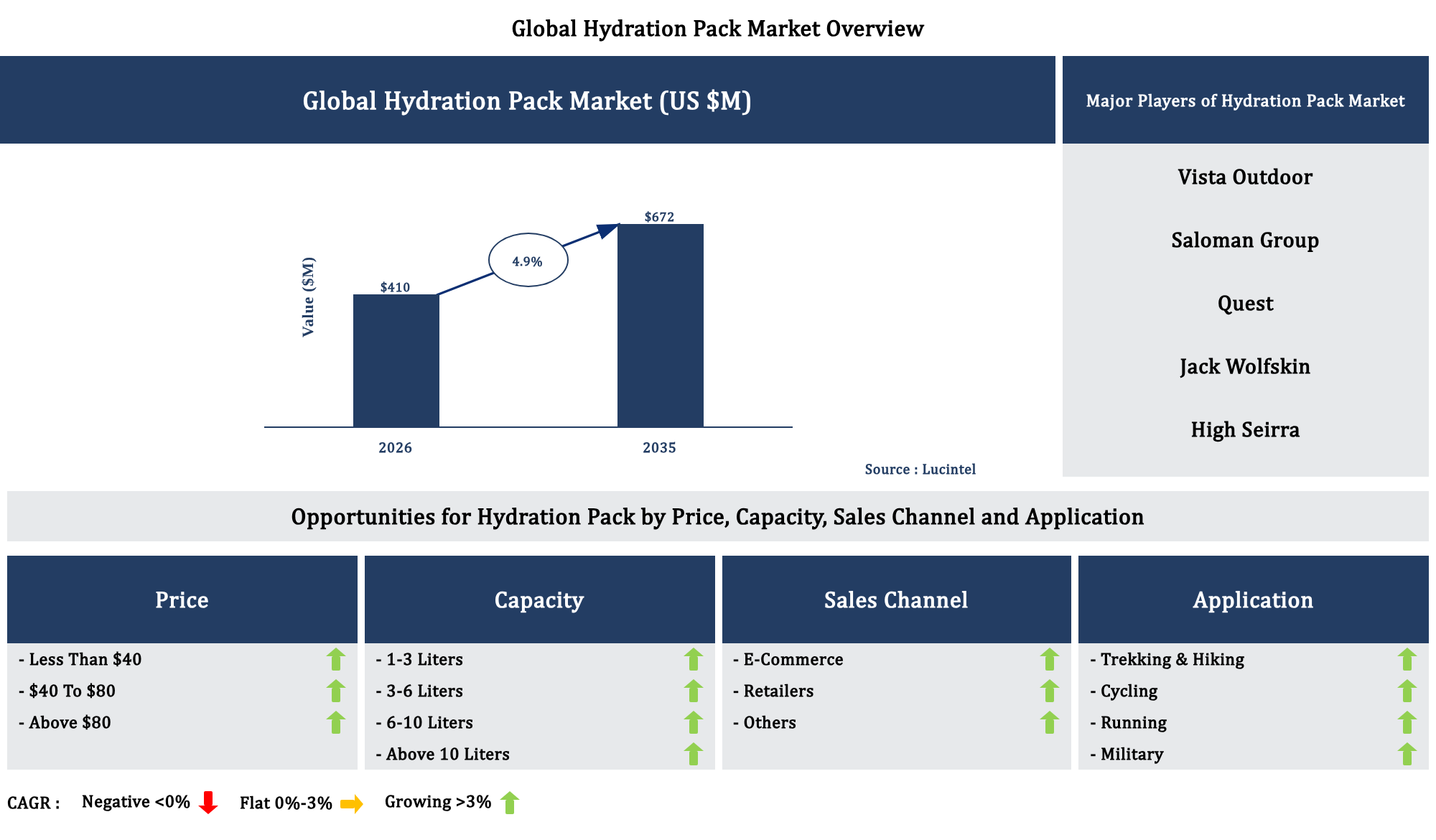
The future of the global hydration pack market looks promising with opportunities in the trekking & hiking, cycling, running, and military markets. The global hydration pack market is expected to reach an estimated $672 million by 2035 with a CAGR of 4.9% from 2026 to 2035. The major drivers for this market are the increasing product innovation with smart storage features, the growing travel & camping activities among young consumers, and the rising military & tactical applications for hydration packs.
• Lucintel forecasts that, within the price category, $40 to $80 is expected to witness the highest growth over the forecast period.
• Within the application category, trekking & hiking is expected to witness the highest growth.
• In terms of region, APAC is expected to witness the highest growth over the forecast period.
Gain valuable insights for your business decisions with our comprehensive 150+ page report. Sample figures with some insights are shown below.
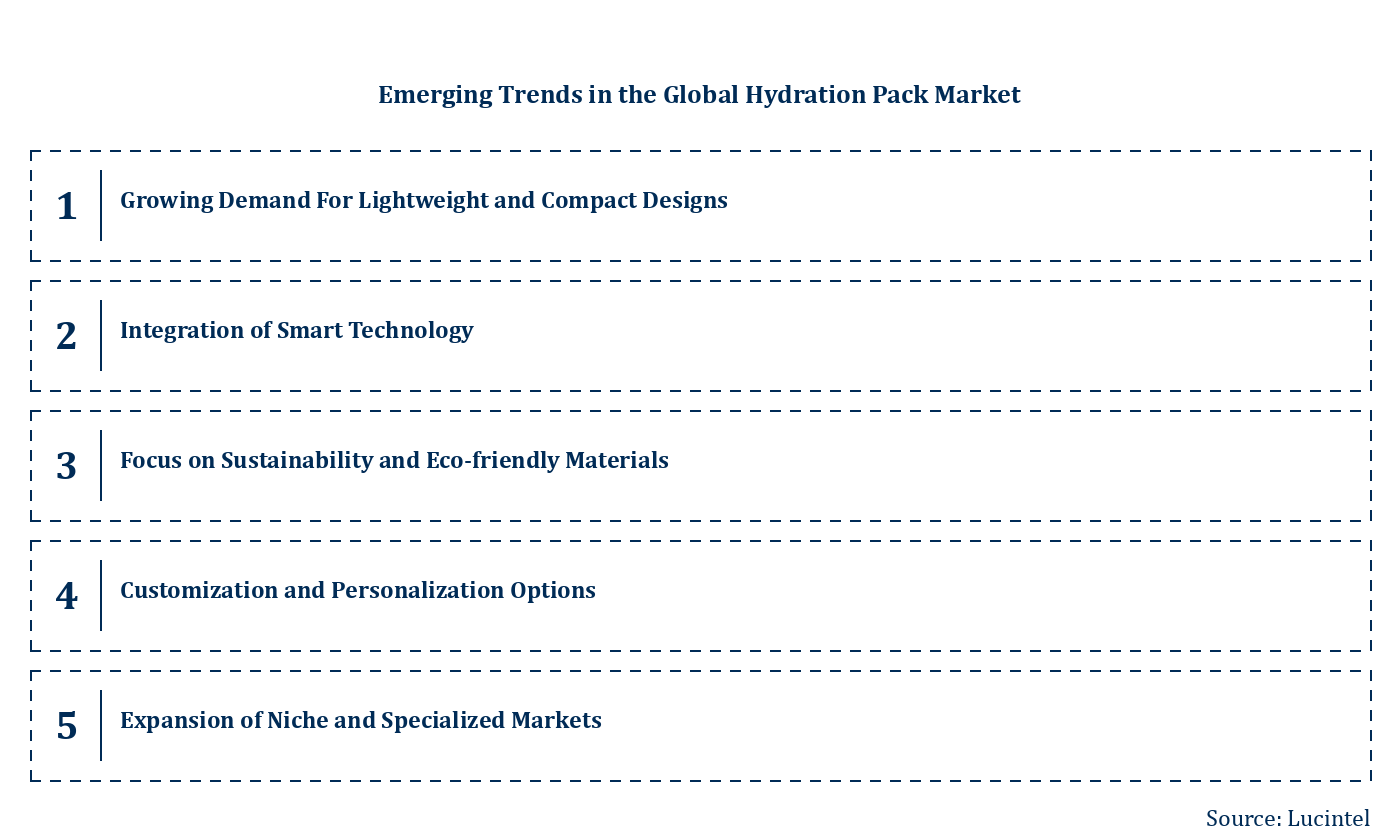
Emerging Trends in the Hydration Pack Market
The hydration pack market is experiencing rapid growth driven by increasing outdoor activities, health consciousness, and technological advancements. Consumers are seeking more efficient, durable, and versatile hydration solutions for sports, hiking, cycling, and everyday use. As the market evolves, several emerging trends are shaping its future landscape, influencing product innovation, consumer preferences, and competitive strategies. These trends reflect a shift towards sustainability, personalization, and smart technology integration, which are redefining how hydration packs are designed, marketed, and used. Understanding these key developments is essential for stakeholders aiming to capitalize on the market‘s potential and meet evolving consumer demands.
• Growing Demand for Lightweight and Compact Designs: Consumers prefer hydration packs that are lightweight and easy to carry, especially for outdoor activities like running, cycling, and hiking. Manufacturers are focusing on using advanced materials that reduce weight without compromising durability or capacity. This trend enhances user comfort and mobility, encouraging longer and more frequent outdoor pursuits. The demand for sleek, minimalist designs is also driven by urban consumers seeking convenient hydration solutions for daily commutes and fitness routines. As a result, innovation in material science and ergonomic design is critical to meeting this trend.
• Integration of Smart Technology: The incorporation of smart features such as hydration tracking, temperature control, and app connectivity is transforming hydration packs into high-tech gear. These innovations enable users to monitor fluid intake, receive hydration reminders, and customize their hydration experience. Smart hydration packs appeal to tech-savvy consumers and athletes aiming for optimal performance and health management. This trend also opens new avenues for data collection and personalized coaching, creating opportunities for brands to differentiate their products. As technology advances, the integration of sensors and IoT connectivity is expected to become standard in premium hydration packs.
• Focus on Sustainability and Eco-Friendly Materials: Environmental concerns are prompting manufacturers to adopt sustainable practices, including using recycled and biodegradable materials. Consumers are increasingly prioritizing eco-friendly products, influencing market offerings. Companies are also exploring refillable and reusable components to reduce waste. This trend aligns with broader environmental initiatives and appeals to eco-conscious consumers, especially younger demographics. Sustainable hydration packs not only reduce environmental impact but also enhance brand reputation and customer loyalty. As regulations tighten and awareness grows, sustainability is becoming a key differentiator in the hydration pack market.
• Customization and Personalization Options: Consumers seek hydration packs tailored to their specific needs, preferences, and activities. Manufacturers are offering customizable features such as adjustable straps, modular compartments, and personalized branding. This trend enhances user experience by providing functional and aesthetic flexibility. Personalization also extends to color options, hydration bladder sizes, and accessory attachments. The rise of online customization platforms allows consumers to design their packs, fostering brand engagement and loyalty. As personalization becomes more accessible, it is expected to drive higher customer satisfaction and market differentiation.
• Expansion of Niche and Specialized Markets: The market is witnessing growth in niche segments such as ultralight packs for trail runners, insulated packs for cold weather, and hydration solutions for medical or military applications. These specialized products cater to specific user needs, offering tailored features like enhanced insulation, durability, or medical-grade materials. This trend allows brands to target distinct customer groups and command premium pricing. The expansion into niche markets also encourages innovation and diversification, ensuring the hydration pack industry remains dynamic and responsive to diverse consumer demands. As these segments grow, they contribute significantly to overall market expansion.
These emerging trends are fundamentally reshaping the hydration pack market by emphasizing innovation, sustainability, and customization. They are driving product development towards smarter, lighter, and more eco-friendly solutions, while also catering to specific consumer needs. This evolution is fostering increased competition, opening new market segments, and enhancing overall consumer engagement, positioning the market for sustained growth and technological advancement.
Recent Developments in the Hydration Pack Market
The hydration pack market is experiencing rapid growth driven by increasing outdoor activities, health consciousness, and innovative product designs. Consumers seek lightweight, durable, and versatile hydration solutions for hiking, cycling, and sports. Technological advancements and eco-friendly materials are shaping product development. Market players are expanding their offerings to meet diverse consumer needs, while e-commerce channels boost accessibility. These developments are transforming the industry landscape, creating new opportunities for brands and enhancing consumer experiences.
• Growing Popularity of Outdoor Activities: The rising participation in hiking, cycling, and adventure sports fuels demand for efficient hydration solutions, prompting manufacturers to innovate lightweight, ergonomic packs that cater to active lifestyles, thus expanding market reach and consumer base.
• Technological Innovations in Materials: Use of advanced, eco-friendly, and durable materials enhances product performance, making hydration packs more lightweight, comfortable, and sustainable. These innovations attract environmentally conscious consumers and improve user experience, driving sales and market growth.
• Customization and Versatile Designs: Manufacturers are offering customizable hydration packs with multiple compartments and adjustable features, catering to individual preferences and specific activities. This trend increases consumer engagement, boosts sales, and broadens market appeal across various outdoor and sports segments.
• Expansion of E-Commerce Channels: Online platforms facilitate wider product availability, detailed information, and direct consumer engagement. E-commerce growth enables brands to reach global markets efficiently, accelerates sales, and provides valuable consumer insights, thereby strengthening market competitiveness.
• Focus on Eco-Friendly and Sustainable Products: The shift towards environmentally sustainable hydration packs, made from recyclable and biodegradable materials, aligns with consumer values. This focus enhances brand reputation, meets regulatory standards, and promotes market differentiation, fostering long-term industry growth.
The overall impact of these developments is a dynamic, innovative market characterized by increased consumer choice, expanded global reach, and sustainable practices, which collectively drive growth and competitiveness in the hydration pack market.
Strategic Growth Opportunities in the Hydration Pack Market
The hydration pack market is experiencing rapid growth driven by increasing outdoor activities, health consciousness, and innovative product developments. Consumers seek lightweight, durable, and versatile hydration solutions for sports, hiking, cycling, and adventure travel. Market players are focusing on expanding product features, targeting new customer segments, and leveraging e-commerce channels. This dynamic environment presents numerous opportunities for strategic expansion, product differentiation, and technological integration, ultimately fueling market growth and meeting evolving consumer demands across diverse applications.
• Expansion into the Outdoor Sports and Adventure Tourism Sectors: Hydration packs are increasingly adopted by outdoor enthusiasts, adventure travelers, and sports participants. Growing participation in hiking, trail running, cycling, and mountain biking creates a substantial demand for specialized hydration solutions. Companies can capitalize on this trend by developing tailored products with enhanced features such as increased capacity, ergonomic design, and durability. Strategic partnerships with outdoor gear brands and targeted marketing campaigns can further boost market penetration and brand visibility in these high-growth segments.
• Integration of Smart Technology for Enhanced User Experience: The incorporation of smart features like hydration tracking, temperature control, and connectivity with mobile apps offers significant growth potential. These advanced hydration packs appeal to tech-savvy consumers seeking convenience and data-driven insights for health and performance optimization. Investment in IoT-enabled products can differentiate brands, foster customer loyalty, and open new revenue streams. As wearable technology gains popularity, smart hydration packs are poised to become a key innovation driver in the market.
• Development of Eco-Friendly and Sustainable Hydration Solutions: Increasing environmental awareness among consumers is driving demand for eco-conscious products. Companies can explore biodegradable materials, recyclable components, and sustainable manufacturing practices to meet this demand. Offering eco-friendly hydration packs not only aligns with global sustainability goals but also enhances brand reputation. This opportunity encourages innovation in material science and supply chain management, appealing to environmentally conscious customers and expanding market share in a competitive landscape.
• Expansion into Emerging Markets with Rising Outdoor Activity Participation: Developing regions are witnessing a surge in outdoor recreation and fitness activities, driven by urbanization and rising disposable incomes. Tailoring products to local preferences, price points, and climatic conditions can unlock new growth avenues. Establishing distribution networks and localized marketing strategies will facilitate market entry. This expansion can significantly increase global market size, diversify revenue streams, and establish early brand presence in high-potential emerging markets.
• Focus on Product Innovation for Specialized Applications Like Military and Medical Use: Hydration packs designed for military personnel, first responders, and medical emergencies require high durability, ease of use, and advanced features. Developing specialized products for these sectors can open lucrative niche markets. Collaborations with defense agencies and healthcare providers can facilitate product development and adoption. This opportunity enhances market scope, drives technological advancements, and positions brands as leaders in high-performance hydration solutions for critical applications.
The overall growth of the hydration pack market is driven by diverse opportunities spanning outdoor recreation, technological innovation, sustainability, emerging markets, and specialized applications. Capitalizing on these areas will enable companies to expand their market presence, meet evolving consumer needs, and sustain competitive advantage in a rapidly evolving industry landscape.
Hydration Pack Market Driver and Challenges
The hydration pack market is influenced by a variety of technological, economic, and regulatory factors that shape its growth and development. Innovations in materials and design enhance user experience and product durability, while economic trends such as increasing health consciousness and outdoor activity participation drive demand. Regulatory standards concerning safety and environmental impact also play a crucial role in product development and marketing strategies. Additionally, technological advancements in hydration technology and manufacturing processes contribute to market expansion. However, the market faces challenges related to regulatory compliance, environmental concerns, and competition from alternative hydration solutions. Understanding these drivers and challenges is essential for stakeholders aiming to capitalize on market opportunities and navigate potential obstacles effectively.
The factors responsible for driving the hydration pack market include:
• Technological Innovation: The development of lightweight, durable, and ergonomic materials has significantly improved hydration pack designs. Advanced features such as leak-proof reservoirs, insulation for temperature control, and integrated storage compartments enhance user convenience. These innovations cater to outdoor enthusiasts, athletes, and travelers, expanding market reach. Continuous R&D efforts are expected to introduce smarter hydration solutions, further boosting demand. The integration of technology, like hydration tracking via smart packs, also appeals to tech-savvy consumers, fostering market growth.
• Growing Outdoor and Fitness Activities: Increasing participation in outdoor sports, hiking, cycling, running, and adventure tourism has propelled demand for hydration packs. Consumers seek reliable hydration solutions that are portable and easy to carry during physical activities. The rising health consciousness and fitness trends globally contribute to this growth. As more individuals engage in active lifestyles, the need for efficient hydration solutions becomes critical, thereby expanding the market. The proliferation of outdoor events and sports competitions further amplifies this trend.
• Urbanization and Lifestyle Changes: Rapid urbanization has led to a rise in outdoor recreational activities within city environments. Urban dwellers participate in activities like jogging, cycling, and weekend hikes, creating a steady demand for hydration packs. Additionally, the increasing popularity of travel and adventure tourism encourages consumers to invest in portable hydration solutions. The convenience and portability of hydration packs align with modern busy lifestyles, making them a preferred choice for hydration on the go, thus fueling market growth.
• E-commerce and Digital Marketing: The expansion of online retail platforms has made hydration packs more accessible to a global audience. E-commerce channels offer a wide variety of products, competitive pricing, and detailed customer reviews, influencing purchasing decisions. Digital marketing strategies, including social media campaigns and influencer collaborations, have increased brand awareness and consumer engagement. This digital shift allows manufacturers to reach niche markets and customize offerings, accelerating market penetration and sales growth.
• Environmental Sustainability Initiatives: Increasing awareness of environmental issues has prompted manufacturers to adopt eco-friendly materials and sustainable manufacturing practices. Recyclable and biodegradable components appeal to environmentally conscious consumers, enhancing brand reputation. Regulatory pressures to reduce plastic waste also drive innovation in reusable and sustainable hydration solutions. These initiatives not only meet consumer demand but also position companies favorably in a competitive market, fostering long-term growth and compliance with evolving environmental standards.
The challenges facing the hydration pack market include:
• Regulatory Compliance and Standards: Stringent safety, quality, and environmental regulations pose significant hurdles for manufacturers. Compliance requires substantial investment in testing, certification, and quality assurance processes, which can increase costs and time-to-market. Variations in regulations across regions complicate global expansion efforts. Non-compliance risks legal penalties and damage to brand reputation. Staying abreast of evolving standards and ensuring product conformity is essential but challenging, especially for smaller players with limited resources.
• Environmental Concerns and Waste Management: Despite sustainability efforts, the environmental impact of plastic components in hydration packs remains a concern. Single-use plastics and non-biodegradable materials contribute to pollution, attracting regulatory scrutiny and consumer criticism. Managing waste and promoting recycling are ongoing challenges. Manufacturers must innovate to develop eco-friendly alternatives without compromising product performance, which can involve higher costs and technological hurdles. Addressing these concerns is vital for maintaining consumer trust and market relevance.
• Intense Market Competition: The hydration pack market is highly competitive, with numerous established brands and new entrants vying for market share. Price wars, product differentiation, and brand loyalty are critical factors influencing success. Companies must continuously innovate and invest in marketing to stand out. Additionally, the presence of substitute products like water bottles and hydration belts intensifies competition. Market saturation in certain regions can limit growth opportunities, requiring strategic expansion and diversification to sustain profitability.
The hydration pack market is driven by technological advancements, increasing outdoor and active lifestyles, urbanization, digital marketing, and sustainability initiatives. However, regulatory complexities, environmental concerns, and fierce competition pose significant challenges. These factors collectively influence market dynamics, requiring stakeholders to innovate, adapt, and strategize effectively. While growth prospects remain promising, addressing these challenges is crucial for long-term success and market stability.
List of Hydration Pack Companies
Companies in the market compete on the basis of product quality offered. Major players in this market focus on expanding their manufacturing facilities, R&D investments, infrastructural development, and leverage integration opportunities across the value chain. With these strategies hydration pack companies cater increasing demand, ensure competitive effectiveness, develop innovative products & technologies, reduce production costs, and expand their customer base. Some of the hydration pack companies profiled in this report include-
• Vista Outdoor
• Saloman Group
• Quest
• Jack Wolfskin
• High Seirra
Hydration Pack Market by Segment
The study includes a forecast for the global hydration pack market by price, capacity, sales channel, application, and region.
Hydration Pack Market by Price [Value from 2019 to 2035]:
• Less Than $40
• $40 To $80
• Above $80
Hydration Pack Market by Capacity [Value from 2019 to 2035]:
• 1-3 Liters
• 3-6 Liters
• 6-10 Liters
• Above 10 Liters
Hydration Pack Market by Sales Channel [Value from 2019 to 2035]:
• E-Commerce
• Retailers
• Others
Hydration Pack Market by Application [Value from 2019 to 2035]:
• Trekking & Hiking
• Cycling
• Running
• Military
Hydration Pack Market by Region [Value from 2019 to 2035]:
• North America
• Europe
• Asia Pacific
• The Rest of the World
Country Wise Outlook for the Hydration Pack Market
The hydration pack market has experienced significant growth driven by increasing outdoor activities, fitness trends, and innovations in product design. Consumers are seeking lightweight, durable, and versatile hydration solutions for sports, hiking, cycling, and adventure travel. Technological advancements and sustainability concerns are shaping product development, while regional market dynamics influence growth trajectories. The United States, China, Germany, India, and Japan are key players with unique market trends and consumer preferences. Understanding these developments provides insight into future opportunities and challenges within this expanding industry.
• United States: The U.S. hydration pack market has seen rapid growth due to rising outdoor recreation activities and fitness awareness. Innovations include lightweight materials, ergonomic designs, and integration of hydration technology. E-commerce sales have surged, and brands focus on eco-friendly products to meet sustainability demands. The market is also driven by increased participation in trail running, cycling, and adventure sports, with a focus on customization and comfort.
• China: China‘s hydration pack market is expanding due to a growing middle class and increased outdoor sports participation. Local brands are emerging, offering affordable and innovative products tailored to urban and rural consumers. The market benefits from government initiatives promoting outdoor activities and fitness. Technological integration, such as smart hydration systems, is gaining traction, alongside a rising preference for lightweight and compact designs.
• Germany: The German market emphasizes high-quality, durable hydration packs suitable for hiking, cycling, and mountaineering. Sustainability and eco-conscious manufacturing are key trends, with consumers favoring products made from recycled materials. The market is characterized by a strong presence of international brands and a focus on ergonomic, functional designs that meet strict safety standards. Retail channels include specialty outdoor stores and online platforms.
• India: The hydration pack market in India is experiencing rapid growth driven by increasing outdoor adventure tourism and fitness trends. Local brands are gaining popularity by offering affordable, lightweight, and versatile products. The rise of e-commerce and social media marketing has expanded reach, especially among young consumers. There is a growing demand for hydration packs suitable for varied terrains and climates, with an emphasis on durability and affordability.
• Japan: Japan‘s hydration pack market is characterized by technological innovation and a focus on compact, lightweight designs suitable for urban commuting, cycling, and outdoor activities. Consumers prioritize quality, brand reputation, and eco-friendliness. The market is influenced by a strong outdoor culture and a preference for multifunctional products. Retail channels include specialty stores, online shops, and collaborations with outdoor sports events, fostering continuous product innovation.
Features of the Global Hydration Pack Market
Market Size Estimates: Hydration pack market size estimation in terms of value ($M).
Trend and Forecast Analysis: Market trends (2019 to 2025) and forecast (2026 to 2035) by various segments and regions.
Segmentation Analysis: Hydration pack market size by various segments, such as by price, capacity, sales channel, application, and region in terms of value ($M).
Regional Analysis: Hydration pack market breakdown by North America, Europe, Asia Pacific, and Rest of the World.
Growth Opportunities: Analysis of growth opportunities in different price, capacity, sales channel, application, and regions for the hydration pack market.
Strategic Analysis: This includes M&A, new product development, and competitive landscape of the hydration pack market.
Analysis of competitive intensity of the industry based on Porter’s Five Forces model.
FAQ
Q1. What is the hydration pack market size?
Answer: The global hydration pack market is expected to reach an estimated $672 million by 2035.
Q2. What is the growth forecast for hydration pack market?
Answer: The global hydration pack market is expected to grow with a CAGR of 4.9% from 2026 to 2035.
Q3. What are the major drivers influencing the growth of the hydration pack market?
Answer: The major drivers for this market are the increasing product innovation with smart storage features, the growing travel & camping activities among young consumers, and the rising military & tactical applications for hydration packs.
Q4. What are the major segments for hydration pack market?
Answer: The future of the hydration pack market looks promising with opportunities in the trekking & hiking, cycling, running, and military markets.
Q5. Who are the key hydration pack market companies?
Answer: Some of the key hydration pack companies are as follows:
• Vista Outdoor
• Saloman Group
• Quest
• Jack Wolfskin
• High Seirra
Q6. Which hydration pack market segment will be the largest in future?
Answer: Lucintel forecasts that, within the price category, $40 to $80 is expected to witness the highest growth over the forecast period.
Q7. In hydration pack market, which region is expected to be the largest in next 8 years?
Answer: In terms of region, APAC is expected to witness the highest growth over the forecast period.
Q8. Do we receive customization in this report?
Answer: Yes, Lucintel provides 10% customization without any additional cost.
This report answers following 11 key questions:
Q.1. What are some of the most promising, high-growth opportunities for the hydration pack market by price (less than $40, $40 to $80, and above $80), capacity (1-3 liters, 3-6 liters, 6-10 liters, and above 10 liters), sales channel (E-commerce, retailers, and others), application (trekking & hiking, cycling, running, and military), and region (North America, Europe, Asia Pacific, and the Rest of the World)?
Q.2. Which segments will grow at a faster pace and why?
Q.3. Which region will grow at a faster pace and why?
Q.4. What are the key factors affecting market dynamics? What are the key challenges and business risks in this market?
Q.5. What are the business risks and competitive threats in this market?
Q.6. What are the emerging trends in this market and the reasons behind them?
Q.7. What are some of the changing demands of customers in the market?
Q.8. What are the new developments in the market? Which companies are leading these developments?
Q.9. Who are the major players in this market? What strategic initiatives are key players pursuing for business growth?
Q.10. What are some of the competing products in this market and how big of a threat do they pose for loss of market share by material or product substitution?
Q.11. What M&A activity has occurred in the last 5 years and what has its impact been on the industry?
For any questions related to Hydration Pack Market, Hydration Pack Market Size, Hydration Pack Market Growth, Hydration Pack Market Analysis, Hydration Pack Market Report, Hydration Pack Market Share, Hydration Pack Market Trends, Hydration Pack Market Forecast, Hydration Pack Companies, write Lucintel analyst at email: helpdesk@lucintel.com. We will be glad to get back to you soon.
