
Market Report · May 18, 2026

This market report covers trends, opportunities, and forecasts in the global hybrid printing market to 2031 by technology (uv inkjet printing, water-based printing, solvent printing, led curable, and dye sublimation), application (food & beverages, pharmaceuticals, textile and fabric, cosmetic, retail, and electronics), and region (North America, Europe, Asia Pacific, and the Rest of the World)
We'll send your sample report shortly.
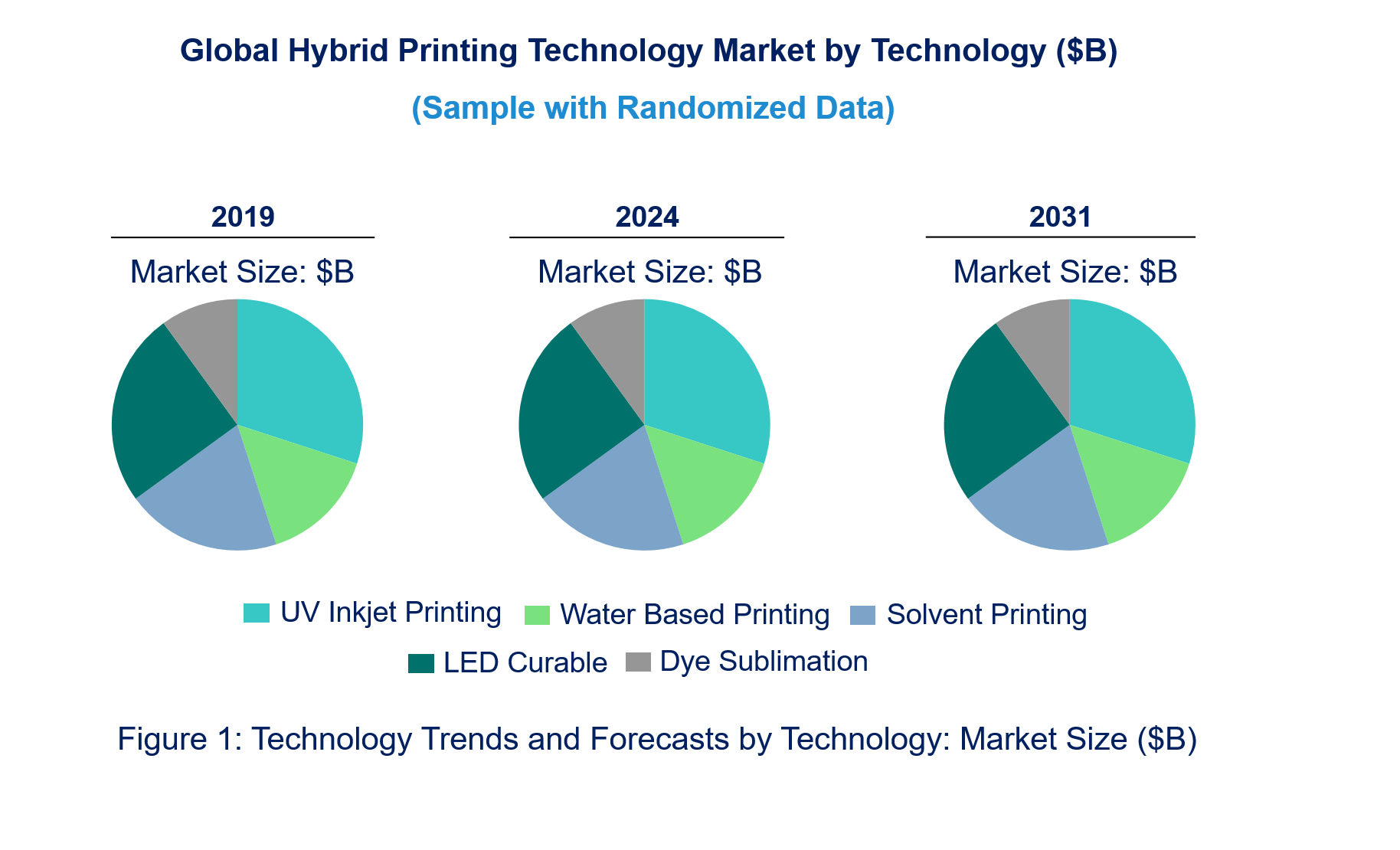
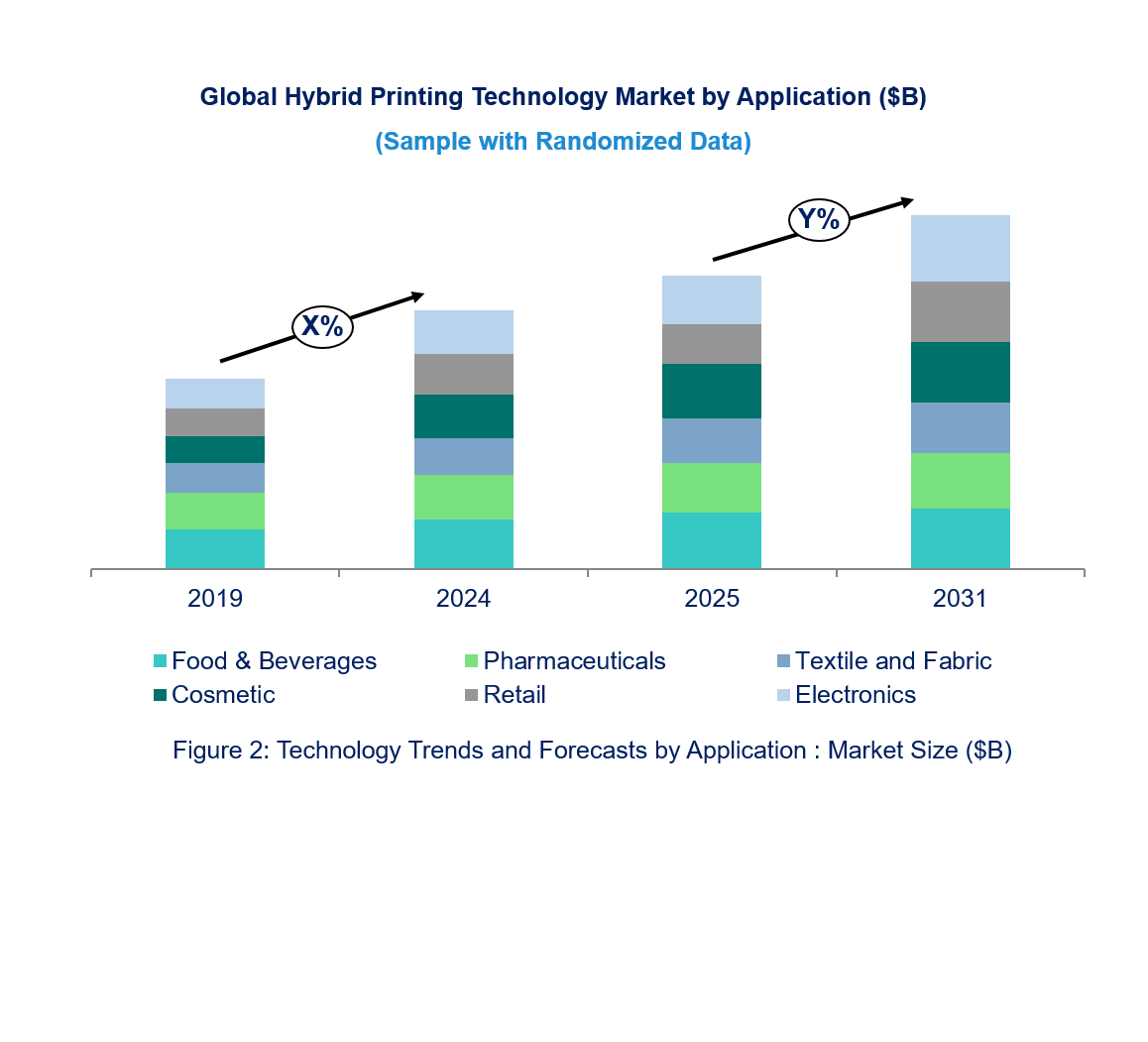
• Increased Personalization and VDP Adoption: Companies are taking advantage of hybrid printing systems to provide personalization in print output. Adding digital capabilities on traditional presses allows for variable data printing of elements such as names, addresses, or promotion messages. This is very effective in marketing and packaging markets where personalized products drive greater involvement and loyalty.
• IoT and Automation in Printing Processes: Hybrid printing solutions are increasingly being used with IoT technologies and automation. These improvements in workflows optimize and minimize downtime, allowing predictive maintenance. This trend is making hybrid printing systems more reliable and efficient and, therefore, attractive to high-volume industries.
• Growth in Eco-Friendly Printing Solutions: Sustainability is becoming a critical focus, as hybrid printing systems now support eco-friendly inks, energy-efficient operations, and reduced waste. Businesses are adopting such solutions to meet regulatory requirements and to serve environmentally conscious consumers, particularly in packaging and labels.
• Growth of Flexible Packaging Applications: Hybrid printing systems are most suited for printing on various materials, hence hygienically preferred for flexible packaging. Thereby, hybrid printing is seen to be playing a pivotal role in meeting the requirements of convenience, durability, and aesthetic appearance by the increasing demand from consumers for precision and scalability.
• High-Speed Printing Enhancement and Quality Improvement: The latest hybrid printing technologies offer unprecedented speed without compromising on quality. Enhanced resolution and precision have made these systems suitable for high-definition graphic printing. This is particularly beneficial in industries like publishing and advertising, where visual appeal is paramount. The hybrid printing market is evolving rapidly as new technologies and consumer demands reshape its trajectory. Emerging trends, such as personalization, IoT integration, eco-friendly practices, flexible packaging, and high-speed enhancements, are transforming the scope and efficiency of hybrid printing systems. Collectively, these developments are making hybrid printing an essential resource for those industries demanding innovation, sustainability, and improved output quality. Thus, as adaptation grows, the market is expected to exhibit considerable expansion, further opening up opportunities for businesses and technology providers.
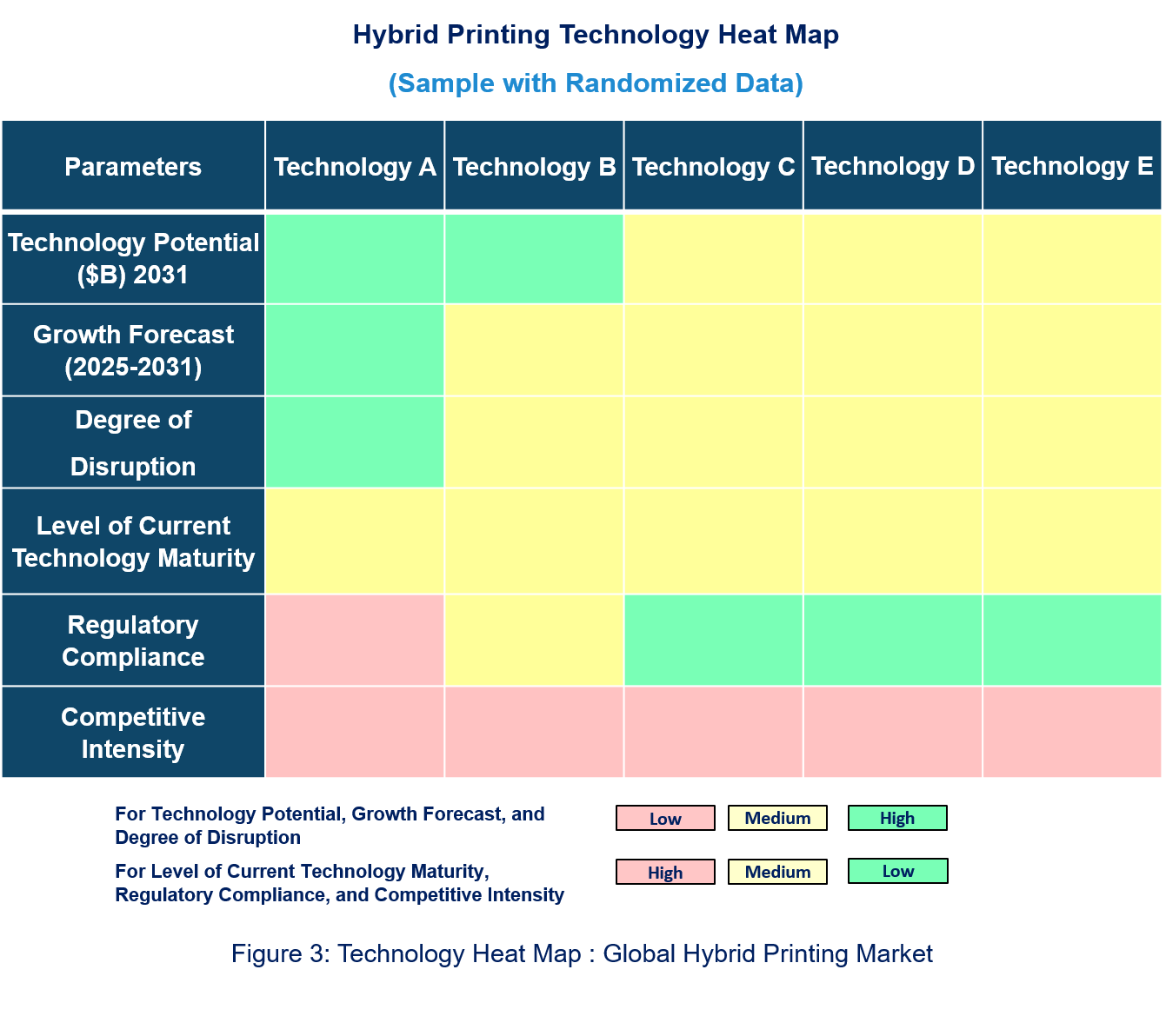
• Potential in Technology: Hybrid printing is the potential where it merges traditional speed and cost-effectiveness with digital precision and adaptability. This technology is great for the seamless production of customized and variable designs, particularly useful for brands looking to engage customers with personalized packaging and messaging. Its versatility supports sustainable practices by reducing waste and enabling on-demand production.
• Degree of Disruption: Hybrid printing breaks the patterns of traditional printing workflows due to inline finishing, rapid changeovers, and shorter runs that do not compromise efficiency. It bridges the gap between long-run cost efficiency and short-run customization, changing the landscape of the printing industry.
• Current Technology Maturity Level: Hybrid printing is in a growth stage with advancements in digital components and integration capabilities driving the adoption. The technology is established; however, ongoing innovation continues to refine its applications.
• Regulatory Compliance: Hybrid printing is strictly regulated, mainly in food packaging industries because this sector requires safety and sustainability in its products.
• FUJIFILM Holdings Corporation: FUJIFILM developed a new series of UV inkjet printers with hybrid printing capabilities that integrate high-speed digital printing with advanced finishing capabilities. This product innovation provides packaging applications with increased productivity and faster turnaround time with no compromise on quality.
• HP Development Company, L.P.: HP introduced a newly designed hybrid printing platform particularly suited for the food and beverage sectors with ink solutions that address regulatory needs and consumer appeal to the eco-friendly packaging issue, reinforcing HP's sustainable leadership.
• Ricoh: Ricoh launched a high-speed digital offset hybrid that has been designed for medium-to-large commercial volume printers. It has advanced color management with AI-driven auto increases efficiency and prevents waste in materials.
• Konica Minolta: Konica Minolta offers a hybrid label printing machine that combines digital and flexography printing capabilities in one system. Thus, it allows the production of more versatile labels with small up to large batch runs and consistent print quality.
• Bobst: Bobst unveiled its future hybrid corrugated board printer, which offers production efficiency and cost savings. The device could print multi-color images in addition to variable data printed on e-commerce packages due to the diverse variety it offers.
• Electronics For Imaging (EFI): EFI introduced a hybrid textile printing solution that combines digital and traditional dye sublimation technologies. This solution addresses the growing demand for personalized and on-demand textile production, particularly in the fashion industry.
• Seiko Epson: Epson introduced a new hybrid printing solution for the signage and display market. It is equipped with UV and solvent printing technologies, which help to provide a higher color vibrancy and durability that makes it suitable for outdoor applications.
• Koenig & Bauer: Koenig & Bauer introduced a hybrid press for the folding carton market, providing advanced inline finishing options. The system allows for brand differentiation through unique tactile and visual effects, targeting premium packaging.
• Heidelberger Druckmaschinen: Heidelberg launched a new hybrid offset and digital printing press that is optimized for short-run and personalized print jobs. It supports quick turnaround times, making it ideal for the on-demand publishing market. These developments underscore the rapid technological evolution in the hybrid printing market, driving operational efficiency, sustainability, and innovation across various applications.
• Demand for Customization and Short Print Runs: Hybrid printing is driven by the need for customized solutions and cost-effective short print runs. Businesses, especially in marketing and packaging, use hybrid systems to produce customized products quickly and effectively to cater to consumer demands for uniqueness and variety.
• Technological Advancements in Printing: Hybrid printing systems are enhanced through continuous innovation, such as high-resolution capabilities and automation. Such advancements have improved productivity and quality, thereby allowing industries to print complex designs with speed and precision. In the current competitive and high-volume market, this is critical.
• Increasing Emphasis on Sustainable Printing Practices: Hybrid printing supports green solutions through low-waste production, recyclable material, and green technologies. Sustainability has become the new trend because of its awareness, and now businesses have started adopting hybrid printing to align with new regulatory norms and consumer demand for environmentally friendly practices.
• Expanding Packaging and Labeling Markets: Hybrid printing is significantly driven by the growth of the packaging industry because of e-commerce and retail. It is needed in handling different types of materials to produce attractive yet long-lasting packaging solutions.
• Economical: The reduced costs for operating: Hybrid printing combines the cost-effectiveness of traditional methods with the versatility of digital printing. This integration reduces operational expenses, particularly for medium to high-volume production, making it an attractive option for industries seeking a balance of quality and affordability. Challenges in the hybrid printing market are:
• High Initial Investment Costs: Hybrid printing systems are quite expensive for SMEs. While there are long-term benefits of cost savings, the high capital expenditure required to procure and install such systems is a significant hurdle for adoption in resource-constrained businesses.
• Technical Complexity and Skill Requirements: Specialized knowledge is needed for operating and maintaining the hybrid printing systems. This leads to its inability to reach most parts, particularly regions that lack educational institutions that can offer technical training facilities and experts.
• Pure Digital and Offset Printing Competition: The availability of advanced digital and offset printing technologies poses a competition for hybrid printing. Hybrid systems are versatile, but specific industries may prefer specialized solutions fully catering to either traditional or digital printing needs.
• Inability to Maintain Consistent Print Quality: Uniformity in hybrid systems integrating different technologies is difficult to ensure. This occurs primarily due to variability in the substrate, ink compatibility, and machine calibration, leading to less reliability in hybrid printing when such applications are critical. The hybrid printing market is expected to grow significantly with drivers such as demand for customization, technological innovation, focus on sustainability, and growth in the packaging market. However, it is likely to be hindered by high initial costs, technical complexity, and competition. How hybrid printing reshapes the global printing industry will be determined by navigating these factors.
• Fujifilm Holdings Corporation
• HP Development Company
• L.P
• Ricoh
• Konica Minolta
• Bobst
• Technology Readiness by Technology Type: UV Inkjet is very advanced with wide applications. Water-based printing matures with increased demand for sustainability. Solvent printing remains reliable for outdoor use but is strictly regulated. LED curable is just emerging, and Dye sublimation is leading in textiles.
• Competitive Intensity and Regulatory Compliance: In hybrid printing market, UV inkjet is facing stiff competition because of the widespread adoption, following the regulations with low emission. Water-based printing is aligned with the eco-friendly mandates. Solvent printing is battling regulatory challenges. LED curable offers compliant solutions with efficiency, and dye Sublimation meets niche needs.
• Disruption Potential: UV inkjet printing disrupts with fast drying and versatile substrate compatibility, while water-based printing offers sustainability advantages. Solvent printing provides durability but has environmental concerns. LED curable printing ensures energy efficiency and dye sublimation excels in textile applications.
• UV Inkjet Printing
• Water Based Printing
• Solvent Printing
• LED Curable
• Dye Sublimation
• Food & Beverages
• Pharmaceuticals
• Textile and Fabric
• Cosmetic
• Retail
• Electronics
• North America
• Europe
• Asia Pacific
• The Rest of the World
• Latest Developments and Innovations in the Hybrid Printing Technologies
• Companies / Ecosystems
• Strategic Opportunities by Technology Type




Choose a license that fits your team. Instant PDF delivery.
Prices exclude taxes. Instant delivery. Custom licensing available on request.
Market Report · May 18, 2026
Market Report · May 18, 2026
Market Report · May 18, 2026
Trusted partner for strategic intelligence and business growth


Receive a complimentary market analysis tailored to your industry. Our analysts will identify key growth opportunities and competitive dynamics specific to your business.

Market size, growth rate, and key trend analysis for your specific sector.

Top competitor positioning and market share analysis.

Strategic recommendations backed by data-driven insights.
Get curated market intelligence and competitive moves straight to your inbox.
By subscribing, you agree to receive our monthly insights. Unsubscribe anytime.
Receive a complimentary market analysis tailored to your industry. Our analysts will identify key growth opportunities and competitive dynamics specific to your business.
Market size, growth rate, and key trend analysis for your specific sector.
Top competitor positioning and market share analysis.
Strategic recommendations backed by data-driven insights.
Get curated market intelligence, emerging trends, and competitive moves straight to your inbox each month.
By subscribing, you agree to receive our monthly insights. Unsubscribe anytime.
We'll send your sample report shortly.