
Market Report · July 31, 2026

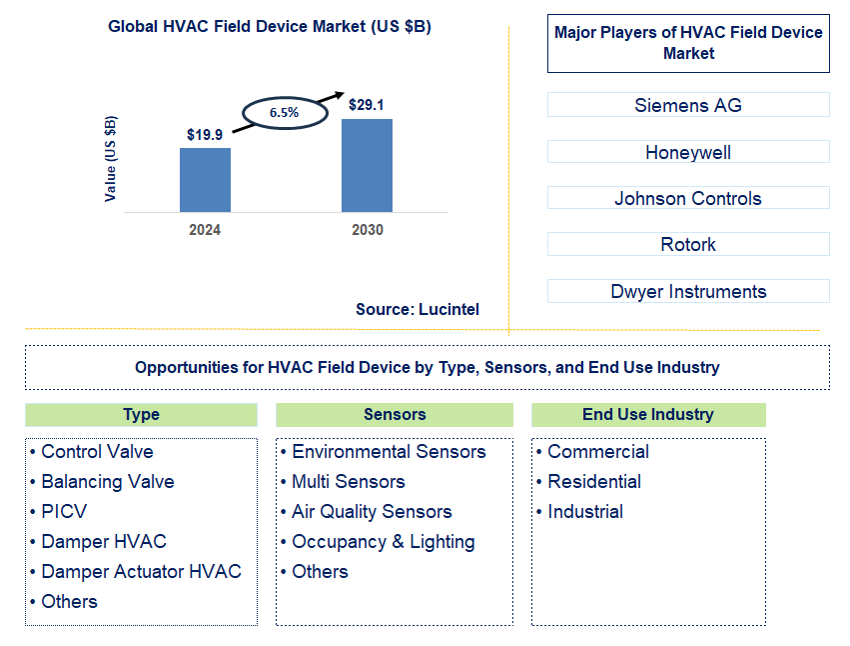
Key data points: The market size in 2030 = $29.1 billion, growth forecast = 6.5% annually for the next 6 years. Scroll below to get more insights. This market report covers trends, opportunities, and forecasts in the global hvac field device market to 2030 by type (control valve, balancing valve, PICV, damper HVAC, damper actuator HVAC, and others), sensors (environmental sensors, multi sensors, air quality sensors, occupancy & lighting, and others), end use industry (commercial, residential, and industrial), and region (North America, Europe, Asia Pacific, and the Rest of the World)
We'll send your sample report shortly.
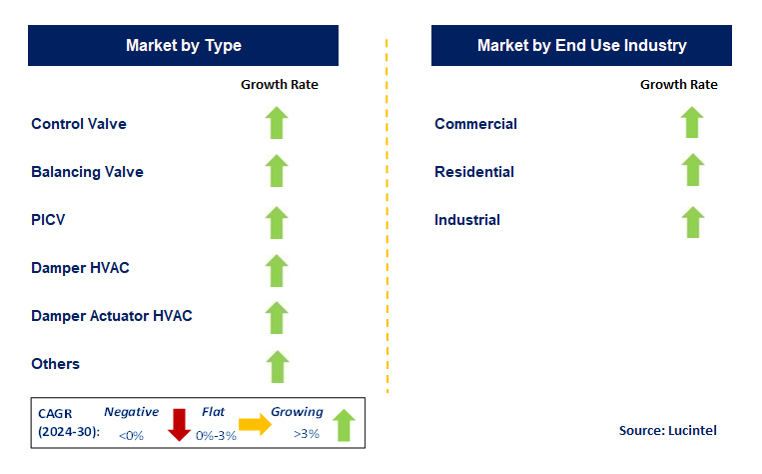
• Lucintel forecasts that, within the type category, the control valve is expected to witness the highest growth over the forecast period.
• Within the end-use category, residential will remain the largest segment.
• In terms of regions, APAC is expected to witness the highest growth over the forecast period. Gain valuable insights for your business decisions with our comprehensive 150+ page report.
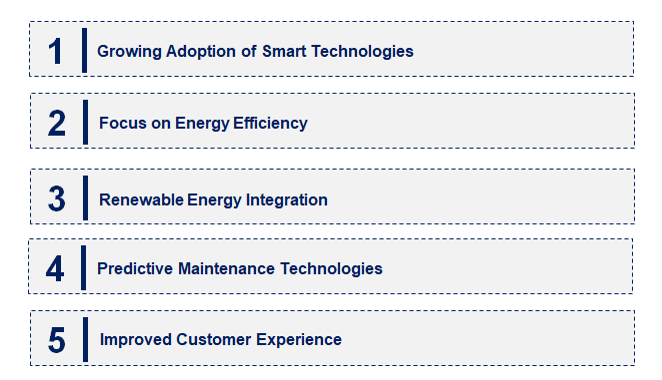
• Growing Adoption of Smart Technologies: The advent of smart HVAC systems has transformed how people relate to their heating and cooling solutions. These systems allow users to regulate indoor climates from outside their homes via smartphone apps leading to optimized energy consumption. Convenience is improved through this trend as well as promoting fuel efficiency thus more customers now prefer products that allow them to live by sustainable principles.
• Focus on Energy Efficiency: Energy consumption among heating ventilating air conditioning (HVAC) equipment is being reduced through the enactment of new energy efficiency standards. The US Department of Energy has given regulations requiring higher SEER ratings for air conditioners in its latest rulings. Therefore, energy-saving initiatives have redefined product development processes forcing manufacturers to innovate; thus reducing operational costs for individuals while lowering carbon foot printing by the sector at large.
• Renewable Energy Integration: Incorporation of renewable sources like solar or geothermal in the HVAC market is increasingly being noticed across various companies largely because they have been consuming huge amounts of power all along these years. Thus, by use of such an approach businesses can lower energy bills involving also global efforts aimed at reducing dependence on fossil fuels making HVAC friendly towards environment.
• Predictive Maintenance Technologies: The HVAC industry has lately started using predictive maintenance technologies that were not there a few years ago. Internet-of-things devices coupled with data analytics used by these conditioning units today make it possible for real-time monitoring and future problem prediction before any failure occurs. This would reduce downtime and maintenance costs thereby ensuring dependable systems that result in satisfied clients. Such interventions provide a basis upon which businesses will optimize their operations and prolong the lifespan of their HVAC equipment.
• Improved Customer Experience: HVAC firms are focusing on enhancing customer experience. They have adopted digital solutions for booking, invoicing, and communication among others to make it more efficient from initial contact through final service. Not only does this emphasize on high level of customer service nurtures loyalty but also differentiates companies in such a highly competitive market. Thus By prioritizing user-friendly experiences, HVAC businesses can improve the attraction as well as retention of customers. These trends are conjoining to reshape the HVAC field device market by promoting innovation and sustainability. As smart technologies and energy-efficient solutions become standard, the industry is poised for growth, with companies that adapt to these changes likely to thrive. The emphasis on customer experience further underscores the importance of understanding consumer needs in this evolving landscape.
• IoT-Enabled HVAC Devices: The integration of IoT technology has enabled real-time monitoring, remote control, and predictive maintenance of HVAC systems. Such devices are fitted with sensors to monitor temperature variations as well as other factors such as humidity levels enabling optimization of the system performance and reduction in energy usage.
• AI-Powered HVAC Controls: With AI algorithms being used to analyze data from HVAC systems; it leads to intelligent decision-making and adaptive control. AI-driven controls ensure optimal system performance based on variables such as occupancy levels or changing weather conditions thereby resulting in enhanced energy efficiency as well as comfort.
• Cloud-Based HVAC Solutions: To manage their building’s HVAC systems, facility managers can use cloud-based platforms like BrainBox which is scalable and flexible. By storing data about their buildings’ air quality in clouds, building operators gain access to real-time information that makes it possible for them to identify trends besides carrying out remote diagnostics and troubleshooting.
• Energy-Efficient HVAC Components: The development of high-efficient motors, and variable speed drives heat exchangers among others is a result of advancements made in material science and designs aimed at enhancing energy efficiency within the heating ventilation air conditioning system. These components minimize power consumption while reducing overall expenditure.
• Smart Thermostats & Controllers: Smart thermostats can regulate temperature based on user preferences using geofencing technology while also being compatible with other smart home appliances through voice command. These peripherals allow users more interactive control over their heating ventilation air conditioning (HVAC) systems thereby increasing customization options meant for personalized comfort settings. Altogether, these changes signify that the HVAC field device market is undergoing significant disruption. This includes IoT-enabled devices, AI-powered controls, cloud solutions, energy-efficient components and smart thermostats among others are slowly changing how HVAC systems are designed, operated, and maintained. To achieve this objective, the industry is increasingly focused on offering intelligent, connected, and sustainable solutions that fit the changing needs of its customer base contributing to an environmentally friendly built environment that is more efficient and comfortable at the same time.
• Smart Thermostats Integration: The increasing popularity of smart homes has led to increased demand for advanced thermostats. These devices augment energy efficiency through machine learning and IoT-based integrations as well as offering users immediate control and analysis capabilities. This results in significant reductions in costs and improved environmental conservation efforts hence encouraging investments in residential buildings and HVACs.
• Energy Management Systems (EMS): EMS are gaining traction in commercial buildings for their ability to optimize energy use through real-time monitoring and control. They help reduce operational costs by integrating HVAC controls with building management systems thus enhancing energy efficiency leading to lower energy bills associated with reduced carbon footprint.
• Predictive Maintenance Solutions: By using AI and IoT for predictive maintenance, one can predict potential issues before they become significant problems that could lead to failure of HVAC systems. A proactive approach like this minimizes downtimes, extends equipment lives lowering maintenance costs while improving reliability especially in industrial applications.
• Wireless Sensors and Controls: The adoption of wireless technology in HVAC systems enhances installation flexibility and reduces wiring costs. Residential or commercial buildings where these sensors are utilized can be easily integrated with remote monitoring platforms making them more efficient than before.
• Demand-Controlled Ventilation (DCV): DCV systems adjust ventilation based on occupancy levels, improving air quality and reducing energy consumption. In addition, this makes them quite popular for comfort improvement as well as optimization of operations among institutional or commercial spaces because they regulate airflow dynamically. These opportunities include smart thermostats; energy management systems; predictive maintenance solutions; wireless sensors; and demand-controlled ventilation in the HVAC field device market, which improve efficiency, reduce costs, and improve user experiences. Each of these opportunities contributes to a more intelligent and sustainable HVAC system that meets the growing demand for advanced solutions both at home and office.
• Siemens AG
• Honeywell
• Johnson Controls
• Rotork
• Dwyer Instruments
• Belimo Holding
• Robert Bosch
• Electrolux AB
• Azbil Corporation
• Danfoss A/S
• Control Valve
• Balancing Valve
• PICV
• Damper HVAC
• Damper Actuator HVAC
• Others
• Environmental Sensors
• Multi Sensors
• Air Quality Sensors
• Occupancy & Lighting
• Others
• Commercial
• Residential
• Industrial
• North America
• Europe
• Asia Pacific
• The Rest of the World
• United States: In the U.S., the HVAC field device market is advancing with a strong emphasis on smart home integration and energy efficiency. Innovations include advanced sensors and IoT-enabled devices that provide real-time data and remote control, enhancing system performance and reducing energy consumption. Additionally, regulatory support for energy-efficient systems is driving growth in this sector.
• China: China's HVAC market is rapidly evolving with a focus on improving air quality and energy efficiency. The introduction of smart HVAC systems equipped with AI and big data analytics is notable. These technologies enable better air quality management and energy optimization, aligning with China's broader goals of reducing carbon emissions and promoting sustainable urban development.
• Germany: Germany is leading in the adoption of energy-efficient and eco-friendly HVAC technologies. Recent developments include the integration of renewable energy sources, such as solar and geothermal, into HVAC systems. Germany's strong regulatory framework supports this transition, promoting the use of advanced HVAC devices that comply with stringent environmental standards.
• India: In India, the HVAC field device market is witnessing growth driven by urbanization and increased demand for efficient cooling solutions. Recent advancements include the deployment of inverter-based air conditioning systems and smart thermostats. These innovations aim to address the challenges of energy consumption and climate control in rapidly growing urban areas.
• Japan: Japan's HVAC market is focusing on precision and energy efficiency, with significant advancements in heat pump technology and smart controls. Japanese companies are developing advanced HVAC systems that integrate with renewable energy sources and offer enhanced performance and reliability, reflecting the country's commitment to sustainability and technological innovation.


• Siemens AG
• Honeywell
• Johnson Controls
• Rotork
• Dwyer Instruments
• Belimo Holding
• Robert Bosch
• Electrolux AB
• Azbil Corporation
• Danfoss A/S Q6. Which HVAC field device market segment will be the largest in future? Answer: Lucintel forecast that control valve is expected to witness the highest growth over the forecast period. Q7. In HVAC field device market, which region is expected to be the largest in next 5 years? Answer: APAC is expected to witness the highest growth over the forecast period. Q.8 Do we receive customization in this report? Answer: Yes, Lucintel provides 10% customization without any additional cost.


Choose a license that fits your team. Instant PDF delivery.
Prices exclude taxes. Instant delivery. Custom licensing available on request.
Market Report · July 31, 2026
Market Report · July 22, 2026
Market Report · July 20, 2026
Trusted partner for strategic intelligence and business growth


Receive a complimentary market analysis tailored to your industry. Our analysts will identify key growth opportunities and competitive dynamics specific to your business.

Market size, growth rate, and key trend analysis for your specific sector.

Top competitor positioning and market share analysis.

Strategic recommendations backed by data-driven insights.
Get curated market intelligence and competitive moves straight to your inbox.
By subscribing, you agree to receive our monthly insights. Unsubscribe anytime.
Receive a complimentary market analysis tailored to your industry. Our analysts will identify key growth opportunities and competitive dynamics specific to your business.
Market size, growth rate, and key trend analysis for your specific sector.
Top competitor positioning and market share analysis.
Strategic recommendations backed by data-driven insights.
Get curated market intelligence, emerging trends, and competitive moves straight to your inbox each month.
By subscribing, you agree to receive our monthly insights. Unsubscribe anytime.
We'll send your sample report shortly.